FLRT Energy Drink
Ginseng, green tea, guarana, and guayusa walk into a zero-sugar feminine can
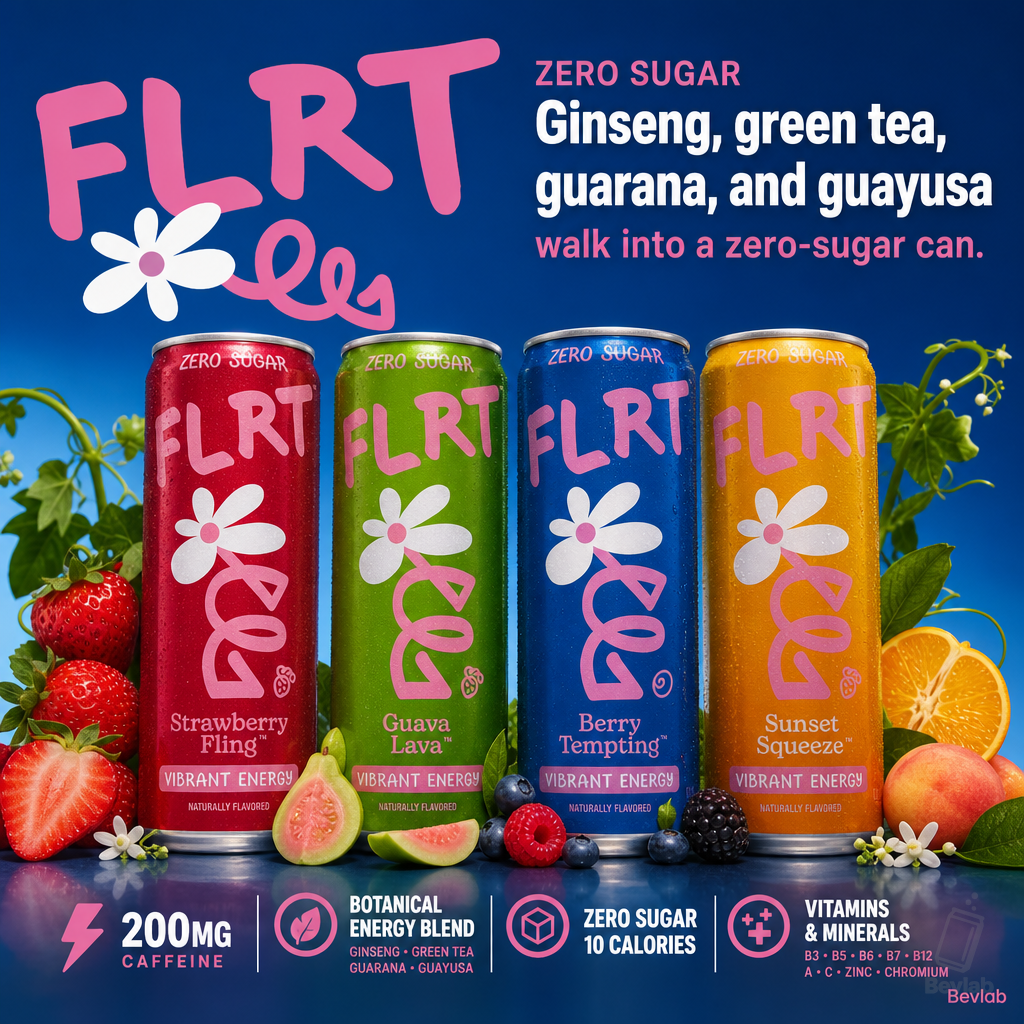
A full ingredient breakdown of FLRT Energy Drink, Monster Beverage's zero-sugar energy line for women.
FLRT is Monster Beverage Corporation's new energy drink brand, built around zero-sugar cans and a "vibrant, fearless" positioning aimed squarely at the female-focused corner of the category that Alani Nu and Bloom Nutrition have spent years building. FLRT launches in four flavors -- Strawberry Fling, Guava Lava, Berry Tempting, and Sunset Squeeze -- and every one of them runs the same core energy blend: 200mg caffeine per 12oz can, zero sugar, and a stack of botanical extracts that goes well beyond a standard caffeine-and-B-vitamins formula.[1]

That's the part worth digging into, because the label reads less like a typical convenience-store Enny and more like a multi-source stimulant blend borrowed from the functional beverage aisle. Of concern is the preformed vitamin A, which gets stored directly in the liver and needs to be monitored since upper safety limits are relatively low.
FLRT Energy Drink Nutrition Facts
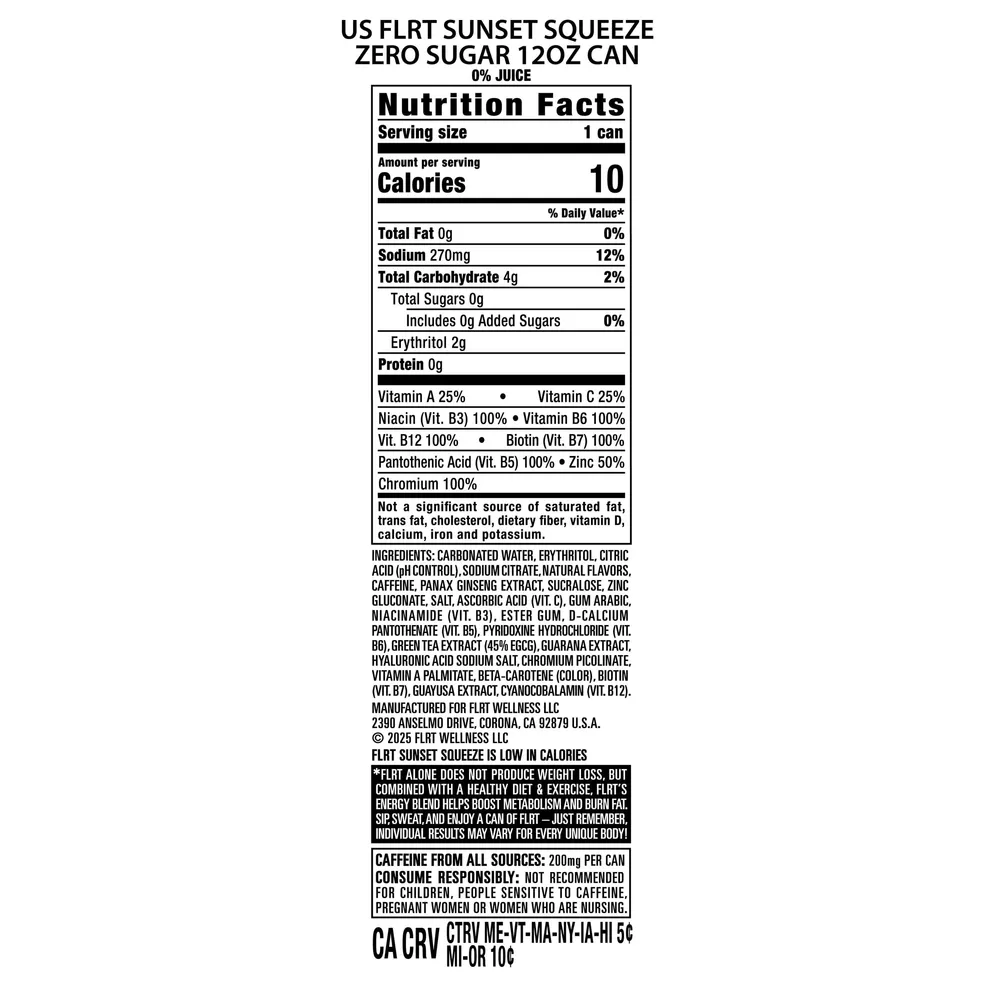
- Calories: 10
- Total Fat: 0g
- Sodium: 270mg (12% DV)
- Total Carbohydrate: 4g (2% DV)
- Total Sugars: 0g
- Added Sugars: 0g (0% DV)
- Erythritol: 2g
- Protein: 0g
- Vitamin A: 25% DV
- Vitamin C: 25% DV
- Niacin (Vitamin B3): 100% DV
- Vitamin B6: 100% DV
- Vitamin B12: 100% DV
- Biotin (Vitamin B7): 100% DV
- Pantothenic Acid (Vitamin B5): 100% DV
- Zinc: 50% DV
- Chromium: 100% DV
Each 12oz can runs just 10 calories, and the "low in calories" claim on the can checks out against the label math above.
FLRT Ingredients
Each 12oz can provides the following key actives:
-
Caffeine - 200mg
Caffeine is the backbone of the FLRT formula, and at 200mg per can it sits right in line with Alani Nu and Celsius, the two brands FLRT is most directly chasing in the zero-sugar, female-focused set. Caffeine blocks adenosine receptors in the brain, the signal that builds up throughout the day and makes you feel tired. Blocking that signal increases the availability of dopamine, norepinephrine, and serotonin, which is why you feel more alert and less fatigued shortly after drinking it.[2] The ISSN's position stand on caffeine and exercise concludes that doses around 3-6mg/kg reliably enhance endurance, sprinting, and general exercise performance in both trained and untrained people, and 200mg lands well within that range for most adult body weights.[2] A comprehensive review of caffeine's cognitive effects found that doses in the 32-300mg range consistently improve vigilance, reaction time, and attention, with vigilance tasks showing the most reliable benefit.[3] A large safety review concluded that up to 400mg/day in healthy adults isn't linked to overt cardiovascular, behavioral, or reproductive harm, so a single 200mg can leaves meaningful headroom before hitting that ceiling.[4]
-
Panax Ginseng Extract
FLRT doesn't disclose the specific milligram amount of ginseng on the label, so this one falls into "present but undosed" territory. Ginseng's active compounds are ginsenosides, and the most consistent human evidence for ginseng sits in acute cognitive performance. A well-controlled crossover trial found that a single 400mg dose of Panax ginseng extract improved a "secondary memory" composite score across post-dose testing, while lower and higher doses (200mg and 600mg) actually slowed reaction time.[5] A related trial testing repeated 7-day dosing found the acute effect didn't fade or build over a week, meaning ginseng's cognitive boost shows up fast and stays fairly consistent rather than requiring loading.[6] Ginseng's cardiovascular mechanisms, including nitric oxide-driven vasodilation and antioxidant activity in blood vessel walls, are well documented in cell and animal models but haven't been confirmed in large human trials, so any circulation-related benefit should be read as plausible rather than established.[7]
-
Green Tea Extract (45% EGCG)
The label lists green tea standardized to 45% EGCG, though the specific extract amount isn't disclosed. Green tea is caffeine's quieter cousin here: it contains its own small amount of caffeine, plus catechins like EGCG that inhibit the enzyme that breaks down norepinephrine, effectively extending the stimulant signal that caffeine kicks off.[8] A dose-response meta-analysis of 26 randomized trials found green tea extract meaningfully reduced body weight and BMI, with the biggest effect showing up at doses under 500mg/day and around 12 weeks of consistent use.[9] A larger, GRADE-assessed meta-analysis of 59 trials confirmed reductions in body fat percentage and increases in adiponectin, a hormone tied to fat metabolism, with benefits most pronounced in people under 50 and those carrying more body fat to begin with.[10] These are chronic-use findings from daily supplementation studies, not something a single can will replicate, but they explain why green tea extract keeps showing up in energy and metabolism-positioned drinks.
-
Guarana Extract
Guarana seeds pack roughly four times the caffeine concentration of coffee beans by weight, but the interesting part of guarana research is that its effects don't seem fully explained by caffeine alone.[11] A meta-analysis of 8 human trials found acute guarana supplementation produced a small but statistically significant improvement in response time across a range of cognitive tasks, though it didn't move accuracy.[11] A crossover trial in physically active adults found guarana matched to a 5mg/kg caffeine-equivalent dose sped up choice reaction time before exercise and simple reaction time after a maximal cycling effort, with guarana trending slightly ahead of an equivalent caffeine dose (though not by a statistically significant margin).[12] Guarana also carries catechins and tannins that may slow caffeine absorption, stretching out the stimulant effect rather than delivering it all at once.[11] The guarana dose itself isn't listed on the label.
-
Guayusa Extract
Guayusa is an Amazonian holly leaf that's earned a spot in more energy drink formulas over the past few years, and it's one of the more evidence-backed additions on this label thanks to a pair of published human trials using a standardized 20% caffeine / 30% chlorogenic acid extract. In a randomized, placebo-controlled crossover trial, a 600mg dose of that standardized extract (about 120mg caffeine) significantly cut fatigue, improved perceived energy by nearly 30%, and sped up motor and psychomotor performance within about an hour.[13] A separate crossover trial using the same extract found it improved working memory test performance and boosted self-rated mental clarity, focus, and productivity more than a placebo.[14] Guayusa's chlorogenic acids appear to inhibit adenosine reuptake through a mechanism separate from caffeine's receptor-blocking action, which may explain why guayusa extract produces a smaller adrenaline spike than synthetic caffeine at matched serum caffeine levels.[13] The guayusa dose isn't listed either, and the human research behind these findings comes from a single proprietary extract, not generic guayusa leaf.
-
Erythritol - 2g
Erythritol is the sugar alcohol doing the heavy lifting behind FLRT's zero-sugar, 10-calorie can. It's a sugar substitute your body absorbs almost entirely in the small intestine and then excretes largely unchanged in urine, which is why it doesn't spike blood sugar or add meaningful calories despite tasting close to real sugar.[15] That said, erythritol has become one of the more scrutinized sweeteners in the category over the last two years. A 2023 study found elevated fasting plasma erythritol was linked to a higher rate of major cardiovascular events over three years across multiple patient cohorts, and follow-up lab work showed erythritol can make platelets more reactive at concentrations similar to what shows up in blood after eating.[16] A more recent review pushed back on that framing, pointing out that the cohorts studied were enrolled before erythritol was widely used as a food sweetener, meaning the elevated levels almost certainly reflected the body's own overproduction tied to metabolic issues rather than dietary intake, and that a separate genetic (Mendelian randomization) analysis found no causal link between erythritol and heart disease.[17] At 2g per can, FLRT's erythritol dose is modest compared to the 30g single-serving doses used in the platelet studies, but it's a live debate worth knowing about if you're a heavy zero-sugar drinker.
-
Vitamins and Minerals
-
Vitamin A - 25% DV
Vitamin A shows up here as retinyl palmitate (a preformed vitamin A ester), a standard multivitamin-style inclusion rather than a headline ingredient. It's arguably essential for vision, but the form matters: unlike plant-based carotenoids, preformed vitamin A is stored right in the liver and its intake is cumulative across everything you eat and drink in a day.[18] At 25% DV per can, this is a modest contribution and not a toxicity concern on its own, but it's worth tracking if you're also taking a multivitamin, drink fortified dairy, and/or eating retinol-heavy meals or liver.[18]
Note also some of the flavors use beta-carotene as a color, and that inclusion doesn't legally need to be disclosed despite there being RAE (retinol activity equivalence), so the number may actually be higher. Vitamin A toxicity is a growing concern in America, we're simultaneously getting too much through overfortification, and our environments are making us worse at metabolizing it. Be careful here.
-
Vitamin C - 25% DV
Vitamin C is included here as ascorbic acid, likely more for immune-support positioning than for any single mechanism tied to energy. It's a cofactor for collagen synthesis and supports neutrophil function in the immune system, and a meta-analysis of common cold trials found supplementation reduced the severity of cold symptoms by roughly 15% compared to placebo.[19] At 25% DV, FLRT's dose is a fraction of the doses used in most cold-related trials, so think of this as general nutritional support rather than a functional claim.
-
Niacin (Vitamin B3) - 100% DV
Niacin, listed as niacinamide, is the non-flushing form of vitamin B3. It's a precursor to NAD+, the cellular energy currency your mitochondria run on for converting food into usable ATP.[20] Niacinamide won't cause the flushing/tingling sensation associated with nicotinic acid at high doses, which is why it's the form used in beverages, although it's far less effective than true niacin (as nicotinic acid). At 100% DV, this is a standard B-vitamin energy-support dose rather than a therapeutic one.
-
Vitamin B5 (Pantothenic Acid) - 100% DV
Vitamin B5, as D-calcium pantothenate, is the building block for Coenzyme A, a molecule involved in roughly 4% of all enzymatic reactions in the body, most notably energy metabolism through the Krebs cycle.[21] It's one of the more fundamental "energy vitamin" inclusions in any B-complex stack, and 100% DV is a typical fortification-level dose.
-
Vitamin B6 - 100% DV
Vitamin B6, here as pyridoxine hydrochloride, is a cofactor in more than 140 enzymatic reactions including amino acid metabolism and neurotransmitter synthesis for serotonin, dopamine, and GABA.[22] At 100% DV this is well within normal fortification range, though it's worth noting that some case reports have linked chronic high-dose B6 supplementation, well above what's in a single can, to nerve-related side effects.[22]
-
Biotin (Vitamin B7) - 100% DV
Biotin is a coenzyme for carboxylase enzymes involved in fat and glucose metabolism.[23] It's a common "energy and metabolism" label addition, though a systematic review found no randomized trial evidence that biotin improves hair or nail growth in people without a diagnosed deficiency, despite that being biotin's most popular consumer selling point.[23] One practical note: high-dose biotin supplementation can interfere with certain thyroid lab tests, so it's worth mentioning to a doctor before bloodwork if you're a regular drinker.[23]
-
Vitamin B12 - 100% DV
Vitamin B12, as cyanocobalamin, is essential for red blood cell formation and nerve function, and it's the vitamin most associated (rightly or not) with "energy" in consumer marketing. Research on B12 supplementation in people who aren't deficient is mixed. A meta-analysis of 16 high-quality trials found no significant cognitive or fatigue benefit from B12 supplementation in non-deficient adults, though people with confirmed B12 deficiency and cognitive impairment do see measurable improvement from supplementation.[24] At 100% DV, this dose is squarely aimed at covering baseline nutritional needs.
-
Zinc - 50% DV
Zinc, as zinc gluconate, is a cofactor for hundreds of enzymes involved in metabolism and immune function.[25] At 50% DV this is a solid but not excessive dose. Zinc research is most consistent for correcting deficiency-related outcomes like low testosterone in already-deficient men, rather than boosting performance in people who are already zinc-replete.[25]
-
Chromium - 100% DV
Chromium, as chromium picolinate, is best known for its role in insulin signaling, helping glucose transporters move into cell membranes more efficiently.[26] Most of the clinical evidence for chromium picolinate comes from populations with insulin resistance or PCOS rather than healthy adults, where a meta-analysis found it improved glucose and lipid markers over multi-month use.[26] At 100% DV, FLRT's inclusion here is a standard supportive dose rather than a therapeutic one.
-
-
Other Ingredients
- Carbonated Water - the base of the drink, providing carbonation and the bulk of the liquid volume.
- Sodium Citrate - a buffering salt that helps stabilize pH and smooths out tartness from the citric acid in the formula.
- Natural Flavors - the broad flavoring category responsible for each can's specific fruit profile, with no nutritional function of its own.
- Sucralose - the primary high-intensity sweetener rounding out the sweetness erythritol doesn't fully cover.
- Salt - added in small amounts for flavor balance and to offset bitterness from the extract blend.
- Ester Gum - a density-adjusting agent used to keep citrus flavor oils suspended evenly through the can instead of separating.
Flavors Available
FLRT launches with four flavors: Strawberry Fling, Guava Lava, Berry Tempting, and Sunset Squeeze. All four run the same 200mg caffeine, zero-sugar formula, with the flavor-specific differences limited to the natural flavor blend and coloring rather than the core energy stack.
- Berry Tempting (12 Cans: $23.64)
- Guava Lava (12 Cans: $23.76)
- Strawberry Fling (12 Cans: $23.76)
- Sunset Squeeze (12 Cans: $23.76)

A Crowded Category, A Loaded Can
FLRT enters an already-crowded zero-sugar, female-marketed lane with a formula that goes deeper than the Alani Nu/Celsius standard, layering ginseng, green tea, guarana, and guayusa on top of the caffeine base. If you like the idea of that botanical stack working alongside your caffeine rather than a solo hit, FLRT is worth trying once it lands on shelves.
Ideally, Monster's formulators dig into the growing vitamin A toxicity epidemic and remove retinyl palmitate and beta-carotene from these cans - they're unnecessary inclusions that have potential to do more harm than good.
Will this displace Alani or Celsius? Odds aren't good, given their growth, but it's always a bad idea to bet against Monster.
Tagged