GHOST Protein Drink: A Yoo-Hoo Chocolate Collab!
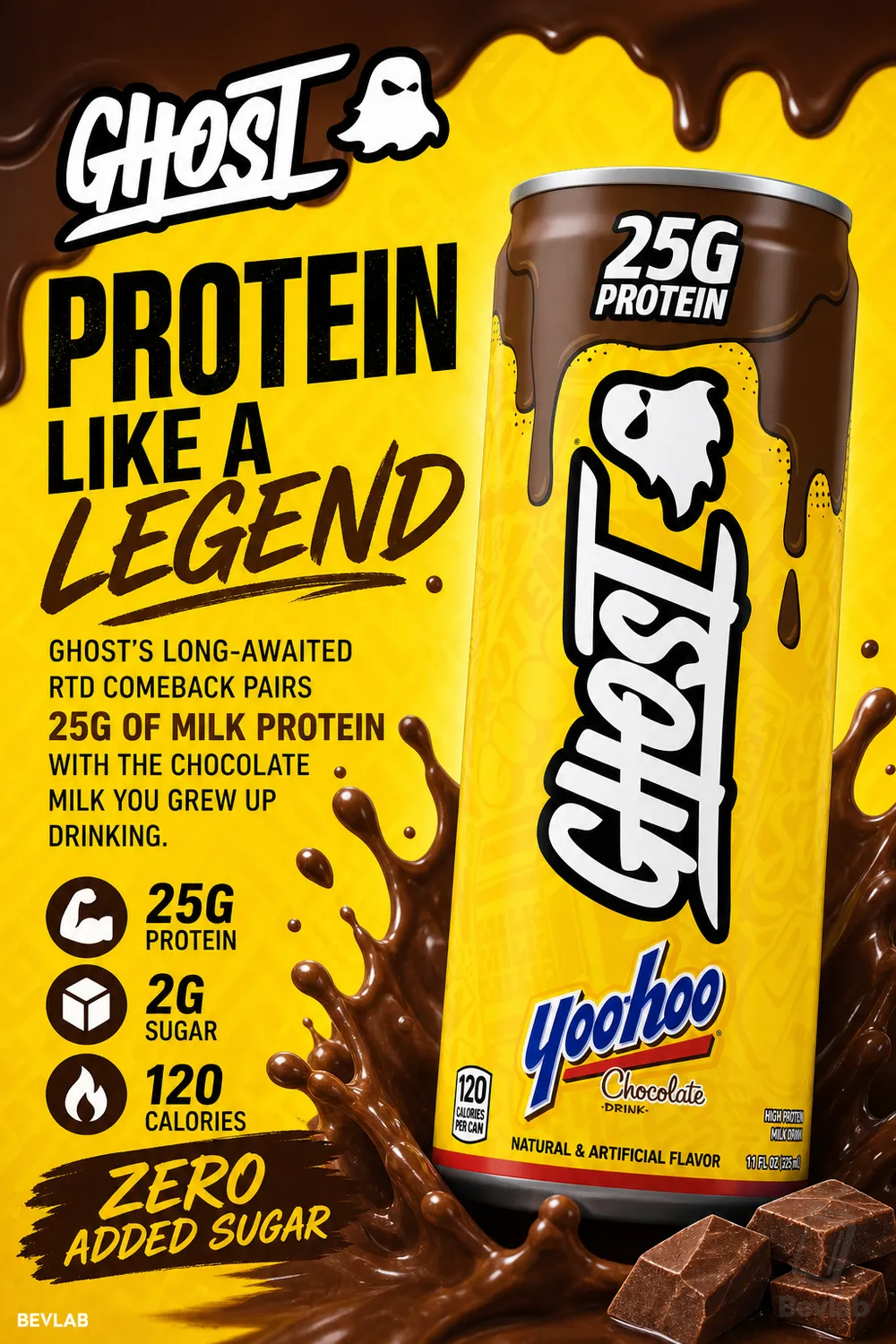
GHOST's long-awaited RTD comeback pairs 25g of milk protein with the chocolate milk you grew up drinking.
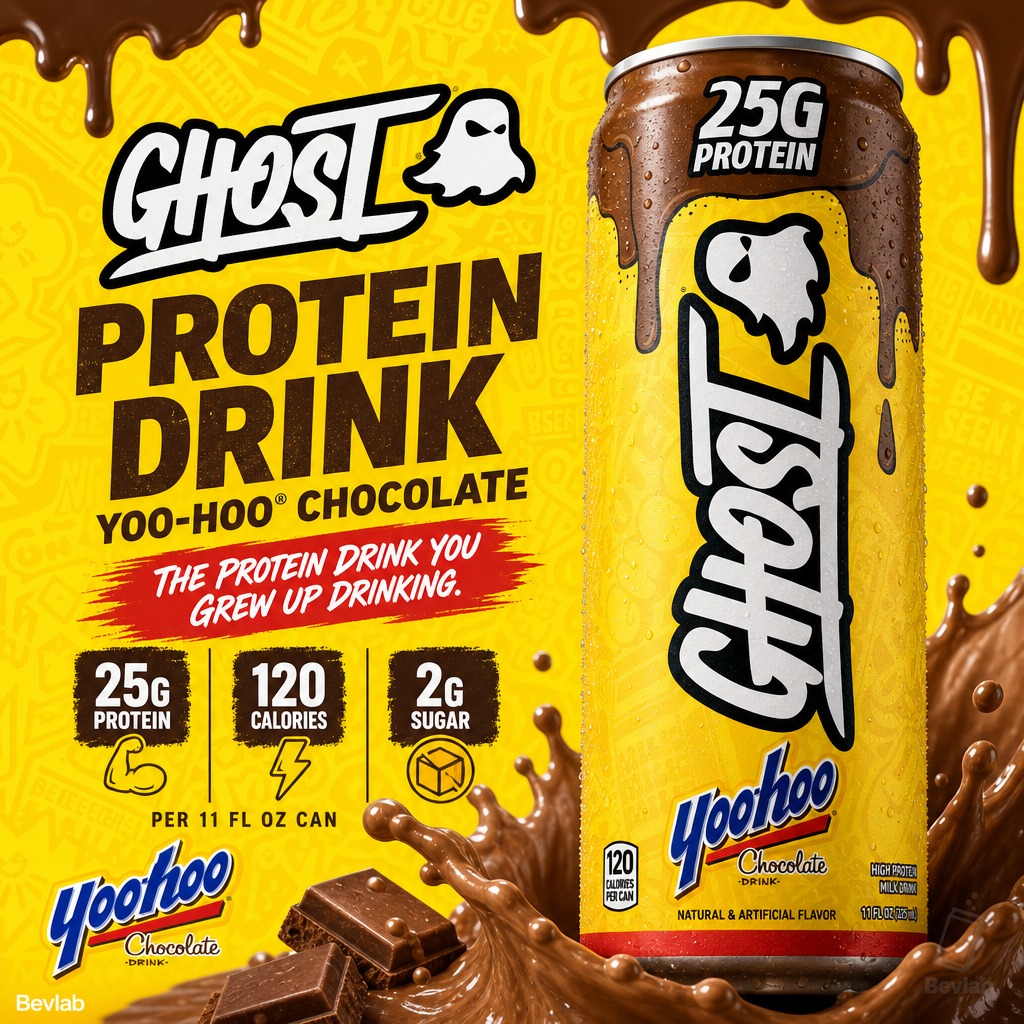
GHOST Protein Drink returns with a Yoo-hoo chocolate collab: 25g protein, 120 calories, 2g sugar. What a throwback!
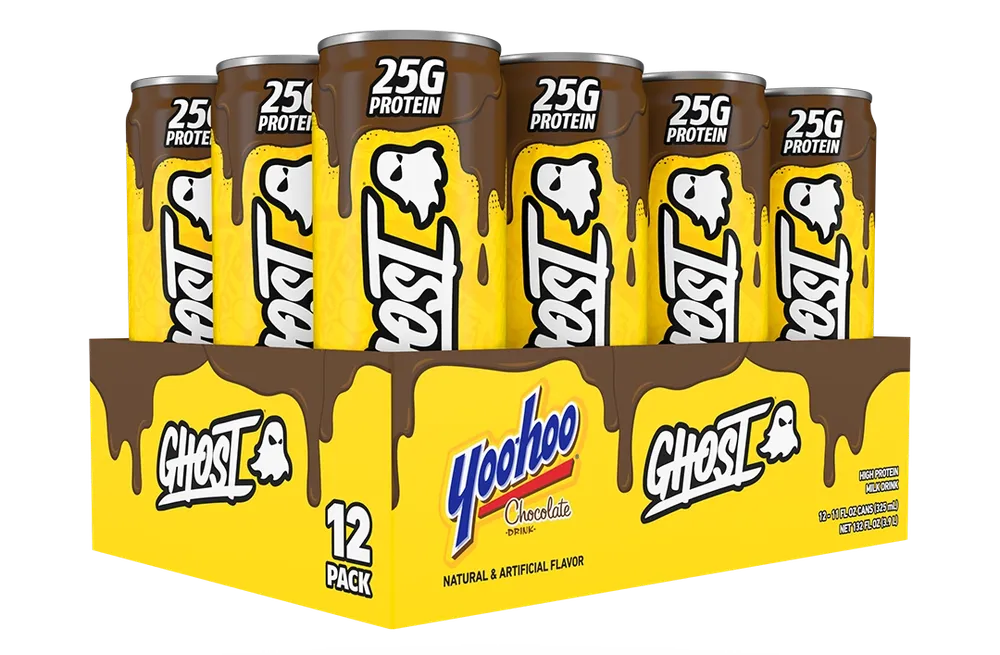
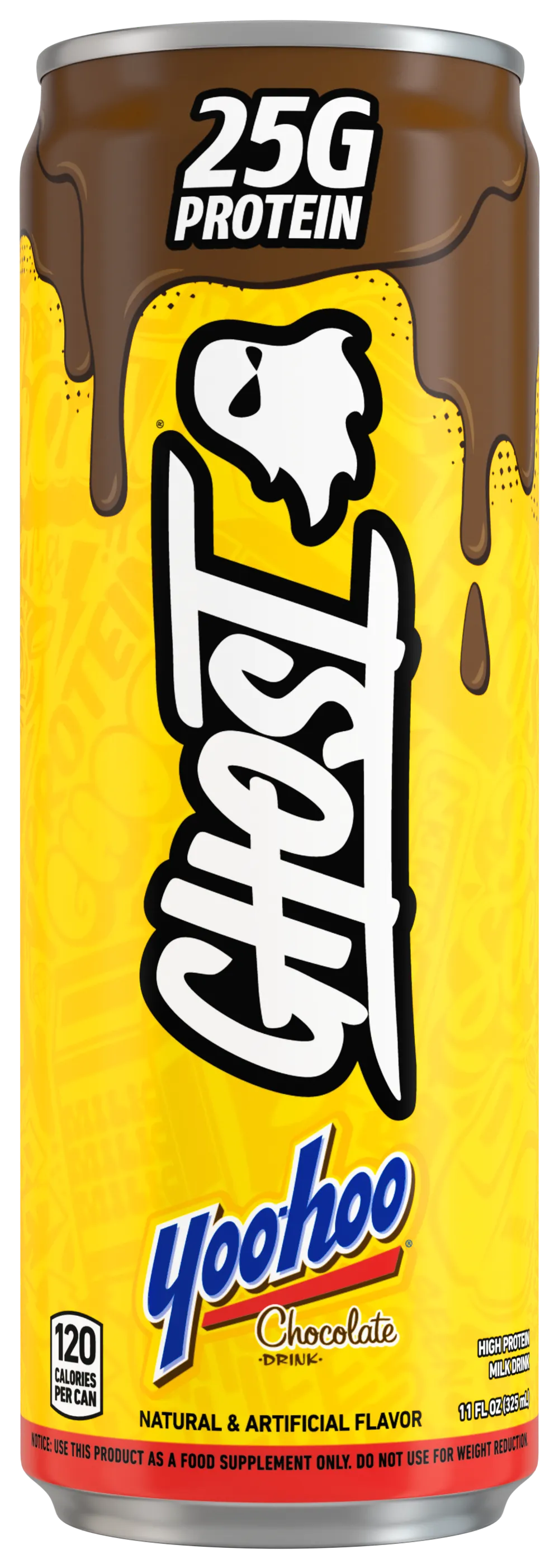
The GHOST Protein Drink is back, and it's back wearing a Yoo-hoo costume. The chocolate-dripping yellow can pairs GHOST's signature logo with Yoo-hoo's branding, backing it up with 25g of protein at just 120 calories in an 11 fl oz can. That's a lean protein-to-calorie ratio that makes most chocolate milk look like a dirty dessert by comparison.

This isn't GHOST's first attempt at a protein RTD. The brand pulled its earlier ready-to-drink line a few years back after learning what a lot of beverage brands learn the hard way: protein RTDs are a whole different ballgame. GHOST founder Dan Lourenço hinted at a comeback when he sat down for the inaugural BevLab Podcast episode at Ghost HQ, without giving away specifics. Now, with Keurig Dr Pepper's distribution muscle behind it, the timing finally works. A limited direct-to-consumer drop reportedly sold out in 20 minutes before the can started rolling into retailers nationwide, which tells you the demand for GHOST protein RTDs never actually went away.
Watch Related Videos
Bevlab VideosGHOST Protein Drink Nutrition Facts
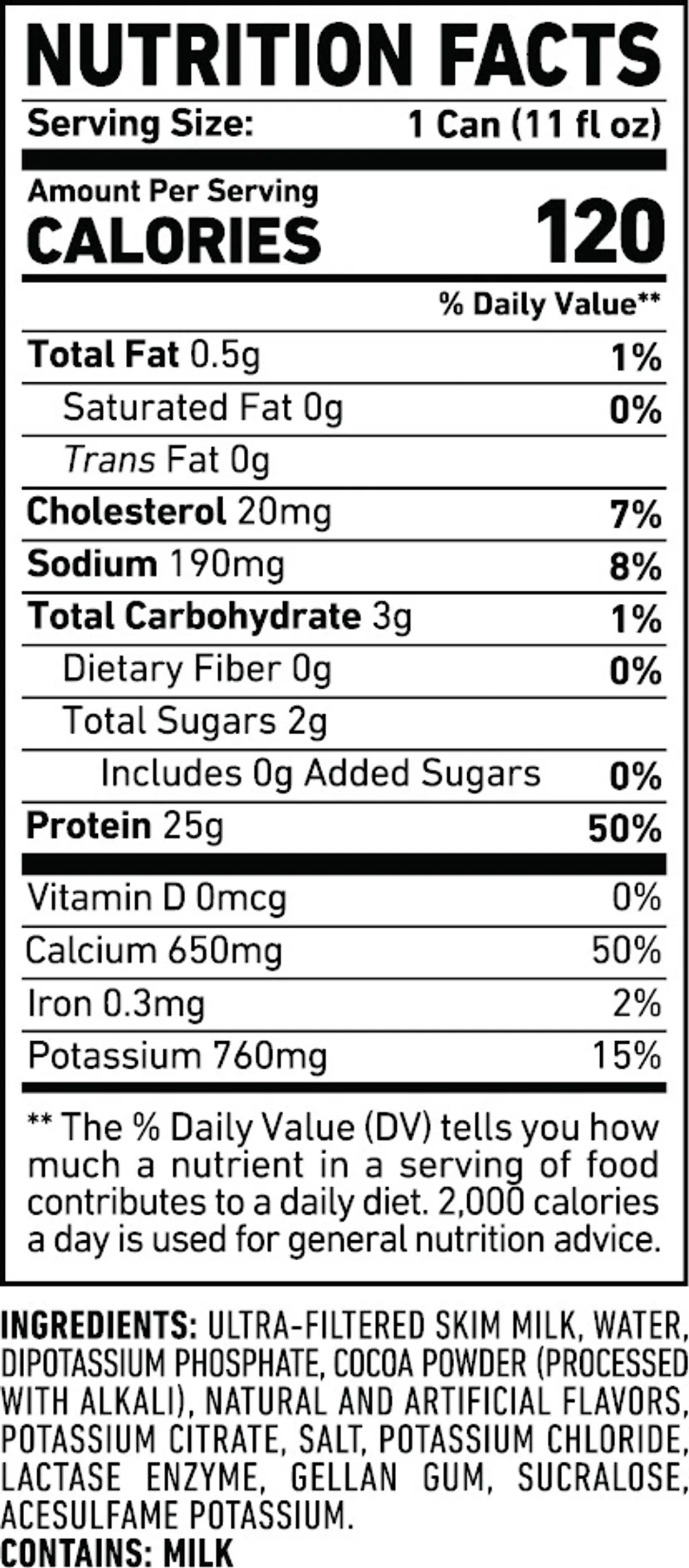
- Calories: 120
- Total Fat: 0.5g
- Saturated Fat: 0g
- Cholesterol: 20mg
- Sodium: 190mg
- Total Carbohydrate: 3g
- Dietary Fiber: 0g
- Total Sugars: 2g
- Added Sugars: 0g
- Protein: 25g
- Vitamin D: 0mcg (0% DV)
- Calcium: 650mg (50% DV)
- Iron: 0.3mg (2% DV)
- Potassium: 760mg (15% DV)
GHOST Protein Drink Ingredients
The can leads with ultra-filtered skim milk and keeps the rest of the label short. Here's what each piece is doing.
-
Milk Protein (Ultra-Filtered Skim Milk)
Milk protein in this can comes from ultra-filtered skim milk, which concentrates the protein while preserving milk's naturally occurring 80:20 casein-to-whey ratio, unlike isolated whey or casein products that strip out one fraction entirely.[1] That ratio matters for the kinetics of digestion: casein curdles in stomach acid and releases amino acids slowly, while whey stays soluble and produces a fast, sharp rise in blood leucine. Research in rats found that a milk protein blend peaks somewhere between whey's fast onset and casein's slow one, giving a more sustained aminoacidemia than either fraction alone.[2] On the muscle-building side, controlled trials have found that roughly 20g of high-quality protein maximizes the acute muscle protein synthesis response to a single serving, with anything beyond that mostly getting oxidized rather than used for repair.[3] At 25g per can, this comfortably clears that threshold, and meta-analytic data across resistance-training studies backs milk-derived protein for lean mass gains over time.[4]
-
Dark Chocolate (Cocoa Powder Processed with Alkali)
Cocoa powder gives this can its Yoo-hoo chocolate flavor, and it's worth being upfront about what it is and isn't doing here. Minimally processed cocoa retains cocoa flavanols like epicatechin, compounds studied for supporting nitric oxide production and endothelial function.[5] But alkalized ("Dutch-processed") cocoa, which is what's listed here, is chosen for its smoother, darker flavor profile at the cost of a chunk of that flavanol content. The doses shown to move the needle on blood pressure or oxidative stress markers in trials, generally north of 200mg of flavanols a day, are also far higher than what a flavoring-level splash of alkalized cocoa powder in a protein drink would deliver.[6] This is a flavor ingredient first, and any wellness angle should be treated as a bonus, not the point.
-
Natural & Artificial Flavors
Natural and artificial flavors round out the Yoo-hoo chocolate taste beyond what cocoa powder alone can deliver. The regulatory distinction between the two categories is about sourcing, not chemistry: a flavor compound extracted from a plant and its lab-synthesized twin are frequently molecularly identical.[7] Flavor compounds work through both retronasal aroma and direct taste receptor activation, and research on taste-taste interactions shows that mixing sweet, salty, and bitter inputs changes how each one is perceived depending on concentration.[8] Consumer research consistently shows a preference for "natural flavor" labeling over "artificial," even when the underlying chemistry doesn't differ meaningfully.[9] For a licensed nostalgia flavor like Yoo-hoo, getting this blend right is the difference between a gimmick and a can that actually tastes like the drink it's imitating.
-
Salt
Salt shows up at a modest 190mg of sodium per can, low enough that it's doing flavor work rather than electrolyte-replacement work. Sodium salts are well documented for suppressing perceived bitterness more effectively than they suppress sweetness, which is useful in a protein-forward beverage where high protein concentrations and alkalized cocoa can both read bitter.[10] That effect has been demonstrated directly in whey protein hydrolysate beverages, where sodium chloride measurably reduced bitter notes, though it also nudges up salty and sour perception at higher levels.[11] At 190mg, this can sits well within the range where sodium's cardiovascular risk profile isn't a meaningful consideration for a single serving.[12]
-
Lactase Enzyme

Lactase enzyme is the reason GHOST can call this can lactose-free despite building it on ultra-filtered skim milk. The enzyme breaks the bond between glucose and galactose in lactose, and when it's added directly to a dairy product during manufacturing rather than taken as a supplement alongside a meal, it can hydrolyze the vast majority of lactose before the can ever reaches the shelf.[13] Controlled studies in lactose-intolerant subjects found that pre-hydrolyzed milk essentially eliminated the GI symptoms and breath hydrogen response that untreated milk produced.[14] A separate trial in children with lactase deficiency found hydrolyzed milk cut symptoms significantly while also improving calcium absorption compared to a lactose-free, calcium-supplemented diet, with no downside in tolerability.[15] For anyone who loves dairy protein but can't handle a normal glass of milk, this is the ingredient doing the real work.
-
Gellan Gum
Gellan gum is a stabilizer here, keeping the protein and cocoa evenly suspended instead of settling out in the can. Most of the interesting research on gellan gum involves a specific low-acyl form used at concentrations far above what a beverage needs, where it forms a gel in the stomach that can slow starch digestion and blunt post-meal blood sugar spikes.[16] At the fractional-percent concentrations typical of ready-to-drink beverages, none of those functional effects would be expected to show up. Regulatory review has consistently found gellan gum safe at food-additive use levels, with no genotoxicity or carcinogenicity signal across the animal and human data reviewed.[17] In this can, it's texture, not a health ingredient.
-
Sucralose
Sucralose is one of two non-nutritive sweeteners keeping added sugar at zero while the can still tastes like a Yoo-hoo. It's roughly 600 times sweeter than table sugar and passes through the body largely unmetabolized.[18] The most recent EFSA re-evaluation of sucralose concluded the existing acceptable daily intake doesn't need revision and current authorized uses don't raise safety concerns.[19] Real-world consumption data backs that up: surveyed populations tend to consume sucralose at levels well under the ADI even accounting for multiple sweetened products in a day.[20] Some research has found sucralose can shift gut microbiome composition and glycemic response in a subset of people, an effect that appears to be highly individual rather than universal.[21]
-
Acesulfame Potassium
Acesulfame potassium, or Ace-K, works alongside sucralose here, a pairing brands lean on because the two sweeteners together produce a more sugar-like taste than either does alone. Ace-K is heat-stable and holds up across a wide pH range, which makes it a reliable partner in shelf-stable dairy beverages.[22] In a clinical trial testing a sucralose and Ace-K blend against a sucrose control before a carbohydrate-heavy meal, the blend produced a significantly smaller insulin spike than sugar, without any compensatory increase in later food intake.[23] A comprehensive weight-of-evidence review covering genotoxicity and carcinogenicity data across multiple animal models found no consistent cancer or DNA-damage signal for Ace-K.[24]
-
Water
Water rounds out the base alongside the ultra-filtered milk, diluting the protein concentrate to drinkable consistency. Beyond its role as a solvent, water is the primary vehicle for nutrient delivery and hydration status, and even mild fluid deficits of 1-2% of body weight are enough to measurably affect alertness and physical performance.[25] In a can like this, it's simply doing what it always does: making everything else work.
-
Vitamins and Minerals
-
Calcium
Calcium lands at 650mg, or 50% DV, one of the more notable numbers on this label. That's a substantial contribution toward the 1,000-1,200mg/day range research associates with meaningful fracture-risk reduction in adults, and it's coming naturally from the milk base rather than a fortified add-in.[26] For a dairy protein drink, this is a real secondary benefit, not just a byproduct.
-
Potassium
Potassium comes in at 760mg, or 15% DV, sourced from the milk itself plus potassium citrate and potassium chloride added during formulation. Population data consistently link a higher dietary potassium-to-sodium ratio with lower blood pressure, and this can's potassium load comfortably outweighs its 190mg of sodium.[27] It's a meaningful electrolyte contribution for a drink that isn't marketed as a sports beverage.
-
-
Other Ingredients
- Dipotassium Phosphate - a buffering and electrolyte agent common in dairy beverages, helping stabilize pH and contributing to the can's overall potassium content.
Who Should Get Some
- Lactose-sensitive dairy fans: The lactase enzyme does real work here, letting anyone who normally avoids milk-based protein drinks enjoy a genuine dairy protein source without the GI fallout.
- High-protein, low-sugar shoppers: 25g protein and 2g sugar in 120 calories is a hard macro profile to beat for a grab-and-go option that still tastes like an actual treat.
...and, of course, Yoo-Hoo fans!
A Nostalgia Play That Delivers
GHOST didn't just slap a licensed logo on a protein shake. The macros are strong, the lactase inclusion solves a real problem for dairy-sensitive drinkers, and the sweetener stack does its job without added sugar. With Keurig Dr Pepper's distribution behind it, this has a real shot at holding a permanent spot next to the GHOST Protein Bar as a grab-and-go staple. Follow @BevlabMedia on TikTok and Instagram for the retail rollout as it happens.
More Related Videos
Bevlab VideosReferences
- Goulding, D.A. et al. "Milk proteins: An overview." Milk Proteins, 2020. https://doi.org/10.1016/B978-0-12-815251-5.00002-5
- Kanda, Atsushi, et al. "Effects of Whey, Caseinate, or Milk Protein Ingestion on Muscle Protein Synthesis after Exercise." Nutrients, 2016. https://doi.org/10.3390/nu8060339
- Witard, Oliver C, et al. "Myofibrillar muscle protein synthesis rates subsequent to a meal in response to increasing doses of whey protein at rest and after resistance exercise." The American journal of clinical nutrition, 2014. https://doi.org/10.3945/ajcn.112.055517
- Morton, Robert W, et al. "A systematic review, meta-analysis and meta-regression of the effect of protein supplementation on resistance training-induced gains in muscle mass and strength in healthy adults." British journal of sports medicine, 2018. https://doi.org/10.1136/bjsports-2017-097608
- Sun, Ye, et al. "Dose-response relationship between cocoa flavanols and human endothelial function: a systematic review and meta-analysis of randomized trials." Food & function, 2019. https://doi.org/10.1039/c9fo01747j
- Behzadi, Mehrdad, et al. "Effect of dark chocolate/ cocoa consumption on oxidative stress and inflammation in adults: A GRADE-assessed systematic review and dose-response meta-analysis of controlled trials." Complementary therapies in medicine, 2024. https://doi.org/10.1016/j.ctim.2024.103061
- Singh, Nidhi, et al. "Natural food flavours: a healthier alternative for bakery industry-a review." Journal of food science and technology, 2024. https://doi.org/10.1007/s13197-023-05782-4
- Keast, Russell S.J, et al. "An overview of binary taste–taste interactions." Food Quality and Preference, 2003. https://doi.org/10.1016/S0950-3293(02)00110-6
- Murley, Tyler, et al. "The Influence of Colorants, Flavorants and Product Identity on Perceptions of Naturalness." Foods (Basel, Switzerland), 2019. https://doi.org/10.3390/foods8080317
- Breslin, P A, et al. "Salt enhances flavour by suppressing bitterness." Nature, 1997. https://doi.org/10.1038/42388
- Leksrisompong, Pattarin, et al. "Bitter taste inhibiting agents for whey protein hydrolysate and whey protein hydrolysate beverages." Journal of food science, 2012. https://doi.org/10.1111/j.1750-3841.2012.02800.x
- O'Donnell, Martin, et al. "Sodium intake and cardiovascular health." Circulation research, 2015. https://doi.org/10.1161/CIRCRESAHA.116.303771
- Lin, M Y, et al. "Comparative effects of exogenous lactase (beta-galactosidase) preparations on in vivo lactose digestion." Digestive diseases and sciences, 1993. https://doi.org/10.1007/BF01297079
- Nagy, L, et al. "Efficacy testing of beta-galactosidase with H2 breath test in patients with carbohydrate malabsorption." Acta medica Hungarica, 1987. https://pubmed.ncbi.nlm.nih.gov/3118327/
- Nielsen, O H, et al. "Calcium absorption and acceptance of low-lactose milk among children with primary lactase deficiency." Journal of pediatric gastroenterology and nutrition, 1984. https://doi.org/10.1097/00005176-198403000-00009
- Alshammari, Norah A, et al. "Structuring white rice with gellan gum reduces the glycemic response in healthy humans." Food research international (Ottawa, Ont.), 2024. https://doi.org/10.1016/j.foodres.2024.115090
- EFSA, Panel on Food Additives and Nutrient Sources added to Food (ANS), et al. "Re-evaluation of gellan gum (E 418) as food additive." EFSA journal. European Food Safety Authority, 2018. https://doi.org/10.2903/j.efsa.2018.5296
- "Plain language summary of the Re-evaluation of sucralose (E 955) as a food additive." EFSA journal. European Food Safety Authority, 2026. https://doi.org/10.2903/j.efsa.2026.p240202
- EFSA, Panel on Food Additives and Flavourings (FAF), et al. "Re-evaluation of sucralose (E 955) as a food additive and evaluation of a new application on extension of use of sucralose (E 955) in fine bakery wares." EFSA journal. European Food Safety Authority, 2026. https://doi.org/10.2903/j.efsa.2026.9854
- Daher, Mira, et al. "Trends and amounts of consumption of low-calorie sweeteners: A cross-sectional study." Clinical nutrition ESPEN, 2022. https://doi.org/10.1016/j.clnesp.2022.01.006
- Suez, Jotham, et al. "Personalized microbiome-driven effects of non-nutritive sweeteners on human glucose tolerance." Cell, 2022. https://doi.org/10.1016/j.cell.2022.07.016
- Chowdhury, Chandrama Roy, et al. "Beyond sweetness: A review of the health and safety of acesulfame-K." Food chemistry, 2026. https://doi.org/10.1016/j.foodchem.2025.147290
- Almiron-Roig, Eva, et al. "Impact of acute consumption of beverages containing plant-based or alternative sweetener blends on postprandial appetite, food intake, metabolism, and gastro-intestinal symptoms: Results of the SWEET beverages trial." Appetite, 2023. https://doi.org/10.1016/j.appet.2023.106515
- Marchitti, Satori A, et al. "Lack of Genotoxic and Carcinogenic Potential for Nonsugar Sweeteners: A Review of Animal and Mechanistic Evidence." Advances in nutrition (Bethesda, Md.), 2025. https://doi.org/10.1016/j.advnut.2025.100552
- Jéquier, E, et al. "Water as an essential nutrient: the physiological basis of hydration." European journal of clinical nutrition, 2010. https://doi.org/10.1038/ejcn.2009.111
- Clarke, B.L. "Use Of Calcium Or Calcium In Combination With Vitamin D Supplementation To Prevent Fractures And Bone Loss In People Aged 50 Years And Older A Meta Analysis." Yearbook of Endocrinology, 2008. https://doi.org/10.1016/s0084-3741(08)79096-6
- He, Feng J, et al. "Beneficial effects of potassium on human health." Physiologia plantarum, 2008. https://doi.org/10.1111/j.1399-3054.2007.01033.x
Tagged