Just Ice Tea Organic Iced Tea: The Honest Tea Sequel
Real leaves, fair trade cane sugar, and a light hand on the sweet stuff
Seth Goldman's Eat the Change brews this organic iced tea from fair trade leaves, with 11g of cane sugar in the Dragon Green Tea can.
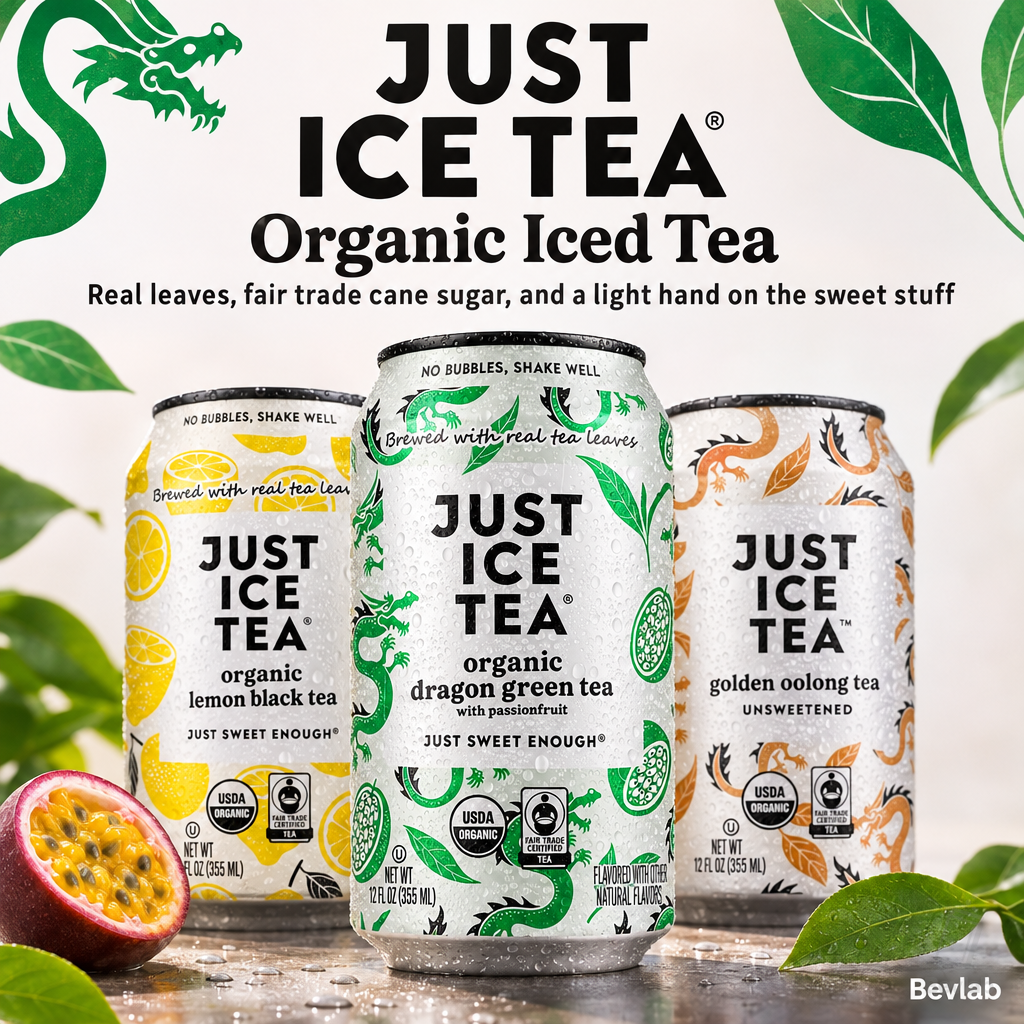
Just Ice Tea Organic Iced Tea is Seth Goldman's second act after Honest Tea. It comes from his company Eat the Change, and Honest Tea fans will recognize the pitch: organic tea brewed from real leaves, fair trade sourcing, and only enough sugar to take the edge off.
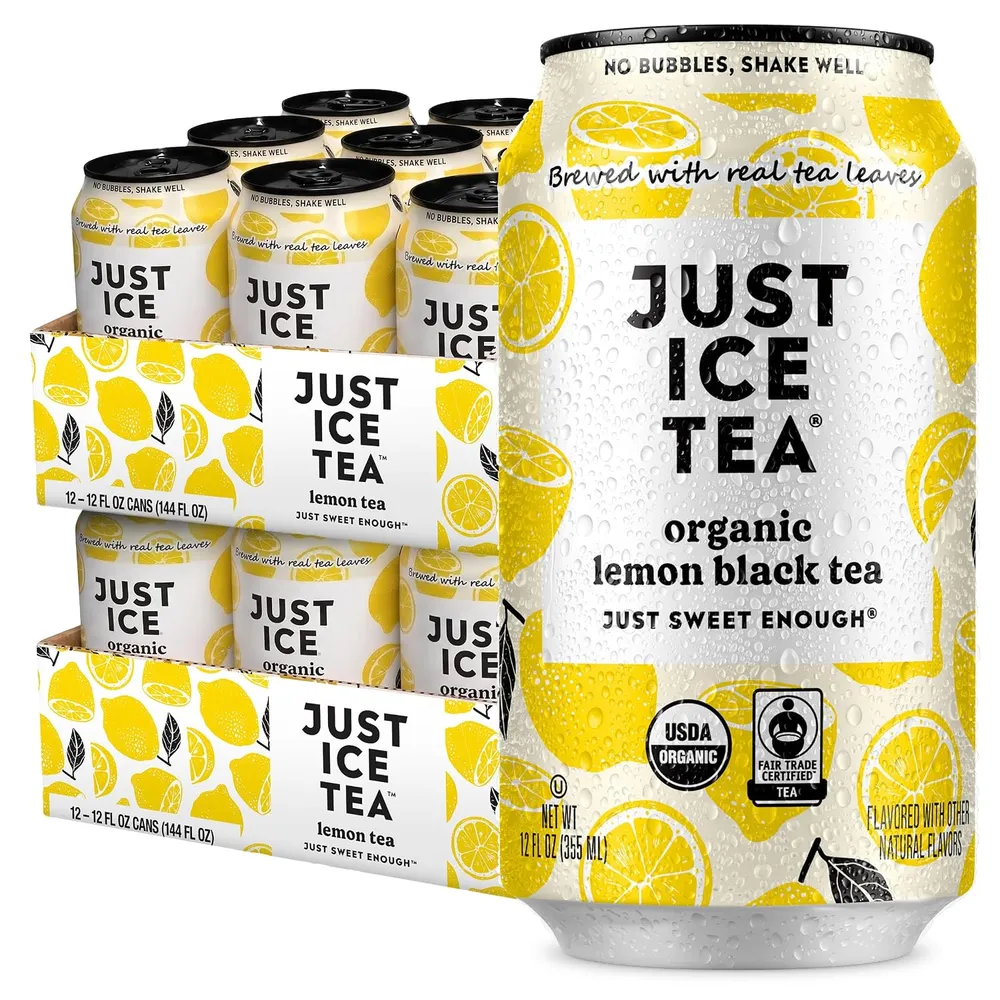
This page covers the full bottled and canned family as one product. Eat the Change also makes a caffeinated line called Awaken, which isn't part of this page. The formula breakdown below uses the Dragon Green Tea with passionfruit can, which has a short ingredient list built on brewed green tea, organic cane sugar, and fruit.
Goldman's Fair Trade Second Act
Fair trade sourcing is the core of the pitch. The label marks both main ingredients, the green tea leaves and the cane sugar, as Fair Trade Certified. The tea, sugar, flavors, and passionfruit juice are all organic.
Tea and sugar do the most work in an iced tea, so certifying those two covers the core of the formula. You can check it right on the ingredient list.
Just Ice Tea Organic Iced Tea Nutrition Facts
These numbers are from the 12 fl oz Dragon Green Tea can. Other flavors have their own panels.
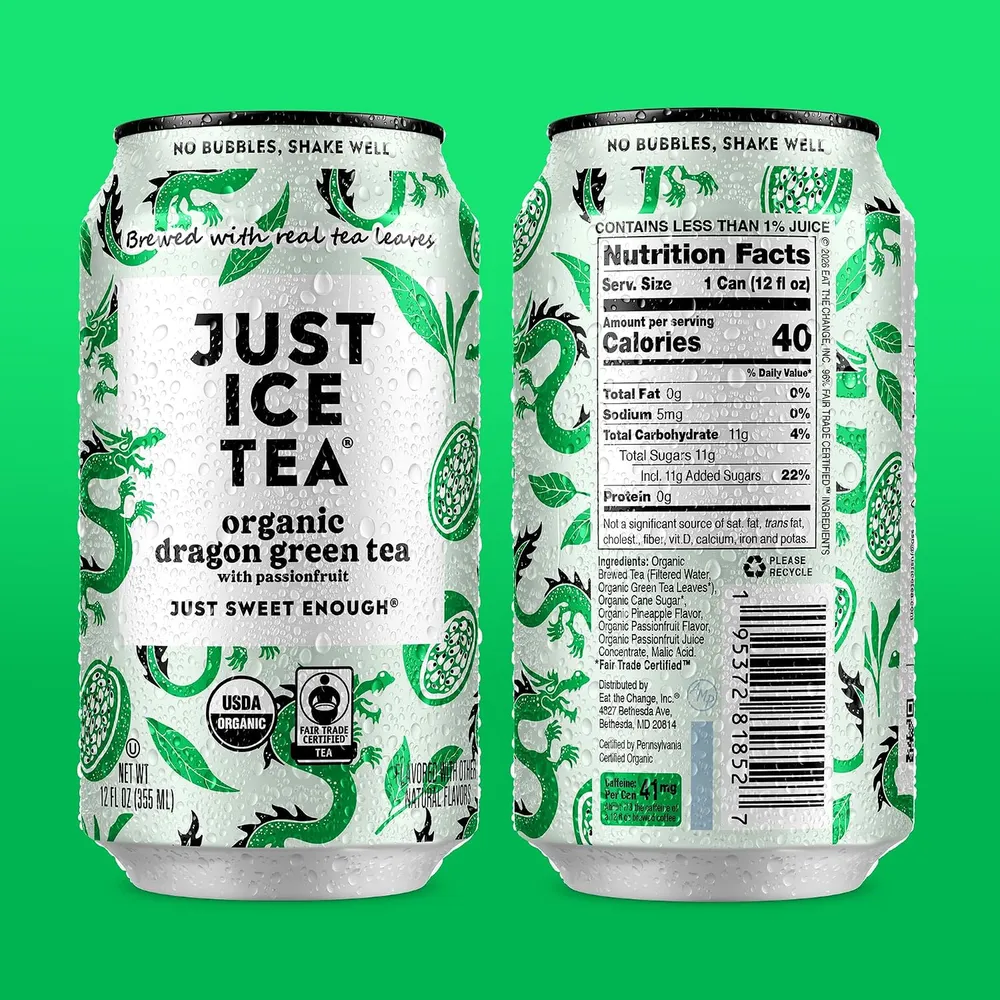
- Calories: 40
- Total Fat: 0g (0% DV)
- Total Carbohydrate: 11g (4% DV)
- Total Sugars: 11g
- Added Sugars: 11g (22% DV)
- Total Sugars: 11g
- Protein: 0g
- Vitamins and Minerals
- Sodium: 5mg (0% DV)
All 11g of sugar counts as added sugar, which comes to 22% of the Daily Value in one can. That's the main trade-off here: you get real sugar instead of a zero-calorie sweetener, in a small enough amount to keep the can at 40 calories.
Just Ice Tea Organic Iced Tea Ingredients
The Dragon Green Tea can lists six ingredients. Here's what each one does.
-
Organic Green Tea
Organic green tea leaves brewed in filtered water form the base and come first on the label. Green tea comes from Camellia sinensis leaves processed with minimal oxidation, which keeps more of the leaf's original catechins than black tea processing does.[1] Brewed green tea also contains naturally occurring caffeine and the amino acid theanine.[2] Just Ice Tea doesn't disclose how much tea goes into each can or how many catechins it contains.
One study compared brewed tea with extracts. In 50 healthy men, 200mg of EGCG given as green tea improved blood vessel function, while the same amount as green tea extract or isolated EGCG did not.[3] That study used plain brewed tea at a fixed EGCG dose, so don't expect the same result from a sweetened canned tea.
On safety, European regulators concluded that traditionally brewed green tea is generally safe at normal intakes. Their liver concerns were tied to concentrated supplements delivering 800mg or more of EGCG a day.[4] Two caveats still apply to the drink itself. In a study of 46 Moroccan women, a 300mL serving of green tea with a meal cut iron absorption by more than 85%.[5] In a small trial, green tea also sharply lowered blood levels of the blood pressure medication nadolol.[6]
-
Malic Acid

Malic acid is last on the ingredient list. In a fruit-flavored tea it adds tartness, which sharpens the fruit notes and balances the cane sugar. Commercial malic acid is made chemically or by microbial fermentation.[7]
Malate, its counterpart in the body, is a normal part of energy metabolism. It's an intermediate in the TCA cycle, the process cells use to produce usable energy.[8] That doesn't mean malic acid in iced tea gives you energy. The human research on malic acid as a supplement is thin and mostly uses combination products, such as a malate-oligosaccharide drink tested in endurance athletes.[9] Those studies can't tell you what malic acid alone does, and none of them reflect the small amounts used to flavor a drink. The label doesn't disclose the amount, so treat this as a flavor ingredient and nothing more.
-
Sweeteners and Flavors
-
Organic Cane Sugar
Organic cane sugar is the only sweetener listed, and like the tea leaves, it's Fair Trade Certified. The ingredient list has no stevia, sugar alcohols, or other zero-calorie sweeteners, so the sweetness comes from sugar. For people who don't like the aftertaste of zero-calorie sweeteners, that's the selling point.
-
Organic Pineapple Flavor
Organic pineapple flavor is the first of two flavorings on the Dragon Green Tea can. It adds a tropical fruit note to the green tea. Beyond the organic designation, the label doesn't say what it's made from.
-
Organic Passionfruit Flavor
Organic passionfruit flavor is the "with passionfruit" part of the flavor name. Paired with the pineapple flavor, it gives the drink its tropical profile.
-
Organic Passionfruit Juice Concentrate
Organic passionfruit juice concentrate comes right after the flavorings on the label, which suggests a small amount goes into the can. It adds a bit of real fruit alongside the flavorings rather than turning the drink into a juice blend. The panel doesn't break out how much sugar it contributes.
-
-
Other Ingredients
- Filtered Water - The water the tea is brewed in, and most of what's in the can.
Bottles First, Cans Later
Just Ice Tea launched in bottles in 2022 and added cans in 2024. Each flavor has its own tea and fruit, so treat the Dragon Green Tea breakdown above as one example rather than the panel for every flavor.
- Dragon Green Tea (12 Oz.: $28.39)
- Golden Oolong Tea (12 Oz.: $32.99)
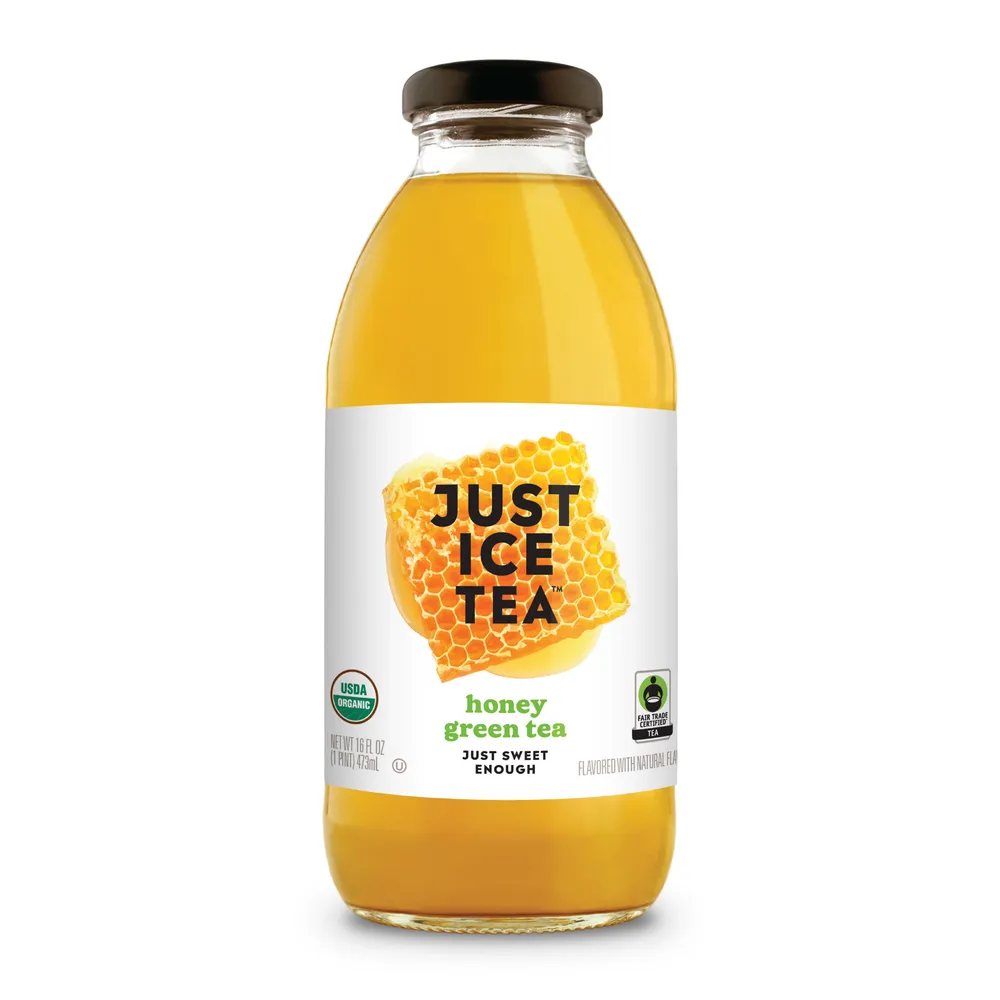
- Honey Green Tea (16 Oz.: $42.80)
- Lemon Black Tea (12 Oz.: $32.99)
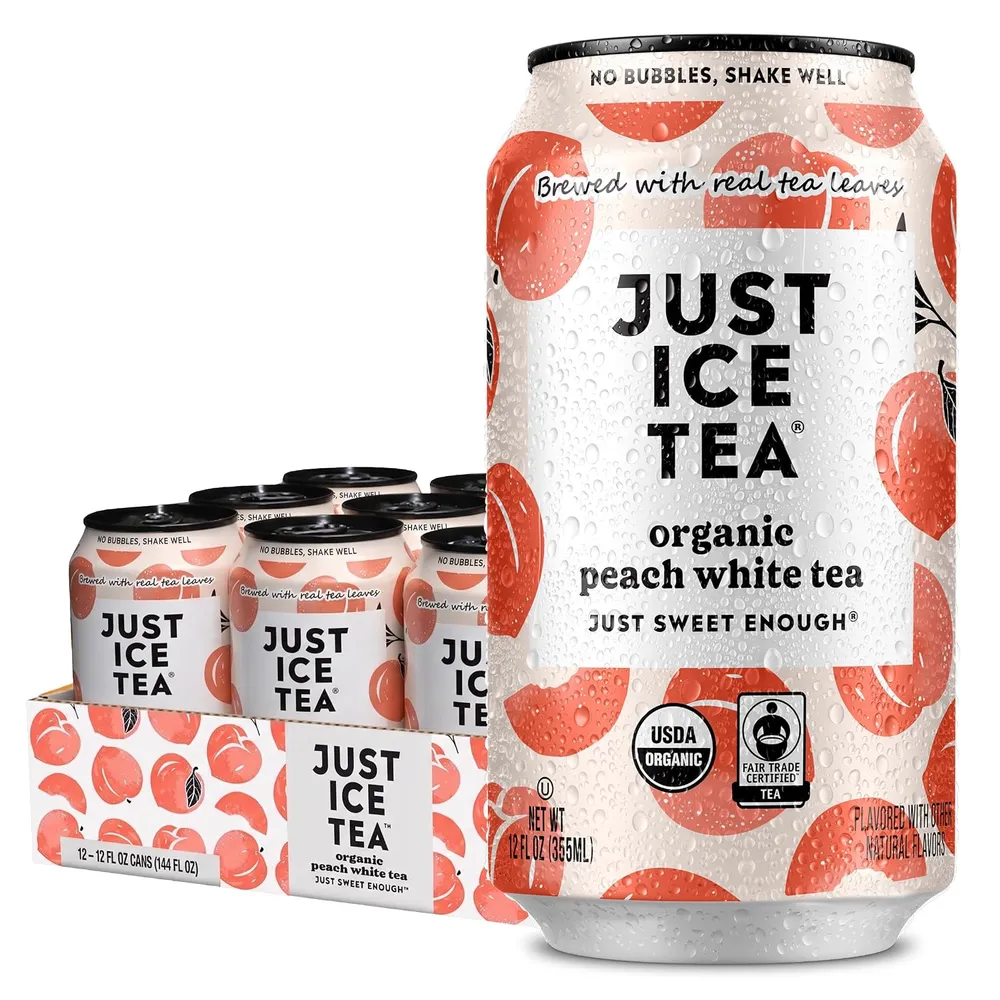
- Peach White Tea (12 Oz.: $32.99)
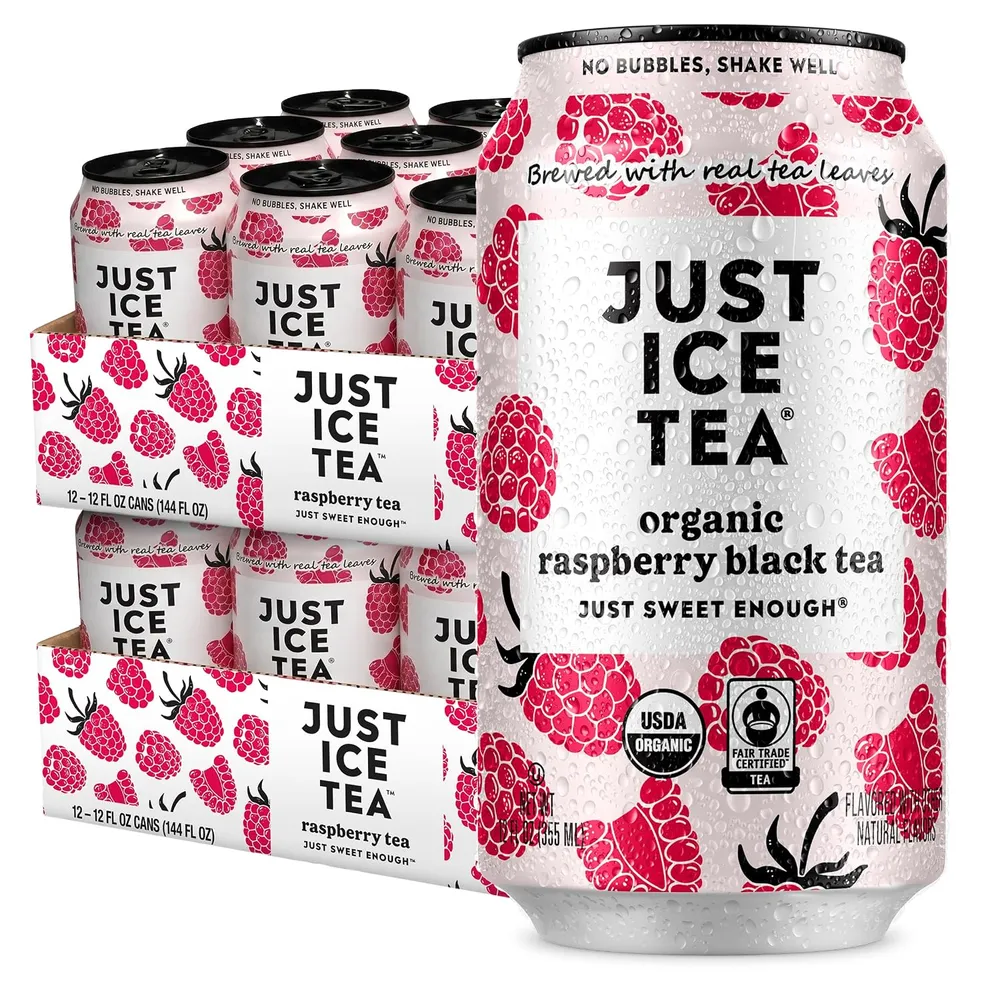
- Raspberry Black Tea (12 Oz.: $32.99)
Sweet Tea for Label Readers
If you want an iced tea built on brewed organic green tea and fair trade cane sugar, with no zero-calorie sweeteners, the Dragon Green Tea label delivers it. Follow @BevlabMedia on TikTok and Instagram for more breakdowns like this one.
References
- Zhang, Liang, et al. "Chemistry and Biological Activities of Processed Camellia sinensis Teas: A Comprehensive Review." Comprehensive reviews in food science and food safety, 2019. https://doi.org/10.1111/1541-4337.12479
- Zhao, Tiantian, et al. "Green Tea (Camellia sinensis): A Review of Its Phytochemistry, Pharmacology, and Toxicology." Molecules (Basel, Switzerland), 2022. https://doi.org/10.3390/molecules27123909
- Lorenz, Mario, et al. "Tea-induced improvement of endothelial function in humans: No role for epigallocatechin gallate (EGCG)." Scientific reports, 2017. https://doi.org/10.1038/s41598-017-02384-x
- EFSA, Panel on Food Additives and Nutrient Sources added to Food (ANS), et al. "Scientific opinion on the safety of green tea catechins." EFSA journal. European Food Safety Authority, 2018. https://doi.org/10.2903/j.efsa.2018.5239
- Lazrak, Meryem, et al. "Tea Consumption Reduces Iron Bioavailability from NaFeEDTA in Nonanemic Women and Women with Iron Deficiency Anemia: Stable Iron Isotope Studies in Morocco." The Journal of nutrition, 2021. https://doi.org/10.1093/jn/nxab159
- Misaka, S, et al. "Green tea ingestion greatly reduces plasma concentrations of nadolol in healthy subjects." Clinical pharmacology and therapeutics, 2014. https://doi.org/10.1038/clpt.2013.241
- Wu, Na, et al. "Recent advances in microbial production of L-malic acid." Applied microbiology and biotechnology, 2022. https://doi.org/10.1007/s00253-022-12260-y
- Mescam, Muriel, et al. "Identification of the catalytic mechanism and estimation of kinetic parameters for fumarase." The Journal of biological chemistry, 2011. https://doi.org/10.1074/jbc.m110.214452
- Qiang, Fu. "Effect of Malate-oligosaccharide Solution on Antioxidant Capacity of Endurance Athletes." The open biomedical engineering journal, 2015. https://doi.org/10.2174/1874120701509010326
Tagged