Ryl Iced Tea with Benefits
Four flavors, zero sugar, and a modest vitamin C boost in every can.
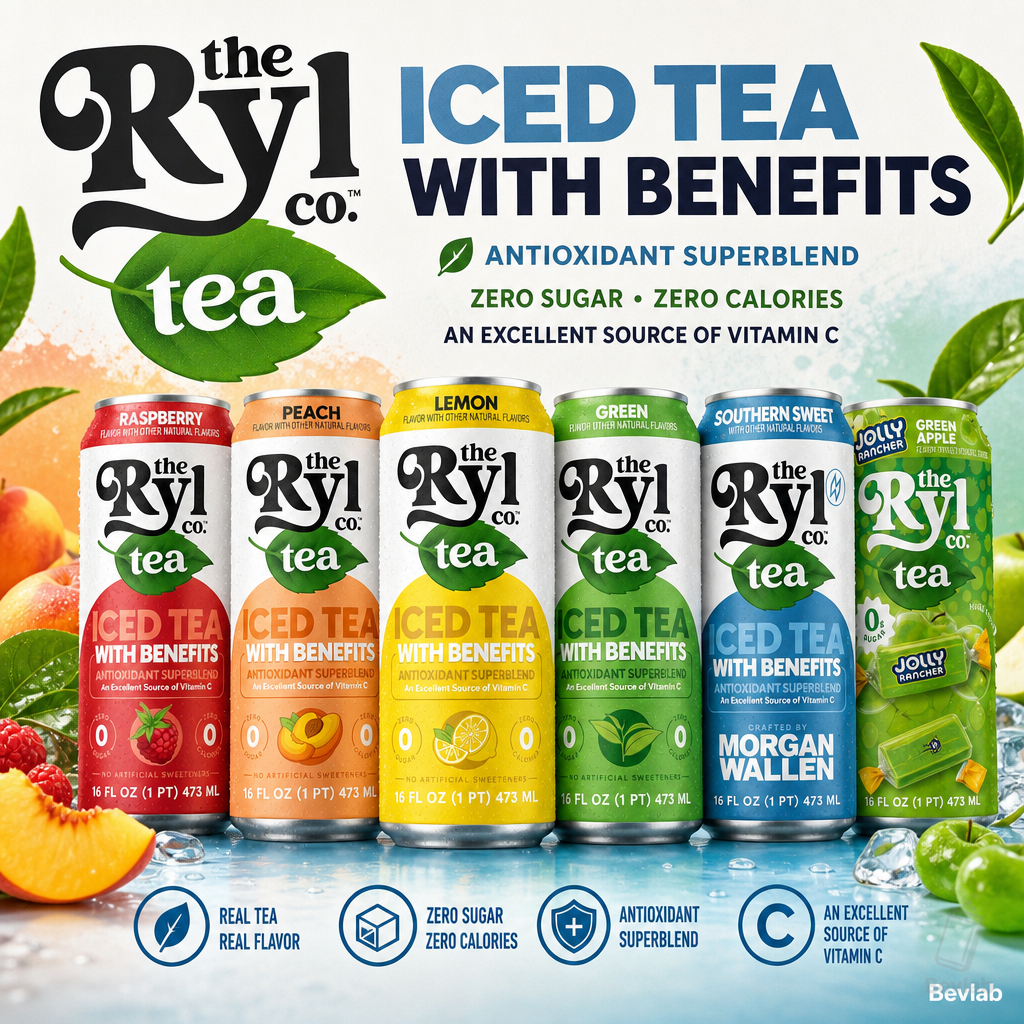
Ryl's Iced Tea with Benefits brings zero-sugar, zero-calorie iced tea positioned around an Antioxidant Superblend and some major flavor collabs.
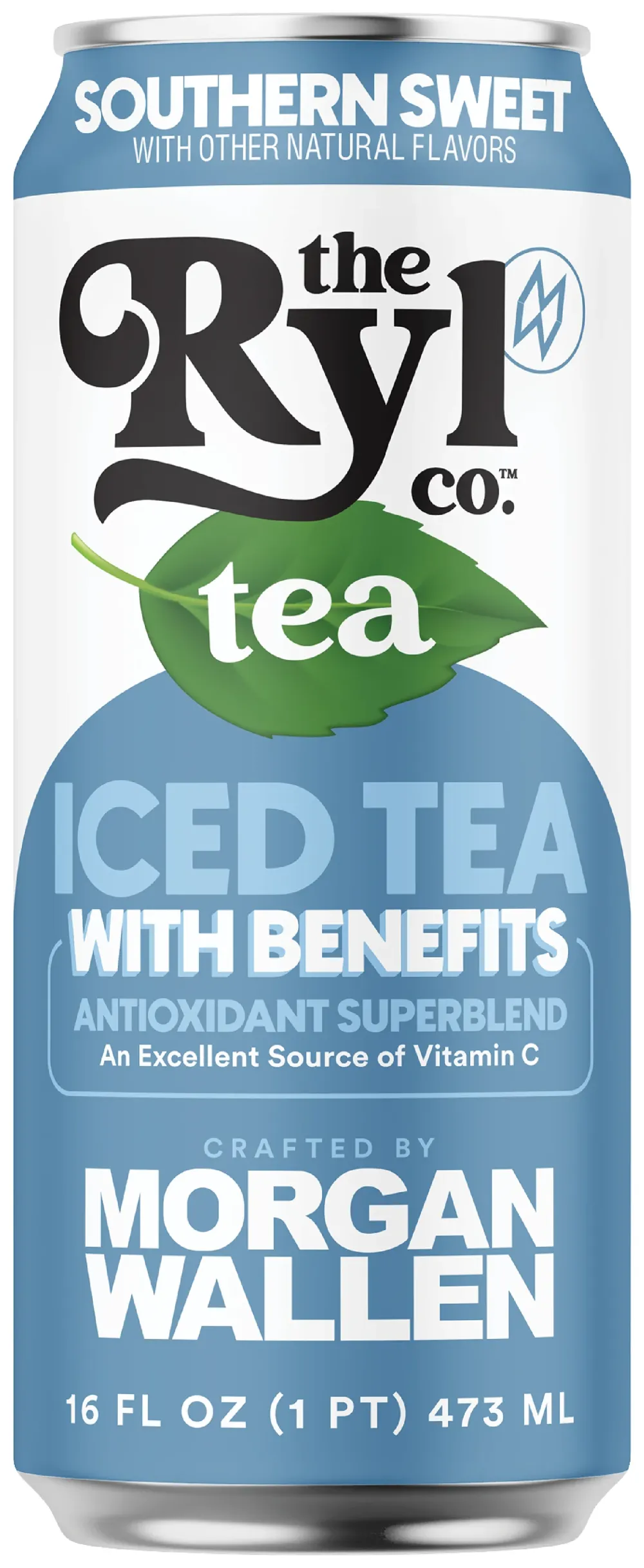
The Ryl Co's Iced Tea with Benefits is exactly what it sounds like: a zero-sugar, zero-calorie canned iced tea that leans on its "Antioxidant Superblend" label to stand out in a crowded RTD tea aisle. The line comes in several flavors, including Raspberry, Peach, Lemon, Green, a Morgan Wallen collab, and Jolly Rancher flavors, each packaged in a 16 fl oz can and built around the same short ingredient list.
The Ryl Company launched its tea lineup in January 2023, founded by Blodin Ukella, who grew up drinking tea as a home remedy in a Kosovo refugee family before turning that into a beverage company. Since then, the brand has scaled fast, closing a $15 million Series B round in 2025 and a $20 million Series C round in 2026 to push further into national retail and direct store delivery. That kind of funding trajectory usually means a brand is finding real shelf traction, and Ryl's push into Wegmans, Whole Foods, and Sprouts backs that up.
We're covering it now because we've recently spotted some new flavors -- Blueberry Citrus and Dragon Fruit -- as the line continues to expand. Let's dig in.
Ryl Iced Tea with Benefits Nutrition Facts
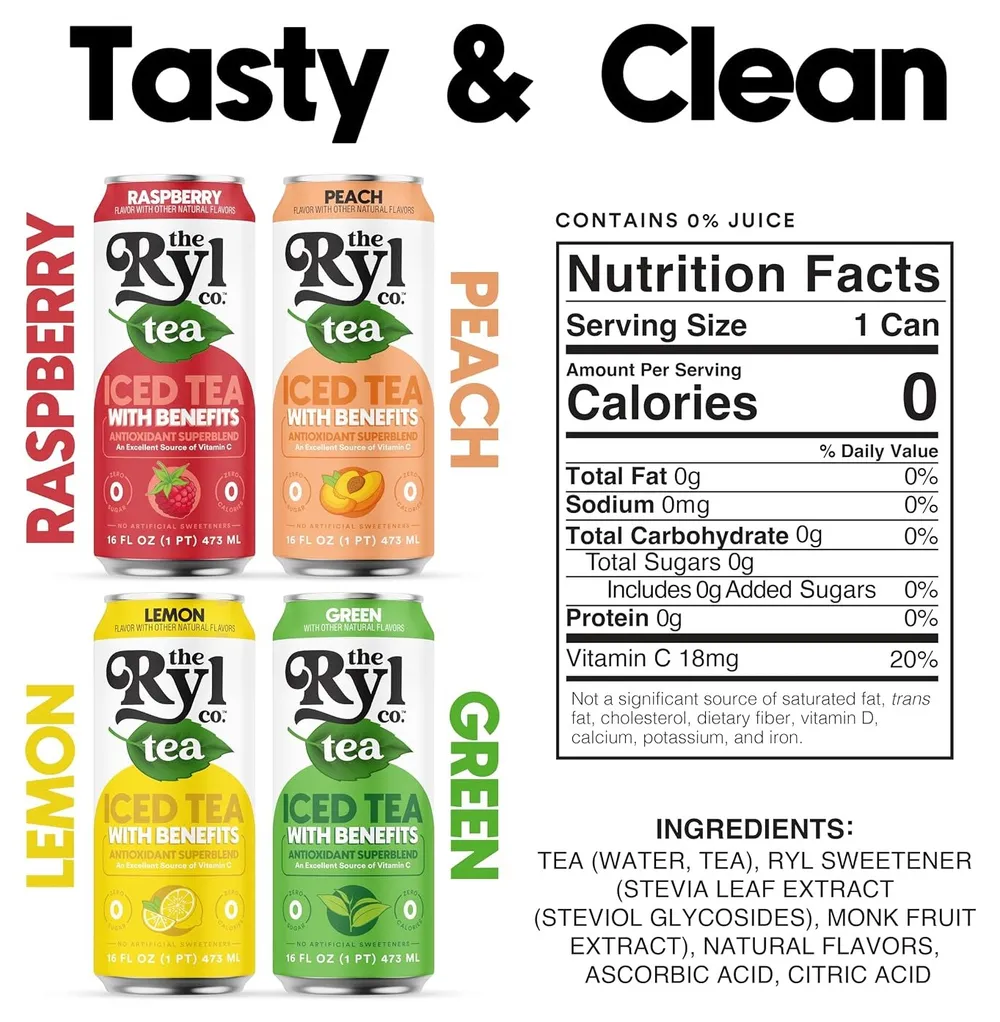
Per 16 fl oz can, the label lists:
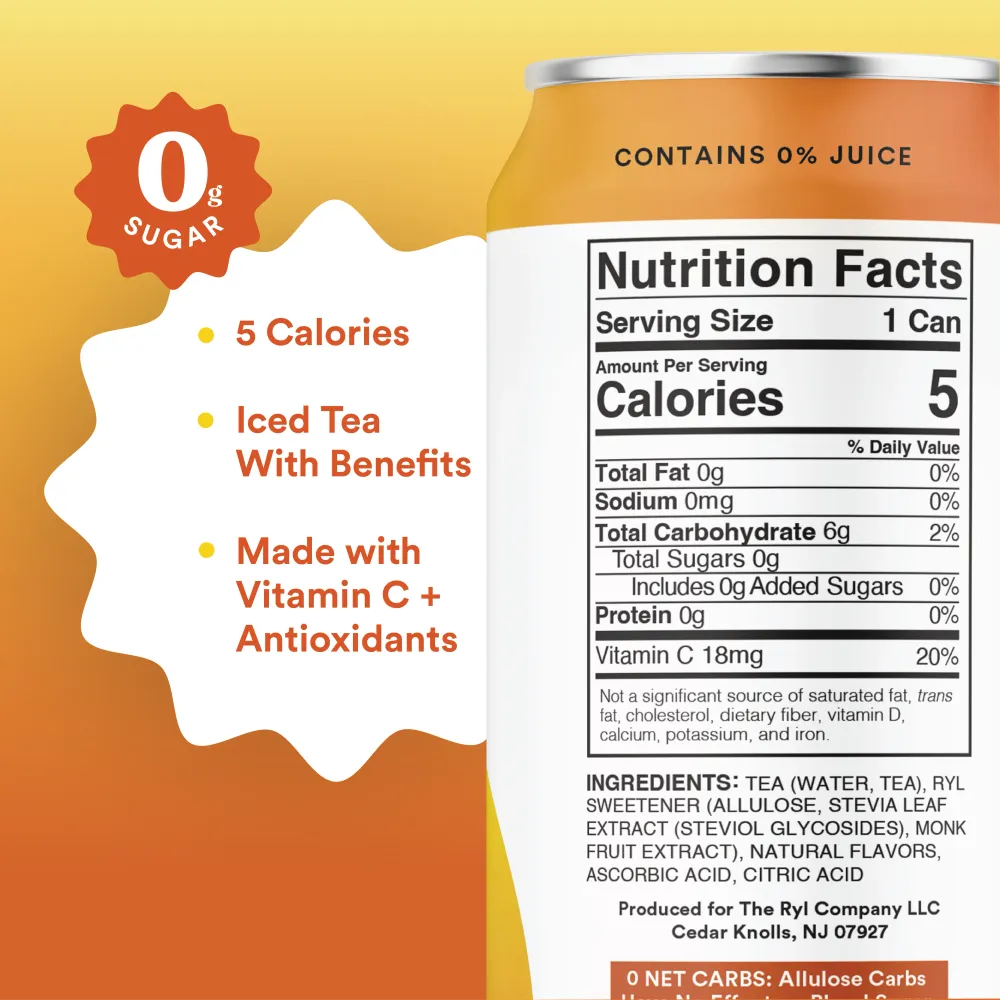
- Calories: 0
- Total Fat: 0g (0% DV)
- Sodium: 0mg (0% DV)
- Total Carbohydrate: 0g (0% DV)
- Total Sugars: 0g
- Added Sugars: 0g (0% DV)
- Protein: 0g (0% DV)
- Vitamin C: 18mg (20% DV)
That's the whole nutritional story: no calories, no sugar, and one vitamin called out on the panel. Each can also carries a small amount of naturally occurring caffeine from the tea itself, well below what you'd get from a cup of coffee or a standard Enny, and it's not something the brand is building a stimulant claim around.
Iced Tea with Benefits Ingredients
The full ingredient statement on the can reads: tea (water, tea), Ryl Sweetener (stevia leaf extract, monk fruit extract), natural flavors, ascorbic acid, and citric acid. That's a short list by RTD tea standards, and the "benefits" framing really comes down to three things worth breaking out.
-
Tea
Tea is the actual base ingredient here, and the one doing double duty as both the beverage itself and the source of whatever "Antioxidant Superblend" chemistry the can is built around. The label just lists it as tea (water, tea), with no single-origin varietal or processing style called out, but white, green, and black tea all come from the same plant, Camellia sinensis, and differ mainly in how much the leaves are oxidized during processing.[1]
That processing step matters chemically. Green tea is left unoxidized, which keeps its catechins and other polyphenols close to their fresh-leaf state.[2] White tea uses the youngest buds and leaves with the lightest processing of the three, and one lab comparison found it delivered the highest catechin content and the best simulated intestinal bioavailability of the group.[3] Black tea is fully oxidized, converting much of that catechin content into theaflavins and thearubigins, which are a different, but still well-studied, polyphenol profile.[1]
The human research on tea polyphenols is broad. A 2025 review of black tea clinical trials linked regular consumption to improved endothelial and vascular function, largely attributed to antioxidant and anti-inflammatory activity.[4] A separate systematic review of tea's bioactive compounds (caffeine and L-theanine among them) found small but consistent improvements in mood and cognitive performance in the hours after intake.[5]
None of that translates into a specific number on Ryl's can, though. Tea here is a brewed base ingredient, not a standardized extract with a declared catechin or polyphenol dose, so there's no clean way to size up how much of this research applies to a given serving. Some antioxidant contribution from the tea itself is a reasonable expectation, but the vitamin C addition below is the only piece of the "Superblend" story that actually comes with a number on the label.
-
Vitamin C (from Ascorbic Acid) - 18mg (20% DV)
Vitamin C, listed on the can as ascorbic acid, is the actual ingredient behind the "Antioxidant Superblend" name. It works as an electron donor and enzyme cofactor, supporting reactions involved in collagen formation and gene regulation while also feeding directly into immune cell function.[6,7] The synthetic ascorbic acid used in a can like this is chemically identical to the vitamin C found in fruit, and human studies generally show no meaningful difference in how well the body absorbs and uses it.[8]
It's worth being clear-eyed about the dose here. At 18mg (20% DV), this can is a solid contribution toward daily vitamin C needs, but it's nowhere near the doses used in clinical research on immune outcomes. The meta-analysis showing a 15% reduction in common cold severity used at least 1 gram per day.[9] That's more than 50 times what's in this can, so think of the 18mg here as a modest daily top-up, not a functional immune dose.
-
Citric Acid
Citric acid is doing flavor and shelf-stability work more than anything else. It's the same compound that gives lemons and limes their sourness, occurring naturally at concentrations up to roughly 48g/L in fresh lemon juice.[10] In a formula like this, it's used as an acidulant to balance sweetness and stabilize pH, which is standard practice across the RTD tea category. Citric acid also carries GRAS status and is produced industrially at massive scale through fermentation.[11] That makes its use here entirely unremarkable from a safety standpoint.
It's also worth noting that citric acid is a central compound in the body's own energy metabolism, forming the starting point of the citric acid cycle that mitochondria use to generate cellular energy.[12] That's a fact about the molecule, not a functional claim about this can. At flavoring-level amounts, citric acid in a canned tea isn't dosed to influence that pathway. Its job here is taste and stability.
-
Natural Flavors
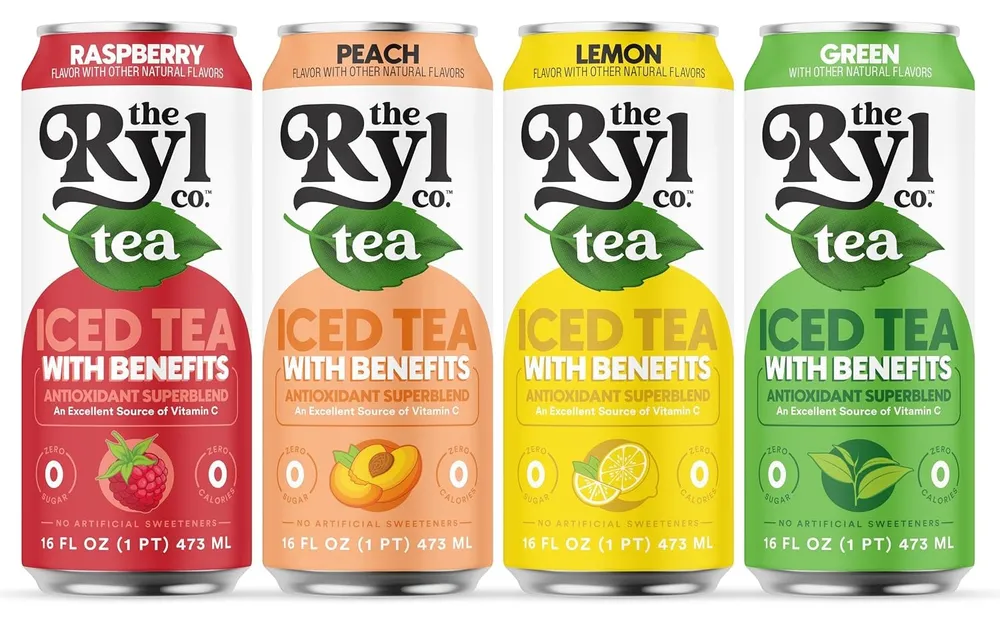
Natural flavors is a broad regulatory category covering flavor compounds sourced from plant, animal, or fermentation origins, and it's one of the most common entries on any beverage label.[13] In Ryl's case, natural flavors give each variant its distinct Raspberry, Peach, Lemon, or Green character on top of the base tea. The individual compounds inside a "natural flavors" declaration go through extensive industry safety vetting before they're used, with hundreds of natural flavor complexes formally reviewed and affirmed as GRAS by expert panels.[14,15]
Consumer research also shows that shoppers consistently rate products labeled with natural flavors as more "natural" than those using artificial flavors, even when the underlying chemistry is similar.[16] That perception is part of why a brand positioning itself as clean and simple, like Ryl, leans on natural flavors rather than artificial ones. It's a labeling and sourcing choice more than a functional one.
-
Other Ingredients
- Water - the base for brewing the tea.
- Ryl Sweetener (Stevia Leaf Extract (Steviol Glycosides) and Monk Fruit Extract) - the zero-calorie, plant-derived sweetener system that replaces sugar across the line. Some Ryl flavors list allulose as an additional part of this sweetener blend on their official nutrition graphics, though that's not universal across every variety. This can's label lists only stevia leaf extract and monk fruit extract.
Flavors Available
Iced Tea with Benefits comes in four core flavors (Raspberry, Peach, Lemon, and Green), plus a growing lineup of collabs and the new flavors mentioned above. All four core flavors share the same base formula and nutrition profile, with natural flavors doing the work of differentiating each one.
- Black Tea - Unsweetened (12 Cans: $23.64)
- Blueberry Citrus (12 Cans: $29.99)
- Dragon Fruit (12 Cans: $29.99)
- Green (12 Cans: $29.99)
- Green Citrus (12 Cans: $26.28)
- Half & Half (12 Cans: $21.24)
- Jolly Rancher - Blue Raspberry (12 Cans: $22.46)
- Jolly Rancher - Cherry (12 Cans: $29.99)
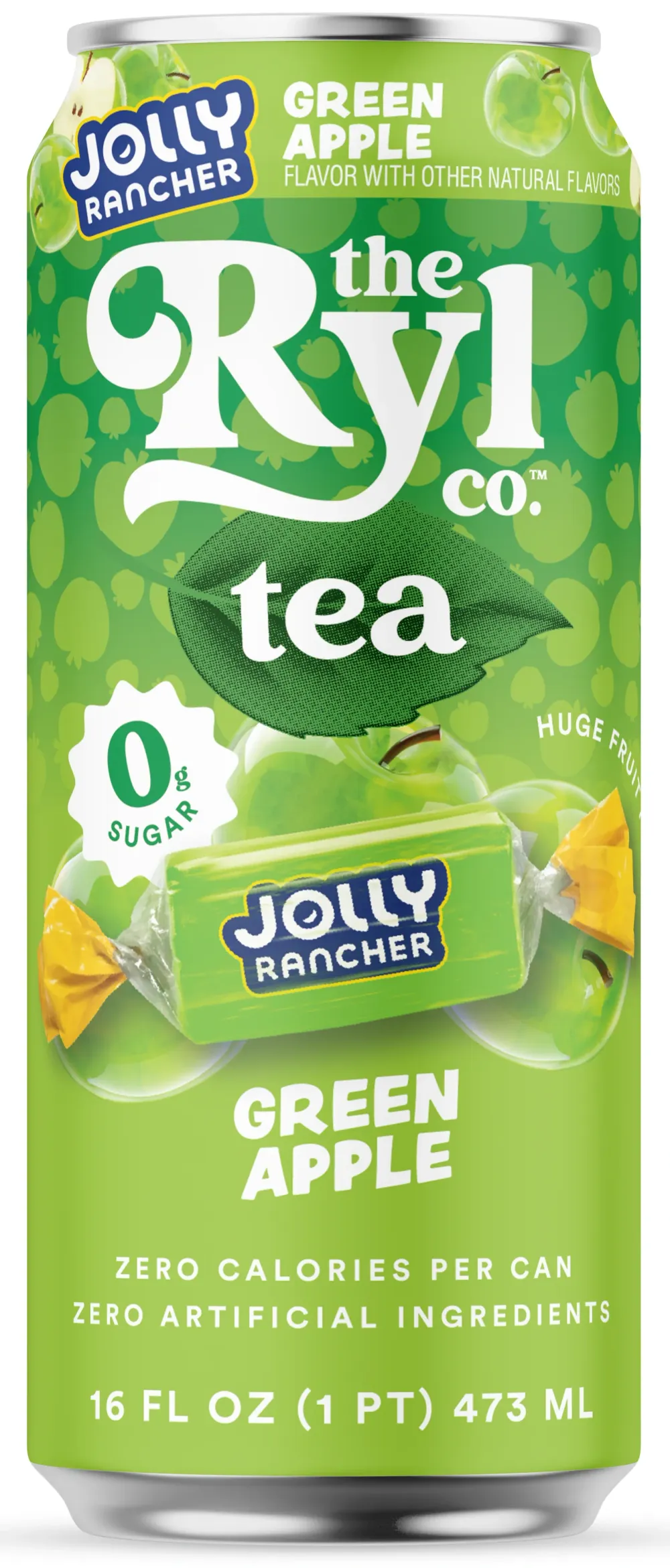
- Jolly Rancher - Green Apple (12 Cans: $26.28)
- Lemon (12 Cans: $29.99)
- Peach (12 Cans: $21.24)
- Raspberry (12 Cans: $23.64)
- Rocket Pop (12 Cans: $26.28)
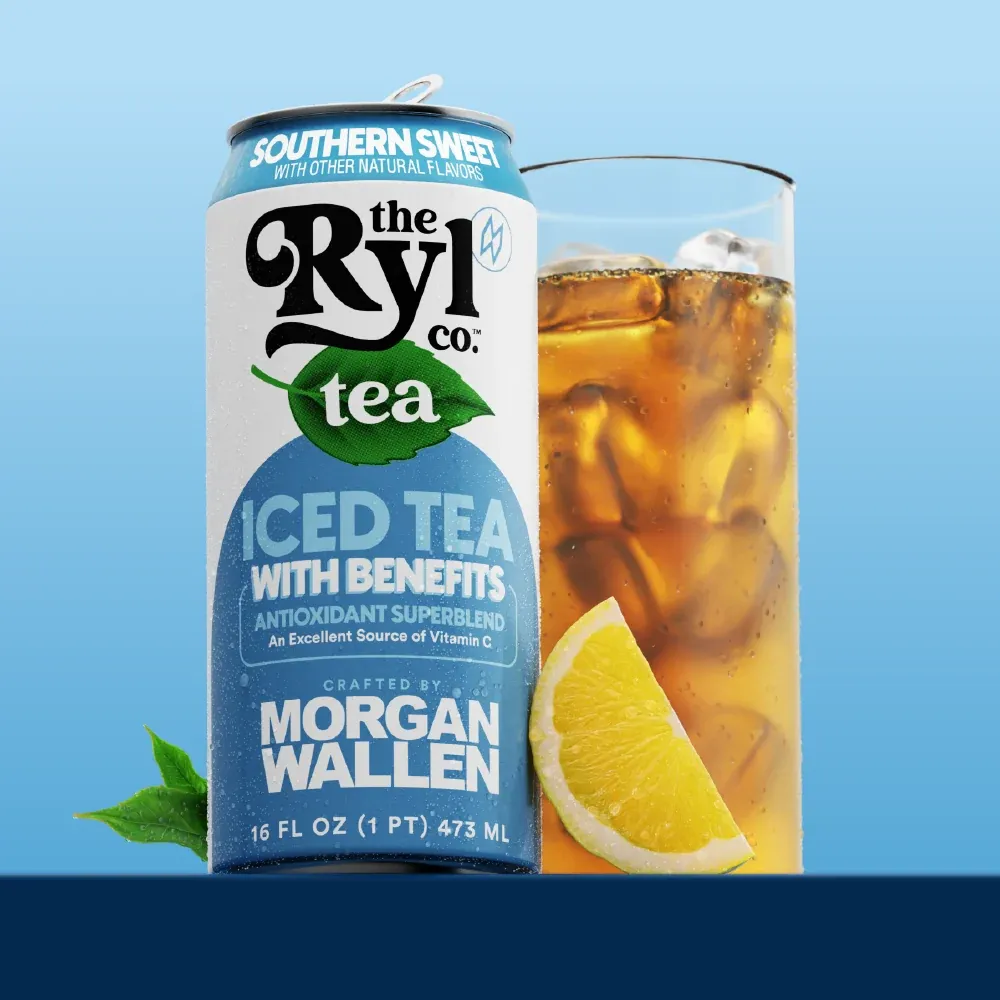
- Southern Sweet Tea (crafted by: Morgan Wallen) (12 Cans: $23.64)
- Variety Pack (12 Cans: $23.64)
- Watermelon (12 Cans: $23.07)
Who It's For
- Zero-sugar tea drinkers: If you want the ritual of iced tea without any sugar or calories, this hits that brief cleanly, and the ingredient list is short enough to actually read.
- Light caffeine sippers: With only the tea's naturally occurring caffeine and no added stimulants, this is built for people who want flavor and a small vitamin C boost without an energy-drink-level jolt.
A Clean Can With One Real Functional Ingredient
Ryl's Iced Tea with Benefits is a well-made, zero-sugar tea with a short, legible ingredient list and a modest but genuine vitamin C boost, not a loaded functional stack. It's built for anyone who wants a clean, sugar-free iced tea that still tastes like actual fruit, no stimulant math required.
Follow @BevlabMedia on TikTok and Instagram for more can-by-can breakdowns.
References
- Zhang, Liang, et al. "Chemistry and Biological Activities of Processed Camellia sinensis Teas: A Comprehensive Review." Comprehensive reviews in food science and food safety, 2019. https://doi.org/10.1111/1541-4337.12479
- Zhao, Tiantian, et al. "Green Tea (Camellia sinensis): A Review of Its Phytochemistry, Pharmacology, and Toxicology." Molecules (Basel, Switzerland), 2022. https://doi.org/10.3390/molecules27123909
- Tenore, Gian Carlo, et al. "Simulated gastrointestinal digestion, intestinal permeation and plasma protein interaction of white, green, and black tea polyphenols." Food chemistry, 2015. https://doi.org/10.1016/j.foodchem.2014.08.006
- Yilmaz, Yusuf. "Health-Promoting Effects of Black Tea: A Narrative Review of Clinical Trials." International journal of food science, 2025. https://doi.org/10.1155/ijfo/8560718
- Payne, Edward R, et al. "Effects of Tea (Camellia sinensis) or its Bioactive Compounds l-Theanine or l-Theanine plus Caffeine on Cognition, Sleep, and Mood in Healthy Participants: A Systematic Review and Meta-Analysis of Randomized Controlled Trials." Nutrition reviews, 2025. https://doi.org/10.1093/nutrit/nuaf054
- Carr, Anitra, et al. "Vitamin C And Immune Function." Nutrients, 2017. https://doi.org/10.3390/nu9111211
- Lykkesfeldt, Jens, et al. "The pharmacology of vitamin C." Pharmacological reviews, 2025. https://doi.org/10.1016/j.pharmr.2025.100043
- Carr, Anitra C, et al. "Synthetic or food-derived vitamin C-are they equally bioavailable?." Nutrients, 2013. https://doi.org/10.3390/nu5114284
- Hemilä, Harri, et al. "Vitamin C reduces the severity of common colds: a meta-analysis." BMC public health, 2023. https://doi.org/10.1186/s12889-023-17229-8
- Penniston, Kristina L, et al. "Quantitative assessment of citric acid in lemon juice, lime juice, and commercially-available fruit juice products." Journal of endourology, 2008. https://doi.org/10.1089/end.2007.0304
- Książek, Ewelina. "Citric Acid: Properties, Microbial Production, and Applications in Industries." Molecules (Basel, Switzerland), 2023. https://doi.org/10.3390/molecules29010022
- Vesnina, Anna, et al. "Citric Acid Cycle Genes and Nutrigenetics." International journal of molecular sciences, 2026. https://doi.org/10.3390/ijms27052360
- Singh, Nidhi, et al. "Natural food flavours: a healthier alternative for bakery industry-a review." Journal of food science and technology, 2024. https://doi.org/10.1007/s13197-023-05782-4
- Rosol, Thomas J, et al. "FEMA GRAS assessment of natural flavor complexes: Lemongrass oil, chamomile oils, citronella oil and related flavoring ingredients." Food and chemical toxicology : an international journal published for the British Industrial Biological Research Association, 2023. https://doi.org/10.1016/j.fct.2023.113697
- Davidsen, Jeanne M, et al. "FEMA GRAS assessment of natural flavor complexes: Asafetida oil, garlic oil and onion oil." Food and chemical toxicology : an international journal published for the British Industrial Biological Research Association, 2023. https://doi.org/10.1016/j.fct.2022.113580
- Murley, Tyler, et al. "The Influence of Colorants, Flavorants and Product Identity on Perceptions of Naturalness." Foods (Basel, Switzerland), 2019. https://doi.org/10.3390/foods8080317
Tagged