MET-Rx 44g High Protein Shake
44 grams of protein, six grams of fiber, and 2,300–2,500mg of electrolytes depending on flavor.
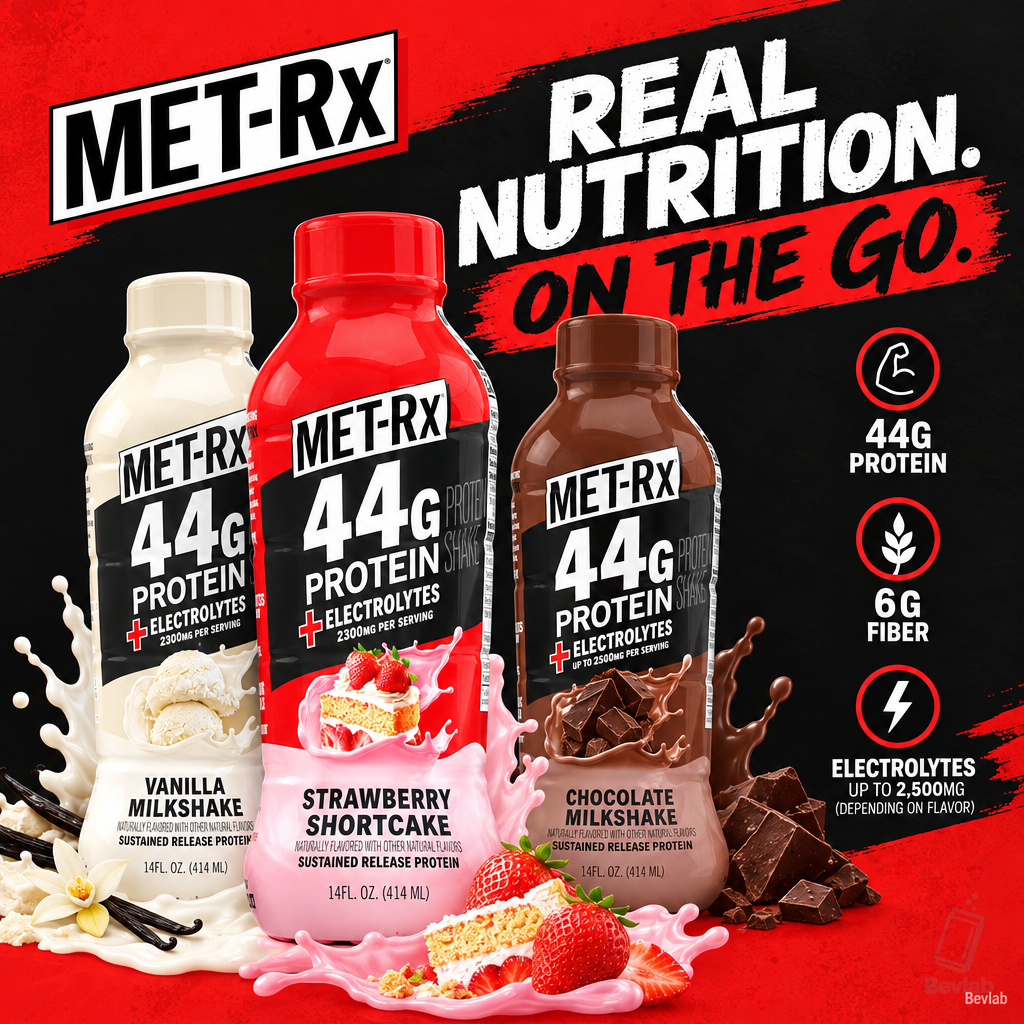
MET-Rx returns to ready-to-drink protein with 44g of protein and 6g of fiber per bottle, plus flavor-specific electrolyte totals that reach up to 2,500mg.
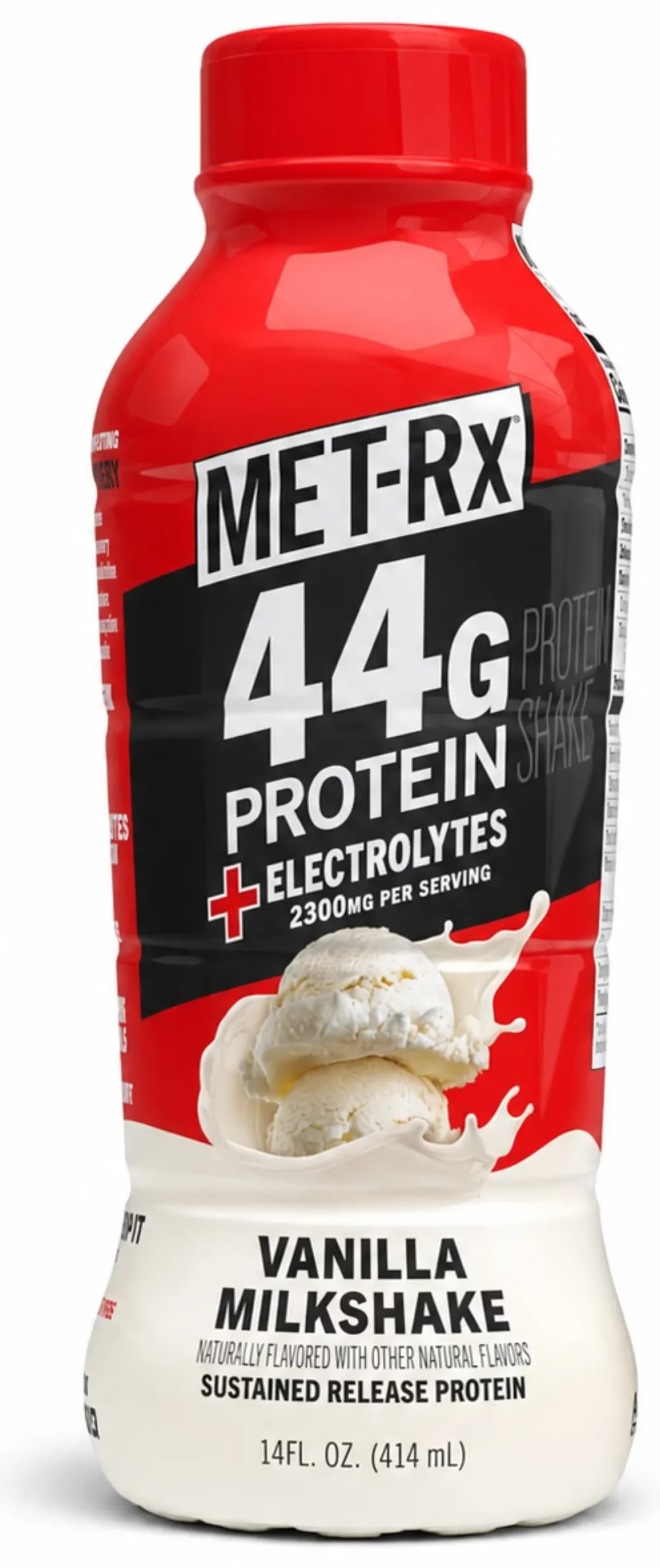
MET-Rx has spent over three decades as a bar-and-powder brand built on gym culture and protein bragging rights, and the RTD case isn't unfamiliar territory for the brand. In September 2026, MET-Rx returned to the ready-to-drink shelf with the MET-Rx 44g High Protein Shake, launching in three flavors: Vanilla Milkshake, Strawberry Shortcake, and Chocolate Milkshake. The line's core pitch is 44 grams of protein, 6 grams of fiber, and a batch of electrolytes in a grab-and-go bottle instead of powder and a shaker; the Vanilla Milkshake label we verified comes in at 250 calories.
The launch leans hard on John Cena, MET-Rx's longtime brand ambassador and the face of its ongoing "Level-Up" campaign. "MET-Rx remains my go-to for recovery after any tough workout," Cena said around the launch. "The new 44g shake packs high protein with fiber and electrolytes for recovery, making it easier than ever to get the protein and essential nutrients I need." That's the marketing pitch. What actually backs it up is the label, so that's where we're headed.
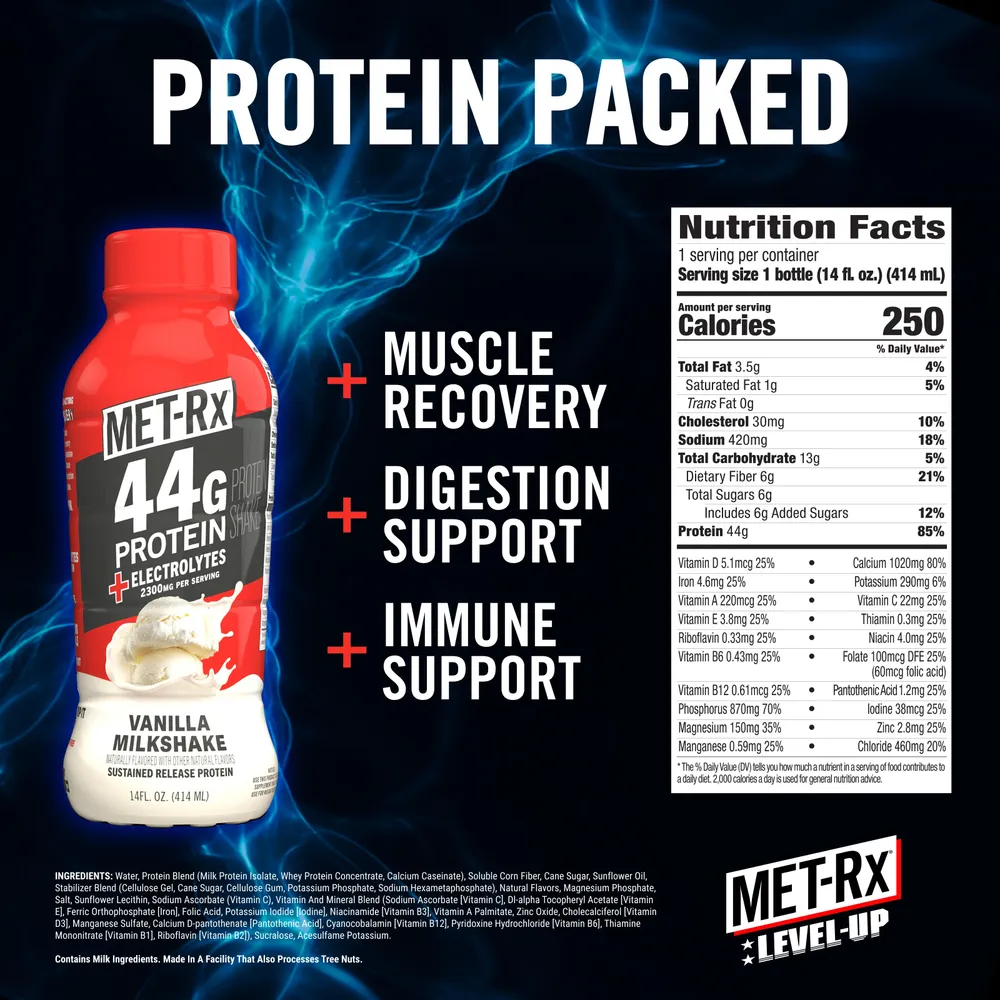
MET-Rx 44g High Protein Shake Nutrition Facts (Vanilla Milkshake)
- Calories: 250
- Total Fat: 3.5g (4%DV)
- Saturated Fat: 1g (5%DV)
- Trans Fat: 0g
- Cholesterol: 30mg (10%DV)
- Sodium: 420mg (18%DV)
- Total Carbohydrate: 13g (5%DV)
- Dietary Fiber: 6g (21%DV)
- Total Sugars: 6g
- Added Sugars: 6g (12%DV)
- Protein: 44g (85%DV)
- Calcium: 1020mg (80%DV)
- Phosphorus: 870mg (70%DV)
- Magnesium: 150mg (35%DV)
- Chloride: 460mg (20%DV)
- Vitamin C: 22mg (25%DV)
- Vitamin D: 5.1mcg (25%DV)
- Iron: 4.6mg (25%DV)
- Potassium: 290mg (6%DV)
That's alongside a full spread of B-vitamins and a few trace minerals, all covered in detail below.
MET-Rx 44g High Protein Shake Ingredients
Each 14 fl oz (414mL) bottle provides the following:
-
Water
Water opens the ingredient list, as it does on virtually every RTD shake, and here it's doing more than just diluting the protein blend. A single 414mL bottle contributes meaningfully toward daily fluid needs, and water itself isn't a passive filler ingredient, it's an active participant in nutrient transport, thermoregulation, and the enzymatic reactions your body runs on constantly.[1] For someone drinking this after a workout, fluid intake matters as much as the protein: even mild dehydration in the 1-2% body weight range can blunt concentration and physical performance.[2] A practical hydration rule of thumb is roughly 1mL of water per kcal of energy expenditure, and a 250-calorie bottle like this one contributes a reasonable chunk toward that target without adding much volume to your day.[3]
-
Protein Blend (Milk Protein Isolate, Whey Protein Concentrate, Calcium Caseinate) - 44g protein (85%DV)
Protein Blend is where this shake earns its name. MET-Rx lists three protein sources on the label, and the brand markets the combination as "Sustained Release Protein." That's not just a marketing line: whey protein concentrate digests relatively fast, delivering an early wave of amino acids into your bloodstream, while calcium caseinate clots in the stomach and releases amino acids more slowly over several hours. Milk protein isolate sits in between, since it's essentially concentrated whole milk protein made up of roughly 80% casein and 20% whey. Combining all three is a standard approach for a recovery shake meant to be consumed once and left alone, rather than sipped alongside a meal. The label doesn't break out how many grams come from each individual source, but together they add up to 44g of protein per bottle, a substantial dose for a 250-calorie beverage.
-
Soluble Corn Fiber
Soluble Corn Fiber appears prominently in the ingredient list alongside a label total of 6g Dietary Fiber and the "digestion support" claim MET-Rx prints on the bottle; the label does not disclose how much of that fiber comes from soluble corn fiber versus the cellulose-based stabilizers. It's a digestion-resistant glucose polymer derived from corn starch, meaning most of it survives the small intestine intact and reaches the colon, where gut bacteria ferment it into short-chain fatty acids.[4] Human feeding trials using comparable soluble corn fiber products, typically in the 10-25g/day range, have found it increases beneficial Bifidobacterium populations and lowers fecal pH without major gastrointestinal distress at moderate intakes.[5] Tolerance testing has found soluble corn fiber well tolerated even at doses well above a single bottle's contribution here, with gas and bloating being the main limiting factors as intake climbs.[6] There's also evidence tying soluble corn fiber to modestly improved calcium absorption in some populations, a nice complement to a shake also delivering 80% of daily calcium.[7] The ingredient order is consistent with a meaningful contribution from soluble corn fiber, but the exact amount is not disclosed.
-
Sunflower Oil
Sunflower Oil shows up in a small amount to help carry the shake's 3.5g of total fat and 1g of saturated fat, and likely plays a role in mouthfeel alongside the sunflower lecithin further down the label. Conventional sunflower oil is high in linoleic acid, a polyunsaturated omega-6 fat, and swapping saturated fat for polyunsaturated fat like this has been shown in controlled feeding trials to lower LDL cholesterol.[8] This isn't a fat-forward product, though, and sunflower oil here is functioning more as a texture ingredient than a headline nutritional contributor. In diet-comparison studies, sunflower-oil-rich diets have generally performed similarly to, though not always better than, monounsaturated-fat-rich diets on cholesterol markers.[9] At the amount present in a single bottle, its job is texture and stability rather than delivering a meaningful dose of any particular fatty acid.
-
Natural Flavors
Natural Flavors supplies the vanilla milkshake taste in this bottle (or strawberry shortcake and chocolate milkshake, depending on which flavor you grab) without contributing meaningful nutrition. Under FDA rules, "natural flavor" just means the flavoring compound is derived from a plant, animal, or fermentation source rather than synthesized from scratch. It doesn't guarantee the flavor tastes like a specific named dessert, and it doesn't tell you much about the exact compounds inside the blend.[10] Natural flavor complexes used in commercial beverages go through industry and regulatory safety review before reaching market, and this ingredient category carries no known safety flags.[11]
-
Magnesium (as Magnesium Phosphate) - 150mg (35%DV)
Magnesium shows up here as Magnesium Phosphate, and at 150mg per bottle it covers 35% of the daily value, a generous dose for a beverage. Magnesium is a cofactor in more than 300 enzymatic reactions in the body, spanning energy metabolism, muscle contraction, and nerve signaling.[12] It's also a commonly researched mineral for post-exercise recovery: a systematic review of supplementation studies found magnesium generally reduced perceived muscle soreness and improved subjective recovery after exercise, though optimal form, dose, and timing are still being worked out.[13] In one controlled trial, magnesium glycinate at 350mg/day for 10 days meaningfully reduced soreness after eccentric exercise compared to placebo, a similar range to what a couple of bottles of this shake would provide.[14] Salt form does matter for absorption in some cases, since inorganic forms like magnesium oxide tend to be less bioavailable than organic salts, though magnesium phosphate isn't singled out for a special bioavailability advantage either way in the research.[15]
-
Salt
Salt is the source of most of the shake's sodium, and it's central to MET-Rx's "+ electrolytes" callout on the front label. The Vanilla Milkshake bottle lists 420mg of sodium (18%DV) and 460mg of chloride (20%DV) on the Nutrition Facts panel, both coming primarily from added salt. Sodium drives extracellular fluid balance in the body, and unlike plain water, sodium-containing beverages help the body actually retain fluid rather than just passing it through.[16] That's relevant for a shake positioned around post-workout recovery, since sweat losses are hypotonic relative to blood, and replacing sodium alongside fluid is part of what makes a beverage genuinely rehydrating rather than just wet.[17] Sodium also plays a role in taste, since it's a well-documented bitterness suppressor, which likely helps this shake's milk-protein base taste more like a milkshake and less like a chalky protein blend.[18] The electrolyte claim varies by flavor. The Vanilla Milkshake and Strawberry Shortcake bottles list 2,300mg of electrolytes per serving, while the brand's launch materials for the Chocolate Milkshake flavor cite up to 2,500mg, so don't assume every bottle in the lineup hits the same number.
-
Sunflower Lecithin
Sunflower Lecithin is doing quiet formulation work in a protein-dense RTD shake like this one, even though it never gets a callout on the front label. As a natural emulsifier, it helps keep the sunflower oil, the milk proteins, and the water phase from separating on the shelf, and it plays a specific role in protecting whey and casein proteins from clumping when the shake is heat-processed for shelf stability. Lecithin binds to hydrophobic patches on heat-denatured whey protein and prevents them from aggregating into the kind of gritty texture that would otherwise show up in a shelf-stable, non-refrigerated protein beverage.[19] Sunflower-derived lecithin performs this job just as well as more common soy lecithin in controlled dairy emulsion studies, without relying on soy-derived lecithin to do it.[20] Modified and hydrolyzed forms of sunflower lecithin tend to outperform the native form for this kind of heat stabilization, though the label doesn't specify which form is used here.[21]
-
Vitamin C (as Sodium Ascorbate) - 22mg (25%DV)
Vitamin C appears twice in the ingredient list, once as standalone Sodium Ascorbate and again inside the Vitamin and Mineral Blend, and together they add up to 22mg per bottle, 25% of the daily value. That's a moderate dose, well below the 1 gram or more used in cold-severity research, but enough to meaningfully contribute toward daily needs alongside a normal diet.[22] Vitamin C functions as both an antioxidant and an enzyme cofactor, supporting collagen-related chemistry and a range of immune cell functions including neutrophil activity and epithelial barrier maintenance, which lines up with the "+ immune support" claim MET-Rx prints on the bottle.[23] Sodium ascorbate is simply the sodium salt form of ascorbic acid rather than a functionally different compound, and comparative pharmacokinetic work hasn't found the form itself to be a major differentiator for absorption.[24] At 22mg, this shake contributes a helpful but modest slice of daily vitamin C, not a replacement for a supplement or a piece of citrus.
-
Vitamins and Minerals
The Vitamin and Mineral Blend and standalone additions round out the label with roughly two dozen vitamins and minerals, most landing at a consistent 25% of the daily value.
-
B-Complex Vitamins - 25%DV each
The blend supplies a full spread of B-vitamins, each landing near 25% of the daily value: Thiamin (0.3mg), Riboflavin (0.33mg), Niacin (4.0mg), Vitamin B6 (0.43mg), Folate (100mcg DFE, including 60mcg as folic acid), Vitamin B12 (0.61mcg), and Pantothenic Acid (1.2mg). This is a standard fortification approach. B-vitamins are water-soluble cofactors for energy metabolism, and stacking them at a consistent 25%DV is common across fortified beverages and protein powders rather than a sign of any unusual dosing strategy.
-
Calcium and Phosphorus - 1020mg (80%DV) and 870mg (70%DV)
Calcium and Phosphorus are the two largest numbers on this label by percent daily value, and neither comes from an isolated mineral additive. Both occur naturally as part of the dairy protein blend, since calcium caseinate contributes substantial calcium, and the phosphate-based stabilizers used further down the ingredient list. A shake delivering 80% of daily calcium alongside 44g of protein is a meaningful nutritional bonus, particularly for anyone who doesn't drink much dairy otherwise.
-
Vitamin D, Vitamin A, and Vitamin E - 25%DV each
Rounding out the fat-soluble vitamins, the blend adds Vitamin D (5.1mcg as cholecalciferol), Vitamin A (220mcg as Vitamin A Palmitate), and Vitamin E (3.8mg as DL-alpha Tocopheryl Acetate), each near 25% of the daily value. These are standard fortification forms used broadly across the food and supplement industry, dosed consistently with what you'd see in a typical fortified protein product.
-
Trace Minerals: Iron, Zinc, Iodine, and Manganese
The blend also covers four trace minerals near 25%DV each: Iron (4.6mg as Ferric Orthophosphate), Zinc (2.8mg as Zinc Oxide), Iodine (38mcg as Potassium Iodide), and Manganese (0.59mg as Manganese Sulfate). None are dosed at a level that raises a safety flag for a healthy adult drinking one bottle a day, and they're the kind of nutrients that are easy to run short on if a diet skews heavily toward processed convenience foods. This is fortification for baseline coverage, not a targeted micronutrient intervention.
-
Potassium and Chloride
Potassium (290mg, 6%DV) and Chloride (460mg, 20%DV) round out the shake's electrolyte profile alongside the sodium discussed above. Potassium's contribution is modest relative to its daily value, so this shake shouldn't be relied on as a significant potassium source on its own, but combined with sodium and chloride it supports the "+ electrolytes" positioning MET-Rx is leaning on for this launch.
-
-
Sucralose
Sucralose is one of two non-nutritive sweeteners doing the heavy lifting on sweetness here, since with only 6g of sugar and 13g of total carbs, MET-Rx needed something else to make a 250-calorie shake taste like an actual milkshake. It's roughly 600 times sweeter than table sugar and passes through the body largely unmetabolized. The research on sucralose and blood sugar is mixed: a controlled trial giving healthy adults 15% of the acceptable daily intake for two weeks found a meaningful drop in insulin sensitivity,[25] while a larger randomized trial testing sucralose against other sweeteners found no significant changes in fasting glucose, insulin, or HbA1c after 14 days.[26] Regulatory reviewers have kept a close eye on the ingredient. The EFSA panel completed a full re-evaluation of sucralose as recently as 2025 and concluded the existing acceptable daily intake doesn't need revision, with dietary exposure under current authorized uses falling below that limit across tested population groups.[27]
-
Acesulfame Potassium
Acesulfame Potassium, often shortened to Ace-K, is paired with sucralose here, a common combination since the two sweeteners work together to produce a more sugar-like taste than either does alone and to mask the slight bitterness Ace-K can have by itself. It's roughly 150-200 times sweeter than sugar and, unlike sucralose, is absorbed almost completely and excreted unchanged in urine within 24 hours.[28] In one clinical trial testing a sucralose and Ace-K blend before a carbohydrate-rich breakfast, the combination reduced the post-meal insulin response compared to sucrose, without increasing how much people ate later in the day.[29] A comprehensive weight-of-evidence review covering regulatory data and mechanistic lab testing concluded Ace-K shows no meaningful genotoxic or carcinogenic signal across the available animal and in vitro evidence.[30] Ace-K carries an acceptable daily intake of roughly 9-15mg/kg body weight per day depending on the regulatory body, and typical multi-product daily exposure estimates for adults land well under that limit.[28]
-
Other Ingredients
- Cane Sugar - The source of the shake's 6g of sugar, all of which counts as added sugar on the label. It appears twice in the ingredient list, once on its own and once as part of the Stabilizer Blend, though the exact split between the two isn't disclosed.
- Stabilizer Blend (Cellulose Gel, Cane Sugar, Cellulose Gum, Potassium Phosphate, Sodium Hexametaphosphate) - A texture and shelf-stability system rather than a nutritional ingredient. Cellulose gel and cellulose gum are common thickeners that keep the protein suspended and prevent separation, while potassium phosphate and sodium hexametaphosphate help buffer pH and stabilize the proteins against heat processing. The small cane sugar component in this blend is already accounted for in the shake's total sugar figure above.
Flavors Available
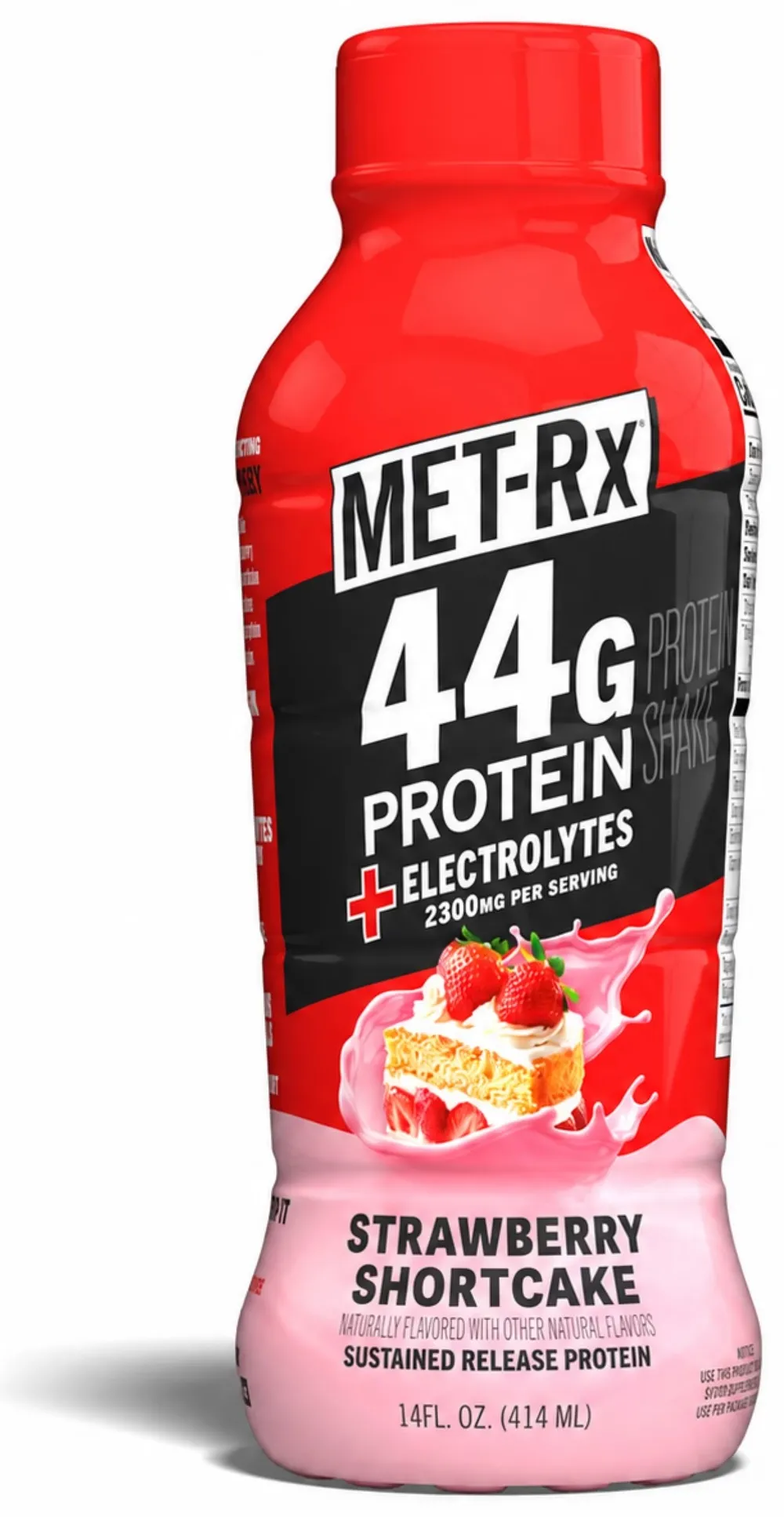
MET-Rx launched the 44g High Protein Shake in three flavors: Vanilla Milkshake, Strawberry Shortcake, and Chocolate Milkshake. The Vanilla Milkshake and Strawberry Shortcake bottles share the same 2,300mg electrolyte callout and largely overlap on formula, while the Chocolate Milkshake version swaps in cocoa processed with alkali and carries the brand's higher "up to 2,500mg electrolytes" claim from launch materials. Nutrition specifics shift slightly by flavor, so check the label on the bottle you actually grab.
- Strawberry Shortcake (1 Bottle: $3.47)
Who It's For
- Post-workout grab-and-go drinkers: If you want 44g of protein without measuring powder or washing a shaker bottle, this covers that need in about 250 calories with a meaningful fiber and calcium bonus.
- Milk-sensitive shoppers, skip it: The Protein Blend is entirely dairy-derived (milk protein isolate, whey protein concentrate, calcium caseinate), and the label explicitly flags milk ingredients, so this isn't an option for anyone avoiding dairy.
A Legit Protein Number in a Familiar RTD Package
MET-Rx isn't reinventing the ready-to-drink protein category with this launch, but the core numbers hold up: 44 grams of protein and 6 grams of fiber for around 250 calories is a genuinely efficient macro split, backed by a real vitamin and mineral spread rather than a token multivitamin gesture. The trade-offs are the usual ones for this format: sucralose and Ace-K sweetening, a stabilizer blend doing quiet work, and an electrolyte claim that shifts by flavor rather than holding steady across the line. If you're chasing a protein number without the shaker bottle, it delivers on the label. Follow @BevlabMedia on TikTok and Instagram for more RTD breakdowns.
References
- Jéquier, E, et al. "Water as an essential nutrient: the physiological basis of hydration." European journal of clinical nutrition, 2010. https://doi.org/10.1038/ejcn.2009.111
- Popkin, Barry M, et al. "Water, hydration, and health." Nutrition reviews, 2010. https://doi.org/10.1111/j.1753-4887.2010.00304.x
- Kleiner, S M. "Water: an essential but overlooked nutrient." Journal of the American Dietetic Association, 1999. https://doi.org/10.1016/S0002-8223(99)00048-6
- Abby, S Klosterbuer; Meredith A J Hullar; Fei Li; Elizabeth Traylor; Johanna W Lampe; William Thomas; Joanne L Slavin. "Gastrointestinal effects of resistant starch, soluble maize fibre and pullulan in healthy adults." Br J Nutr, 2013. https://doi.org/10.1017/s0007114513000019
- Brittany, M Vester Boler; Mariana C Rossoni Serao; Laura L Bauer; Michael A Staeger; Thomas W Boileau; Kelly S Swanson; George C Fahey Jr. "Digestive physiological outcomes related to polydextrose and soluble maize fibre consumption by healthy adult men." Br J Nutr, 2011. https://doi.org/10.1017/s0007114511002388
- B, Housez; M Cazaubiel; C Vergara; J-M Bard; A Adam; A Einerhand; P Samuel. "Evaluation of digestive tolerance of a soluble corn fibre." J Hum Nutr Diet, 2012. https://doi.org/10.1111/j.1365-277x.2012.01252.x
- Corrie, M Whisner; Berdine R Martin; Cindy H Nakatsu; Jon A Story; Claire J MacDonald-Clarke; Linda D McCabe; George P McCabe; Connie M Weaver. "Soluble Corn Fiber Increases Calcium Absorption Associated with Shifts in the Gut Microbiome: A Randomized Dose-Response Trial in Free-Living Pubertal Females." J Nutr, 2016. https://doi.org/10.3945/jn.115.227256
- Meydani, S N, et al. "Food use and health effects of soybean and sunflower oils." Journal of the American College of Nutrition, 1991. https://doi.org/10.1080/07315724.1991.10718168
- Mensink, R P, et al. "Effect of a diet enriched with monounsaturated or polyunsaturated fatty acids on levels of low-density and high-density lipoprotein cholesterol in healthy women and men." The New England journal of medicine, 1989. https://doi.org/10.1056/NEJM198908173210705
- Goodman, Matthew J. "The “Natural” vs. “Natural Flavors” Conflict in Food Labeling: A Regulatory Viewpoint." Food and drug law journal, 2017. https://pubmed.ncbi.nlm.nih.gov/29140655/
- Davidsen, Jeanne M, et al. "FEMA GRAS assessment of natural flavor complexes: Asafetida oil, garlic oil and onion oil." Food and chemical toxicology : an international journal published for the British Industrial Biological Research Association, 2023. https://doi.org/10.1016/j.fct.2022.113580
- Fatima, Ghizal, et al. "Magnesium Matters A Comprehensive Review Of Its Vital Role In Health And Diseases." Cureus, 2024. https://doi.org/10.7759/cureus.71392
- Tarsitano, Maria Grazia, et al. "Effects Of Magnesium Supplementation On Muscle Soreness In Different Type Of Physical Activities A Systematic Review." Journal of translational medicine, 2024. https://doi.org/10.1186/s12967-024-05434-x
- Reno, Alyssum M, et al. "Effects Of Magnesium Supplementation On Muscle Soreness And Performance." Journal of strength and conditioning research, 2022. https://doi.org/10.1519/JSC.0000000000003827
- Pardo, Marta R, et al. "Bioavailability of magnesium food supplements: A systematic review." Nutrition (Burbank, Los Angeles County, Calif.), 2021. https://doi.org/10.1016/j.nut.2021.111294
- O'Donnell, Martin, et al. "Sodium intake and cardiovascular health." Circulation research, 2015. https://doi.org/10.1161/CIRCRESAHA.116.303771
- Valentine, Verle. "The importance of salt in the athlete's diet." Current sports medicine reports, 2007. https://pubmed.ncbi.nlm.nih.gov/17617999/
- Roper, Stephen D. "The taste of table salt." Pflugers Archiv : European journal of physiology, 2015. https://doi.org/10.1007/s00424-014-1683-z
- McSweeney, Seamus L. et al. "Effect of lecithin and monoglycerides on the heat stability of a model infant formula emulsion." Food Hydrocolloids, 2008. https://doi.org/10.1016/j.foodhyd.2007.04.017
- Kasinos, M. et al. "Effect of hydrolysed sunflower lecithin on the heat-induced coagulation of recombined concentrated milk emulsions." International Dairy Journal, 2014. https://doi.org/10.1016/j.idairyj.2013.12.001
- Cabezas, D. M. et al. "Emulsifying Properties of Different Modified Sunflower Lecithins." Journal of the American Oil Chemists' Society, 2012. https://doi.org/10.1007/s11746-011-1915-8
- Hemilä, Harri, et al. "Vitamin C reduces the severity of common colds: a meta-analysis." BMC public health, 2023. https://doi.org/10.1186/s12889-023-17229-8
- Carr, Anitra, et al. "Vitamin C And Immune Function." Nutrients, 2017. https://doi.org/10.3390/nu9111211
- Carr, Anitra C, et al. "Synthetic or food-derived vitamin C--are they equally bioavailable?." Nutrients, 2013. https://doi.org/10.3390/nu5114284
- Romo-Romo, Alonso, et al. "Sucralose decreases insulin sensitivity in healthy subjects: a randomized controlled trial." The American journal of clinical nutrition, 2018. https://doi.org/10.1093/ajcn/nqy152
- Suez, Jotham, et al. "Personalized microbiome-driven effects of non-nutritive sweeteners on human glucose tolerance." Cell, 2022. https://doi.org/10.1016/j.cell.2022.07.016
- "Plain language summary of the Re-evaluation of sucralose (E 955) as a food additive." EFSA journal. European Food Safety Authority, 2026. https://doi.org/10.2903/j.efsa.2026.p240202
- Chowdhury, Chandrama Roy, et al. "Beyond sweetness: A review of the health and safety of acesulfame-K." Food chemistry, 2026. https://doi.org/10.1016/j.foodchem.2025.147290
- Almiron-Roig, Eva, et al. "Impact of acute consumption of beverages containing plant-based or alternative sweetener blends on postprandial appetite, food intake, metabolism, and gastro-intestinal symptoms: Results of the SWEET beverages trial." Appetite, 2023. https://doi.org/10.1016/j.appet.2023.106515
- Marchitti, Satori A, et al. "Lack of Genotoxic and Carcinogenic Potential for Nonsugar Sweeteners: A Review of Animal and Mechanistic Evidence." Advances in nutrition (Bethesda, Md.), 2025. https://doi.org/10.1016/j.advnut.2025.100552
Tagged