Misfit Energy Drink
225mg caffeine, Cognizin, and citrulline in a can that skips the corporate playbook.
Misfit Energy is a small-batch NH energy drink running 225mg caffeine, Cognizin citicoline, citrulline, and theanine. Here's what's actually in the can.
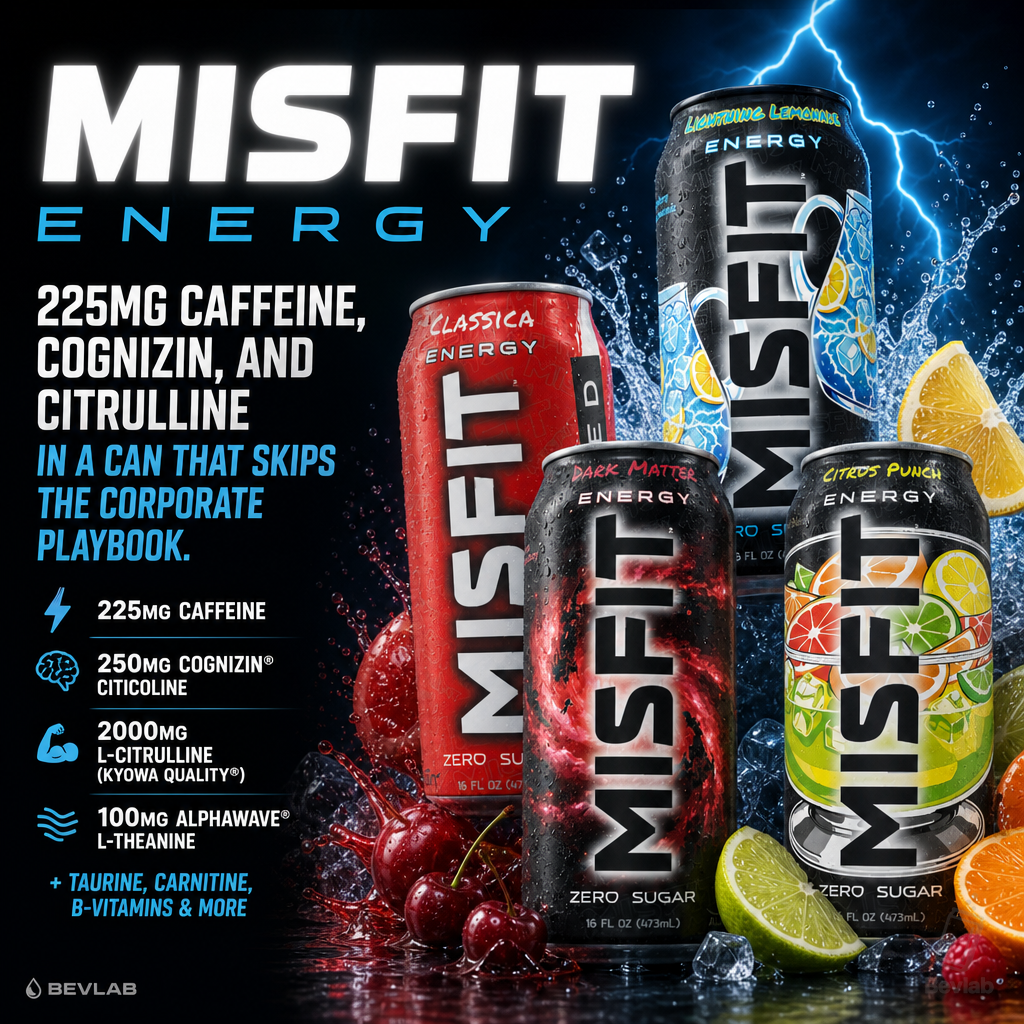
Most energy drinks that call themselves "craft" are really just a regional flavor lineup slapped on a standard 200mg caffeine base. Misfit Energy isn't doing that. The New Hampshire-based brand, run out of a small production facility in Epsom, builds its 16oz cans around a stack that looks more like a nootropic pre-workout than a gas station Enny: 225mg caffeine, a full 2000mg of Kyowa Quality-branded L-citrulline, 250mg of Cognizin citicoline, and 100mg of AlphaWave L-theanine, all wrapped around a B-vitamin base and two old-school energy drink standbys in taurine and glucuronolactone.
The founders built the formula around a personal problem: caffeine sensitivity. One of them can't tolerate a standard-dose energy drink without feeling wired and jittery, so the stack leans on citrulline and theanine to take the edge off rather than just cranking caffeine higher. That's a different approach from the "add more caffeine" playbook most regional brands run, and it's worth breaking down ingredient by ingredient.
Misfit Energy Ingredients
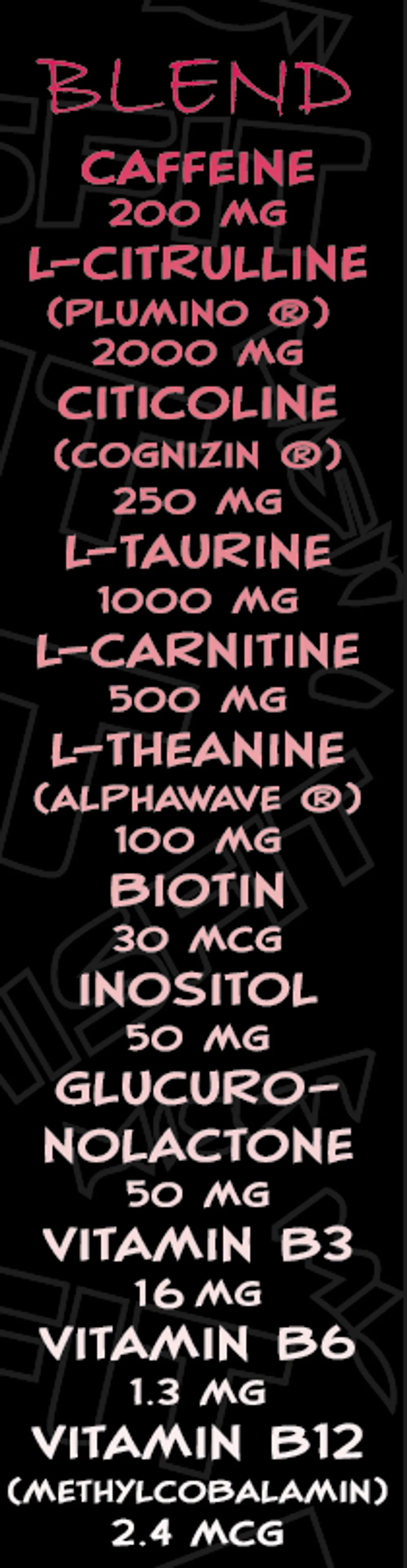
Each 16oz can lists the following actives on its BLEND panel:
-
Caffeine - 225mg
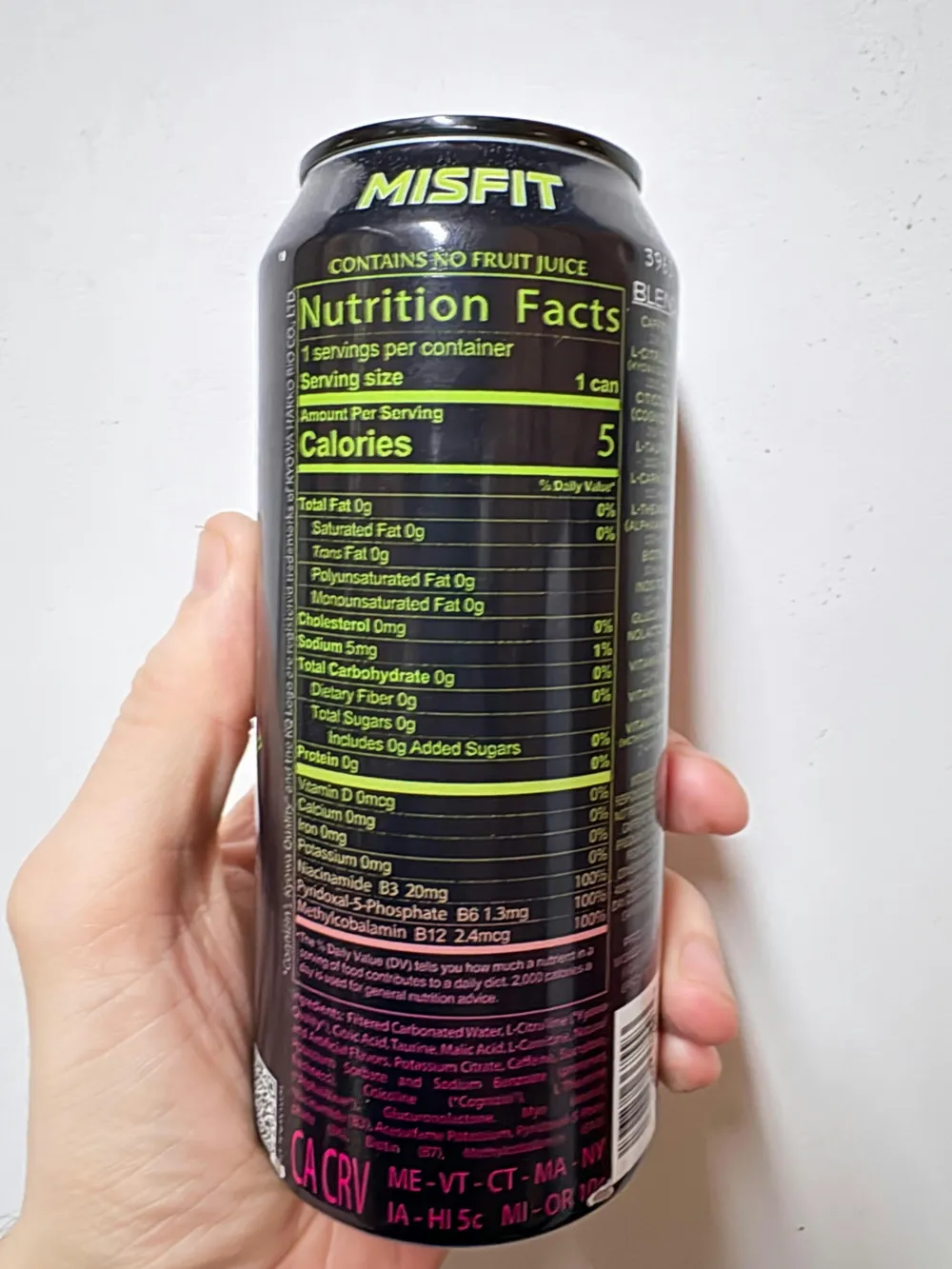
Caffeine does the heavy lifting here, and at 225mg per can it sits a notch above the 200mg most mainstream energy drinks build around. Mechanically, caffeine blocks the signal in your brain that makes you feel tired, which is why it reliably improves reaction time, sustained attention, and mood in both rested and sleep-deprived people across a wide dose range.[1] The ISSN's position stand on caffeine and exercise backs doses in the 3-6mg/kg range (roughly 200-400mg for most adults) for both cognitive and physical performance benefits.[2] The can itself carries the standard FDA-aligned warning not to exceed 400mg of caffeine a day, and a comprehensive safety review found up to 400mg/day doesn't carry meaningful cardiovascular or behavioral risk in healthy adults.[3] At 225mg, Misfit is dosing on the stronger end of "moderate" rather than pushing into 300mg-plus territory.
-
L-Citrulline (Kyowa Quality®) - 2000mg
L-Citrulline is the ingredient doing the work Misfit's founders actually designed the formula around: taking the edge off caffeine's blood pressure spike. Citrulline gets converted to arginine in your body more efficiently than eating arginine directly, since arginine gets broken down in the gut and liver before it can do much good. Citrulline skips that problem and raises usable arginine levels, which is what drives nitric oxide production and the "pump" or blood flow effect associated with these formulas.[4] A meta-analysis of citrulline trials found it meaningfully lowers systolic blood pressure, with the strongest diastolic effect showing up specifically at doses of 6g/day or more.[5] Worth flagging: most acute strength and power research uses doses of 3g or higher taken before training,[6] so Misfit's 2g falls just under that bar. It's still a meaningful dose using a reputable branded source, just not quite at the ceiling of what the performance literature has tested.
-
Citicoline (Cognizin®) - 250mg
Citicoline is the focus ingredient in the stack, and Misfit uses Cognizin, the branded form behind most of the modern human research on this compound. Citicoline feeds your brain the raw material it needs for both acetylcholine production (tied to memory and attention) and rebuilding neuronal cell membranes. At 250mg specifically, this dose matches the lower arm of a randomized trial in healthy women that found meaningful reductions in attention lapses on a sustained-attention test after 28 days.[7] Other trials using 500mg/day found improved episodic memory in older adults with age-related memory complaints over 12 weeks,[8] so Misfit's 250mg sits at the entry point of citicoline's demonstrated cognitive-benefit range rather than the high end, but it's a real, clinically relevant number rather than a dusting.
-
L-Taurine - 1000mg
Taurine is one of the two "classic" energy drink ingredients in this can, alongside glucuronolactone, and 1000mg is a common dose in the category. Beyond its long history in Red Bull-style formulas, taurine supports mitochondrial function and has antioxidant effects that show up during and after exercise.[9] Meta-analytic work on taurine and cardiometabolic markers has found blood pressure and lipid benefits at doses of 1.5-3g/day.[10] Misfit's 1g sits below that therapeutic range but within the typical energy drink dosing window. Where taurine gets more interesting for an Enny specifically is in combination with caffeine: a network meta-analysis found that pairing the two produced credible improvements in anaerobic capacity and reaction time beyond either ingredient alone.[11]
-
L-Carnitine - 500mg
L-Carnitine shuttles fatty acids into your cells' mitochondria so they can be burned for fuel, which is the basis for its "metabolism support" positioning in supplements and functional beverages. Human recovery research using L-carnitine (often as L-carnitine L-tartrate) at doses around 2g/day found reductions in exercise-induced muscle damage markers and improved recovery of muscle function.[12] Systematic review data on acute and chronic dosing protocols generally centers on 2-4g for measurable performance and recovery effects.[13] Misfit's 500mg is a real, non-trivial dose, but it's meaningfully below the range most of the exercise-performance literature has actually tested, so it's better understood as a supporting player in the formula than a stand-alone ergogenic dose.
-
L-Theanine (AlphaWave®) - 100mg
L-Theanine is the other half of Misfit's anti-jitter strategy, and it's a well-established pairing partner for caffeine. Theanine smooths out caffeine's edge without killing the focus, largely by dampening excess glutamate signaling and nudging the brain toward a calm-but-alert state associated with alpha brain waves.[14] A meta-analysis of caffeine-plus-theanine studies found the combination reliably improves alertness and attentional accuracy compared to either ingredient alone, though caffeine tends to drive more of the effect than theanine does on its own.[15] In direct head-to-head testing, theanine alone showed few standout cognitive effects, but caffeine plus theanine together improved reaction time, working memory speed, and reduced mental fatigue in ways neither ingredient replicated solo.[16] At 100mg, Misfit's dose is on the lower end of what's been studied for this pairing (most trials use 100-250mg), but it's a real, clinically relevant amount rather than a token inclusion.
-
Inositol - 50mg
Inositol shows up here at a fraction of the doses used in its actual clinical research. Mechanistically, inositol is a building block for cell signaling molecules that help mediate insulin, mood-related neurotransmitters, and hormone signaling. But the human trials behind those effects, whether for mood, PCOS-related metabolic markers, or sleep, use gram-level doses, typically 2000-4000mg per day, not 50mg. At 50mg, Misfit's inclusion is better understood as a formula-rounding ingredient than something dosed to hit any of inositol's documented outcomes. It's not misleading, since the label states the amount plainly, but don't expect this dose to do much on its own.
-
Glucuronolactone - 50mg
Glucuronolactone is the other legacy energy drink ingredient here, best known as one of the defining actives in Red Bull-style formulas. Standard commercial energy drinks run closer to 600mg per 250mL serving,[17] so Misfit's 50mg is a small fraction of that industry-standard concentration. Most of the human evidence for glucuronolactone's role in alertness and performance comes from multi-ingredient energy drink studies where its individual contribution can't be separated from caffeine and taurine.[18] The one study that isolated it found it didn't meaningfully raise blood pressure the way caffeine does, though it produced an unexpected shortening of the heart's QTc interval that researchers flagged as needing more study.[19] At this dose, it's more of a category nod than a functional driver.
-
Vitamins and Minerals
-
Biotin - 30mcg
Biotin lands right at the adequate intake level set by US and European health authorities (roughly 30-40mcg/day for adults).[20] That's a nutritionally sensible dose, and it's worth noting biotin's popular hair-and-nail marketing angle isn't backed by human trial evidence in people who aren't actually deficient. Here, it's simply filling out the B-vitamin base rather than doing any heavy lifting.
-
Vitamin B3 (Niacinamide) - 20mg
Vitamin B3 here is niacinamide, the non-flushing form of niacin, dosed at 20mg. That's well above the RDA (16mg for men, 14mg for women) but nowhere near the 500mg-plus territory where niacin starts showing lipid-modifying effects in clinical research.[21] At 20mg, this is a straightforward B-vitamin inclusion with no flushing risk, not a therapeutic dose.
-
Vitamin B6 (Pyridoxal-5-Phosphate) - 1.3mg
Vitamin B6 is included as pyridoxal-5'-phosphate, the body's directly active coenzyme form that skips the liver conversion step regular pyridoxine needs. At 1.3mg, this lands right in the standard adult RDA range and supports the amino acid and neurotransmitter metabolism B6 is known for, well below any dose where safety becomes a consideration.[22]
-
Vitamin B12 (Methylcobalamin) - 2.4mcg
Vitamin B12 rounds out the B-vitamin base at 2.4mcg, matching the adult RDA almost exactly. It's supplied as methylcobalamin, one of the more bioavailable forms for supporting red blood cell production and nerve function. This is a maintenance-level dose rather than a performance-oriented mega-dose, which tracks with its role here as a baseline nutrient rather than a headline ingredient.
-
Flavors Available
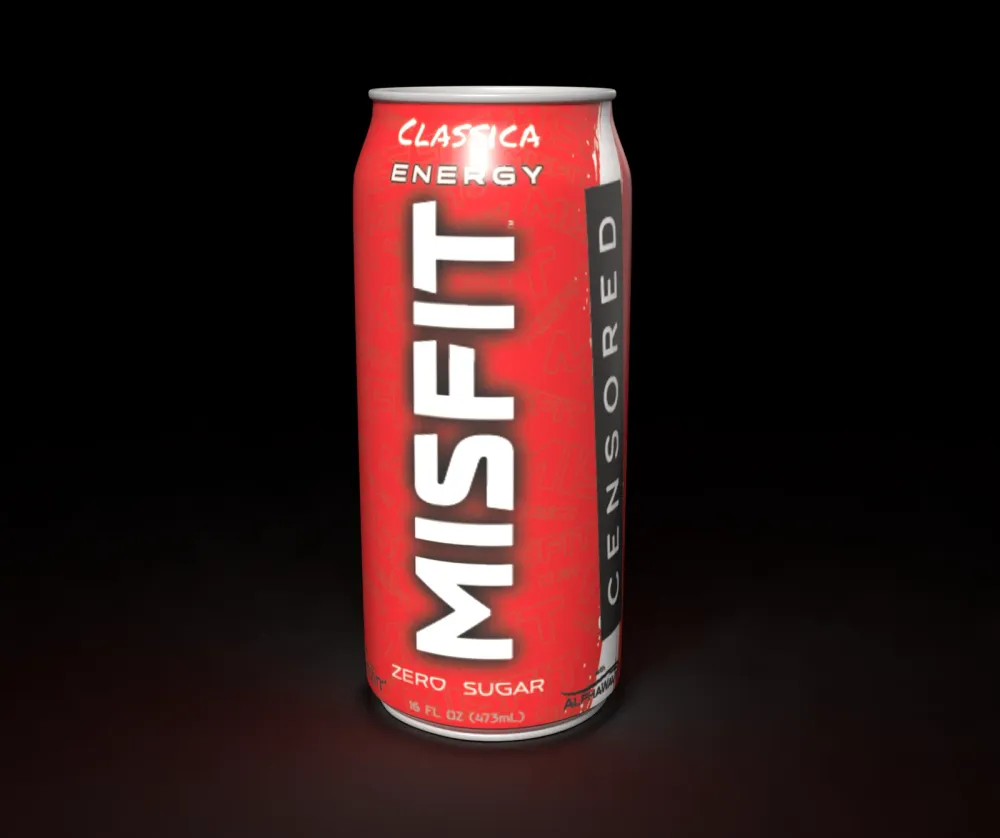
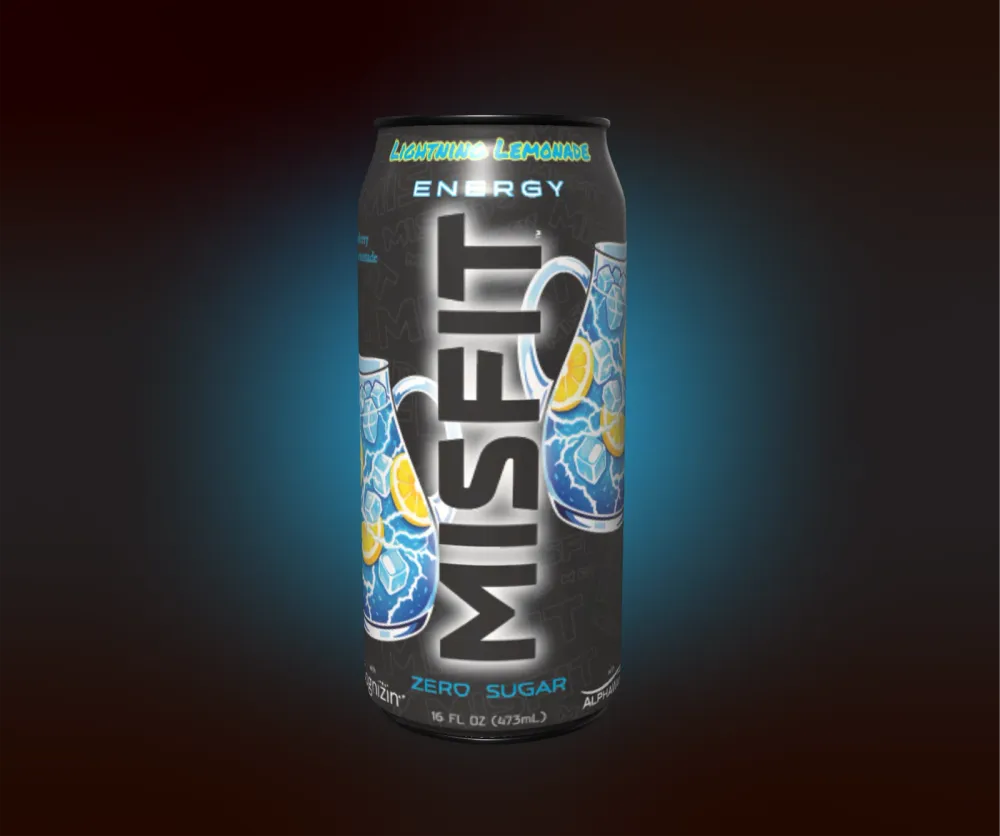
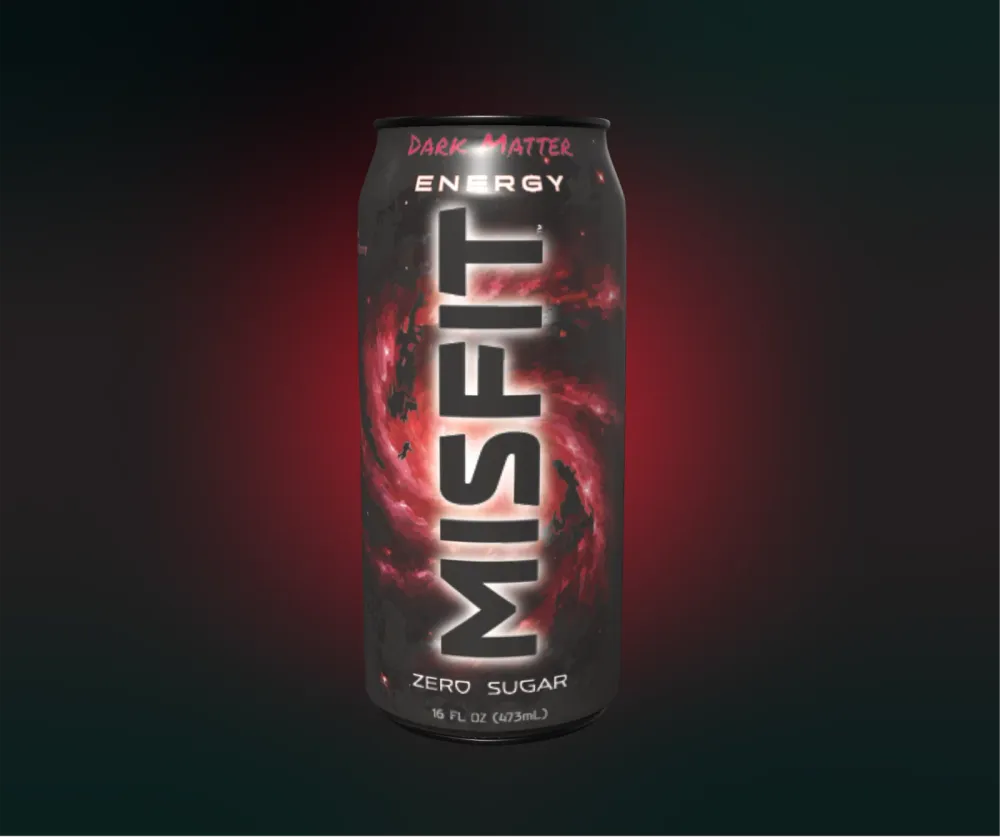
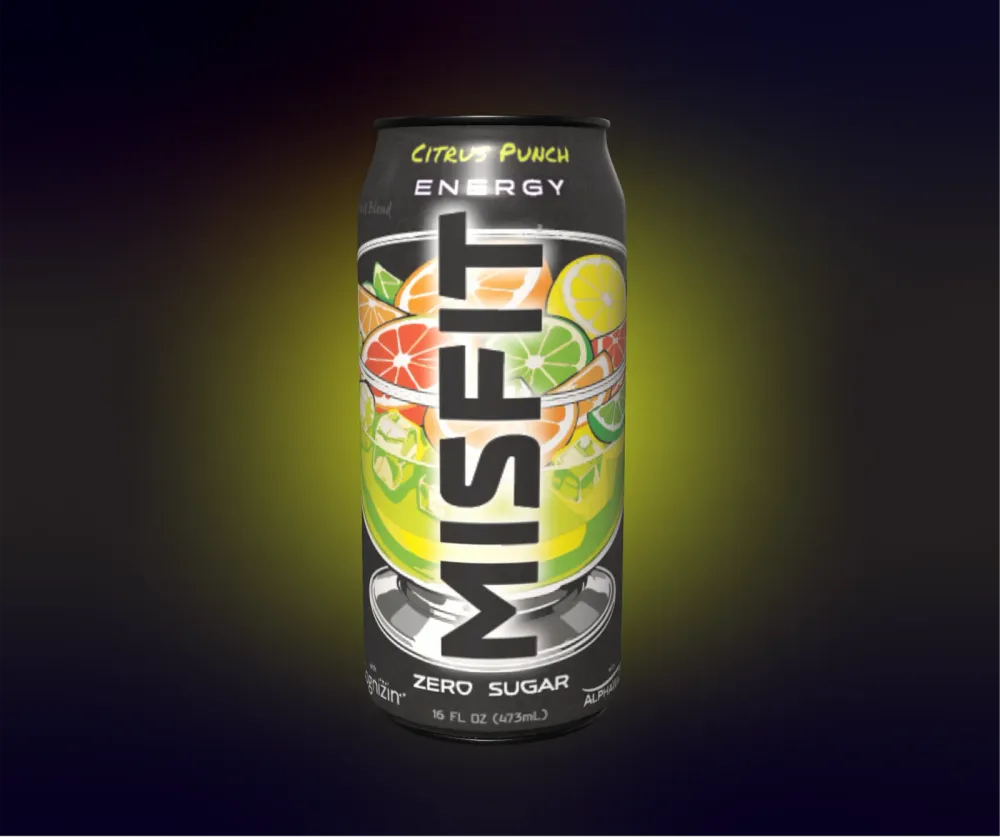
Misfit's most visible lineup right now runs four flavors that show off very different personalities. Lightning Lemonade is a blue raspberry lemonade play, Classica is the brand's answer to the familiar red-can flavor everyone already knows, Citrus Punch leans into an aggressive multi-citrus blend, and Dark Matter is the polarizing one: dark cherry up front with a black licorice finish that's clearly built to split opinion rather than play it safe.
Beyond these four latest ones, Misfit runs a much longer rotating lineup with names like Blood Moon, Dragon Blud, and Project Bluebeam, which fits the brand's underground, drop-culture positioning more than a typical grocery-aisle flavor menu.
Who It's For
- Caffeine-sensitive drinkers who still want a real dose: The citrulline and theanine pairing is specifically designed to soften the vasoconstriction and jitters that come with 225mg of caffeine, which makes this a reasonable pick for people who've had rough experiences with high-caffeine cans before.
- New England locals and craft-scene supporters: If small-batch production and an anti-corporate story matter to you as much as the ingredient panel, Misfit's regional footprint and direct-to-consumer model are part of the appeal.
The Verdict: Real Actives, Honestly Dosed
Misfit backs its formula-forward pitch with real numbers: 225mg of caffeine, plus citrulline and citicoline doses that land within actual research ranges, all on a fully disclosed label with no proprietary blend hiding the details. A few supporting ingredients, like inositol and glucuronolactone, are dosed too low to do much on their own, but the core stack holds up better than most regional energy drinks manage.
Follow @BevlabMedia on TikTok and Instagram for the can-by-can breakdown of the four featured flavors.
References
- McLellan, Tom M. et al. "A Review Of Caffeine S Effects On Cognitive Physical And Occupational Performance." Neuroscience & Biobehavioral Reviews, 2016. https://doi.org/10.1016/j.neubiorev.2016.09.001
- Guest, Nanci S. et al. "International Society Of Sports Nutrition Position Stand Caffeine And Exercise Performance." Journal of the International Society of Sports Nutrition, 2021. https://doi.org/10.1186/s12970-020-00383-4
- Wikoff, Daniele, et al. "Systematic review of the potential adverse effects of caffeine consumption in healthy adults, pregnant women, adolescents, and children." Food and chemical toxicology : an international journal published for the British Industrial Biological Research Association, 2017. https://doi.org/10.1016/j.fct.2017.04.002
- Schwedhelm, Edzard, et al. "Pharmacokinetic and pharmacodynamic properties of oral L-citrulline and L-arginine: impact on nitric oxide metabolism." British journal of clinical pharmacology, 2008. https://doi.org/10.1111/j.1365-2125.2007.02990.x
- Barkhidarian, Bahareh, et al. "Effects of L-citrulline supplementation on blood pressure: A systematic review and meta-analysis." Avicenna journal of phytomedicine, 2019. https://pmc.ncbi.nlm.nih.gov/articles/PMC6369322/
- Trexler, Eric T, et al. "Acute Effects of Citrulline Supplementation on High-Intensity Strength and Power Performance: A Systematic Review and Meta-Analysis." Sports medicine (Auckland, N.Z.), 2019. https://doi.org/10.1007/s40279-019-01091-z
- McGlade, Erin, et al. "Improved Attentional Performance Following Citicoline Administration In Healthy Adult Women." Food and Nutrition Sciences, 2012. https://doi.org/10.4236/fns.2012.36103
- Nakazaki, Eri, et al. "Citicoline And Memory Function In Healthy Older Adults A Randomized Double Blind Placebo Controlled Clinical Trial." The Journal of Nutrition, 2021. https://doi.org/10.1093/jn/nxab119
- Jong, Chian Ju, et al. "The Role of Taurine in Mitochondria Health: More Than Just an Antioxidant." Molecules (Basel, Switzerland), 2021. https://doi.org/10.3390/molecules26164913
- Nie, Zizheng, et al. "Effects of Oral Taurine Supplementation on Cardiometabolic Risk Factors: A Meta-analysis and Systematic Review of Randomized Clinical Trials." Nutrition reviews, 2025. https://doi.org/10.1093/nutrit/nuaf220
- Deng, Hengzhi, et al. "Caffeine and taurine: a systematic review and network meta-analysis of their individual and combined effects on physical capacity, cognitive function, and physiological markers." Journal of the International Society of Sports Nutrition, 2025. https://doi.org/10.1080/15502783.2025.2566371
- Fielding, Roger, et al. "L Carnitine Supplementation In Recovery After Exercise." Nutrients, 2018. https://doi.org/10.3390/nu10030349
- Mielgo-Ayuso, Juan, et al. "Effect Of Acute And Chronic Oral L Carnitine Supplementation On Exercise Performance Based On The Exercise Intensity A Systematic Review." Nutrients, 2021. https://doi.org/10.3390/nu13124359
- Juneja, L. "L Theanine A Unique Amino Acid Of Green Tea And Its Relaxation Effect In Humans." Trends in Food Science & Technology, 1999. https://doi.org/10.1016/s0924-2244(99)00044-8
- Camfield, David A, et al. "Acute effects of tea constituents L-theanine, caffeine, and epigallocatechin gallate on cognitive function and mood: a systematic review and meta-analysis." Nutrition reviews, 2014. https://doi.org/10.1111/nure.12120
- Haskell, Crystal F, et al. "The Effects Of L Theanine Caffeine And Their Combination On Cognition And Mood." Biological psychology, 2008. https://doi.org/10.1016/j.biopsycho.2007.09.008
- Rubio, Carmen, et al. "Caffeine, D-glucuronolactone and Taurine Content in Energy Drinks: Exposure and Risk Assessment." Nutrients, 2022. https://doi.org/10.3390/nu14235103
- Alford, C, et al. "The effects of red bull energy drink on human performance and mood." Amino acids, 2001. https://doi.org/10.1007/s007260170021
- Basrai, Maryam, et al. "Energy Drinks Induce Acute Cardiovascular and Metabolic Changes Pointing to Potential Risks for Young Adults: A Randomized Controlled Trial." The Journal of nutrition, 2019. https://doi.org/10.1093/jn/nxy303
- Solvik, Beate Stokke, et al. "Biotin: a scoping review for Nordic Nutrition Recommendations 2023." Food & nutrition research, 2024. https://doi.org/10.29219/fnr.v68.10256
- Freese, Riitta, et al. "Niacin - a scoping review for Nordic Nutrition Recommendations 2023." Food & nutrition research, 2023. https://doi.org/10.29219/fnr.v67.10299
- Kato, Norihisa, et al. "Relationship of Low Vitamin B6 Status with Sarcopenia, Frailty, and Mortality: A Narrative Review." Nutrients, 2024. https://doi.org/10.3390/nu16010177
Tagged