oHy Hydrogen Sparkling Water
A magnesium reaction, a 1.4 PPM hydrogen claim, and what the research really says about it
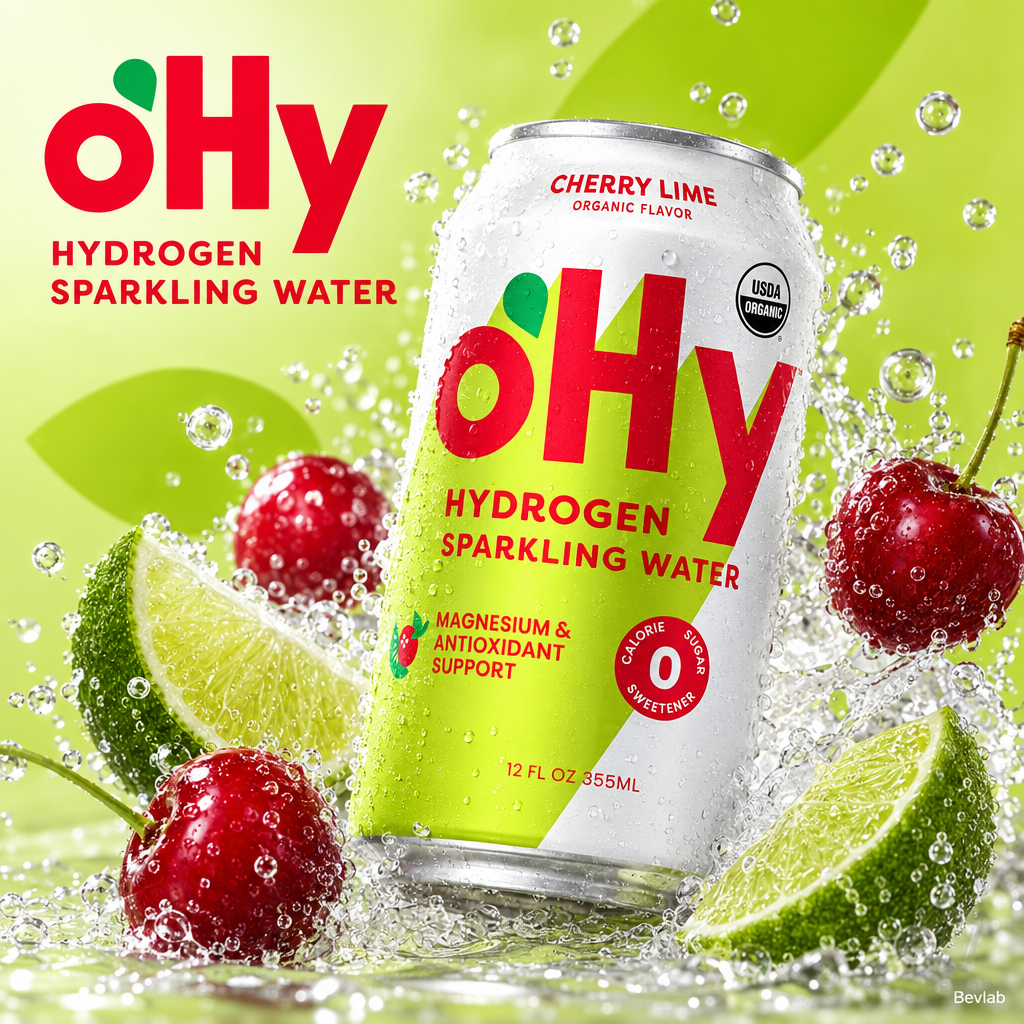
oHy's Hydrogen Sparkling Water landed in 800+ Target stores. Here's the magnesium reaction, 1.4 PPM claim, and what hydrogen-water research shows.
In September 2026, oHy Hydrogen Sparkling Water rolled out to more than 800 Target stores nationwide, which oHy says makes it the first hydrogen beverage available at the retailer. The Grand Rapids, Michigan brand, founded by Trent Hartwig and John Green, has built its entire pitch around a claim that sounds more like a chemistry demo than a beverage label: drop magnesium into purified water, and you get molecular hydrogen gas dissolved right into the can.
This is Bevlab's first real dig into molecular hydrogen as a category, and it's a good one to start with. The can itself is about as simple as sparkling water gets: zero calories, zero sugar, four ingredients. The interesting part is what isn't on the ingredient statement at all.
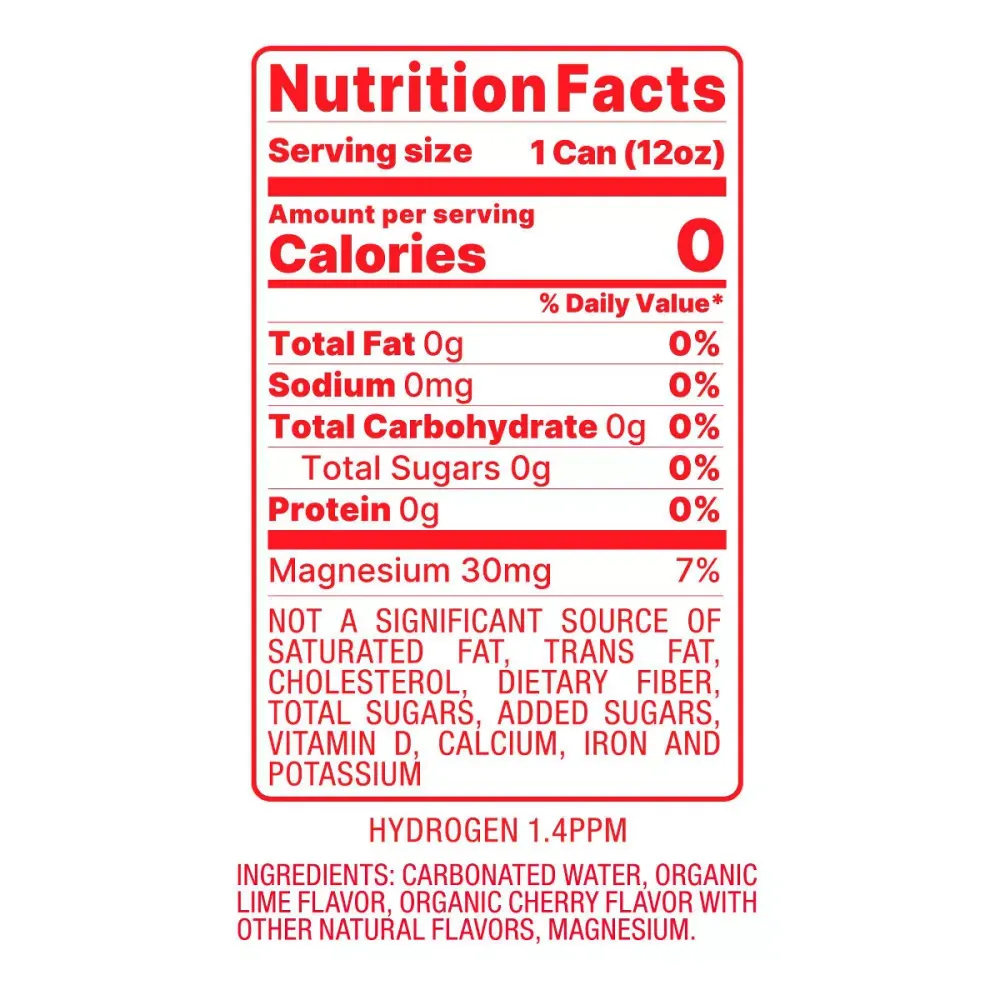
oHy Hydrogen Sparkling Water Nutrition Facts
- Calories: 0
- Total Fat: 0g (0% DV)
- Sodium: 0mg (0% DV)
- Total Carbohydrate: 0g (0% DV)
- Total Sugars: 0g (0% DV)
- Protein: 0g (0% DV)
- Magnesium: 30mg (7% DV)
There's also a front-panel claim that doesn't fit anywhere on a standard Nutrition Facts template: Hydrogen 1.4 PPM. That number is the entire reason this product exists, so it's worth its own section below.
oHy Hydrogen Sparkling Water Ingredients
Across its organic flavors, oHy says the formula holds steady: carbonated water, two organic fruit flavors, and 30mg of magnesium engineered to react and generate hydrogen gas.
-
Molecular Hydrogen (1.4 PPM)
What Molecular Hydrogen Actually Is
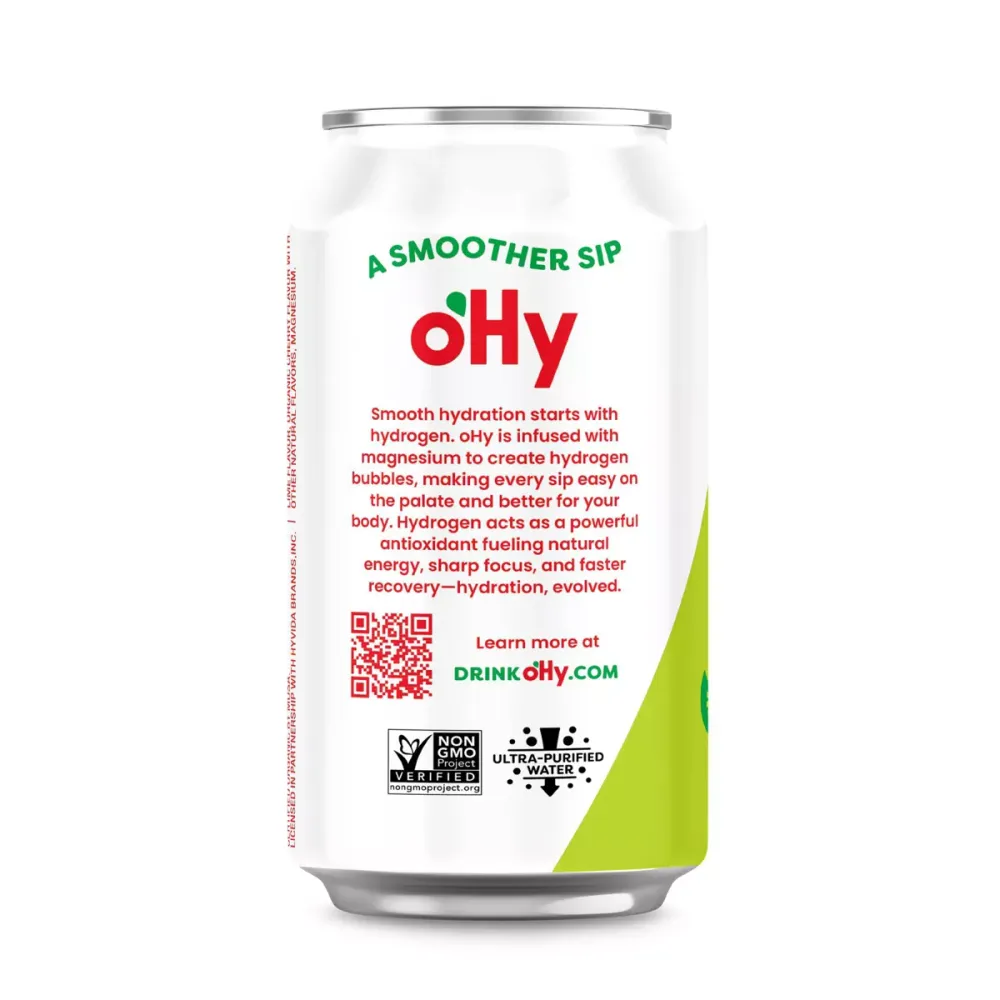
Molecular hydrogen (H2) is the diatomic gas itself, the smallest molecule that exists. Hydrogen-rich water, the category oHy sits in, is simply a delivery vehicle for dissolved H2, not a separate active ingredient in its own right. Oral hydrogen-rich water produces a real but short-lived exposure. Studies measuring breath hydrogen after ingestion show it spikes quickly and falls back toward baseline within a couple hours.[1] oHy's version isn't hydrogen added from an external tank. The brand's process infuses magnesium into the can, and the reaction between magnesium and water is what releases the hydrogen gas along with magnesium bicarbonate as a byproduct, which is also where the 30mg of magnesium on the nutrition panel comes from.
Concentration, Delivery, and Why PPM Matters
There's no single agreed-upon dose in hydrogen-water research, which makes label comparisons tricky. Human trials have used acute 500-600mL servings, ongoing 1-2L/day regimens, and hydrogen tablets dissolved in water that deliver several milligrams of H2 in one sitting.[2,3] Low solubility, how fast dissolved gas escapes after opening a package, generation method, and timing all make cross-study comparisons messy.
Here's the math behind oHy's number: 1.4 PPM dissolved hydrogen works out to roughly 1.4mg per liter of water. A 12 fl oz can holds about 0.355L, so if that concentration holds all the way to the moment you drink it, you're getting in the neighborhood of 0.5mg of dissolved hydrogen gas. That's a real, measurable concentration, and it's within the range other hydrogen-water products use. But it's not close to the multi-liter or multi-milligram protocols used in several of the studies below, and that gap matters for how much of this research actually applies to a single can.
The Redox Biology Behind the Claims
The foundational work behind hydrogen-water's popularity is a 2007 paper showing H2 could modulate oxidative injury in cellular and animal ischemia models.[4] Take it as preclinical evidence for biological plausibility, not proof that a beverage does the same thing in a person.
Human data on the "hydrogen as antioxidant" idea is more mixed than the marketing suggests. A meta-analysis in healthy adults found no significant overall reduction in exercise-induced oxidative stress, though biological antioxidant potential improved modestly in some subgroups.[5] A four-week trial in healthy adults found no broad advantage over plain water on primary blood markers of oxidative stress, although immune-cell apoptosis and inflammatory gene signals tied to NF-kB signaling moved in a favorable direction.[6] Three days of strenuous exercise with hydrogen water preserved an antioxidant-potential index without improving actual performance.[7] And a 2026 trial in people with chronic mountain sickness found hydrogen water raised total antioxidant capacity while also raising malondialdehyde, a marker of oxidative damage, with no reduction in oxidative-stress-related injury.[8] The honest read here is redox and cell-signaling modulation, not a simple free-radical eraser.
What the Exercise and Recovery Research Shows
The best calibration point is a 2024 meta-analysis covering 27 publications and 597 participants. It found trivial, nonsignificant effects on VO2max, aerobic endurance, and strength, a small improvement in lower-limb explosive power, and modest reductions in perceived exertion and blood lactate.[9] That's the honest ceiling... don't expect a measurable endurance or strength boost.
Smaller positive trials do exist. Pre-exercise hydrogen water lowered lactate at higher cycling workloads and modestly reduced perceived effort in one study of 12 men.[10] Tablet-generated hydrogen water delivering about 5mg of H2 reduced exercise heart and respiratory rates without improving maximal output.[11] Runners in a crossover study improved time to exhaustion and some perceptual measures.[12] Two weeks of daily hydrogen water in trained cyclists appeared to preserve late repeated-sprint power, though total work was unchanged.[13] More recent small studies have reported improved squat endurance, better sprint-fatigue metrics, faster heart-rate-variability recovery, and reduced muscle-damage markers.[14,15,16]
But null trials show up just as often. Acute hydrogen water didn't improve treadmill time to exhaustion, VO2max, heart rate, or perceived effort in endurance-trained runners.[17] A larger dose in trained runners produced no improvement in time to exhaustion, lactate, heart rate, or oxygen uptake.[18] Two papers on competitive finswimmers appear to come from the same 12-person study group rather than independent populations, and the later of the two found no improvement in repeated sprints and only a marginal gain over a longer distance.[19,20]
Cardiometabolic Signals
Early, small studies in people with diabetes or metabolic syndrome reported favorable shifts in lipids and redox markers, though several were uncontrolled or underpowered.[21,22,23] A larger 24-week placebo-controlled trial in metabolic syndrome reported broad improvements across cholesterol, glucose, inflammation, and redox markers.[24] An eight-week trial in people with impaired fasting glucose found a small additional drop in fasting glucose alongside gut microbiome changes.[25] A hyperuricemia trial found a stronger reduction in uric acid at a higher hydrogen dose.[26]
The best look is a 2026 meta-analysis of 13 trials and 757 participants: total cholesterol dropped by about 6.7mg/dL and LDL by about 3.2mg/dL, triglycerides didn't move significantly, and HDL actually dropped slightly rather than rising. The authors called the effect statistically real but clinically modest.[27] Earlier, smaller meta-analyses reported similarly small lipid shifts.[28,29]
What the Evidence Doesn't Establish
The most important negative data point in this whole literature is a large, high-quality trial: a triple-blind, multi-center COVID-19 study of 675 patients found hydrogen water did not reduce clinical worsening compared to placebo, with similar side-effect rates in both groups.[30] That's a well-run trial finding no clinical benefit where the mechanism seemed plausible on paper, and it's a useful reality check against overpromising.
Beyond that, systematic reviews across the category repeatedly flag the same limitations: small sample sizes, wildly different delivery methods, inconsistent dosing, and a need for bigger, better-controlled trials before drawing firm conclusions.[31,32,2,33,3] On safety, oral hydrogen water has generally been well tolerated across weeks and months of use in the trials available.[24] Well tolerated isn't the same as demonstrated benefit, and this literature shouldn't be read as more settled than it is.
How oHy's 1.4 PPM Stacks Up
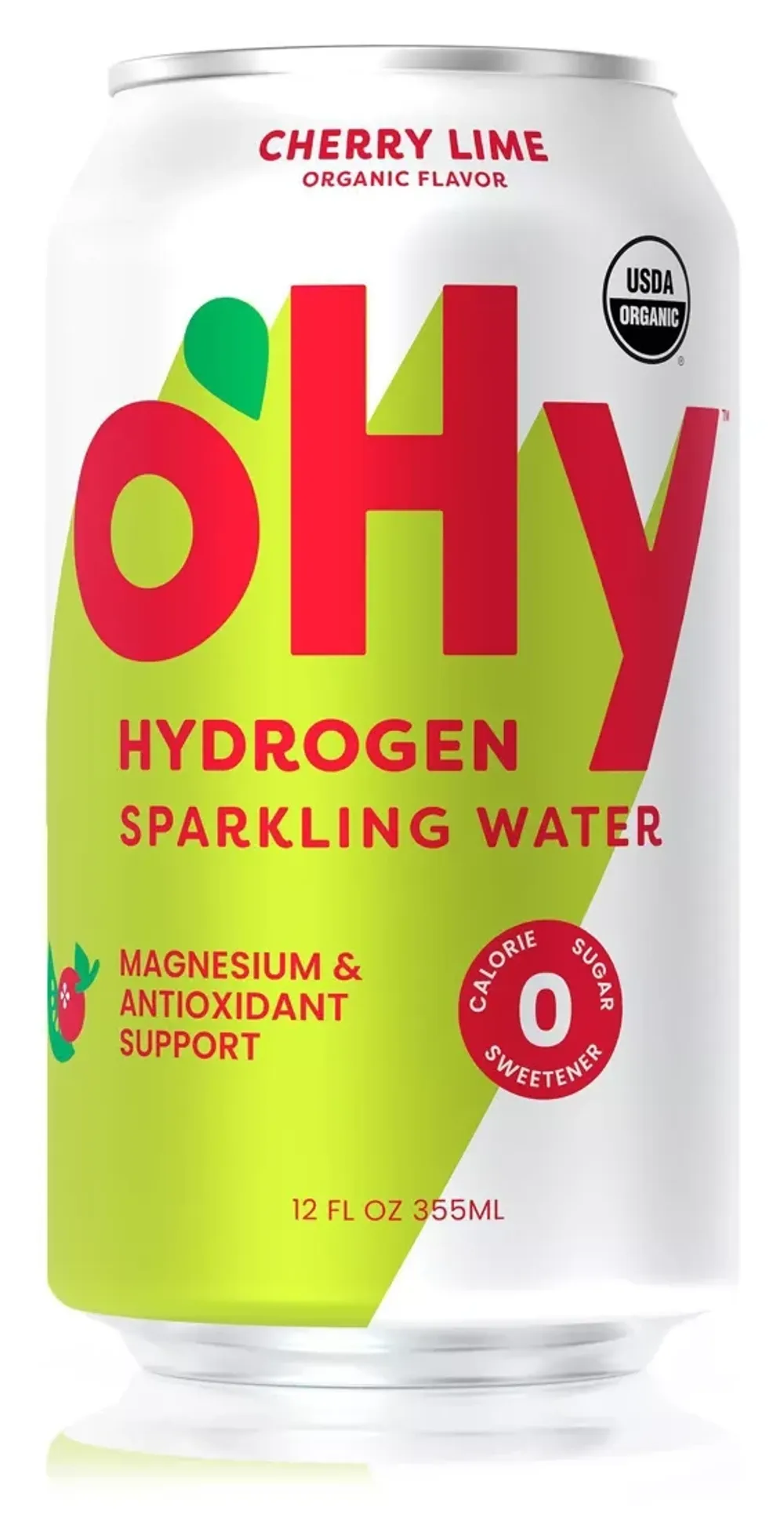
Put it together and here's where oHy actually lands: 1.4 PPM is a real, plausible concentration within the range other hydrogen-water research and products use, and the underlying reaction (magnesium plus water generating H2) is a genuine way to get hydrogen gas into a can. What it isn't is a guaranteed match for the outcomes in studies that used multiple liters a day or multi-milligram tablet doses. One 12 fl oz can with roughly half a milligram of dissolved hydrogen is a modest exposure sitting inside a research field that itself produces modest, inconsistent effects. Treat it as an interesting, biologically plausible functional claim, not a cellular-level miracle antioxidant.
-
Magnesium - 30mg
Magnesium shows up twice in this formula: once as the reactant that produces the can's hydrogen gas, and once as a nutrition label line at 30mg, or 7% of the Daily Value. That's a real but modest amount compared to the 300-500mg/day doses used in most human magnesium trials, so this isn't a mineral-replacement play. oHy describes the resulting compound as magnesium bicarbonate, a highly bio-available form, though bioavailability in magnesium research tends to depend as much on total dose, baseline status, and how it's split across the day as it does on the specific salt form.[34] At a population level, magnesium supplementation has been linked to small reductions in blood pressure, with an umbrella analysis of over 8,600 participants finding average drops of 1.25mmHg systolic and 1.40mmHg diastolic.[35] At 30mg per can, don't expect that effect from oHy specifically. Think of the magnesium here as functional plumbing for the hydrogen reaction first and a minor mineral contribution second.
-
Carbonated Water
Carbonated water is the base of every oHy can, but the brand's whole differentiation story is that its bubbles feel different from a typical seltzer. Traditional CO2 carbonation research has found some interesting effects worth knowing about even if they're not oHy-specific: post-exercise carbonated water increased mean arterial pressure and mood ratings more than still water in one heat-exposure study,[36] and a separate imaging study found carbonated water ingestion increased blood flow in the frontal region of the brain tied to reward processing, an effect the researchers linked to TRPV1 receptor stimulation in the throat.[37] Whether oHy's hydrogen-generated bubbles produce the same throat sensation and downstream effects as standard CO2 carbonation hasn't been independently tested. The "smoother" positioning is a real sensory claim worth trying for yourself, just not one backed by product-specific research yet.
-
Other Ingredients
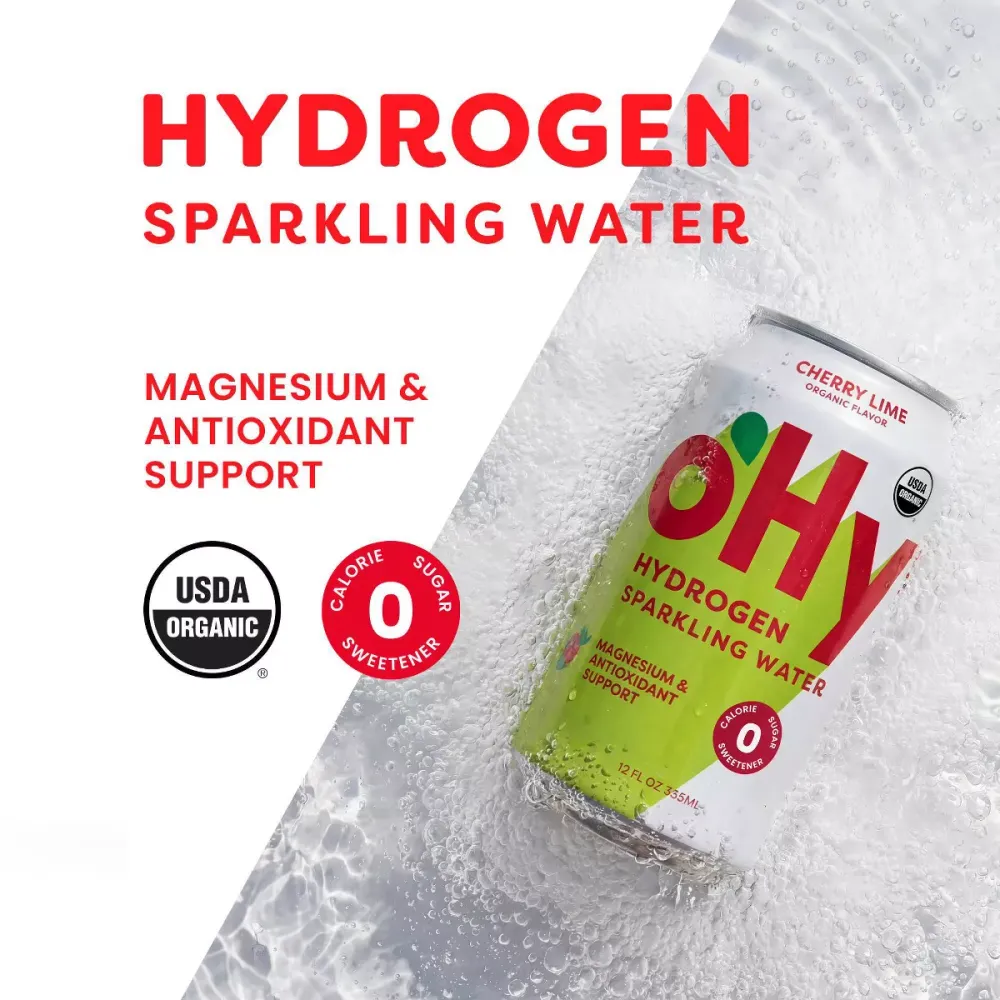
- Organic Lime Flavor - a USDA-certified organic flavor system providing the citrus notes in the Cherry Lime can. No individual amount is disclosed.
- Organic Cherry Flavor with Other Natural Flavors - the primary fruit flavor in this SKU, blended with additional natural flavoring compounds. No individual amount is disclosed.
Flavors Available
oHy's Target launch covers four organic flavors: Blackberry, Raspberry, Cherry Lime, and Strawberry Lemon, part of a broader lineup the brand says includes six flavors overall. The core formula (carbonated water, magnesium, organic flavor) appears consistent across the line, with the fruit flavoring changing SKU to SKU.
- Pineapple (12 Cans: $17.99)
Who It's For
- Sparkling water regulars looking for something different: If you're bored of standard seltzer and curious about a less-fizzy mouthfeel with a zero-sugar, zero-sweetener label, oHy is an easy low-risk trial.
- Skeptical wellness readers: If you want your functional beverage claims backed by a mature, settled body of research, hydrogen water isn't there yet. This is a category to watch, not one to treat as proven.
A Real Mechanism, a Modest Dose
oHy's formula is honest in its simplicity: carbonated water, two organic flavors, and just enough magnesium to react and produce a genuinely measurable amount of hydrogen gas. The molecular hydrogen research behind it is broader and more serious than most people realize, but it's also inconsistent, frequently null in well-designed trials, and built on protocols that often use far more hydrogen than one can delivers. Buy oHy for the clean label and the different mouthfeel. Don't buy it expecting to feel a documented antioxidant effect from a single 12 fl oz can.
Follow @BevlabMedia on TikTok and Instagram as we keep digging into the hydrogen-water category.
References
- Akito, Shimouchi. "Breath hydrogen produced by ingestion of commercial hydrogen water and milk." Biomarker Insights, 2009. https://doi.org/10.4137/bmi.s2209
- Johnsen, Hennie Marie, et al. "Molecular Hydrogen Therapy-A Review on Clinical Studies and Outcomes." Molecules (Basel, Switzerland), 2023. https://doi.org/10.3390/molecules28237785
- Nguyen, Puente Bao, et al. "Emerging Clinical Applications for Molecular Hydrogen." Respiratory care, 2026. https://doi.org/10.1177/19433654251398759
- Ohsawa, Ikuroh, et al. "Hydrogen acts as a therapeutic antioxidant by selectively reducing cytotoxic oxygen radicals." Nature medicine, 2007. https://doi.org/10.1038/nm1577
- Li, Yiting, et al. "Can molecular hydrogen supplementation reduce exercise-induced oxidative stress in healthy adults? A systematic review and meta-analysis." Frontiers in nutrition, 2024. https://doi.org/10.3389/fnut.2024.1328705
- Minju, Sim. "Hydrogen-rich water reduces inflammatory responses and prevents apoptosis of peripheral blood cells in healthy adults: a randomized, double-blind, controlled trial." Scientific Reports, 2020. https://doi.org/10.1038/s41598-020-68930-2
- Dobashi, Shohei, et al. "Hydrogen-rich water suppresses the reduction in blood total antioxidant capacity induced by 3 consecutive days of severe exercise in physically active males." Medical gas research, 2020. https://doi.org/10.4103/2045-9912.279979
- Fengying, Zhang. "Does Hydrogen-Rich Water Reduce Oxidative Stress in Patients with Chronic Mountain Sickness? A Randomized, Blinded, Controlled Trial." High Altitude Medicine & Biology, 2026. https://doi.org/10.1177/15578682251401137
- Zhou, Kaixiang, et al. "Can molecular hydrogen supplementation enhance physical performance in healthy adults? A systematic review and meta-analysis." Frontiers in nutrition, 2024. https://doi.org/10.3389/fnut.2024.1387657
- Botek, Michal, et al. "Hydrogen Rich Water Improved Ventilatory, Perceptual and Lactate Responses to Exercise." International journal of sports medicine, 2019. https://doi.org/10.1055/a-0991-0268
- LeBaron, Tyler W, et al. "Acute Supplementation with Molecular Hydrogen Benefits Submaximal Exercise Indices. Randomized, Double-Blinded, Placebo-Controlled Crossover Pilot Study." Journal of lifestyle medicine, 2019. https://doi.org/10.15280/jlm.2019.9.1.36
- Jebabli, Nidhal, et al. "Acute effect of hydrogen-rich water on physical, perceptual and cardiac responses during aerobic and anaerobic exercises: a randomized, placebo-controlled, double-blinded cross-over trial." Frontiers in physiology, 2023. https://doi.org/10.3389/fphys.2023.1240871
- Da Ponte, Alessandro, et al. "Effects of hydrogen rich water on prolonged intermittent exercise." The Journal of sports medicine and physical fitness, 2018. https://doi.org/10.23736/s0022-4707.17.06883-9
- Zhou, Kaixiang, et al. "Effects of 8 days intake of hydrogen-rich water on muscular endurance performance and fatigue recovery during resistance training." Frontiers in physiology, 2024. https://doi.org/10.3389/fphys.2024.1458882
- Chen, Zhihao, et al. "Effects of Hydrogen-Rich Water Supplementation on Exercise Performance, Autonomic Nervous System Recovery, and Blood Lactate Concentration During Repeated Sprint Exercise in Male University Athletes." Journal of sports science & medicine, 2026. https://doi.org/10.52082/jssm.2026.744
- Mkrtych, Ogannisyan. "Hydrogen-Rich Water Decreases Muscle Damage and Improves Power Endurance in Elite Athletes: A Randomized, Double-Blinded, Placebo-Controlled Trial." Journal of Lifestyle Medicine, 2025. https://doi.org/10.15280/jlm.2025.15.1.8
- Ooi, Cheong Hwa, et al. "Acute ingestion of hydrogen-rich water does not improve incremental treadmill running performance in endurance-trained athletes." Applied physiology, nutrition, and metabolism = Physiologie appliquee, nutrition et metabolisme, 2020. https://doi.org/10.1139/apnm-2019-0553
- Valenta, Michal, et al. "Acute pre-exercise hydrogen rich water intake does not improve running performance at maximal aerobic speed in trained track and field runners: A randomized, double-blind, placebo-controlled crossover study." PloS one, 2022. https://doi.org/10.1371/journal.pone.0279307
- Sládečková, Barbora, et al. "Hydrogen-rich water supplementation promotes muscle recovery after two strenuous training sessions performed on the same day in elite fin swimmers: randomized, double-blind, placebo-controlled, crossover trial." Frontiers in physiology, 2024. https://doi.org/10.3389/fphys.2024.1321160
- Sládečková, Barbora, et al. "Hydrogen-Rich Water as a Performance-Enhancing Aid in National-Level Finswimmers: A Randomized, Double-Blind, Placebo-Controlled Crossover Study." International journal of sports physiology and performance, 2026. https://doi.org/10.1123/ijspp.2025-0492
- Kajiyama, Sizuo, et al. "Supplementation of hydrogen-rich water improves lipid and glucose metabolism in patients with type 2 diabetes or impaired glucose tolerance." Nutrition research (New York, N.Y.), 2008. https://doi.org/10.1016/j.nutres.2008.01.008
- Nakao, Atsunori, et al. "Effectiveness of hydrogen rich water on antioxidant status of subjects with potential metabolic syndrome-an open label pilot study." Journal of clinical biochemistry and nutrition, 2010. https://doi.org/10.3164/jcbn.09-100
- Guohua, Song. "Hydrogen-rich water decreases serum LDL-cholesterol levels and improves HDL function in patients with potential metabolic syndrome." Journal of Lipid Research, 2013. https://doi.org/10.1194/jlr.m036640
- LeBaron, Tyler W, et al. "The Effects of 24-Week, High-Concentration Hydrogen-Rich Water on Body Composition, Blood Lipid Profiles and Inflammation Biomarkers in Men and Women with Metabolic Syndrome: A Randomized Controlled Trial." Diabetes, metabolic syndrome and obesity : targets and therapy, 2020. https://doi.org/10.2147/dmso.s240122
- Bing, Liang. "Hydrogen-Rich Water Ameliorates Metabolic Disorder via Modifying Gut Microbiota in Impaired Fasting Glucose Patients: A Randomized Controlled Study." Antioxidants (Basel), 2023. https://doi.org/10.3390/antiox12061245
- Fenglin, Wu. "Effects of hydrogen-rich water on blood uric acid in patients with hyperuricemia: A randomized placebo-controlled trial." Heliyon, 2024. https://doi.org/10.1016/j.heliyon.2024.e36401
- Honghui, Ye. "The effect of hydrogen-rich water interventions on lipid profiles in adults with overweight or obesity and associated metabolic disorders: a systematic review and meta-analysis of randomized controlled trials." Diabetology & Metabolic Syndrome, 2026. https://doi.org/10.1186/s13098-026-02124-0
- Todorovic, Nikola, et al. "The Effects of Hydrogen-Rich Water on Blood Lipid Profiles in Clinical Populations: A Systematic Review and Meta-Analysis." Pharmaceuticals (Basel, Switzerland), 2023. https://doi.org/10.3390/ph16020142
- Jamialahmadi, Hamid, et al. "The Effects of Hydrogen-Rich Water on Blood Lipid Profiles in Metabolic Disorders Clinical Trials: A Systematic Review and Meta-analysis." International journal of endocrinology and metabolism, 2024. https://doi.org/10.5812/ijem-148600
- Gaboreau, Yoann, et al. "Molecular Hydrogen for Outpatients with COVID-19 (Hydro-COVID): A Phase 3 Randomised, Triple-Blinded, Pragmatic, Placebo-Controlled, Multicentre Trial." Journal of clinical medicine, 2024. https://doi.org/10.3390/jcm13154308
- Gagandeep, Dhillon. "Hydrogen Water: Extra Healthy or a Hoax?-A Systematic Review." International Journal of Molecular Sciences, 2024. https://doi.org/10.3390/ijms25020973
- Ghazaleh, Khalili-Tanha. "The impact of hydrogen-rich water on liver enzyme levels in clinical populations: a comprehensive review and meta-analysis." Gastroenterology and Hepatology From Bed to Bench, 2024. https://doi.org/10.22037/ghfbb.v17i4.2990
- Meng, Fanxianzi, et al. "Oral Administration of Hydrogen-rich Water: Biomedical Activities, Potential Mechanisms, and Clinical Applications." Current pharmaceutical design, 2025. https://doi.org/10.2174/0113816128330516241121150719
- Pardo, Marta R, et al. "Bioavailability of magnesium food supplements: A systematic review." Nutrition (Burbank, Los Angeles County, Calif.), 2021. https://doi.org/10.1016/j.nut.2021.111294
- Alharran, Abdullah M, et al. "Impact Of Magnesium Supplementation On Blood Pressure An Umbrella Meta Analysis Of Randomized Controlled Trials." Current therapeutic research, clinical and experimental, 2024. https://doi.org/10.1016/j.curtheres.2024.100755
- Kajiki, Masanobu, et al. "Ingesting carbonated water post-exercise in the heat transiently ameliorates hypotension and enhances mood state." Experimental physiology, 2024. https://doi.org/10.1113/EP091925
- Kosugi, Wataru, et al. "Effect of carbonated water on cerebral blood flow in the frontal region: a study using near-infrared spectroscopy." Frontiers in behavioral neuroscience, 2024. https://doi.org/10.3389/fnbeh.2024.1409123
Tagged