7 Brew Chilled Espresso Makes it Into Walmart
Real cream and Arabica coffee meet added sugar and sucralose in 7 Brew's canned coffee breve
7 Brew's Chilled Espresso Blondie is hitting more shelves. Here's what's really in the can, from Arabica coffee to sucralose.
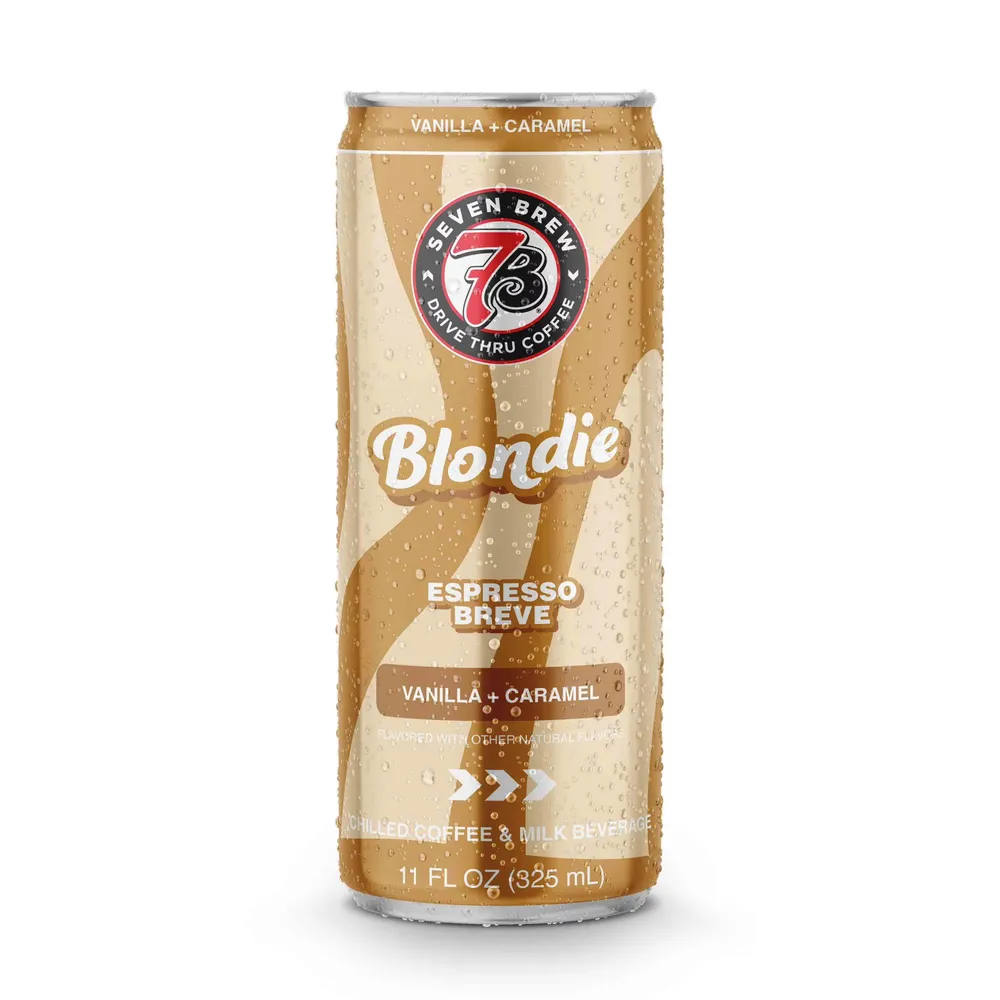
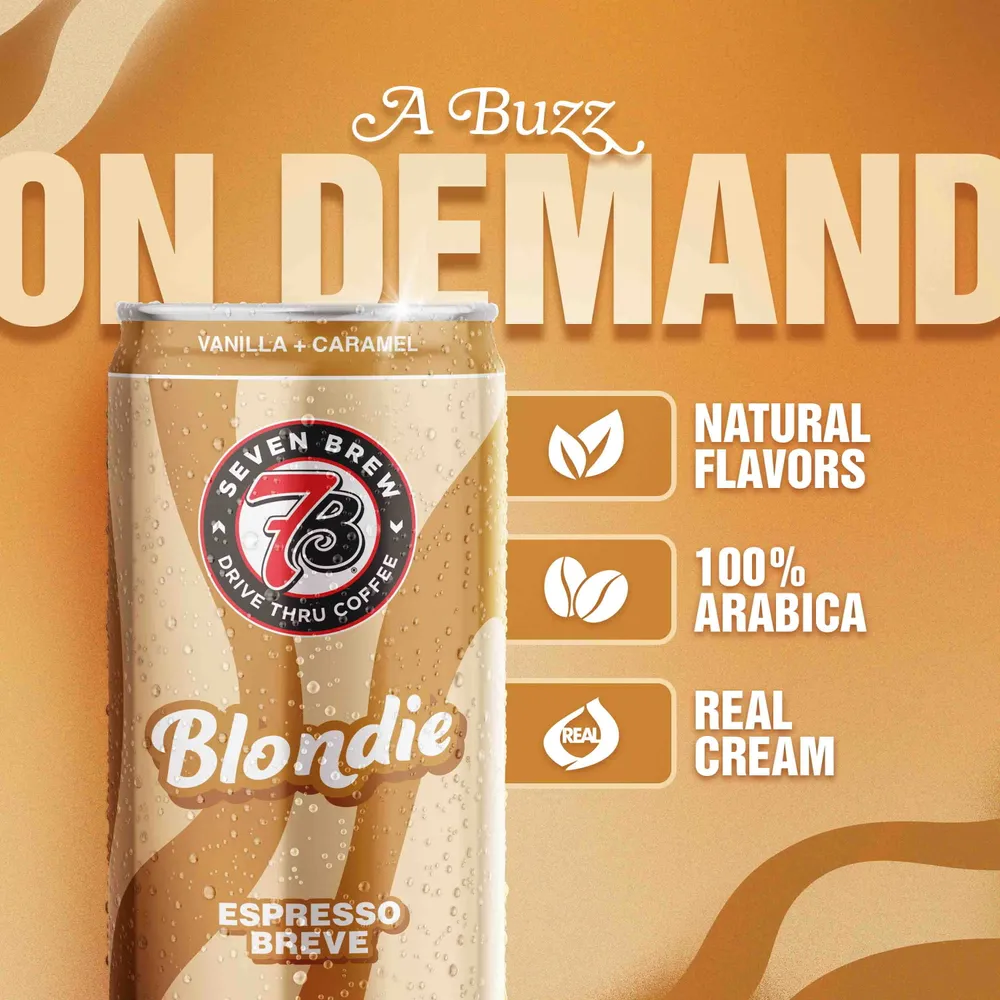
7 Brew's Chilled Espresso Blondie is showing up in more places than the drive-thru lane. The ready-to-drink canned coffee, part of 7 Brew's small at-home lineup, is reaching a wider set of store shelves, giving fans of the chain's stand-made drinks a way to grab the vanilla-caramel breve without pulling into a stand. Now that they're in distribution at Walmart, it's worth popping the hood on a formula, since a lot more people are about to try this can for the first time.
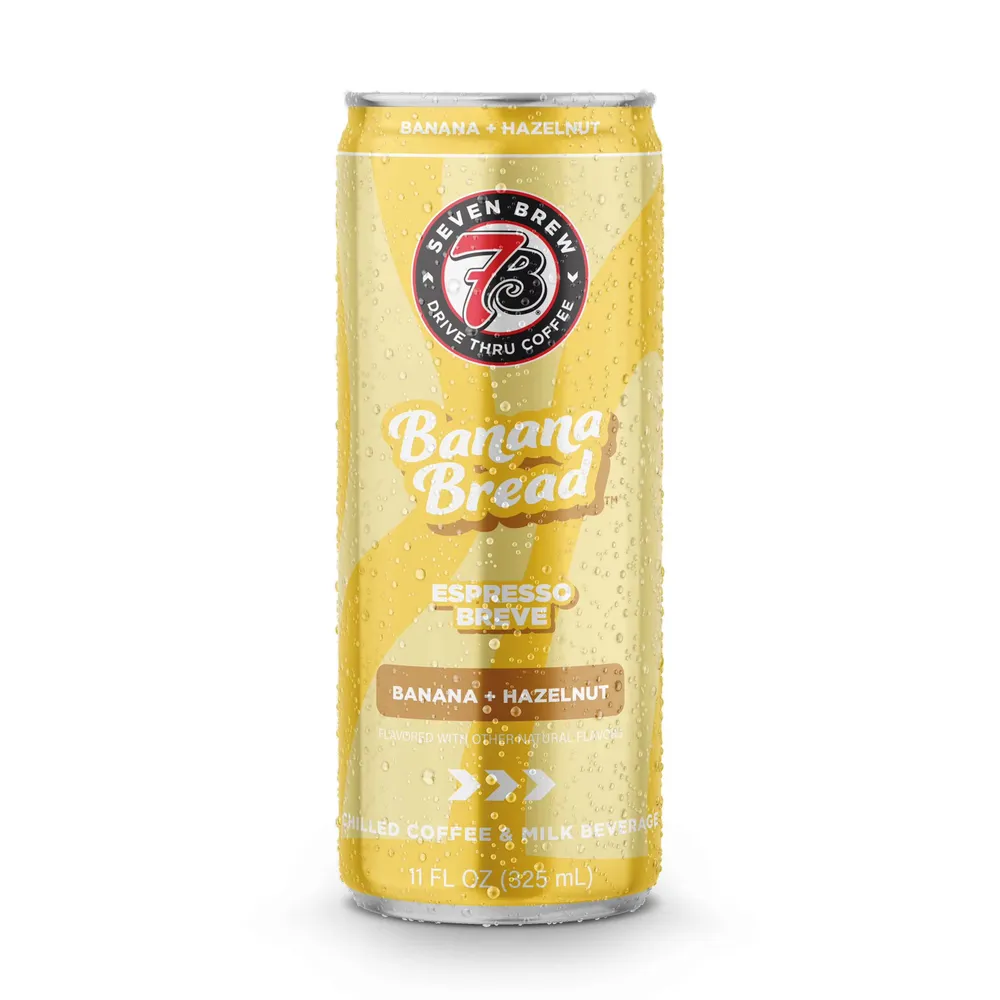
7 Brew built its name on drive-thru speed and a menu with more combinations than most people can count. Chilled Espresso is the brand's bet that its most popular stand drink can survive the trip from a cup to a can. Before getting into what's actually inside the cans (Blondie specifically analyzed below), it's worth a quick look at where 7 Brew came from and how this RTD line fits into that story.
From Drive-Thru Stand to Retail Shelf
7 Brew started in 2017 in Northwest Arkansas as a drive-thru coffee concept, and it grew to seven stands by 2020. That's when an entrepreneurial group bought the brand and began operating it as Brew Culture LLC, building out the "Brew Crew" culture and modernized menu that's become the chain's identity. Growth since has been fast: 7 Brew went from 38 stands in January 2023 to more than 800 today across 38 states, and Blackstone took a minority stake in the company in 2024.
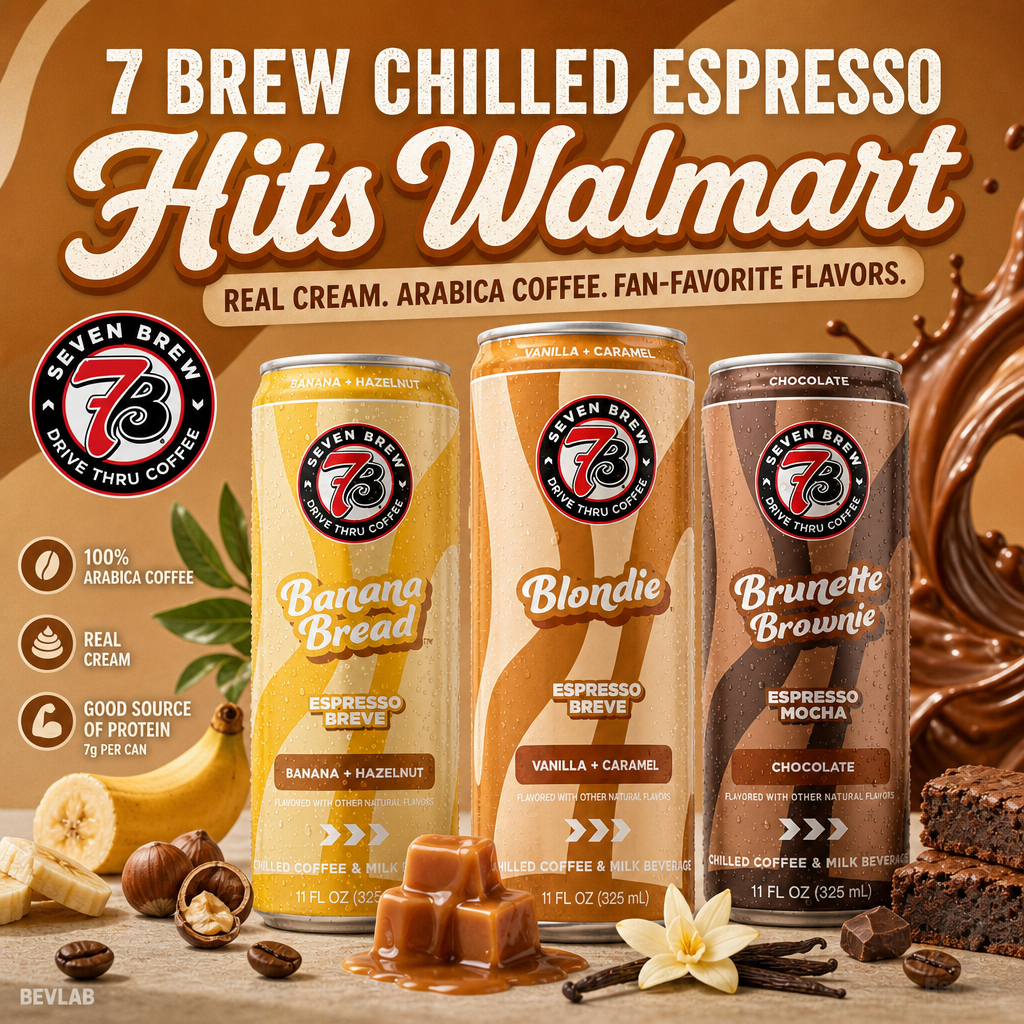
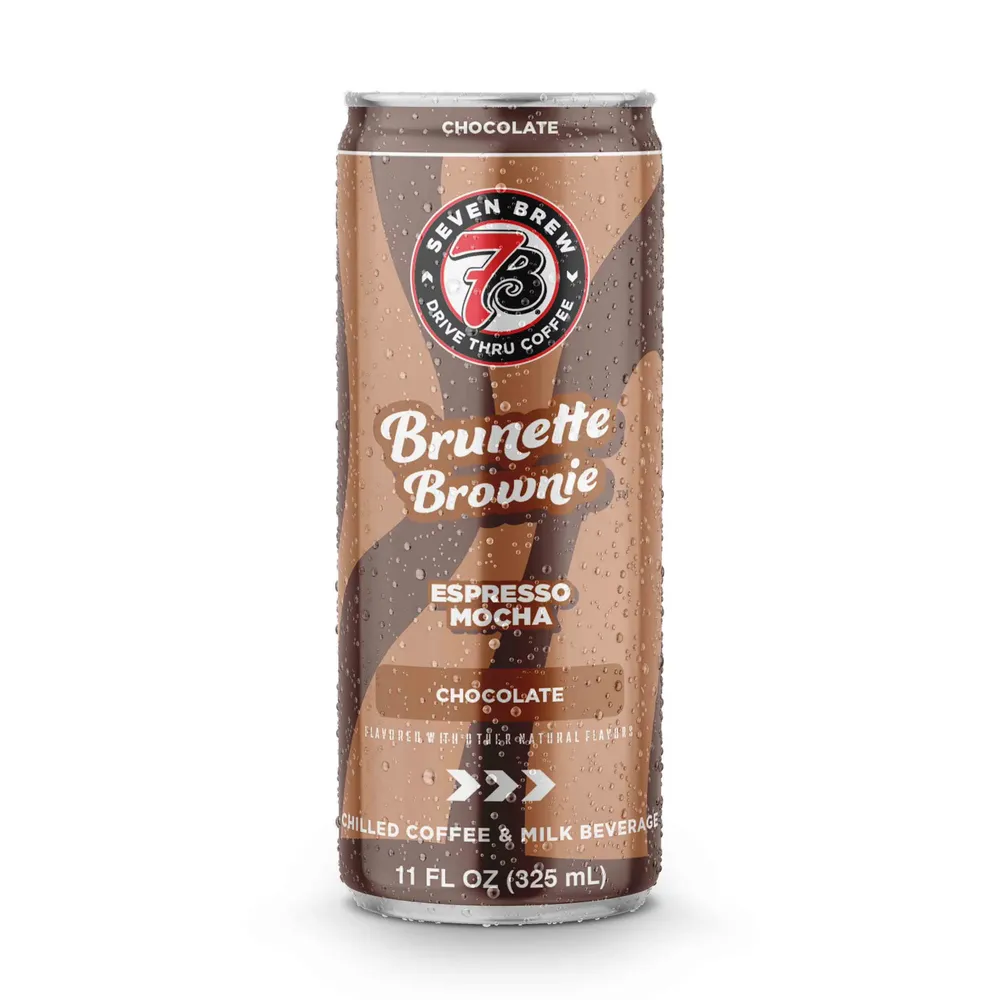
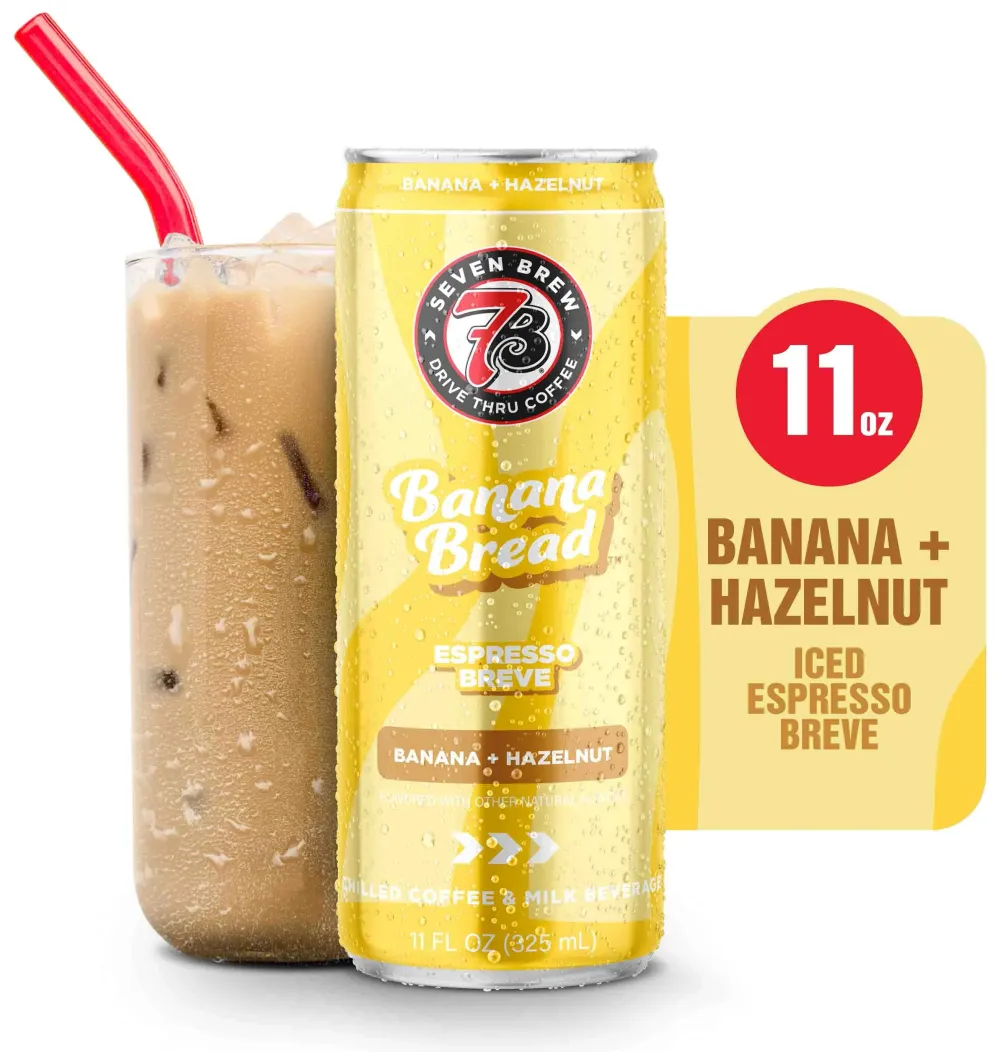
The core menu leans hard into customization, with more than 20,000 possible drink combinations across coffee, energy drinks, sodas, teas, lemonades, smoothies, and shakes. Chilled Espresso is 7 Brew's move to take one corner of that menu, its espresso breves, and put it in a can. According to 7 Brew's own product pages, the RTD lineup covers three flavors inspired by fan-favorite stand drinks: Blondie (caramel and vanilla), Brunette Brownie (chocolate and espresso), and Banana Bread (banana and hazelnut). Each one is built on 100% Arabica coffee, real cream, and natural flavor, which is the same formula backbone the brand highlights for the Blondie can specifically.
That backbone is where the actual product story lives. Here's what's on the label.
7 Brew Chilled Espresso Blondie Nutrition Facts
Per 11 fl oz (325mL) can:
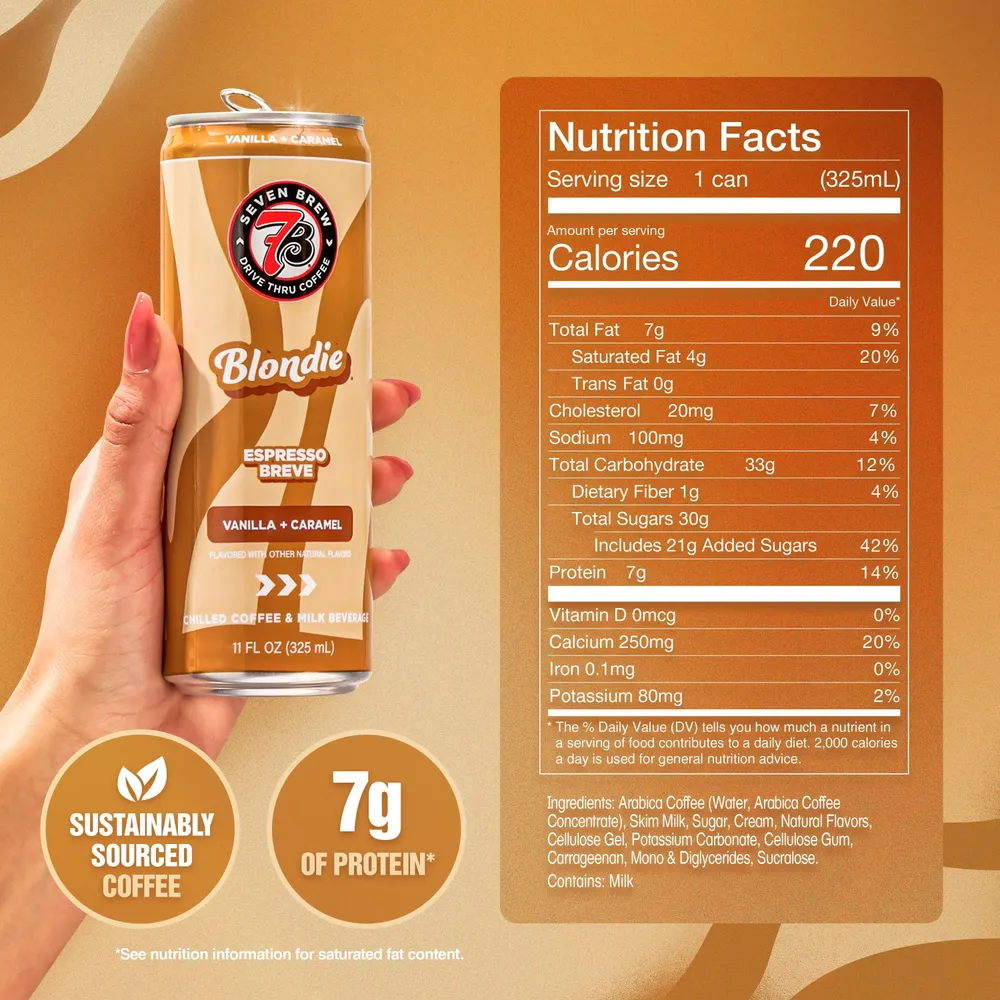
- Calories: 220
- Total Fat: 7g
- Saturated Fat: 4g
- Cholesterol: 20mg
- Sodium: 100mg
- Total Carbohydrate: 33g
- Dietary Fiber: 1g
- Total Sugars: 30g
- Added Sugars: 21g (42% DV)
- Protein: 7g
- Calcium: 250mg (20% DV)
- Potassium: 80mg (2% DV)
That's a can built around dairy and sugar first, caffeine second. Nothing here is hidden, but it's worth sitting with those numbers before getting into the ingredient list: 30g of total sugar and 21g of added sugar put this squarely in dessert-coffee territory, not the low-sugar functional-beverage lane.
7 Brew Chilled Espresso Blondie Ingredients
The label lists ingredients in this order: Arabica Coffee (Water, Arabica Coffee Concentrate), Skim Milk, Sugar, Cream, Natural Flavors, Cellulose Gel, Potassium Carbonate, Cellulose Gum, Carrageenan, Mono & Diglycerides, and Sucralose.
-
Arabica Coffee
Arabica coffee is the base of this drink, listed as water plus Arabica coffee concentrate. Arabica is the more widely cultivated of the two major commercial coffee species and is generally associated with a smoother, less bitter cup and lower caffeine content than Robusta.[1] How much of that character survives concentration and canning depends heavily on brew method and roast, since chlorogenic acid and antioxidant levels shift substantially based on those processing choices.[2,3] The cardiometabolic picture for Arabica coffee also depends on preparation: filtered Arabica coffee has shown a more neutral lipid profile in controlled trials than Arabica-Robusta blends or unfiltered, boiled preparations, which tend to carry more of the cholesterol-raising diterpenes cafestol and kahweol.[4,5] The label doesn't disclose a caffeine amount, so there's no way to say exactly how much caffeine this can delivers.
-
Skim Milk
Skim milk supplies the dairy protein and lactose that make this a "chilled coffee and milk beverage" rather than a black coffee product. Whole fluid milk naturally carries a casein-to-whey protein mix, and that intact protein system is part of why dairy milk has shown measurable postexercise muscle protein benefits in controlled trials, even in its nonfat form.[6] Skim milk also has a documented quirk: it produces a disproportionately high insulin response relative to its glycemic index, a pattern that shows up regardless of whether the milk is whole or skim.[7] None of that translates into a specific claim about this can, since Chilled Espresso is a flavored, sweetened dessert beverage rather than a recovery drink, but it explains why skim milk is doing real nutritional work here beyond flavor: it's the source of the can's 7g of protein and most of its 250mg of calcium.
-
Sugar
Sugar here means ordinary sucrose, the same table sugar chemistry used across the food supply, and it's the ingredient responsible for the bulk of this can's 21g of added sugar. Sucrose has a moderate glycemic index around 65, roughly between pure glucose and pure fructose.[8] The health conversation around added sugar splits into two camps in the research: frequent, high-dose fructose-containing sugar intake is tied to dental caries risk in a dose- and frequency-dependent way,[9,10] and some cohort work links high sugar-sweetened beverage intake to greater type 2 diabetes and metabolic syndrome risk,[11] while other reviews argue that at typical, non-extreme intakes, the case against sugar specifically (versus excess calories generally) is less settled than headlines suggest.[12] Either way, at 21g of added sugar in one can, this isn't a product to reach for if you're managing total sugar intake closely.
-
Cream
Cream is what gives this can its "breve" character, since a breve is traditionally an espresso drink made with steamed cream or half-and-half instead of milk. Cream isn't just concentrated milk fat: native dairy cream carries fat globules wrapped in a membrane structure that appears to change how the body handles that fat compared to processed forms like butter oil, at least in controlled feeding trials.[13] That's a mechanistic detail more relevant to cream research generally than to a single can of flavored coffee, since the cream amount here is a formulation-level addition for richness and mouthfeel, not a dose anyone is tracking for a specific effect. Combined with skim milk, it's what pushes this can to 7g of total fat and 4g of saturated fat per serving.
-
Natural Flavors
Natural flavors are doing the work of delivering the "vanilla + caramel" identity printed on the Blondie can. Under FDA rules, natural flavors are substances derived from plant, animal, or fermentation sources whose function is purely to contribute flavor, with no nutritional role.[14] The flavoring industry's safety body, FEMA, evaluates these complexes using conservative exposure and toxicology thresholds, and its re-affirmations of GRAS status typically show real-world intake sitting orders of magnitude below any level of concern.[15] Consumer research also shows that shoppers consistently rate products labeled with natural flavor as more appealing and "natural" than those using artificial flavor, even though the regulatory distinction is about ingredient source rather than health impact or degree of processing.[16]
-
Cellulose Gel (Microcrystalline Cellulose)
Listed on the can as Cellulose Gel, this ingredient is microcrystalline cellulose, a purified, insoluble form of plant cellulose used almost entirely for texture and stability rather than nutrition. In beverage systems, MCC helps keep dispersed ingredients suspended and can measurably improve physical stability during storage, an effect shown directly in a 2026 fortified protein-beverage study where MCC outperformed other tested stabilizers at preventing separation.[17] Regulatory review has consistently found no safety concern at typical food-use levels, with EFSA concluding no numerical intake limit is needed for MCC.[18] In a dairy coffee can like this one, it's there to help keep the cream, milk proteins, and other suspended solids from settling out on the shelf.
-
Potassium Carbonate
Potassium Carbonate is the source of the can's 80mg of potassium, which works out to just 2% of the daily value. In coffee and dairy beverage manufacturing, potassium carbonate is more commonly used as a mild alkalizing agent to help balance acidity and pH than as a meaningful nutritional potassium source, and the amount here reflects that: potassium's more studied cardiovascular and bone benefits in the research literature involve intakes in the thousands of milligrams per day, delivered through dedicated potassium citrate or potassium-enriched salt interventions.[19,20] At 80mg per can, this ingredient's role in the formula is almost certainly technical rather than nutritional.
-
Cellulose Gum
Cellulose Gum, also known as carboxymethyl cellulose or CMC, is a water-soluble cellulose derivative used to control viscosity and help stabilize dispersed proteins and fats in liquid formulas.[21] It's a common enough tool in acidified and dairy-protein beverages that formulation studies have directly tested how different CMC concentrations change perceived viscosity, smoothness, and mouthfeel.[22] In head-to-head comparisons with other hydrocolloids in fortified dairy beverages, CMC has landed in the middle of the pack for physical stability, less effective than microcrystalline cellulose but more effective than carrageenan under some storage conditions.[23] Here, it's a supporting stabilizer working alongside the cellulose gel and carrageenan already in the formula.
-
Carrageenan
Carrageenan is a sulfated polysaccharide extracted from red seaweed, and in dairy beverages its main job is preventing the separation of fat and protein during storage and shelf life.[24] It's one of the more scrutinized food-additive stabilizers in current nutrition research: EFSA's regulatory re-evaluation found no genotoxicity or carcinogenicity concern for native, food-grade carrageenan and set a temporary acceptable daily intake pending further clarification of exposure data.[25] At the same time, a growing body of mechanistic, animal, and small human trials has raised open questions about carrageenan's effects on gut barrier function and glucose metabolism at higher, sustained exposures, and a 2023 scoping review called for more high-quality human research before drawing firm conclusions either way.[26] For context, the doses tested in that emerging research are typically measured in hundreds of milligrams per day, well above what a can of flavored coffee would contribute from carrageenan's use as a stabilizer.
-
Mono & Diglycerides
Mono & Diglycerides, sometimes labeled E471, are common food emulsifiers built from glycerol and fatty acids, and their core function is helping fat and water phases stay blended instead of separating.[27] Regulatory toxicology on E471 has generally been reassuring, with no numerical intake limit deemed necessary based on the available short- and long-term safety data.[27] That said, more recent large observational cohort work has flagged an association between higher E471 intake and increased cancer risk, though the authors were explicit that residual confounding and measurement error limit how much weight that finding can carry, and it requires replication before it changes the safety picture.[28] In this can, mono and diglycerides are working alongside the cellulose gum and carrageenan to keep the dairy fat and coffee base from splitting apart.
-
Sucralose
Sucralose is the one ingredient here that doesn't fit the "indulgent dessert coffee" framing at first glance, since it's a zero-calorie, high-intensity sweetener roughly 600 times sweeter than table sugar. Its presence alongside 21g of real added sugar suggests it's being used to round out sweetness rather than replace sugar outright. Regulatory review has repeatedly upheld sucralose's acceptable daily intake, with EFSA's most recent re-evaluation concluding the current ADI doesn't need revision and that authorized uses pose no safety concern.[29] That said, the human research on sucralose is more mixed than the regulatory conclusion alone suggests: at least one large NutriNet-Santé cohort found higher sucralose consumers had a higher rate of incident type 2 diabetes,[30] and a controlled trial found sucralose altered gut microbiome composition and, in some participants, changed glycemic response to a glucose load.[31] Typical dietary sucralose exposure, including in surveyed populations, tends to sit well within the ADI,[32] and there's no reason to think one can changes that picture meaningfully.
Flavors Available
7 Brew's Chilled Espresso lineup currently spans three flavors built on the same Arabica coffee, real cream, and natural flavor base: Blondie (vanilla and caramel), Banana Bread (banana and hazelnut), and Brunette Brownie (chocolate and espresso). All three carry the same "good source of protein" positioning tied to their 7g protein content per can.
Who It's For
- Fans of 7 Brew's stand drinks who can't always make it to a stand: This is a direct attempt to bottle the Blondie breve experience, and it's built for people who already like that drink and want it on demand.
- Not for anyone tracking added sugar closely: At 21g of added sugar and 30g total sugar per can, this is closer to a canned dessert coffee than a light or functional beverage, sucralose or not.
A Can That Doesn't Pretend to Be Something It's Isn't
7 Brew's Chilled Espresso Blondie is exactly what it looks like on the label: a rich, cream-forward canned coffee built for flavor and indulgence, not for a clean-label or low-sugar positioning. The Arabica coffee and real cream base is legitimate, but 21g of added sugar plus sucralose means this is a treat-yourself can, not an everyday functional pick. If you already love the stand drink, the wider retail rollout is good news. If you're watching sugar intake or get rocked by carrageenan, this isn't the can for that goal.
Follow @BevlabMedia on TikTok and Instagram for more canned-coffee breakdowns as they hit shelves.
References
- Martini, Daniela, et al. "Coffee Consumption and Oxidative Stress: A Review of Human Intervention Studies." Molecules (Basel, Switzerland), 2016. https://doi.org/10.3390/molecules21080979
- Sęk, Magdalena, et al. "Brewing-Method-Dependent Changes in the Bioactive Compound Profile and Antioxidant Potential of Coffee Beverages." Molecules (Basel, Switzerland), 2026. https://doi.org/10.3390/molecules31122163
- Yeager, Sara E, et al. "Acids in coffee: A review of sensory measurements and meta-analysis of chemical composition." Critical reviews in food science and nutrition, 2023. https://doi.org/10.1080/10408398.2021.1957767
- Gonçalinho, Gustavo Henrique Ferreira, et al. "Effects of Coffee on Sirtuin-1, Homocysteine, and Cholesterol of Healthy Adults: Does the Coffee Powder Matter?." Journal of clinical medicine, 2022. https://doi.org/10.3390/jcm11112985
- Juwita, A. Ita, et al. "The Changes of Kahweol and Cafestol of Arabica Coffee from Bean to Consumption: A Systematic Literature Review." Beverages, 2025. https://doi.org/10.3390/beverages11040105
- Wilkinson, Sarah B, et al. "Consumption of fluid skim milk promotes greater muscle protein accretion after resistance exercise than does consumption of an isonitrogenous and isoenergetic soy-protein beverage." The American journal of clinical nutrition, 2007. https://doi.org/10.1093/ajcn/85.4.1031
- Hoyt, Garrett, et al. "Dissociation of the glycaemic and insulinaemic responses to whole and skimmed milk." The British journal of nutrition, 2005. https://doi.org/10.1079/bjn20041304
- Foster-Powell, Kaye, et al. "International table of glycemic index and glycemic load values: 2002." The American journal of clinical nutrition, 2002. https://doi.org/10.1093/ajcn/76.1.5
- Moynihan, Paula, et al. "Diet, nutrition and the prevention of dental diseases." Public health nutrition, 2004. https://doi.org/10.1079/PHN2003589
- Sheiham, A. "Dietary effects on dental diseases." Public health nutrition, 2001. https://doi.org/10.1079/phn2001142
- Malik, Vasanti S, et al. "Sugar-sweetened beverages and risk of metabolic syndrome and type 2 diabetes: a meta-analysis." Diabetes care, 2010. https://doi.org/10.2337/dc10-1079
- Rippe, James M, et al. "Relationship between Added Sugars Consumption and Chronic Disease Risk Factors: Current Understanding." Nutrients, 2016. https://doi.org/10.3390/nu8110697
- Rosqvist, Fredrik, et al. "Potential role of milk fat globule membrane in modulating plasma lipoproteins, gene expression, and cholesterol metabolism in humans: a randomized study." The American journal of clinical nutrition, 2015. https://doi.org/10.3945/ajcn.115.107045
- Davidsen, Jeanne M, et al. "FEMA GRAS assessment of natural flavor complexes: Asafetida oil, garlic oil and onion oil." Food and chemical toxicology : an international journal published for the British Industrial Biological Research Association, 2023. https://doi.org/10.1016/j.fct.2022.113580
- Rosol, Thomas J, et al. "FEMA GRAS assessment of natural flavor complexes: Lemongrass oil, chamomile oils, citronella oil and related flavoring ingredients." Food and chemical toxicology : an international journal published for the British Industrial Biological Research Association, 2023. https://doi.org/10.1016/j.fct.2023.113697
- Murley, Tyler, et al. "The Influence of Colorants, Flavorants and Product Identity on Perceptions of Naturalness." Foods (Basel, Switzerland), 2019. https://doi.org/10.3390/foods8080317
- Li, Jiaxin, et al. "Enhancing Stability of Vitamin-Fortified Protein Beverages: Optimization of Stabilizer Type and Concentration and Screening of Natural Antioxidant Combinations." Foods (Basel, Switzerland), 2026. https://doi.org/10.3390/foods15081392
- EFSA, Panel on Food Additives and Nutrient Sources added to Food (ANS), et al. "Re‐evaluation of celluloses E 460(i), E 460(ii), E 461, E 462, E 463, E 464, E 465, E 466, E 468 and E 469 as food additives." EFSA Journal, 2018. https://doi.org/10.2903/j.efsa.2018.5047
- He, Feng J, et al. "Beneficial effects of potassium on human health." Physiologia plantarum, 2008. https://doi.org/10.1111/j.1399-3054.2007.01033.x
- Weaver, Connie M. "Potassium and health." Advances in nutrition (Bethesda, Md.), 2013. https://doi.org/10.3945/an.112.003533
- Rahman, Md Saifur, et al. "Recent Developments of Carboxymethyl Cellulose." Polymers, 2021. https://doi.org/10.3390/polym13081345
- Liu, Jing, et al. "Stabilization of directly acidified protein drinks by single and mixed hydrocolloids-combining particle size, rheology, tribology, and sensory data." Food science & nutrition, 2020. https://doi.org/10.1002/fsn3.1933
- Li, Jiaxin, et al. "Enhancing Stability of Vitamin-Fortified Protein Beverages: Optimization of Stabilizer Type and Concentration and Screening of Natural Antioxidant Combinations." Foods (Basel, Switzerland), 2026. https://doi.org/10.3390/foods15081392
- Liu, Fang, et al. "Food-grade carrageenans and their implications in health and disease." Comprehensive reviews in food science and food safety, 2021. https://doi.org/10.1111/1541-4337.12790
- EFSA, Panel on Food Additives and Nutrient Sources added to Food (ANS), et al. "Re-evaluation of carrageenan (E 407) and processed Eucheuma seaweed (E 407a) as food additives." EFSA journal. European Food Safety Authority, 2018. https://doi.org/10.2903/j.efsa.2018.5238
- Tahiri, Mirlinda, et al. "Evidence and hypotheses on adverse effects of the food additives carrageenan (E 407)/processed Eucheuma seaweed (E 407a) and carboxymethylcellulose (E 466) on the intestines: a scoping review." Critical reviews in toxicology, 2023. https://doi.org/10.1080/10408444.2023.2270574
- EFSA, Panel on Food Additives and Nutrient Sources added to Food (ANS), et al. "Re-evaluation of mono- and di-glycerides of fatty acids (E 471) as food additives." EFSA journal. European Food Safety Authority, 2017. https://doi.org/10.2903/j.efsa.2017.5045
- Sellem, Laury, et al. "Food additive emulsifiers and cancer risk: Results from the French prospective NutriNet-Santé cohort." PLoS medicine, 2024. https://doi.org/10.1371/journal.pmed.1004338
- "Plain language summary of the Re-evaluation of sucralose (E 955) as a food additive." EFSA journal. European Food Safety Authority, 2026. https://doi.org/10.2903/j.efsa.2026.p240202
- Debras, Charlotte, et al. "Artificial Sweeteners and Risk of Type 2 Diabetes in the Prospective NutriNet-Santé Cohort." Diabetes care, 2023. https://doi.org/10.2337/dc23-0206
- Suez, Jotham, et al. "Personalized microbiome-driven effects of non-nutritive sweeteners on human glucose tolerance." Cell, 2022. https://doi.org/10.1016/j.cell.2022.07.016
- Daher, Mira, et al. "Trends and amounts of consumption of low-calorie sweeteners: A cross-sectional study." Clinical nutrition ESPEN, 2022. https://doi.org/10.1016/j.clnesp.2022.01.006
Tagged