Sneak Energy Drink Cans
150mg of natural caffeine, a gut health angle, and a nootropic stack that doesn't hide behind a proprietary blend label
A full breakdown of what's inside Sneak Energy Cans, from the 150mg natural caffeine base to Brainberry, AstraGin, and the prebiotic fiber blend.
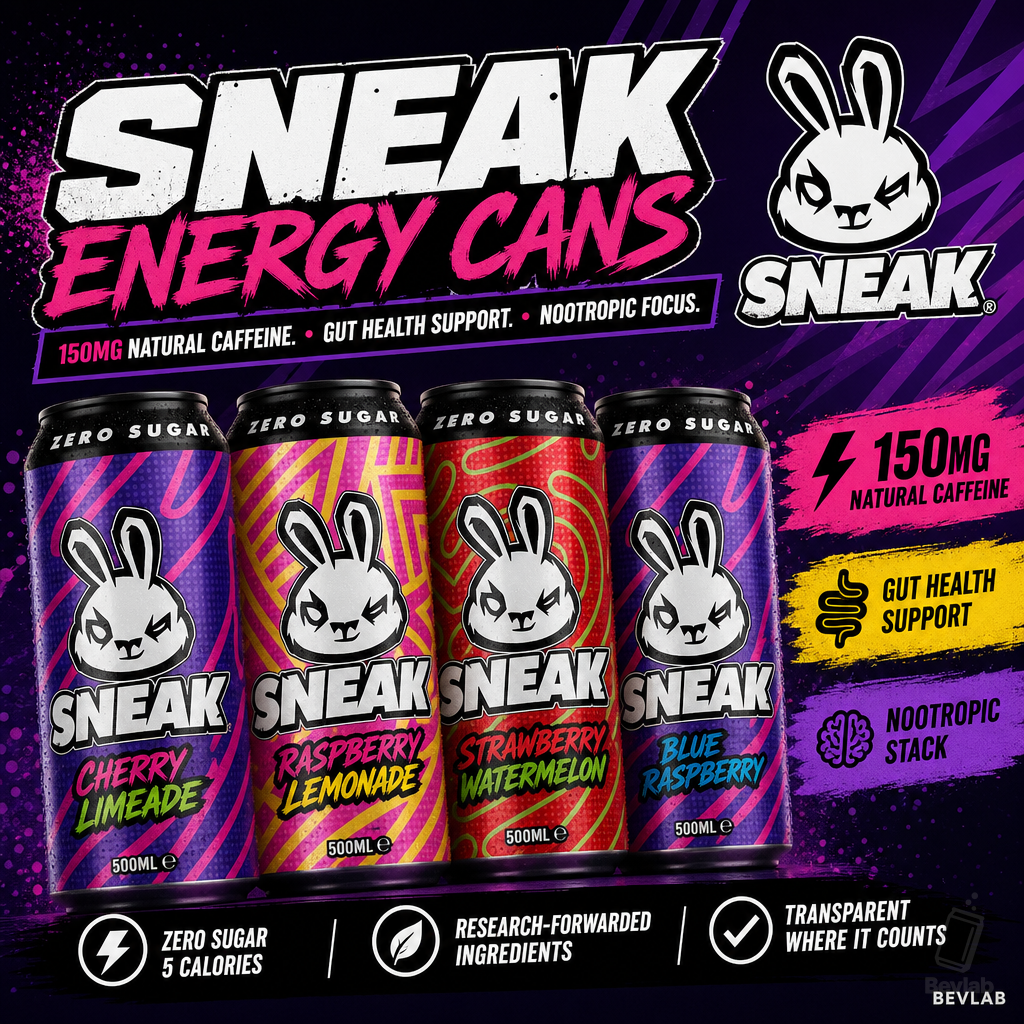
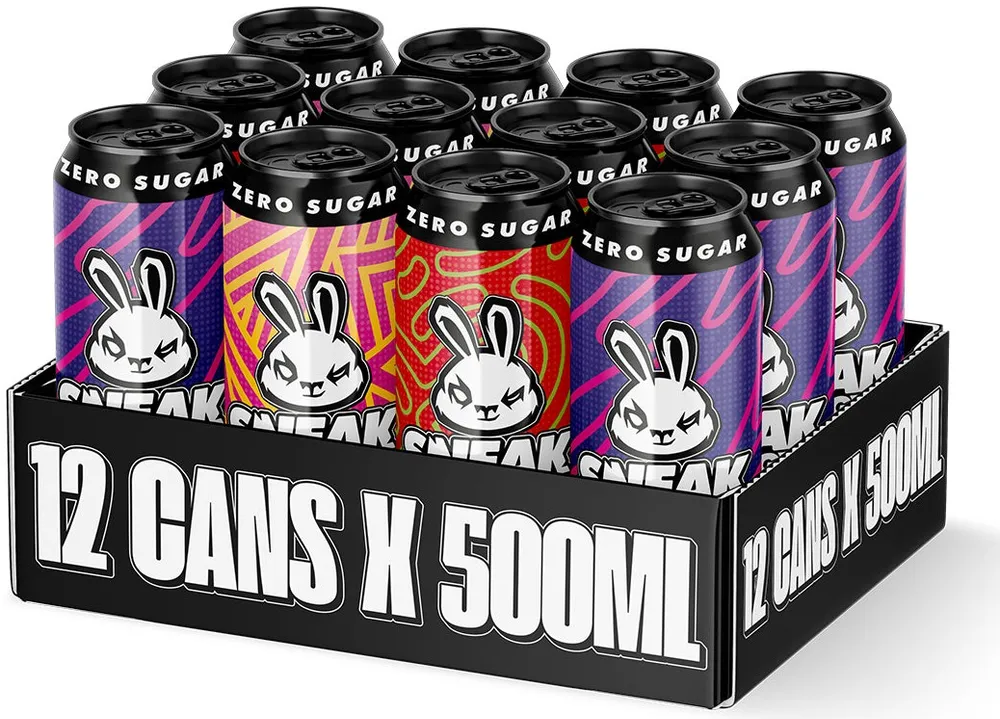
Sneak Energy Cans are the ready-to-drink extension of a brand that built its name on powdered energy formulas before moving into cans. The 500mL format keeps the brand's core positioning intact: 150mg of natural caffeine from green coffee bean extract, zero sugar, only 5 calories per can, and a formula that leans harder into gut health and nootropic support than most cans on the shelf. It's available in four flavors, including Cherry Limeade and Raspberry Lemonade, all built on the same underlying formula.
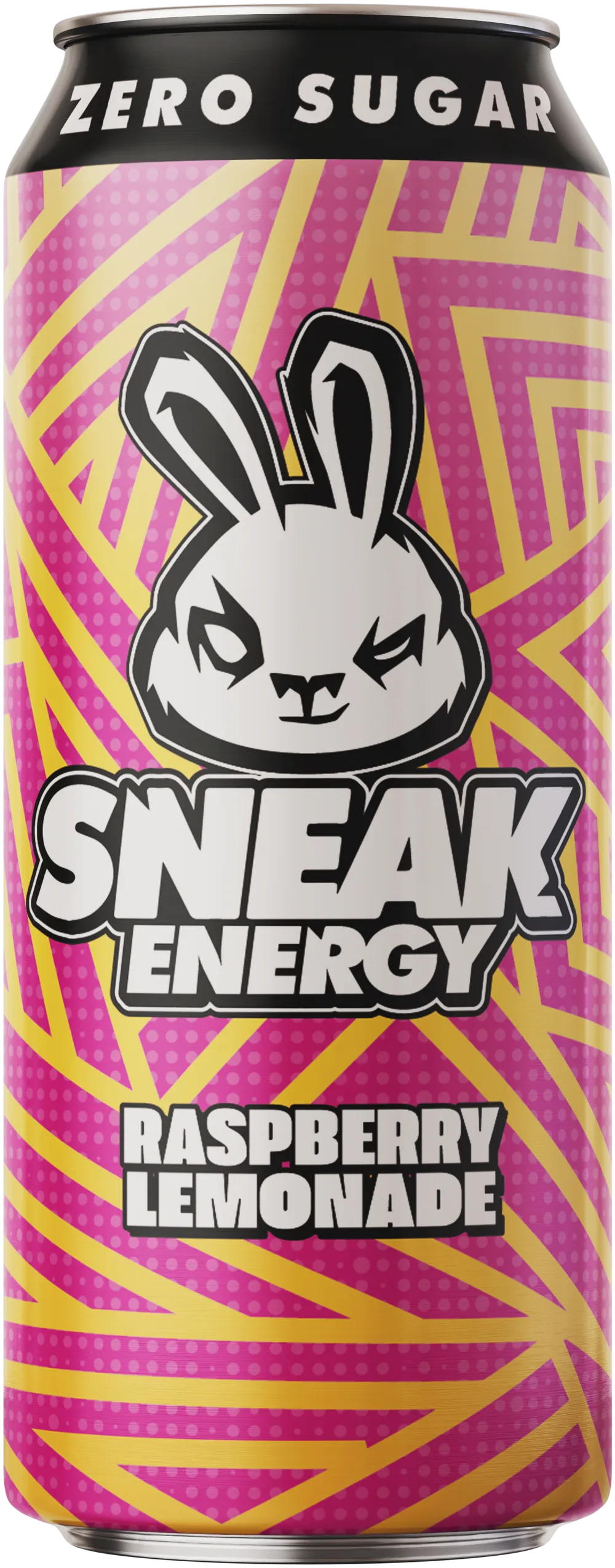
What sets this can apart from a standard 150mg-caffeine energy drink isn't the stimulant base. It's everything sitting alongside it: an aronia berry extract with a growing human research base, a nutrient-absorption ingredient normally seen in performance supplements, and an inulin-based prebiotic fiber blend that most energy drinks skip entirely. Here's what's actually in the can.
Sneak Energy Cans Nutrition Facts
Per 500mL can:
- Energy: 5kcal
- Fat: 0g
- Carbohydrates: 0g (sugars: 0g)
- Protein: 0g
- Salt: 0.15g
- Vitamin C: 80mg (100% RI)
- Niacin (B3): 20mg (125% RI)
- Vitamin E: 12mg (100% RI)
- Pantothenic Acid (B5): 10mg (166% RI)
- Zinc: 5mg (50% RI)
- Vitamin B6: 2mg (143% RI)
- Iodine: 60mcg (40% RI)
- Vitamin B12: 10mcg (400% RI)
- Vitamin D3: 5mcg (100% RI)
Sneak Energy Cans Ingredients
Sneak discloses total caffeine content and the full vitamin and mineral panel with individual doses, but the rest of the functional ingredients, Brainberry, AstraGin, taurine, inulin, choline bitartrate, ginseng, and inositol, sit inside a single undosed blend on the label. That's a proprietary-blend structure, even though Sneak markets itself around clean, transparent formulas. Where a specific dose isn't disclosed, we've noted that clearly below rather than guessing.
-
Natural Caffeine (Green Coffee Bean Extract) - 150mg
The caffeine in Sneak comes from green coffee bean extract rather than synthetic caffeine anhydrous, which is where the "natural caffeine" claim on the can comes from. Mechanistically it works the same way regardless of source: caffeine blocks adenosine receptors in the brain, which is the signal that makes you feel tired, and that blockade is what drives the alertness and focus most people associate with energy drinks.[1] At 150mg, this can sits in the moderate range for the category, well below the 300mg+ cans but high enough to produce a real effect. Research on caffeine doses in this range consistently shows improved reaction time, vigilance, and sustained attention, especially on repetitive or monotonous tasks.[2] The FDA and toxicology reviews generally consider up to 400mg/day safe for healthy adults,[3] so a single 150mg can leaves plenty of room in a normal day's intake.
-
Brainberry (Aronia Berry Extract) - undisclosed
Brainberry is a standardized Aronia melanocarpa (black chokeberry) extract, and it's one of the more research-backed ingredients in this can. It's rich in anthocyanins, primarily cyanidin-3-O-galactoside, and it's been tested in a handful of placebo-controlled human trials from the same research group. In middle-aged overweight adults, a 90mg dose over 24 weeks improved psychomotor speed on a standard hand-coordination test.[4] In young adults, a single week of 750mg improved reaction speed on a five-choice attention task and raised serum BDNF.[5] In older overweight adults, six weeks at a lower dose improved spatial working memory scores by 20% versus placebo.[6] Sneak doesn't disclose the amount used in this can, so we can't say where it lands relative to those study doses, but the ingredient itself has a real and growing evidence base behind it, which is more than most "brain berry" marketing claims can say.
-
AstraGin - undisclosed
AstraGin is a combination of Astragalus membranaceus and Panax notoginseng root extracts, and its job isn't to stimulate you directly. It's designed to help your body absorb the other ingredients in the can more efficiently. In a human pharmacokinetic trial, 50mg of AstraGin alongside L-arginine increased arginine absorption by over 17% compared to placebo.[7] In a longer 4-week trial pairing AstraGin with whey protein, it meaningfully increased absorption of the branched-chain amino acids valine and leucine, with the biggest gains showing up in older adults.[8] The standard clinical and commercial dose across every human trial to date is 50mg, so if Sneak is using an industry-typical amount, it's likely operating in that range, though the label doesn't confirm it. A 2020 EFSA safety review found the ingredient safe at lower intake levels than the commercial 50mg dose used in these trials, a regulatory nuance worth knowing if you're stacking multiple AstraGin-containing products in a day.[9]
-
L-Taurine - undisclosed
Taurine is one of the most common additions to energy drinks worldwide, and it shows up here as part of the undosed blend. On its own, taurine's evidence base leans more cardiometabolic than cognitive: meta-analyses show modest reductions in blood pressure and heart rate at doses of 1.5-3g per day,[10] and separate research shows it can meaningfully lower triglycerides and fasting glucose at similar intakes.[11] For exercise and cognitive performance specifically, taurine alone tends to show small effects, and its biggest wins in the research show up when it's paired with caffeine rather than used solo.[12] Given Sneak doesn't disclose the amount here, it's reasonable to assume it's playing a supporting role in the formula rather than delivering a clinically meaningful dose on its own.
-
Prebiotic Fiber (Inulin) - undisclosed
The gut health claim on Sneak's cans comes from inulin, a chicory root-derived fiber that your body can't digest directly. Instead, it travels to your colon where it feeds beneficial bacteria like Bifidobacterium, and that fermentation process is what's behind inulin's reputation as a prebiotic.[13] Human research shows meaningful blood sugar benefits at around 10g per day sustained for six or more weeks, especially in people with prediabetes,[14] but the tolerability research is worth knowing too: doses above roughly 20g per day start causing noticeably more gas and bloating in a lot of people.[15] Since Sneak doesn't publish the exact amount in this can, it's impossible to know whether you're getting a meaningfully dosed prebiotic or a smaller supporting amount, but it's a distinctly different ingredient choice than the vitamin-only "gut health" claims you see elsewhere in the category.
-
Choline Bitartrate - undisclosed
Choline is the raw material your brain uses to build acetylcholine, the neurotransmitter tied to focus, memory, and fast motor control. In the one placebo-controlled human trial using this specific form, a 2g dose (delivering about 800mg of actual choline) improved visuomotor accuracy and produced measurable pupil constriction, a marker of central cholinergic activity, in healthy adults.[16] That said, choline bitartrate's track record on memory specifically is weaker than its track record on motor precision, and it tends to show less consistent benefit than other choline forms like alpha-GPC in healthy, non-deficient people.[17] As with the rest of this blend, Sneak doesn't state the dose, so there's no way to know if this can is delivering anything close to the 2g studied amount.
-
Korean Ginseng Extract (Panax Ginseng) - undisclosed
Ginseng rounds out the cognitive side of this formula. Human trials on standardized Panax ginseng extracts have found a somewhat unusual dose-response pattern: a single 400mg dose of the G115 extract improved delayed recall and working memory in healthy adults, while both lower and higher doses performed worse on the same tasks.[18] Ginseng also has decent human evidence for reducing fatigue specifically, with reviews across cancer-related and general fatigue populations finding benefit at doses of 400mg or more sustained for at least four weeks.[19] Unstandardized ginseng products can vary wildly in actual ginsenoside content,[20] so without knowing Sneak's extraction standard or dose, it's hard to say how closely this ingredient tracks the studied benefits.
-
Inositol - undisclosed
Inositol rounds out the blend as a sugar alcohol your body uses in cell signaling, particularly in pathways tied to insulin and hormone regulation. Most of its human research sits in metabolic and reproductive health contexts at gram-level doses, well beyond what a single energy drink typically delivers, so its inclusion here is likely more of a supporting, low-dose addition to the broader nootropic-adjacent stack than a headline active.
-
Vitamins and Minerals
-
Vitamin C (as Ascorbic Acid) - 80mg (100% RI)
Vitamin C covers a full day's reference intake in one can. Beyond its antioxidant role, it's a cofactor your body needs to make norepinephrine, which ties it loosely into the alertness picture alongside caffeine.
-
Niacin (as Nicotinamide) - 20mg (125% RI)
Niacin is a precursor to NAD+, the coenzyme your cells rely on for energy metabolism. At 20mg, this is a standard nutritional dose, far below the gram-level amounts used for niacin's lipid-lowering effects, so expect a B-vitamin contribution rather than a flushing sensation.
-
Vitamin E (as DL-Alpha Tocopheryl) - 12mg (100% RI)
Vitamin E here is the standard alpha-tocopherol form, not the tocotrienol forms studied for more specific cardiometabolic effects. At 100% RI, it's simply covering a nutritional gap.
-
Pantothenic Acid / Vitamin B5 (as Calcium Pantothenate) - 10mg (166% RI)
Vitamin B5 is the direct precursor to Coenzyme A, which your cells need for turning food into usable energy. This dose is well within typical supplemental ranges and isn't associated with any notable side effects.
-
Vitamin B6 (as Pyridoxine HCL) - 2mg (143% RI)
Vitamin B6 supports amino acid metabolism and neurotransmitter synthesis. At 2mg, this can sits comfortably below the doses associated with peripheral neuropathy risk from long-term high-dose supplementation.
-
Vitamin D3 (as Cholecalciferol) - 5mcg (100% RI)
Vitamin D3 covers a standard day's reference intake. It's a small but useful addition given how common mild vitamin D insufficiency is in the general population.
-
Vitamin B12 (as Methylcobalamin) - 10mcg (400% RI)
Vitamin B12 is dosed here in the methylcobalamin form at 400% RI, a common approach in energy drinks even though the "energy" framing around B12 is more about correcting deficiency than boosting energy in people who already have adequate levels.
-
Zinc (as Zinc Biglycinate) - 5mg (50% RI)
Zinc shows up at half the daily reference intake, in a bisglycinate form generally associated with good absorption and fewer GI side effects than cheaper zinc salts.
-
Iodine (as Potassium Iodide) - 60mcg (40% RI)
Iodine is essential for thyroid hormone production. At 60mcg, it's a moderate contribution to daily needs, useful given that iodine intake has quietly declined in several Western countries in recent decades.
-
-
Other Ingredients
- Water - the base of the can and the primary vehicle for everything else in the formula.
- Malic Acid - a tart, naturally occurring acid that gives the can its sour edge and helps balance sweetness.
- Natural Flavoring - the source of each can's specific flavor profile, derived from plant-based flavor extracts rather than synthetic compounds.
- Sucralose - a zero-calorie sweetener roughly 600 times sweeter than sugar, responsible for most of the can's sweetness.
- Acesulfame Potassium - a second high-intensity sweetener typically paired with sucralose to round out the sweetness profile and reduce any lingering aftertaste.
Flavors Available
Who It's For
- Gut health-conscious energy drinkers: the inulin inclusion is a genuine point of difference if you're looking for an energy drink that does more than just caffeinate you.
- Nootropic-curious buyers: Brainberry and AstraGin give this can a more research-forward story than the average zero-sugar energy drink, even without disclosed doses.
A Promising Stack Held Back by an Undisclosed Blend
Sneak Energy Cans pair a genuinely differentiated ingredient list, Brainberry, AstraGin, inulin, taurine, choline, and ginseng, with a proprietary-blend structure that keeps every dose hidden. The formula backs up the brand's research-forward positioning only if those doses land near what's been studied, and right now there's no way to check.
Follow @BevlabMedia on TikTok and Instagram for more energy drink breakdowns.
References
- Guest, Nanci S. et al. "International Society Of Sports Nutrition Position Stand Caffeine And Exercise Performance." Journal of the International Society of Sports Nutrition, 2021. https://doi.org/10.1186/s12970-020-00383-4
- McLellan, Tom M. et al. "A Review Of Caffeine S Effects On Cognitive Physical And Occupational Performance." Neuroscience & Biobehavioral Reviews, 2016. https://doi.org/10.1016/j.neubiorev.2016.09.001
- Wikoff, Daniele, et al. "Systematic review of the potential adverse effects of caffeine consumption in healthy adults, pregnant women, adolescents, and children." Food and chemical toxicology : an international journal published for the British Industrial Biological Research Association, 2017. https://doi.org/10.1016/j.fct.2017.04.002
- Ahles, Sanne, et al. "The Effect of Long-Term Aronia melanocarpa Extract Supplementation on Cognitive Performance, Mood, and Vascular Function: A Randomized Controlled Trial in Healthy, Middle-Aged Individuals." Nutrients, 2020. https://doi.org/10.3390/nu12082475
- Ahles, Sanne, et al. "Short-term Aronia melanocarpa extract supplementation improves cognitive performance: a randomized, double-blind, placebo-controlled cross-over study in healthy young adults." European journal of nutrition, 2024. https://doi.org/10.1007/s00394-024-03381-3
- Ahles, Sanne, et al. "Aronia melanocarpa extract supplementation affects brain vascular function and cognitive performance: A randomized, double-blind, placebo-controlled, cross-over study in older adults with overweight or obesity." Clinical nutrition (Edinburgh, Scotland), 2026. https://doi.org/10.1016/j.clnu.2025.106561
- Lin, Ching-Pin, et al. "Pharmacokinetic effects of AstraGin® (Astragalus membranaceus and Panax notoginseng) with L-arginine on nitric oxide bioavailability." Functional Foods in Health and Disease, 2023. https://doi.org/10.31989/ffhd.v13i6.1104
- Zhuang, Shu Ru, et al. "Effects of Astragalus membranaceus and Panax notoginseng Saponins Extract on the Pharmacokinetics of Whey Protein Absorption, Intestinal Permeability, and Muscle Function: A Pilot Study." Nutrients, 2026. https://doi.org/10.3390/nu18030504
- EFSA, Panel on Nutrition, Novel Foods and Food Allergens (NDA), et al. "Safety of a botanical extract derived from Panax notoginseng and Astragalus membranaceus (AstraGin™) as a novel food pursuant to Regulation (EU) 2015/2283." EFSA journal. European Food Safety Authority, 2020. https://doi.org/10.2903/j.efsa.2020.6099
- Tzang, Chih-Chen, et al. "Insights into the cardiovascular benefits of taurine: a systematic review and meta-analysis." Nutrition journal, 2024. https://doi.org/10.1186/s12937-024-00995-5
- Nie, Zizheng, et al. "Effects of Oral Taurine Supplementation on Cardiometabolic Risk Factors: A Meta-analysis and Systematic Review of Randomized Clinical Trials." Nutrition reviews, 2025. https://doi.org/10.1093/nutrit/nuaf220
- Deng, Hengzhi, et al. "Does One Shot Work? The Acute Impact of a Single Taurine Dose on Exercise Performance: A Meta-Analytic Review." Scandinavian journal of medicine & science in sports, 2025. https://doi.org/10.1111/sms.70123
- Meyer, D, et al. "The bifidogenic effect of inulin and oligofructose and its consequences for gut health." European journal of clinical nutrition, 2009. https://doi.org/10.1038/ejcn.2009.64
- Wang, Long, et al. "Inulin-type fructans supplementation improves glycemic control for the prediabetes and type 2 diabetes populations: results from a GRADE-assessed systematic review and dose-response meta-analysis of 33 randomized controlled trials." Journal of translational medicine, 2019. https://doi.org/10.1186/s12967-019-02159-0
- Mysonhimer, Annemarie R, et al. "Gastrointestinal Effects and Tolerance of Nondigestible Carbohydrate Consumption." Advances in nutrition (Bethesda, Md.), 2022. https://doi.org/10.1093/advances/nmac094
- Naber, Marnix, et al. "Improved Human Visuomotor Performance And Pupil Constriction After Choline Supplementation In A Placebo Controlled Double Blind Study." Scientific reports, 2015. https://doi.org/10.1038/srep13188
- Kansakar, Urna, et al. "Choline Supplements An Update." Frontiers in endocrinology, 2023. https://doi.org/10.3389/fendo.2023.1148166
- Kennedy, David O, et al. "Ginseng Potential For The Enhancement Of Cognitive Performance And Mood." Pharmacology, biochemistry, and behavior, 2003. https://doi.org/10.1016/S0091-3057(03)00126-6
- Arring, Noël M, et al. "Ginseng As A Treatment For Fatigue A Systematic Review." Journal of alternative and complementary medicine (New York, N.Y.), 2018. https://doi.org/10.1089/acm.2017.0361
- Scholey, Andrew, et al. "Effects Of American Ginseng Panax Quinquefolius On Neurocognitive Function An Acute Randomised Double Blind Placebo Controlled Crossover Study." Psychopharmacology, 2010. https://doi.org/10.1007/s00213-010-1964-y
Tagged