Wet Hydration Electrolyte Water: Light on Calories, Light on Electrolytes
A canned water that leans on 4% potassium and keeps the label short
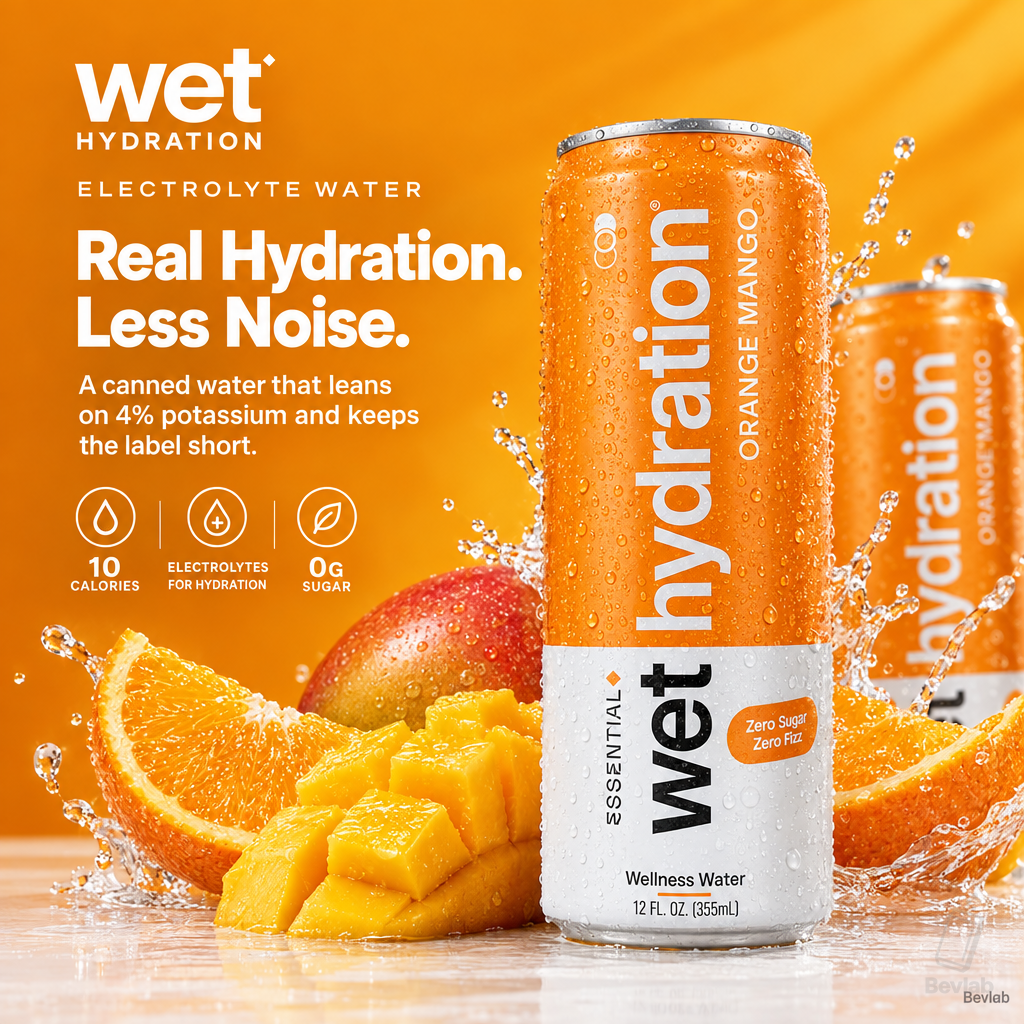
Each can of Wet Hydration Electrolyte Water delivers 150mg of potassium and 60mg of sodium for 10 calories, sweetened with monk fruit extract.
A can of Wet Hydration Electrolyte Water puts 150mg of potassium next to 60mg of sodium, for 10 calories and 0g of sugar. Potassium outweighs sodium on this panel, and that tilt is the most interesting thing about the formula, but one we definitely support.
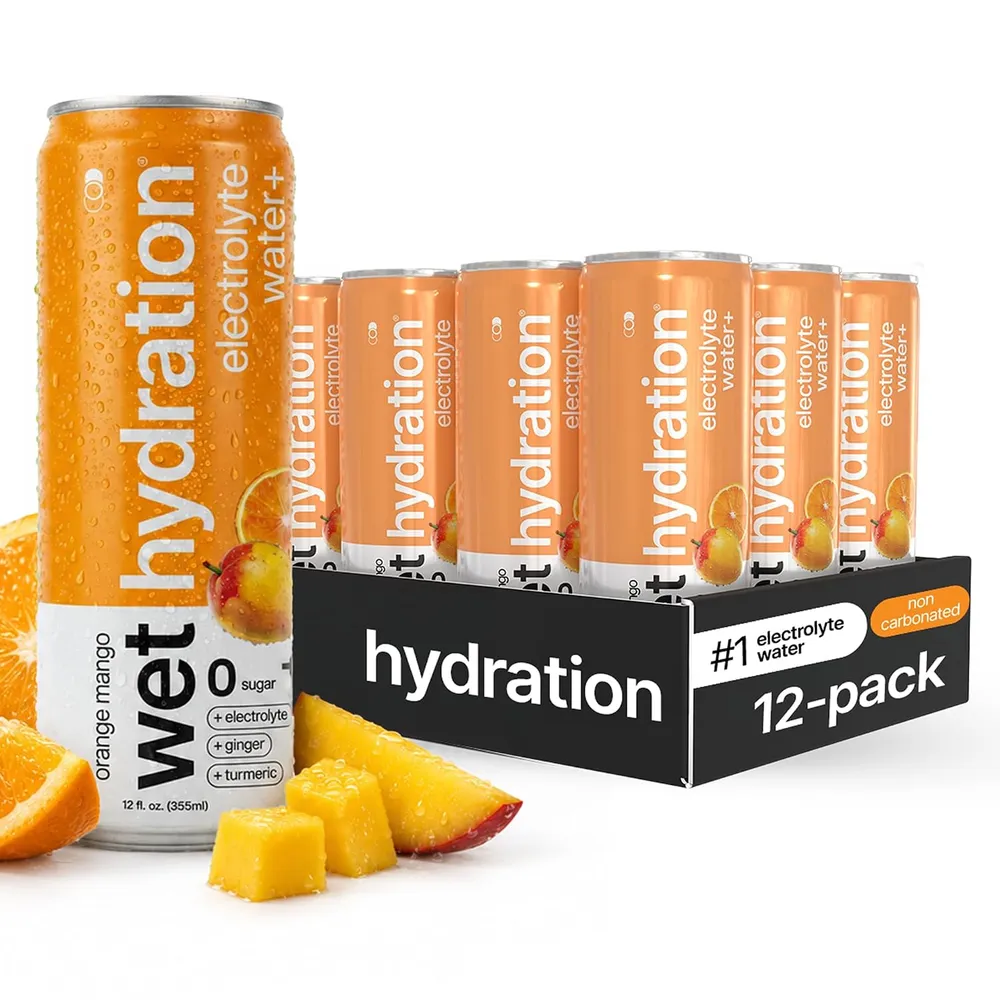
The rest of the lineup is small. You get 9mg (2%) of magnesium as magnesium bisglycinate and 8mg of calcium as calcium sodium citrate, then monk fruit extract for sweetness, citric acid for tartness, and natural flavors. If you're deciding whether it earns a spot in the fridge next to your morning Enny, the useful question is what each of those amounts can realistically do.
Wet Hydration Electrolyte Water Nutrition Facts
Per 1 can. These numbers come from one flavor's can, and other flavors vary slightly.
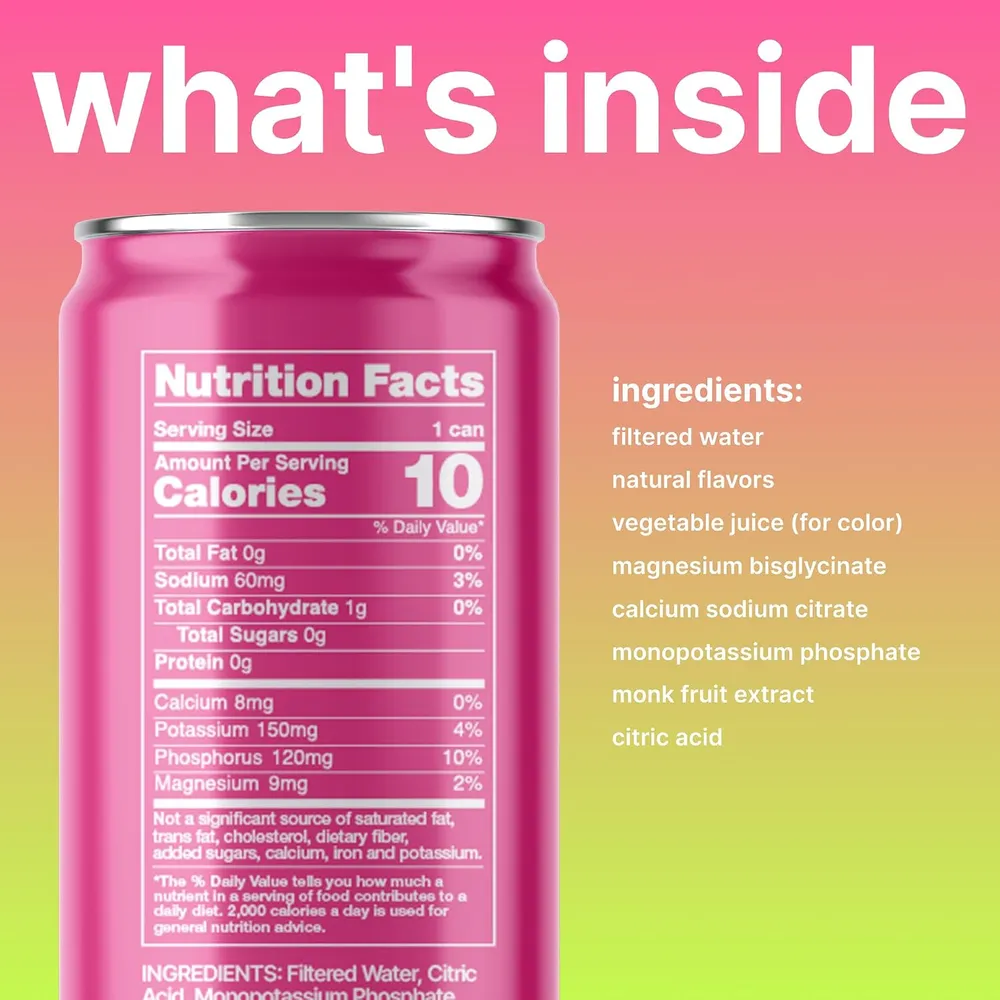
- Calories: 10
- Total Carbohydrate: 1g (0% DV)
- Total Sugars: 0g
- Protein: 0g
- Vitamins and Minerals
- Sodium: 60mg (3% DV)
- Potassium: 150mg (4% DV)
- Phosphorus: 120mg (10% DV)
- Magnesium: 9mg (2% DV)
- Calcium: 8mg (0% DV)
Wet Hydration Electrolyte Water Ingredients
Each 1 can serving provides the following key actives:
-
Filtered Water
Filtered water is the base of the can, and the label doesn't print a volume or dose for it. Its job here is to carry the minerals, but water matters on its own. Reviews describe mild dehydration, a loss of 1-2% of body weight, as enough to affect concentration, reaction time, and mood, especially when heat and exercise are involved.[1,2] During exercise, fluid replacement comes first because sweat is more dilute than blood plasma, carrying roughly 20-50mmol/L of sodium versus about 150mmol/L in plasma.[3] The 60mg of sodium in this can is about 2.6mmol, so it covers a small slice of what a hard session sheds. There's a flip side too, since drinking large volumes of low-sodium fluid during long endurance efforts can contribute to hyponatremia.[1] None of this research tested this product. Treat it as background on why electrolyte water exists, not as a performance promise.
-
Potassium (as Monopotassium Phosphate) - 150mg (4% DV)
Potassium is the headline mineral at 150mg per can, which the label rounds to 4% of the Daily Value. It comes as monopotassium phosphate, a potassium salt that also brings the 120mg of phosphorus (10% DV) printed on the panel. Potassium is a shortfall nutrient in the U.S. diet, with average intake around 2,591mg a day against the 4,700mg adequate intake set in 2004.[4]
Population research found that a higher sodium-to-potassium ratio predicted more cardiovascular disease than either mineral alone.[5] This can has more potassium than sodium by weight, but one can is a small piece of a day. Blood pressure trials mostly used 2,340mg a day or more.[6]
Potassium is also steady in sweat, about 222mg per liter in a seven-person heat study, so 150mg roughly matches two-thirds of a liter of sweat.[7] If you have kidney disease or take potassium-sparing diuretics, ACE inhibitors, or ARBs, check with your doctor about potassium sources.[6]
We're happy with anything that pushes the ratio back in potassium's favor, but you'll need to do a lot more than just drink one of these to fix your potassium:sodium ratio back towards the recommended ~3:2.
-
Magnesium (as Magnesium Bisglycinate) - 9mg (2% DV)
Magnesium comes as magnesium bisglycinate, a form bound to the amino acid glycine, at 9mg per can (2% DV). Absorption depends on dose, your baseline status, and the form, and no single form wins every comparison.[8,9] In 12 patients with ileal resection, magnesium diglycinate and magnesium oxide absorbed about the same overall, though that's a different form from the one on this label and a very specific group of people.[10] The recovery research uses much bigger amounts. In a 22-person study, 350mg a day for ten days reduced muscle soreness after damaging exercise, while performance differences were only trends.[11] A Cochrane review found no clinically meaningful benefit for idiopathic cramps in older adults.[12] At 9mg, this can is a small mineral top-up, not a recovery dose.
-
Calcium (as Calcium Sodium Citrate) - 8mg (0% DV)
Calcium shows up as calcium sodium citrate at 8mg, which the label comically rounds to 0% DV. Studies that move the needle use far more. In cyclists, 1,000mg taken before exercise blunted the rise in parathyroid hormone, though it didn't significantly reduce a bone breakdown marker.[13,14] The fracture research is built on daily totals around 1,200mg from diet plus supplements.[15] This one is in the formula to round out the electrolyte lineup, not to deliver an effect.
-
Monk Fruit Extract
Monk fruit extract is the sweetener, and the brand doesn't disclose how much goes in. It comes from Siraitia grosvenorii, a vine grown mainly in southern China, and its sweetness comes from mogrosides, which run roughly 160 to 420 times sweeter than sugar depending on extract purity.[16] That's how a can can taste sweet and list 0g of total sugars. Digestive enzymes don't break mogrosides down, gut bacteria do, and in rats most of an oral dose turned up in feces as breakdown products.[17] Most of the buzz about blood sugar and gut benefits comes from animal and lab studies with few human trials, so nothing here says this can does anything for metabolism.[18] On safety, monk fruit extract has multiple U.S. GRAS notices, while a 2019 EFSA panel said the data weren't sufficient to conclude on safety as an EU food additive, citing unresolved testicular findings at very high doses in a 90-day rat study.[16] Expect a slower, lingering sweetness, with a bitter or metallic edge at high concentrations.[18]
-
Other Ingredients
- Natural Flavors - Flavor-only ingredients that carry the taste and aroma. The label doesn't break down their sources, and they add no meaningful nutrition.
- Citric Acid - A tart acid found naturally in citrus, used in beverages for sourness and acidity control.
- Vegetable Juice (for color) - The can lists it as the color source. The amount isn't disclosed, and other flavors may color differently.
Check Your Flavor's Can
The panel above is from a single can, so check the label on the flavor in your hand. The live flavor list below covers the lineup.
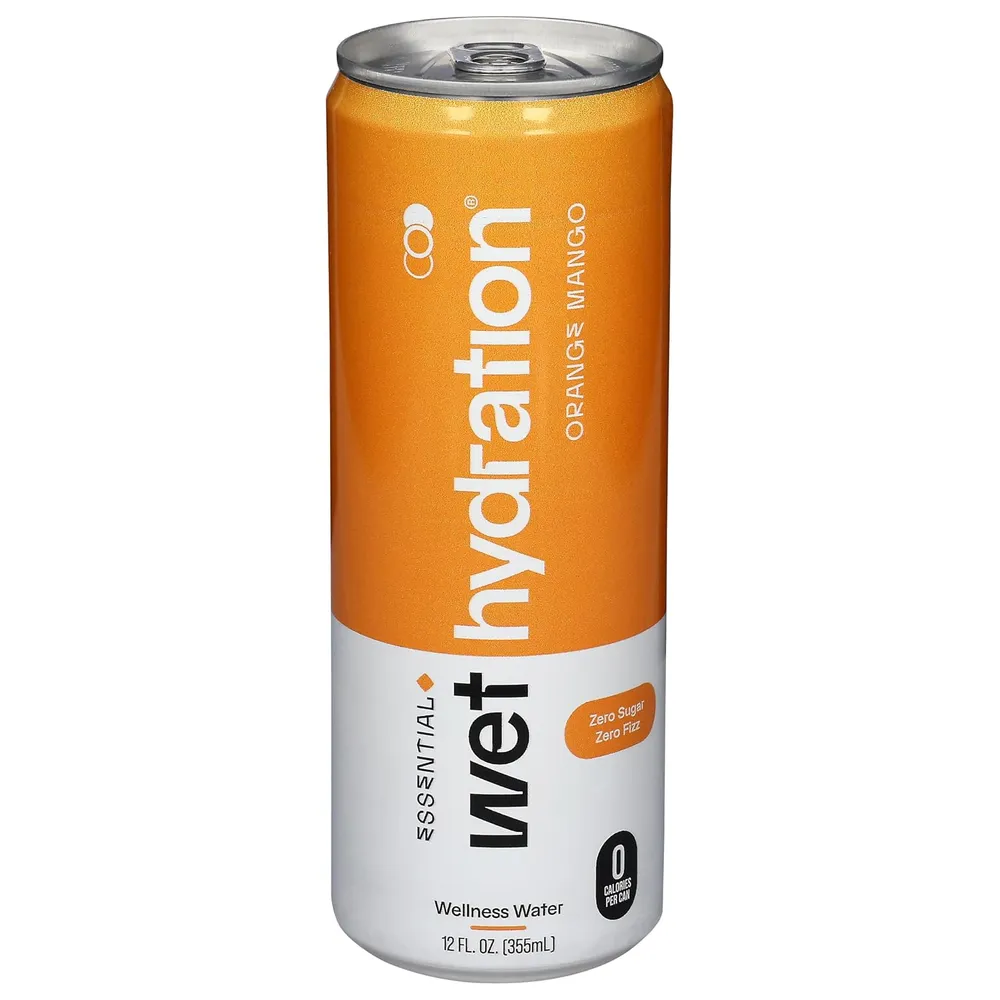
- Orange Mango (12 Cans: $20.99)
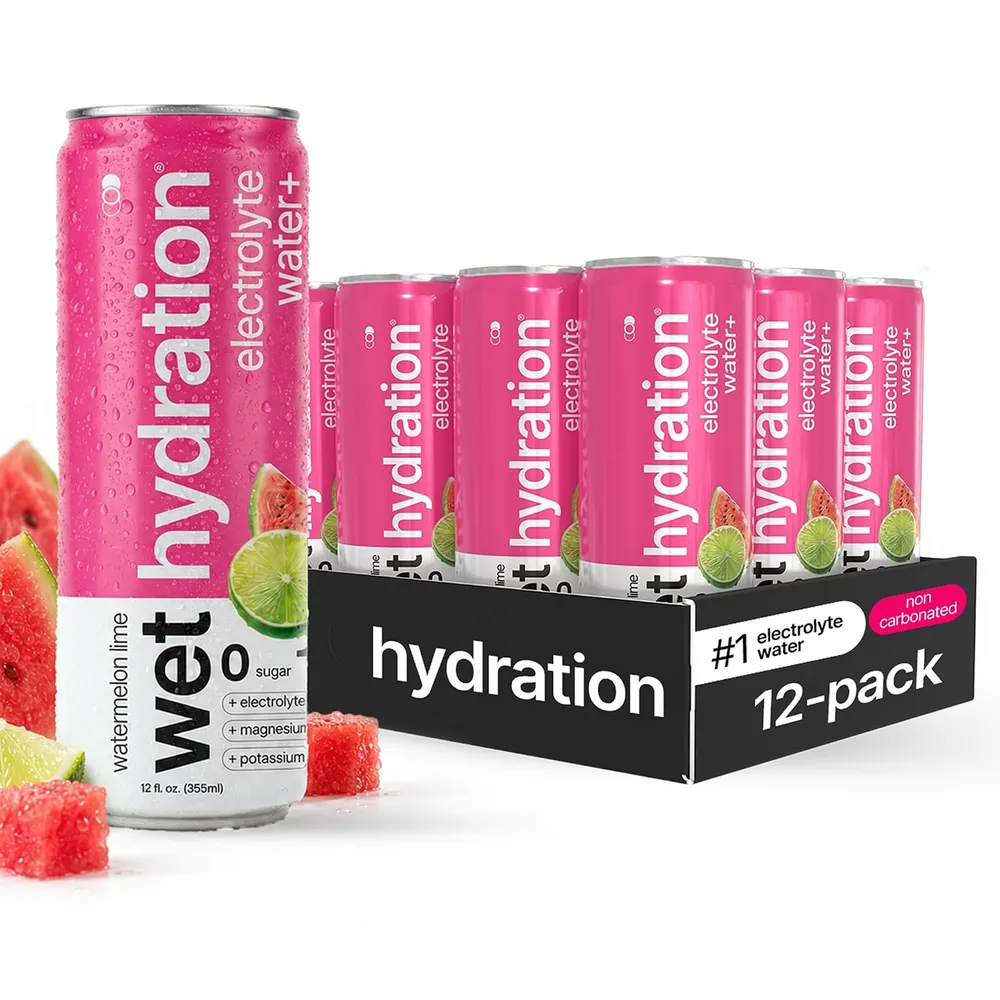
- Watermelon Lemon Lime (12 Cans: $20.99)
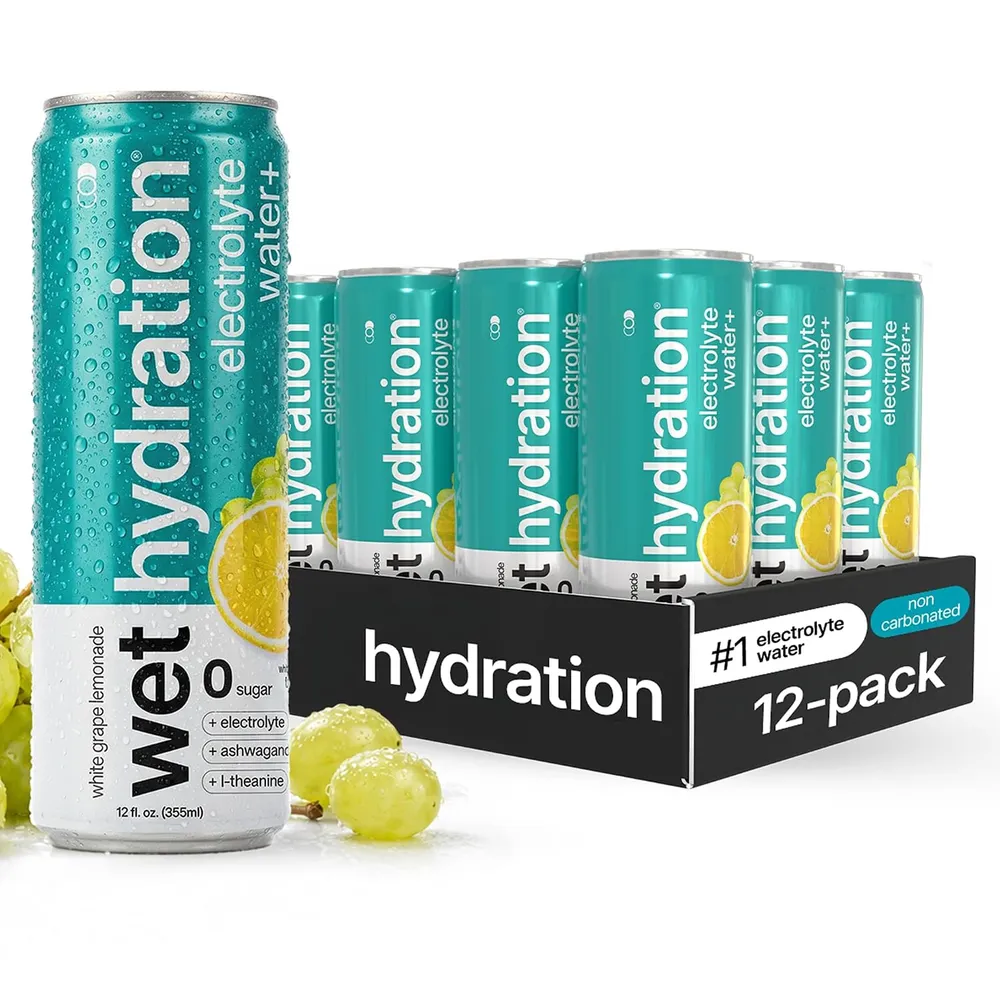
- White Grape Lemonade (12 Cans: $20.99)
Potassium Does the Work Here
This is for someone who wants a flavored, 10-calorie can with a light electrolyte base. Potassium and sodium are the amounts worth noting, the magnesium and calcium are small enough to read as supporting cast, and if you sweat hard for hours, you'll want more sodium than 60mg.
Follow @BevlabMedia on TikTok and Instagram for more can-by-can breakdowns.
References
- Riebl, Shaun K, et al. "The Hydration Equation: Update on Water Balance and Cognitive Performance." ACSM's health & fitness journal, 2013. https://doi.org/10.1249/FIT.0b013e3182a9570f
- Popkin, Barry M, et al. "Water, hydration, and health." Nutrition reviews, 2010. https://doi.org/10.1111/j.1753-4887.2010.00304.x
- Jéquier, E, et al. "Water as an essential nutrient: the physiological basis of hydration." European journal of clinical nutrition, 2010. https://doi.org/10.1038/ejcn.2009.111
- Weaver, Connie M. "Potassium and health." Advances in nutrition (Bethesda, Md.), 2013. https://doi.org/10.3945/an.112.003533
- Cook, Nancy R, et al. "Joint Effects of Sodium and Potassium Intake on Subsequent Cardiovascular Disease: The Trials of Hypertension Prevention (TOHP) Follow-up Study." Archives of internal medicine, 2009. https://doi.org/10.1001/archinternmed.2008.523
- He, Feng J, et al. "Beneficial effects of potassium on human health." Physiologia plantarum, 2008. https://doi.org/10.1111/j.1399-3054.2007.01033.x
- Montain, Scott J, et al. "Sweat mineral-element responses during 7 h of exercise-heat stress." International journal of sport nutrition and exercise metabolism, 2007. https://doi.org/10.1123/ijsnem.17.6.574
- Pardo, Marta R, et al. "Bioavailability of magnesium food supplements: A systematic review." Nutrition (Burbank, Los Angeles County, Calif.), 2021. https://doi.org/10.1016/j.nut.2021.111294
- Schuchardt, Jan Philipp, et al. "Intestinal Absorption and Factors Influencing Bioavailability of Magnesium-An Update." Current nutrition and food science, 2017. https://doi.org/10.2174/1573401313666170427162740
- Schuette, Sally A. et al. "Bioavailability of Magnesium Diglycinate vs Magnesium Oxide in Patients with Ileal Resection." Journal of Parenteral and Enteral Nutrition, 1994. https://doi.org/10.1177/0148607194018005430
- Reno, Alyssum M, et al. "Effects Of Magnesium Supplementation On Muscle Soreness And Performance." Journal of strength and conditioning research, 2022. https://doi.org/10.1519/JSC.0000000000003827
- Garrison, Scott R, et al. "Magnesium For Skeletal Muscle Cramps." The Cochrane database of systematic reviews, 2020. https://doi.org/10.1002/14651858.CD009402.pub3
- Barry, Daniel W, et al. "Acute Calcium Ingestion Attenuates Exercise Induced Disruption Of Calcium Homeostasis." Medicine and science in sports and exercise, 2011. https://doi.org/10.1249/MSS.0b013e3181f79fa8
- Sherk, Vanessa D, et al. "Calcium Supplementation Attenuates Disruptions In Calcium Homeostasis During Exercise." Medicine and science in sports and exercise, 2017. https://doi.org/10.1249/MSS.0000000000001239
- Clarke, B.L. "Use Of Calcium Or Calcium In Combination With Vitamin D Supplementation To Prevent Fractures And Bone Loss In People Aged 50 Years And Older A Meta Analysis." Yearbook of Endocrinology, 2008. https://doi.org/10.1016/s0084-3741(08)79096-6
- EFSA, Panel on Food Additives and Flavourings (FAF), et al. "Safety of use of Monk fruit extract as a food additive in different food categories." EFSA journal. European Food Safety Authority, 2019. https://doi.org/10.2903/j.efsa.2019.5921
- Murata, Yuji, et al. "Digestion and absorption of Siraitia grosvenori triterpenoids in the rat." Bioscience, biotechnology, and biochemistry, 2010. https://doi.org/10.1271/bbb.90832
- Yeung, Andy Wai Kan. "Bibliometric analysis on the literature of monk fruit extract and mogrosides as sweeteners." Frontiers in nutrition, 2023. https://doi.org/10.3389/fnut.2023.1253255
Tagged