Energy Drinks Pass Coffee as Gen Z's Main Caffeine Source, Citi Finds
Citi's survey of 2,400 US energy drink drinkers found 30.6% of 16-24 year-olds now call energy drinks their main caffeine source, ahead of coffee.
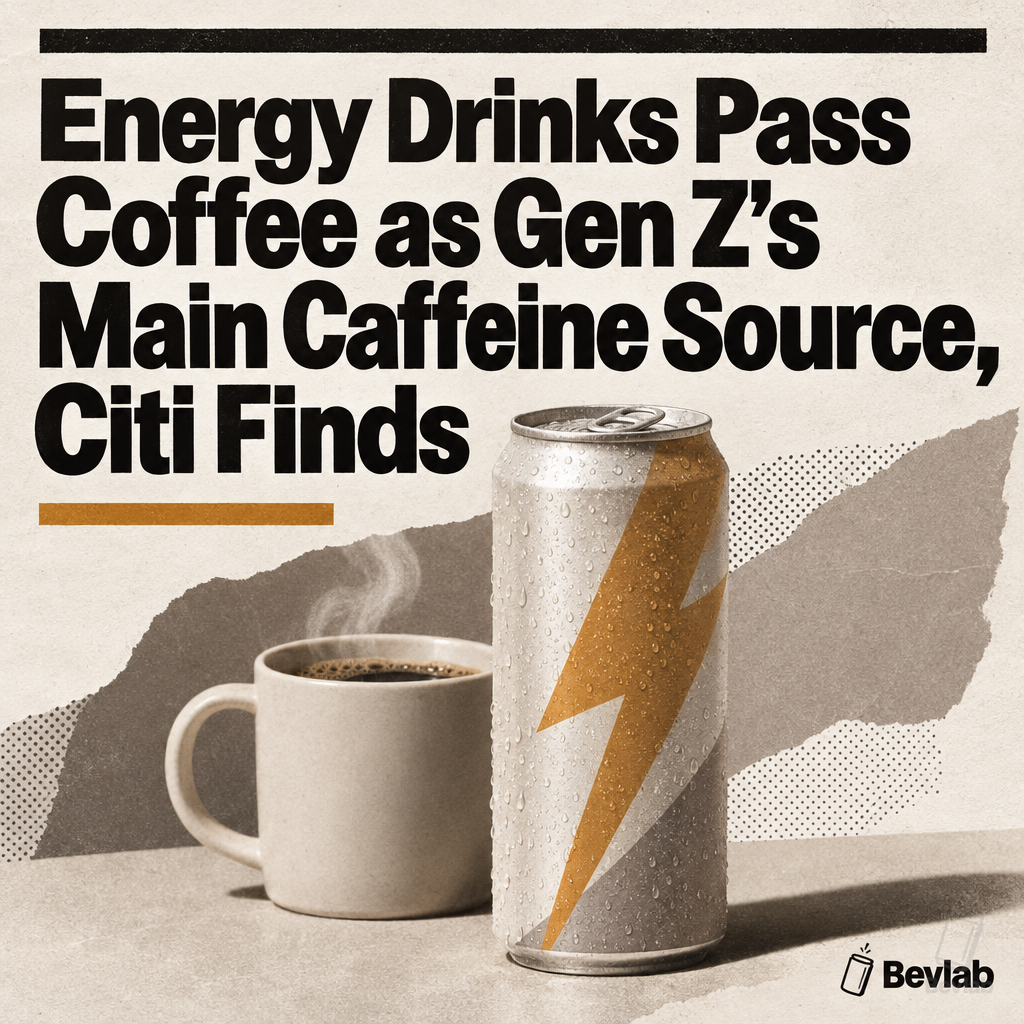
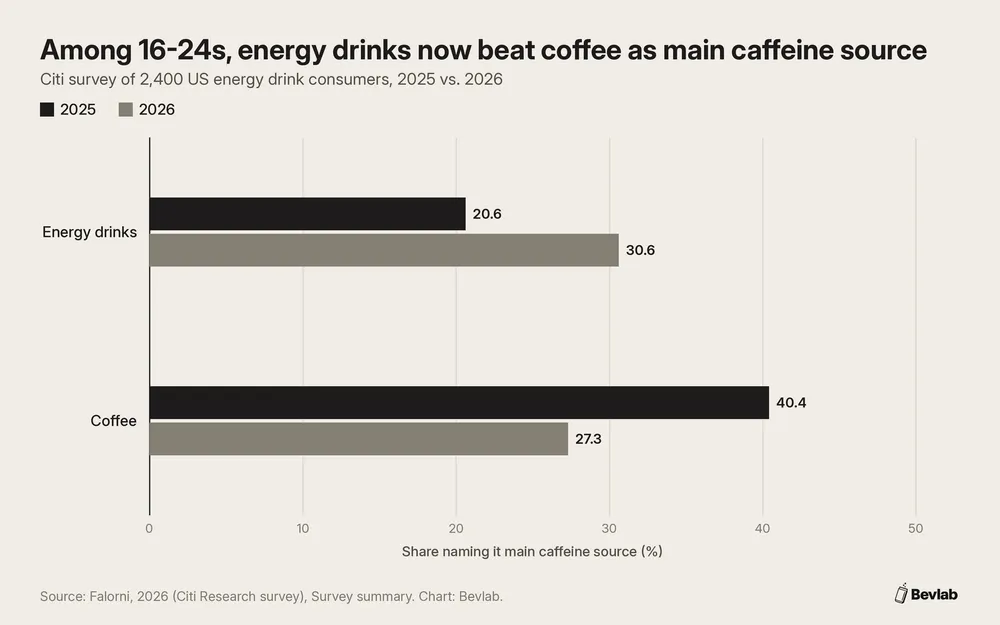
Coffee just lost the youngest caffeine drinkers. In Citi's latest survey of 2,400 US energy-drink consumers, 30.6% of 16-24 year-olds named energy drinks as their main caffeine source, up from 20.6% a year earlier. Coffee fell to 27.3% from 40.4% in the same group.[1]
Citi beverage analyst Filippo Falorni led the survey. It first circulated in mid-August 2026 and came back around in November, but Citi's full note goes only to its clients and isn't public. The numbers and quotes below come from Citi's survey note as reported by ZeroHedge.[1]
One caveat: everyone surveyed already drinks energy drinks. The survey shows where energy-drink drinkers get most of their caffeine. It doesn't measure what all Americans drink.
The Numbers by Age
Every age group Citi broke out moved toward energy drinks. The youngest group is the only one where coffee is no longer on top.[1]
| Age group | Energy drinks as main source | Coffee as main source |
|---|---|---|
| All respondents | 23.6% (from 16.6%) | 40.8% (from 47.4%) |
| 16-24 | 30.6% (from 20.6%) | 27.3% (from 40.4%) |
| 25-34 | 24.3% (from 19%) | Not broken out |
| 55+ | 12% (from 7.7%) | 60.4% |
"Based off our survey results, younger consumers are increasingly comfortable with using energy beverages as their primary caffeine source", Falorni wrote, according to ZeroHedge.[1]
The people who switched mostly came from coffee. Falorni wrote that "the coffee category has been the largest share donor to energy beverages across all age groups." Among switchers, 45% said coffee was their main caffeine source before they moved to energy drinks. Another 30% came from soft drinks and 10% from tea.[1]
Why the Can Is Winning
Two numbers explain a lot of this. Zero-sugar products now make up about 49% of US energy-drink sales, up from 37% in 2021. Energy-drink prices have risen only 4.9% since late 2021. Soda rose 42% and coffee 47% over the same stretch.[1]
That makes the switch easy to understand. A zero-sugar can doesn't come with the soda guilt, and it has gotten cheaper relative to a café drink every year. Citi reads the price gap as room for Monster and Red Bull to raise prices.[1]
Those two brands still control about 70% of the market, even with all the new challengers. But the survey also found that loyalty is weak: 51% of respondents switched their main brand in the past year. Women made up 58% of people who started drinking energy drinks in the past year, compared with 29% of people who've been drinking them for six years or longer.[1]
Regulators Are Moving on Teens
Governments are watching the young end of this trend. England confirmed on 16 July 2026 that it will ban sales of high-caffeine energy drinks to under-16s. The ban covers drinks other than tea or coffee with more than 150mg/L of caffeine. It applies in shops, in vending machines, and online. It's set to start in April 2027, but Parliament still has to approve it.[2]
Poland went further and has banned energy drink sales to under-18s since January 1, 2024. Under Polish law, an energy drink is any drink with more than 150mg/L of caffeine or any drink that contains taurine.
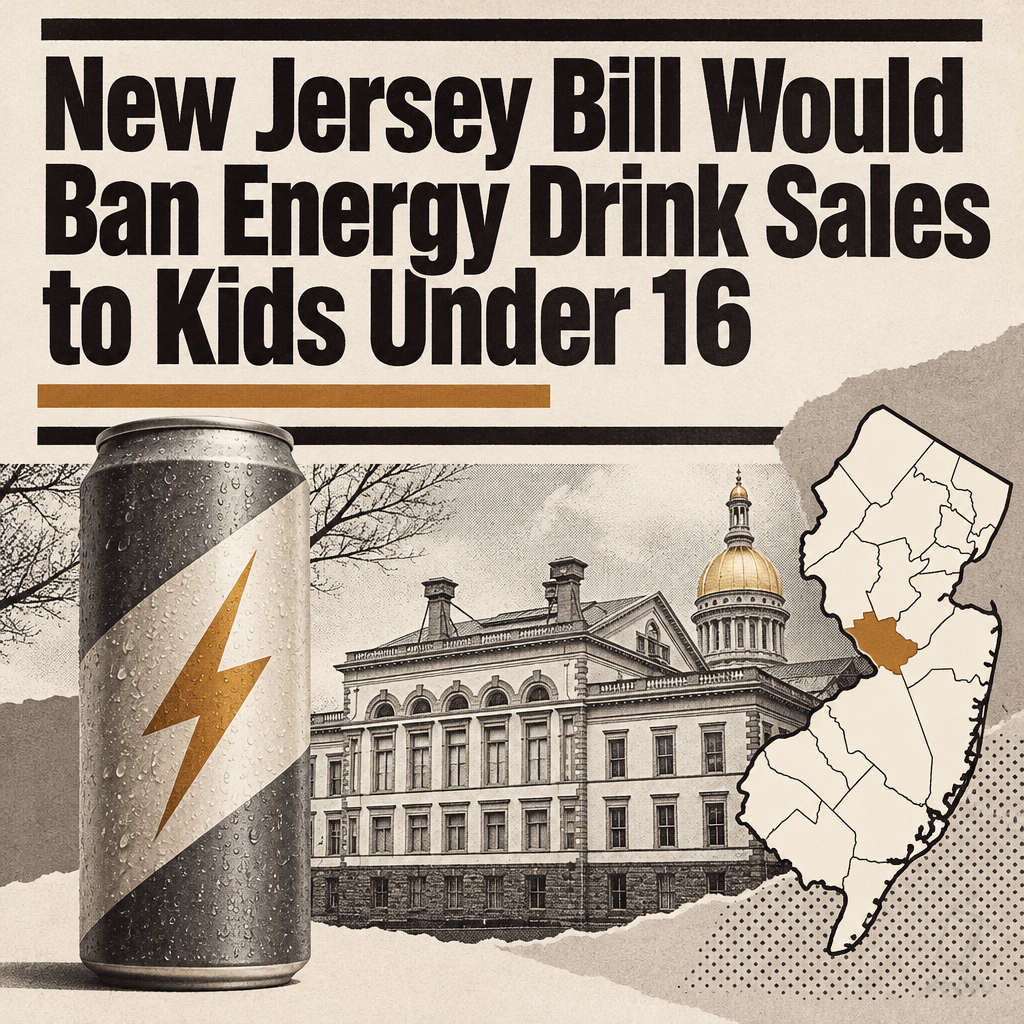
In the US, we've covered New Jersey's proposed under-16 ban, and more states could follow.
Where Bevlab Stands
Citi's youngest group starts at 16, so this "Gen Z" growth includes 16- and 17-year-olds. Bevlab doesn't support caffeine for kids. Parents are responsible first, since they decide what goes in the fridge and what their teens spend money on. Retailers and lawmakers come after that.
The industry shouldn't treat teen growth as a win. The adult side of this survey (zero sugar, better value, and coffee drinkers switching over) is a strong enough story without it.
References
-
ZeroHedge. "Energy Drinks Overtake Coffee As Gen Z's Primary Caffeine Source." ZeroHedge, 2026. https://www.zerohedge.com/personal-finance/energy-drinks-overtake-coffee-gen-zs-primary-caffeine-source
-
UK Department of Health and Social Care. "Children's health further protected with energy drinks ban." GOV.UK, 2026. https://www.gov.uk/government/news/childrens-health-further-protected-with-energy-drinks-ban
Tagged