GORGIE Energy Drink: 150mg Green Tea Caffeine and Zero Sugar
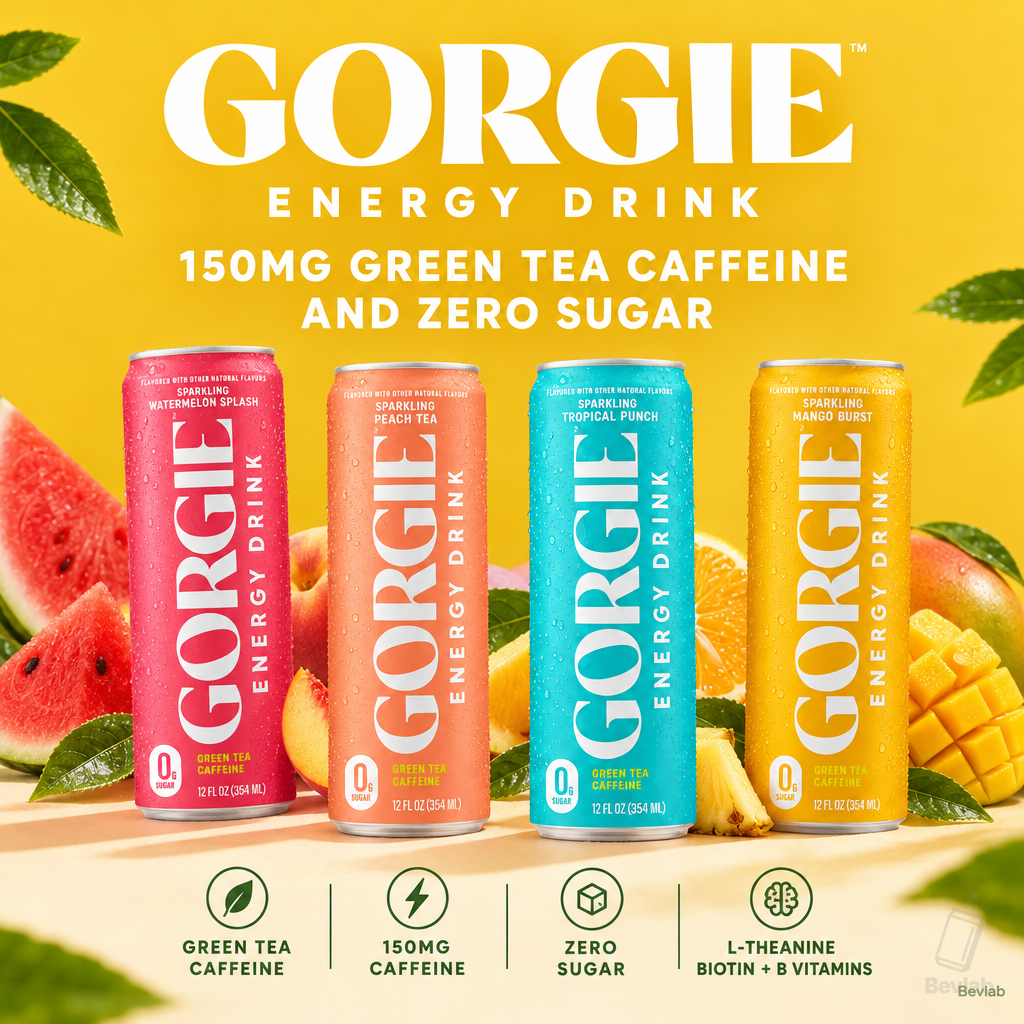
GORGIE Energy Drink uses 150mg caffeine from green tea, zero sugar, L-theanine, biotin, and B vitamins across a growing flavor lineup.
GORGIE just landed a new flavor at Target this fall. Berry Burst, wrapped in a deep purple can, is now sitting on shelves nationwide as the brand's latest push into mainstream retail. It's a timely reason to open a can, but the more useful story is what's actually inside every GORGIE Energy Drink on the shelf, not just the newest one.
GORGIE has built its identity around a specific pitch: an energy drink with zero sugar, five calories, a green tea caffeine base, and a small functional stack of L-theanine, ginger root extract, and B vitamins layered on top. It's aimed at everyday energy use rather than high-stimulant pre-workout territory. Here's what's actually on the label, and what the ingredients inside can and can't back up.
Nutrition Facts
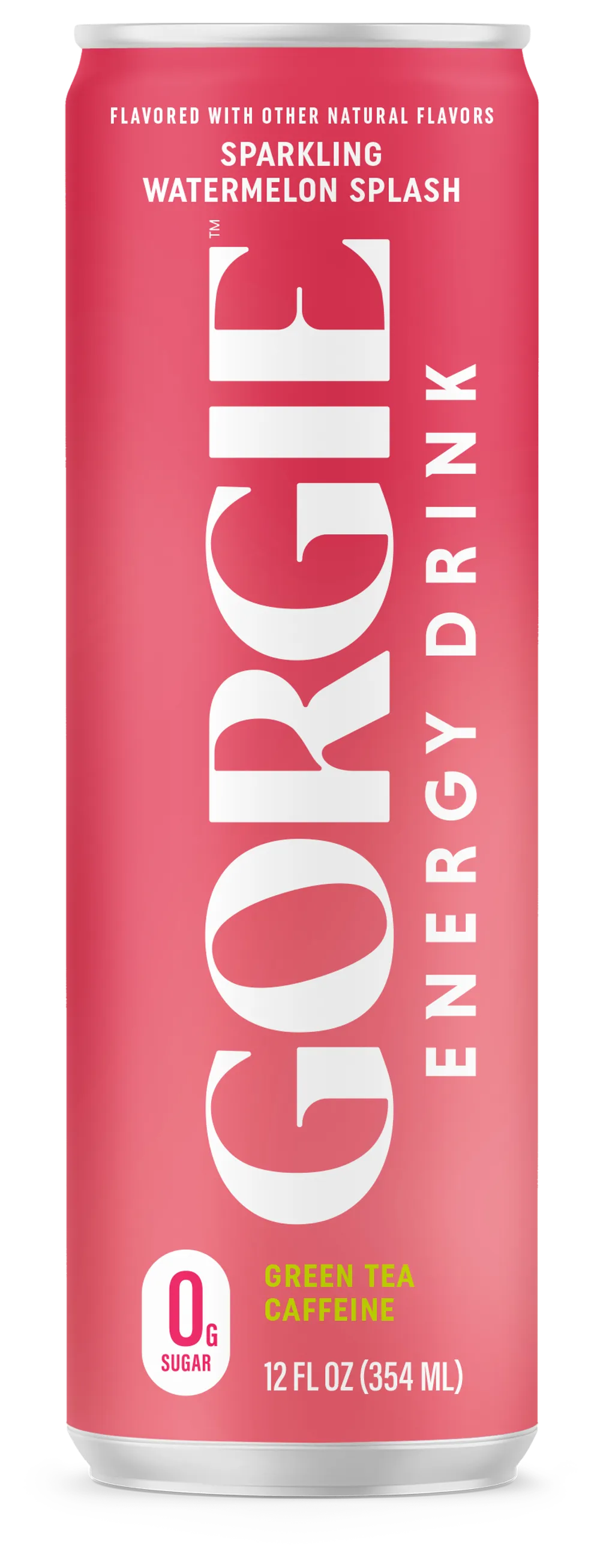
Based on the label for the Sparkling Watermelon Splash can, per one 12oz can (one can equals one serving):
- Calories: 5
- Total Fat: 0g
- Sodium: 0mg
- Total Carbohydrate: 1g
- Total Sugars: 0g (includes 0g added sugars)
- Niacin: 16mg (100% DV)
- Vitamin B6: 1.7mg (100% DV)
- Vitamin B12: 2.4mcg (100% DV)
- Biotin: 30mcg (100% DV)
The numbers tell a clear story before you even get to the ingredient list. This is a five-calorie, zero-sugar can that provides 100% of the Daily Value for niacin, vitamin B6, vitamin B12, and biotin in a single serving. Those micronutrients are a visible part of the label, but the stimulant effect still comes primarily from caffeine.
What's Inside
The ingredient panel is straightforward, with caffeine doing most of the functional heavy lifting. Here's what each active ingredient actually does, and where the label stops short of giving you the full picture.
Caffeine from Green Tea - 150mg
Caffeine is the main functional driver here, and GORGIE lists 150mg per can sourced from green tea. Caffeine works primarily by blocking adenosine receptors, reducing one of the brain's accumulating signals for sleepiness and fatigue. Across low-to-moderate doses, that can improve alertness, vigilance, attention, and reaction time.[1] In a controlled study using 50mg caffeine with or without 100mg L-theanine, caffeine alone improved subjective alertness, while the combination improved some measures of attention and resistance to distraction.[2]
At 150mg, GORGIE sits in moderate territory. That's noticeably less than the 300mg-plus doses used in a lot of sports performance and endurance research, where caffeine's ergogenic effects on things like power output and time to exhaustion are typically studied at higher per-kilogram amounts.[3] A can of GORGIE isn't trying to replicate a pre-workout protocol. It's built for a steady, single-serving lift, not a max-effort training stimulus.
L-Theanine
L-theanine is an amino acid best known from tea and commonly paired with caffeine in cognitive-performance research. Controlled trials have found that caffeine and L-theanine together can improve selected measures of attention, speed, accuracy, and resistance to distraction, although the results depend on dose and task.[4,5] Reviews of the broader literature support a plausible complementary effect on attention and mood, but they don't establish that every caffeine-theanine product will reproduce those outcomes.[6]
Here's where we'd like a little more transparency: GORGIE doesn't disclose how much L-theanine is actually in the can. The caffeine-theanine research uses specific, disclosed amounts, often in the 100-200mg range for theanine. If you're going to make L-theanine part of the functional story, we'd rather see the number on the label. Without it, we can't tell how closely the can lines up with the research.
Ginger Root Extract
Ginger root extract shows up further down the ingredient list, and it's playing a supporting role rather than a primary one. This isn't an energy ingredient. Most of the human research behind ginger centers on gastrointestinal function, including reducing nausea and supporting normal gastric motility.[7] Ginger has shown benefit for nausea in specific clinical contexts,[8] and broader reviews have examined its effects on digestive function and related outcomes.[9]
Same transparency issue here: the human research behind ginger uses defined doses, often gram-level root powder or standardized extracts, while GORGIE doesn't disclose the ginger amount or standardization. So we can't pretend a label mention equals a studied dose. Ginger is a reasonable supporting addition, but we'd like the number before giving it much more credit than that.
Vitamins and Minerals
GORGIE rounds out its stack with four B-vitamin-family nutrients, each hitting 100% of the daily value in a single can.
Niacinamide (Vitamin B3) - 16mg (100% DV)
Niacinamide is the non-flushing amide form of niacin, meaning it won't cause the skin-flushing sensation associated with high-dose nicotinic acid. In the body, it's a building block for NAD+ and NADP, coenzymes involved in dozens of metabolic reactions. It's not a stimulant and won't add to the caffeine's energy effect. At 16mg, it provides 100% of the FDA Daily Value for niacin.
Pyridoxine Hydrochloride (Vitamin B6) - 1.7mg (100% DV)
Pyridoxine hydrochloride is a common form of vitamin B6, which the body converts to pyridoxal-5'-phosphate, a coenzyme involved in amino acid metabolism and neurotransmitter synthesis. At 1.7mg, the can provides 100% of the FDA Daily Value for vitamin B6.
Biotin - 30mcg (100% DV)
Biotin functions as a cofactor for carboxylase enzymes involved in metabolizing carbohydrates, fats, and protein. At 30mcg, GORGIE hits 100% of the daily value. This is a functional metabolic role, not the hair-skin-nails marketing angle biotin often gets attached to in supplement aisles.
Cyanocobalamin (Vitamin B12) - 2.4mcg (100% DV)
Cyanocobalamin is a stable, synthetic form of vitamin B12, involved in red blood cell formation, DNA synthesis, and one-carbon metabolism. At 2.4mcg, the can covers 100% of the daily value. B12 is essential for these processes, but for someone who isn't deficient, extra B12 on top of an already sufficient diet won't translate into more energy.
Other Ingredients
The rest of the label handles texture, tartness, and color rather than function. Filtered carbonated water is the beverage base. Citric acid provides tartness and helps manage the can's pH. Potassium citrate is included for acidity and flavor buffering rather than as a meaningful electrolyte source. GORGIE doesn't disclose a potassium amount, so it shouldn't be read as an electrolyte-replacement ingredient. Natural watermelon flavor with other natural flavors and fruit and vegetable juice for color handle taste and appearance. Steviol glycosides (Reb M) is the zero-calorie sweetener, a highly purified stevia extract that lets the can hit zero sugar without leaning on aspartame, sucralose, or sugar alcohols.
Flavors Available
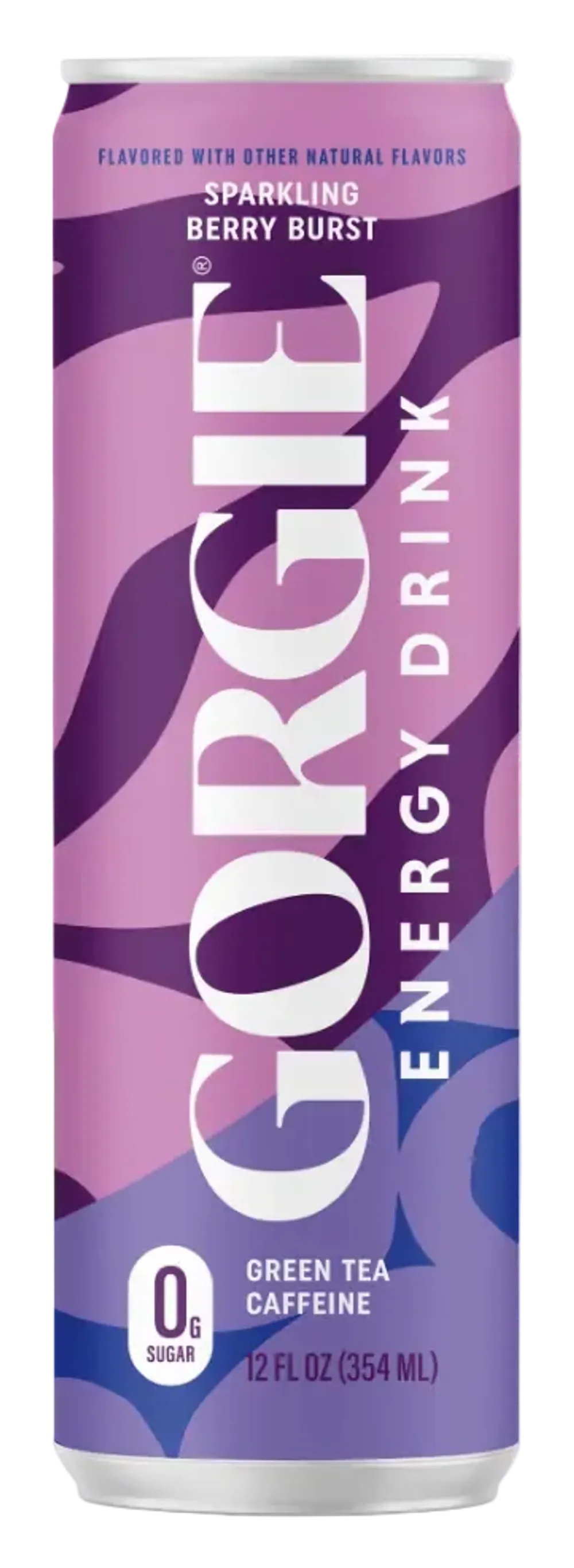
- Cherry Lime (12 Cans: $31.99)
- Citrus Burst (12 Cans: $31.99)
- Mango Burst (12 Cans: $31.99)
- Orange Twist (12 Cans: $31.99)
- Peach (12 Cans: $31.99)
- Tropical Punch (12 Cans: $31.99)
- Variety Pack (12 Cans: $31.99)
- Watermelon Splash (12 Cans: $31.99)
- Wild Berry (12 Cans: $31.99)
Who It's For
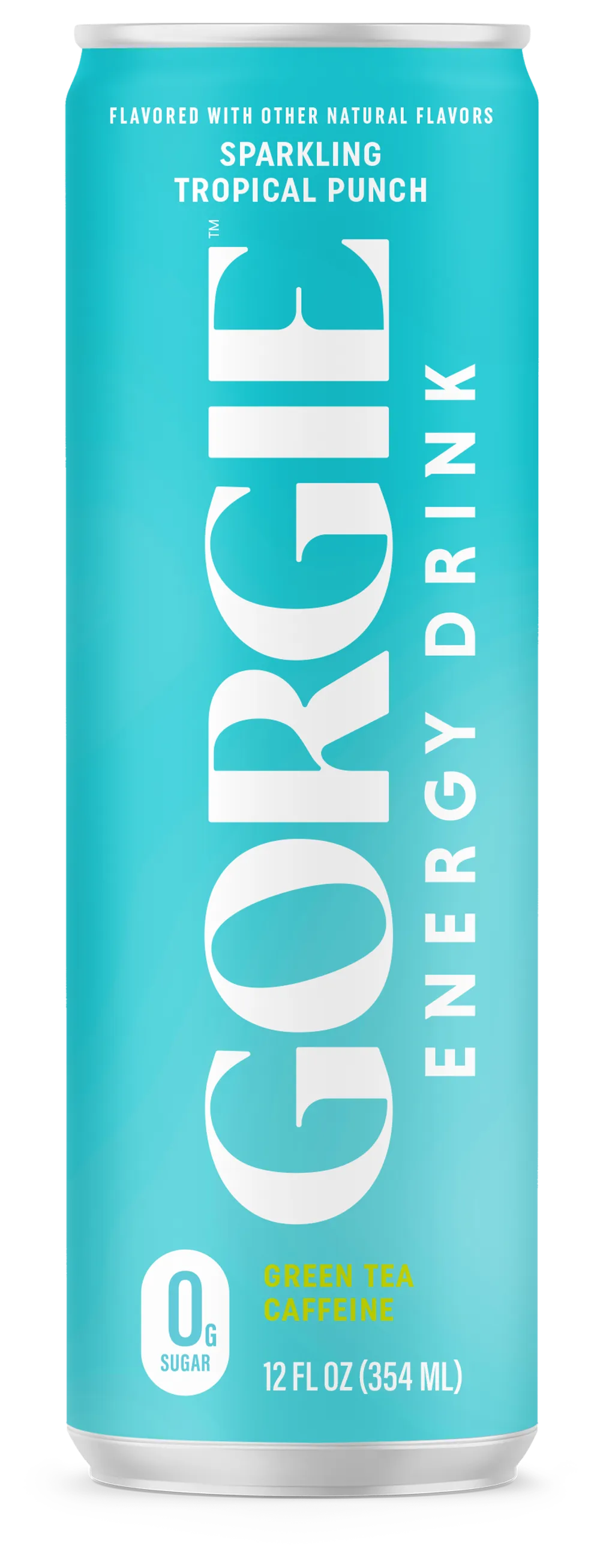
GORGIE fits shoppers who want a low-calorie, zero-sugar energy drink with a moderate 150mg caffeine dose and a relatively simple functional stack. If your priority is a 300mg-plus stimulant hit or fully disclosed clinical doses of every supporting ingredient, this is a different kind of product.
Moderate Energy, With Two Undisclosed Doses
GORGIE's label is refreshingly specific where it matters most: five calories, zero sugar, 150mg caffeine from green tea, and 100% of the Daily Value for niacin, vitamin B6, vitamin B12, and biotin. Then it gets a little shy right where we'd like more detail. The L-theanine and ginger amounts aren't disclosed, so we can't tell how closely those inclusions line up with the doses used in human research. Give us those two numbers and the formula becomes much easier to evaluate. As it stands, GORGIE is best understood as a moderate-caffeine, zero-sugar energy drink with a few supporting functional ingredients rather than a heavily dosed nootropic or pre-workout formula.
Follow @BevlabMedia on TikTok and Instagram for more label breakdowns as new flavors and formulas land.\n\n## References
- McLellan TM et al. "A Review of Caffeine's Effects on Cognitive, Physical and Occupational Performance." Neuroscience & Biobehavioral Reviews, 2016. DOI: 10.1016/j.neubiorev.2016.09.001
- Owen GN et al. "The combined effects of L-theanine and caffeine on cognitive performance and mood." Nutritional Neuroscience, 2008. DOI: 10.1179/147683008X301513
- Guest NS et al. "International Society of Sports Nutrition position stand: caffeine and exercise performance." Journal of the International Society of Sports Nutrition, 2021. DOI: 10.1186/s12970-020-00383-4
- Haskell CF et al. "The effects of L-theanine, caffeine and their combination on cognition and mood." Biological Psychology, 2008. DOI: 10.1016/j.biopsycho.2007.09.008
- Kahathuduwa CN et al. "Acute effects of theanine, caffeine and theanine-caffeine combination on attention." Nutritional Neuroscience, 2017. DOI: 10.1080/1028415X.2016.1144845
- Camfield DA et al. "Acute effects of tea constituents L-theanine, caffeine, and epigallocatechin gallate on cognitive function and mood: a systematic review and meta-analysis." Nutrition Reviews, 2014. DOI: 10.1111/nure.12120
- Wu KL et al. "Effects of ginger on gastric emptying and motility in healthy humans." European Journal of Gastroenterology & Hepatology, 2008. DOI: 10.1097/MEG.0b013e3282f4b224
- Chaiyakunapruk N et al. "The efficacy of ginger for the prevention of postoperative nausea and vomiting: a meta-analysis." American Journal of Obstetrics and Gynecology, 2006. DOI: 10.1016/j.ajog.2005.06.046
- Anh NH et al. "Ginger on Human Health: A Comprehensive Systematic Review of 109 Randomized Controlled Trials." Nutrients, 2020. DOI: 10.3390/nu12010157
Tagged