Kris Gethin on Biohacking, Peptides, and Building Clean
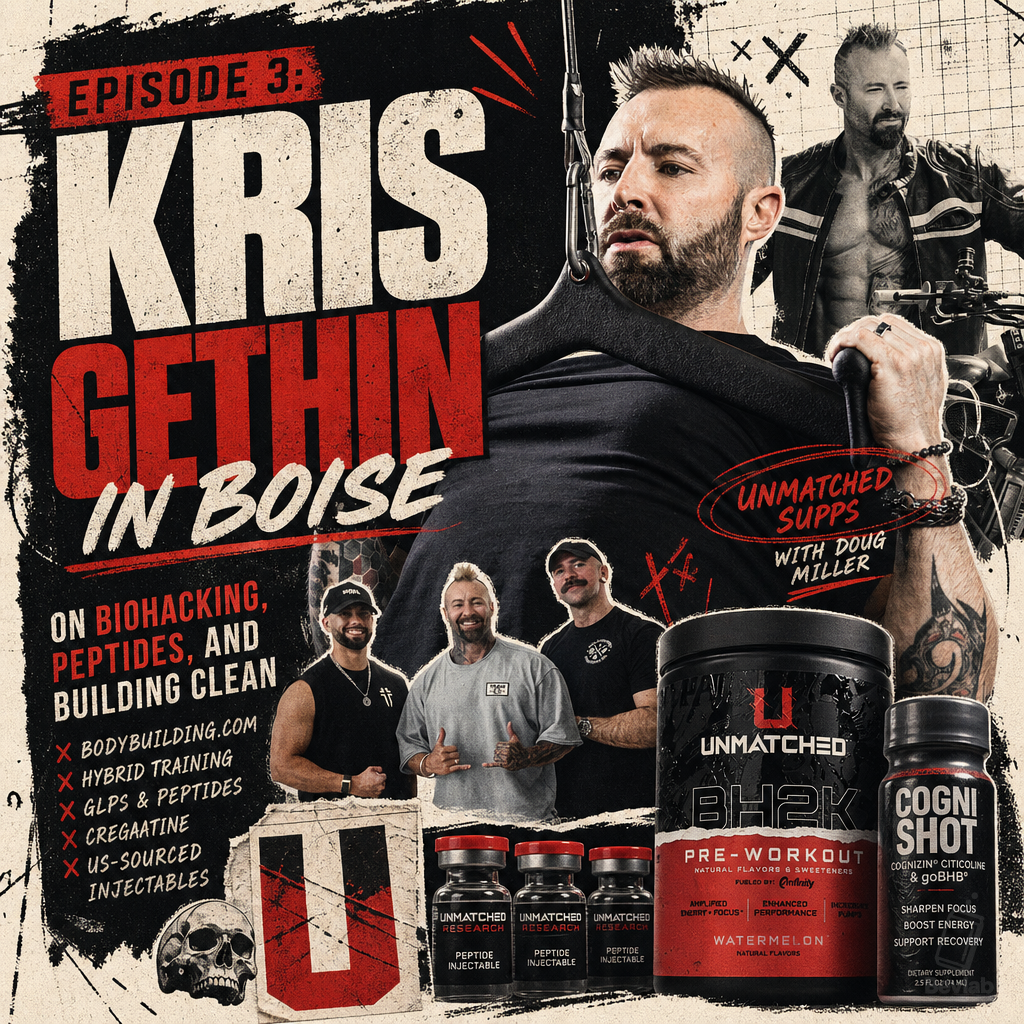
Kris Gethin sits down in Boise to cover his full arc: Bodybuilding.com, hybrid training, GLPs, dietary peptides, CreGAAtine, and his new US-sourced injectable peptide company with Doug Miller.
Watch on YouTube
Episode 3: Kris Gethin in Boise
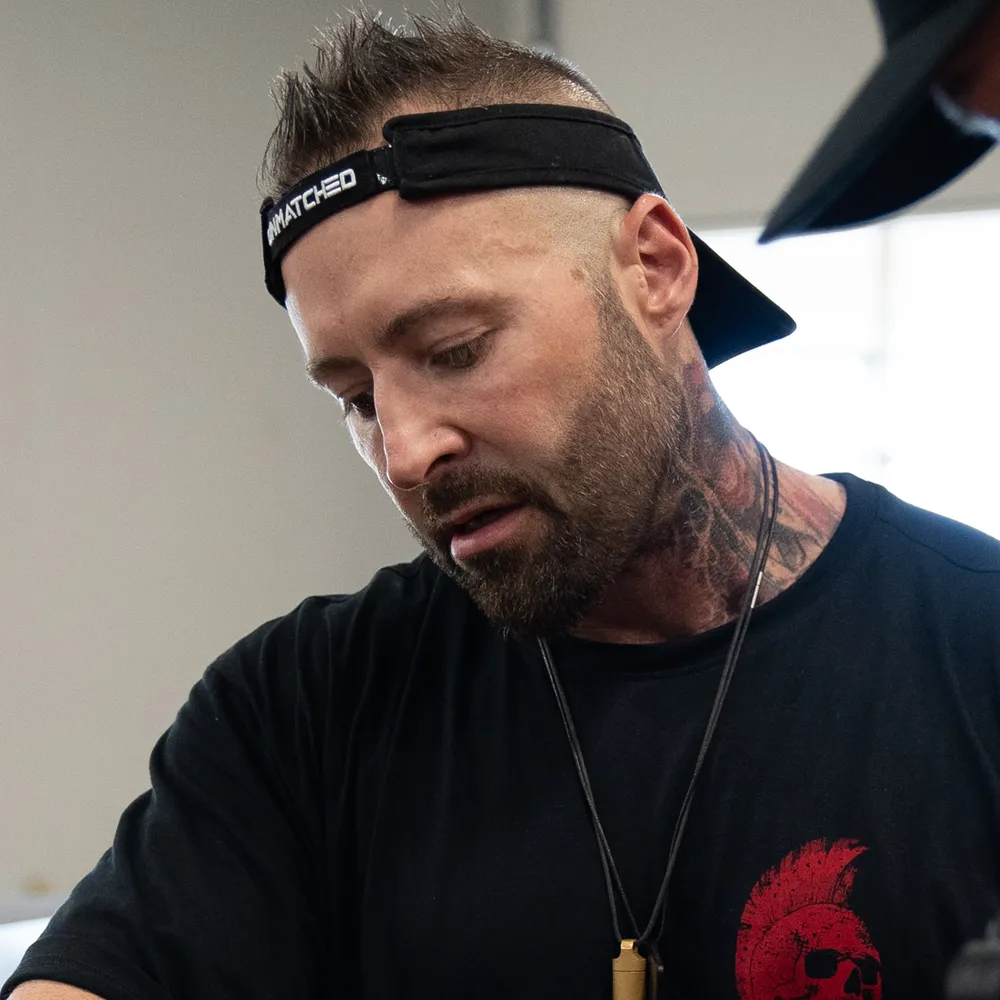
Episode 3 of the Bevlab Podcast, sponsored by Cognizin® Citicoline, is a proper sit-down. Ben flew to Boise and recorded at Kris Gethin's house -- cracking shots of CogniShot (the new liquid shot built around Cognizin citicoline and goBHB, and the episode's sponsor), catching up after nearly a decade, and covering essentially everything: Kris's path from motocross to natural bodybuilding to Iron Man to hardcore biohacking, his supplement brand Unmatched Supps with co-founder Doug Miller, dietary peptides, GLPs, the industry's transparency reckoning, and the freshly launched US-sourced injectable peptide company. It's a long one and most of it is usable.
What We Covered
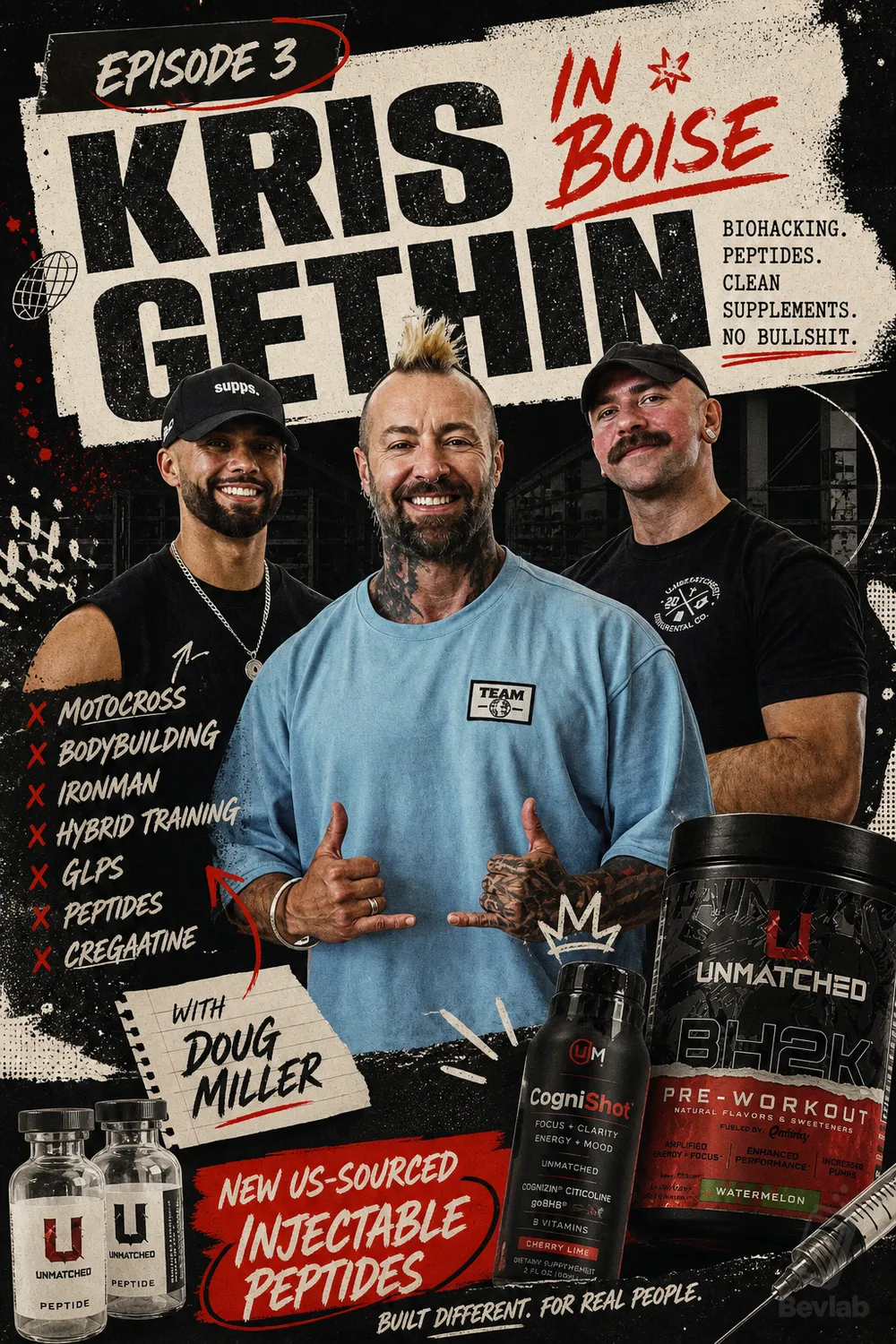
Kris has one of the more interesting career arcs in the fitness industry -- from motocross racer in Wales, to personal trainer in Australia, to content star at Bodybuilding.com, to supplement founder, to biohacking's loudest voice. This episode follows that whole path, with deep dives into the topics he's been loud about recently.
- The Bodybuilding.com era: 450,000 unique visitors a day and what squandering that looked like
- How structure and training discipline replaced partying and kept him out of worse situations
- Hybrid athletes: why Kris was doing Iron Mans as a bodybuilder before it was a trend, and how CrossFit validated what he already knew about cardio
- The peptide primer: what peptides actually are, why they're different from testosterone replacement, and how the category is moving from bodybuilders to the general public
- GLPs: Kris's personal low-dose GLP-3 experiment, a friend who dropped 110+ pounds and kept it off, and why most GLP users fail long-term without a training and nutrition structure
- Fasting: Dr. Valter Longo's fasting mimicking diet, why Kris still takes essential aminos on longer fasts, and why this topic attracts too much dogma from both sides
- Unmatched Supps: the product lineup, what's selling, what isn't, and what's coming
- CreGAAtine: Kris's creatine of choice, why he goes four scoops (8g), and why the four absorption pathways matter for brain and bone as much as muscle
- The new injectable peptide brand: US-sourced, compounding pharmacy tested, sterility-verified -- launched the day before filming
- Rapid fire: lower body over upper body, cinnamon frosted protein as the favorite Unmatched flavor, paraxanthine over caffeine for cortisol management, ice baths over saunas
Key Takeaways
Peptides Are No Longer Just for Bodybuilders
Kris got into research peptides around 2017 -- BPC-157, TB-500, GHK -- after being diagnosed with mold toxicity and going deep into the biohacking world. What he's watched since is the category expand outward fast. "It used to be the biohackers," he says, "then the bodybuilders, now it's the real estate agent, the person at the coffee table next to you." His father, who avoided a hip replacement for 20 years, started BPC and Cartilax and is sleeping through the night for the first time. That's the shift: recovery tools becoming general health tools.
The most useful framing he offers for people unfamiliar with peptides: unlike testosterone, which replaces something your body already makes and suppresses natural production, most peptides signal your body to do more of what it was already doing. A growth hormone secretagogue doesn't give you exogenous growth hormone -- it tells your pituitary to pulse more of its own. Lower dependency risk, lower shutdown risk. There are exceptions and the category is broad, but that's the general principle worth knowing.
The New Peptide Company Is Built on US Manufacturing and Full Testing
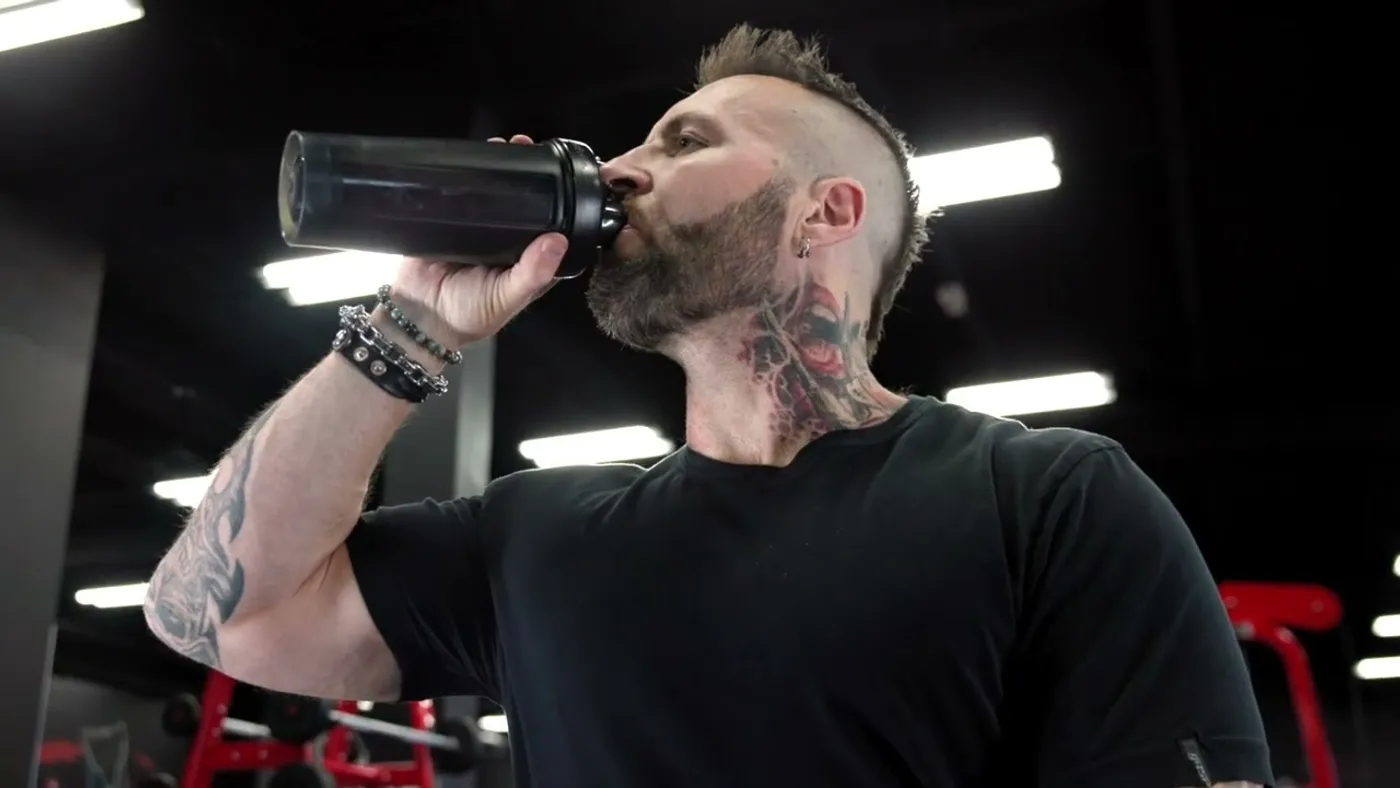
Kris and Doug Miller launched a separate injectable peptide brand the day before this episode filmed. It took about 16 months to get off the ground, and the whole story behind it is sourcing integrity. Most injectable peptides on the market come from China, and the certificates of analysis that come with them are often duplicates -- not reflective of the actual batch. A New York Times investigation Kris mentions tested 15 products from 15 companies and found 75% didn't meet spec, were underdosed, or contained contaminants. Fentanyl in peptides has been reported.
The Gethin-Miller response: manufacture and test everything domestically through a compounding pharmacy, run sterility testing, spectrometry, the full stack. They launched with 15 products -- the ones most in demand by Kris's own clients -- and are building toward alternative delivery mechanisms (topicals) for people who won't inject.
Dietary Peptides Are Unmatched's Real Differentiator
The supplement line has taken a hard position on oral peptide-derived ingredients: PeptiStrong (a fava bean-derived anti-catabolic compound), dileucine (double-bonded leucine for faster uptake and stronger anabolic signaling), and CreGAAtine (creatine guanidinoacetic acid). These aren't gateway products to injectable peptides -- Kris is clear on that. They're standalone efficacy plays backed by research Kris has studied alongside people like Sean Wells.
The creatine-HMB combination gets specific attention: the synergy between them isn't additive, it's multiplicative. Kris runs four scoops of CreGAAtine daily (8g), partly for the physical benefits and partly for the neuroprotective and bone-density benefits that require higher doses to show up. The B vitamins are included specifically to address homocysteine concerns that come up with guanidinoacetic acid.
The Supplement Industry's Transparency Era Didn't Happen on Its Own
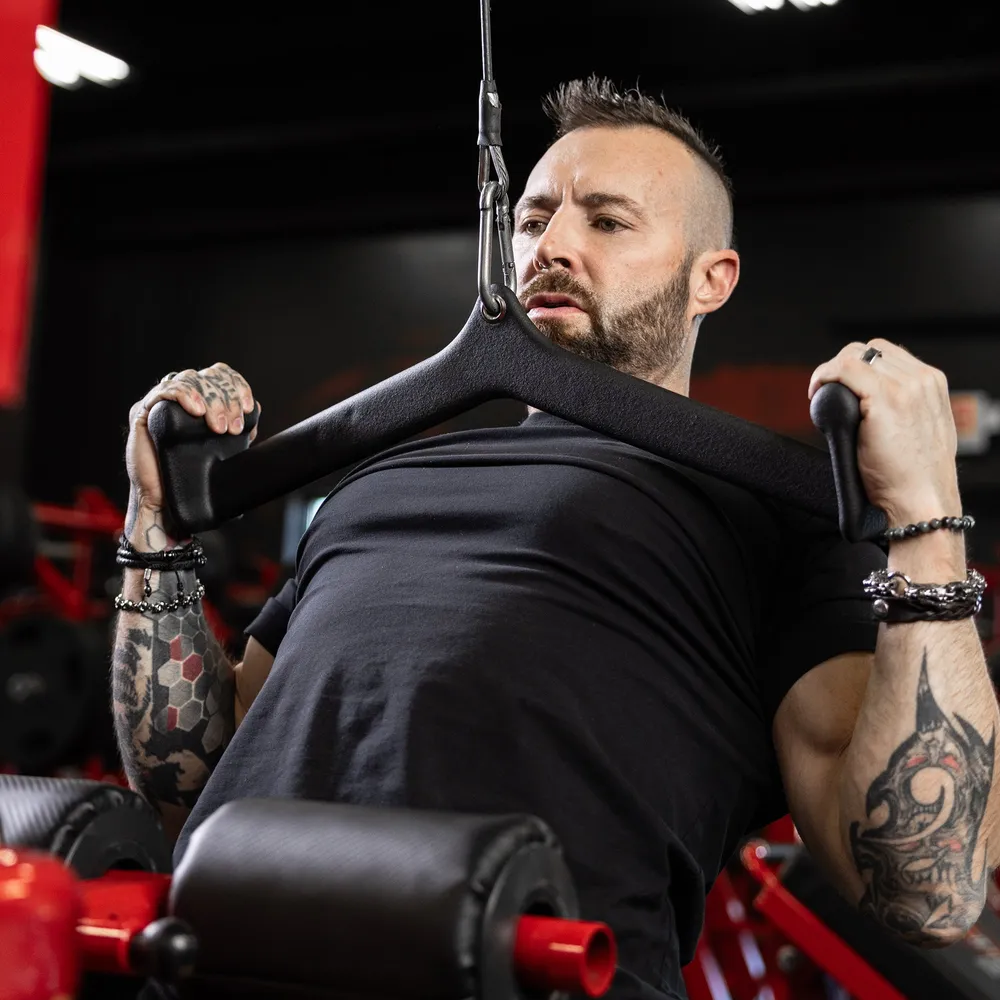
Kris traces the shift back to his Bodybuilding.com days. When he started doing video trainers there, he began actually testing the supplements he was recommending to hundreds of thousands of people -- and found wide variance. Well-known brands testing poorly. Obscure brands testing well. Amino acids sourced from bird feathers and animal fur. That experience drove him to start formulating his own products -- selfishly, as he puts it, because he wanted something he could actually feel good about promoting. Ben has his own version of that story from his time at NutraBio, where label transparency was being built before it was an industry expectation. Within a couple of years, proprietary blends were commercially toxic. The race to transparency that followed changed the whole category.
Paraxanthine Over Caffeine, and Why It's Not Just Marketing
In the rapid-fire section, Kris picks paraxanthine over caffeine without hesitation. The reasoning is practical: he's a high-anxiety person, very cortisol-aware, and caffeine -- which he still uses -- raises cortisol in ways he's trying to minimize as he gets older. Paraxanthine gives him what he describes as euphoric focus without that cortisol spike. For a guy who has been using stimulants for 20-plus years, that's a meaningful distinction.
GLPs Work Better With an Off-Ramp Planned From Day One
Kris has tried low-dose GLP-3 himself (half a milligram -- well below typical clinical doses) and describes the main benefit as eliminating food noise rather than suppressing appetite to the point of muscle loss. He thinks about it for cortisol-adjacent reasons: less mental bandwidth spent on food means more going to training and recovery. His friend Pete's story is the more dramatic case -- over 110 pounds lost, blood work normalized, weight kept off after stopping. But Kris's concern about the broader GLP phenomenon is real: most users don't have a training and nutrition program structured around the taper, receptors downregulate over time, and people who stay on too long start losing bone density, hair, and energy. "It's not an anti-aging formula anymore," he says. "It's actually accelerating your aging."
Magazine Culture and Why Scarcity Created Better Athletes
This isn't a beverage industry insight but it's worth documenting: Kris still keeps old issues of Flex, MD, and Iron Man by the bed. His argument is that scarcity made every issue matter -- you read every word, treated the workouts like a contract for the next 30 days, and the athletes in those pages felt genuinely out of reach and therefore worth aspiring to. The constant scroll of TikTok and Instagram has inverted all of that. He reads for 45 minutes every night before bed specifically to train his attention span back.
Why This Episode Matters
Kris Gethin has been at every major inflection point in the fitness-to-supplements pipeline for 20 years: Weider publications, Bodybuilding.com's content peak, the supplement transparency reckoning, the hybrid athlete shift, the biohacking boom, and now the peptide consumer mainstreaming. This episode is a long-form record of that full arc from someone who lived it, not a brand interview. The peptide company launch timing makes it particularly useful as a document of where the injectable peptide category is right now, and where the quality failures are concentrated.
For beverage and supplement operators: the consumer trust conversation Kris walks through is directly relevant. He describes how he started testing products he was recommending and found them wanting -- and how that drove him to formulate his own. That's the same journey a lot of category-aware consumers are on right now, especially in functional RTDs and nootropic beverages. Ingredient quality and sourcing transparency aren't just ethics plays. They're the thing that converts informed buyers.
Watch the Episode
Full episode on YouTube: Bevlab Podcast Episode 003 -- Kris Gethin
The Bevlab Podcast is sponsored by Cognizin® Citicoline from Kyowa Hakko USA.
Tagged