2O3 Electrolytes + Honey Hydration: Hydration That Kept the Sugar
A powerlifter's honey-and-salt habit, poured into a can
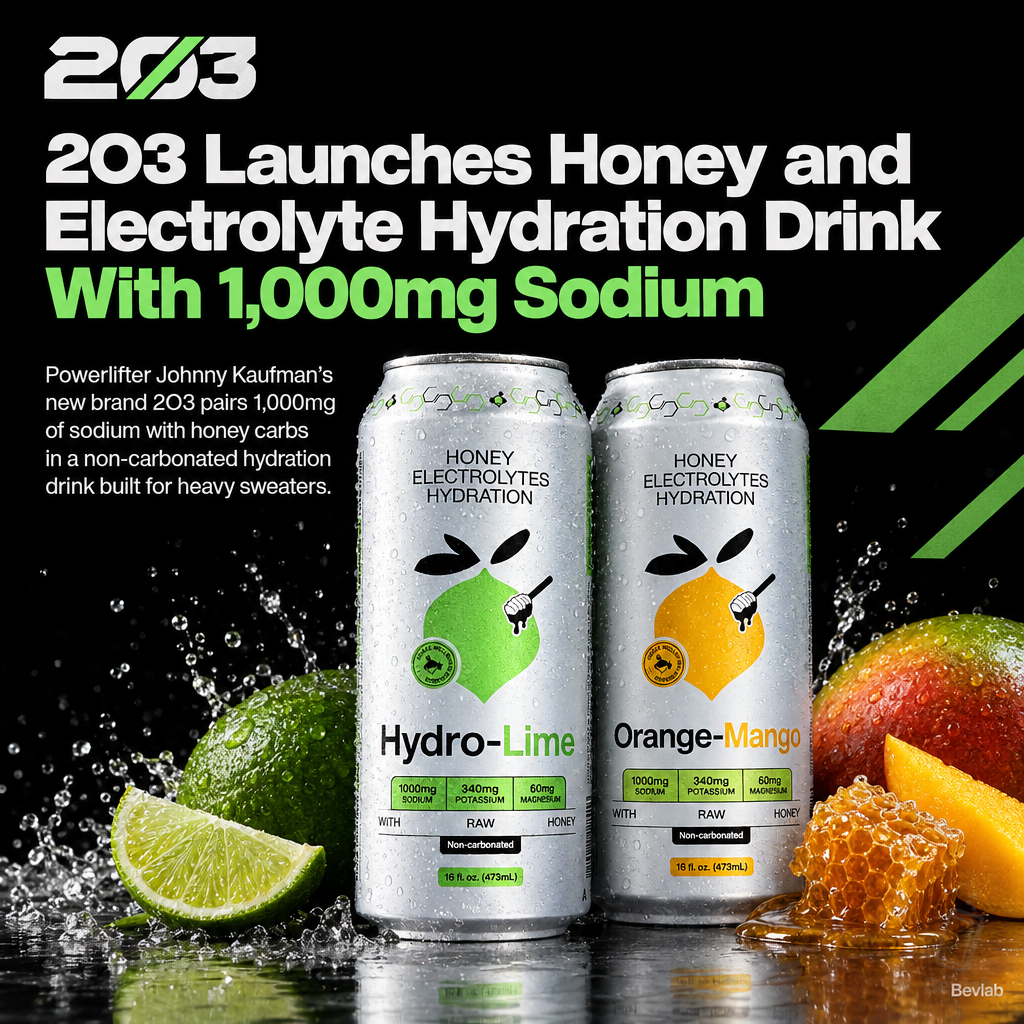
Founded by record-holding powerlifter Johnny Kaufman, 2O3 pairs 1,000mg sodium with raw honey carbs, betting athletes want sugar back in their hydration.
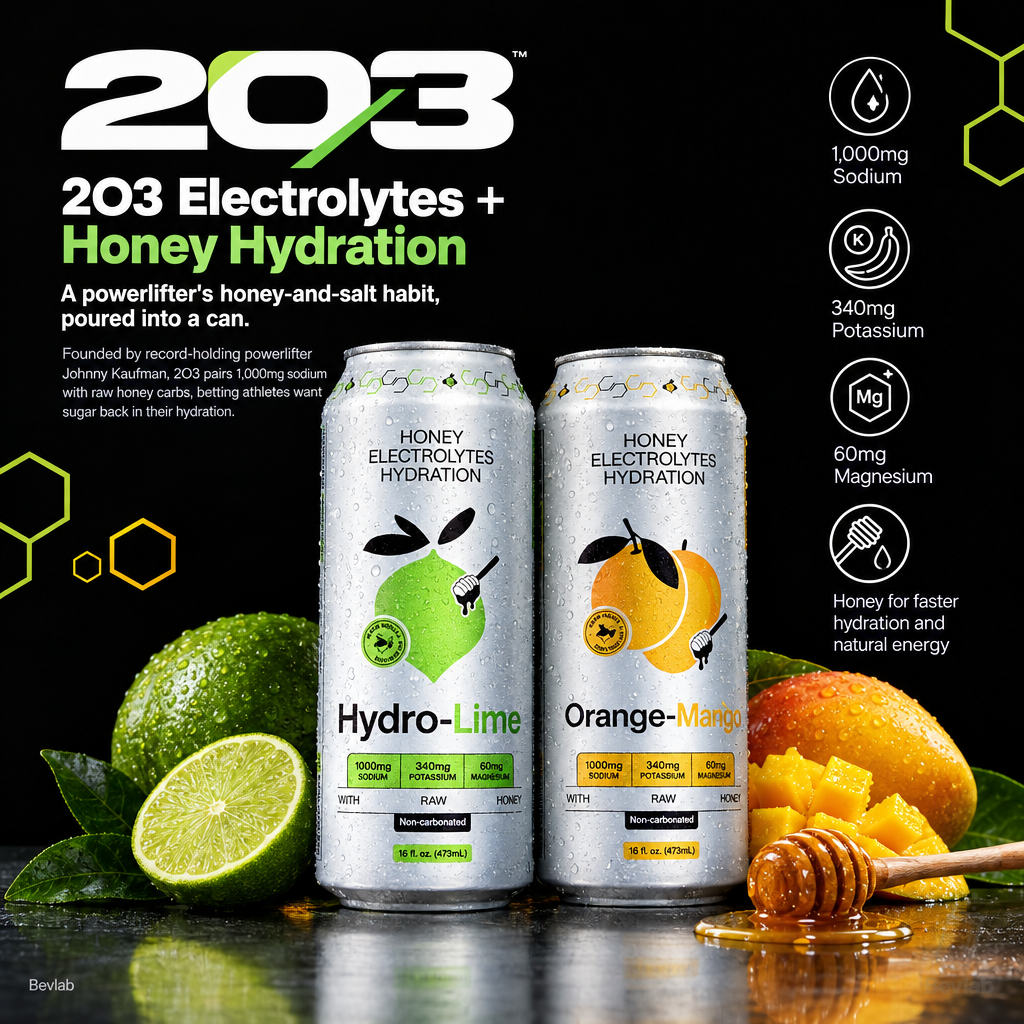
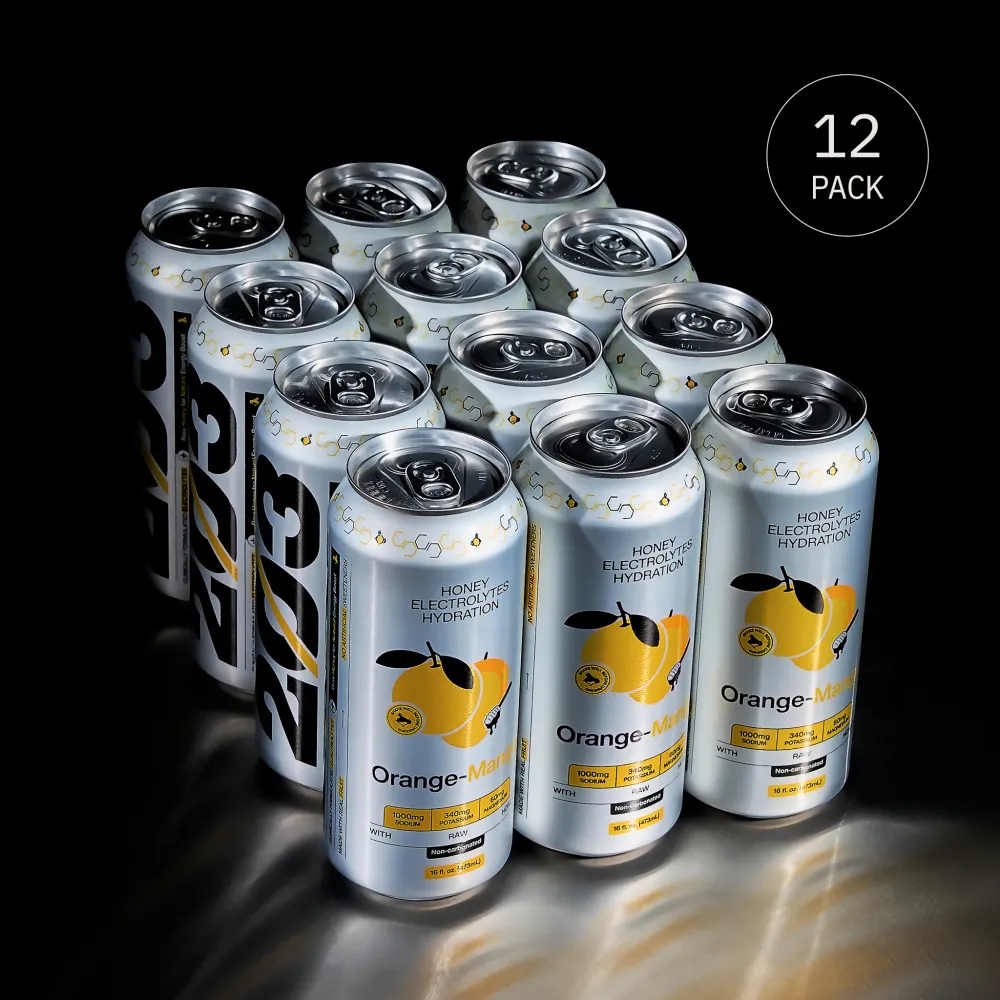
Strength athletes have been mixing honey and electrolytes on their own for years. 2O3 figured that gym-bag habit deserved a real can. The brand was founded by record-holding powerlifter Johnny Kaufman and consumer-products entrepreneur Nelson Cury, and it launched 2O3 Electrolytes + Honey Hydration at a Houston event in September 2026 as its first product. It's a 16 fl oz, non-carbonated drink that pairs a heavy sodium dose with raw honey, which puts it on the opposite side from the zero-sugar mixes that have taken over the hydration aisle.
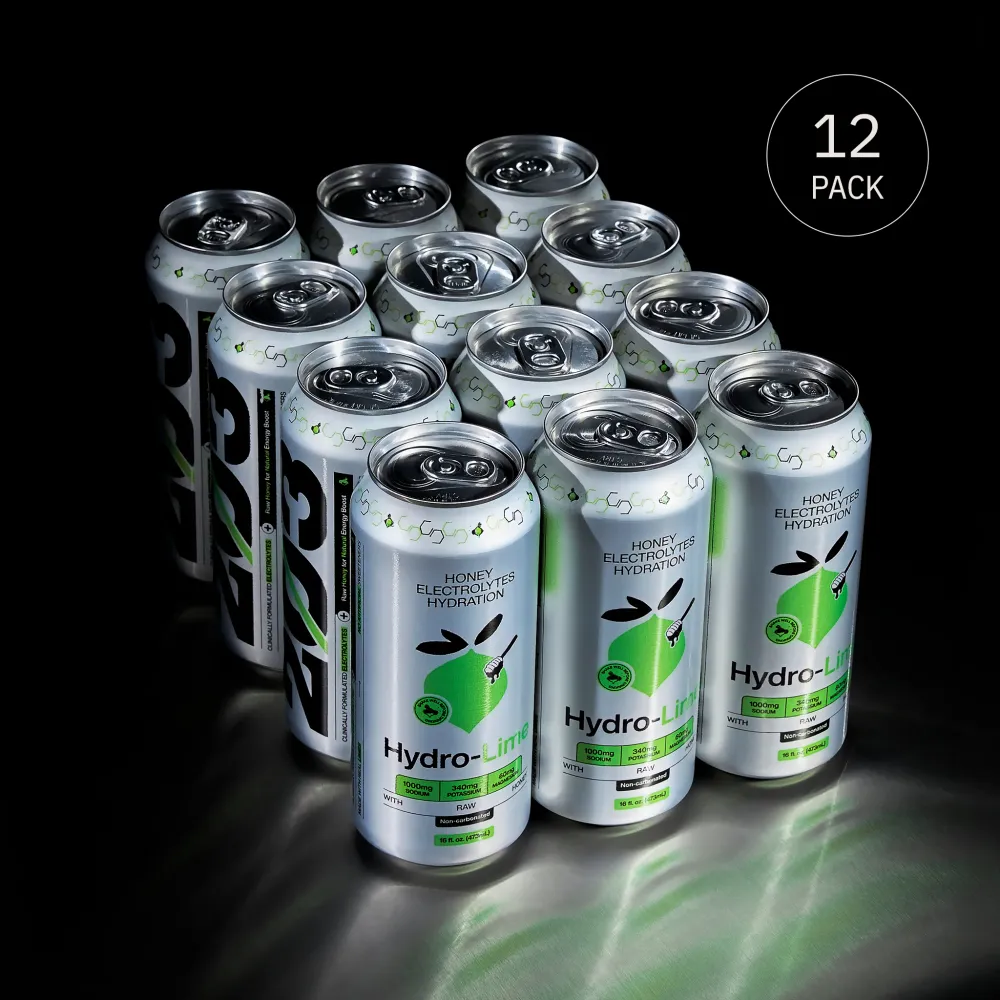
The pitch is that sodium works better with some sugar riding along, and 2O3 gets that sugar from honey instead of sucrose or dextrose. Each can lists 1,000mg sodium, 340mg potassium, and 60mg magnesium alongside 18g of sugars, and the label notes that all of the added sugar comes from honey. The founding athlete team (Kaufman, Jamal Browner, Austin Perkins, Rondel Hunte, and Sean Mills) tells you who it's built for first: people who sweat hard under a barbell. It launched direct-to-consumer and in select gyms around the country.
Why 2O3 Put Sugar Back In
Putting carbs in a hydration drink is an old idea. Sodium helps your body hold on to the fluid you drink, and research on post-exercise rehydration has long found that people keep more of a sodium-containing drink than of plain water.[1] Recovery nutrition reviews also treat fluid, sodium, and carbohydrate as a package after hard training, because you're replacing water and fuel at the same time.[2]
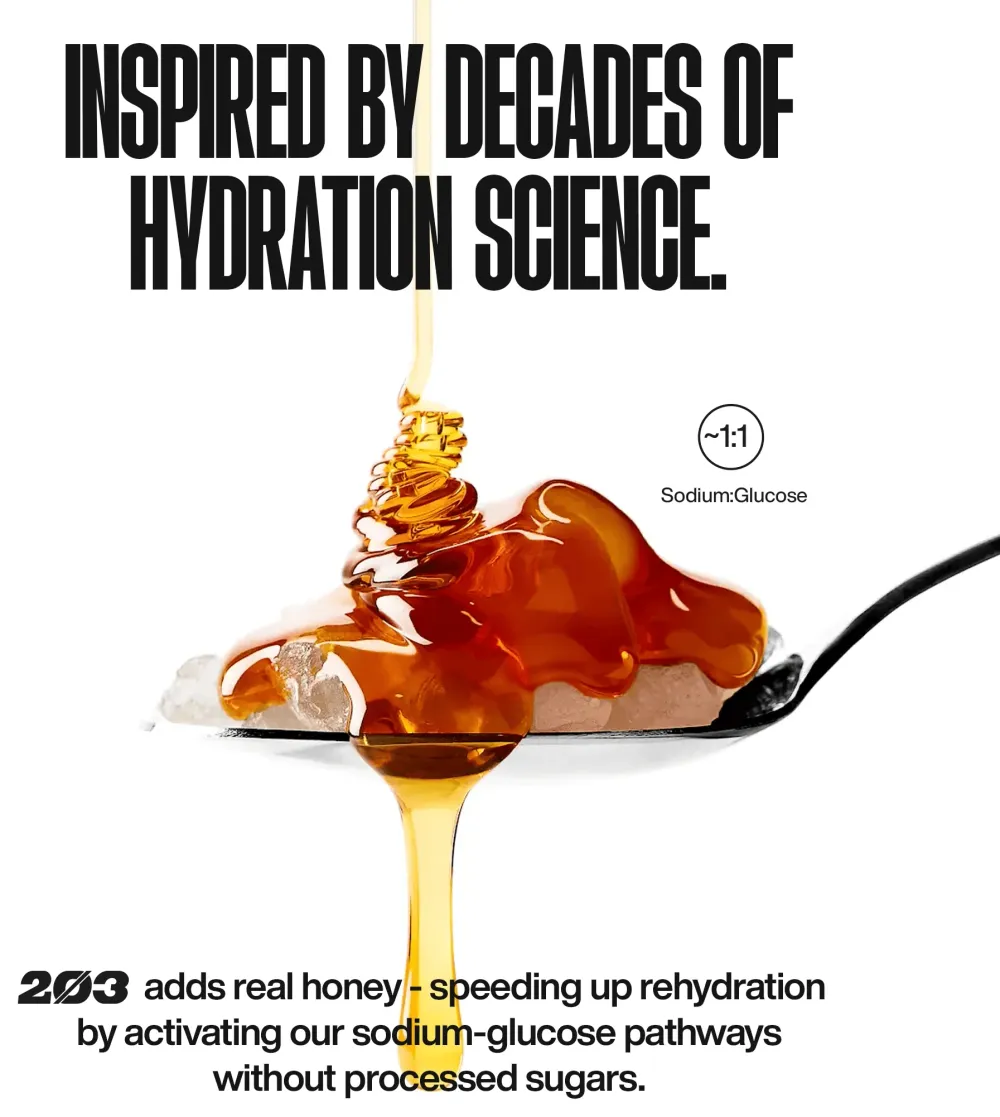
2O3 adds a specific carb source and a ratio argument. The brand's case rests on the gut's sodium-glucose transporter (SGLT-1): sodium and glucose get absorbed together, and water follows them. 2O3 says honey is the glucose source that switches that system on, and it describes pairing sodium and glucose at roughly 1:1.
You can't check that ratio from the can. Honey is a mix of glucose and fructose, and the label lists 18g of total sugars without saying how much of it is glucose. The drink clearly delivers sodium and sugar together. The exact sodium-to-glucose balance is the brand's claim, not something printed on the panel.
The sugar stance also comes from the founders. Cury's family has produced sugar in Brazil for four generations, and he has argued that the sugar conversation in performance nutrition has become too binary. The company says it spent three years developing a stable powdered honey and plans to use it for other formats. The RTD is the first one.
Long, sweaty days also carry a less obvious risk. Drinking far more plain water than you need can push blood sodium dangerously low, and "drink to thirst" is the standard advice for preventing that.[3] The National Athletic Trainers' Association recommends adding sodium to fluid-replacement drinks partly to lower that risk.[4] A salty drink helps, but you still need to be sensible about how much you drink.
2O3 Electrolytes + Honey Hydration Nutrition Facts
These numbers come from the Hydro-Lime can, which is one 16 fl oz (473mL) serving:
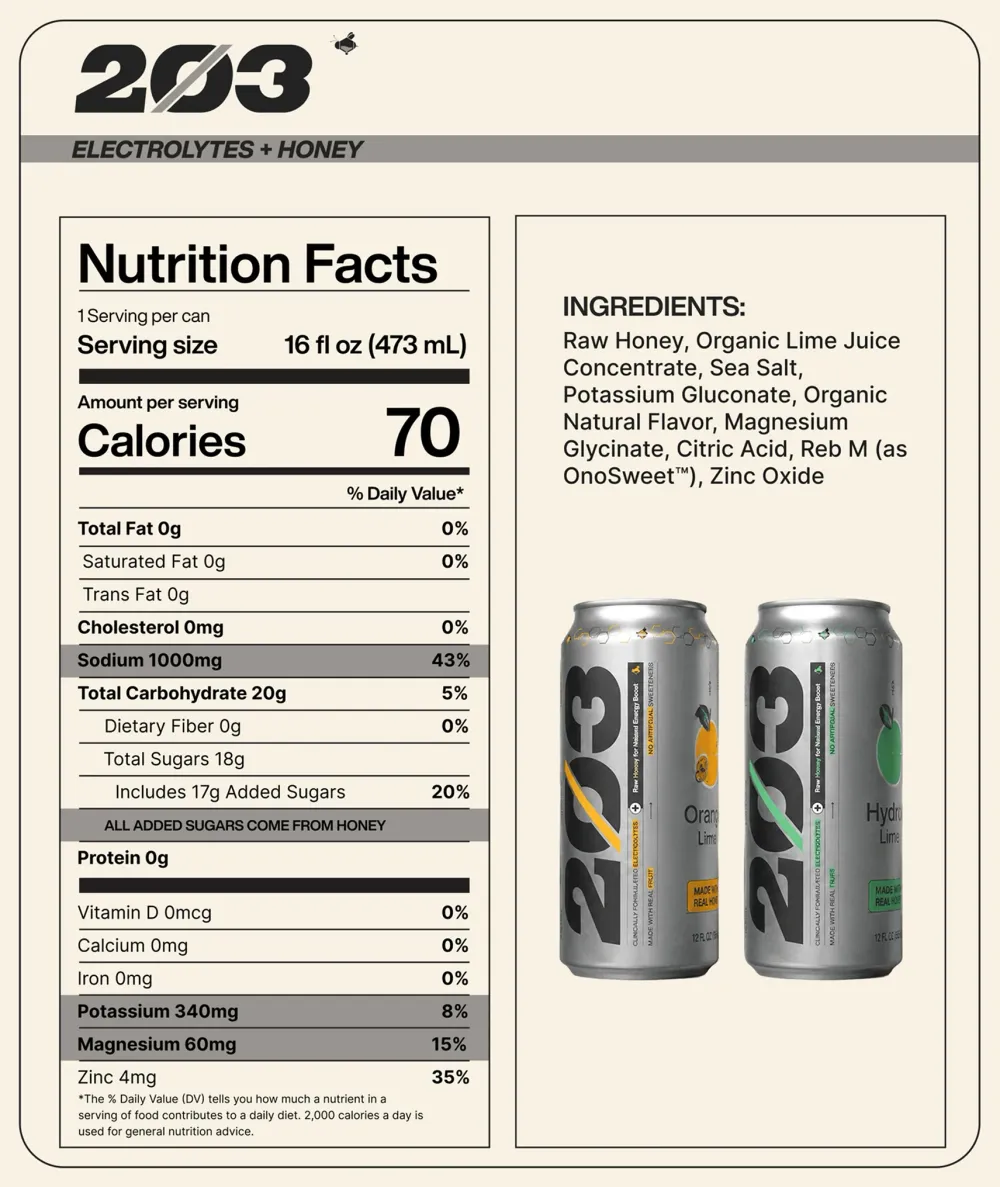
- Calories: 70
- Total Fat: 0g (0% DV)
- Total Carbohydrate: 20g (5% DV)
- Dietary Fiber: 0g (0% DV)
- Total Sugars: 18g
- Added Sugars: 17g (20% DV)
- Protein: 0g
- Vitamins and Minerals
- Sodium: 1000mg (43% DV)
- Potassium: 340mg (8% DV)
- Magnesium: 60mg (15% DV)
- Zinc: 4mg (35% DV)
Two numbers matter here. The 17g of added sugars is 20% of the Daily Value, and that's what the honey approach costs you. The sodium is 43% DV in a single can, which suits a long training day and is a lot for something you'd sip at your desk. At 70 calories, it's still light enough to drink during a session.
2O3 Electrolytes + Honey Hydration Ingredients
Each 16 fl oz can provides the following key actives:
-
Sea Salt

Sea salt is the sodium source on the ingredient list, and the panel lists 1,000mg sodium (43% DV) per can. The label doesn't give the salt amount itself, so the sodium total is the number to go by. Sweat costs you both water and sodium. If you drink plain water alone, your blood gets diluted and your body sends more of that water to your bladder before you're fully rehydrated.[5]
How much sodium you lose varies a lot from person to person. In professional football players, sweat sodium ranged from 15 to 99 mEq/L, and estimated losses over a 4.5-hour practice day ran from 2.3g to 30.2g.[6] Tennis players with a history of heat cramps lost 1.4-4.8g of sodium per hour on court.[7] Compared with numbers like those, 1,000mg per can is a heavy-sweater dose. Per liter, it's far more concentrated than the 0.3-0.7g of sodium chloride per liter that the NATA position statement suggests for sessions longer than four hours.[4]
Whether sodium prevents cramps is still debated. A study of ultra-distance runners found no meaningful link between blood electrolytes and cramping.[8] General sodium intake matters too, since blood pressure responds most to sodium at high daily intakes.[9]
-
Raw Honey
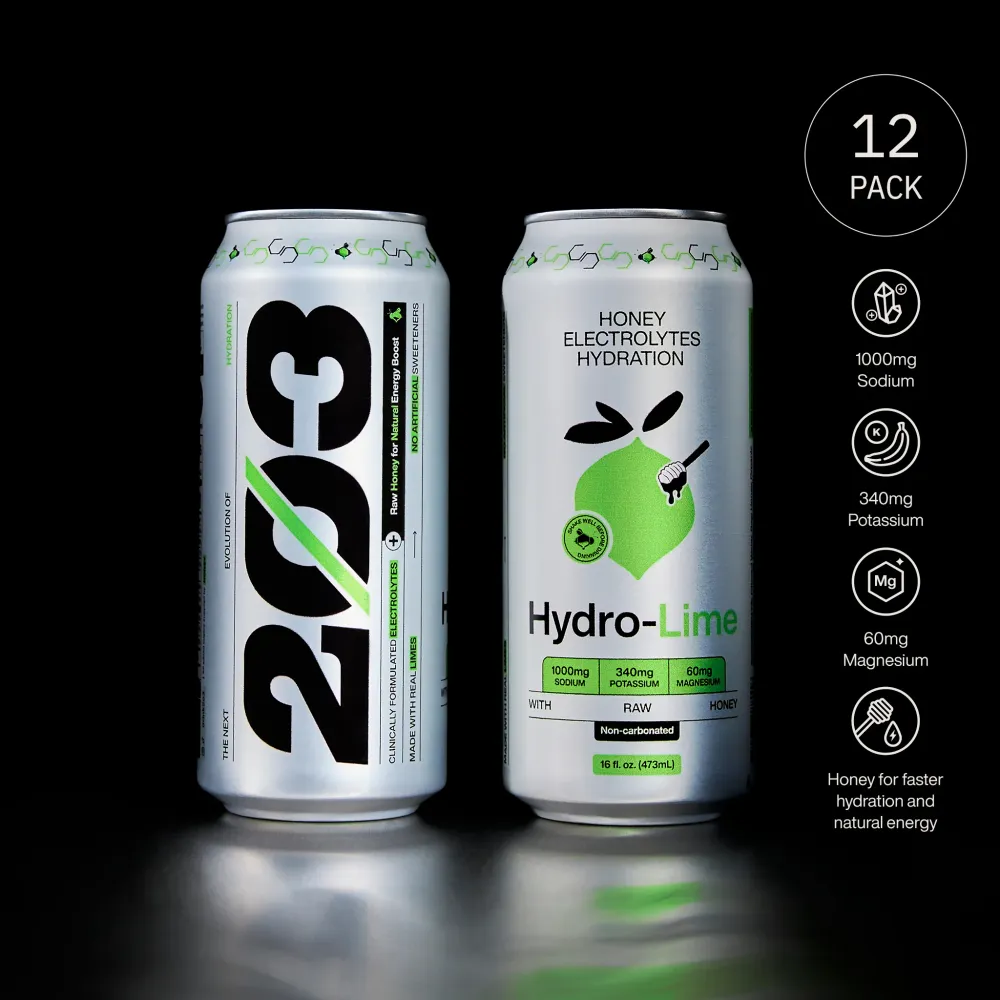
Raw honey is listed first on the label, and the drink is built around it. The panel shows 20g of carbohydrates and 18g of total sugars, and a callout says all 17g of added sugars come from honey. 2O3 doesn't disclose how much honey goes into each can.
2O3 argues that honey is a better training carb than refined sugar. Honey is a natural mix of glucose and fructose, and the brand says that blend gives steadier energy, a gentler blood sugar response, and less stomach trouble than the sucrose in conventional sports drinks. It also credits honey with polyphenols, trace vitamins, and minerals. None of those claims have been measured for this drink, and the panel doesn't list any vitamin or mineral from honey at a meaningful level, so treat them as the brand's pitch.
What the can does show is simple. It has a modest carb dose from one recognizable source, paired with a lot of sodium. That fits the strength crowd. A long session of heavy sets burns through fuel and sweat, and 20g of honey sugar gives you some of both back without making the drink heavy.
-
Vitamins and Minerals
-
Potassium (as Potassium Gluconate) - 340mg (8% DV)
Potassium is a supporting electrolyte here, not the headline dose. It's the main mineral inside your cells and works with sodium on muscle contraction and fluid balance. Sweat potassium concentration stays fairly steady across long sessions, so it's a predictable loss to replace.[10] The gluconate form absorbs well: a controlled trial found potassium gluconate raised blood potassium in a dose-dependent way.[11]
-
Magnesium (as Magnesium Glycinate) - 60mg (15% DV)
Magnesium comes in as magnesium glycinate, a glycine-bound form that tends to be easy on the stomach. In a crossover study of the closely related diglycinate, absorption was about the same as magnesium oxide overall, better in the poorest absorbers, and better tolerated.[12] Magnesium is often marketed for cramps, but a Cochrane review found it unlikely to meaningfully help cramps in older adults and found no trials on exercise cramps.[13]
-
Zinc (as Zinc Oxide) - 4mg (35% DV)
Zinc is the mineral you might not expect in a hydration can. At 4mg, it's well under the roughly 40mg/day long-term upper intake level for adults.[14] Training can shift where zinc sits in the body: soccer players had lower red blood cell zinc than sedentary controls even though they ate similar amounts.[15] 2O3 doesn't make a specific zinc claim, so read this as a modest top-up.
-
-
Sweeteners and Flavors
-
Organic Lime Juice Concentrate
Organic lime juice concentrate is second on the Hydro-Lime ingredient list. It's the real fruit in that flavor and the drink's tart citrus base. This ingredient is specific to Hydro-Lime. Orange Mango uses its own fruit base, and these notes don't cover that can.
-
Organic Natural Flavor
Organic natural flavor supports the fruit. Under FDA rules, "natural flavor" is defined by where it comes from (fruit, plants, and similar sources), not by its chemistry, so a natural flavor and its artificial counterpart can be the same molecule.[16] Natural flavor complexes go through FEMA expert-panel safety reviews, and the amounts used for flavoring sit far below the levels where animal studies found problems.[17] The label doesn't say what this flavor is made from. It's only there for flavor.
-
Rebaudioside M (as OnoSweet™)
Reb M is a steviol glycoside, a sweet compound found in the stevia leaf in only tiny amounts. Because of that, commercial supply depends heavily on enzyme bioconversion or fermentation.[18,19] Formulators like it because it's closer to sugar than older stevia extracts. In a 126-person consumer study, Reb M rated closer to sucrose than Reb A did, though its sweetness lingered longer than sugar's.[20] EFSA found no safety concern for Reb M made by fermentation at its proposed use levels.[21] Here it's listed second to last, so it plays a supporting role next to the honey.
-
-
Other Ingredients
- Citric Acid - This sharpens the tartness and helps regulate acidity, which is a standard job for citric acid in non-carbonated drinks.[22]
Hydro-Lime and Orange Mango
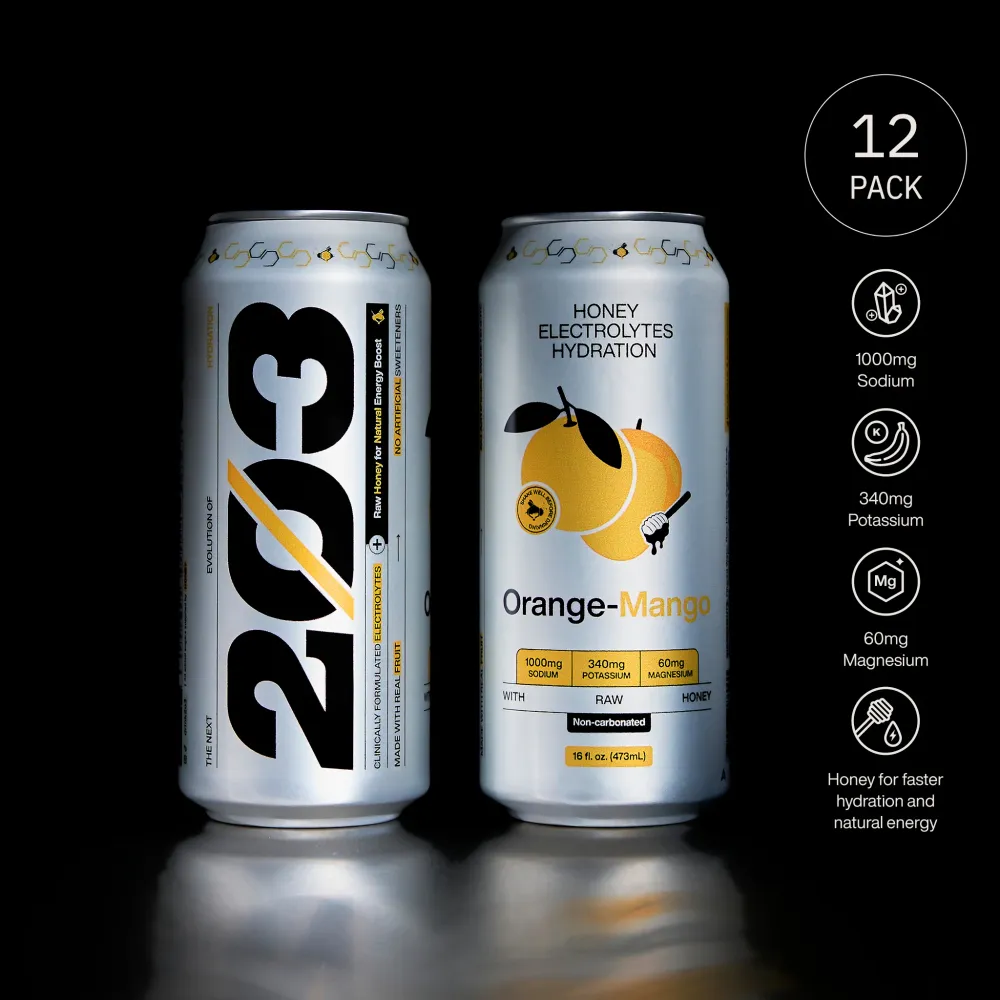
2O3 launched with two flavors, Hydro-Lime and Orange Mango, and the brand says both are made with real fruit. The ingredient and nutrition details above come from the Hydro-Lime can, so Orange Mango's fruit base and exact numbers may differ.
- Hydro-Lime (Not in stock at any PricePlow partner stores)
- Orange Mango (Not in stock at any PricePlow partner stores)
Salt First, Honey Second
2O3 Electrolytes + Honey Hydration is a serious sodium drink for people who train long and sweat hard, and the 1,000mg dose backs that up. The honey pitch rests more on the brand's argument than on the label, since the can doesn't list honey's amount or glucose content, but if you want sodium and a modest carb dose from sea salt and honey instead of refined sugar, this delivers it.
References
- Shirreffs, S M, et al. "Rehydration and recovery of fluid balance after exercise." Exercise and sport sciences reviews, 2000. https://pubmed.ncbi.nlm.nih.gov/11131686/
- Burke, L M. "Nutrition for post-exercise recovery." Australian journal of science and medicine in sport, 1997. https://pubmed.ncbi.nlm.nih.gov/9127682/
- Siegel, Arthur J. "Fatal water intoxication and cardiac arrest in runners during marathons: prevention and treatment based on validated clinical paradigms." The American journal of medicine, 2015. https://doi.org/10.1016/j.amjmed.2015.03.031
- Casa, D J, et al. "National athletic trainers' association position statement: fluid replacement for athletes." Journal of athletic training, 2000. https://pubmed.ncbi.nlm.nih.gov/16558633/
- Valentine, V. "The importance of salt in the athlete's diet." Current sports medicine reports, 2007. https://pubmed.ncbi.nlm.nih.gov/17617999
- Godek, Sandra Fowkes, et al. "Sweat rates, sweat sodium concentrations, and sodium losses in 3 groups of professional football players." Journal of athletic training, 2010. https://doi.org/10.4085/1062-6050-45.4.364
- Bergeron, M F. "Heat cramps: fluid and electrolyte challenges during tennis in the heat." Journal of science and medicine in sport, 2003. https://doi.org/10.1016/S1440-2440(03)80005-1
- Schwellnus, M P, et al. "Serum electrolyte concentrations and hydration status are not associated with exercise associated muscle cramping (EAMC) in distance runners." British journal of sports medicine, 2004. https://doi.org/10.1136/bjsm.2003.007021
- O'Donnell, Martin, et al. "Sodium intake and cardiovascular health." Circulation research, 2015. https://doi.org/10.1161/CIRCRESAHA.116.303771
- Montain, Scott J, et al. "Sweat mineral-element responses during 7 h of exercise-heat stress." International journal of sport nutrition and exercise metabolism, 2007. https://doi.org/10.1123/ijsnem.17.6.574
- Stone, Michael S, et al. "Potassium Intake, Bioavailability, Hypertension, and Glucose Control." Nutrients, 2016. https://doi.org/10.3390/nu8070444
- Schuette, Sally A. et al. "Bioavailability of Magnesium Diglycinate vs Magnesium Oxide in Patients with Ileal Resection." Journal of Parenteral and Enteral Nutrition, 1994. https://doi.org/10.1177/0148607194018005430
- Garrison, Scott R, et al. "Magnesium For Skeletal Muscle Cramps." The Cochrane database of systematic reviews, 2020. https://doi.org/10.1002/14651858.CD009402.pub3
- Roohani, Nazanin, et al. "Zinc and its importance for human health: An integrative review." Journal of research in medical sciences : the official journal of Isfahan University of Medical Sciences, 2013. https://pubmed.ncbi.nlm.nih.gov/23914218
- Toro-Román, Víctor, et al. "Toro Roman2022 Influence Of Physical Training On Intracellular And Extracellular Zinc Concentrations." Journal of the International Society of Sports Nutrition, 2022. https://doi.org/10.1080/15502783.2022.2054665
- Goodman, Matthew J. "The “Natural” vs. “Natural Flavors” Conflict in Food Labeling: A Regulatory Viewpoint." Food and drug law journal, 2017. https://pubmed.ncbi.nlm.nih.gov/29140655/
- Rosol, Thomas J, et al. "FEMA GRAS assessment of natural flavor complexes: Lemongrass oil, chamomile oils, citronella oil and related flavoring ingredients." Food and chemical toxicology : an international journal published for the British Industrial Biological Research Association, 2023. https://doi.org/10.1016/j.fct.2023.113697
- Okonkwo, Clinton E, et al. "A review on rebaudioside M: The next generation steviol glycoside and noncaloric sweetener." Journal of food science, 2024. https://doi.org/10.1111/1750-3841.17401
- Guo, Baodang, et al. "Enhancement of Rebaudioside M Production by Structure-Guided Engineering of Glycosyltransferase UGT76G1." Journal of agricultural and food chemistry, 2022. https://doi.org/10.1021/acs.jafc.2c01209
- Tao, Ran, et al. "Consumer-Based Sensory Characterization of Steviol Glycosides (Rebaudioside A, D, and M)." Foods (Basel, Switzerland), 2020. https://doi.org/10.3390/foods9081026
- EFSA, Panel on Food Additives and Flavourings (FAF), et al. "Safety evaluation of the food additive steviol glycosides, predominantly Rebaudioside M, produced by fermentation using Yarrowia lipolyticaVRM." EFSA journal. European Food Safety Authority, 2023. https://doi.org/10.2903/j.efsa.2023.8387
- Książek, Ewelina. "Citric Acid: Properties, Microbial Production, and Applications in Industries." Molecules (Basel, Switzerland), 2023. https://doi.org/10.3390/molecules29010022
Tagged