AI Energy UltraDopa Energy Drink
225mg caffeine, plenty of Cognizin citicoline, and a 1,176mg prop blend built entirely around dopamine
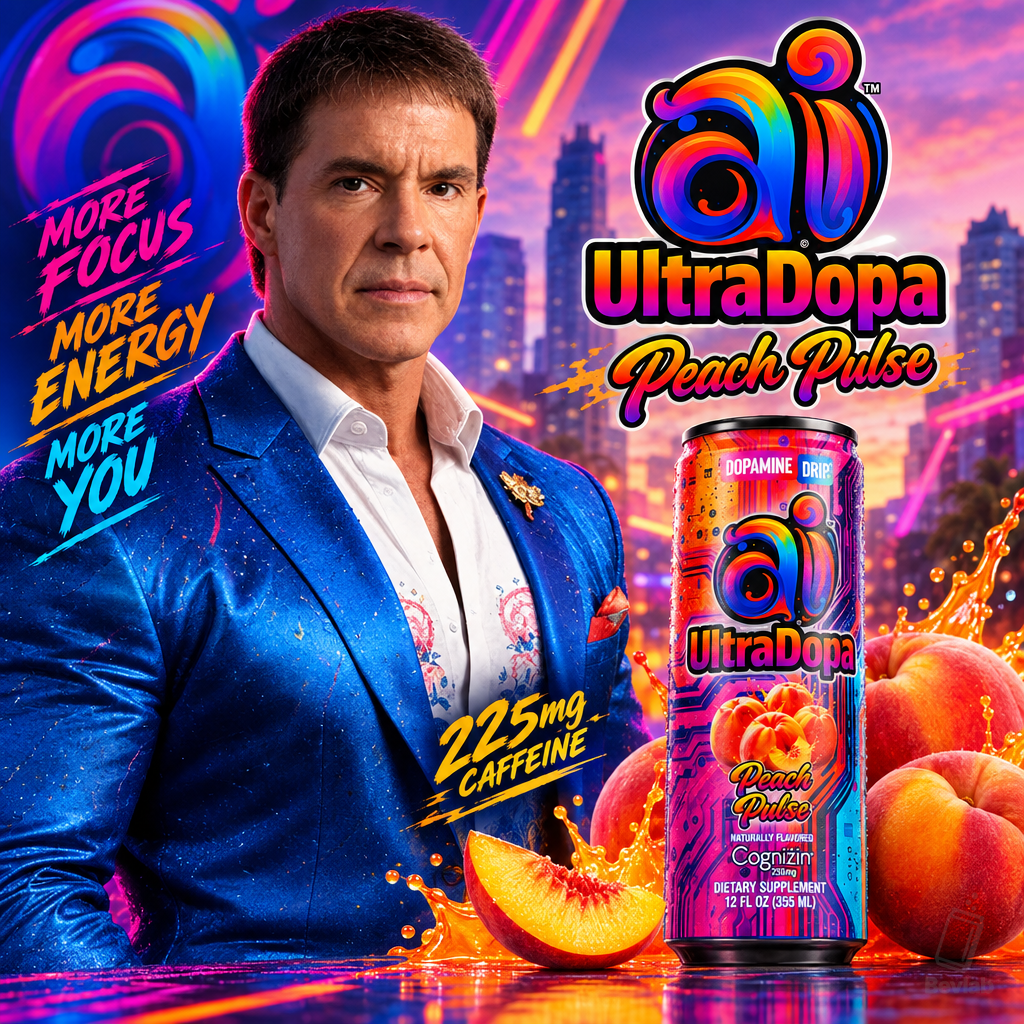
A full ingredient breakdown of Ai UltraDopa, the zero-sugar nootropic energy drink from Bang Energy founder Jack Owoc.
Jack Owoc built the performance energy drink category with Bang Energy, and he's back with a formula that reads less like a typical caffeine-plus-taurine can and more like a stack built around one neurotransmitter in particular. The Ai UltraDopa Peach Pulse Energy Drink launched under the simpler "Ai Energy" name in Winter 2024, then got a rebrand and formula update in Summer 2025 to sharpen its positioning around dopamine, alongside epinephrine, norepinephrine, and acetylcholine.

The can is zero-sugar, zero-calorie, zero-carb, and gluten-free, which puts it in line with where most of the energy drink category has moved. What separates it is the ingredient list: a 1,176mg proprietary blend built around Cognizin citicoline, two forms of tyrosine, L-theanine, rauwolscine, and huperzine-A, plus 225mg of caffeine called out on the front of the can. Here's what's actually happening in the formula, and where the label leaves questions unanswered.
Ai UltraDopa Peach Pulse Nutrition Facts

- Calories: 0
- Total Carbohydrates: 0g
- Total Sugars: 0g
- Vitamin B3 (as Niacinamide): 16mg (100% DV)
- Vitamin B5 (Pantothenic Acid): 5mg (100% DV)
- Vitamin B6 (as Pyridoxal-5'-Phosphate): 2.5mg (147% DV)
- Biotin (Vitamin B7): 30mcg (100% DV)
- Vitamin B9 (as Methyl Folate / 5-MTHF): 400mcg (100% DV)
- Vitamin B12 (as Methylcobalamin): 2.5mcg (104% DV)
- Sodium: 30mg (1% DV)
- NeuroSync™ Proprietary Blend: 1,176mg**
The B-vitamin panel uses several distinct forms, and the label includes active or near-active forms (5-MTHF instead of folic acid, methylcobalamin instead of cyanocobalamin). Sodium is negligible at 1% DV and isn't doing any real electrolyte work here.
Ai UltraDopa Peach Pulse Ingredients
The label discloses a single combined figure for the NeuroSync™ Proprietary Blend: 1,176mg. Seven ingredients are named inside that blend, but the Supplement Facts panel doesn't break out how much of each one you're actually getting. That's a meaningful caveat for everything below except caffeine, which gets its own separate callout.
-
N-Acetyl-L-Tyrosine
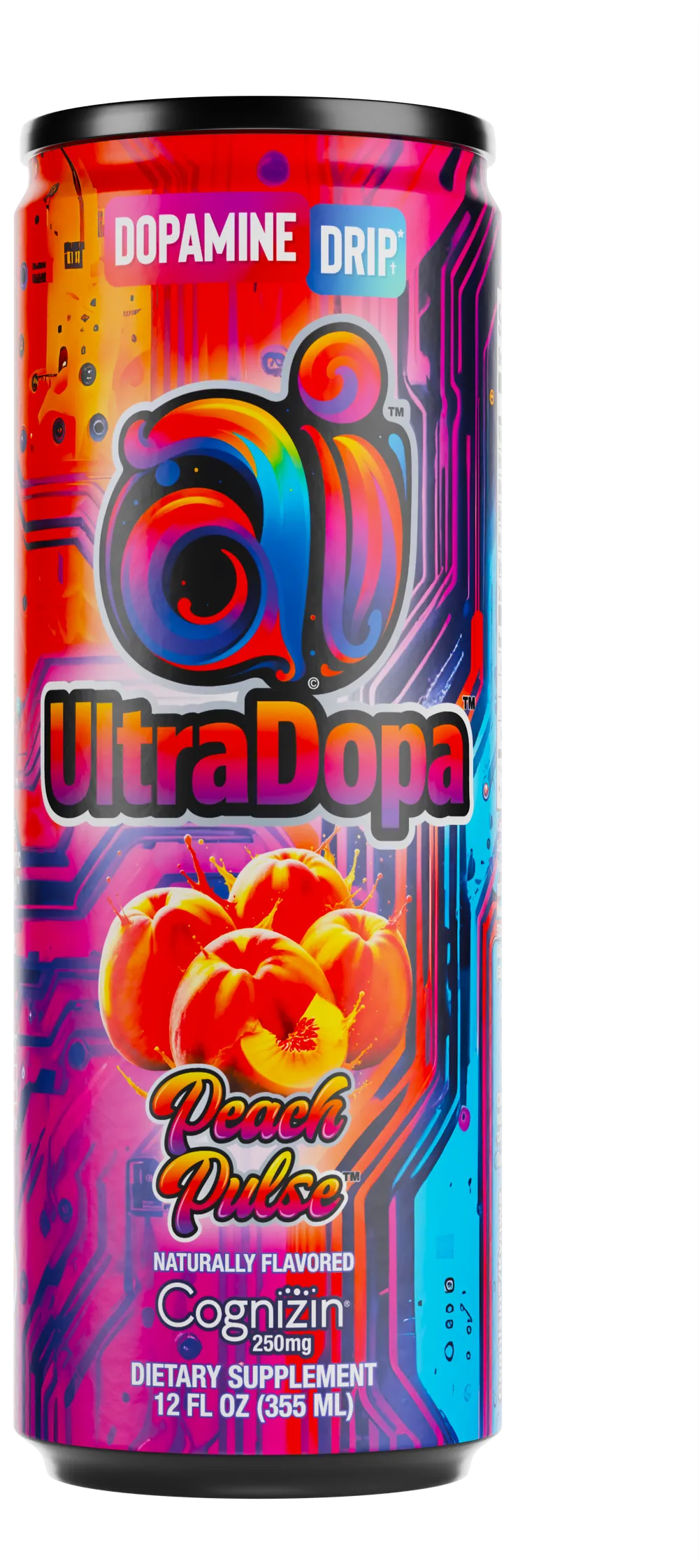
N-Acetyl-L-Tyrosine (NALT) is the acetylated form of the amino acid tyrosine, and it's listed first among the seven named components of the NeuroSync Blend. The acetyl group is added primarily to improve water solubility for formulation purposes. Like tyrosine itself, NALT is a building block the body can use on the pathway toward dopamine, though how efficiently the acetyl group gets cleaved off before that conversion happens is not something this brand's label addresses, and its individual dose within the 1,176mg blend isn't disclosed. Ai UltraDopa also lists standard L-Tyrosine separately in the same blend (covered on its own below), so the formula is leaning on two tyrosine sources rather than one. Because NALT's specific dose here is undisclosed and its research base is distinct from standard tyrosine, we're not going to borrow claims from the L-Tyrosine literature to describe it. Treat its inclusion as a formulation choice rather than a dosed, evidence-backed active until the brand discloses more.
-
Cognizin® (Citicoline) - Part of the 1,176mg Blend
Cognizin is the branded, patent-protected form of citicoline (CDP-choline) made by Kyowa Hakko, and it's the ingredient Ai UltraDopa built its whole positioning around. Once absorbed, citicoline splits into choline and cytidine, both of which cross into the brain and get rebuilt into phosphatidylcholine, the primary structural fat in neuron membranes.[1] Along the way, citicoline also feeds acetylcholine production and has been shown in animal and human research to stimulate tyrosine hydroxylase, the enzyme that kicks off dopamine synthesis.[2] Human trials using this exact branded ingredient at 250mg and 500mg per day improved attention scores on standardized tests in middle-aged women over four weeks.[3] A separate trial in adolescent males found similar gains in motor speed and attentional accuracy.[4] The Ai UltraDopa label doesn't disclose how much Cognizin sits inside the 1,176mg blend, so you can't confirm whether the can hits those studied ranges.
-
Caffeine Anhydrous - 225mg Front-of-Can Disclosure
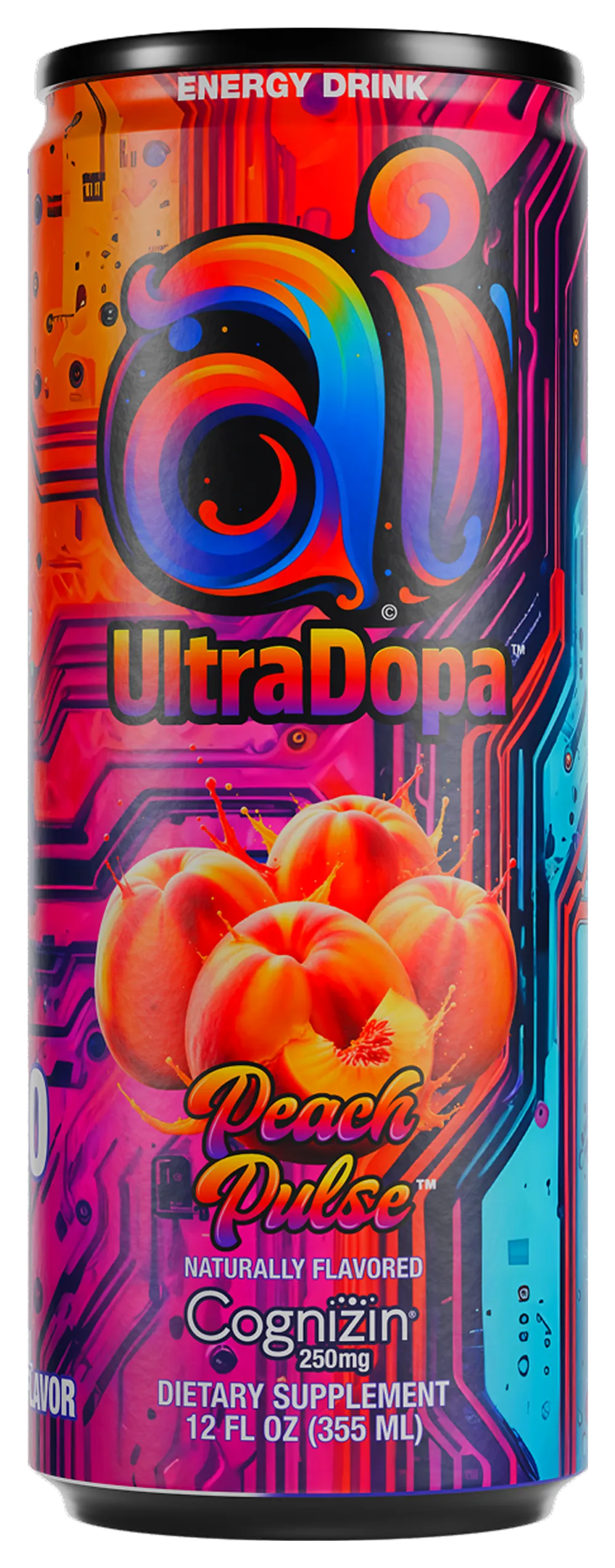
Caffeine is the one ingredient in this formula with a real number attached to it: the front of the can calls out 225mg per serving, separate from the Supplement Facts blend total. Caffeine anhydrous is also one of the seven named NeuroSync Blend components, so that 225mg figure is best read as the brand's total caffeine disclosure rather than a line-item dose broken out inside the 1,176mg blend. Mechanistically, caffeine blocks adenosine receptors in the brain, which is what removes the sleepy signal and simultaneously boosts release of dopamine, norepinephrine, and acetylcholine.[5] At 225mg, where this lands relative to the commonly studied 3-6mg/kg range depends on body weight; that dose range has been shown to improve vigilance, reaction time, and sustained attention in both rested and sleep-deprived people.[6] A comprehensive safety review found no adverse cardiovascular, behavioral, or reproductive effects in healthy adults consuming up to 400mg per day, so 225mg leaves meaningful room before that ceiling.[7]
-
L-Tyrosine - Part of the 1,176mg Blend
L-Tyrosine is the standard, non-acetylated amino acid and the direct precursor the body uses to build dopamine, norepinephrine, and epinephrine through the rate-limiting enzyme tyrosine hydroxylase.[8] The catch is that this enzyme runs close to full capacity in resting, non-stressed neurons, so simply adding more tyrosine does little in a calm state. Tyrosine's benefit shows up specifically when neurons are firing harder than usual, which is why the strongest human evidence comes from stress and sleep-deprivation research rather than baseline cognitive testing.[9] A military field trial found cadets given tyrosine performed better on memory and tracking tasks after a week of demanding combat training.[10] A more recent trial found tyrosine reduced missed responses on a Stroop task before a simulated stress drill, even though it didn't lower measured stress hormones.[11] Results in exercise and heat-stress contexts have been far less consistent, and a pooled network meta-analysis found no significant overall endurance benefit.[12]
-
L-Theanine - Part of the 1,176mg Blend

L-Theanine is the amino acid found naturally in tea leaves, best known for producing a calm-but-alert mental state without sedation. It works partly through GABA receptor activity and partly by promoting alpha brain-wave activity, the relaxed-focus pattern associated with tea drinking.[13] On its own, theanine's cognitive effects are modest and sometimes inconsistent. A broader meta-analysis of 11 trials confirmed that pairing theanine with caffeine reliably boosts alertness and attentional switching, though caffeine dose tends to drive most of that effect.[14] Since Ai UltraDopa already carries 225mg of caffeine, theanine here is most likely doing what it usually does in these stacks: smoothing out caffeine's edge.
-
Rauwolscine - Part of the 1,176mg Blend
Rauwolscine, also called alpha-yohimbine, is a plant alkaloid that blocks alpha-2 adrenergic receptors. Those receptors normally put the brakes on fat cell lipolysis and on norepinephrine release, so blocking them does the opposite: more norepinephrine hits the bloodstream and fat cells become more willing to release stored fat.[15] Rauwolscine is structurally similar to yohimbine but binds more selectively to alpha-2 receptors, which is the pharmacological argument for using it over plain yohimbine.[15] Human dosing data on rauwolscine itself is thin, so most of what's known comes from yohimbine research: a study in soccer players found 20mg/day of yohimbine over three weeks meaningfully reduced body fat percentage without touching muscle mass.[16] Rauwolscine also carries real cardiovascular caution. It's contraindicated with anxiety disorders, high blood pressure, and MAO inhibitors, and its individual dose in this blend isn't disclosed.
-
Huperzine A - Part of the 1,176mg Blend
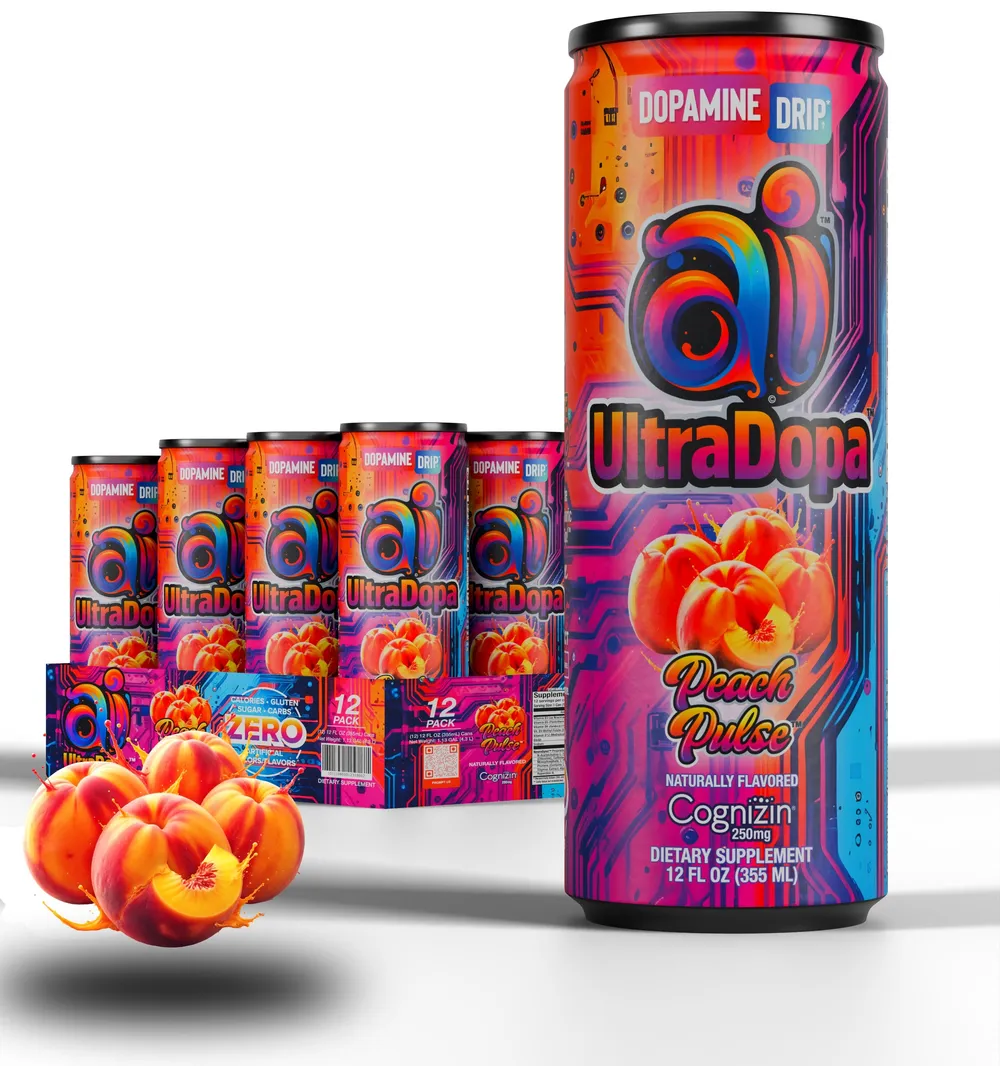
Huperzine A is a compound derived from the Chinese club moss Huperzia serrata, and it works by inhibiting acetylcholinesterase, the enzyme that normally breaks down acetylcholine in the synapse.[17] Blocking that enzyme lets acetylcholine linger longer, which is the same basic mechanism behind several Alzheimer's drugs, though huperzine-A is dosed far lower here than in clinical dementia research. Human trials in mild-to-moderate Alzheimer's patients used doses around 400mcg twice daily and found measurable cognitive improvement over placebo.[18] Evidence for healthy adults using huperzine-A as a general focus booster is thinner, resting mostly on one small trial in adolescents that found improved memory scores after a month at 100mcg/day.[18] Because huperzine-A's dose here is buried in the undisclosed blend total, there's no way to know if Ai UltraDopa is anywhere close to studied amounts.
-
Other Ingredients
- Citric Acid - A common acidulant that adjusts tartness and helps stabilize pH in the can.
- Natural Flavors - The flavor system responsible for the Peach Pulse taste profile.
- Sucralose - A zero-calorie sweetener roughly 600 times sweeter than table sugar, used here to hit the zero-sugar claim.
- Potassium Sorbate - A preservative that inhibits mold and yeast growth, particularly effective in the low-pH environment of a carbonated beverage.
- Carbonated Water - The base of the drink, providing the can's carbonation and mouthfeel.
- Sodium Benzoate - A second preservative commonly paired with potassium sorbate in acidic beverages to extend shelf life.
Who It's For
- Dopamine-curious nootropic drinkers: If you're specifically shopping for a stack built around Cognizin, tyrosine, and cholinergic support rather than a straightforward caffeine-and-taurine can, this formula is speaking your language.
- Label-transparency purists should pump the brakes: All seven named actives sit inside the blend, while six lack individual amounts, so if you want to verify doses against the research before you drink it, this can won't give you that answer.
A Bold Positioning, A Blank on the Doses
Ai UltraDopa has an interesting thesis and a legitimately loaded ingredient list, with Cognizin, dual tyrosine sources, theanine, rauwolscine, and huperzine-A all pointed at the same neurotransmitter goals. The 225mg caffeine disclosure is straightforward and sits in a well-studied range, but the 1,176mg proprietary blend hides exactly how much of everything else you're getting, which makes it impossible to compare this can against the clinical doses cited above. Follow @BevlabMedia on TikTok and Instagram for more can-by-can breakdowns like this one.
References
- Conant, Richard, et al. "Therapeutic applications of citicoline for stroke and cognitive dysfunction in the elderly: a review of the literature." Alternative medicine review : a journal of clinical therapeutic, 2004. https://pubmed.ncbi.nlm.nih.gov/15005642/
- Secades, Julio J, et al. "Citicoline: pharmacological and clinical review, 2006 update." Methods and findings in experimental and clinical pharmacology, 2006. https://pubmed.ncbi.nlm.nih.gov/17171187/
- McGlade, Erin, et al. "Improved Attentional Performance Following Citicoline Administration In Healthy Adult Women." Food and Nutrition Sciences, 2012. https://doi.org/10.4236/fns.2012.36103
- McGlade, Erin, et al. "The Effect of Citicoline Supplementation on Motor Speed and Attention in Adolescent Males." Journal of attention disorders, 2019. https://doi.org/10.1177/1087054715593633
- McLellan, Tom M. et al. "A Review Of Caffeine S Effects On Cognitive Physical And Occupational Performance." Neuroscience & Biobehavioral Reviews, 2016. https://doi.org/10.1016/j.neubiorev.2016.09.001
- Guest, Nanci S. et al. "International Society Of Sports Nutrition Position Stand Caffeine And Exercise Performance." Journal of the International Society of Sports Nutrition, 2021. https://doi.org/10.1186/s12970-020-00383-4
- Wikoff, Daniele, et al. "Systematic review of the potential adverse effects of caffeine consumption in healthy adults, pregnant women, adolescents, and children." Food and chemical toxicology : an international journal published for the British Industrial Biological Research Association, 2017. https://doi.org/10.1016/j.fct.2017.04.002
- Fernstrom, John D. et al. "Tyrosine, phenylalanine, and catecholamine synthesis and function in the brain." The Journal of Nutrition, 2007. https://doi.org/10.1093/jn/137.6.1539s
- Jongkees, Bryant J, et al. "Effect of tyrosine supplementation on clinical and healthy populations under stress or cognitive demands--A review." Journal of psychiatric research, 2015. https://doi.org/10.1016/j.jpsychires.2015.08.014
- Deijen, J B, et al. "Tyrosine improves cognitive performance and reduces blood pressure in cadets after one week of a combat training course." Brain research bulletin, 1999. https://doi.org/10.1016/s0361-9230(98)00163-4
- McAllister, Matthew J, et al. "Impact of L-theanine and L-tyrosine on markers of stress and cognitive performance in response to a virtual reality based active shooter training drill." Stress (Amsterdam, Netherlands), 2024. https://doi.org/10.1080/10253890.2024.2375588
- Li, Jiahao, et al. "Effects of Nutritional Supplements on Endurance Performance and Subjective Perception in Athletes Exercising in the Heat: A Systematic Review and Network Meta-Analysis." Nutrients, 2025. https://doi.org/10.3390/nu17132141
- Juneja, L. "L-theanine—a unique amino acid of green tea and its relaxation effect in humans." Trends in Food Science & Technology, 1999. https://doi.org/10.1016/s0924-2244(99)00044-8
- Camfield, David A, et al. "Acute effects of tea constituents L-theanine, caffeine, and epigallocatechin gallate on cognitive function and mood: a systematic review and meta-analysis." Nutrition reviews, 2014. https://doi.org/10.1111/nure.12120
- Perry, Bruce D. et al. "[3H]rauwolscine (α-yohimbine): A specific antagonist radioligand for brain α2-adrenergic receptors." European Journal of Pharmacology, 1981. https://doi.org/10.1016/0014-2999(81)90123-0
- Ostojic, Sergej M. "Yohimbine: the effects on body composition and exercise performance in soccer players." Research in sports medicine (Print), 2006. https://doi.org/10.1080/15438620600987106
- Tang, X.‐C. et al. "Effect Of Huperzine A A New Cholinesterase Inhibitor On The Central Cholinergic System Of The Rat." Journal of Neuroscience Research, 1989. https://doi.org/10.1002/jnr.490240220
- Tun, Maung Kyaw Moe, et al. "The Pharmacology And Therapeutic Potential Of Huperzine A." Journal of experimental pharmacology, 2012. https://doi.org/10.2147/JEP.S27084
Tagged