Beyond Immerse Protein + Energy: The Pivot That Actually Makes Sense
Plant protein finally lands where shoppers want it: a cold, fizzy can
A plant-based meat company's fizzy pivot: hydrolyzed pea protein, coffee-bean caffeine, and L-theanine in a 110-calorie sparkling can.
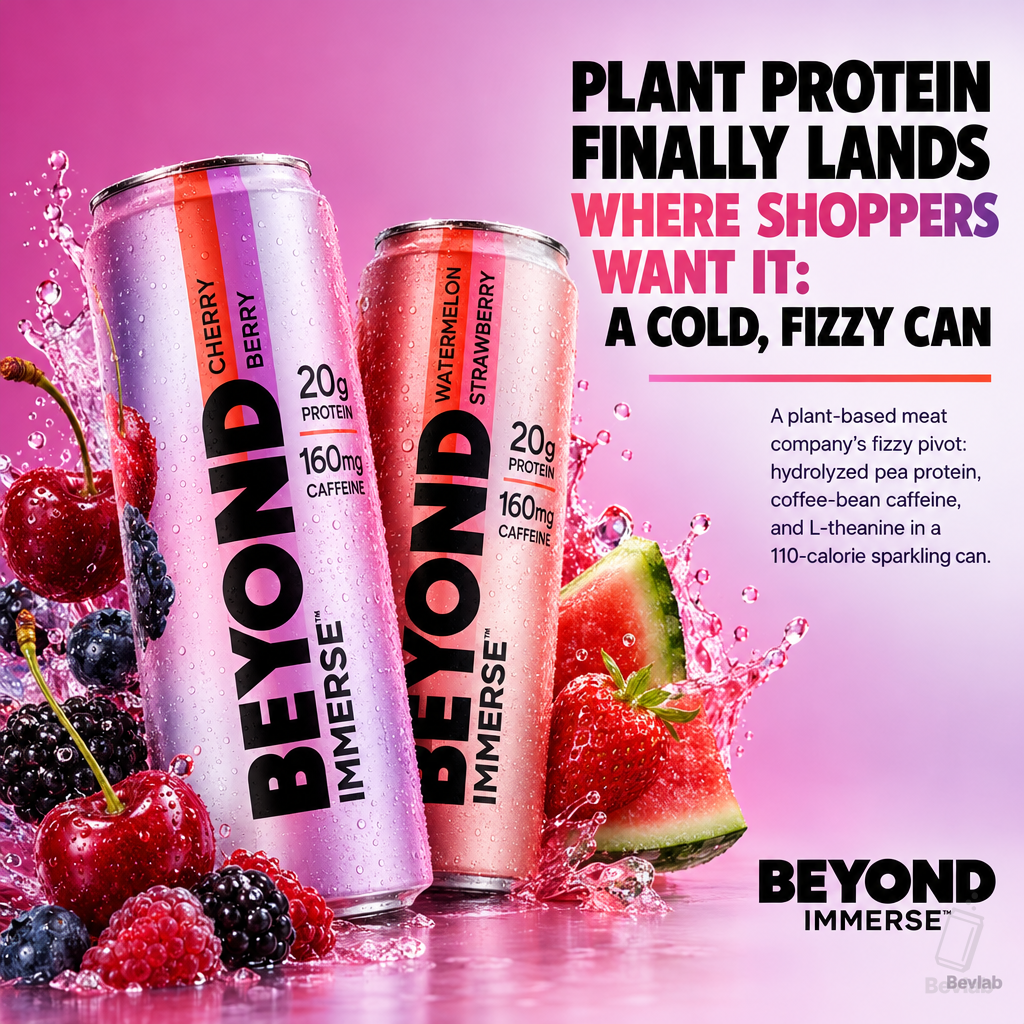
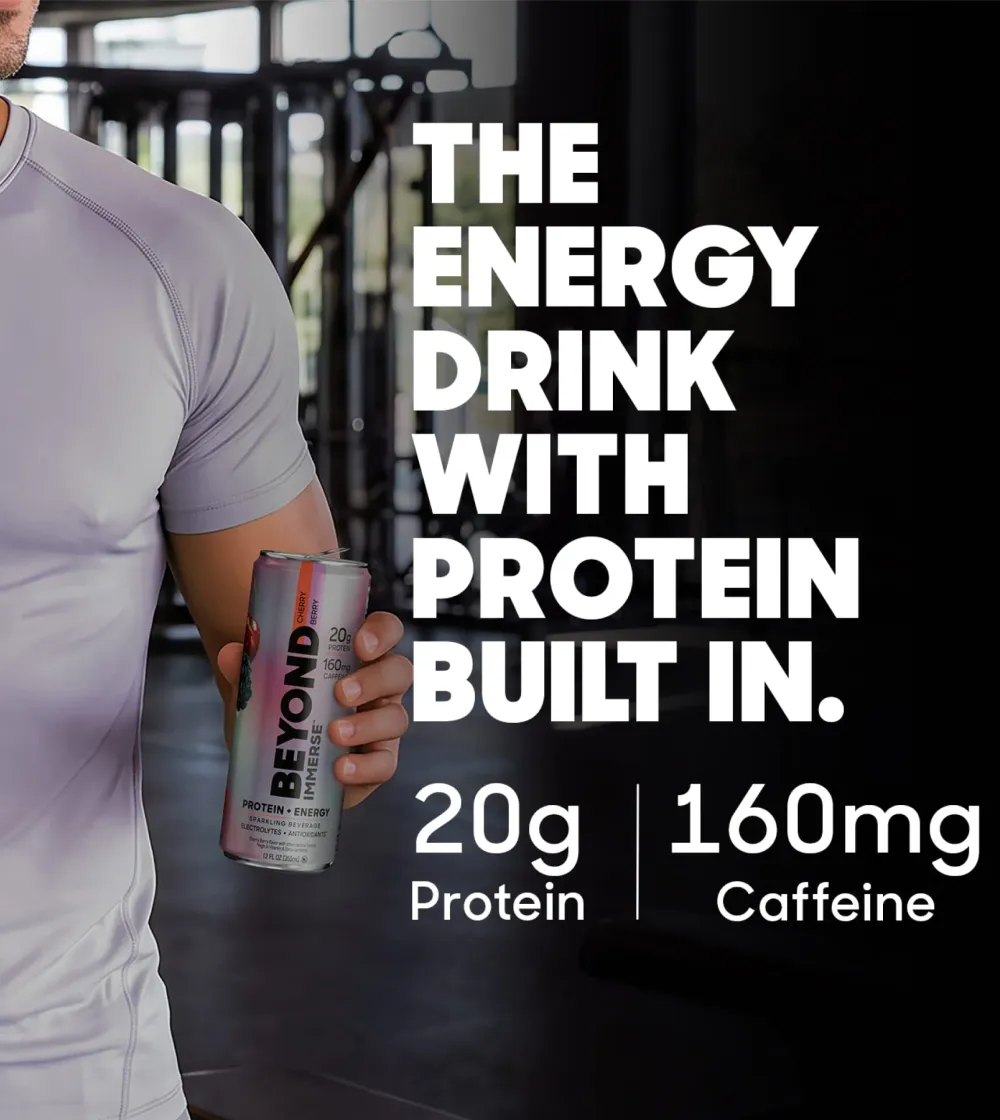
Beyond, the company most people still know as Beyond Meat, spent years trying to convince meat eaters that a plant burger could replace the one on their grill. Its newest product skips that argument entirely. Beyond Immerse Protein + Energy is a sparkling, fruit-flavored canned drink built on hydrolyzed pea protein, with caffeine from coffee beans, L-theanine, and guarana stacked on top. It's a protein drink that behaves like an energy drink, and it leans on the one thing Beyond has always been good at: getting protein out of plants.
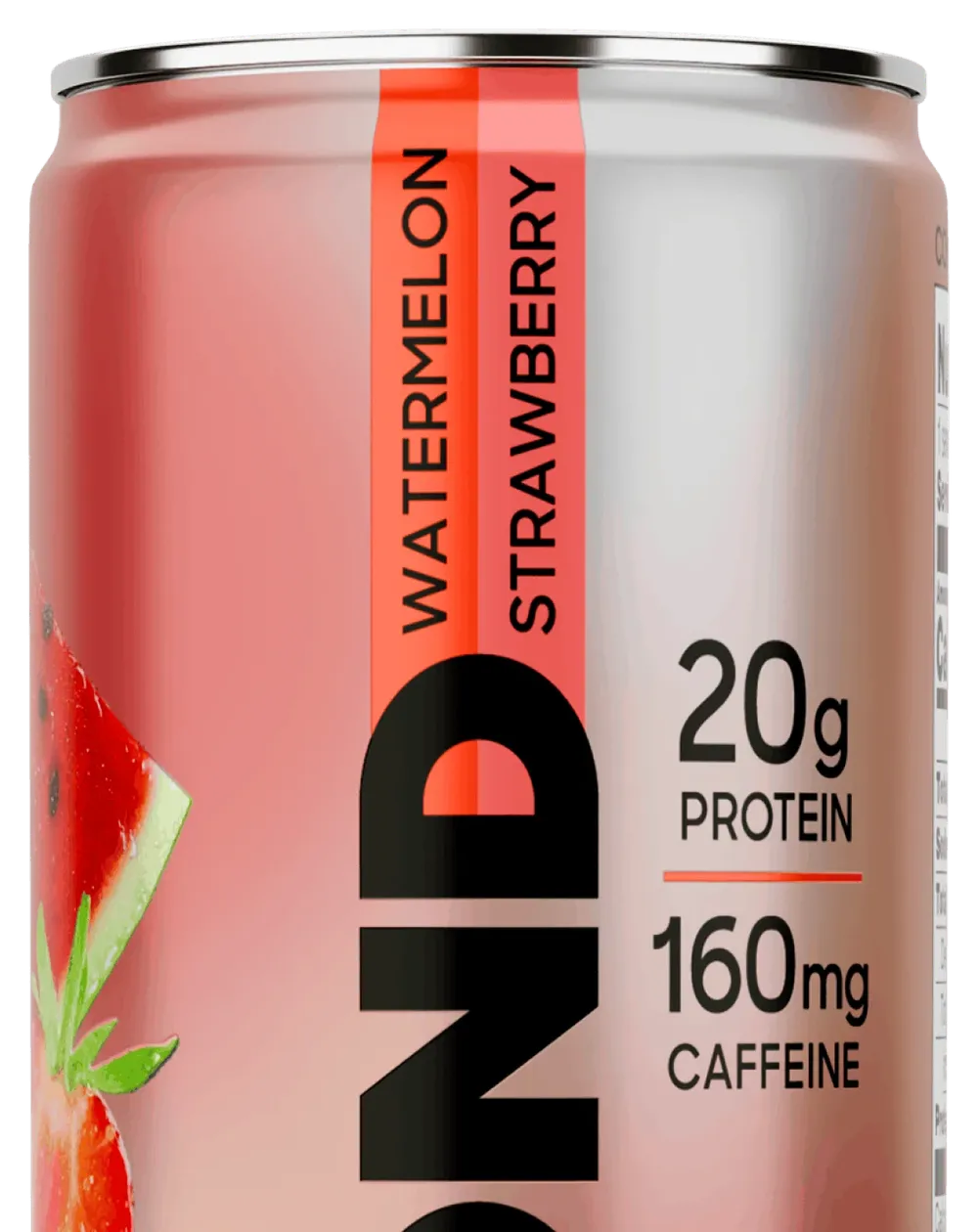
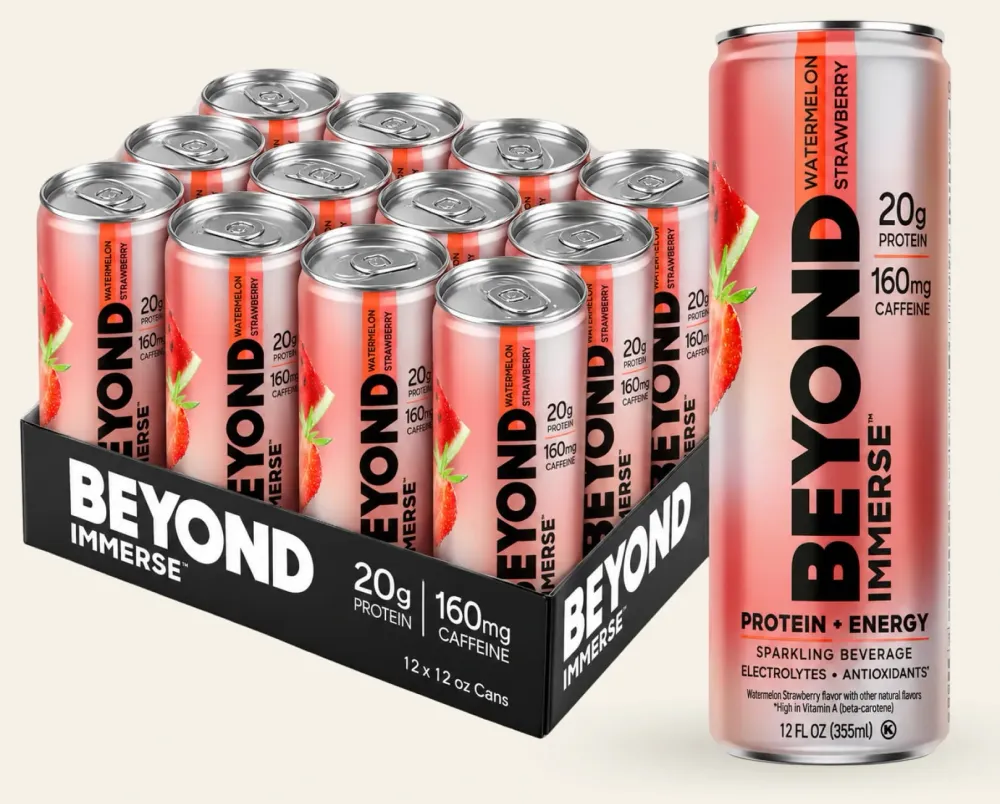
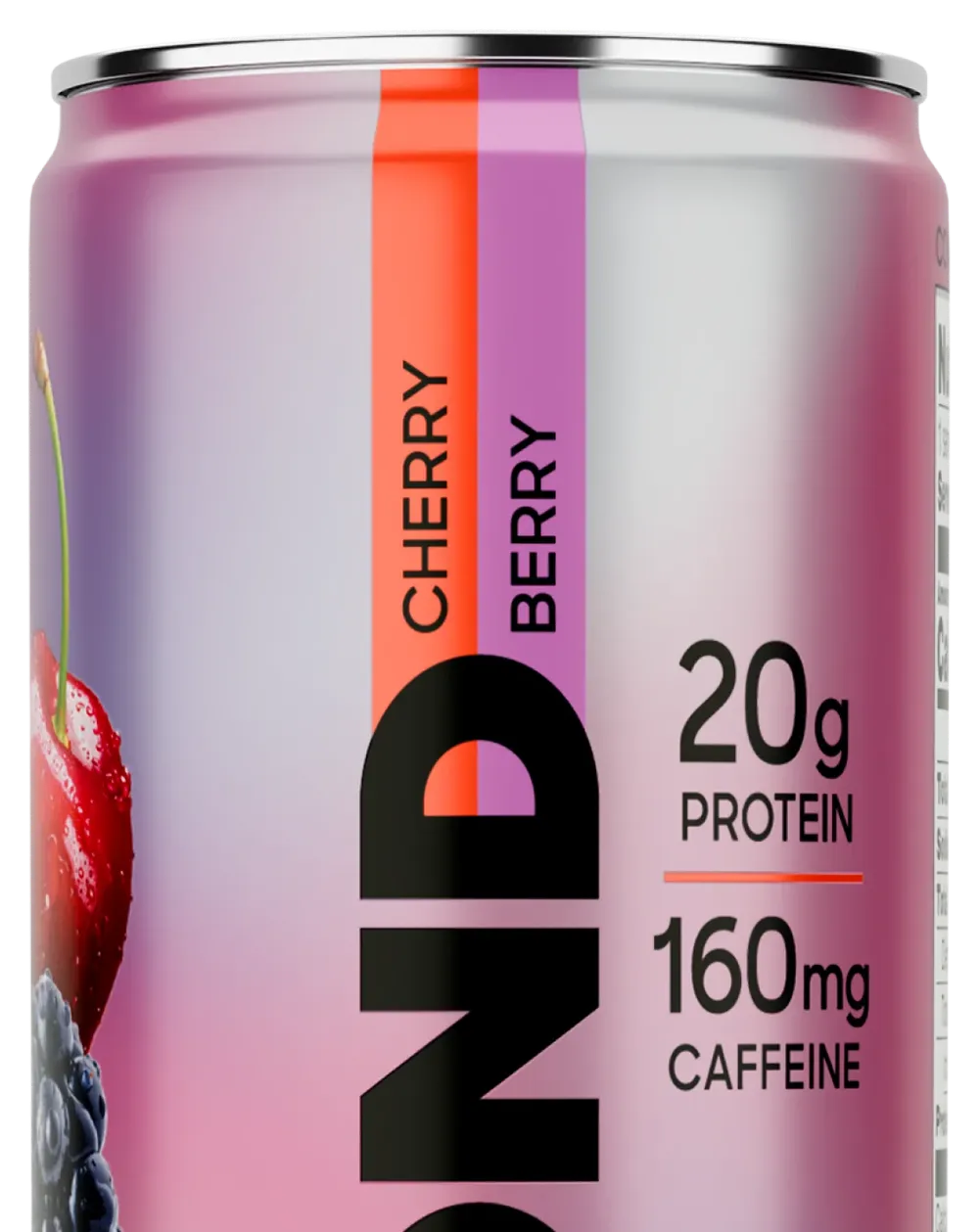
The can comes in at 110 calories, with 20g of protein, 5g of fiber, and 5g of added sugar, sweetened with organic agave and monk fruit. Beyond says each can carries 160mg of caffeine, though that number isn't printed on the label, and the L-theanine and guarana amounts aren't disclosed at all.
Beyond Moves Past the Burger
Beyond built its name on plant-based meat, and getting a lifelong meat eater to give up a burger is one of the hardest sells in the grocery store. A protein drink has an easier job. Nobody holds a fruit-flavored sparkling can up next to a steak and looks for the differences. It doesn't have to imitate anything. It has to taste good, hit its macros, and give you a reason to pick it over the next protein shake in the cooler. A company with years of plant protein experience is well placed for that kind of fight.
Immerse is the name of Beyond's protein drink line, and Protein + Energy is the caffeinated version. It adds a three-part stimulant stack to the protein base. Putting protein and caffeine in one carbonated can means it competes for the post-workout grab and the afternoon energy drink run at the same time. For a brand looking beyond the meat case, it's a smart lane.
Beyond Immerse Protein + Energy Nutrition Facts
These numbers are from a single flavor's can, and the other flavors may vary slightly.
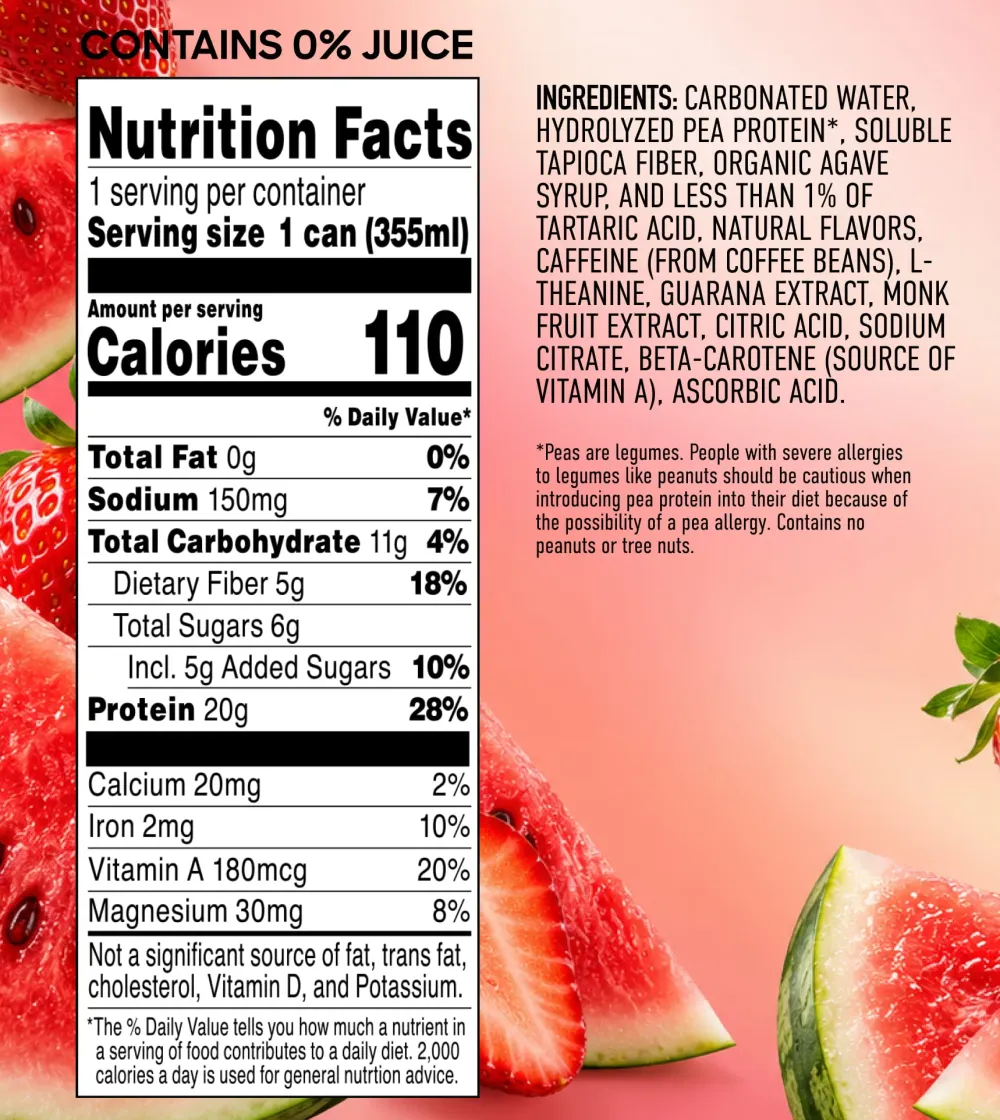
- Calories: 110
- Total Fat: 0g (0% DV)
- Total Carbohydrate: 11g (4% DV)
- Dietary Fiber: 5g (18% DV)
- Total Sugars: 6g
- Added Sugars: 5g (10% DV)
- Protein: 20g (28% DV)
- Vitamins and Minerals
- Sodium: 150mg (7% DV)
- Calcium: 20mg (2% DV)
- Iron: 2mg (10% DV)
- Vitamin A: 180mcg (20% DV)
- Magnesium: 30mg (8% DV)
Getting 20g of protein for 110 calories is an efficient ratio, and it's the main reason to buy this can. Don't be thrown by the 28% DV next to the protein. U.S. labels adjust protein's Daily Value for protein quality, which is why 20g doesn't show up as the 40% you'd get from grams alone.
The carb line is tight too. Of the 11g of carbohydrates, 5g are fiber and 6g are sugar, which accounts for the whole total. Beyond chose a small amount of real sugar over going completely zero-sugar, and at 5g added, the sugar load stays modest.
Beyond Immerse Protein + Energy Ingredients
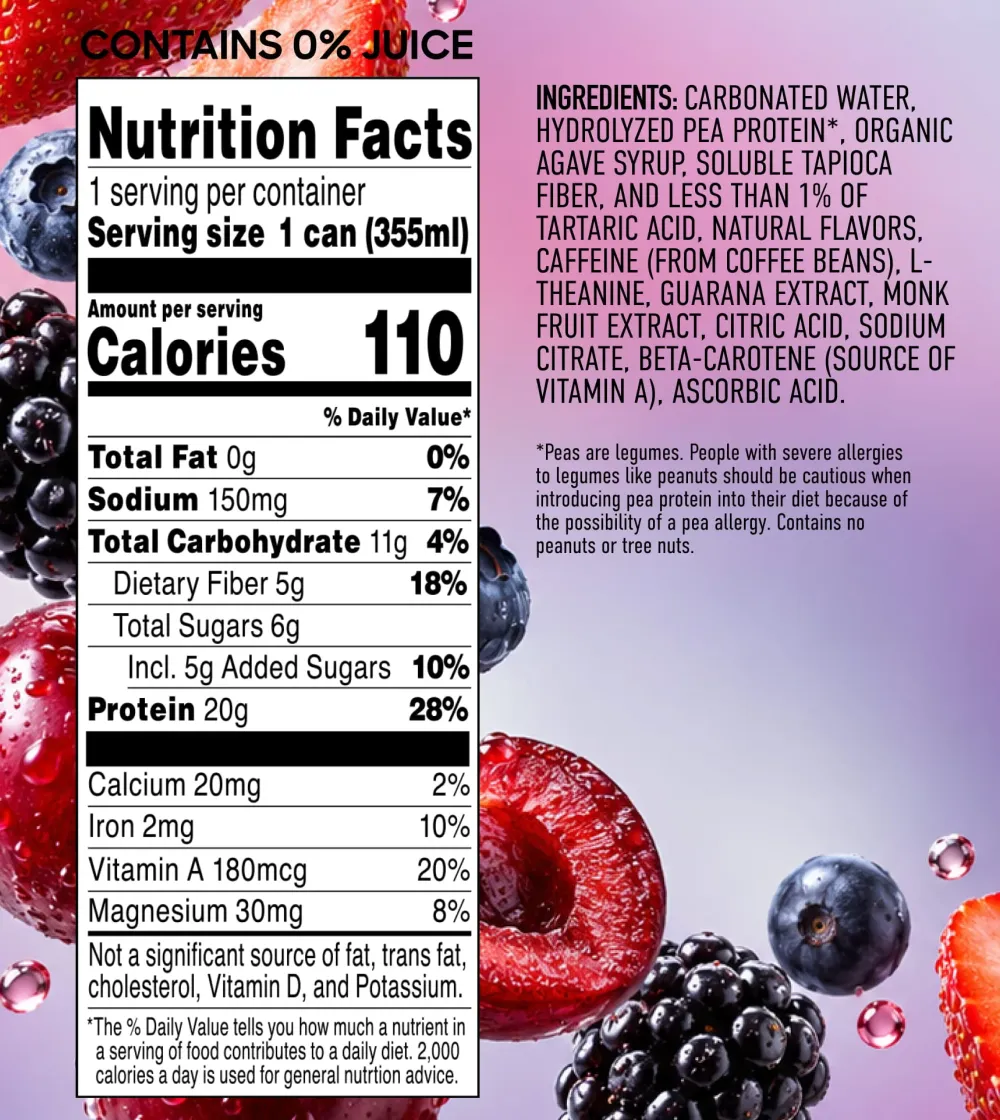
The key ingredients in each 355mL can:
-
Hydrolyzed Pea Protein
Hydrolyzed pea protein is the second ingredient on the can, right behind carbonated water, and it's the only protein source on the label. The panel shows 20g of total protein per can. "Hydrolyzed" means the protein has been broken into smaller pieces. Processing choices like that change how pea protein dissolves and behaves in a finished product, which matters a lot in a carbonated drink.[1,2]
The question for any plant protein is whether it does the job, and pea holds up better than its reputation. In healthy adults, pea protein's amino acid digestibility came in at 93.6%, compared with 96.8% for casein, and that gap wasn't statistically significant.[3] In young men, 30g of pea protein produced the same muscle protein synthesis as 30g of milk protein, even though milk pushed more amino acids into the blood.[4] After resistance training, 25g of pea protein matched both mycoprotein and a pea-mycoprotein blend.[5]
Those studies used 25-30g, a bit more than this can delivers. Pea also tends to produce a smaller amino acid spike in the blood than whey.[6] One more note: pea is a legume, and pea allergy reactions can range from mild to severe.[7]
-
Soluble Tapioca Fiber
Soluble tapioca fiber is the fourth ingredient, and it likely contributes much of the 5g of dietary fiber on the panel. That 5g is the panel's total fiber figure, not a disclosed tapioca fiber dose. This type of tapioca fiber is typically a resistant maltodextrin: starch from tapioca that has been restructured so your digestive enzymes can't break most of it down.[8] It's a low-viscosity fiber, which is why it works in a thin, carbonated drink instead of turning it into a smoothie.[9]
Research on this fiber class focuses on digestion and blood sugar. A meta-analysis of 29 trials found that resistant maltodextrin increased stool frequency and volume at roughly 3.8-13.5g/day.[10] In a crossover study, tapioca resistant maltodextrin produced much smaller glucose and insulin responses than regular tapioca maltodextrin, but that test used a 50g dose, which also caused more gas.[11]
In a protein drink, the practical benefit is simple. Fiber fills out the carbohydrate total without adding much sugar, and a few grams in one can is far from the levels where tolerance becomes an issue.[12]
-
Caffeine (from Coffee Beans)
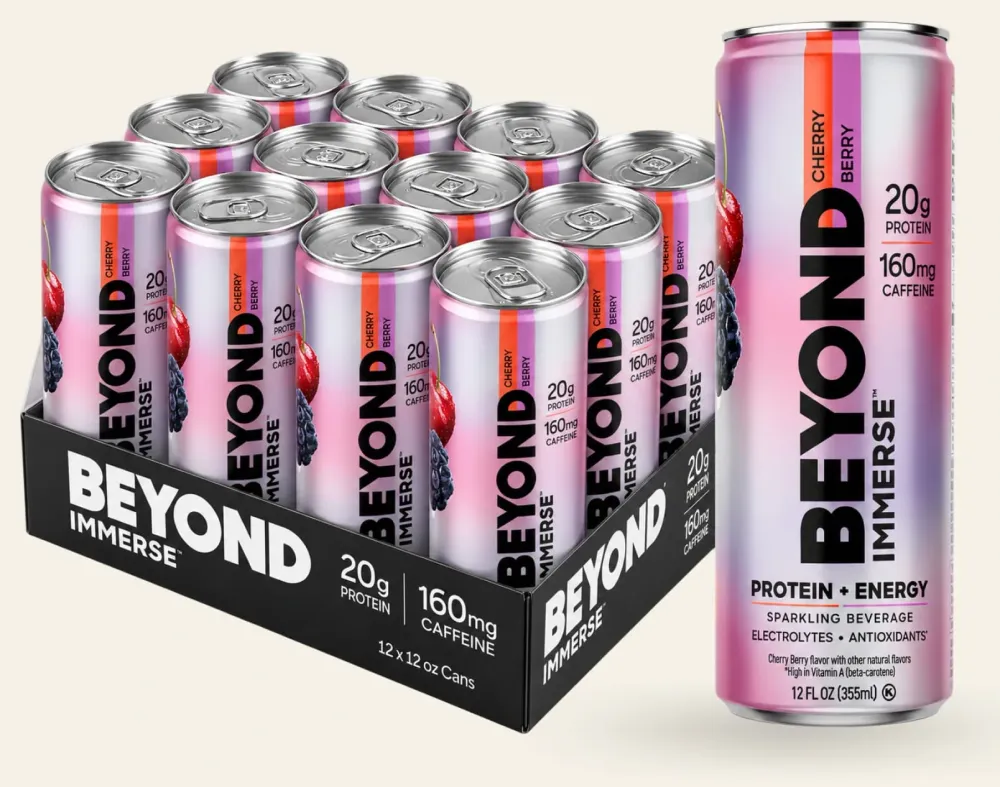
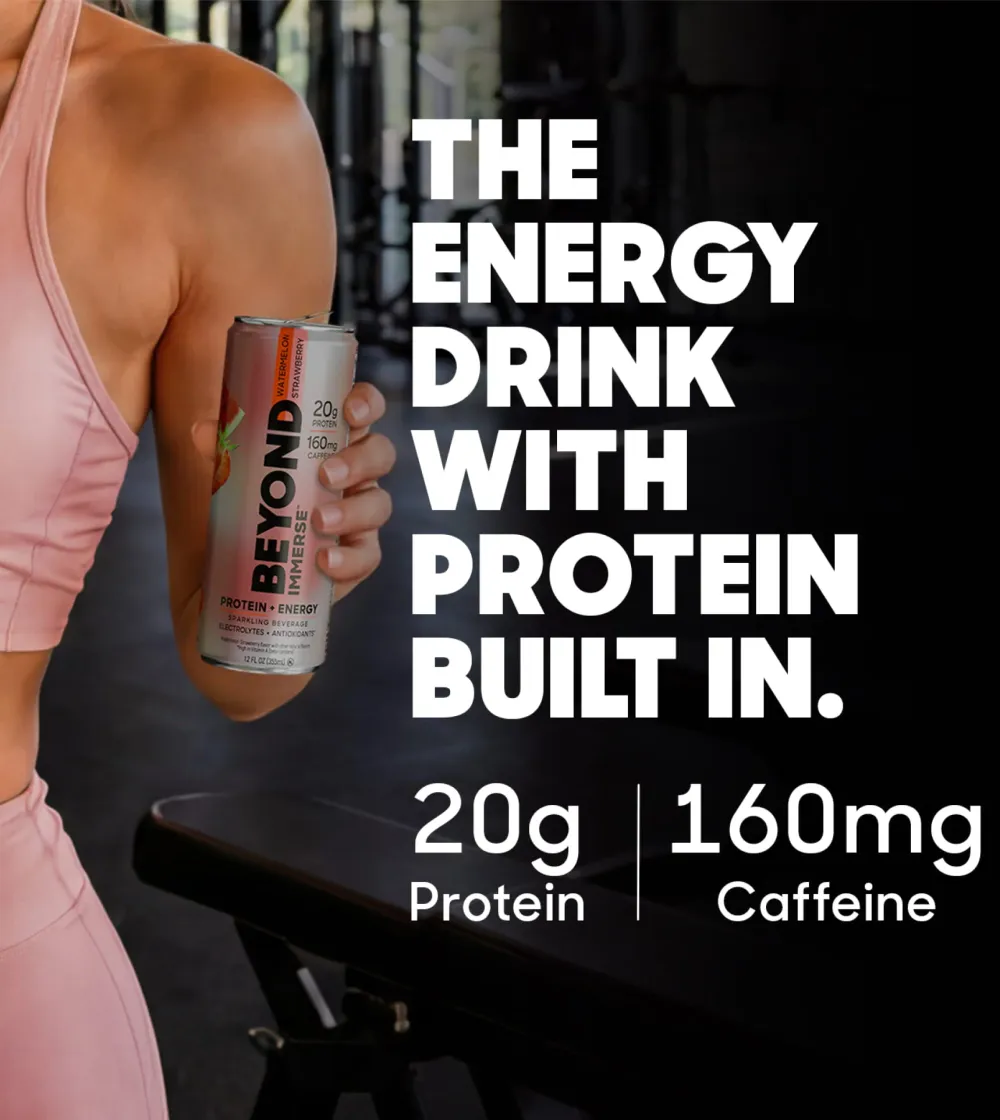
Caffeine in this can comes from coffee beans, and the label says so. The label doesn't print an amount, but Beyond says each can carries 160mg of caffeine. That puts it squarely in energy drink territory. Guarana brings its own naturally occurring caffeine too, and Beyond doesn't break down how the total splits between the two sources.
What caffeine does is familiar. It blocks the signal that makes you feel tired, which is how it sharpens alertness and attention.[13] A broad review found that roughly 40-300mg can improve alertness, vigilance, attention, and reaction time, including in people who are short on sleep.[14] A review of placebo-controlled studies found improvements on both simple and complex attention tasks.[15] For training, the International Society of Sports Nutrition supports caffeine for endurance and many strength and power measures, while noting that individual responses vary widely.[16]
Timing matters too. In one sleep study, 400mg taken even six hours before bed disrupted sleep.[17] A large safety review found that up to 400mg/day wasn't associated with overt adverse effects in healthy adults.[18] At 160mg, one can takes a real bite out of that daily ceiling, so count it against your total and don't make it your nightcap.
-
L-Theanine
L-theanine is the amino acid from tea leaves that smooths out caffeine's edge without killing the focus. Beyond doesn't disclose how much is in this can.
Most of the evidence is for the pairing. A meta-analysis of tea-ingredient trials found that caffeine plus L-theanine improved alertness and attention-switching accuracy in the first two hours, although most of the attention benefit traced back to the caffeine dose.[19] In a crossover trial, 250mg of L-theanine with 150mg of caffeine improved reaction time, working memory speed, and alertness and reduced tiredness. Neither ingredient fully matched those results on its own.[20]
On its own, L-theanine at 50-200mg has been tied to the relaxed-focus state within about 40 minutes of drinking it.[21] A systematic review found that 200-400mg/day may help with stress in people under acute pressure, but the evidence doesn't support it as a standalone treatment for anxiety disorders.[22]
Those are study doses. Without an amount on the label, you can't tell whether this can lands anywhere near that range. It's a smart ingredient to include, and it would be easier to judge with a number next to it.
-
Guarana Extract
Guarana is a seed from the Amazon that's 2.5-6% caffeine by dry weight. It also carries catechins, small amounts of theobromine, and other plant compounds.[23] The label lists guarana extract without an amount, so as with the coffee-bean caffeine, its share of the can's stimulant load isn't disclosed.
A 2023 meta-analysis of eight trials found that guarana produced a small, statistically significant improvement in response time, with no effect on accuracy.[24] In that analysis, guarana taken in liquid showed a stronger response-time effect than guarana in capsules, which is a minor point in a drink's favor.[24] Planarian research suggests guarana's other compounds may add stimulation beyond caffeine alone, but that's an invertebrate model, not people.[25]
Guarana is GRAS as a food ingredient in the U.S. The usual caffeine cautions apply if you're pregnant, have a heart condition or anxiety, or take medications that interact with caffeine.[26] In this can, guarana plays a supporting role next to the coffee-bean caffeine.
-
Vitamins and Minerals
-
Vitamin A (as Beta-Carotene) - 180mcg (20% DV)
Beta-carotene is listed as the source of vitamin A, and the panel shows 180mcg, or 20% of the Daily Value. Your body converts beta-carotene into vitamin A, which supports vision, immune function, and skin. Beta-carotene is also an orange-red pigment, so in a fruit drink it can help with color too.
-
Vitamin C (as Ascorbic Acid)
Ascorbic acid is vitamin C, and it's the last ingredient on the list. In drinks, it commonly works as an antioxidant that helps protect flavor and color over the product's shelf life.
-
Iron - 2mg (10% DV)
The panel shows 2mg of iron, or 10% DV. The ingredient list doesn't name an added iron source, so it most likely comes from the pea protein. Iron helps your red blood cells carry oxygen, and 10% from a drink is a useful bonus.
-
Magnesium - 30mg (8% DV)
Magnesium comes in at 30mg, or 8% DV, and like the iron, it most likely comes from the pea protein rather than an added mineral. Magnesium supports muscle and nerve function and the energy metabolism your body runs all day. It won't cover your daily needs, but it's a small contribution.
-
Sodium - 150mg (7% DV)
Sodium comes in at 150mg, or 7% DV. Sodium citrate is one sodium source on the ingredient list. That's a modest amount, and low enough that it shouldn't affect most people's buying decision.
-
-
Sweeteners and Flavors
-
Organic Agave Syrup
Organic agave syrup is third on the ingredient list. That makes it the largest sweetener by weight and the only sugar-based sweetener in the can. The panel shows 6g of total sugars, 5g of which are added. That's a modest sugar load, and pairing it with monk fruit lets Beyond keep the sugar low without relying only on a high-intensity sweetener.
-
Monk Fruit Extract
Monk fruit extract handles the rest of the sweetness. Its sweet compounds, called mogrosides, make extracts roughly 160-420 times sweeter than sugar depending on purity, so a tiny amount goes a long way.[27] Monk fruit is GRAS in the U.S. and approved in several other markets.[27] Most of its claimed health effects come from animal and lab research, so think of it as a sweetener, not a functional ingredient.[28]
-
Natural Flavors
Natural flavors carry the fruit profile. Under FDA rules, "natural" describes where a flavor's compounds come from, not their chemistry, so natural and artificial versions of the same flavor molecule can be identical.[29] Beyond doesn't break down its flavor system.
-
-
Other Ingredients
Carbonated water leads the label, and everything from tartaric acid onward is listed at less than 1% of the formula.
- Carbonated Water - The base of the drink and the source of its fizz. It gives the can a sparkling, soda-like feel instead of a shake texture.
- Tartaric Acid - The signature acid of grapes, adding tartness to the fruit flavor.
- Citric Acid - Adds tartness and helps control the drink's acidity.
- Sodium Citrate - A salt of citric acid that buffers acidity and softens sour notes.
Picking Your Can
Protein + Energy comes in fruit-forward flavors rather than the usual vanilla and chocolate. The widget below keeps track of the lineup.
Beyond's Best Bet Yet
If you want 20g of plant protein and some caffeine in one light, fizzy can, Beyond built a smart one, and it's a far easier sell than the plant burger ever was. The protein, fiber, and sugar numbers back up the pitch, and Beyond's stated 160mg of caffeine earns the "Energy" in its name. We'd still like to see that number, and the L-theanine dose, printed on the can.
References
- Lam, A. C. Y. et al. "Pea protein isolates: Structure, extraction, and functionality." Food Reviews International, 2018. https://doi.org/10.1080/87559129.2016.1242135
- Shanthakumar, Parvathy, et al. "The Current Situation of Pea Protein and Its Application in the Food Industry." Molecules (Basel, Switzerland), 2022. https://doi.org/10.3390/molecules27165354
- Guillin, Florence M, et al. "Real ileal amino acid digestibility of pea protein compared to casein in healthy humans: a randomized trial." The American journal of clinical nutrition, 2022. https://doi.org/10.1093/ajcn/nqab354
- Pinckaers, Philippe J M, et al. "Post-prandial muscle protein synthesis rates following the ingestion of pea-derived protein do not differ from ingesting an equivalent amount of milk-derived protein in healthy, young males." European journal of nutrition, 2024. https://doi.org/10.1007/s00394-023-03295-6
- West, Sam, et al. "Ingestion of mycoprotein, pea protein, and their blend support comparable postexercise myofibrillar protein synthesis rates in resistance-trained individuals." American journal of physiology. Endocrinology and metabolism, 2023. https://doi.org/10.1152/ajpendo.00166.2023
- Klug, Lea, et al. "Delayed Plasma Amino Acid Response following Ingestion of Extruded Pea Protein Compared with Nonextruded Pea Proteins in Healthy Adults: A Randomized Crossover Trial." The Journal of nutrition, 2026. https://doi.org/10.1016/j.tjnut.2026.101746
- Abu Risha, Marua, et al. "Legume Allergens Pea, Chickpea, Lentil, Lupine and Beyond." Current allergy and asthma reports, 2024. https://doi.org/10.1007/s11882-024-01165-7
- Astina, Junaida, et al. "Tapioca Resistant Maltodextrin as a Carbohydrate Source of Oral Nutrition Supplement (ONS) on Metabolic Indicators: A Clinical Trial." Nutrients, 2022. https://doi.org/10.3390/nu14050916
- Livesey, Geoffrey, et al. "Interventions to lower the glycemic response to carbohydrate foods with a low-viscosity fiber (resistant maltodextrin): meta-analysis of randomized controlled trials." The American journal of clinical nutrition, 2009. https://doi.org/10.3945/ajcn.2008.26842
- Watanabe, Norikazu, et al. "Effects of resistant maltodextrin on bowel movements: a systematic review and meta-analysis." Clinical and experimental gastroenterology, 2018. https://doi.org/10.2147/CEG.S153924
- Astina, Junaida, et al. "Attenuation of glycaemic and insulin responses following tapioca resistant maltodextrin consumption in healthy subjects: a randomised cross-over controlled trial." Journal of nutritional science, 2020. https://doi.org/10.1017/jns.2020.22
- Kishimoto, Yuka, et al. "The maximum single dose of resistant maltodextrin that does not cause diarrhea in humans." Journal of nutritional science and vitaminology, 2013. https://doi.org/10.3177/jnsv.59.352
- Fredholm, Bertil B. et al. "Actions of Caffeine in the Brain with Special Reference to Factors That Contribute to Its Widespread Use." Pharmacological Reviews, 1999. https://doi.org/10.1016/S0031-6997(24)01396-6
- McLellan, Tom M. et al. "A Review Of Caffeine S Effects On Cognitive Physical And Occupational Performance." Neuroscience & Biobehavioral Reviews, 2016. https://doi.org/10.1016/j.neubiorev.2016.09.001
- Einöther, Suzanne J L, et al. "Caffeine as an attention enhancer: reviewing existing assumptions." Psychopharmacology, 2013. https://doi.org/10.1007/s00213-012-2917-4
- Guest, Nanci S. et al. "International Society Of Sports Nutrition Position Stand Caffeine And Exercise Performance." Journal of the International Society of Sports Nutrition, 2021. https://doi.org/10.1186/s12970-020-00383-4
- Drake, Christopher, et al. "Caffeine effects on sleep taken 0, 3, or 6 hours before going to bed." Journal of clinical sleep medicine : JCSM : official publication of the American Academy of Sleep Medicine, 2013. https://doi.org/10.5664/jcsm.3170
- Wikoff, Daniele, et al. "Systematic review of the potential adverse effects of caffeine consumption in healthy adults, pregnant women, adolescents, and children." Food and chemical toxicology : an international journal published for the British Industrial Biological Research Association, 2017. https://doi.org/10.1016/j.fct.2017.04.002
- Camfield, David A, et al. "Acute effects of tea constituents L-theanine, caffeine, and epigallocatechin gallate on cognitive function and mood: a systematic review and meta-analysis." Nutrition reviews, 2014. https://doi.org/10.1111/nure.12120
- Haskell, Crystal F, et al. "The Effects Of L Theanine Caffeine And Their Combination On Cognition And Mood." Biological psychology, 2008. https://doi.org/10.1016/j.biopsycho.2007.09.008
- Juneja, L. "L-theanine—a unique amino acid of green tea and its relaxation effect in humans." Trends in Food Science & Technology, 1999. https://doi.org/10.1016/s0924-2244(99)00044-8
- Williams, Jackson L, et al. "The Effects Of Green Tea Amino Acid L Theanine Consumption On The Ability To Manage Stress And Anxiety Levels A Systematic Review." Plant foods for human nutrition (Dordrecht, Netherlands), 2020. https://doi.org/10.1007/s11130-019-00771-5
- Torres, Elizabeth A F S, et al. "Effects Of The Consumption Of Guarana On Human Hea." Comprehensive reviews in food science and food safety, 2022. https://doi.org/10.1111/1541-4337.12862
- Hack, Brian, et al. "Effect Of Guarana Paullinia Cupana On Cognitive Performance A Systematic Review And Meta Analysis." Nutrients, 2023. https://doi.org/10.3390/nu15020434
- Moustakas, Dimitrios, et al. "Guarana Provides Additional Stimulation Over Caffeine Alone In The Planarian Model." PloS one, 2015. https://doi.org/10.1371/journal.pone.0123310
- Patrick, Madison, et al. "Safety Of Guarana Seed As A Dietary Ingredient A Review." Journal of agricultural and food chemistry, 2019. https://doi.org/10.1021/acs.jafc.9b03781
- EFSA, Panel on Food Additives and Flavourings (FAF), et al. "Safety of use of Monk fruit extract as a food additive in different food categories." EFSA journal. European Food Safety Authority, 2019. https://doi.org/10.2903/j.efsa.2019.5921
- Yeung, Andy Wai Kan. "Bibliometric analysis on the literature of monk fruit extract and mogrosides as sweeteners." Frontiers in nutrition, 2023. https://doi.org/10.3389/fnut.2023.1253255
- Goodman, Matthew J. "The “Natural” vs. “Natural Flavors” Conflict in Food Labeling: A Regulatory Viewpoint." Food and drug law journal, 2017. https://pubmed.ncbi.nlm.nih.gov/29140655/