David Protein Milkshake
The bar brand's first RTD swaps chewing for sipping, with the same EPG and protein-per-calorie math
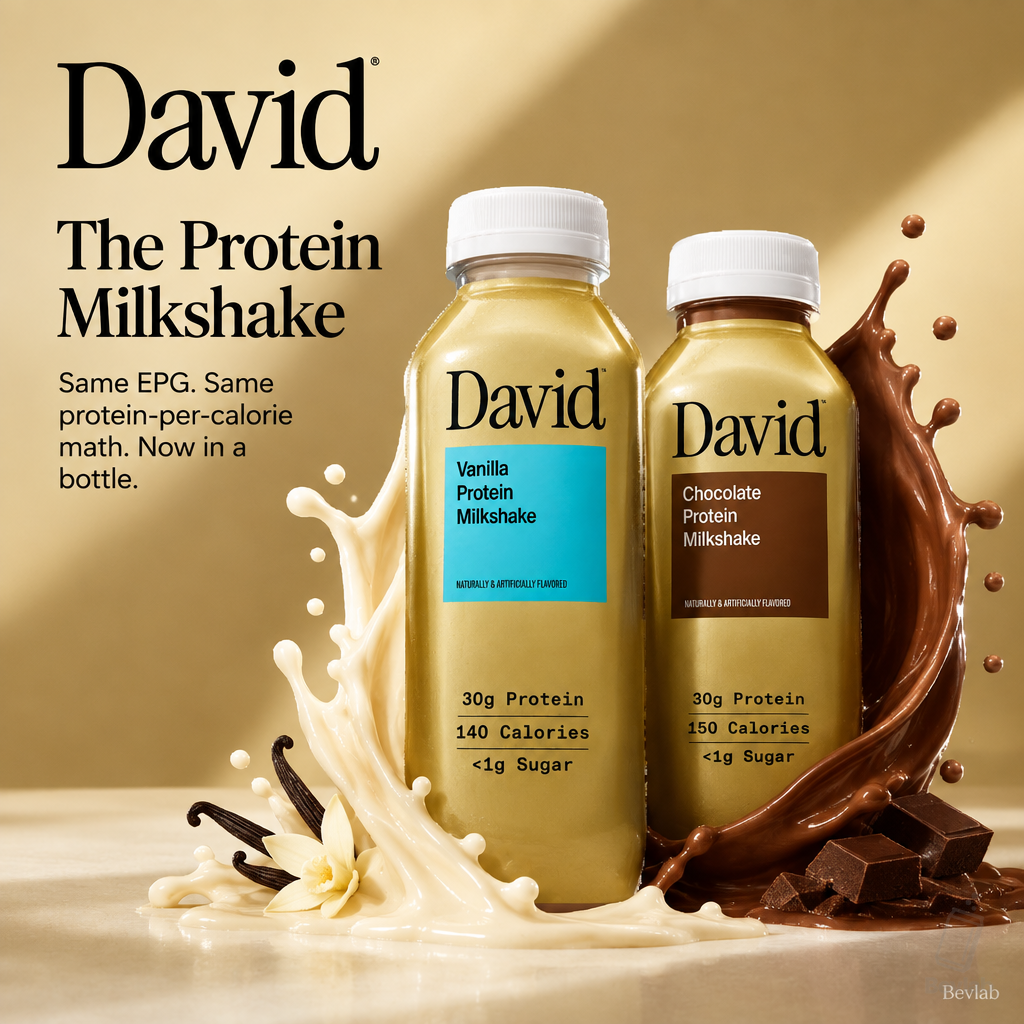
David's new RTD Milkshake packs 30g protein into 140-150 calories with under 1g of sugar. And yes, the controversial EPG fat is inside.
David Protein Milkshake is the bar brand's first move into liquid protein, and it's built on the same math that made David a shelf staple in the first place: maximize protein, minimize calories, use a non-digestible fat (EPG), and keep sugar as close to zero as possible.
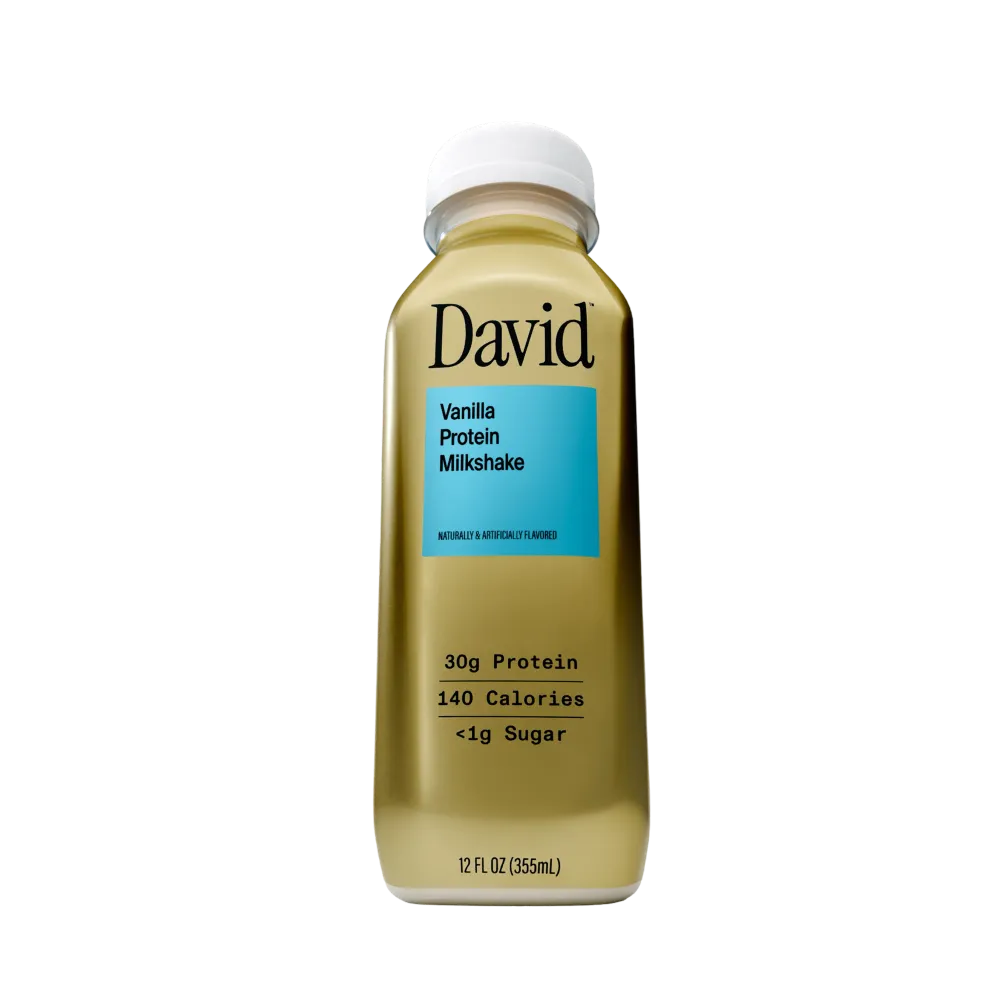
Founder Peter Rahal built his reputation on RXBAR before turning his attention to the "eat enough protein, avoid excess calories, cut added sugar" thesis that became David Gold and David Bronze bars. The Milkshake takes that same framework and pours it into a 12oz bottle.
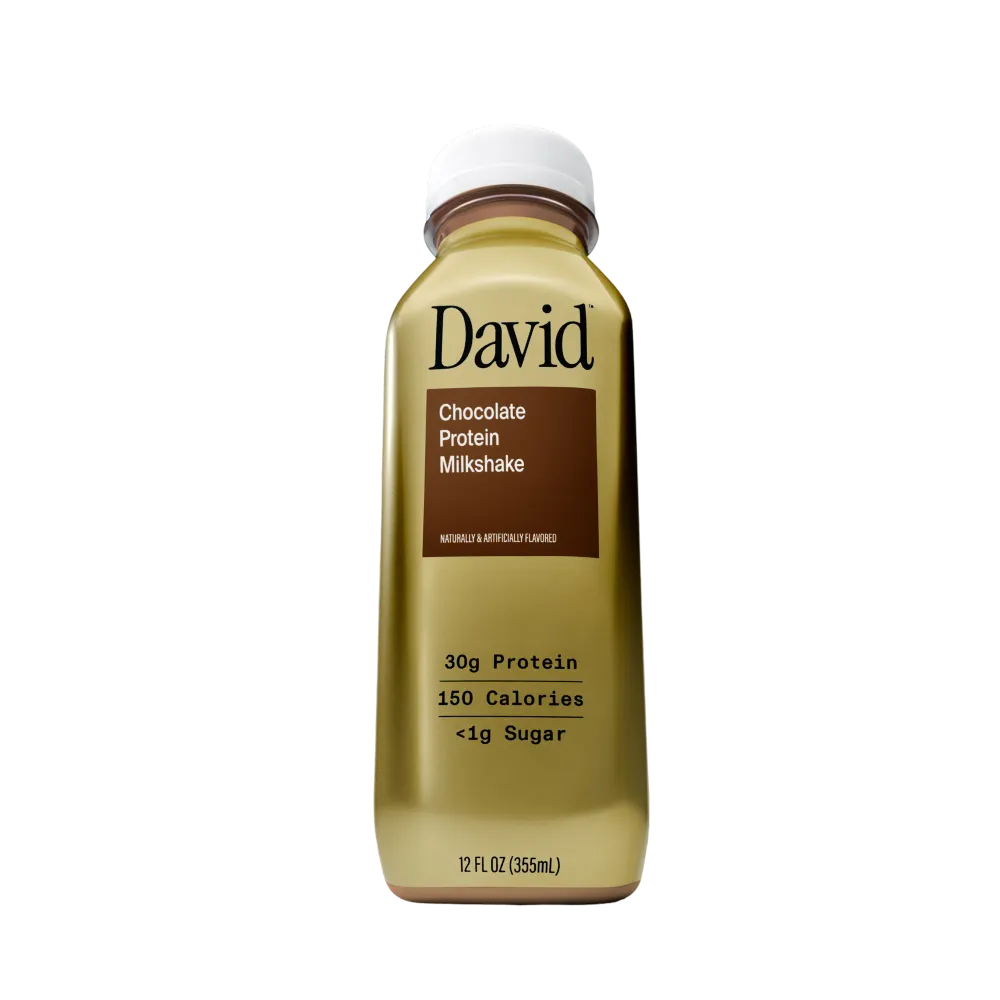
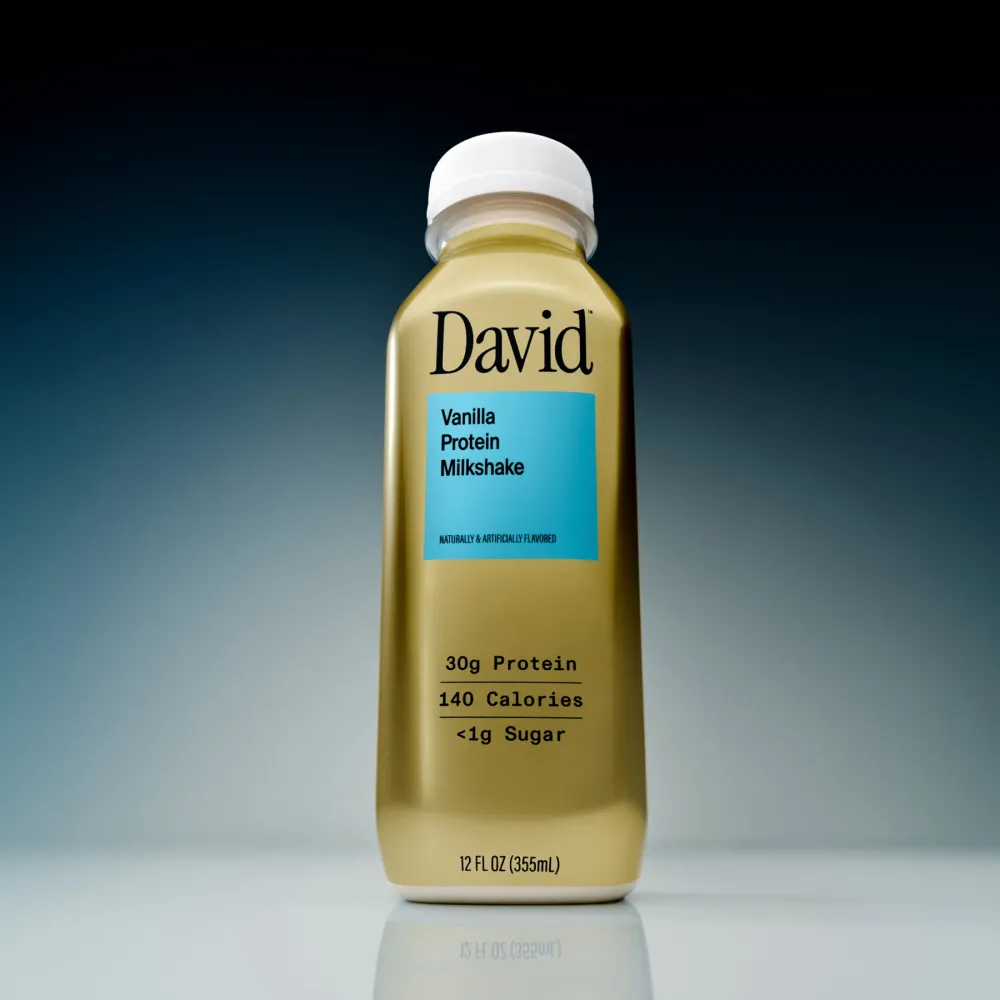
Launched September 8, 2026, in Vanilla and Chocolate, the RTD is backed by David's "Drink David" campaign starring Stella Maxwell, the brand's launch announcement confirms, with the gold bottles showing up across digital, social, and out-of-home placements in New York City. For a category that's mostly bars and powders, this is David finally meeting the "I want my protein in a drink" crowd where they are, but doing it with their patented fat molecule.
This article gets into the science beneath it.
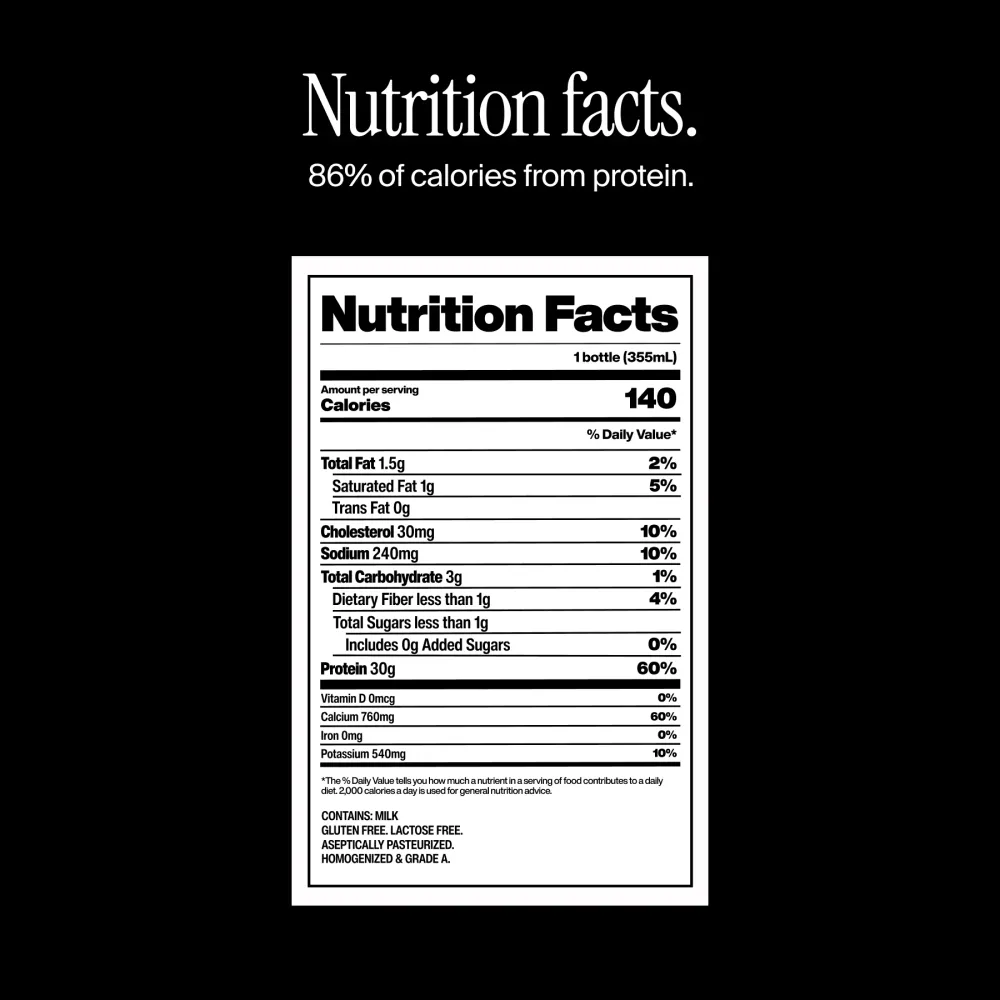
David Protein Milkshake Nutrition Facts
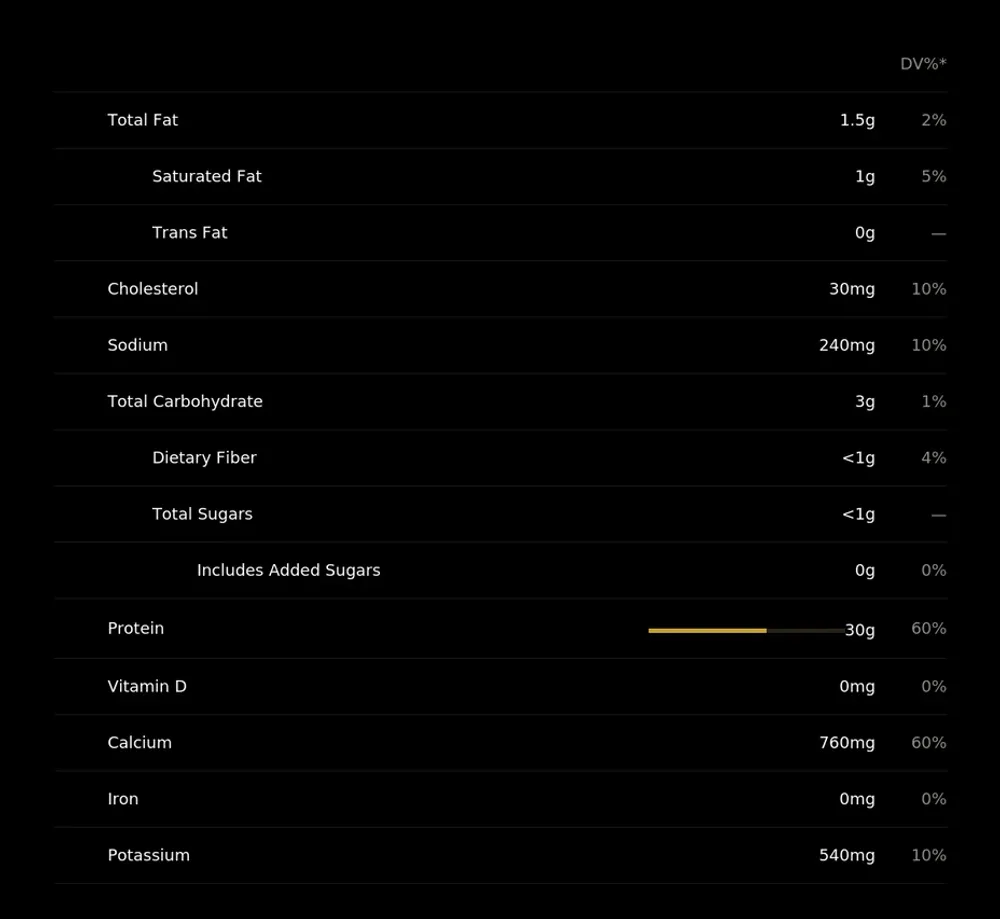
The Vanilla bottle (355mL / 12 fl oz) breaks down like this:
- Calories: 140
- Total Fat: 1.5g (2% DV)
- Saturated Fat: 1g (5% DV)
- Trans Fat: 0g
- Cholesterol: 30mg (10% DV)
- Sodium: 240mg (10% DV)
- Total Carbohydrate: 3g (1% DV)
- Dietary Fiber: <1g (4% DV)
- Total Sugars: <1g
- Added Sugars: 0g (0% DV)
- Protein: 30g (60% DV)
- Calcium: 760mg (60% DV)
- Potassium: 540mg (10% DV)
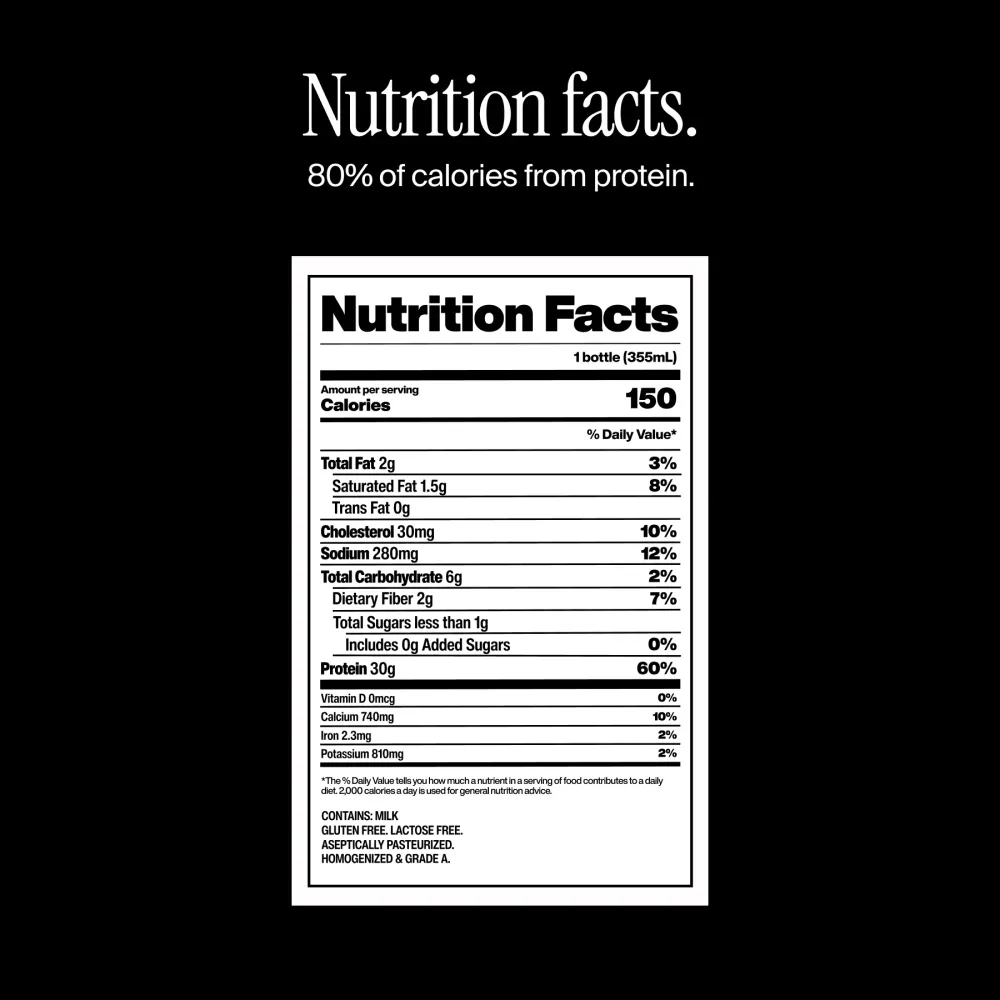
That's 30g of protein for 140 calories, or roughly 86% of the bottle's calories coming directly from protein. Chocolate runs slightly higher at 150 calories, 2g total fat, and 6g total carbohydrate, still under 1g of sugar, according to the brand's launch materials.
Both flavors land in the same neighborhood: this is a shake built to hit a protein number without dragging a calorie or sugar number along with it. Much of that is thanks to the EPG fat discussed below.
David Protein Milkshake Ingredients
-
Ultrafiltered Milk Protein
The base of the Milkshake is ultrafiltered milk, run through a filtration process that concentrates protein while stripping out a chunk of the lactose and water that would otherwise dilute the protein-per-ounce number. That's how David gets to 30g of protein in a 12oz bottle without leaning on protein powders stacked into a shake base. David also adds lactase enzyme to the mix, which breaks down the remaining lactose enzymatically. The brand's own product pages describe the result as lactose-free, which tracks: lactase pre-digests the sugar that would normally cause discomfort for lactose-sensitive drinkers, so the milk-forward base doesn't carry the usual dairy tradeoff.
-
EPG (Modified Plant Fat)
The fat system is where David's Milkshake gets its most interesting, and most debated, ingredient. EPG, short for esterified propoxylated glycerol, is a family of modified fat-like lipids engineered to behave like real fat in texture and mouthfeel while strongly resisting normal digestive breakdown.[1] That resistance to lipolysis is the entire point: it's why David can list a fat system on the label without it converting into the same calorie load a comparable amount of butterfat or oil would carry. The safety literature on EPG reports a commonly cited energy value of around 0.7kcal per gram, though that figure comes from the broader safety record rather than a single primary human calorimetry trial isolating this exact product.[1]
David's official ingredient statement lists "modified plant fat (EPG)" in the fat system but does not disclose the gram amount, so there's no way to know exactly how much EPG is in a bottle, or how it compares to the doses used in EPG's human research. The most relevant human data comes from an 8-week randomized controlled trial in 139 healthy adults testing 10, 25, or 40g per day of EPG-05. It found no significant changes in retinol, alpha-tocopherol, or 25-OH vitamin D2, but did find shifts in beta-carotene and vitamin K-related markers, along with more gastrointestinal complaints at the 25-40g/day doses. The 10g/day dose was considered reasonably well tolerated under the tested conditions.[2] A separate study pushed doses higher, testing 30-150g/day in single-day exposures with washout periods between them, though changes to other parts of the diet during that test limit how cleanly those results translate to everyday eating.[3]
Worth knowing: EPG's calorie accounting became a public fight in early 2026, when a proposed class action, Lopez et al. v. Linus Technologies, Inc. d/b/a David Protein, alleged that David's protein bars (not this Milkshake) carried more calories and fat than labeled, with David disputing whether standard lab testing fairly measures a fat substitute this resistant to digestion. That case was voluntarily dismissed without prejudice in March 2026, and the docket is currently marked terminated. No court ruled on whose calorie math was correct, and the case never touched the RTD line at all. A separate set of pending 2026 lawsuits accuses David bars of mislabeling allulose-sweetened products as "0g Sugar." That dispute doesn't reach this product either: David's official Vanilla and Chocolate Milkshake ingredient statements don't list allulose anywhere in the formula.
-
Other Ingredients
- Natural and Artificial Flavor rounds out the vanilla or chocolate taste profile alongside the other flavor-system components.
- Dutch Process Cocoa Powder appears only in the Chocolate flavor, giving it its cocoa-forward taste.
- Salt balances sweetness and supports the overall flavor profile.
- Sucralose and Acesulfame Potassium are the zero-calorie sweeteners doing the work that sugar would otherwise do, which is how David keeps Total Sugars under 1g without cutting sweetness.
- Dipotassium Phosphate helps stabilize the protein system and manage pH.
- Gum Arabic, Cellulose Gum, and Gellan Gum make up the structure system, the thickeners responsible for the shake's texture and for keeping the protein from settling or separating in the bottle.
-
Vitamins and Minerals
-
Calcium - 760mg (60% DV)
A milk-based protein base naturally carries a big calcium number, and 760mg per bottle covers well over half a day's target in one drink, a byproduct of the dairy foundation rather than a fortification play.
-
Potassium - 540mg (10% DV)
Also naturally present from the milk base, the potassium here isn't dosed for electrolyte replacement the way a sports drink would be, but it's a meaningful contribution on top of everything else in the bottle.
-
Flavors Available
Who It's For
- High-protein, low-sugar label readers: If you're already tracking grams and picking David bars over candy-bar-shaped alternatives, this is the same math in a format you don't have to chew.
- Lactose-sensitive shake drinkers: The lactase enzyme addition means you get a milk-based protein base without the usual dairy discomfort, a real differentiator from soy or pea-based competitors if milk protein is what you actually want.
A Shake That Does the Bar's Job Without the Chewing
The EPG-based drink is here, and word is, it truly tastes like a milkshake.
David built its name on protein-to-calorie efficiency, and the new Milkshake hits that mark: 30g of protein for 140-150 calories and under 1g of sugar holds up as a real number, not a marketing rounding trick. The undisclosed EPG dose and the ongoing bar-side litigation are worth tracking, but neither currently touches this product (yet).
For the label-reading, protein-counting crowd David has always served, this shake earns its spot on the shelf next to the bars. But if you're not into novel fats or are a generally conservative dieter, then you may want to wait for more data on EPG over time.
References
- David, H. Bechtel. "Article series: Safety of esterified propoxylated glycerol (EPG), a nonabsorbable fat replacer." Regulatory Toxicology and Pharmacology, 2014. https://doi.org/10.1016/j.yrtph.2014.11.010
- Michael, H. Davidson; David H. Bechtel. "Assessment of the effect of esterified propoxylated glycerol (EPG) on the status of fat-soluble vitamins and select water-soluble nutrients following dietary administration to humans for 8 weeks." Regulatory Toxicology and Pharmacology, 2014. https://doi.org/10.1016/j.yrtph.2014.11.009
- David, H. Bechtel. "Tolerance of rising dietary concentrations of esterified propoxylated glycerol (EPG) among human volunteers." Regulatory Toxicology and Pharmacology, 2015. https://doi.org/10.1016/j.yrtph.2015.07.030
Tagged