Optimum Nutrition Protein Shake + Fiber RTD
The Gold Standard name adds fiber to the RTD lineup, combining two trending forces
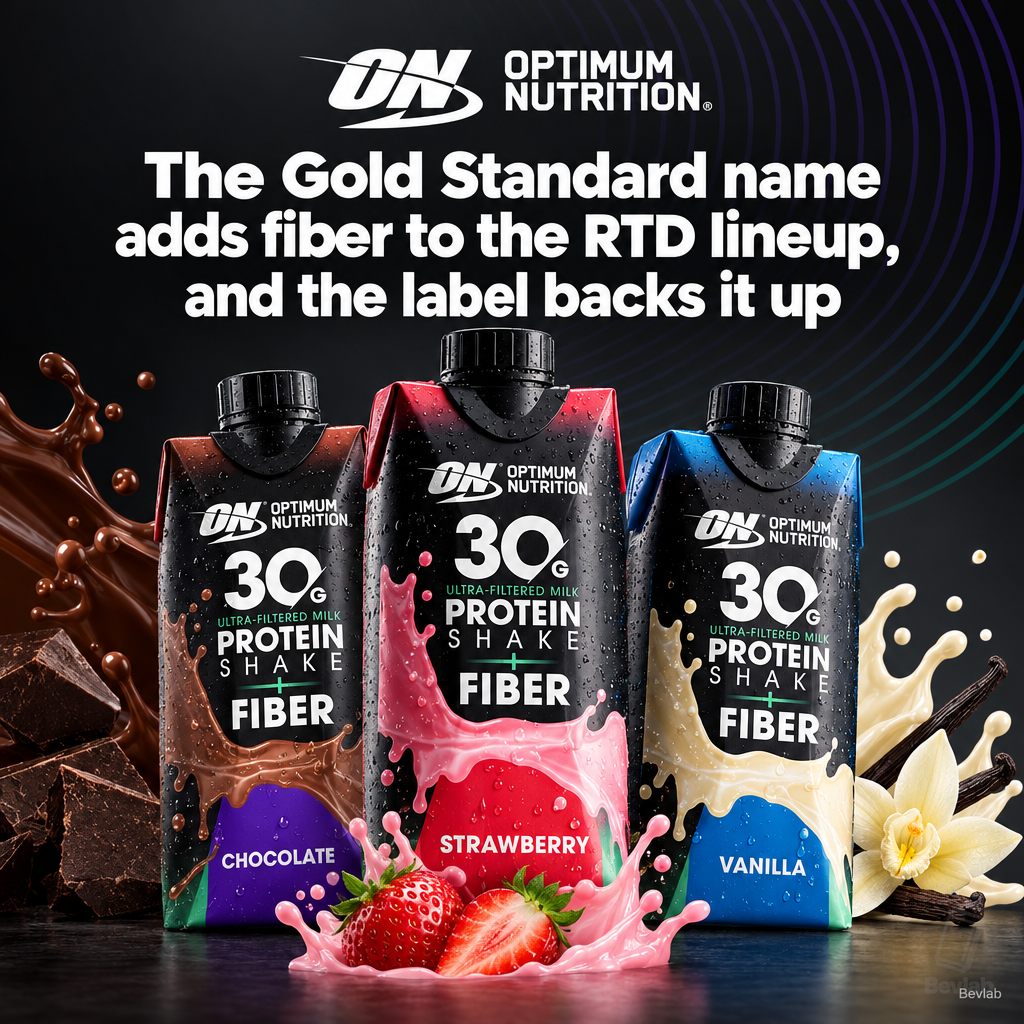
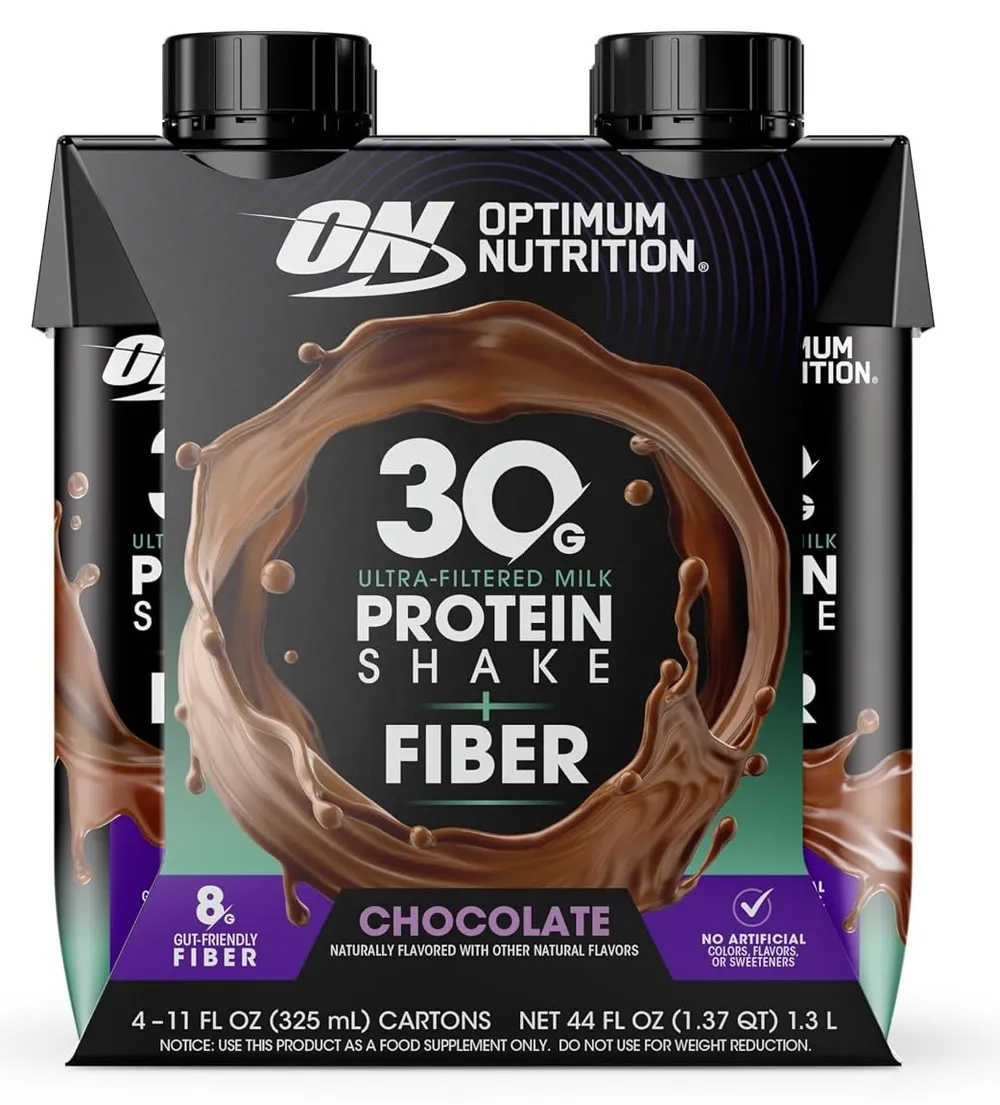
Optimum Nutrition's Protein Shake + Fiber RTD packs 30g protein and 8g fiber into a 190-calorie carton.
Optimum Nutrition's Protein Shake + Fiber RTD is exactly what it sounds like, and that's the point. The brand that built its name on Gold Standard Whey is putting out a ready-to-drink carton that pairs 30g of milk protein with 8g of fiber, all while landing at 190 calories and just 4g of total sugar. It's a straightforward pitch in a category that's gotten crowded with high-protein RTDs, but the fiber inclusion is what separates it from ON's own Gold Standard Protein Shake and most of the shelf around it.
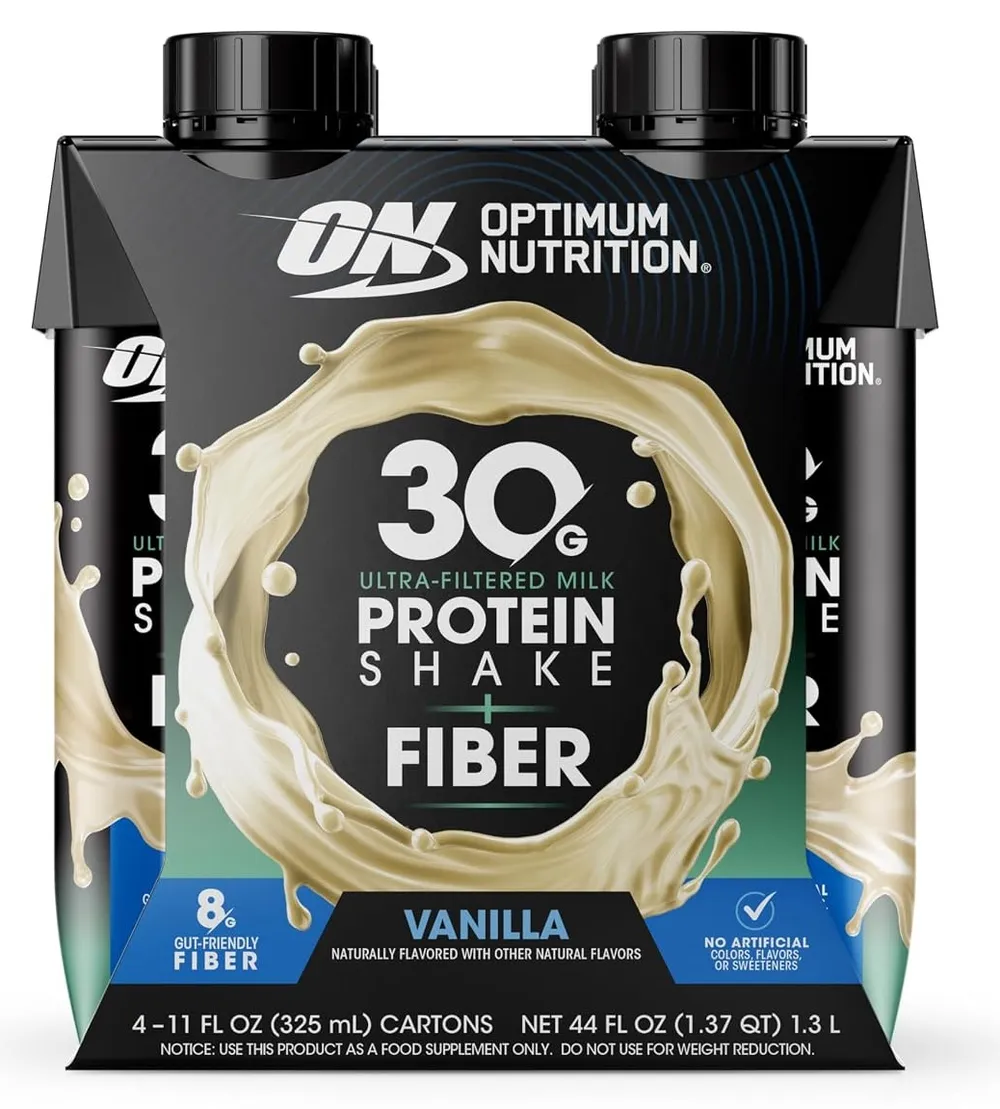
The formula runs on ultra-filtered low-fat milk as its protein base, with soluble corn fiber doing the heavy lifting on the fiber side. It's lactose-free thanks to added lactase, and the brand says there are no artificial flavors or sweeteners in the mix. For a company that's spent four decades building its reputation on manufacturing rigor and batch testing, this is a fairly low-risk category extension. It's not reinventing anything. It's filling a specific nutritional gap that a lot of protein shakes don't bother addressing.
Optimum Nutrition Protein Shake + Fiber Nutrition Facts
Per 325mL carton (Chocolate flavor, as verified from the label):
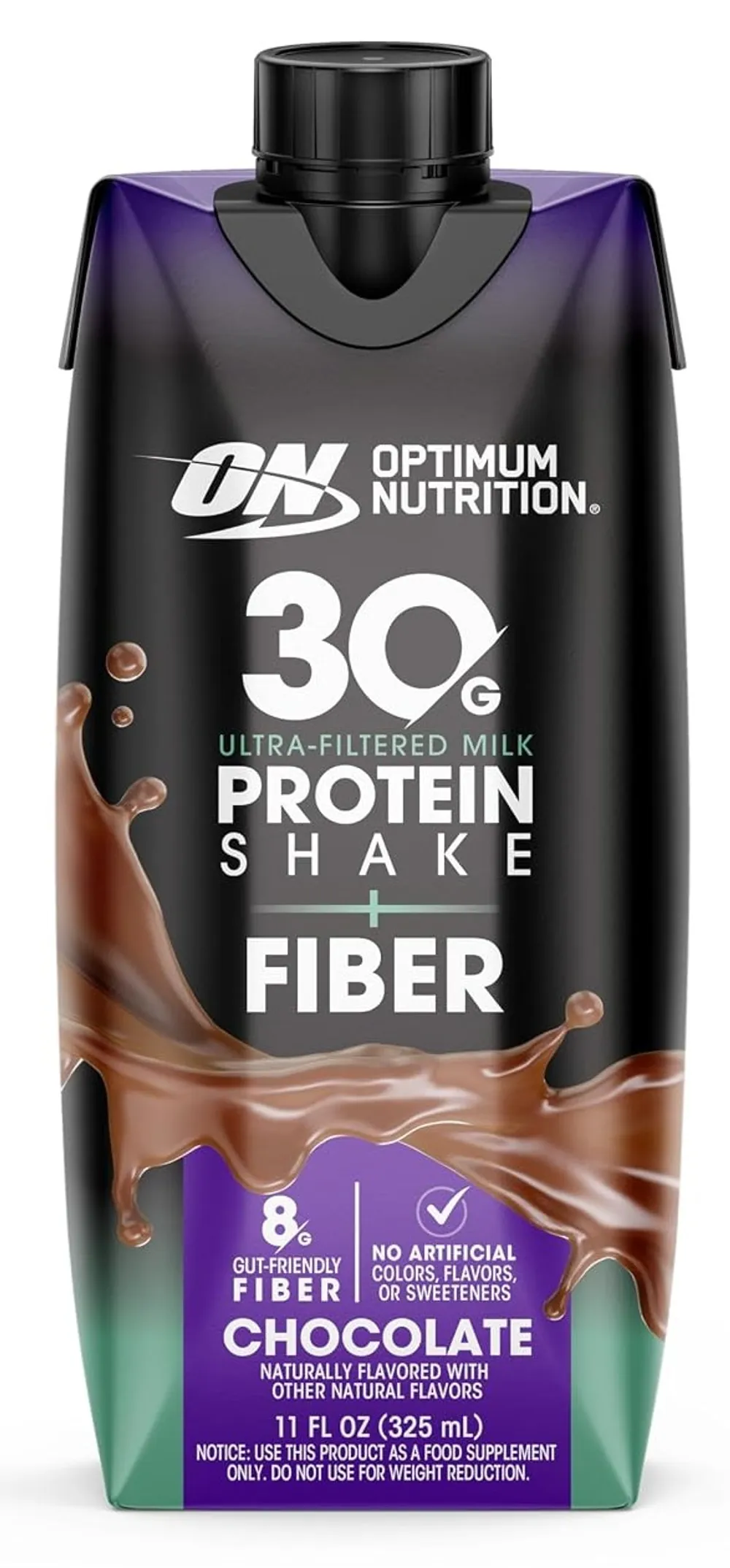
- Calories: 190
- Total Fat: 2g (3% DV)
- Saturated Fat: 1.5g (8% DV)
- Cholesterol: 10mg (3% DV)
- Sodium: 200mg (9% DV)
- Total Carbohydrate: 14g (5% DV)
- Dietary Fiber: 8g (29% DV)
- Total Sugars: 4g
- Added Sugars: 1g (2% DV)
- Protein: 30g (60% DV)
- Calcium: 700mg (50% DV)
- Potassium: 360mg (8% DV)
That's a 60% Daily Value on protein and a 29% Daily Value on fiber from a single 325mL carton, which is a lot of nutritional density packed into a relatively small serving. The fat and sugar numbers stay low across the board, and the calcium content at 50% DV is notably high for a protein shake, a byproduct of the ultra-filtered milk base.
Protein Shake + Fiber Ingredients
Each carton provides the following key functional ingredients:
-
Soluble Corn Fiber
Soluble corn fiber is the ingredient doing the real differentiation work here. It's a digestion-resistant glucose polymer derived from corn carbohydrate, built to survive the small intestine and reach the colon where gut bacteria can ferment it.[1] That fermentation process is well documented: human trials running SCF at doses in the 10-21g/day range have consistently shown increases in Bifidobacterium abundance, lower fecal pH, and shifts in short-chain fatty acid production.[2,3]
Optimum Nutrition doesn't disclose the exact gram amount of soluble corn fiber used in this formula, but the product lists 8g of total dietary fiber, which shouldn't necessarily be read as an 8g SCF dose, but it seems to be that way since there isn't much fiber inside besides this. 8g is the cited studies address SCF itself in healthy adults.[4] SCF has also shown a notable calcium-absorption effect in adolescent and postmenopausal populations, with controlled trials finding roughly 12-13% increases in fractional calcium absorption at defined research doses.[5,6] The product's 700mg calcium makes that research relevant, but of course isn't direct evidence of an absorption effect in this shake. SCF has also been shown to blunt post-meal glucose and insulin response when it displaces digestible carbohydrate, but the label alone does not establish that effect for this shake.[7]
-
Natural Flavors

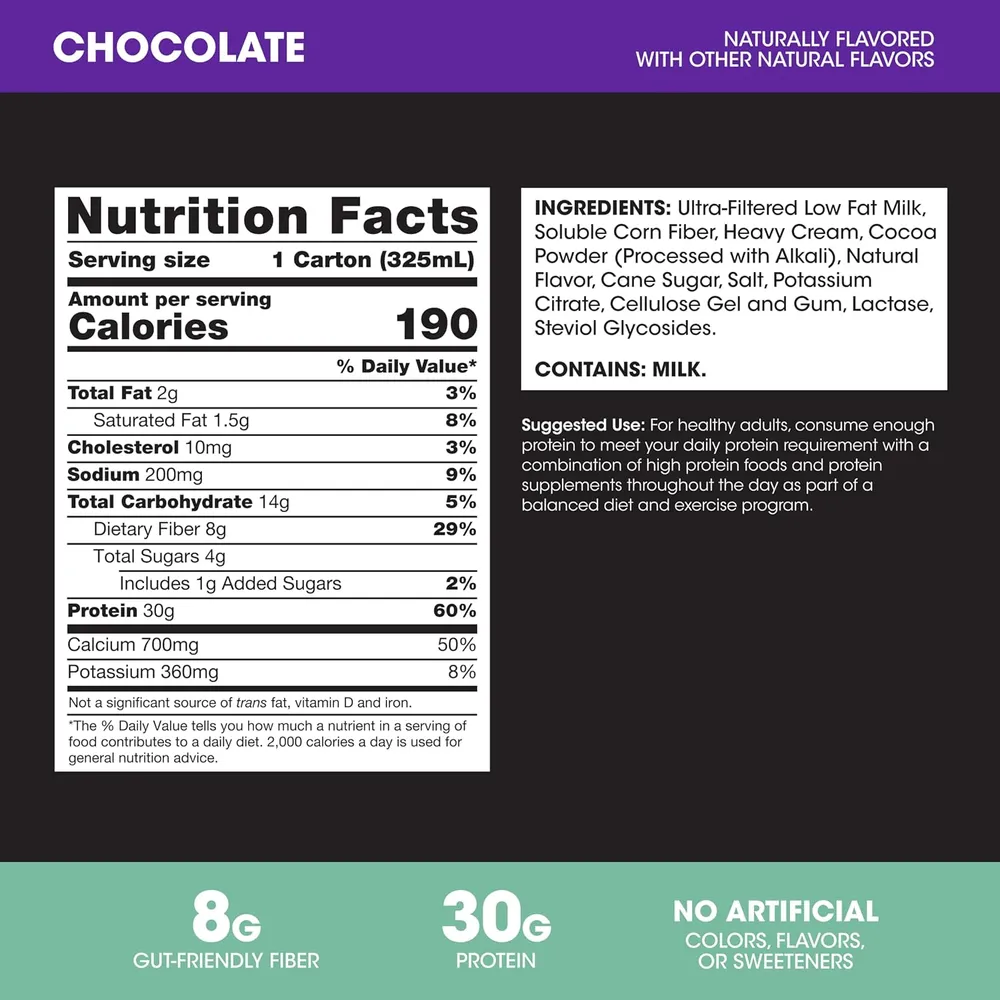
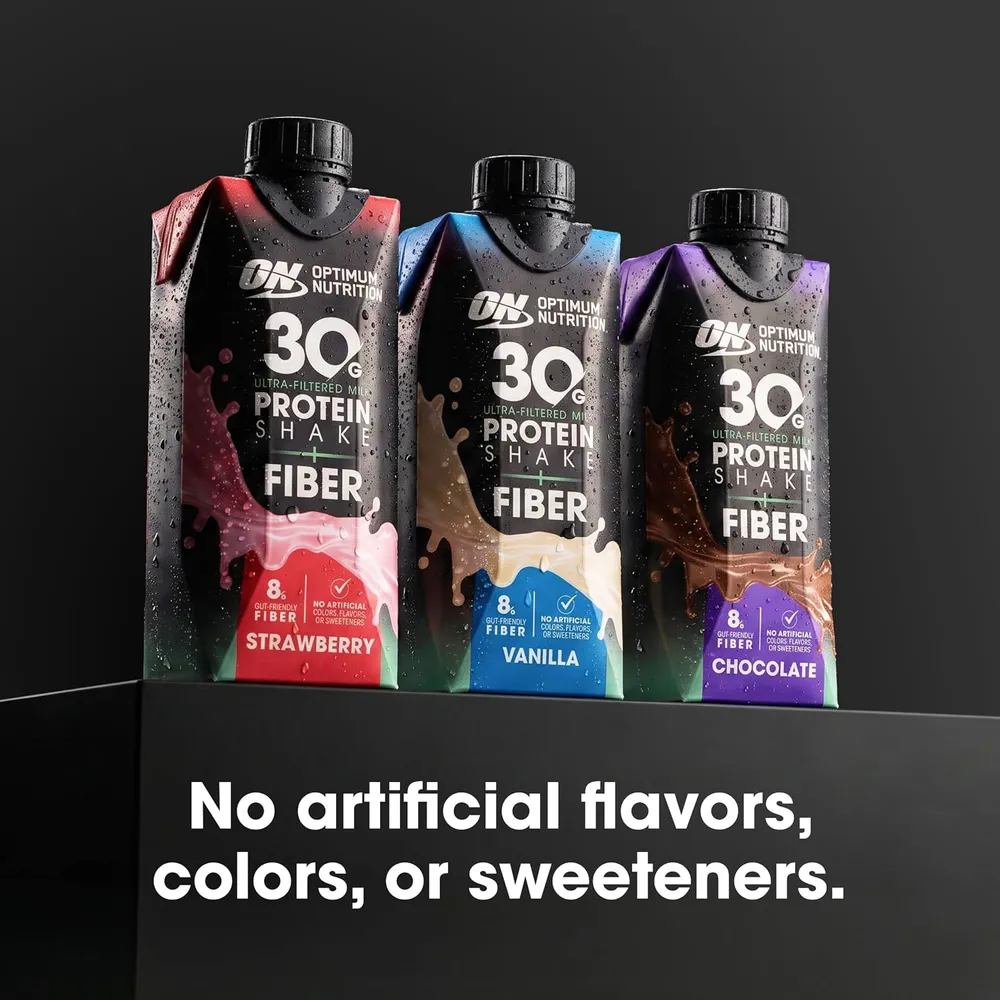
Natural flavors cover the taste side of the equation, in this case building out Chocolate, Vanilla, and Strawberry versions of the base formula. Under FDA definition, a natural flavor has to be sourced from an actual spice, fruit, vegetable, dairy product, or similar material rather than synthesized from a non-food source, though the resulting flavor molecule can be chemically identical to its artificial counterpart. Natural flavor complexes exist purely to shape taste and aroma, and they generally carry little physiological effect beyond that.
-
Salt
Salt shows up in small amounts here, contributing to the 200mg of sodium per carton (9% DV). In a protein-forward beverage like this one, sodium chloride's main job is flavor. Sodium is well established as a bitterness suppressor, and it's commonly used in dairy protein products to mask the slightly chalky or bitter notes that come from concentrated milk proteins.[8] At 200mg per serving, this is a modest, food-level inclusion rather than anything positioned for electrolyte replacement or hydration.
-
Potassium
Potassium citrate helps make part of the 360mg of potassium per carton, or 8% of the Daily Value. Dairy often provides potassium too. Most American diets run well short of the 4,700mg FDA Daily Value for potassium, and the sodium-to-potassium ratio in the diet matters more for cardiovascular outcomes than either mineral in isolation.[9] Population studies have repeatedly found that a higher sodium-to-potassium ratio tracks with higher blood pressure and greater cardiovascular risk, independent of the absolute amount of either mineral.[10,11] At 8% DV, the potassium is a useful secondary nutritional contribution rather than a headline feature. Potassium citrate has also been studied for bone-turnover effects in specific populations, but that evidence shouldn't be extrapolated to this product.[12]
-
Microcrystalline Cellulose
Microcrystalline cellulose, also listed as cellulose gel, functions as a texture and stabilization tool rather than an active nutrient. It's a purified, insoluble form of cellulose that resists fermentation better than soluble fibers like SCF, and its role in a beverage like this is likely to help stabilize the emulsion and keep the milk-based formula from separating over its shelf life.[13] A 2026 protein-beverage stabilization study found MCC performed well at low use levels for maintaining physical stability during storage, which lines up with its likely function here.[14] It shouldn't be confused with the soluble corn fiber doing the digestive-health work in this product. Its role here is technical rather than the product's primary dietary-fiber contribution.
-
Lactase
Lactase is what makes this shake "lactose-free" despite running on a dairy protein base. The enzyme cleaves the lactose molecule into glucose and galactose, either during processing or in situ, reducing the lactose load in the finished drink.[15] Controlled trials pretreating milk with lactase have reported better gastrointestinal tolerance than untreated milk in lactose-intolerant adults, with some work also examining calcium absorption.[16] Given the significant number of adults with some degree of lactase non-persistence, this is a practical inclusion that widens the pool of people who can actually drink this shake without discomfort.
-
Vitamins and Minerals
-
Calcium - 700mg (50% DV)
Calcium here comes primarily from the ultra-filtered milk base rather than an added mineral form, which is why the number is so high relative to a typical fortified beverage. At 50% DV, this carton delivers a genuinely substantial calcium contribution, useful for anyone tracking bone-health nutrients alongside protein intake.
-
Potassium (as Potassium Citrate) - 360mg (8% DV)
See the dedicated Potassium section above for the supporting research. At 8% DV, it's a real but secondary contribution to daily potassium intake.
-
-
Other Ingredients
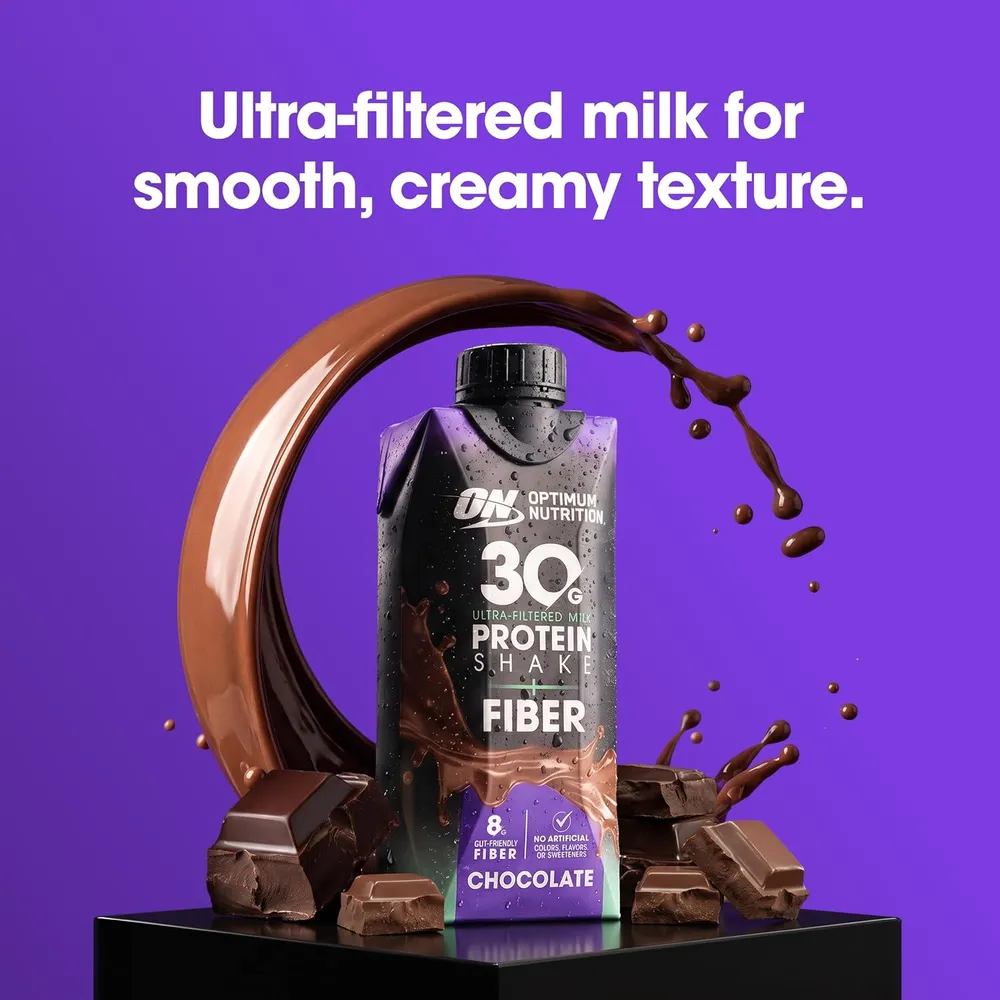
- Ultra-Filtered Low Fat Milk - The primary protein and calcium source in the formula, filtered to concentrate protein content relative to standard milk while reducing lactose and fat.
- Heavy Cream - Adds fat and mouthfeel to round out the beverage's texture, contributing to the 2g total fat per serving.
- Cocoa Powder (Processed with Alkali) - Used in the Chocolate flavor specifically for color and taste, alkali-processing (Dutch-processing) mellows the natural bitterness of raw cocoa.
- Cane Sugar - Provides most of the formula's added sugar content, accounting for the 1g of added sugars on the label.
- Steviol Glycosides - A zero-calorie natural sweetener derived from the stevia plant, used here to round out sweetness without adding to the sugar count.
Flavors Available
Who It's For

- Lactose-sensitive protein shoppers: The lactase inclusion means this is one of the few dairy-based, high-protein RTDs that lactose-intolerant consumers can drink without the usual tradeoffs.
- Fiber-conscious protein buyers: Anyone stacking protein and fiber goals in one product gets a meaningful assist here, since most competing protein RTDs carry little to no fiber at all.
Gold Standard Gets a Fiber Upgrade
This is a smart, low-risk extension of the Gold Standard platform. The formula backs up the label claims: 30g of milk protein, 8g of total dietary fiber with soluble corn fiber listed as the principal fiber ingredient, and a lactose-free profile supported by added lactase. It's not flashy, but it does exactly what it says on the can, which is more than you can say for a lot of RTDs in this category.

References
- Brittany, M Vester Boler; Mariana C Rossoni Serao; Laura L Bauer; Michael A Staeger; Thomas W Boileau; Kelly S Swanson; George C Fahey Jr. "Digestive physiological outcomes related to polydextrose and soluble maize fibre consumption by healthy adult men." Br J Nutr, 2011. https://doi.org/10.1017/s0007114511002388
- Abby, S Klosterbuer; Meredith A J Hullar; Fei Li; Elizabeth Traylor; Johanna W Lampe; William Thomas; Joanne L Slavin. "Gastrointestinal effects of resistant starch, soluble maize fibre and pullulan in healthy adults." Br J Nutr, 2013. https://doi.org/10.1017/s0007114513000019
- Seema, Hooda; Brittany M Vester Boler; Mariana C Rossoni Serao; Jennifer M Brulc; Michael A Staeger; Thomas W Boileau; Scot E Dowd; George C Fahey Jr; Kelly S Swanson. "454 pyrosequencing reveals a shift in fecal microbiota of healthy adult men consuming polydextrose or soluble corn fiber." J Nutr, 2012. https://doi.org/10.3945/jn.112.158766
- Maria, L Stewart; Soma D Nikhanj; Derek A Timm; William Thomas; Joanne L Slavin. "Evaluation of the effect of four fibers on laxation, gastrointestinal tolerance and serum markers in healthy humans." Ann Nutr Metab, 2010. https://doi.org/10.1159/000275962
- Corrie, M Whisner; Berdine R Martin; Cindy H Nakatsu; George P McCabe; Linda D McCabe; Munro Peacock; Connie M Weaver. "Soluble maize fibre affects short-term calcium absorption in adolescent boys and girls: a randomised controlled trial using dual stable isotopic tracers." Br J Nutr, 2014. https://doi.org/10.1017/s0007114514000981
- Corrie, M Whisner; Berdine R Martin; Cindy H Nakatsu; Jon A Story; Claire J MacDonald-Clarke; Linda D McCabe; George P McCabe; Connie M Weaver. "Soluble Corn Fiber Increases Calcium Absorption Associated with Shifts in the Gut Microbiome: A Randomized Dose-Response Trial in Free-Living Pubertal Females." J Nutr, 2016. https://doi.org/10.3945/jn.115.227256
- Wei, Shuan Kimberly Tan; Pei Fen Winnie Chia; Shalini Ponnalagu; Kavita Karnik; Christiani Jeyakumar Henry. "The Role of Soluble Corn Fiber on Glycemic and Insulin Response." Nutrients, 2020. https://doi.org/10.3390/nu12040961
- Breslin, P A, et al. "Salt enhances flavour by suppressing bitterness." Nature, 1997. https://doi.org/10.1038/42388
- Weaver, Connie M. "Potassium and health." Advances in nutrition (Bethesda, Md.), 2013. https://doi.org/10.3945/an.112.003533
- Khaw, K T, et al. "The association between blood pressure, age, and dietary sodium and potassium: a population study." Circulation, 1988. https://doi.org/10.1161/01.CIR.77.1.53
- Cook, Nancy R, et al. "Joint Effects of Sodium and Potassium Intake on Subsequent Cardiovascular Disease: The Trials of Hypertension Prevention (TOHP) Follow-up Study." Archives of internal medicine, 2009. https://doi.org/10.1001/archinternmed.2008.523
- Gregory, Naina Sinha, et al. "Potassium citrate decreases bone resorption in postmenopausal women with osteopenia: A randomized double blind clinical trial." Endocrine practice : official journal of the American College of Endocrinology and the American Association of Clinical Endocrinologists, 2015. https://doi.org/10.4158/EP15738.OR
- Kargar, Maryam, et al. "Investigation into the potential ability of Pickering emulsions (food-grade particles) to enhance the oxidative stability of oil-in-water emulsions." Journal of colloid and interface science, 2012. https://doi.org/10.1016/j.jcis.2011.09.073
- Li, Jiaxin, et al. "Enhancing Stability of Vitamin-Fortified Protein Beverages: Optimization of Stabilizer Type and Concentration and Screening of Natural Antioxidant Combinations." Foods (Basel, Switzerland), 2026. https://doi.org/10.3390/foods15081392
- Nagy, L, et al. "Efficacy testing of beta-galactosidase with H2 breath test in patients with carbohydrate malabsorption." Acta medica Hungarica, 1987. https://pubmed.ncbi.nlm.nih.gov/3118327/
- Nielsen, O H, et al. "Calcium absorption and acceptance of low-lactose milk among children with primary lactase deficiency." Journal of pediatric gastroenterology and nutrition, 1984. https://doi.org/10.1097/00005176-198403000-00009