Jetty Hydration Drink: Poppi's Founders Bet on Everyday Hydration
Not for the gym. Not for a marathon. Just for a regular Tuesday.
With 310mg of potassium against just 100mg of sodium, Jetty's caffeine-free hydration drink is built for daily sipping rather than sweaty workouts.
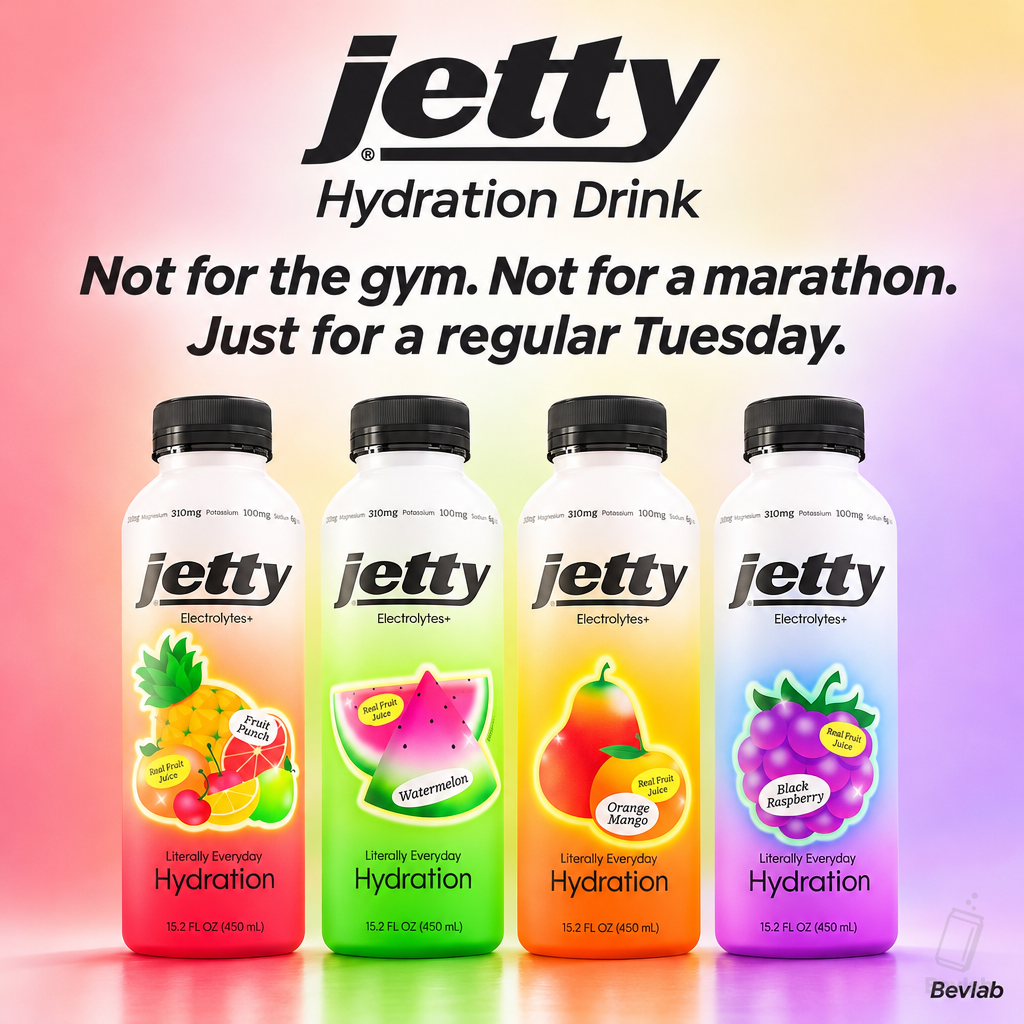
Jetty Hydration Drink is the new brand from Poppi co-founders Allison and Stephen Ellsworth, and this time there are no bubbles. It's a still, ready-to-drink bottle built on coconut water, cassava root fiber, a four-mineral electrolyte blend, and four B vitamins. Most of the hydration aisle sells sweat and suffering. Jetty pitches the opposite: the bottle says it's not for a marathon and not for the gym. It's for real life, every day. Now the label is out, and there's plenty to dig into.
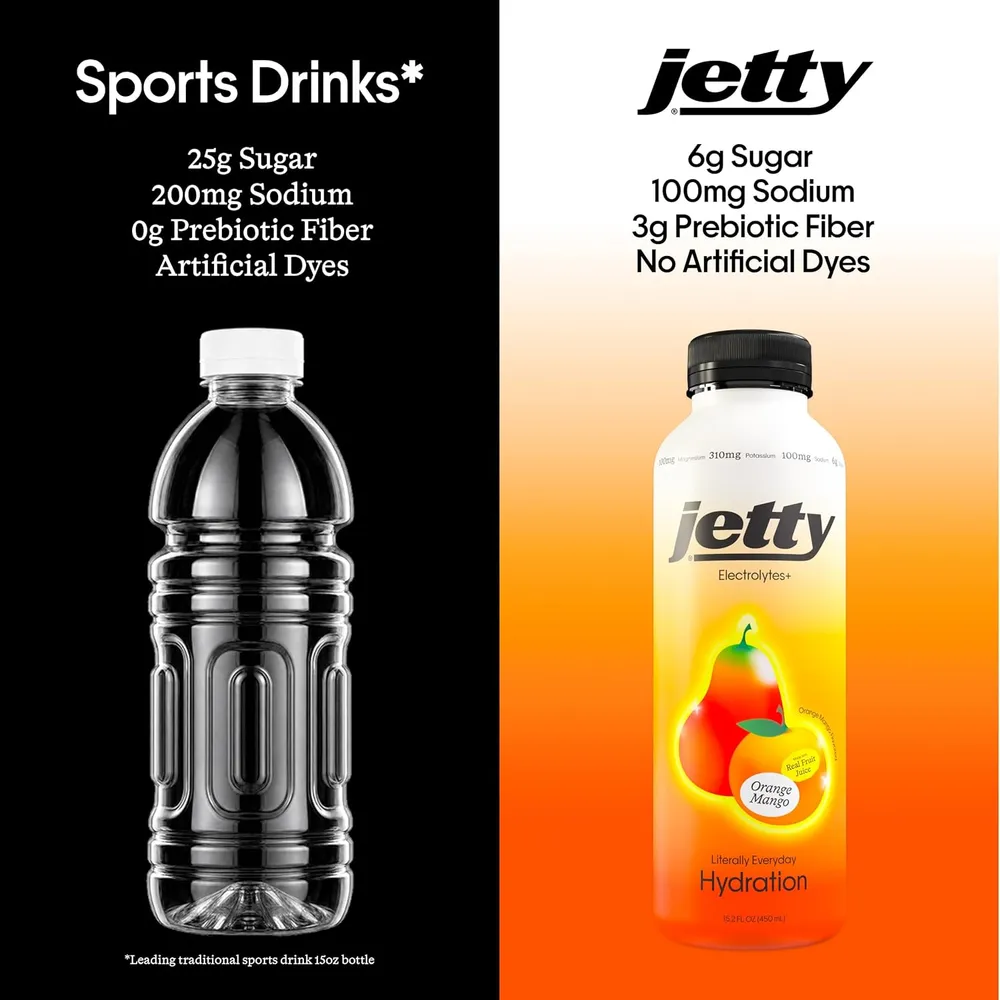
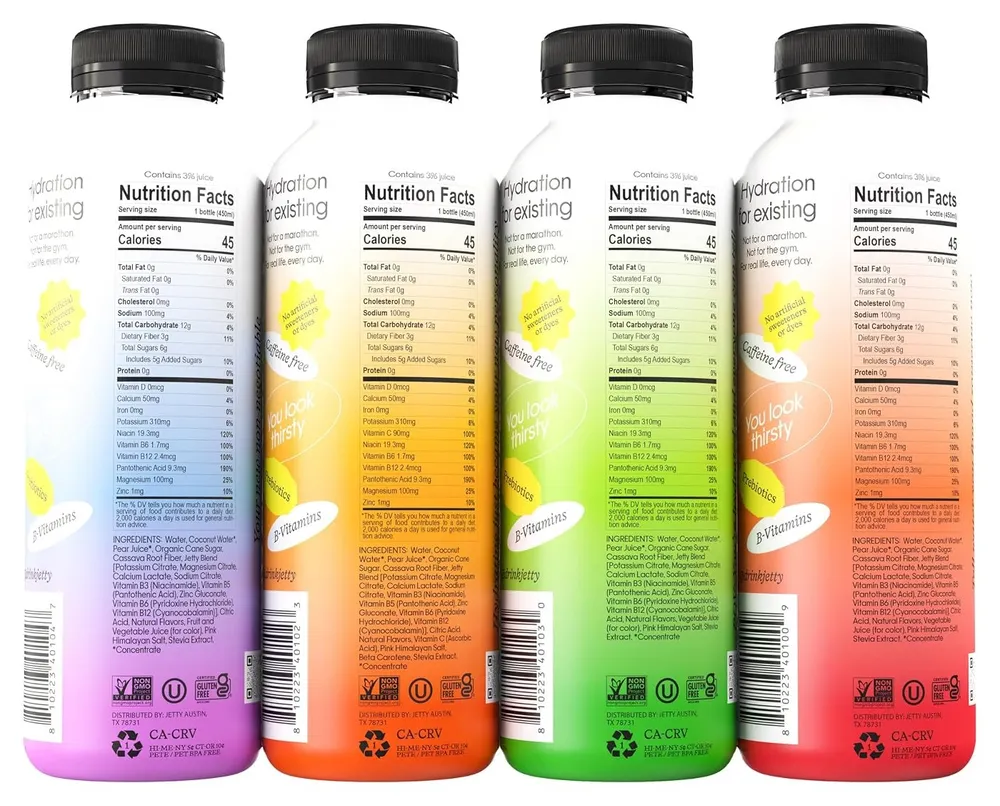
Each 450mL (15.2 fl oz) bottle has 45 calories, 6g of total sugars, 3g of dietary fiber, 100mg of sodium, 310mg of potassium, and 100mg of magnesium. The bottle calls out that it's caffeine-free with no artificial sweeteners or dyes, and the sweetness comes from organic cane sugar, pear juice, and a little stevia. That low-sodium, low-sugar build fits desk days and errands. It fits a two-hour run in August a lot less well.
Jetty Hydration Drink Nutrition Facts
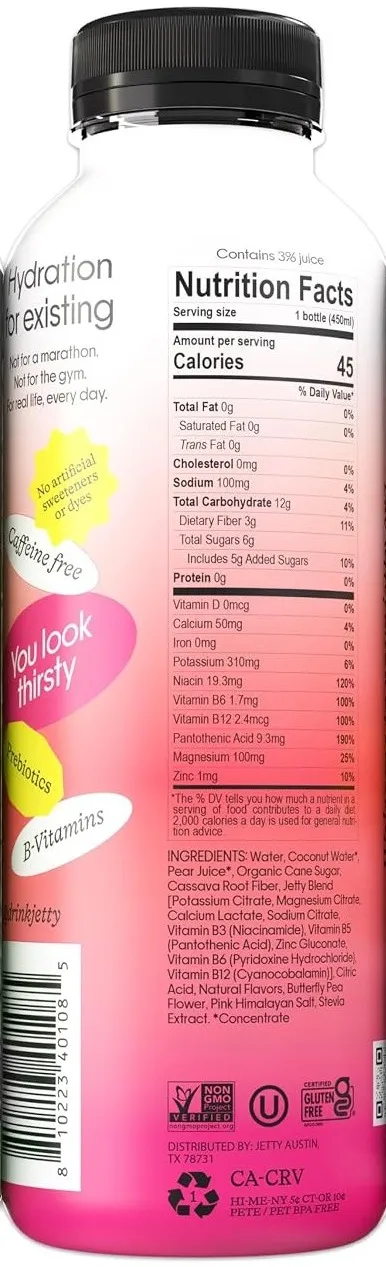
For a hydration drink, the sugar, fiber, and mineral numbers are the story. One 450mL bottle provides:
- Calories: 45
- Total Fat: 0g (0% DV)
- Total Carbohydrate: 12g (4% DV)
- Dietary Fiber: 3g (11% DV)
- Total Sugars: 6g
- Added Sugars: 5g (10% DV)
- Protein: 0g
- Vitamins and Minerals
- Sodium: 100mg (4% DV)
- Potassium: 310mg (6% DV)
- Magnesium: 100mg (25% DV)
- Calcium: 50mg (4% DV)
- Zinc: 1mg (10% DV)
- Niacin: 19.3mg (120% DV)
- Pantothenic Acid: 9.3mg (190% DV)
- Vitamin B6: 1.7mg (100% DV)
- Vitamin B12: 2.4mcg (100% DV)
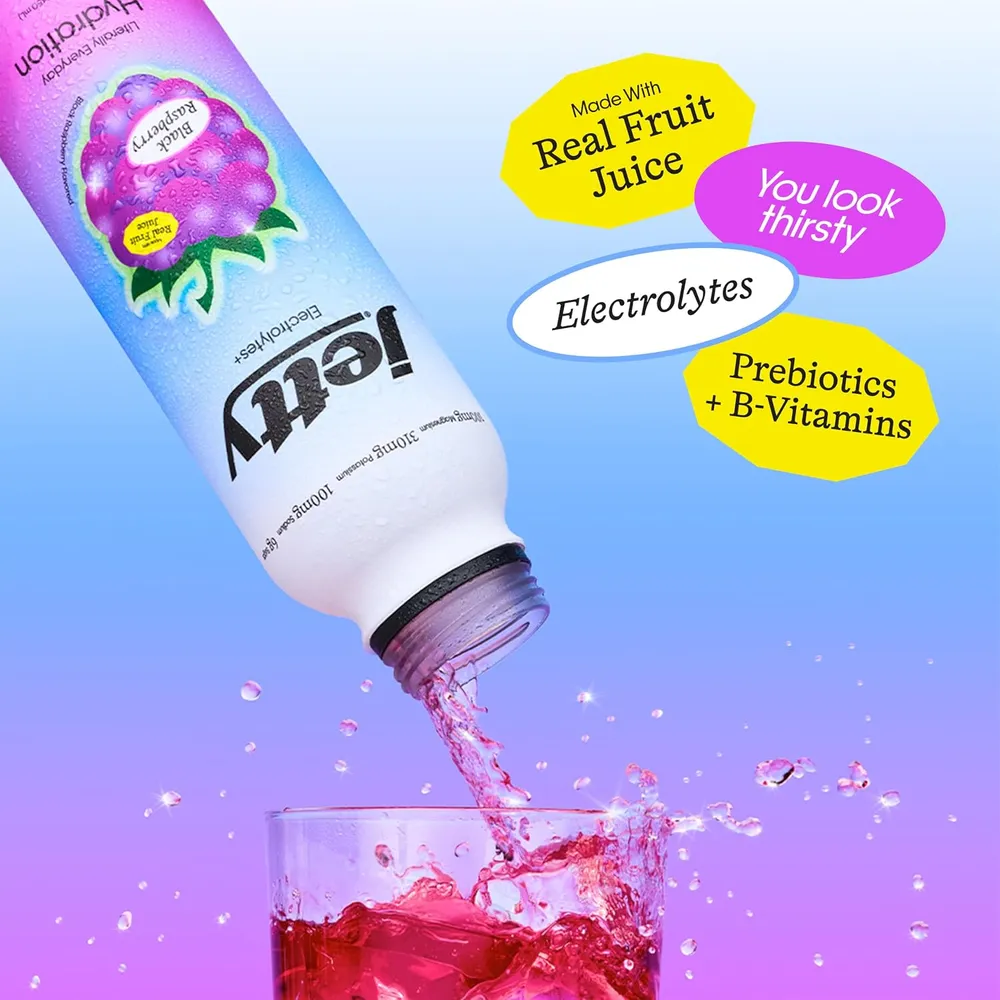
The four main electrolytes add up to 560mg per bottle, and potassium outweighs sodium by more than three to one. The ingredient list below comes from a pink-labeled bottle. The other flavors print the same Nutrition Facts panel but use vegetable juice for color instead of butterfly pea flower.
Hydration for Everyday Life
Jetty's whole pitch is that you shouldn't need a workout to justify a hydration drink. The label leans all the way in with "Hydration for existing" and the not-for-the-gym line, and the formula follows through: light sodium, a potassium-forward mineral blend, a small fiber dose, B vitamins at or above 100% DV, and no caffeine.
That makes sense for anyone who has trouble finishing plain water and wants something flavored that isn't soda, juice, or another can of caffeine. It also means Jetty isn't a sports drink, and it doesn't claim to be. If you put in long, sweaty training sessions, 100mg of sodium probably won't keep up with what you lose. For everyone else, it's an easy, flavored way to drink more fluids through the day.
Jetty Hydration Drink Ingredients
Each 450mL bottle provides the following key ingredients. The label groups the minerals and B vitamins under a named "Jetty Blend," but the Nutrition Facts panel discloses each nutrient amount, so the numbers that matter aren't hidden behind the blend name.
-
Coconut Water
Coconut water (from concentrate) is the second ingredient on the label, right behind water, so it's a big part of the base. Jetty doesn't disclose how much goes into each bottle.
Coconut water is the liquid inside the coconut. It carries natural sugars, minerals, and amino acids, and its makeup shifts with the coconut's variety, maturity, and processing.[1] Its sports reputation comes from a handful of small crossover trials. After men lost about 2.8% of their body mass through exercise, fresh coconut water rehydrated them about as well as plain water or a carbohydrate-electrolyte drink.[2] In twelve trained men, both pure coconut water and coconut water from concentrate performed about the same as a sports drink, though the coconut versions caused more bloating and stomach upset.[3] Sodium turned out to matter: a sodium-enriched coconut water matched a sports drink, and both beat plain water.[4]
In those studies, people drank large volumes after heavy sweating. Jetty isn't selling that use case, and it doesn't disclose its coconut water amount. The fair read is that coconut water gives the drink a familiar, mineral-carrying base, not a dose sized to match the studies.
-
Cassava Root Fiber
Cassava root fiber is the source of Jetty's "prebiotics" callout. Cassava is the root tapioca comes from. The label doesn't list this fiber's own amount. The panel shows 3g of total dietary fiber per bottle, but that total can include fiber from other ingredients, so it isn't a clean dose for the cassava fiber alone.
Jetty also doesn't name the exact fiber type. The best-studied soluble tapioca fiber is tapioca resistant maltodextrin: starch restructured so your digestive enzymes can't easily break it down, which lets more of it reach the colon.[5] In a crossover trial of 16 healthy adults, 50g of it produced much lower glucose and insulin responses than glucose or regular tapioca maltodextrin, though that big serving also increased gas.[6] Across 29 trials, resistant maltodextrin at roughly 3.8-13.5g/day modestly increased stool frequency and volume.[7] Gut bacteria changes depend on the dose: one crossover study found a bifidobacteria increase at 25g/day but not at 15g/day.[8]
So one bottle sits below most study amounts. How well you tolerate fiber depends on the type and amount, and larger servings are what usually bring on bloating and gas.[9] Think of the cassava fiber as a gentle daily fiber nudge, not a full prebiotic regimen in a bottle.
-
Vitamins and Minerals
-
Potassium - 310mg (6% DV)
Potassium is the headline electrolyte. The label lists potassium citrate in the Jetty Blend, and coconut water carries potassium too, so 310mg is the bottle's total from all sources. That's more than three times the sodium. In one postexercise crossover study, a potassium-rich drink cut urine output compared with water but didn't rehydrate better than a standard sodium-containing sports drink.[10] That squares with Jetty's everyday framing.
-
Magnesium - 100mg (25% DV)
Magnesium comes from magnesium citrate in the blend. At 100mg, it covers a quarter of the Daily Value, the biggest share of any mineral on the panel. You do lose some magnesium in sweat when you work in the heat.[11] Evidence that extra magnesium boosts performance is thin in people who already get enough, so treat this as daily-intake support, not a workout tool.[12]
-
Sodium - 100mg (4% DV)
Sodium comes from sodium citrate and pink Himalayan salt in the formula, and the panel puts the total at 100mg. That's a light touch. Rehydration research focused on fast recovery after heavy sweating discusses much higher sodium concentrations.[13] Pink salt's trace minerals don't add up to anything meaningful in small amounts, so it's here for sodium and flavor.[14] If you sweat heavily, this won't replace your losses.
-
Calcium (as Calcium Lactate) - 50mg (4% DV)
Calcium comes as calcium lactate, at 50mg or 4% of the Daily Value. It's the fourth member of the sodium, potassium, magnesium, and calcium lineup that makes up the bottle's 560mg of electrolytes. It's a small contribution to your daily calcium, a supporting player rather than a reason to buy.
-
Zinc (as Zinc Gluconate) - 1mg (10% DV)
Zinc comes as zinc gluconate. At 1mg, or 10% DV, it's a modest top-up of a trace mineral your body uses in hundreds of enzymes and needs from regular intake.[15] That's far below the tens of milligrams used in zinc supplement trials, which is appropriate for something you might drink every day.
-
Vitamin B3 (as Niacinamide) - 19.3mg (120% DV)
Niacin comes as niacinamide, at 19.3mg or 120% DV. Your body uses niacin to make NAD+, a coenzyme at the center of turning food into usable energy.[16] Niacinamide doesn't cause flushing, unlike the nicotinic acid form behind the well-known "niacin flush."[17] The 19.3mg is a little over half the U.S. upper limit of 35mg/day, which is worth knowing if you also take a B-complex.[18]
-
Vitamin B5 (as Pantothenic Acid) - 9.3mg (190% DV)
Vitamin B5, or pantothenic acid, has the biggest %DV on the panel at 190%. Your body uses it to build Coenzyme A, which runs through energy and fat metabolism.[19] No upper intake level has been set, and side effects like mild diarrhea have been reported only at gram-level intakes, so 9.3mg is comfortably low.[19]
-
Vitamin B6 (as Pyridoxine Hydrochloride) - 1.7mg (100% DV)
Vitamin B6 comes as pyridoxine hydrochloride, at 1.7mg or 100% DV. Its active form, pyridoxal-5'-phosphate, takes part in more than 140 enzyme reactions, including amino acid and neurotransmitter metabolism.[20] EFSA set the adult upper limit at 12mg/day, so one bottle sits well under it, though B6 adds up across fortified products and supplements.[21]
-
Vitamin B12 (as Cyanocobalamin) - 2.4mcg (100% DV)
Vitamin B12 comes as cyanocobalamin, the most stable and lowest-cost supplemental form. The 2.4mcg matches the adult RDA. Whatever form you take, your body processes the common forms through the same pathway, so cyanocobalamin isn't a downgrade.[22] Don't expect a jolt, though. In a trial of non-anemic young men, B12 injections didn't improve physical performance compared with placebo.[23]
-
-
Sweeteners and Flavors
-
Organic Cane Sugar
Organic cane sugar is the fourth ingredient. The panel counts 5g of added sugars per bottle (10% DV) out of 6g total sugars. Jetty isn't a zero-sugar drink and doesn't pretend to be. Holding real sugar to a few grams is how it keeps the bottle at 45 calories while still tasting like fruit.
-
Pear Juice (from Concentrate)
Pear juice from concentrate is the third ingredient. It adds fruit character and some of the sweetness, though Jetty doesn't disclose how much goes into each bottle.
-
Stevia Extract
Stevia extract is the last ingredient on the label, so it's used in the smallest amount by weight. Steviol glycosides from the stevia leaf are roughly 200-450 times sweeter than sugar, so a little goes a long way.[24] They hold GRAS status in the U.S., with an acceptable daily intake of 4mg/kg body weight as steviol equivalents.[24] Blending stevia with other sweeteners can tame its bitter, lingering aftertaste.[25] Stevia lets Jetty keep its "no artificial sweeteners" callout while cutting sugar.
-
Natural Flavors
Natural flavors fill in each flavor's fruit profile. Under FDA rules, the term covers flavoring compounds derived from natural sources such as fruits, plants, or fermentation, and it describes where they come from, not their chemistry.[26] Jetty doesn't list the specific sources, which is normal on U.S. labels.
-
-
Other Ingredients
- Water - The base of the drink and the first ingredient by weight.
- Citric Acid - Adds tartness and helps control acidity, a standard job for it in beverages.
- Butterfly Pea Flower - A botanical colorant on the pink bottle. Other flavors use vegetable juice for color instead.
Color Without the Dyes
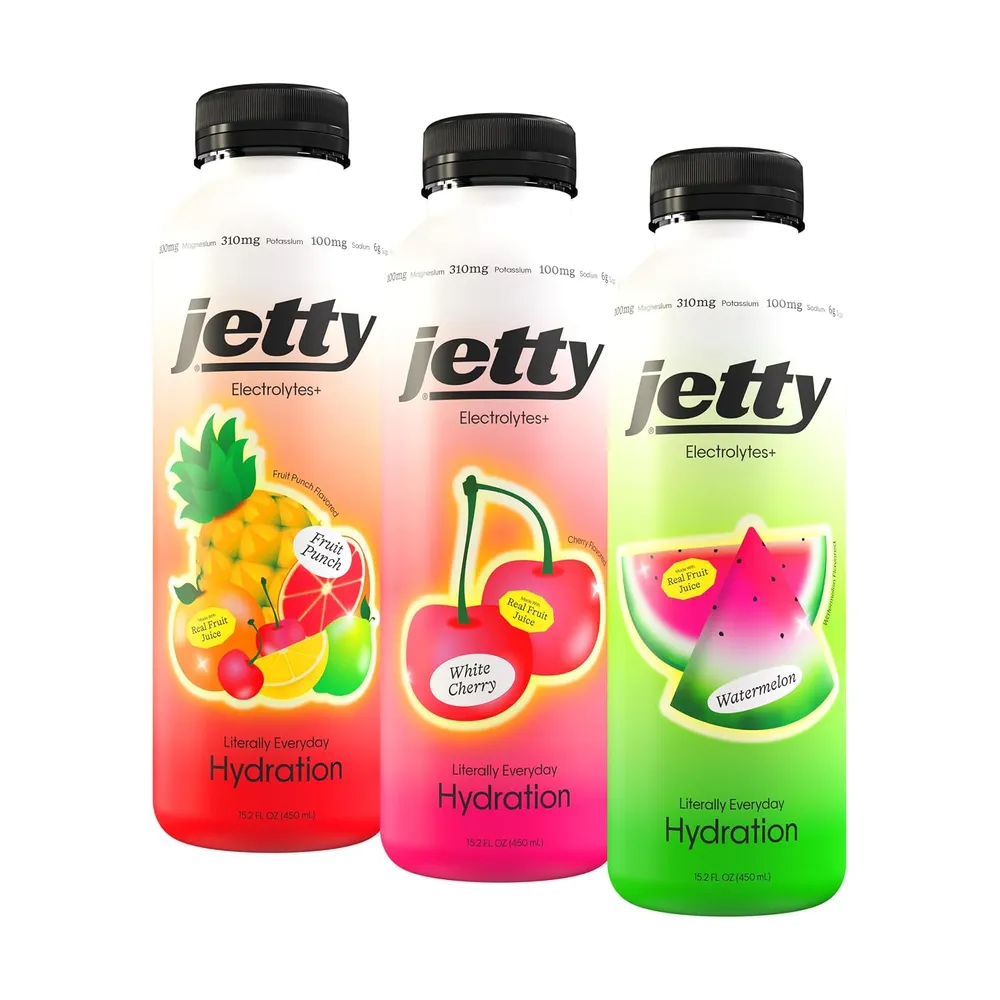
The launch flavors share the same core formula. The one ingredient-list difference is the colorant: the pink bottle uses butterfly pea flower, and the other flavors use vegetable juice. Either way, it backs up the bottle's no-dyes callout.
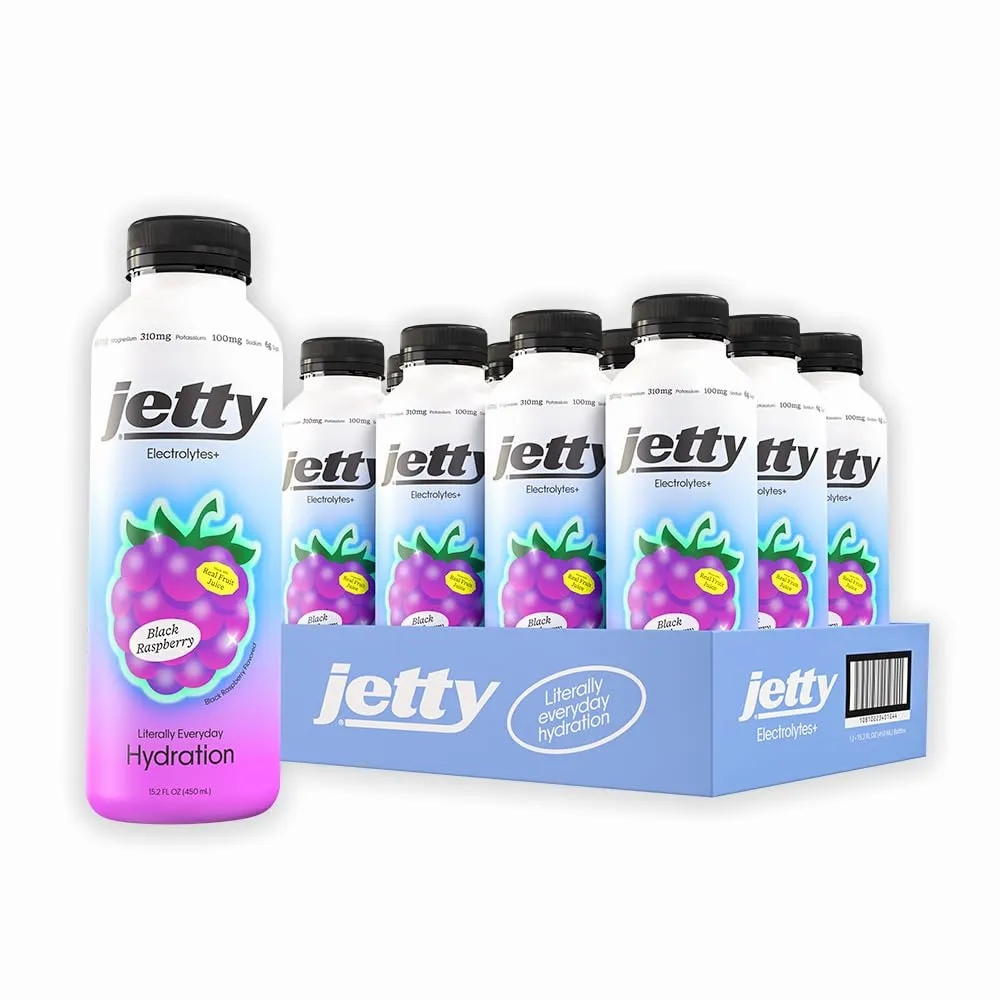
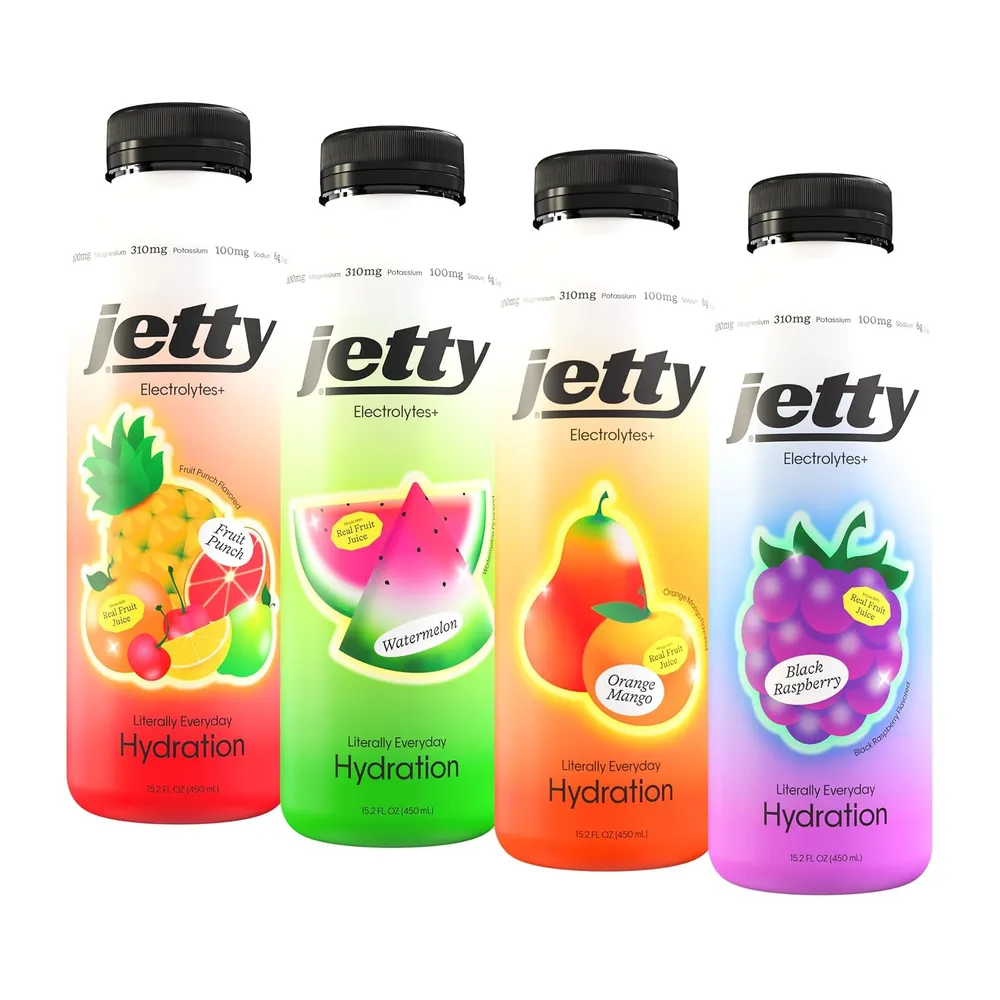
- Black Raspberry (12 Bottles: $29.88)
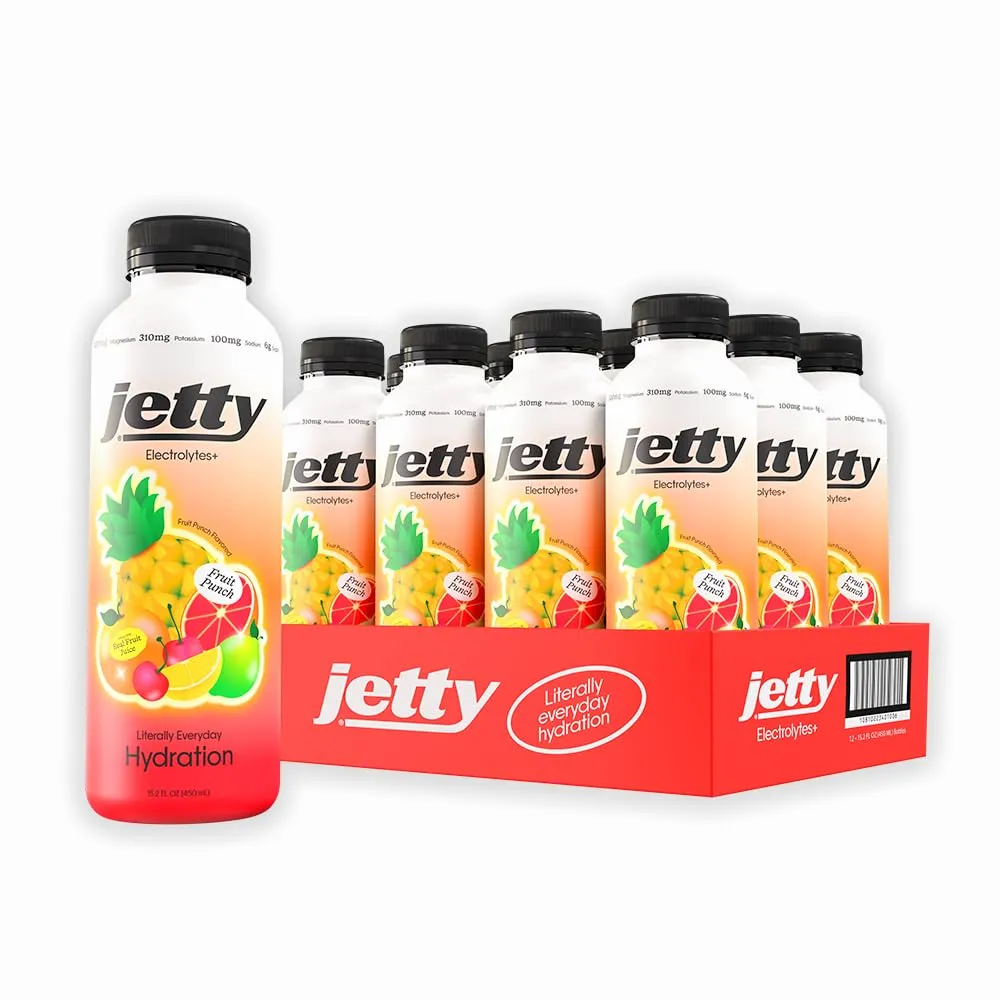
- Fruit Punch (12 Bottles: $29.88)
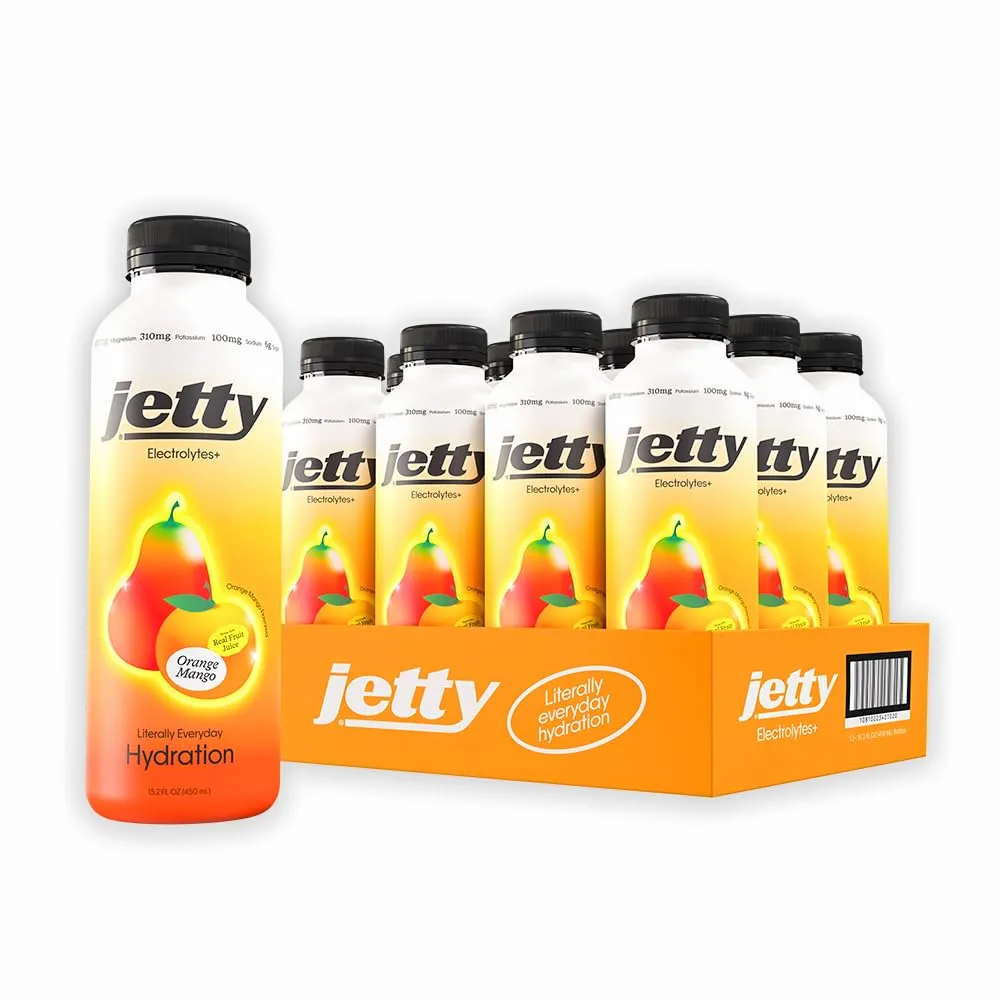
- Orange Mango (12 Bottles: $29.88)
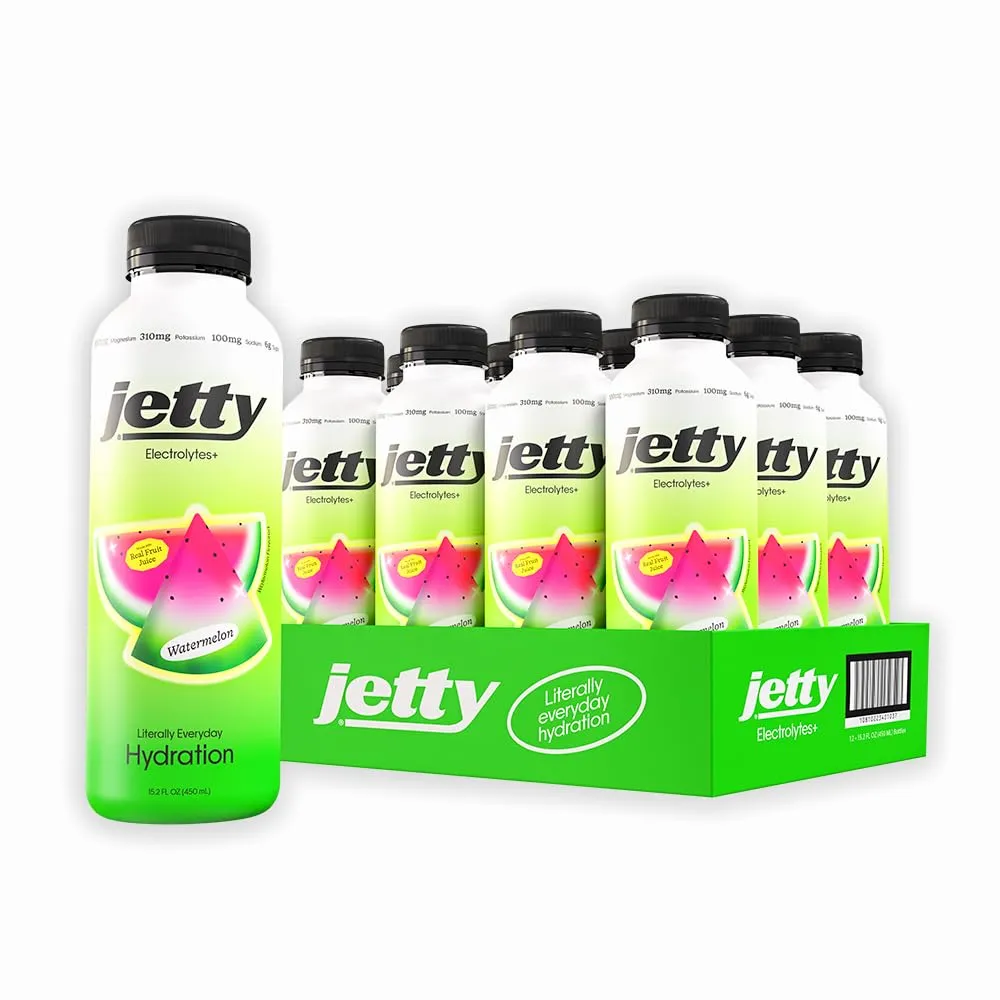
- Variety Pack (12 Bottles: $29.99)
- Watermelon (12 Bottles: $29.88)
Low-Key Hydration That Delivers
Jetty Hydration Drink is for people who want a flavored, caffeine-free bottle to sip through an ordinary day, and the formula matches that pitch: a few grams of sugar, a potassium-heavy mineral blend, some fiber, and no stimulants. Athletes and heavy sweaters need more sodium than this bottle carries. As an everyday swap for soda or juice, the Ellsworths built exactly what the label promises.
For more launches like this, follow @BevlabMedia on TikTok and Instagram.
References
- Yong, Jean W H, et al. "The chemical composition and biological properties of coconut (Cocos nucifera L.) water." Molecules (Basel, Switzerland), 2009. https://doi.org/10.3390/molecules14125144
- Saat, Mohamed, et al. "Rehydration after exercise with fresh young coconut water, carbohydrate-electrolyte beverage and plain water." Journal of physiological anthropology and applied human science, 2002. https://doi.org/10.2114/jpa.21.93
- Kalman, Douglas S, et al. "Comparison of coconut water and a carbohydrate-electrolyte sport drink on measures of hydration and physical performance in exercise-trained men." Journal of the International Society of Sports Nutrition, 2012. https://doi.org/10.1186/1550-2783-9-1
- Ismail, I, et al. "Rehydration with sodium-enriched coconut water after exercise-induced dehydration." The Southeast Asian journal of tropical medicine and public health, 2007. https://pubmed.ncbi.nlm.nih.gov/17883020/
- Astina, Junaida, et al. "Tapioca Resistant Maltodextrin as a Carbohydrate Source of Oral Nutrition Supplement (ONS) on Metabolic Indicators: A Clinical Trial." Nutrients, 2022. https://doi.org/10.3390/nu14050916
- Astina, Junaida, et al. "Attenuation of glycaemic and insulin responses following tapioca resistant maltodextrin consumption in healthy subjects: a randomised cross-over controlled trial." Journal of nutritional science, 2020. https://doi.org/10.1017/jns.2020.22
- Watanabe, Norikazu, et al. "Effects of resistant maltodextrin on bowel movements: a systematic review and meta-analysis." Clinical and experimental gastroenterology, 2018. https://doi.org/10.2147/CEG.S153924
- Burns, Alyssa M, et al. "In healthy adults, resistant maltodextrin produces a greater change in fecal bifidobacteria counts and increases stool wet weight: a double-blind, randomized, controlled crossover study." Nutrition research (New York, N.Y.), 2018. https://doi.org/10.1016/j.nutres.2018.09.007
- Mysonhimer, Annemarie R, et al. "Gastrointestinal Effects and Tolerance of Nondigestible Carbohydrate Consumption." Advances in nutrition (Bethesda, Md.), 2022. https://doi.org/10.1093/advances/nmac094
- Pérez-Idárraga, Alexandra, et al. "Postexercise rehydration: potassium-rich drinks versus water and a sports drink." Applied physiology, nutrition, and metabolism = Physiologie appliquee, nutrition et metabolisme, 2014. https://doi.org/10.1139/apnm-2013-0434
- Beller, G A; Maher, J T; Hartley, L H; Bass, D E; Wacker, W E. "Changes in serum and sweat magnesium levels during work in the heat." Aviation, Space, and Environmental Medicine, 1975. https://pubmed.ncbi.nlm.nih.gov/1131135
- Zhang, Yijia, et al. "Can Magnesium Enhance Exercise Performance?." Nutrients, 2017. https://doi.org/10.3390/nu9090946
- Burke, L M. "Nutrition for post-exercise recovery." Australian journal of science and medicine in sport, 1997. https://pubmed.ncbi.nlm.nih.gov/9127682/
- Fayet-Moore, Flavia; Wibisono, Cinthya; Carr, Prudence; Duve, Emily; Petocz, Peter; Lancaster, Graham; McMillan, Joanna; Marshall, Skye; Blumfield, Michelle. "An Analysis of the Mineral Composition of Pink Salt Available in Australia." Foods, 2020. https://doi.org/10.3390/foods9101490
- Roohani, Nazanin, et al. "Zinc and its importance for human health: An integrative review." Journal of research in medical sciences : the official journal of Isfahan University of Medical Sciences, 2013. https://pubmed.ncbi.nlm.nih.gov/23914218
- Yang, Yue, et al. "NAD(+) metabolism: Bioenergetics, signaling and manipulation for therapy." Biochimica et biophysica acta, 2016. https://doi.org/10.1016/j.bbapap.2016.06.014
- Gasperi, Valeria, et al. "Niacin in the Central Nervous System: An Update of Biological Aspects and Clinical Applications." International journal of molecular sciences, 2019. https://doi.org/10.3390/ijms20040974
- Minto, Clara, et al. "Definition of a tolerable upper intake level of niacin: a systematic review and meta-analysis of the dose-dependent effects of nicotinamide and nicotinic acid supplementation." Nutrition reviews, 2017. https://doi.org/10.1093/nutrit/nux011
- Freese, Riitta, et al. "Pantothenic acid - a scoping review for Nordic Nutrition Recommendations 2023." Food & nutrition research, 2023. https://doi.org/10.29219/fnr.v67.10255
- di Salvo, Martino Luigi, et al. "Vitamin B(6) salvage enzymes: mechanism, structure and regulation." Biochimica et Biophysica Acta (BBA) - Proteins and Proteomics, 2011. https://doi.org/10.1016/j.bbapap.2010.12.006
- EFSA Panel on Nutrition, Novel Foods and Food Allergens (NDA), et al. "Scientific opinion on the tolerable upper intake level for vitamin B6." EFSA journal. European Food Safety Authority, 2023. https://doi.org/10.2903/j.efsa.2023.8006
- Obeid, Rima, et al. "Cobalamin coenzyme forms are not likely to be superior to cyano- and hydroxyl-cobalamin in prevention or treatment of cobalamin deficiency." Molecular nutrition & food research, 2015. https://doi.org/10.1002/mnfr.201500019
- Tin-May-Than, et al. "The effect of vitamin B12 on physical performance capacity." British Journal of Nutrition, 1978. https://doi.org/10.1079/bjn19780122
- Orellana-Paucar, Adriana Monserrath. "Steviol Glycosides from Stevia rebaudiana: An Updated Overview of Their Sweetening Activity, Pharmacological Properties, and Safety Aspects." Molecules (Basel, Switzerland), 2023. https://doi.org/10.3390/molecules28031258
- Parker, M N, et al. "Consumer acceptance of natural sweeteners in protein beverages." Journal of dairy science, 2018. https://doi.org/10.3168/jds.2018-14707
- Goodman, Matthew J. "The “Natural” vs. “Natural Flavors” Conflict in Food Labeling: A Regulatory Viewpoint." Food and drug law journal, 2017. https://pubmed.ncbi.nlm.nih.gov/29140655/
Tagged