Jones Soda Cane Sugar Soda: Real Sugar, No Wellness Spin
Glass bottles, fan photos, and a soda that owns being a treat
Jones Soda's cane sugar line makes no functional pitch, and the Root Beer can lists 180 calories and 46g of added sugar, 90% of the Daily Value.
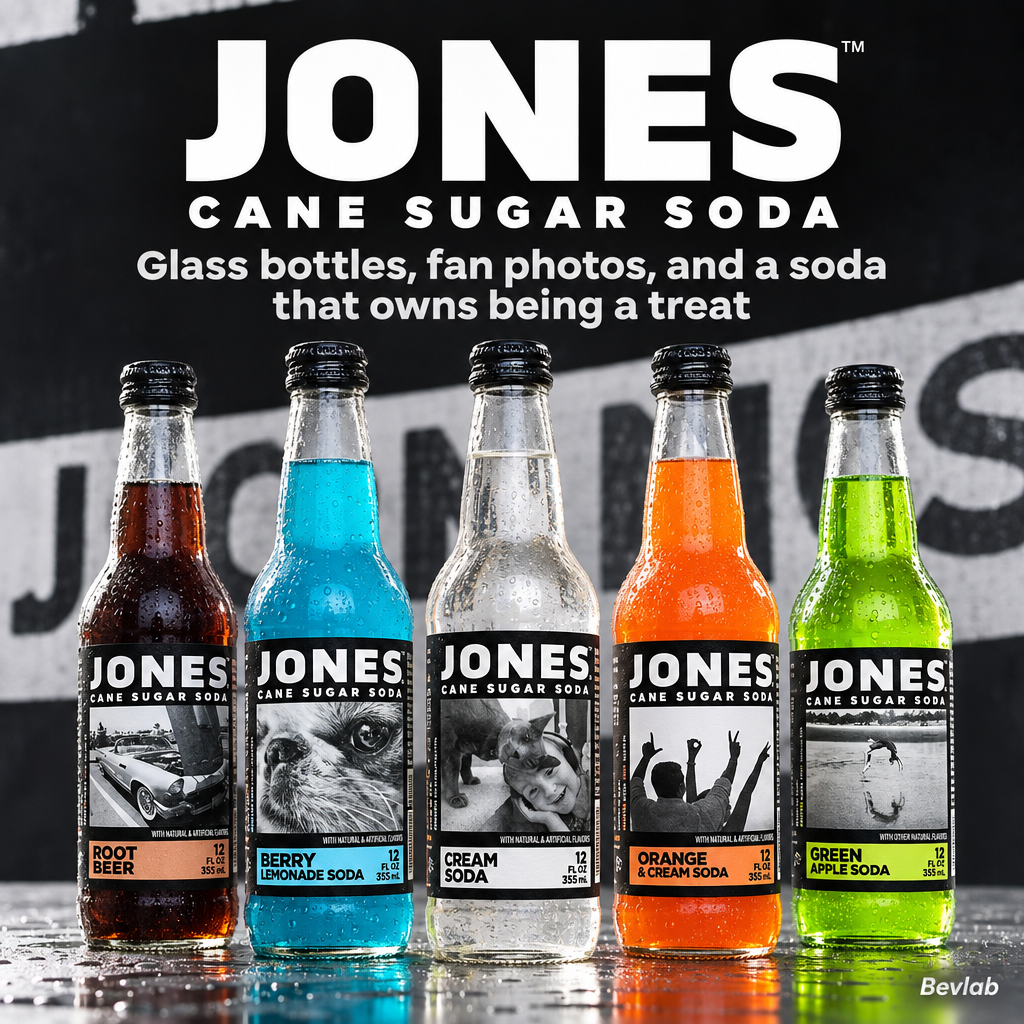
Jones Soda Cane Sugar Soda is the core line from Jones Soda, the craft soda brand known for glass bottles, stark black-and-white labels, and customer photos on the front. Fans submit those photos through Jones's own photo program. The drink inside is sweetened with cane sugar, and that's the entire pitch. It has no prebiotic fiber, no added vitamins, and no focus blend. This is soda, made with some personality.
That makes it a different kind of page for Bevlab. You won't find a formula built to do anything for you here, and the label doesn't claim one. The Root Beer can lists 180 calories and 46g of added sugar, which tells you how to treat it: as a treat.
Jones Soda Cane Sugar Soda Nutrition Facts
These numbers come from the 12 fl oz (355mL) Root Beer can. Other flavors vary, so check the label on the one you're drinking.
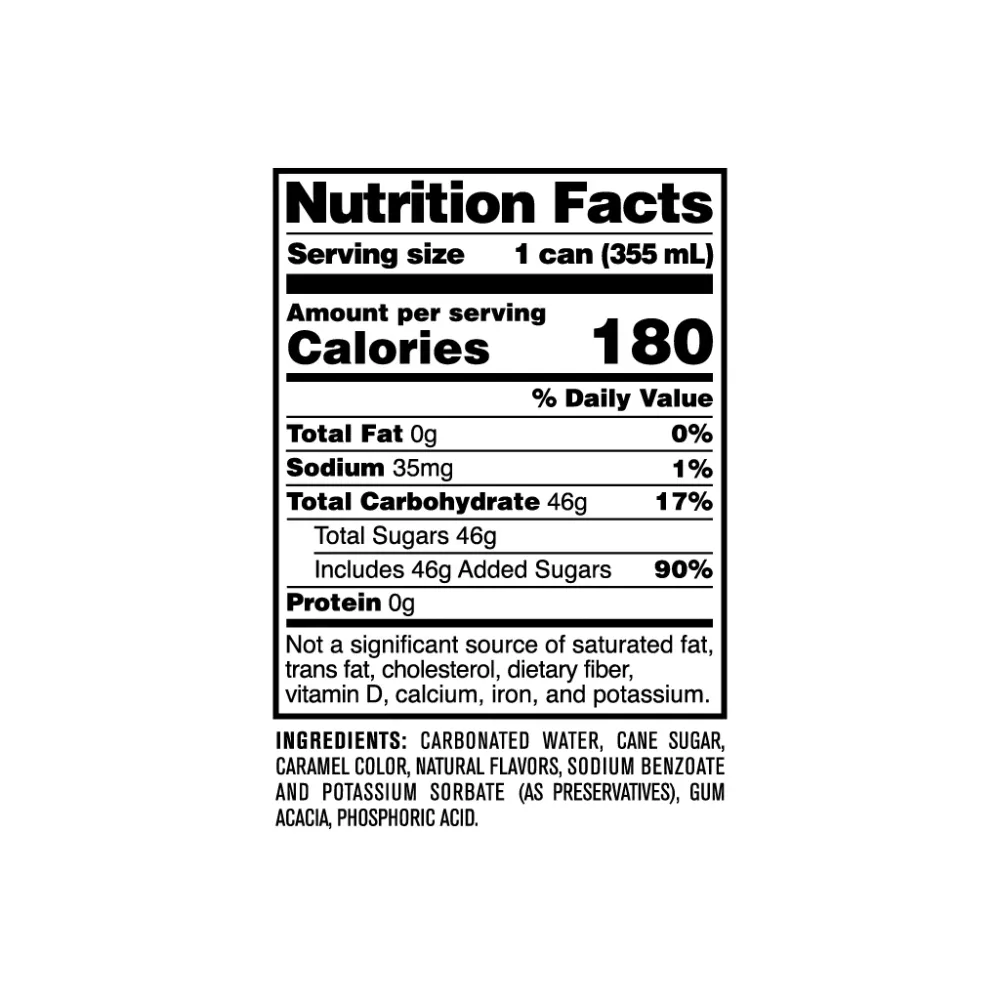
- Calories: 180
- Total Fat: 0g (0% DV)
- Total Carbohydrate: 46g (17% DV)
- Total Sugars: 46g
- Added Sugars: 46g (90% DV)
- Total Sugars: 46g
- Protein: 0g
- Vitamins and Minerals
- Sodium: 35mg (1% DV)
The sugar line matters most. Every gram of sugar in the Root Beer is added sugar, and one can covers 90% of the Daily Value for added sugars. That's nearly a full day's worth in 12 ounces. The 180 calories come almost entirely from that sugar, since the can has no fat and no protein.
Jones Soda Cane Sugar Soda Ingredients
The Root Beer can prints this ingredient statement:
INGREDIENTS: CARBONATED WATER, CANE SUGAR, CARAMEL COLOR, NATURAL FLAVORS, SODIUM BENZOATE AND POTASSIUM SORBATE (AS PRESERVATIVES), GUM ACACIA, PHOSPHORIC ACID.
That's a short, classic soda build. Here's how each piece fits.
-
Cane Sugar
Cane sugar is the headline. It's in the product name, and it's the second ingredient on the Root Beer label, right after carbonated water. It's also the only sweetener on the list. Jones doesn't print a separate amount for the cane sugar itself, but the panel shows 46g of total sugars, all of them counted as added.
For a craft soda brand, cane sugar is a taste and identity choice. Nutritionally, though, the label treats it like any other added sugar, and the 90% DV figure is the one to remember. There's no low-sugar version of this formula. Jones has released separate ZERO sodas for people who want that.
-
Carbonated Water
Carbonated water comes first on the list, which is standard for soda. It mostly supplies the fizz and the bite, but carbonation isn't completely inert. In a small crossover study, 12 active adults drank carbonated or still water while recovering from exercise in the heat. The carbonated water caused brief increases in blood pressure and brain blood flow. Later in recovery, it also improved mouth refreshment and reduced sleepiness more than still water did.[1] Those effects were short-lived and don't make soda a recovery drink.
The weight-loss idea doesn't hold up either. A 2025 report looked at whether absorbed carbon dioxide could burn meaningful glucose and concluded the effect is likely too small to matter.[2] On teeth, a trial in 18 adolescents found that plain carbonated water barely moved saliva pH, while a sucrose-sweetened soda caused the biggest drop.[3] In a sugared soda like this one, the bubbles aren't the main concern.
-
Phosphoric Acid
Phosphoric acid is the last ingredient on the Root Beer label, so it's present in the smallest amount by weight. Its job is tartness and pH control. That tang balances the sweetness so the drink doesn't taste flat. It's best known as the acid in colas.
A 2016 analysis of 379 U.S. beverages found that 93% had a pH below 4.0, the level considered potentially damaging to teeth, and phosphoric-acid colas ranked among the most acidic drinks tested.[4] Jones doesn't publish a pH for its sodas or print the phosphoric acid amount, so don't assume the Root Beer is as acidic as a cola. Still, sipping any sugared, acidic soda all day isn't great for enamel.
On the regulatory side, Europe's food safety authority re-evaluated phosphoric acid and the related phosphate additives in 2019 and concluded the group should be managed with an acceptable daily intake.[5]
-
Sodium Benzoate
Sodium benzoate is the first of two preservatives on the label, and it works best in acidic drinks like soda. Its acid form slips into microbial cells and interferes with how they take in nutrients, and the effect gets stronger as pH drops.[6] The label doesn't disclose how much is in the can.
For scale, the European Food Safety Authority set a group acceptable daily intake of 5mg/kg of body weight per day, measured as benzoic acid. That works out to 350mg/day for a 70kg adult. The same review found that young children who drink a lot of flavored drinks could exceed that limit.[7]
The best-known benzoate issue is benzene, which can form when benzoate is paired with vitamin C (ascorbic acid), and heat speeds it up.[8] The Root Beer label doesn't list ascorbic acid.
-
Potassium Sorbate
Potassium sorbate is the second preservative, and it's there to keep microbes, mainly yeast and mold, from growing in the bottle. Jones doesn't disclose the amount. In 2019, European regulators set a group acceptable daily intake of 11mg/kg of body weight per day, measured as sorbic acid.[9]
It isn't biologically inert. In lab work, potassium sorbate increased DNA damage markers in human lymphocytes cultured at high concentrations.[10] Mice given 150-1,000mg/kg for 10 weeks showed liver inflammation and gut microbiome changes, and those effects eased after a washout period.[11] Those exposures are far above what a can of soda delivers, and the research doesn't include a controlled human trial showing harm at food-level intake. It's a common preservative with a few open lab questions, not a reason to panic.
-
Sweeteners and Flavors
-
Natural Flavors
Natural flavors supply the root beer character. Under FDA rules, "natural flavor" is defined by where the flavoring comes from, such as plants, spices, or fermentation, not by its chemistry. Natural and artificial versions of the same flavor molecule can be chemically identical.[12] Jones doesn't say which botanicals go into the Root Beer's flavor, and flavoring serves taste, not nutrition.
-
-
Other Ingredients
- Caramel color gives the Root Beer its dark brown color.
- Gum acacia is a plant-derived gum, and the label doesn't list an individual amount.
The Rest of the Jones Shelf
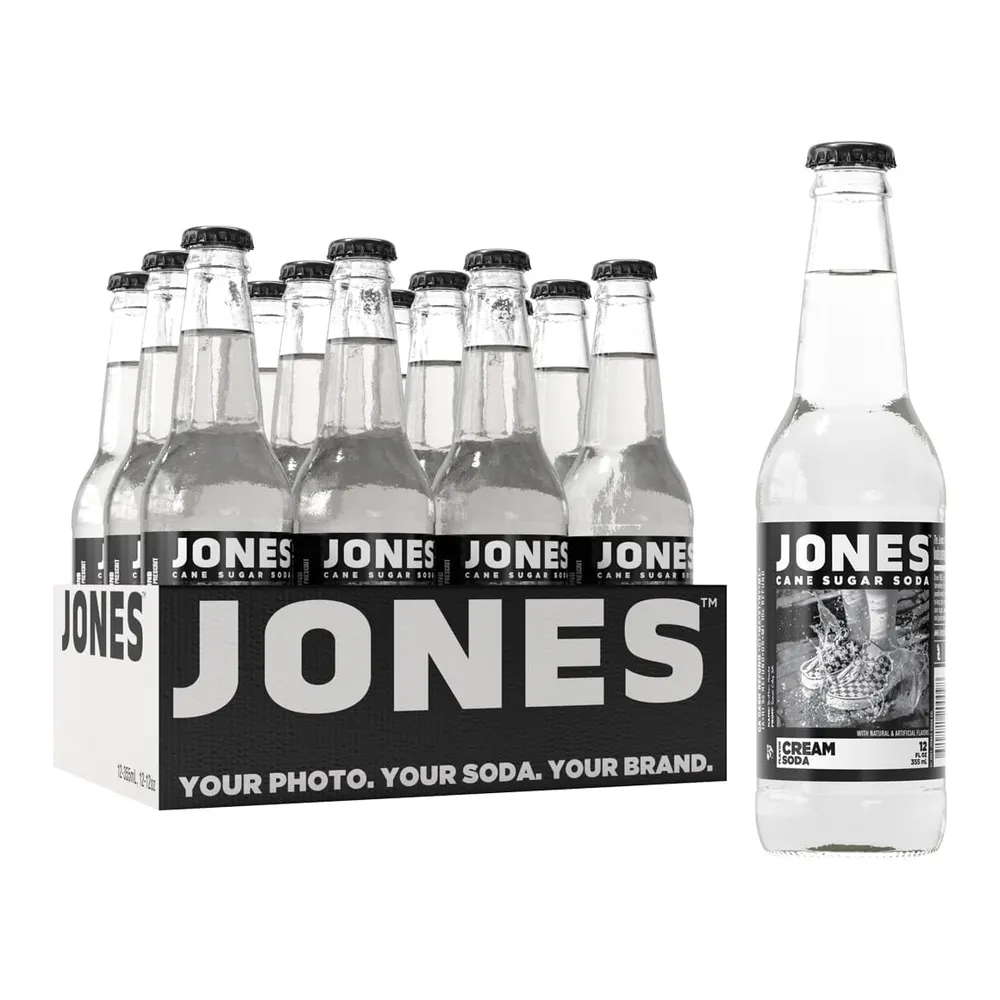
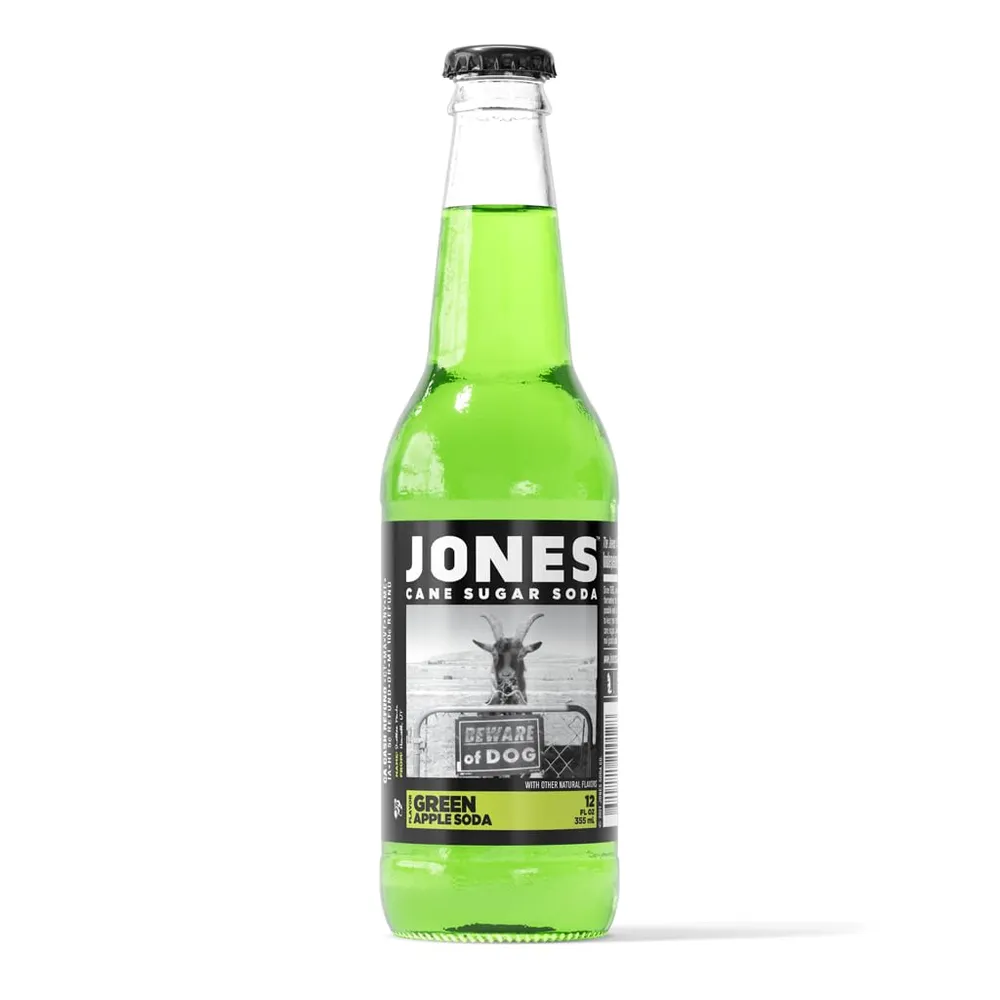
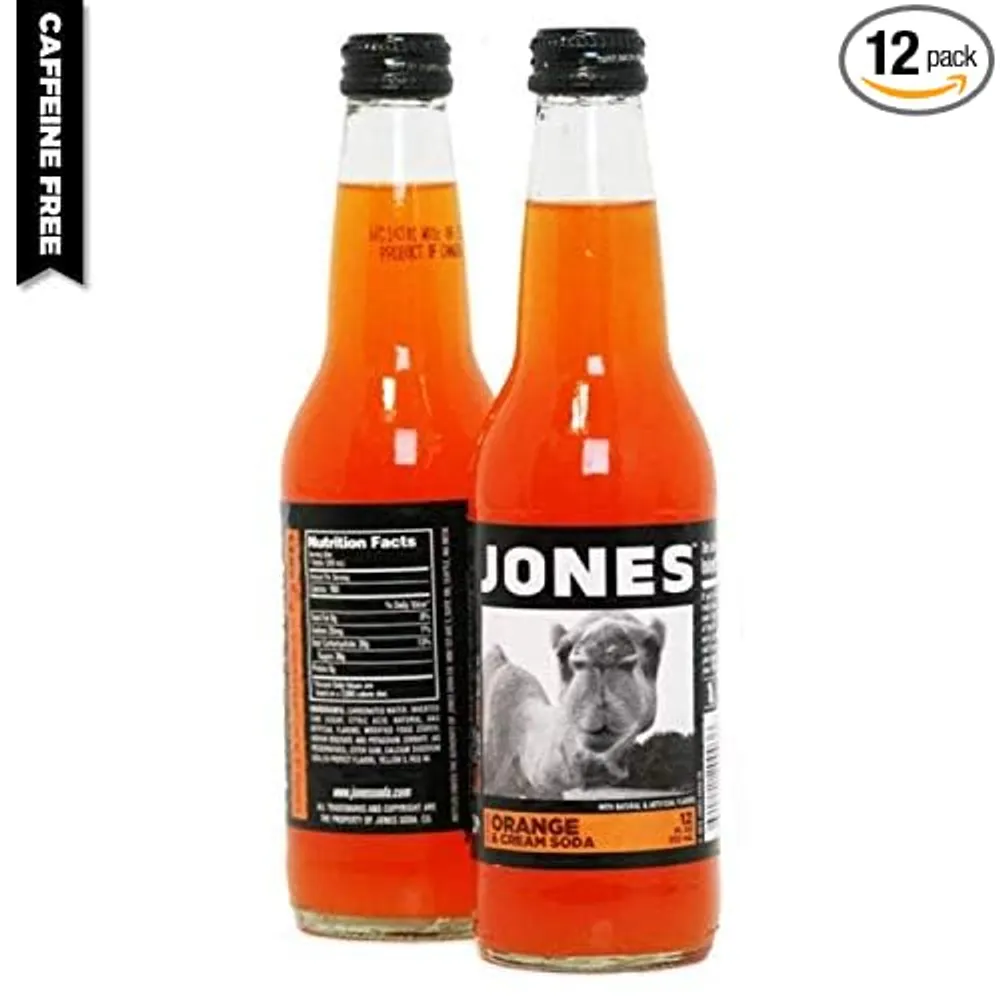
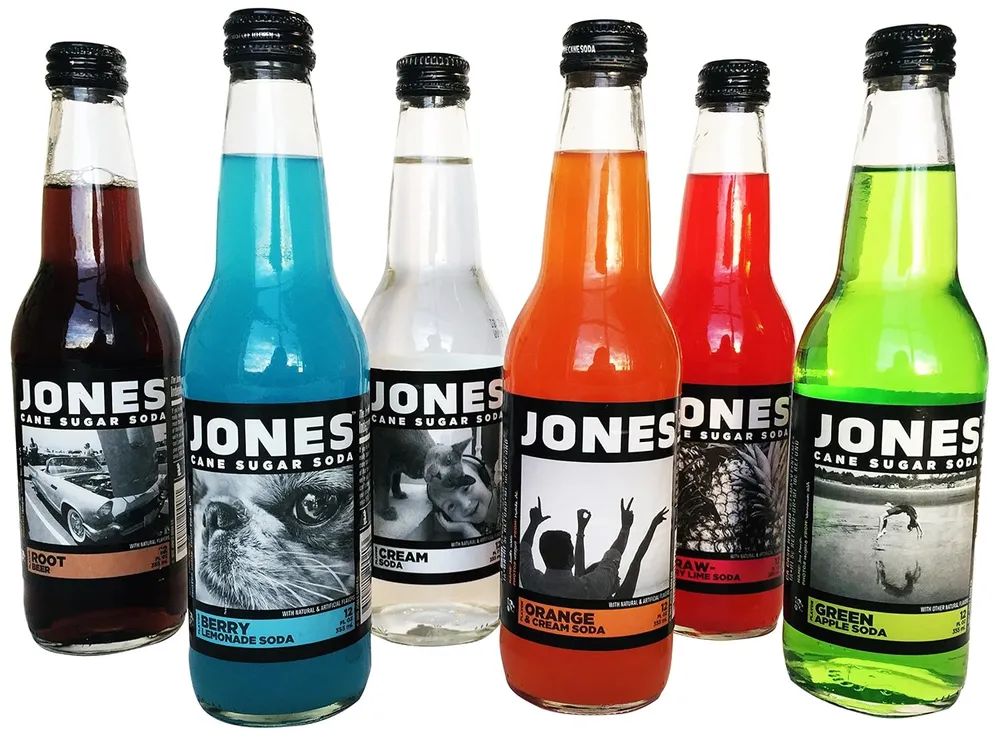
The cane sugar line has included flavors such as Cream Soda, Green Apple, Berry Lemonade, Strawberry Lime, and Orange & Cream, each with its own label. Jones has also released ZERO sodas and a POP Jones prebiotic soda line as separate products.
- Berry Lemonade (Not in stock at any PricePlow partner stores)
- Blue Bubblegum (Not in stock at any PricePlow partner stores)
- Cream Soda (Not in stock at any PricePlow partner stores)
- Green Apple (Not in stock at any PricePlow partner stores)
- Orange & Cream (Not in stock at any PricePlow partner stores)
- Root Beer (Not in stock at any PricePlow partner stores)
- Strawberry Lime (Not in stock at any PricePlow partner stores)
- Variety Pack (Not in stock at any PricePlow partner stores)
Drink It Like Dessert
Jones Soda Cane Sugar Soda is for people who want an old-school sugar soda with craft-brand personality, not a functional drink. The label is plain about it: cane sugar, natural flavors, two common preservatives, and 46g of added sugar in the Root Beer can, so treat it as an occasional treat and it delivers what it promises.
References
- Kajiki, Masanobu, et al. "Ingesting carbonated water post-exercise in the heat transiently ameliorates hypotension and enhances mood state." Experimental physiology, 2024. https://doi.org/10.1113/EP091925
- Takahashi, Akira. "Can carbonated water support weight loss?." BMJ nutrition, prevention & health, 2025. https://doi.org/10.1136/bmjnph-2024-001108
- Barajas-Torres, Guadalupe Carolina, et al. "Effects of Carbonated Beverage Consumption on Oral pH and Bacterial Proliferation in Adolescents: A Randomized Crossover Clinical Trial." Life (Basel, Switzerland), 2022. https://doi.org/10.3390/life12111776
- Reddy, Avanija, et al. "The pH of beverages in the United States." Journal of the American Dental Association (1939), 2016. https://doi.org/10.1016/j.adaj.2015.10.019
- EFSA, Panel on Food Additives and Flavourings (FAF), et al. "Re-evaluation of phosphoric acid-phosphates - di-, tri- and polyphosphates (E 338-341, E 343, E 450-452) as food additives and the safety of proposed extension of use." EFSA journal. European Food Safety Authority, 2019. https://doi.org/10.2903/j.efsa.2019.5674
- Freese, E, et al. "Function of lipophilic acids as antimicrobial food additives." Nature, 1973. https://doi.org/10.1038/241321a0
- EFSA, Panel on Food Additives and Nutrient Sources (ANS). "Scientific Opinion on the re‐evaluation of benzoic acid (E 210), sodium benzoate (E 211), potassium benzoate (E 212) and calcium benzoate (E 213) as food additives." EFSA Journal, 2016. https://doi.org/10.2903/j.efsa.2016.4433
- Nyman, Patricia J, et al. "Evaluation of accelerated UV and thermal testing for benzene formation in beverages containing benzoate and ascorbic acid." Journal of food science, 2010. https://doi.org/10.1111/j.1750-3841.2010.01536.x
- EFSA, Panel on Food Additives and Flavourings (FAF), et al. "Opinion on the follow-up of the re-evaluation of sorbic acid (E200) and potassium sorbate (E202) as food additives." EFSA journal. European Food Safety Authority, 2019. https://doi.org/10.2903/j.efsa.2019.5625
- Mamur, Sevcan, et al. "Does potassium sorbate induce genotoxic or mutagenic effects in lymphocytes?." Toxicology in vitro : an international journal published in association with BIBRA, 2010. https://doi.org/10.1016/j.tiv.2009.12.021
- Xiao, Nanhai, et al. "Effects of potassium sorbate on systemic inflammation and gut microbiota in normal mice: A comparison of continuous intake and washout period." Food and chemical toxicology : an international journal published for the British Industrial Biological Research Association, 2024. https://doi.org/10.1016/j.fct.2024.114443
- Goodman, Matthew J. "The “Natural” vs. “Natural Flavors” Conflict in Food Labeling: A Regulatory Viewpoint." Food and drug law journal, 2017. https://pubmed.ncbi.nlm.nih.gov/29140655/
Related Coverage
Tagged