No Worries GLP-1 Support Beverage
8 Grams of Chicory Fiber, Zero Semaglutide
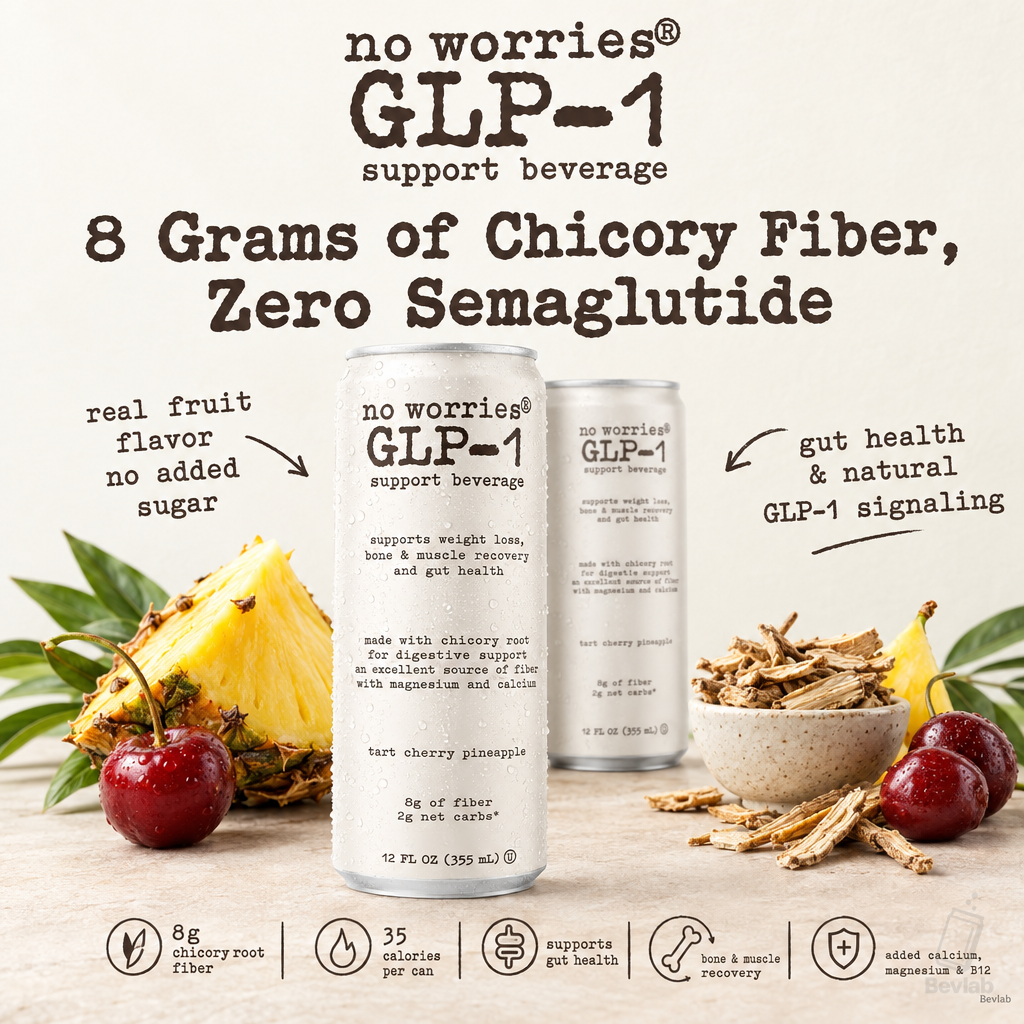
No Worries GLP-1 Support Beverage from Langers packs 8g of chicory-root inulin fiber into a 35-calorie can built around natural GLP-1 signaling.
No Worries GLP-1 Support Beverage is a sparkling tart cherry and pineapple drink from Langers built around a very specific pitch: an 8-gram dose of chicory-root fiber positioned to support your body's own GLP-1 signaling, the hormone pathway that drugs like semaglutide and tirzepatide have turned into a household topic. At 35 calories a can, with a full 8 grams of that total coming from fiber, this is one of the more fiber-forward mainstream beverages to show up in the current GLP-1 moment, and today we're gooing to separate what's actually happening in the can from what the name implies.
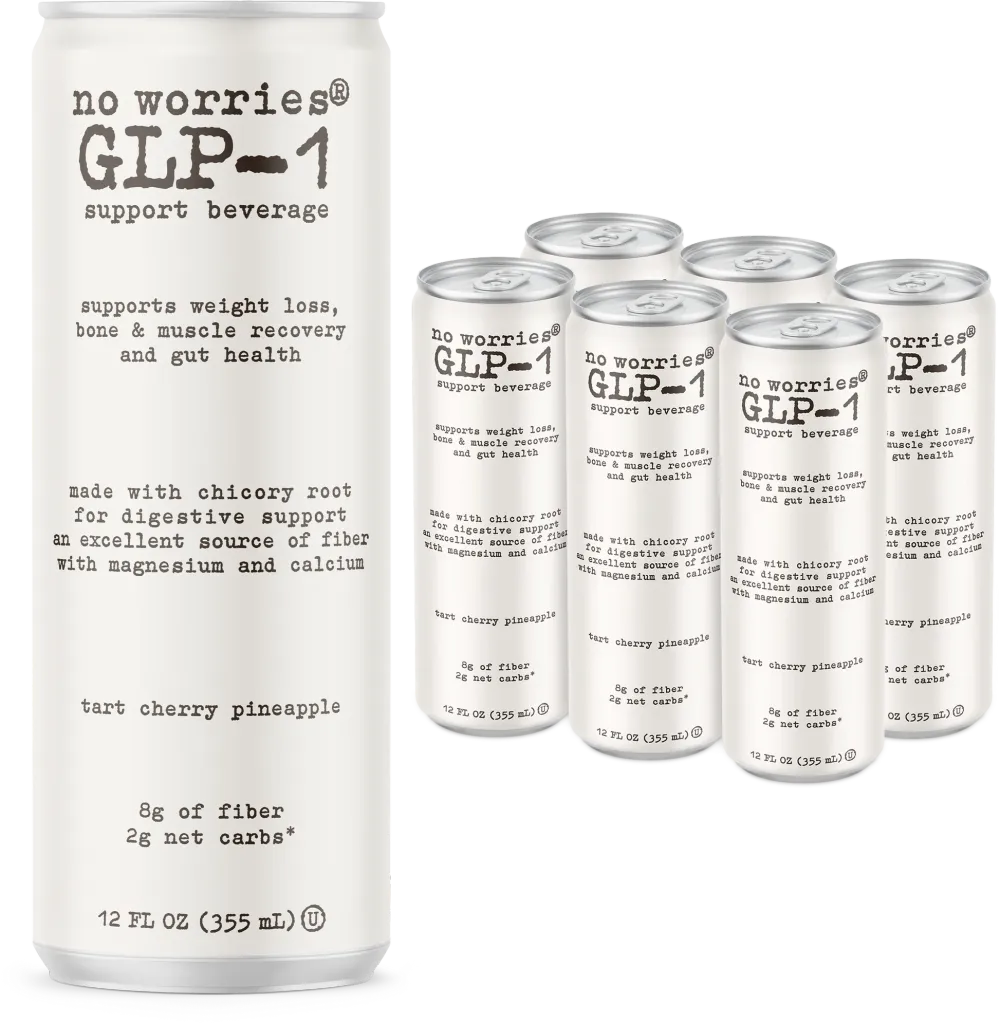
The formula itself is short: purified carbonated water, tart cherry and pineapple juice concentrates for flavor, chicory root fiber for the headline claim, calcium and magnesium, plus a touch of B12, and stevia to keep added sugar at zero. Nothing here is exotic. What makes it worth a closer look is how directly it tries to connect a well-documented gut mechanism to a cultural moment most consumers associate with a syringe, not a fiber blend.
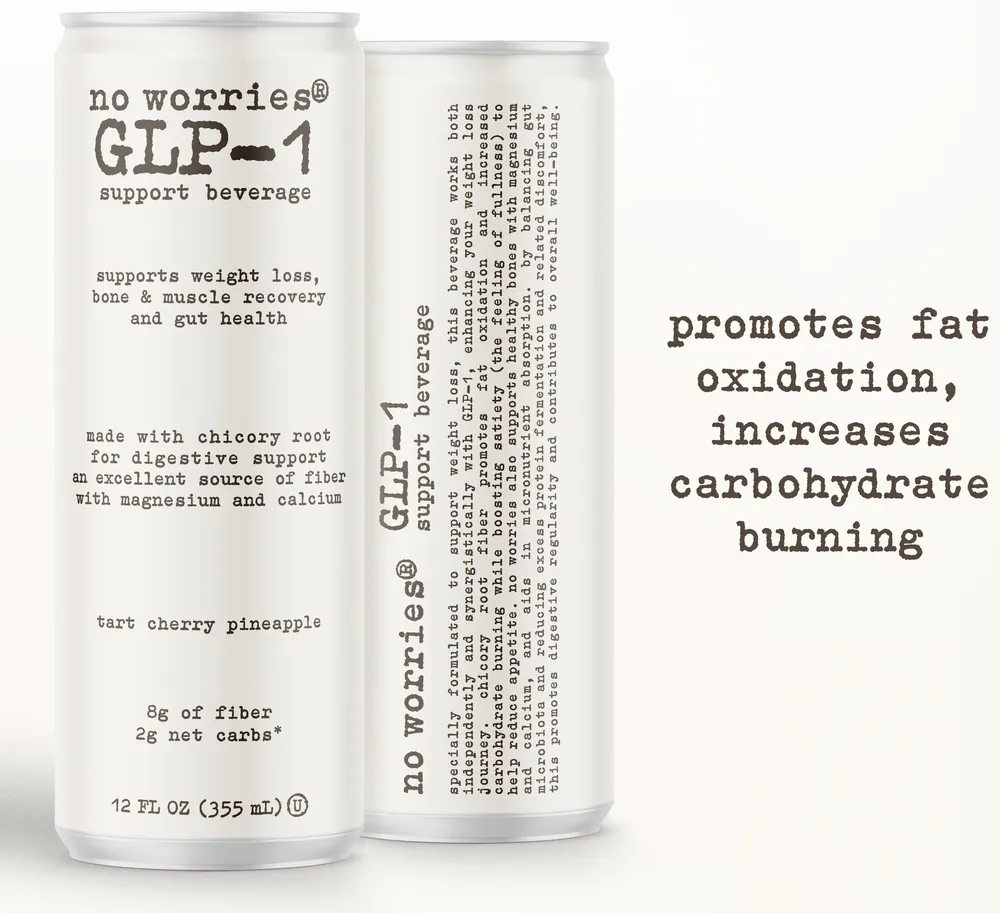
Same Company, New Product Line
No Worries GLP-1 Support Beverage comes from Langer Juice Company, the business behind the Langers juice brand found in grocery stores nationwide. This isn't a startup launching its first product around a trending acronym, it's an established juice manufacturer extending an existing juice-blending operation into the functional-beverage space.
We mention this because it actually makes sense: No Worries reads like a juice company's answer to the GLP-1 trend: a fruit-juice base, a fiber addition, and a short list of minerals, built with the kind of straightforward formulation you'd expect from a company that already knows how to get juice concentrate into a can at scale, not a lab built around a novel stimulant stack.
What "GLP-1 Support" Actually Means
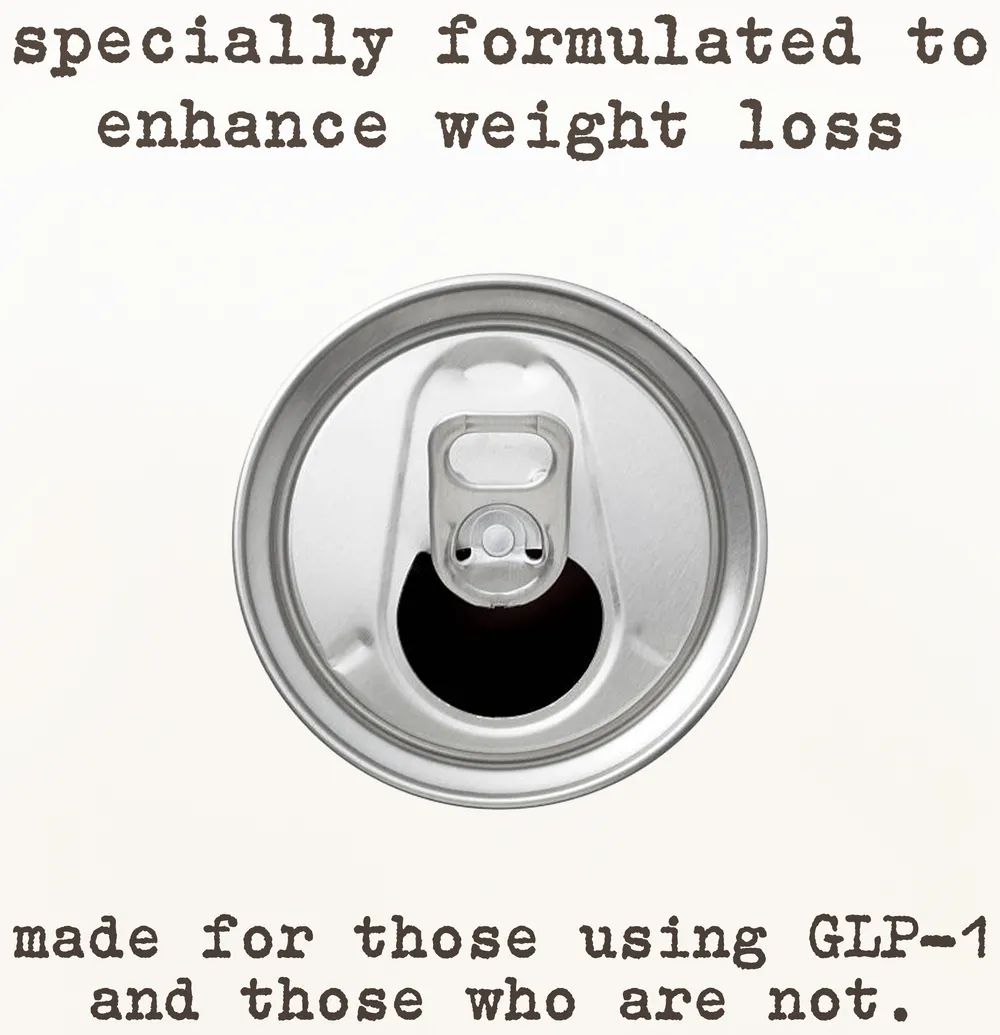
The name on this can borrows from the biggest story in weight management right now, so it's worth being precise about what it does and doesn't mean. GLP-1, or glucagon-like peptide-1, is a hormone your gut releases naturally after eating. Drugs like semaglutide are engineered to activate the GLP-1 receptor directly, while tirzepatide activates both the GIP and GLP-1 receptors, and their long half-lives produce sustained receptor agonism that dietary fiber does not reproduce. A beverage can't replicate that pharmacology, and No Worries doesn't try to. There's no semaglutide, no tirzepatide, no GLP-1 receptor agonist, and no drug of any kind in this can.
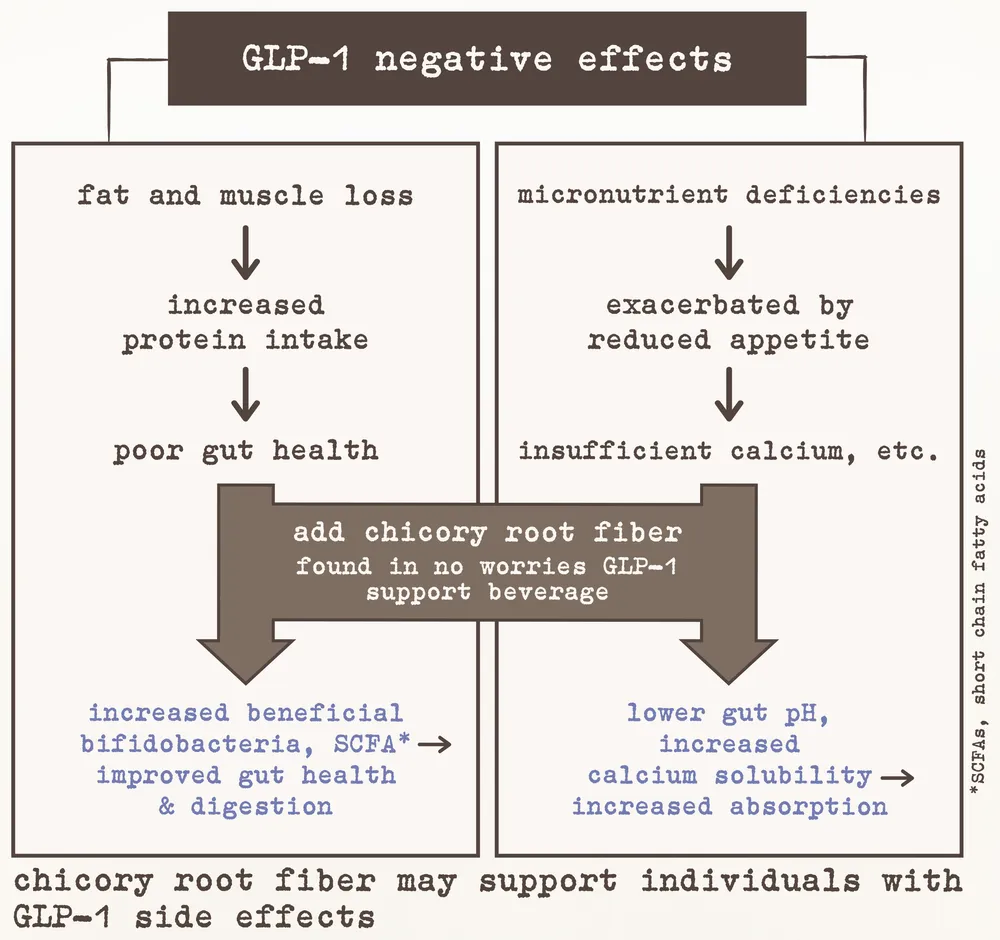
What it does contain is 8 grams of chicory-root fiber, which, as covered below, can prompt your own gut to release a bit more GLP-1 and peptide YY (PYY) through fermentation. It's a real, published mechanism, yet just a nudge on a natural pathway, not a pharmaceutical intervention.
According to Langers, the beverage is built for two different people:
- Those already on a GLP-1 medication who want to support the process with an appetite-friendly, low-calorie drink, and
- Those managing their weight without medication who want a fiber-forward option leaning on the same underlying biology.
Both are reasonable use cases and . Neither should be read as evidence that this can replicates what an injectable GLP-1 drug does.
No Worries GLP-1 Support Beverage Nutrition Facts
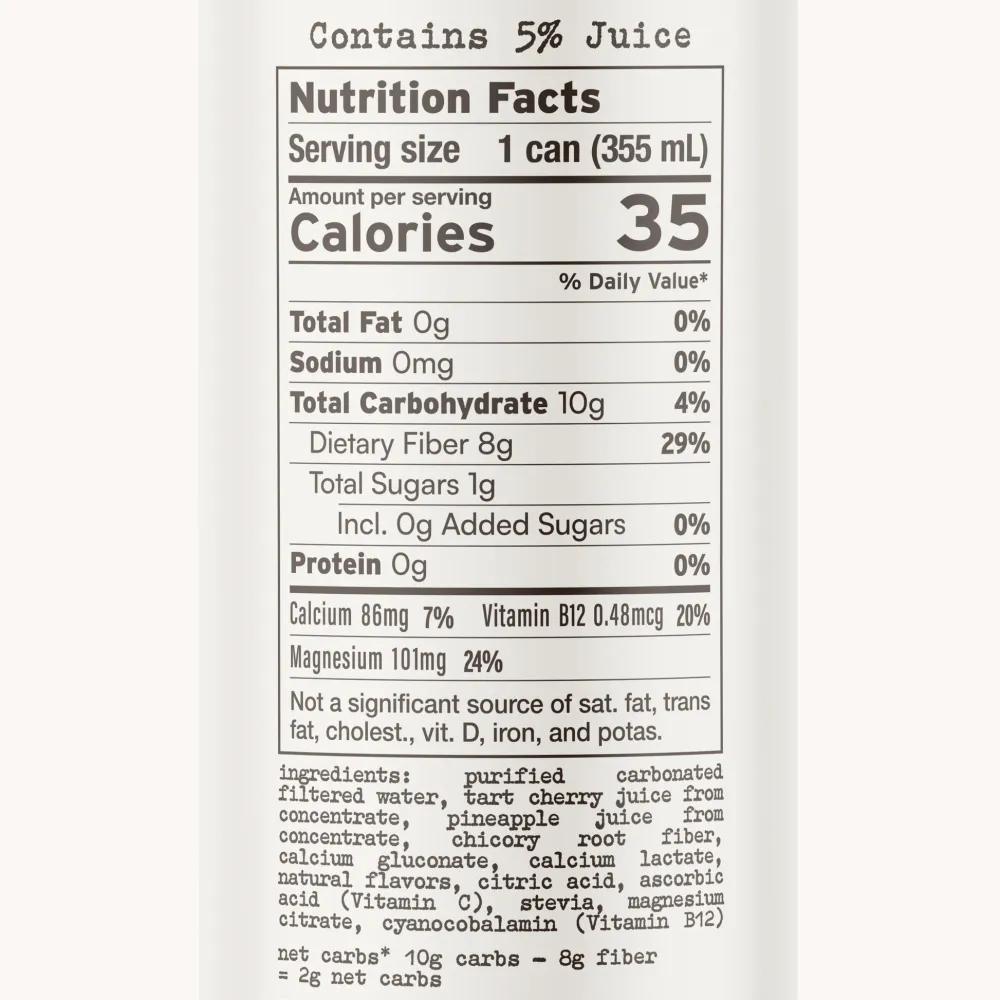
A single 355mL can comes in at 35 calories, with almost all of that total tied up in the 8 grams of fiber and 1 gram of naturally occurring sugar. The panel also does the math for you: Langers prints the claim "10g total carbs, minus 8g fiber, equals 2g net carbs" directly on the can, a common way fiber-heavy products get marketed to low-carb shoppers, though "net carbs" isn't a term the FDA formally regulates.
- Calories: 35
- Total Fat: 0g (0% DV)
- Sodium: 0mg (0% DV)
- Total Carbohydrate: 10g (4% DV)
- Dietary Fiber: 8g (29% DV)
- Total Sugars: 1g
- Added Sugars: 0g (0% DV)
- Protein: 0g (0% DV)
- Calcium: 86mg (7% DV)
- Vitamin B12: 0.48mcg (20% DV)
- Magnesium: 101mg (24% DV)
No Worries GLP-1 Support Beverage Ingredients
Each 355mL can breaks down to the following:
-
Inulin (Chicory Root Fiber) - 8g
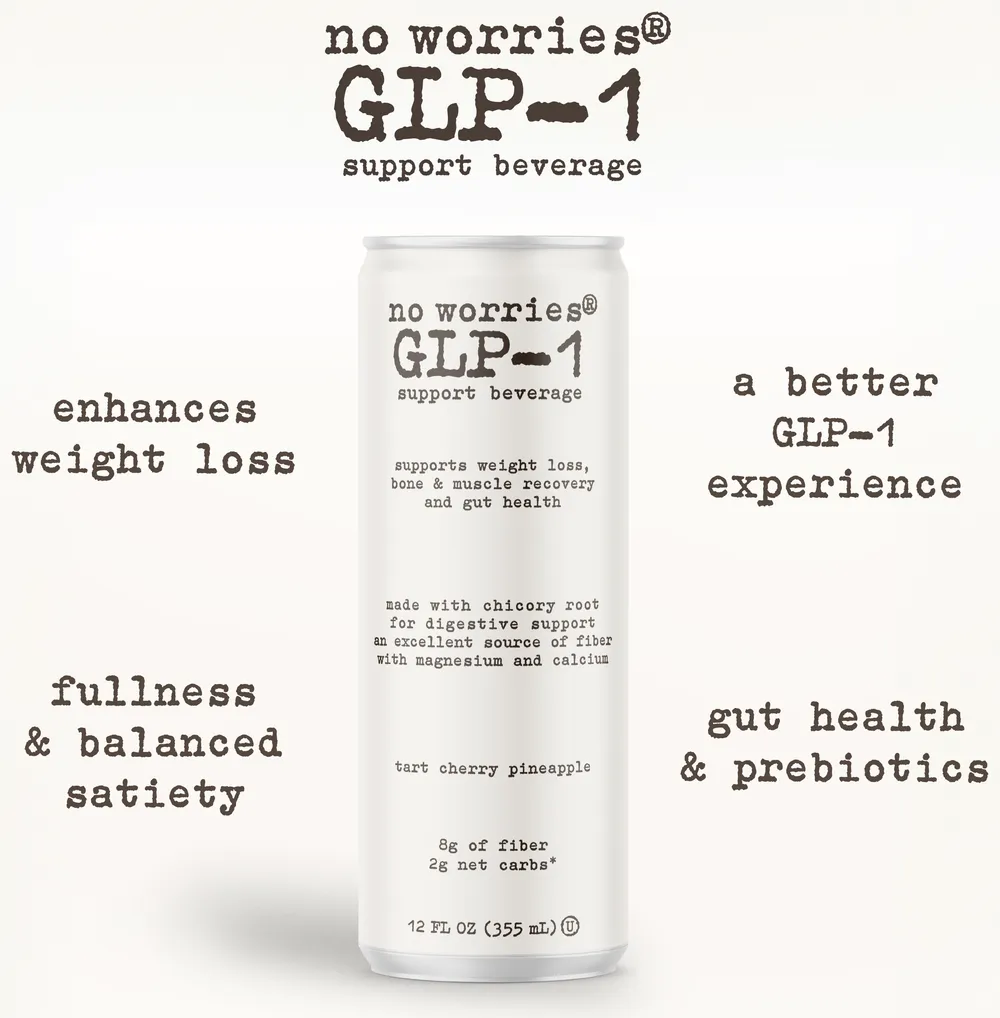
Inulin, listed on the can as chicory root fiber, supplies all 8 grams of this beverage's fiber and is the ingredient actually connected to the "GLP-1" name on the label. Inulin is a soluble fructan that human digestive enzymes can't break down, so it travels intact to the colon, where resident bacteria ferment it into short-chain fatty acids. Those acids, particularly propionate and butyrate, stimulate colonic cells to release GLP-1 and PYY, the gut's own satiety hormones.[1] That's the mechanistic rationale behind the name: this can doesn't contain a GLP-1 drug, it contains a fiber that can prompt your gut to release a bit more of its own signaling hormones.
The evidence for that pathway translating into less eating is mixed. A review of 19 randomized trials found inulin-type fructans had no consistent effect on appetite ratings or daily energy intake in most adult studies, with body weight results inconsistent outside long-term pediatric data.[2] The clearer human data sits in glycemic control: a dose-response meta-analysis of 33 trials found meaningful reductions in fasting glucose and HbA1c in people with prediabetes or type 2 diabetes at roughly 10g/day for six weeks or more, though the same analysis found no significant benefit in healthy adults.[3] There's also a mineral-absorption angle: a one-year adolescent trial found a similar dose of inulin-type fructans increased calcium absorption and bone mineral density, which may be part of why No Worries pairs its fiber with calcium and magnesium.[4]
At 8 grams per can, the fiber content sits in the range where a comprehensive tolerability review found mild to moderate bloating and flatulence become more common, though most people adjust within a couple of weeks of regular intake.[5] Drink it daily and you'll probably notice before you see any metabolic effect.
-
Tart Cherry and Pineapple Juice (from Concentrate)
Tart cherry juice from concentrate and pineapple juice from concentrate make up the beverage's 5% juice content and its base flavor, sitting behind the fiber, calcium, and magnesium as the flavor backbone of the can. Neither has a disclosed concentration on the label, so it's not possible to say how much of either juice is actually in a serving, and that matters because tart cherry's research base is dose-dependent. The clinical work on tart cherry concentrate covers exercise recovery, sleep, and uric acid, and it's built almost entirely on protocols using 30 to 60mL of concentrate or 240 to 480mL of full juice per day.[6] A juice blend making up roughly 5% of a 355mL can is well below that range, so the tart cherry here reads as a flavor and light-antioxidant contributor rather than a dosed functional ingredient. Pineapple juice from concentrate plays a similar role, rounding out the sweetness and tartness without a stated amount. Together, they're doing more for taste than for any specific health claim, and that's a fair trade in a beverage where the fiber is carrying the actual positioning.
-
Vitamins and Minerals
-
Calcium (as Calcium Gluconate and Calcium Lactate) - 86mg (7% DV)
Calcium here comes from two salts, calcium gluconate and calcium lactate, combined to reach 86mg per can, about 7% of the Daily Value. That's a fortification-level amount, not a bone-health dose. The clinical trials showing calcium's fracture-prevention and bone-density benefits generally used 1,000 to 1,200mg per day from diet and supplements combined.[7] At 86mg, the can contributes toward that total rather than delivering it on its own.
A good reason this is included is because GLP-1 users are eating much less dairy, and that's the main driver of calcium consumption.
-
Magnesium (as Magnesium Citrate) - 101mg (24% DV)
Magnesium citrate supplies 101mg per can, 24% of the Daily Value and the largest single mineral contribution in the formula. That's a meaningful dent in daily magnesium needs (320 to 420mg depending on sex), though it's well below the 300 to 500mg doses used in trials studying magnesium for stress, sleep, or muscle recovery.[8] Magnesium acts as a cofactor in hundreds of enzymatic reactions tied to energy metabolism and muscle function, so this amount is best read as filling a nutritional gap rather than delivering a therapeutic dose.[9]
-
Vitamin B12 (as Cyanocobalamin) - 0.48mcg (20% DV)
Cyanocobalamin, a stable synthetic form of vitamin B12, is dosed at 0.48mcg, or 20% of the Daily Value. That's a modest addition aimed at everyday adequacy, not the 500 to 1,500mcg doses used in trials correcting diagnosed B12 deficiency or supporting cognitive outcomes in deficient patients.[10] For someone with normal B12 status, a beverage adding a fifth of the daily requirement won't move the needle much on energy or cognition, but it's a reasonable contribution toward baseline intake.
-
Vitamin C (as Ascorbic Acid) - Amount Not Disclosed
Ascorbic acid appears on the ingredient list as vitamin C, but unlike calcium, magnesium, and B12, it doesn't get a milligram amount or %DV anywhere on the nutrition panel. That's not unusual for small-inclusion ingredients that also serve a technical role. Alongside citric acid, ascorbic acid can help stabilize flavor and color in juice-based beverages, and it's plausible the amount here is doing double duty as a mild antioxidant and a formulation aid rather than a meaningfully dosed vitamin. Without a disclosed number, it isn't something to build health expectations around.
-
-
Other Ingredients
- Carbonated Water - The base of the beverage, and possibly more relevant to the GLP-1 positioning than it gets credit for. Carbonation causes gastric distension that contributes to a feeling of fullness, a mechanism separate from the fiber's fermentation pathway but pointed in the same satiety direction.[11]
- Natural Flavors - A standard flavoring complex used to round out the tart cherry and pineapple base. It's a source-defined regulatory category rather than a specific compound, and the label doesn't disclose anything beyond the generic declaration.
- Citric Acid - A common acidulant that balances the juice's sweetness and helps preserve flavor stability, working alongside the ascorbic acid already in the formula.
- Stevia - The zero-calorie sweetener responsible for keeping this beverage at 35 calories with only 1g of naturally occurring sugar and zero added sugar. The label doesn't disclose an amount, which is typical for high-intensity sweeteners used in small fractions of a gram.
Who Should Drink This Can
No Worries may appeal to people who want a genuinely high dose of soluble fiber in a convenient, low-calorie format, whether or not appetite management is the goal. At 35 calories with zero grams of protein, it won't compete much with a limited calorie budget, and 8 grams of chicory-root inulin is a real, well-studied amount rather than a token inclusion. Whether it makes sense alongside a prescription GLP-1 medication is a personal decision best made with a doctor or pharmacist, since this can isn't formulated as a companion product for those drugs and doesn't affect how they work. What this isn't for is anyone expecting the can itself to replicate the effects of an injectable GLP-1 drug, since the actual mechanism here is dietary fiber, not pharmacology.
The Fiber Behind the Trendy Name
No Worries earns some credit for restraint. It doesn't pretend to be a GLP-1 drug in a can, and 8 grams of chicory-root fiber is a real, clinically relevant amount rather than a marketing footnote. The calcium, magnesium, and B12 additions are modest but sensible, and the tart cherry and pineapple base keeps it drinkable without added sugar. The gut-hormone story behind the name is grounded in real biology, but the human evidence for fiber-driven GLP-1 release translating into meaningfully less eating is still mixed, not proven. Judge this can as a solid fiber beverage first, and treat any appetite benefit as a bonus rather than a guarantee.
Follow @BevlabMedia on TikTok and Instagram for more functional beverage breakdowns.
References
- den, Besten Gijs, et al. "The role of short-chain fatty acids in the interplay between diet, gut microbiota, and host energy metabolism." Journal of Lipid Research, 2013. https://doi.org/10.1194/jlr.r036012
- Liber, Anna, et al. "Effects of inulin-type fructans on appetite, energy intake, and body weight in children and adults: systematic review of randomized controlled trials." Annals of nutrition & metabolism, 2013. https://doi.org/10.1159/000350312
- Wang, Long, et al. "Inulin-type fructans supplementation improves glycemic control for the prediabetes and type 2 diabetes populations: results from a GRADE-assessed systematic review and dose-response meta-analysis of 33 randomized controlled trials." Journal of translational medicine, 2019. https://doi.org/10.1186/s12967-019-02159-0
- Abrams, Steven A, et al. "A combination of prebiotic short- and long-chain inulin-type fructans enhances calcium absorption and bone mineralization in young adolescents." The American journal of clinical nutrition, 2005. https://doi.org/10.1093/ajcn.82.2.471
- Mysonhimer, Annemarie R, et al. "Gastrointestinal Effects and Tolerance of Nondigestible Carbohydrate Consumption." Advances in nutrition (Bethesda, Md.), 2022. https://doi.org/10.1093/advances/nmac094
- Sabou, Vlad R, et al. "Review of Analytical Methods and Reporting of the Polyphenol Content of Tart Cherry Supplements in Human Supplementation Studies Investigating Health and Exercise Performance Effects: Recommendations for Good Practice." Frontiers in nutrition, 2021. https://doi.org/10.3389/fnut.2021.652094
- Clarke, B.L. "Use Of Calcium Or Calcium In Combination With Vitamin D Supplementation To Prevent Fractures And Bone Loss In People Aged 50 Years And Older A Meta Analysis." Yearbook of Endocrinology, 2008. https://doi.org/10.1016/s0084-3741(08)79096-6
- Pouteau, Etienne, et al. "Superiority of magnesium and vitamin B6 over magnesium alone on severe stress in healthy adults with low magnesemia: A randomized, single-blind clinical trial." PloS one, 2018. https://doi.org/10.1371/journal.pone.0208454
- Fatima, Ghizal, et al. "Magnesium Matters A Comprehensive Review Of Its Vital Role In Health And Diseases." Cureus, 2024. https://doi.org/10.7759/cureus.71392
- Ueno, Asako, et al. "Influences Of Vitamin B12 Supplementation On Cognition And Homocysteine In Patients With Vitamin B12 Deficiency And Cognitive Impairment." Nutrients, 2022. https://doi.org/10.3390/nu14071494
- Takahashi, Akira. "Can carbonated water support weight loss?." BMJ nutrition, prevention & health, 2025. https://doi.org/10.1136/bmjnph-2024-001108
Tagged