True Sea Moss Sparkling Hydration
Wildcrafted sea moss meets real fruit and electrolytes in a low-calorie sparkling can
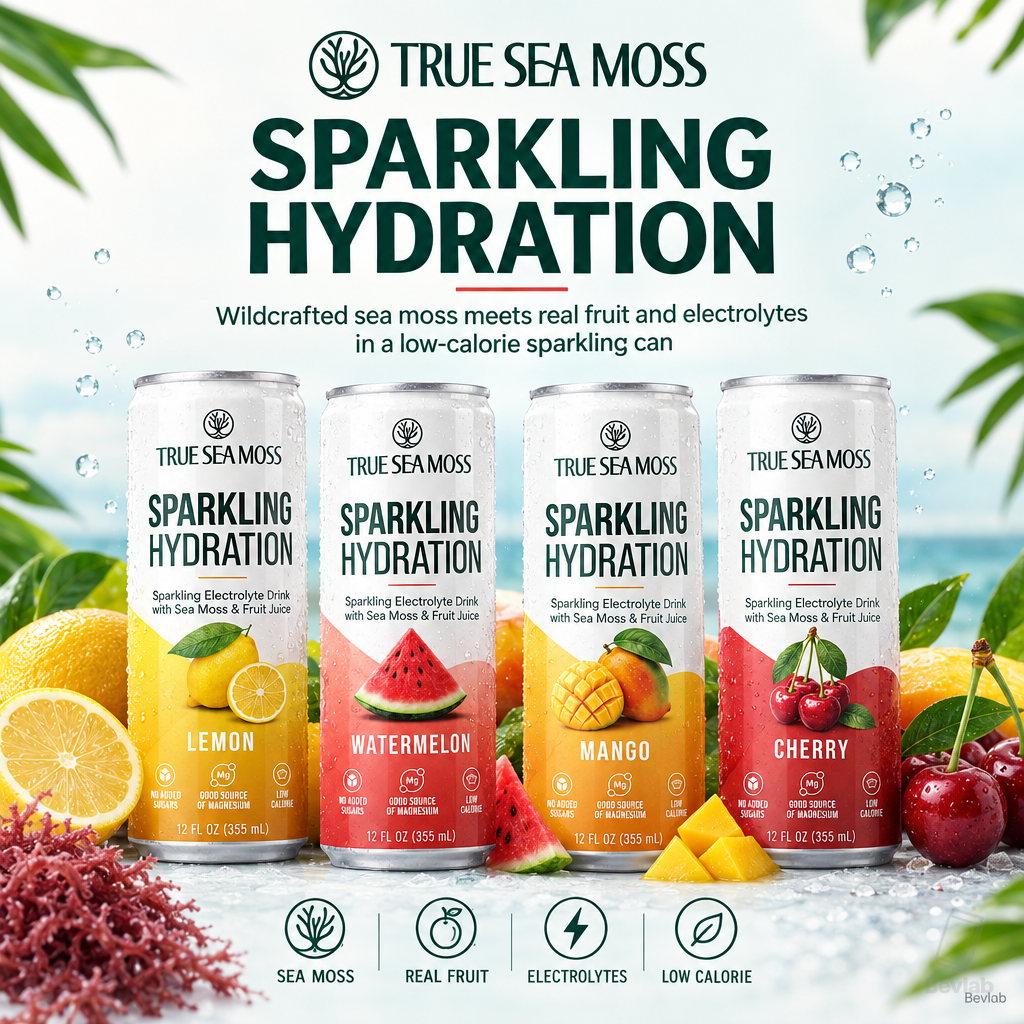
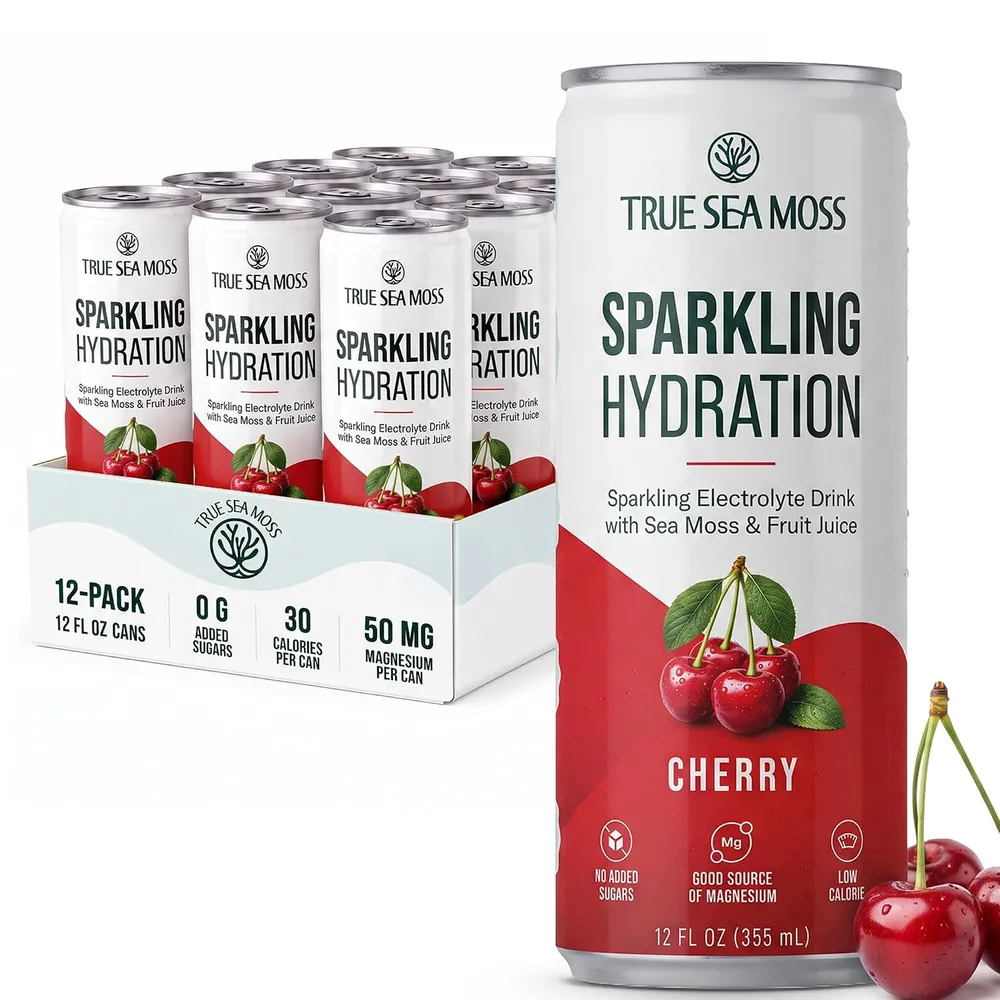
True Sea Moss's first canned drink pairs Irish moss with real fruit and sodium, potassium, and magnesium electrolytes across four flavors.
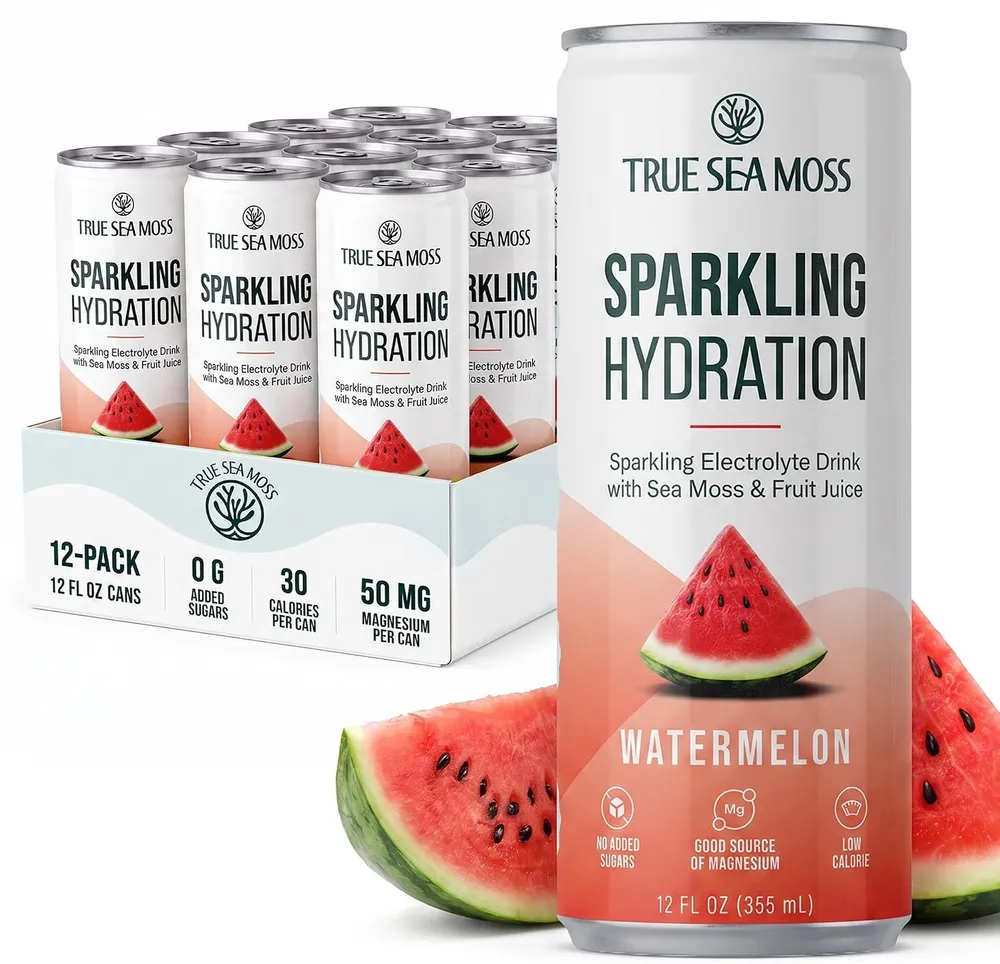
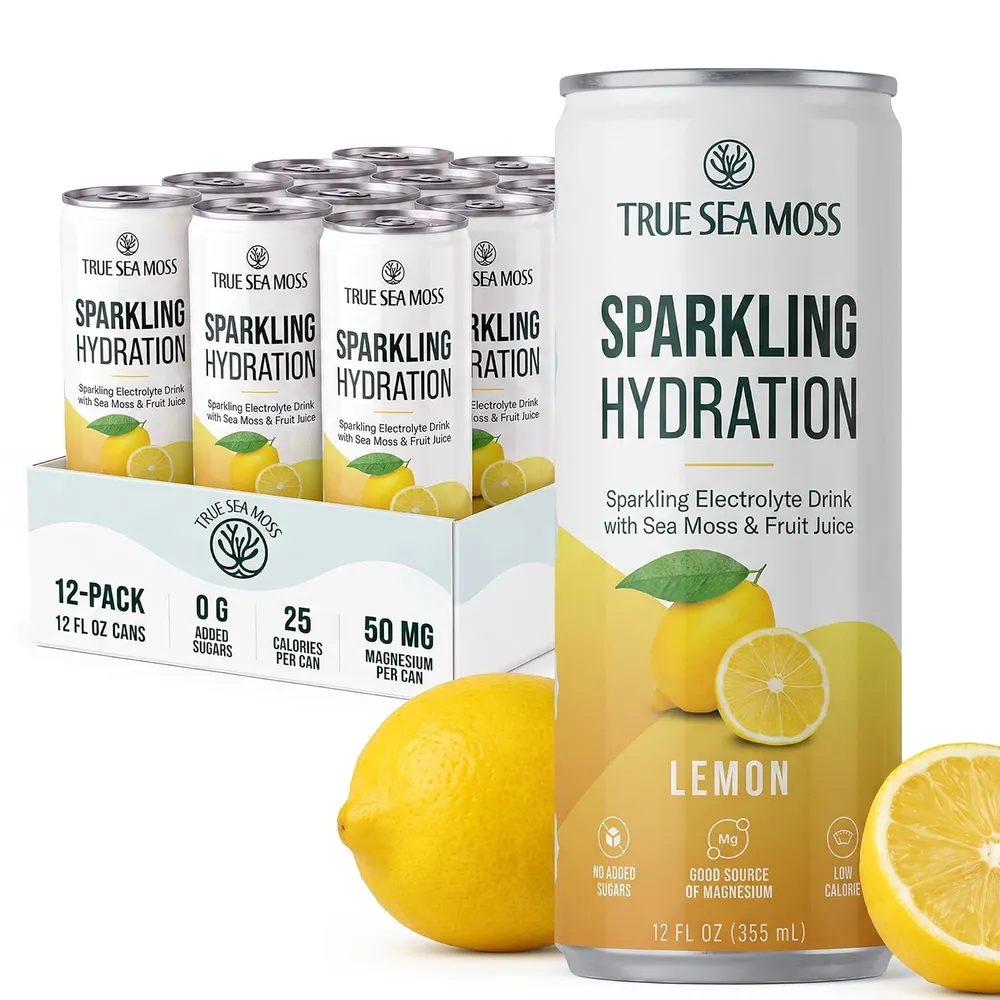
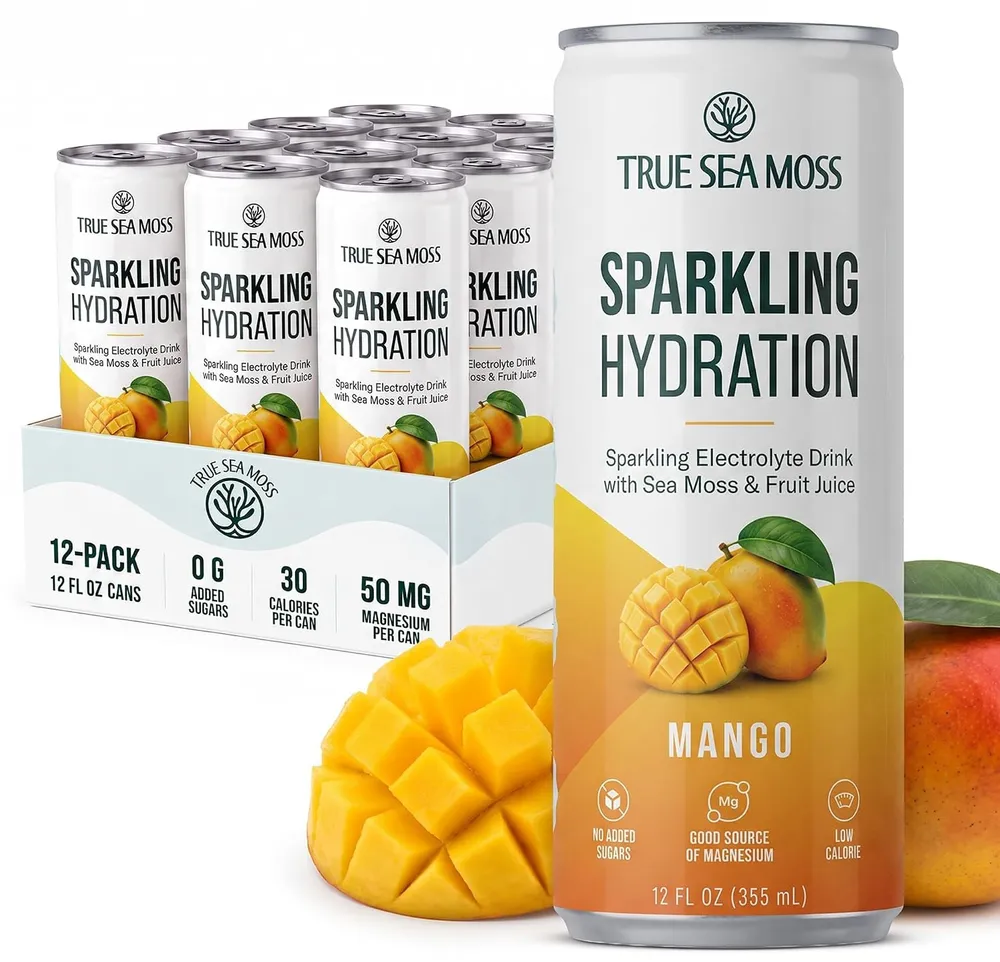
As an ingredient, sea moss has spent the last few years living in jars, sachets, and smoothie recipes. True Sea Moss Sparkling Hydration moves it into a can. True Sea Moss, a wellness brand built around wild-harvested sea moss gels and other mineral-focused products, launched the line on September 24, 2026, in four flavors: Lemon, Watermelon, Cherry, and Mango. It's the brand's first move into ready-to-drink beverages, and it lands the sea moss pitch in a format a lot more people are actually going to reach for.
The can leans on the same story that built True Sea Moss's gel business: minerals, real fruit, and a label without filler ingredients. According to the launch announcement, the four flavors pair sea moss with real fruit juice or puree, sodium, potassium, and magnesium electrolytes, and monk fruit, with 25–30 calories and 0g added sugar per 12oz can. The captured Amazon label panel supplies exact ingredient and Nutrition Facts details for one listing, so those figures below should not be assumed identical across every flavor. It's currently available on Amazon and TikTok Shop, with retail distribution expected in Q1 2027.
True Sea Moss Sparkling Hydration Nutrition Facts
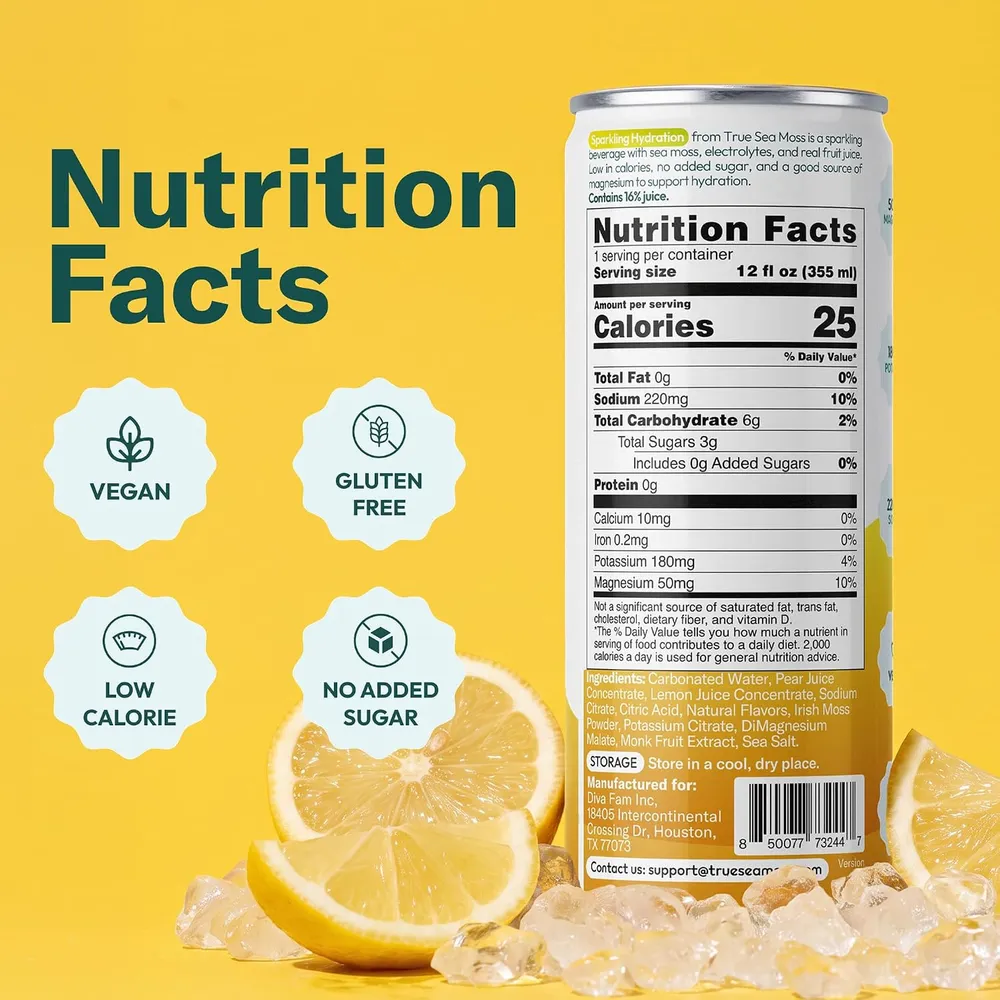
On the captured 12 fl oz (355mL) Amazon label panel:
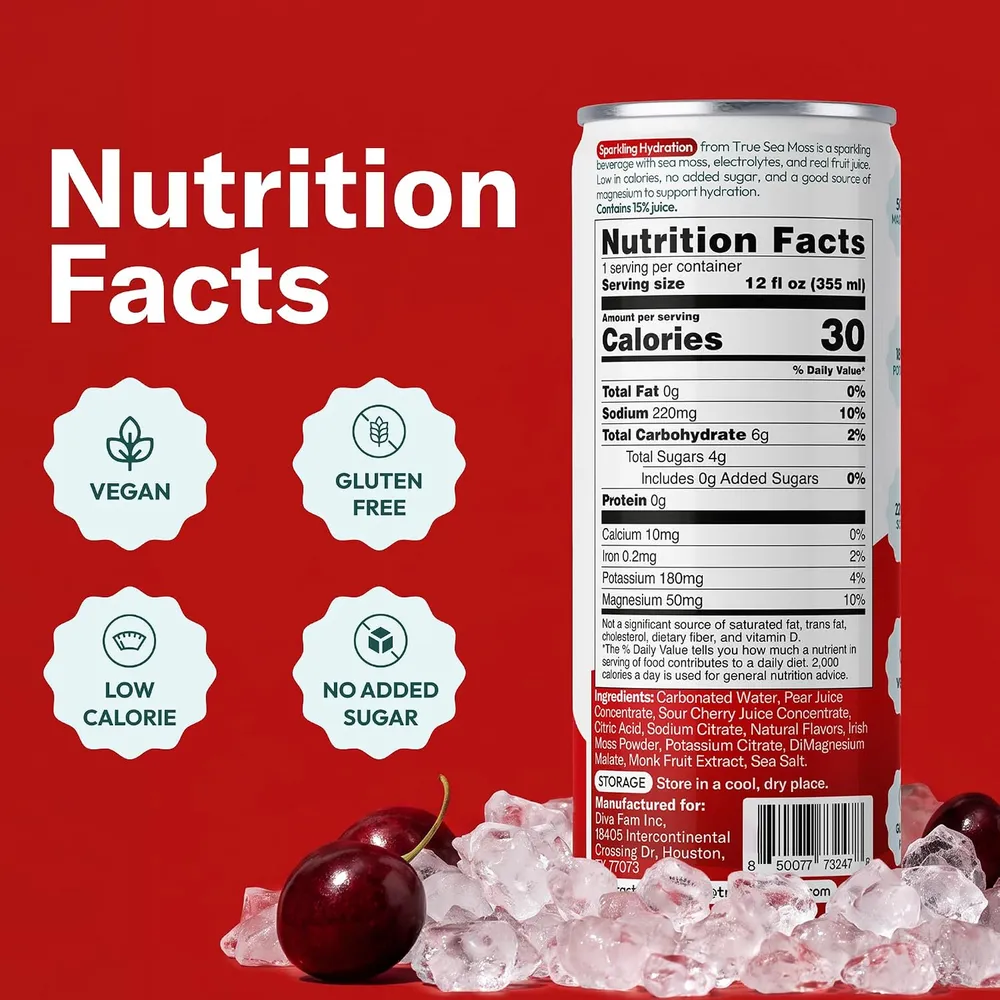
- Calories: 25
- Total Fat: 0g
- Sodium: 220mg (10%DV)
- Total Carbohydrate: 6g (2%DV)
- Total Sugars: 3g
- Added Sugars: 0g (0%DV)
- Protein: 0g
- Potassium: 180mg (4%DV)
- Magnesium: 50mg (10%DV)
The launch announcement gives line-wide ranges of 25–30 calories, 3–4g total sugar, 0g added sugar, and 410–450mg combined sodium/potassium/magnesium depending on flavor.
That's a light nutritional footprint by design. The whole pitch is a drink that reads closer to flavored sparkling water than a sports drink, but with enough sodium, potassium, and magnesium on the label to earn the "electrolyte" claim rather than just borrow the word.
True Sea Moss Sparkling Hydration Ingredients
The captured Amazon label panel lists carbonated water, pear juice concentrate, lemon juice concentrate, sodium citrate, citric acid, natural flavors, Irish moss powder, potassium citrate, dimagnesium malate, monk fruit extract, and sea salt. This should be read as the formula shown on that panel rather than a guarantee that every fruit input is identical across all four flavors. No proprietary blends, no artificial sweeteners. Here's what's doing the actual work.
-
Carbonated Water
Carbonated water is simply water with carbon dioxide dissolved into it under pressure, and it's the base of the can. Beyond the fizz, research on sparkling water has looked at whether carbonation itself does anything physiologically. A systematic review found no meaningful long-term blood pressure change from drinking carbonated water, beyond a brief spike in the first 20 minutes tied to swallowing reflexes rather than sodium content.[1] Separately, a small crossover study found that carbonated water consumed after exercise in the heat produced a modestly greater rise in blood pressure and cerebral blood flow than still water during early recovery, along with reduced sleepiness in the same window.[2] None of this makes carbonation a functional ingredient in the supplement sense. It's mostly there for mouthfeel and to make the can taste like a beverage instead of flavored tap water, but it's a more studied ingredient than people give it credit for.
-
Sodium Citrate
Sodium citrate shows up in sports nutrition at much higher doses than anything in this can, typically around 500mg per kilogram of body weight, taken hours before intense exercise to buffer acid buildup in muscle.[3] That's not what's happening here. At beverage-appropriate amounts, sodium citrate functions as a mild alkaline salt that helps balance pH and contributes to the can's total sodium and electrolyte profile alongside sea salt. It's also worth noting that sodium citrate has been shown to expand plasma volume more effectively than plain water when matched for sodium content, supporting fluid retention rather than just replacement.[4] In a hydration-positioned drink like this one, that's the relevant framing: a supporting electrolyte and buffering ingredient, not a dosed ergogenic aid.
-
Citric Acid
Citric acid is the tartness behind the Lemon can and a background acidifier in the others. It's naturally abundant in citrus, with fresh lemon juice running around 48 grams per liter, and it's also the world's most heavily produced organic acid, made industrially via fermentation with the mold Aspergillus niger.[5,6] Beyond flavor, citrate is a genuine intermediate in the tricarboxylic acid cycle, the pathway your cells use to generate usable energy from food.[7] That's a real biochemical role, but it doesn't mean a beverage-level dose of citric acid measurably speeds up your metabolism. Here, its job is acidity and pH stability, plain and simple.
-
Natural Flavors
Natural flavors is a regulatory category, not a specific compound. Under FDA rules, anything derived from a fruit, vegetable, spice, or similar natural source and used primarily for flavor qualifies, regardless of how processed or concentrated it is.[8] In this can, natural flavors work alongside actual pear and lemon juice concentrate to round out each flavor's fruit character. Consumer research on labeling shows people generally rate products higher on "naturalness" when a natural flavor is paired with real fruit or juice rather than presented alone, which is likely part of why True Sea Moss leans on both juice concentrate and natural flavors together rather than one or the other.[9]
-
Irish Moss (Chondrus crispus)
This is the ingredient the whole brand is built around. Irish moss powder comes from Chondrus crispus, a red seaweed rich in minerals, sulfated carbohydrates, and protein, though its exact composition varies a lot by source, species authentication, and processing method.[10] The can doesn't disclose how much Irish moss it contains, so it's worth being precise about what the evidence actually supports. The strongest human data point is a small 30-day trial where 500mg per day of Chondrus crispus showed favorable within-group changes in exercise tolerance and fatigue, but the study's own authors note the key between-group comparisons didn't reach statistical significance.[11] Most of the rest of the evidence is preclinical: animal studies showing prebiotic shifts in gut bacteria at 0.5 to 2.5% of the diet,[12] and lab work on anti-inflammatory and antiviral activity from concentrated extracts rather than the whole seaweed you'd get in a can.[13] Iodine is the practical thing to watch here. Seaweed-derived iodine is well absorbed in humans,[14] and one analysis of commercial red seaweed found Irish moss averaging under 4mg of iodine per kilogram dry weight, a level that stayed within modeled safety thresholds even at several grams of daily intake.[15] Because the brand does not disclose the amount of Irish moss powder per can, the iodine contribution from this drink cannot be calculated from the available label materials.
-
Monk Fruit Extract
Monk fruit extract helps keep the captured-panel example at 25 calories with zero added sugar. It comes from Siraitia grosvenorii, a fruit whose sweetness comes from compounds called mogrosides that taste roughly 250 to 400 times sweeter than sugar but pass through the body largely unmetabolized as sugar.[16] It holds GRAS status in the U.S. across multiple FDA notices and has tested negative for genotoxicity in standard lab assays.[17] Most of the research on monk fruit's metabolic effects, like improved glucose handling or lipid markers, comes from animal studies rather than large human trials, so it's fair to call this a well-established, safe sweetener rather than a proven metabolic booster.[17] For a can chasing a "no added sugar" badge without leaning on stevia's bitterness or artificial sweeteners, it's a sound choice.
-
Salt
Sea salt supplies part of the can's sodium alongside sodium citrate, and it's doing double duty as a flavor tool. Salt is well documented to suppress perceived bitterness in food and beverage systems, which helps explain why a small amount shows up even in a fruit-forward, low-sugar drink like this one.[18] On the hydration side, sodium is the primary driver of how well your body holds onto fluid, and dietary research generally supports a moderate sodium intake range rather than extreme restriction for most healthy adults.[19] On the captured panel, 220mg sodium is nowhere near the high end of that range, and it's a sensible amount for a beverage marketed on everyday hydration rather than heavy sweat replacement.
-
Vitamins and Minerals
-
Potassium (as Potassium Citrate) - 180mg (4%DV)
Potassium is one of the more consistently underconsumed minerals in the average American diet, with most people getting roughly half the intake target public health bodies recommend.[20] The sodium-to-potassium ratio in the diet, not just sodium alone, is associated with blood pressure and cardiovascular outcomes across multiple large population studies.[21,22] At 180mg, this can isn't going to meaningfully close that gap on its own, but it's a reasonable contribution alongside the rest of a normal diet, and it's the right direction for a drink positioned around mineral support.
-
Magnesium (as DiMagnesium Malate) - 50mg (10%DV)
Magnesium is a cofactor in over 300 enzymatic reactions in the body, involved in everything from energy metabolism to nerve function.[23] The form here, dimagnesium malate, has specifically been tested for gastrointestinal tolerability at doses of 300 to 600mg per day, well above what's in this can, with no meaningful difference in bowel habits compared to other common magnesium salts.[24] At 50mg, or 10% of the daily value, this can is delivering a supportive rather than a therapeutic dose, which tracks with a beverage that's meant to be part of a daily routine rather than a standalone magnesium supplement.
-
-
Other Ingredients
- Pear Juice Concentrate - a natural sweetening and body-building base for the fruit flavor profile, particularly in Lemon and Watermelon. The label doesn't disclose the specific amount used.
- Lemon Juice Concentrate - provides real citrus character and natural acidity that works alongside citric acid. The label doesn't disclose the specific amount used.
Four Flavors, One Shared Hydration Concept
- Cherry (12 Cans: $44.99)
- Lemon (12 Cans: $44.99)
- Mango (12 Cans: $44.99)
- Watermelon (12 Cans: $44.99)
Lemon, Watermelon, and Cherry use real fruit juice, while Mango uses fruit puree, according to the launch announcement. The line uses the same general sodium-potassium-magnesium electrolyte system, but combined electrolytes vary by flavor from 410 to 450mg, so flavor is not purely a taste difference.
Who Should Actually Reach for This
- Sea moss loyalists who want an easier format: if you already take True Sea Moss gels or electrolyte sachets, this is the same mineral-and-fruit pitch without the spoon.
- Low-sugar sparkling water drinkers looking for more: at 25–30 calories and zero added sugar, the line slots in next to flavored sparkling water but adds a real electrolyte profile most seltzers skip entirely.
A Reasonable First Can, Light on Specifics
True Sea Moss built its reputation on transparency and sourcing, and this can mostly holds up that promise with a short, recognizable ingredient list and no proprietary blends. The one gap is dosing. The brand discloses its electrolyte totals clearly but not how much Irish moss actually makes it into each can, which matters given how thin the human research on Chondrus crispus still is. For a low-calorie, fruit-forward hydration option, it's a solid first swing. For anyone hoping the sea moss halo comes with a meaningful, disclosed dose, there's still room for the brand to say more.
Follow @BevlabMedia on TikTok and Instagram for more launch coverage as True Sea Moss expands to retail in 2027.
References
- Santana-Ramos, Héctor, et al. "Systematic Review of the Effects of Sparkling Water Consumption on Blood Pressure." Current nutrition reports, 2024. https://doi.org/10.1007/s13668-024-00562-8
- Kajiki, Masanobu, et al. "Ingesting carbonated water post-exercise in the heat transiently ameliorates hypotension and enhances mood state." Experimental physiology, 2024. https://doi.org/10.1113/EP091925
- Urwin, Charles S, et al. "Factors Influencing Blood Alkalosis and Other Physiological Responses, Gastrointestinal Symptoms, and Exercise Performance Following Sodium Citrate Supplementation: A Review." International journal of sport nutrition and exercise metabolism, 2021. https://doi.org/10.1123/ijsnem.2020-0192
- Siegler, Jason C, et al. "The Hyperhydration Potential of Sodium Bicarbonate and Sodium Citrate." International journal of sport nutrition and exercise metabolism, 2022. https://doi.org/10.1123/ijsnem.2021-0179
- Penniston, Kristina L, et al. "Quantitative assessment of citric acid in lemon juice, lime juice, and commercially-available fruit juice products." Journal of endourology, 2008. https://doi.org/10.1089/end.2007.0304
- Książek, Ewelina. "Citric Acid: Properties, Microbial Production, and Applications in Industries." Molecules (Basel, Switzerland), 2023. https://doi.org/10.3390/molecules29010022
- Vesnina, Anna, et al. "Citric Acid Cycle Genes and Nutrigenetics." International journal of molecular sciences, 2026. https://doi.org/10.3390/ijms27052360
- Goodman, Matthew J. "The “Natural” vs. “Natural Flavors” Conflict in Food Labeling: A Regulatory Viewpoint." Food and drug law journal, 2017. https://pubmed.ncbi.nlm.nih.gov/29140655/
- Murley, Tyler, et al. "The Influence of Colorants, Flavorants and Product Identity on Perceptions of Naturalness." Foods (Basel, Switzerland), 2019. https://doi.org/10.3390/foods8080317
- Čmiková, Natália, et al. "Seaweed Nutritional Value and Bioactive Properties: Insights from Ascophyllum nodosum, Palmaria palmata, and Chondrus crispus." Life (Basel, Switzerland), 2024. https://doi.org/10.3390/life14111522
- Luisa, Amábile Wolpe Simas; Rodrigo Granzoti; Suellen Cristina Becher Nunes; Emanuel Muller; Edvaldo Gomes Bueno Junior. "Effects of Chondrus Crispus Marine Algae Supplementation on Vo2Max and Aerobic Performance in Healthy Adults." Annals of Case Reports, 2026. https://doi.org/10.29011/2574-7754.102637
- Liu, Jinghua, et al. "Prebiotic effects of diet supplemented with the cultivated red seaweed Chondrus crispus or with fructo-oligo-saccharide on host immunity, colonic microbiota and gut microbial metabolites." BMC complementary and alternative medicine, 2015. https://doi.org/10.1186/s12906-015-0802-5
- Robertson, Ruairi C, et al. "The Anti-Inflammatory Effect of Algae-Derived Lipid Extracts on Lipopolysaccharide (LPS)-Stimulated Human THP-1 Macrophages." Marine drugs, 2015. https://doi.org/10.3390/md13085402
- Andersen, Stig, et al. "Iodine in Edible Seaweed, Its Absorption, Dietary Use, and Relation to Iodine Nutrition in Arctic People." Journal of medicinal food, 2019. https://doi.org/10.1089/jmf.2018.0187
- Darias-Rosales, Javier, et al. "Risk assessment of iodine intake from the consumption of red seaweeds (Palmaria palmata and Chondrus crispus)." Environmental science and pollution research international, 2020. https://doi.org/10.1007/s11356-020-10478-9
- Yeung, Andy Wai Kan. "Bibliometric analysis on the literature of monk fruit extract and mogrosides as sweeteners." Frontiers in nutrition, 2023. https://doi.org/10.3389/fnut.2023.1253255
- EFSA, Panel on Food Additives and Flavourings (FAF), et al. "Safety of use of Monk fruit extract as a food additive in different food categories." EFSA journal. European Food Safety Authority, 2019. https://doi.org/10.2903/j.efsa.2019.5921
- Breslin, P A, et al. "Salt enhances flavour by suppressing bitterness." Nature, 1997. https://doi.org/10.1038/42388
- O'Donnell, Martin, et al. "Sodium intake and cardiovascular health." Circulation research, 2015. https://doi.org/10.1161/CIRCRESAHA.116.303771
- Weaver, Connie M. "Potassium and health." Advances in nutrition (Bethesda, Md.), 2013. https://doi.org/10.3945/an.112.003533
- He, Feng J, et al. "Beneficial effects of potassium on human health." Physiologia plantarum, 2008. https://doi.org/10.1111/j.1399-3054.2007.01033.x
- Adrogué, Horacio J, et al. "Sodium and potassium in the pathogenesis of hypertension." The New England journal of medicine, 2007. https://doi.org/10.1056/NEJMra064486
- Fatima, Ghizal, et al. "Magnesium Matters A Comprehensive Review Of Its Vital Role In Health And Diseases." Cureus, 2024. https://doi.org/10.7759/cureus.71392
- Ashmead, S. "A Randomized Double Blind Three Cohort Crossover Study Assessing Gastrointestinal Tolerability Of Magnesium Sources In Healthy Adults." The Toxicologist, 2016. https://blog.priceplow.com/wp-content/uploads/ashmead2016-a-randomized-double-blind-three-cohort-crossover-study-assessing-gastrointestinal-tolerability-of-magnesium-sources-in-healthy-adults.pdf