Oath Nutrition Energy + Protein Drink
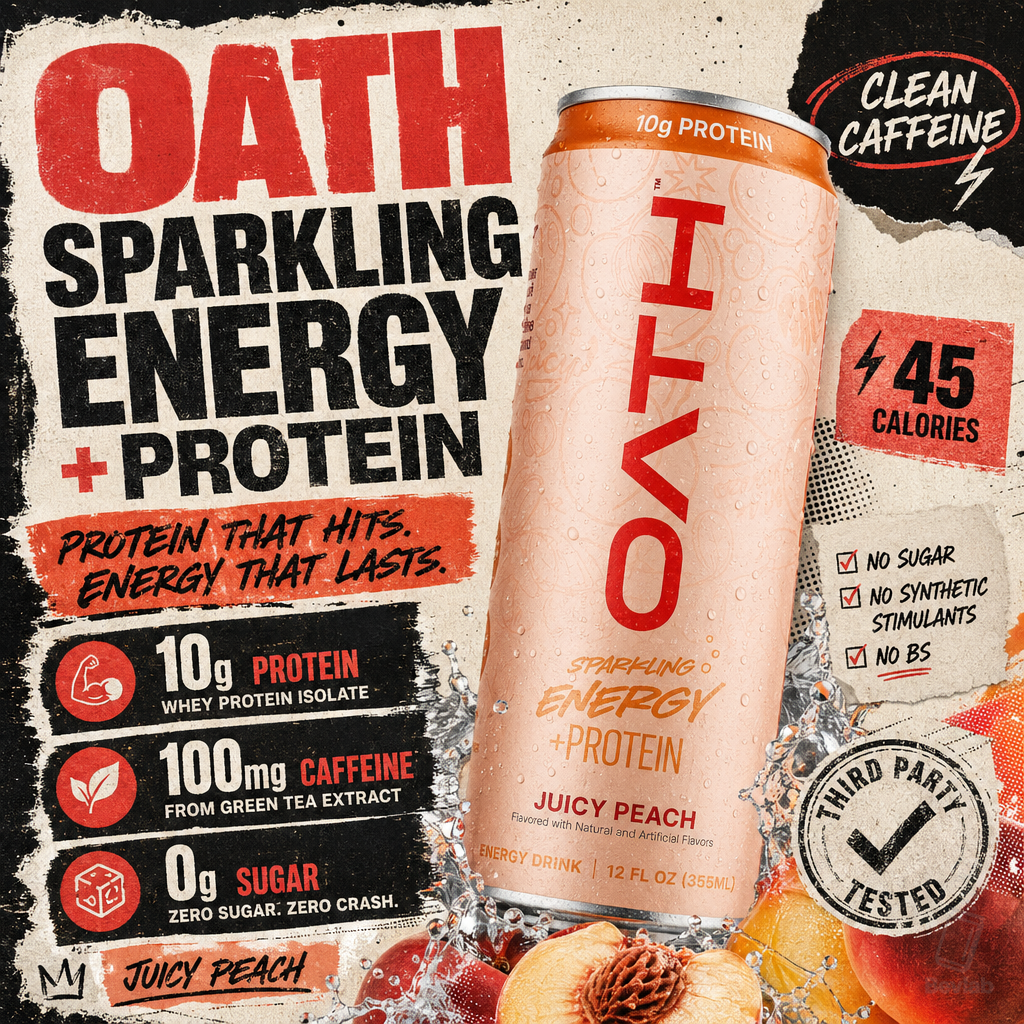
Oath Nutrition's Sparkling Energy + Protein packs 10g whey isolate and 100mg green tea caffeine into a zero-sugar RTD. Here's what's inside.
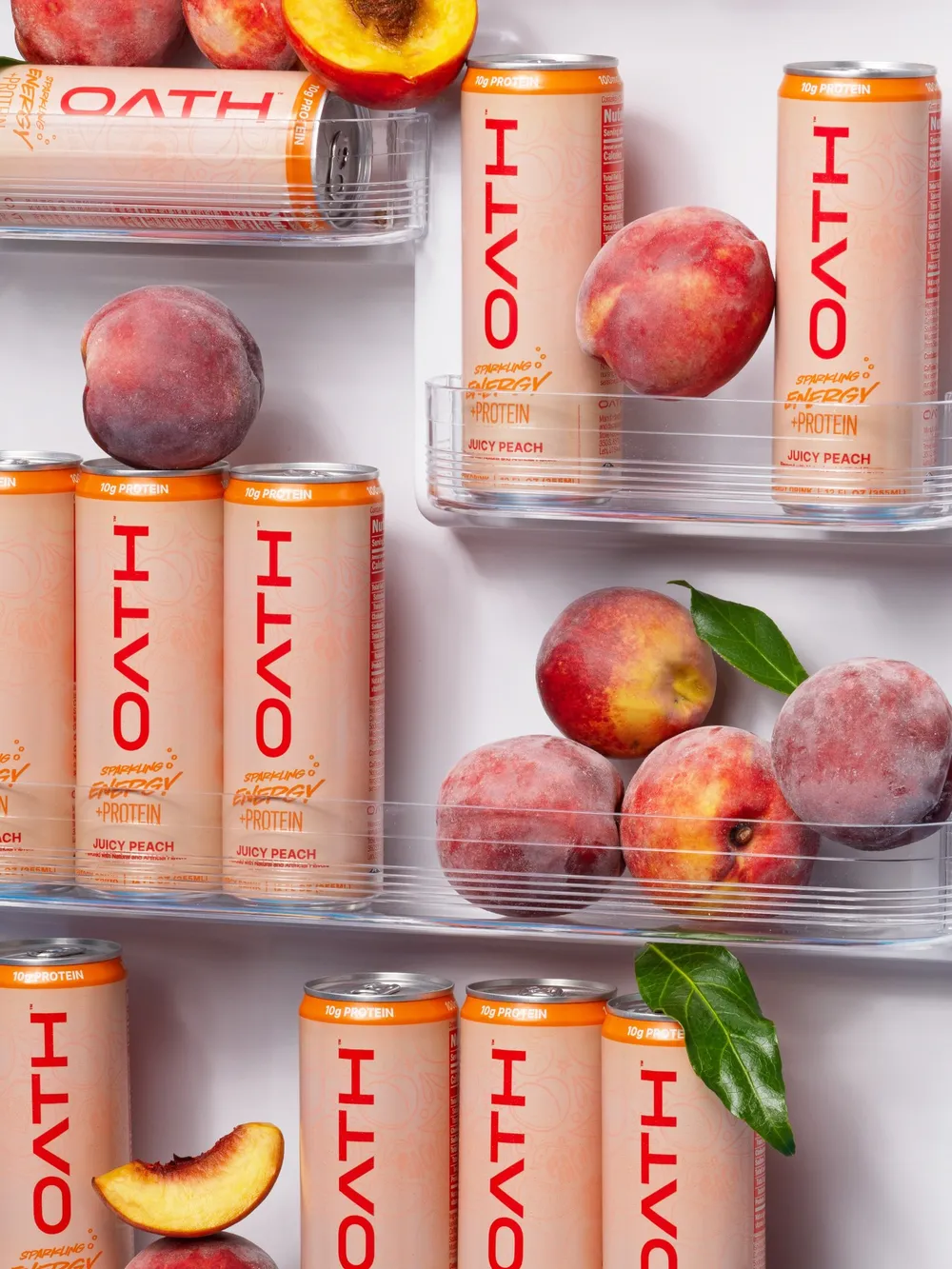
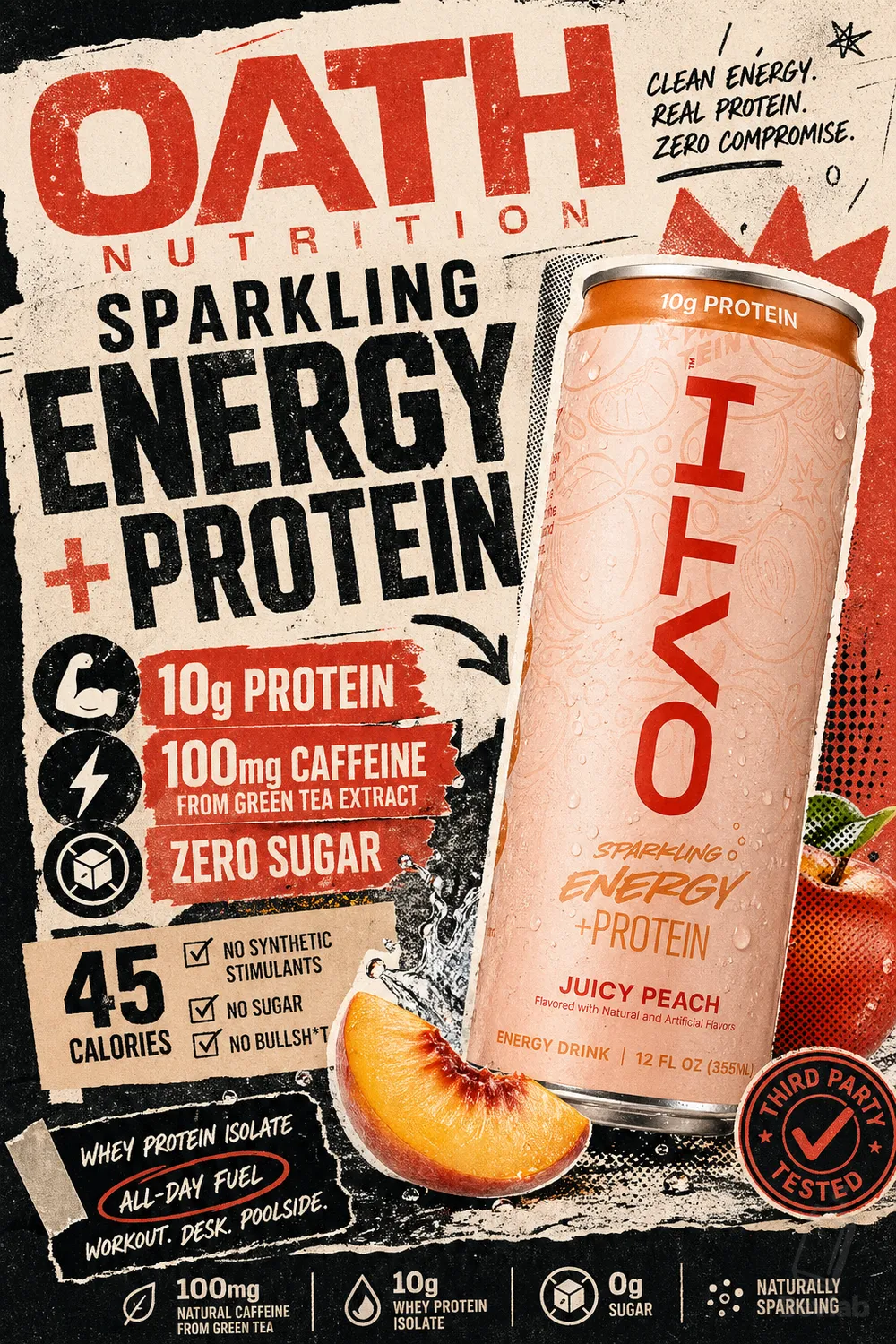
The protein energy drink category is heating up fast. Oath Nutrition's Sparkling Energy + Protein is a 12 fl oz RTD that leads with 10g of whey protein isolate and 100mg of caffeine sourced from green tea extract -- no synthetic stimulants, no sugar, 45 calories. The brand positions it as an all-day drink you can crack before a workout, at your desk, or poolside, which is a smart choice to widen the use occasion beyond the gym bag. If you've been eyeing the Weld Protein Energy Drink but want something with a lighter caffeine footprint (Weld sits at 200mg), Oath is worth a look.
The formula is lean and purposeful. Oath built it around a clear whey protein isolate base -- the same ultrafiltered WPI used in their powder lineup -- sweetened with sucralose and Reb M, naturally preserved with mushroom extract, and acidified with malic and citric acid for bright, sparkling tartness. Third-party tested, one-year shelf life, no refrigeration required before opening. It's a tight package, and it's out first at Target.
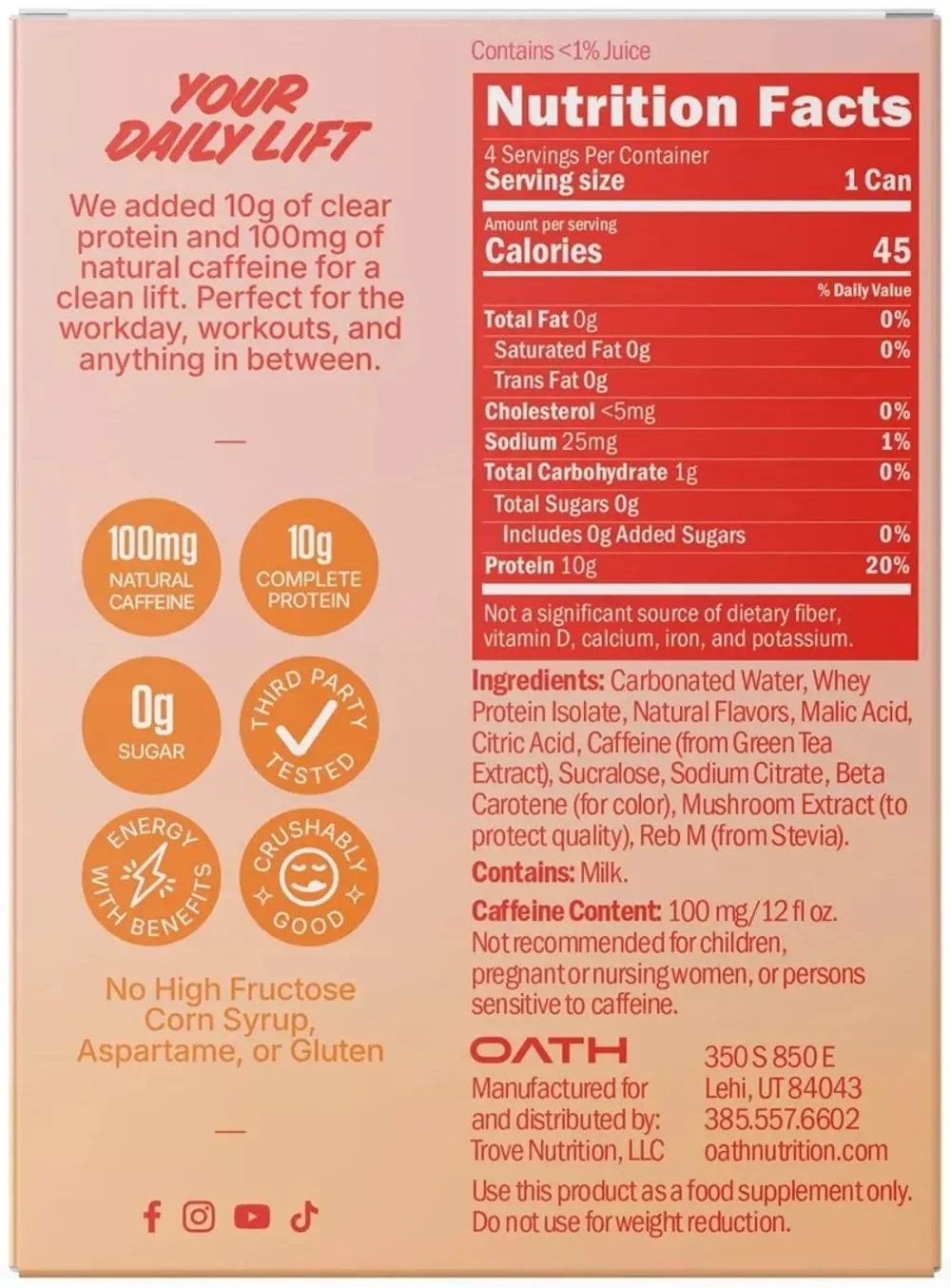
Oath Sparkling Energy + Protein Nutrition Facts
- Calories: 45
- Total Fat: 0g
- Cholesterol: <5mg
- Sodium: 25mg (1% DV)
- Total Carbohydrate: 1g
- Total Sugars: 0g
- Added Sugars: 0g
- Total Sugars: 0g
- Protein: 10g (20% DV)
Oath Sparkling Energy + Protein Ingredients
Each 12 fl oz can provides the following:
-
Whey Protein Isolate - 10g
Whey protein isolate is the headliner here. WPI is a highly purified form of whey with protein content of 90% or more by dry weight, meaning minimal fat and almost no lactose. What makes it stand out from slower proteins is speed: it digests quickly and floods your bloodstream with amino acids, especially leucine, the amino acid most responsible for triggering muscle protein synthesis.[1] That fast leucine spike activates the main pathway driving muscle repair and growth after training.[2]
At 10g per can, note that you're not hitting a full clinical dose for maximizing muscle protein synthesis on its own -- research in trained young men puts that threshold around 20g post-exercise.[3] But 10g is a meaningful contribution, especially as a between-meal option or stacked with other protein sources across the day. We'll take 10g when most energy drinks have 0!
WPI also scores above 1.0 on the DIAAS protein quality metric, meaning a single serving covers more than your full requirement for the most limiting essential amino acid.[4] That puts it a tier above collagen, which Oath's FAQ calls out directly -- collagen is missing several essential amino acids entirely.[1]
-
Caffeine (from Green Tea Extract) - 100mg
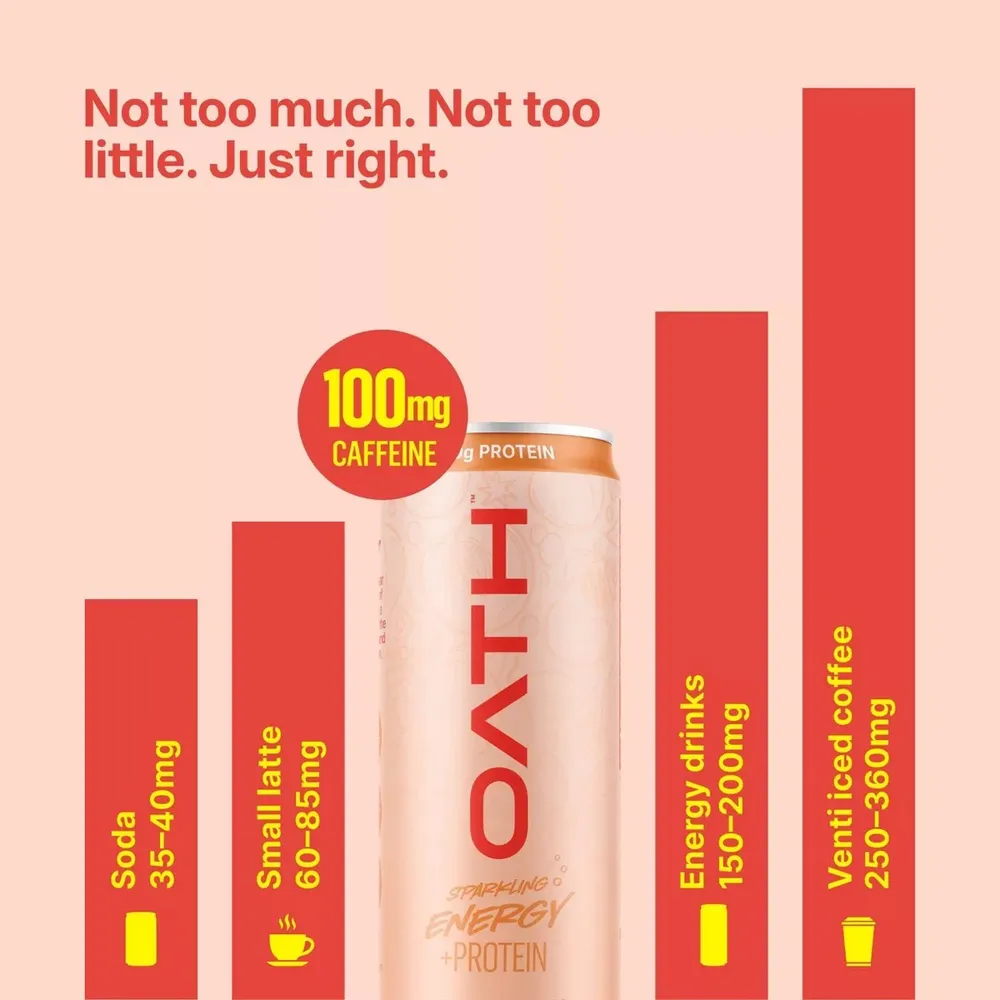
Oath sources its caffeine entirely from green tea extract, which means you're getting caffeine alongside a background of catechins, the polyphenolic compounds behind green tea's health reputation. Caffeine blocks the signal in your brain that makes you feel tired, increases alertness, and supports performance across a range of physical and cognitive tasks. At 100mg, this is a moderate, approachable dose, roughly equivalent to a strong cup of coffee. It's not trying to floor you. It's designed for sustained, clean energy across the day, which matches Oath's "pre-workout or poolside" positioning.
Green tea extraction also means you get trace catechins like EGCG. Green tea catechins work partly by slowing the breakdown of norepinephrine, which can support thermogenesis and fat burning on top of the alertness boost from caffeine itself.[5] A meta-analysis found catechin-caffeine combinations increased fat oxidation by roughly 16% compared to placebo.[5] These effects are modest in the context of a single can, but the mechanism is real.
-
Other Ingredients
-
Carbonated Water -- The base of the drink and the source of its sparkling texture. CO2 dissolved under pressure creates the effervescence and contributes to the bright, crisp mouthfeel Oath highlights in their product copy.
-
Natural Flavors -- Used to build the Juicy Peach and Wild Berry flavor profiles. Natural flavors are derived from botanical or animal sources and contribute taste and aroma without affecting the nutritional profile.
-
Malic Acid -- A naturally occurring organic acid found in apples and grapes. In this formula it serves as an acidulant, contributing the tart, bright flavor character that makes sparkling beverages feel refreshing. Malic acid is also an intermediate in aerobic energy production.[6]
-
Citric Acid -- A food-grade acidulant that sharpens flavor, stabilizes pH, and extends shelf life by binding pro-oxidant metal ions. Found naturally in citrus fruits at high concentrations.[7]
-
Sucralose -- A zero-calorie sweetener roughly 600 times sweeter than sugar, approved globally as a general-use food additive. Used here alongside Reb M to hit the sweetness target without adding sugar or calories.[8]
-
Sodium Citrate -- The alkaline salt of citric acid. In beverages it primarily acts as a buffering agent to balance pH and keep the drink from tasting overly sharp. It also contributes a small amount of sodium to the formula.
-
Mushroom Extract (to protect quality) -- A natural preservative derived from edible fungi. The most beverage-specific research in this space focuses on glycolipids from Dacryopinax spathularia, which hold FDA GRAS status for use in non-alcoholic beverages. These glycolipid-type extracts function as natural antimicrobials by disrupting microbial cell membranes, inhibiting yeasts and lactic acid bacteria that would otherwise cause spoilage.[9] At the concentrations used in beverages, it's a clean-label alternative to sodium benzoate and potassium sorbate, which fits Oath's ingredient philosophy.
-
Reb M (from Stevia) -- Short for Rebaudioside M, a next-generation steviol glycoside with a sensory profile significantly closer to sugar than older stevia compounds. Reb M's extensive glycosylation is what blocks the bitter taste receptor engagement that makes original stevia taste medicinal.[10] In a consumer panel study, Reb M's sweetness was statistically indistinguishable from a sucrose control, while Reb A (the older version) was rated significantly more bitter.[11] Pairing it with sucralose rounds out the sweetness profile cleanly.
Flavors Available
- Juicy Peach (Not in stock at any PricePlow partner stores)
- Summer Citrus (Not in stock at any PricePlow partner stores)
- Wild Berry (Not in stock at any PricePlow partner stores)
Who It's For
- Light stimulant users: If 200mg-plus energy drinks leave you wired, 100mg from a natural source is a much more manageable option, especially if you're sensitive to high-caffeine drinks or tend to crack one later in the day.
- Protein gap fillers: Not everyone wants to shake up a powder at 2pm. If you're falling short on daily protein and want something you can just crack open, 10g of WPI in a sparkling format is a practical solution.
A Solid RTD, When 10g Beats 0g
Oath Nutrition built something genuinely useful here. The protein is real -- complete, bioavailable WPI, not collagen or a partial blend. The caffeine is moderate and honestly sourced. The sucralose and Reb M pairing delivers clean sweetness without the aftertaste that plagued earlier stevia-sweetened drinks. For 45 calories a can, it works well as an afternoon pick-me-up or a casual pre-workout option. If you want more stimulant firepower, check out Weld's 200mg version. If you're in the market for something approachable you can drink any time of day, Oath delivers.
Follow @BevlabMedia on TikTok and Instagram for more RTD breakdowns as they drop.
References
- van, Vliet Stephan, et al. "The Skeletal Muscle Anabolic Response to Plant- versus Animal-Based Protein Consumption." The Journal of nutrition, 2015. https://doi.org/10.3945/jn.114.204305
- Farnfield, Michelle M, et al. "Whey protein ingestion activates mTOR-dependent signalling after resistance exercise in young men: a double-blinded randomized controlled trial." Nutrients, 2009. https://doi.org/10.3390/nu1020263
- Witard, Oliver C, et al. "Myofibrillar muscle protein synthesis rates subsequent to a meal in response to increasing doses of whey protein at rest and after resistance exercise." The American journal of clinical nutrition, 2014. https://doi.org/10.3945/ajcn.112.055517
- Wolfe, Robert R, et al. "Protein quality as determined by the Digestible Indispensable Amino Acid Score: evaluation of factors underlying the calculation." Nutrition reviews, 2016. https://doi.org/10.1093/nutrit/nuw022
- Hursel, R, et al. "Hursel 2011 The Effects Of Catechin Rich Teas And Caffeine On Energy Expenditure And Fat Oxidation A." Obesity reviews : an official journal of the International Association for the Study of Obesity, 2011. https://doi.org/10.1111/j.1467-789X.2011.00862.x
- Ward, Dean. "Krebs Cycle Intermediates." NutritionReview, 2013. https://web.archive.org/web/20250223214057/http://nutritionreview.org/2013/04/krebs-cycle-intermediates/
- Penniston, Kristina L, et al. "Quantitative assessment of citric acid in lemon juice, lime juice, and commercially-available fruit juice products." Journal of endourology, 2008. https://doi.org/10.1089/end.2007.0304
- Wilk, Klara, et al. "The Effect of Artificial Sweeteners Use on Sweet Taste Perception and Weight Loss Efficacy: A Review." Nutrients, 2022. https://doi.org/10.3390/nu14061261
- Galasong, Yupawadee, et al. "Natural glycolipids inhibits certain yeasts and lactic acid bacteria pertinent to the spoilage of shelf stable beverages." Food Control, 2023. https://doi.org/10.1016/j.foodcont.2022.109544
- Jiang, Liangzhen, et al. "A Comprehensive Review on Steviol Glycosides: Sources, Properties, Bioactivities, Sensory-Functional Enhancement and Bioproduction Strategies." Plants (Basel, Switzerland), 2026. https://doi.org/10.3390/plants15020324
- Tao, Ran, et al. "Consumer-Based Sensory Characterization of Steviol Glycosides (Rebaudioside A, D, and M)." Foods (Basel, Switzerland), 2020. https://doi.org/10.3390/foods9081026