Recess Mood: A Calm Can With a Brain-Magnesium Twist
Magtein on the label, a wind-down pitch in the can
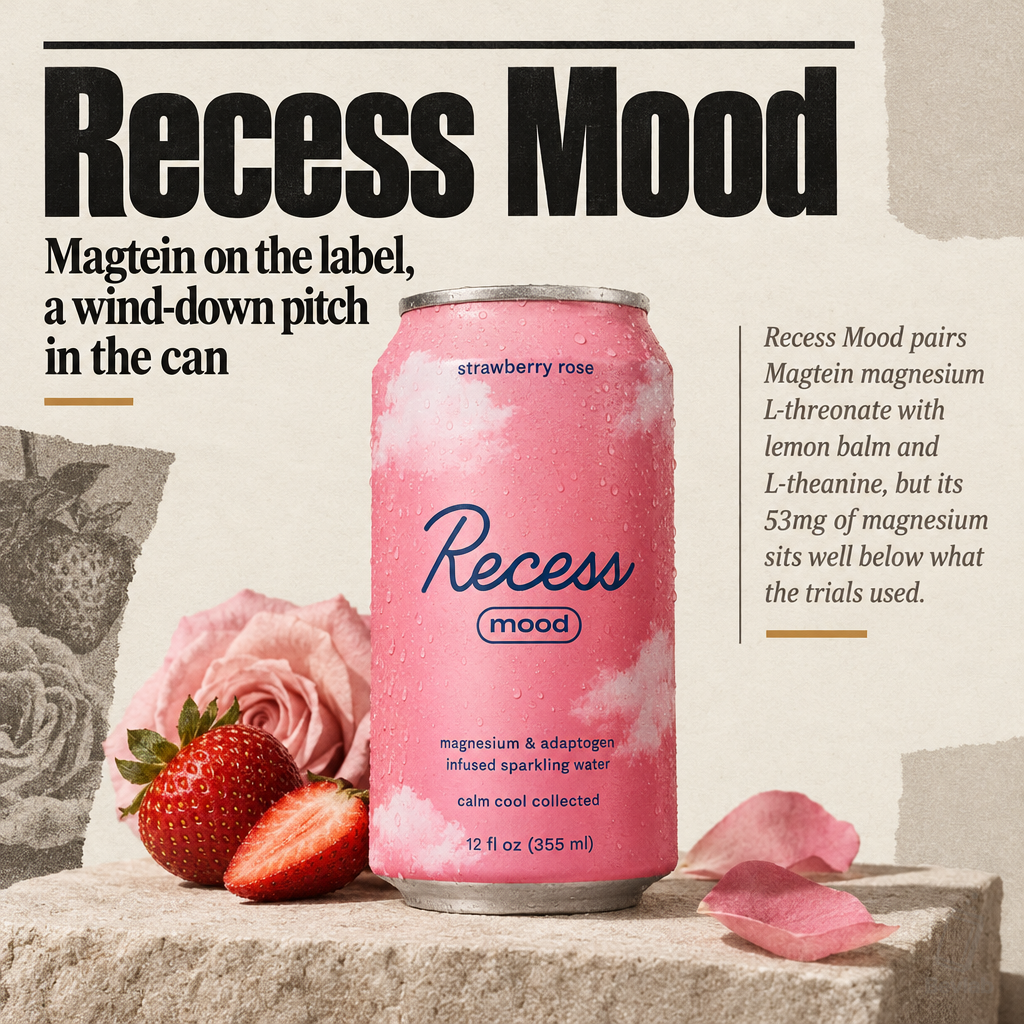
Recess Mood pairs Magtein magnesium L-threonate with lemon balm and L-theanine, and its 53mg of magnesium (15% DV) is a strong dose for a sparkling water.
Recess Mood is the magnesium side of Recess, the New York beverage brand Ben Witte started with co-founders Justin Hauser and David Hess around one idea: helping people feel "calm cool collected" in a world that rarely lets them. Recess first made its name with hemp and adaptogen sparkling water. Mood skips the hemp and builds around a magnesium blend featuring Magtein, the branded magnesium L-threonate that's become the supplement world's go-to "brain magnesium," then adds lemon balm and L-theanine. The goal is a sparkling water that helps you unwind without leaning on alcohol or sedatives.
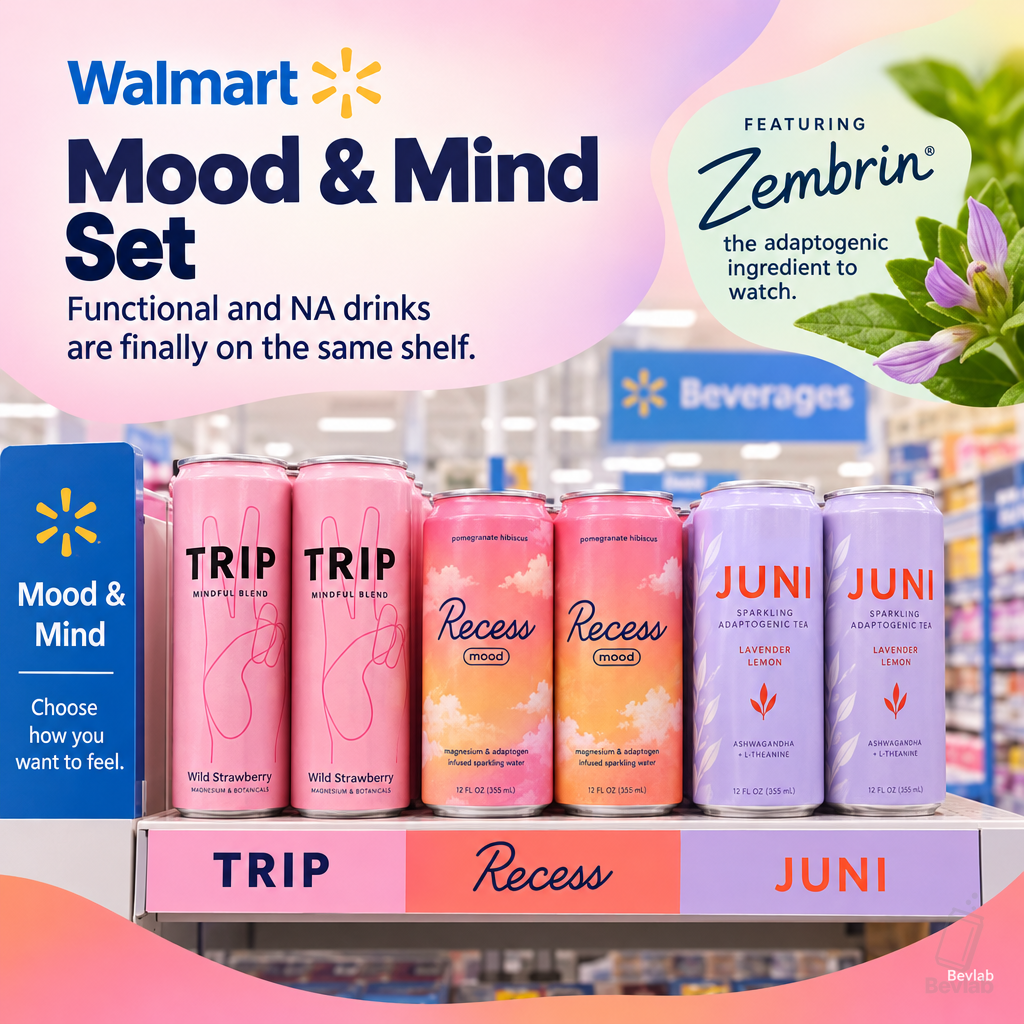
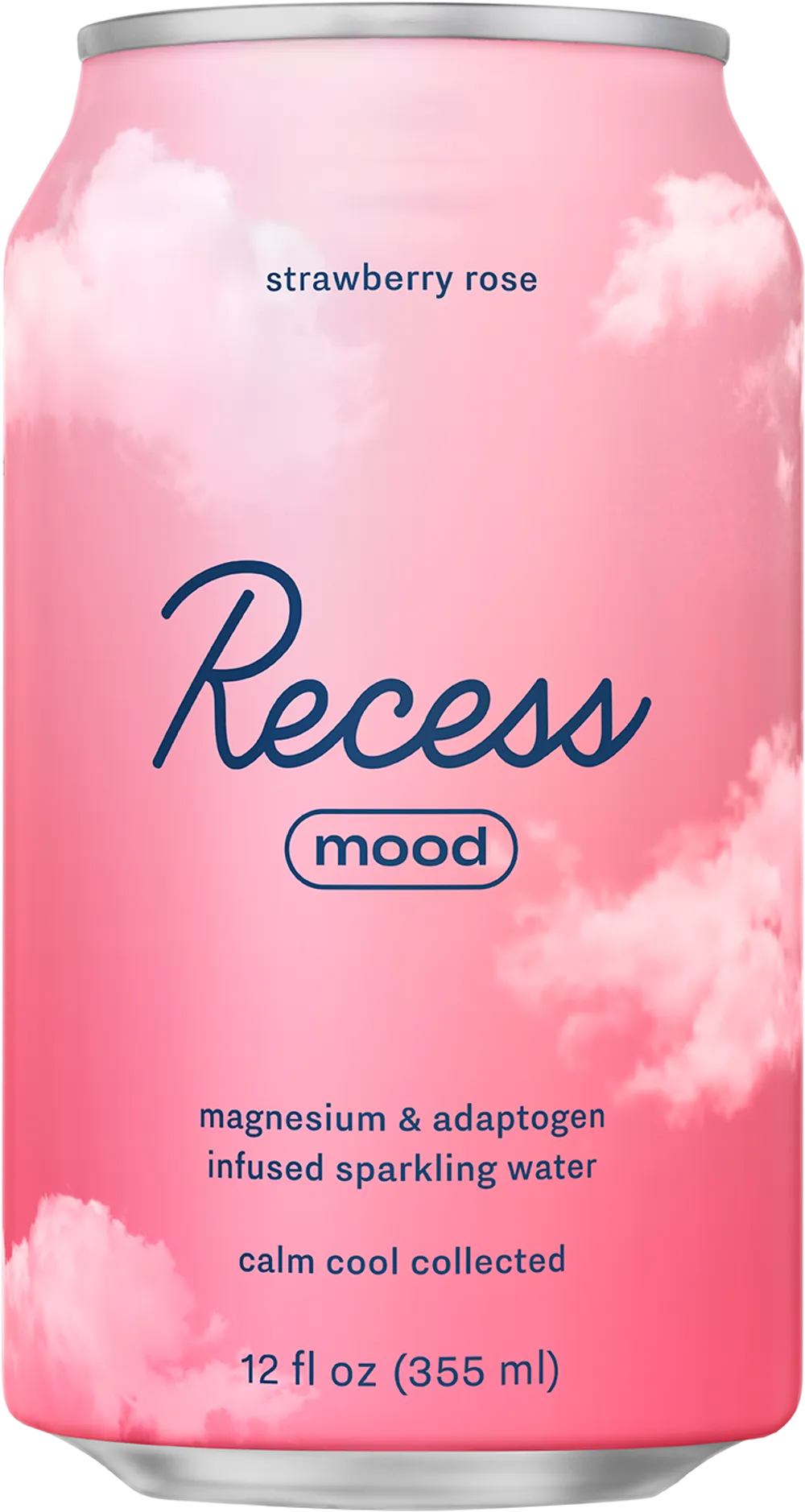
On the Strawberry Rose can, that comes to 20 calories, 3g of sugar with 0g added, monk fruit for sweetness, 53mg of magnesium, and 1mg of vitamin B6. Recess Mood was also part of Walmart's functional and non-alcoholic set reset, which we covered in Walmart Mood & Mind Set. Short version: the ingredient choices are smart, 53mg of magnesium (15% DV) is a strong dose for a beverage, and the herbal doses aren't disclosed. The Magtein trials did use gram-level supplement doses, so read that research as a profile of the ingredient rather than a prediction for one can.
Recess Mood Nutrition Facts
These numbers come from the 12 fl oz Strawberry Rose can. Other flavors may vary slightly.
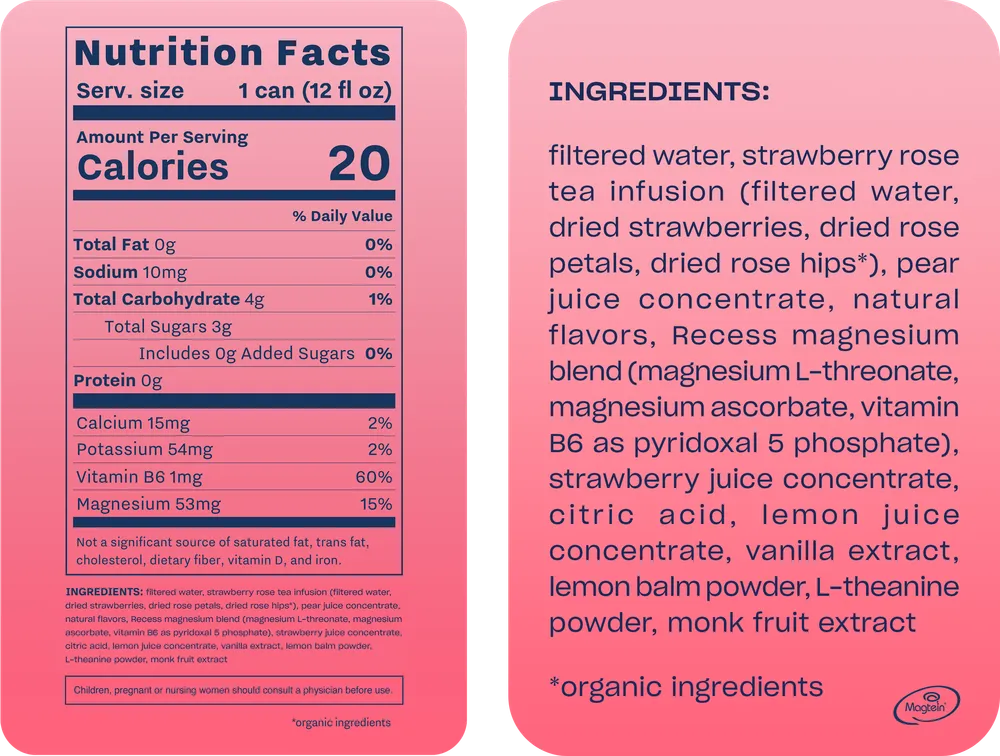
- Calories: 20
- Total Carbohydrate: 4g (1% DV)
- Total Sugars: 3g
- Added Sugars: 0g (0% DV)
- Total Sugars: 3g
- Vitamins and Minerals
- Sodium: 10mg (0% DV)
- Calcium: 15mg (2% DV)
- Potassium: 54mg (2% DV)
- Vitamin B6: 1mg (60% DV)
- Magnesium: 53mg (15% DV)
The label shows 0g of added sugars, so the 3g of sugar rides in with the fruit ingredients, while monk fruit handles the rest of the sweetness. The two numbers that matter for the Mood pitch are magnesium at 15% DV and vitamin B6 at 60% DV, both delivered through the Recess magnesium blend.
Recess Mood Ingredients
Each 12 fl oz can provides the following key actives:
-
Magtein (as Magnesium L-Threonate)
Magtein is a branded magnesium L-threonate (MgT), magnesium bound to L-threonic acid. It's the headline of the Recess magnesium blend, but the label doesn't say how much of the blend's 53mg of magnesium comes from threonate versus magnesium ascorbate.
The big idea behind MgT is getting more magnesium into the brain. That idea comes mostly from animal work: in rats, MgT in drinking water gradually raised magnesium in the fluid around the brain and spinal cord and improved learning and memory.[1] Cell studies suggest the threonate part itself helps raise magnesium inside neurons.[2] No human study has measured brain magnesium after MgT.
The human trials are small, short, and mostly industry-funded. A 6-week trial in 100 adults with unsatisfying sleep found 2g/day of Magtein improved an overall cognition score and reaction time versus placebo.[3] An earlier trial in 44 adults aged 50-70 with cognitive impairment reported a cognition benefit at 1.5-2g/day.[4]
Sleep results are mixed. In 80 adults with sleep complaints, 1g/day for 21 days didn't beat placebo on the main insomnia questionnaire, although wearable deep-sleep and REM scores and some daytime mood and energy ratings improved.[5] The larger 2g/day trial didn't replicate those wearable sleep gains, and its authors concluded Magtein improved some subjective, but not objective, sleep measures.[3] An independent 12-week trial in 109 breast cancer surgery patients found 1.2g/day of MgT made no difference to pain, sleep quality, mood, anxiety, or cognition compared with placebo.[6]
Safety looks clean. EFSA concluded MgT is safe in adult food supplements at up to 3,000mg/day, excluding pregnant and nursing women.[7] Every human trial above used roughly 1-2g of MgT per day, which matters a lot for a single can (more on that below).
-
Lemon Balm
Lemon balm (Melissa officinalis) is a lemon-scented herb in the mint family with a long track record in European and Middle Eastern traditional use.[8] Recess lists it as "lemon balm powder" and doesn't disclose the amount. It also sits near the end of an ingredient list that runs in descending order by weight.
The calming case for lemon balm is decent. A 2021 meta-analysis of randomized trials in people with anxiety or depressive symptoms found lemon balm improved anxiety and depression scores versus placebo, though the authors flagged a small number of trials with inconsistent results.[9] In 100 healthy adults with moderate stress or poor sleep, 400mg/day of a standardized extract for three weeks improved mood, anxiety, stress, and wellbeing scores versus placebo.[10]
Dose and preparation matter here. In a single-dose crossover study, 300mg of a standardized extract raised self-rated calmness, while 900mg cut alertness at every time point.[11] Most of the proposed calming mechanism, nudging the brain's GABA signaling, comes from animal and cell studies.[12] The trials used specific extracts at known doses, and the can uses an undisclosed amount of powdered herb, so those results don't map directly onto a drink.
-
L-Theanine
L-theanine is the amino acid behind green tea's mellow reputation. A 200mL cup of green tea carries roughly 25-60mg.[13] As with lemon balm, the amount in Recess Mood isn't disclosed, and "L-theanine powder" is one of the last items on the ingredient list.
At supplement doses, the research leans toward stress relief without sedation. Early human work found 50-200mg promotes the relaxed-focus state within about 40 minutes.[14] In a 4-week crossover trial in 30 healthy adults, 200mg/day lowered stress-related symptom scores and improved sleep quality ratings versus placebo.[15] A systematic review concluded that 200-400mg/day may help acutely stressed people, but that the evidence doesn't support it as a standalone fix for anxiety disorders.[16]
It isn't a slam dunk. A 28-day trial of 400mg/day in moderately stressed adults saw stress scores fall in both the theanine and placebo groups, with no meaningful difference between them.[17] Much of theanine's focus reputation also comes from studies that pair it with caffeine.[18] The Strawberry Rose can lists no caffeine source, so here theanine is working the calm side of the street, not smoothing out a stimulant.
-
Vitamins and Minerals
-
Magnesium (as magnesium L-threonate (Magtein), magnesium ascorbate) - 53mg (15% DV)
The magnesium total is the one hard number in the Recess magnesium blend: 53mg, or 15% of the Daily Value. It comes from Magtein and magnesium ascorbate (magnesium paired with ascorbate, the vitamin C form) in undisclosed proportions. Magnesium is involved in energy metabolism, muscle function, and hundreds of enzyme reactions.[19] Magnesium and B6 also have history together: an 8-week trial in stressed adults with low magnesium used 300mg/day of magnesium with or without 30mg/day of B6, though without a placebo group.[20] That's a supplement-sized dose. For a 20-calorie sparkling water, 15% of the Daily Value in a single can is a genuinely strong magnesium number.
-
Vitamin B6 (as pyridoxal 5 phosphate) - 1mg (60% DV)
Vitamin B6 shows up as pyridoxal 5 phosphate (P5P), the active coenzyme form your body uses in more than 140 enzyme reactions, including making neurotransmitters.[21] At 1mg, it sits far below the EFSA adult upper limit of 12mg/day.[22] High-dose nerve concerns center mostly on the pyridoxine form, not P5P.[23] If you also take a B-complex, it's still worth tallying your total daily B6.
-
-
Sweeteners and Flavors
-
Monk Fruit Extract
Monk fruit extract handles sweetness without adding sugar. Its sweet compounds, mogrosides, are hundreds of times sweeter than table sugar, and the extract holds GRAS status in the U.S. across multiple notices.[24] Europe's food additive panel wasn't ready to approve it in 2019, citing gaps in long-term toxicity data.[24] Most of the health-benefit buzz around monk fruit comes from animal and lab studies, so treat it as a sweetener, not a functional ingredient.[25]
-
Natural Flavors
Natural flavors are defined by where they come from, not by their chemistry. Under FDA rules, the flavoring has to come from sources like fruit, spices, or plants, and its main job has to be flavor rather than nutrition.[26] The label doesn't name the specific sources, which is standard for the category.
-
Strawberry Rose Tea Infusion, Juice Concentrates, and Vanilla
These are specific to the Strawberry Rose can. The label lists a strawberry rose tea infusion (filtered water, dried strawberries, dried rose petals, and dried rose hips), plus pear juice concentrate, strawberry juice concentrate, lemon juice concentrate, and vanilla extract. Together they build the fruity, floral profile. Amounts aren't disclosed, and other flavors use their own fruit ingredients.
-
-
Other Ingredients
- Filtered Water - The base of the drink and the first ingredient on the label.
- Citric Acid - Adds tartness and helps manage acidity, a standard move in fruit-flavored sparkling drinks.
How Much Magtein Fits in One Can?
The label gives one magnesium number for the whole blend: 53mg. That total is shared between Magtein and magnesium ascorbate, and Recess doesn't say how it splits.
Here's why that matters. By weight, Magtein is mostly threonate, with magnesium making up only about 7.4-8.8% of the ingredient.[7] The human trials dosed it by the gram: 1g/day in the sleep study (about 75mg of magnesium), 1.2g/day in the null surgery trial, and 2g/day in the larger cognition and sleep study (about 145mg of magnesium).[5,6,3]
Even if every milligram of magnesium in the can came from Magtein, you'd be looking at well under 1g of MgT. Magnesium ascorbate also contributes to that 53mg, so the real number is lower still. The trial results describe what the ingredient did at supplement doses, taken daily for weeks, not what one can of Recess Mood does.
That doesn't make the inclusion pointless. As a beverage dose, 53mg of magnesium (15% DV) is a strong number, and it counts toward your daily intake. Choosing a well-researched form also says something about how the brand approached the formula. Just read the Magtein logo as a signal about ingredient quality, not as a promise of trial-level effects.
Where Mood Sits in the Recess Family
Recess has built a few different paths to the same "calm cool collected" feeling. The original Recess sparkling water combined broad spectrum hemp extract with ginseng, lemon balm, and L-theanine. Recess Zero Proof took the craft mocktail route, with 10mg of naturally occurring caffeine from guayusa plus L-theanine and lemon balm. Mood is the hemp-free, caffeine-free (on the Strawberry Rose label) option, with magnesium doing the heavy lifting and the brand positioning it as a gentle lift.
The family also includes a Mood Powder built for mixing, with a much larger 1.6g magnesium blend and a disclosed 200mg of L-theanine. That's a useful comparison: the powder lands in the dose range of the theanine studies above, while the canned version keeps its herbal amounts private and prioritizes drinkability.
Strawberry Rose and the Wider Lineup
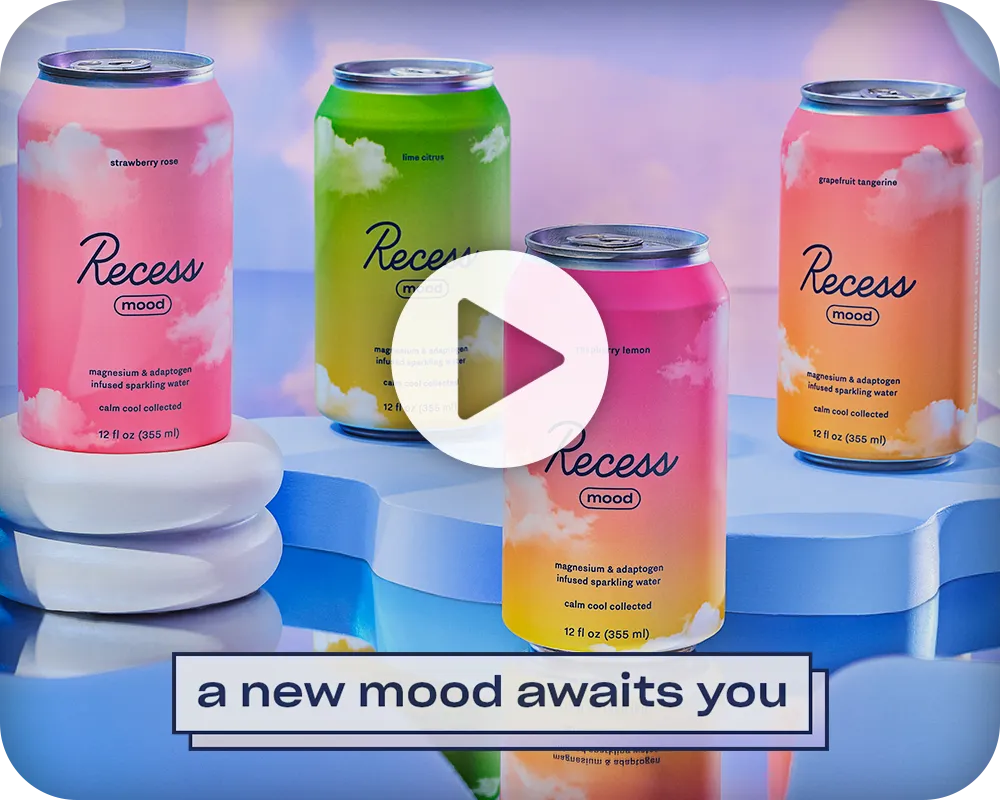
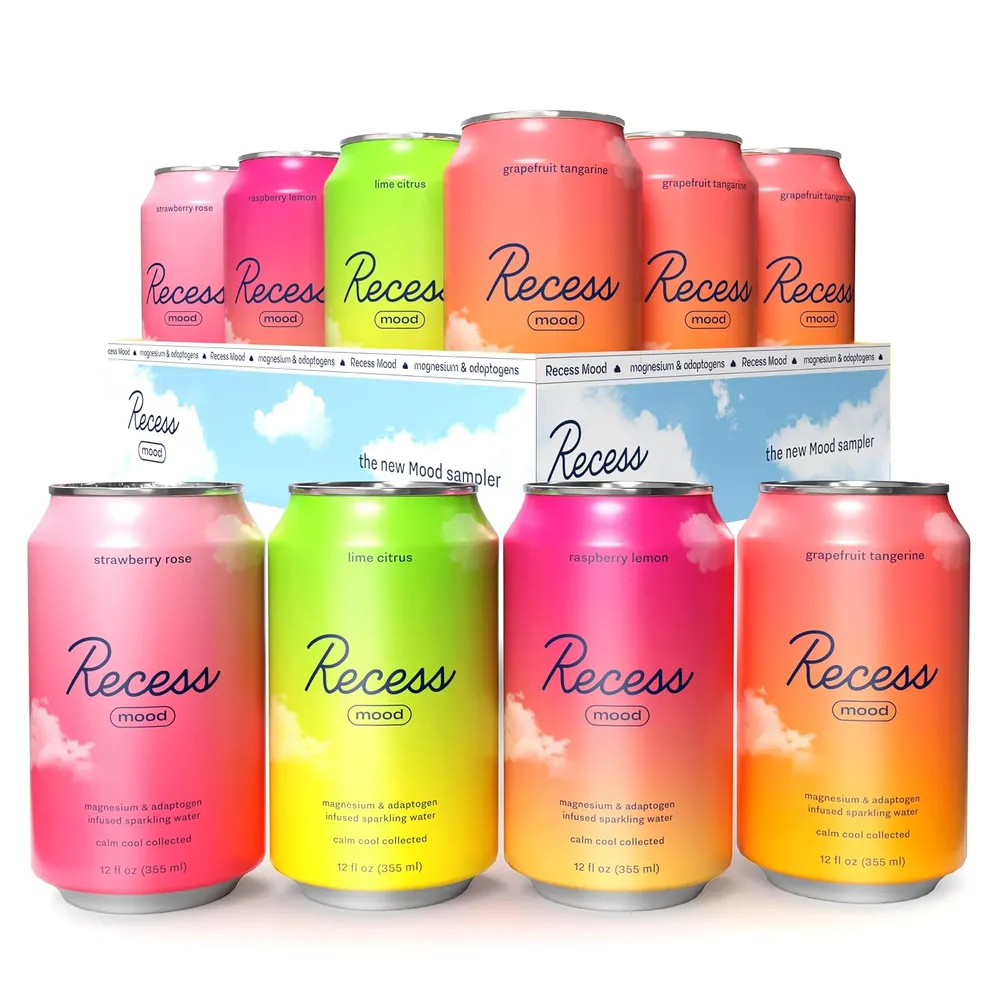
Our label numbers come from Strawberry Rose, which is brewed with real strawberries and rose petals. Mood has rolled out a range of fruit-forward flavors over time, built around the same magnesium, L-theanine, and lemon balm idea, so expect small differences in the numbers from can to can.
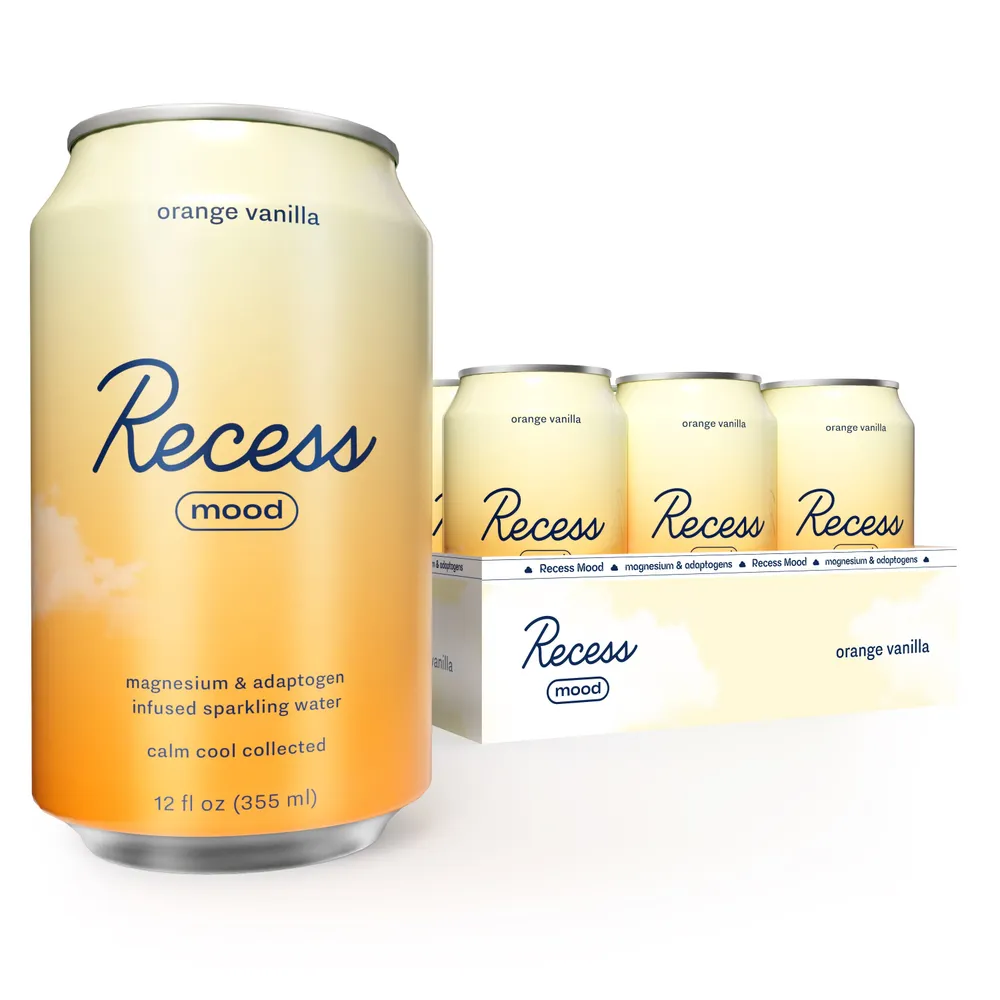
- Black Cherry (12 Cans: $32.97)
- Blood Orange (12 Cans: $32.97)
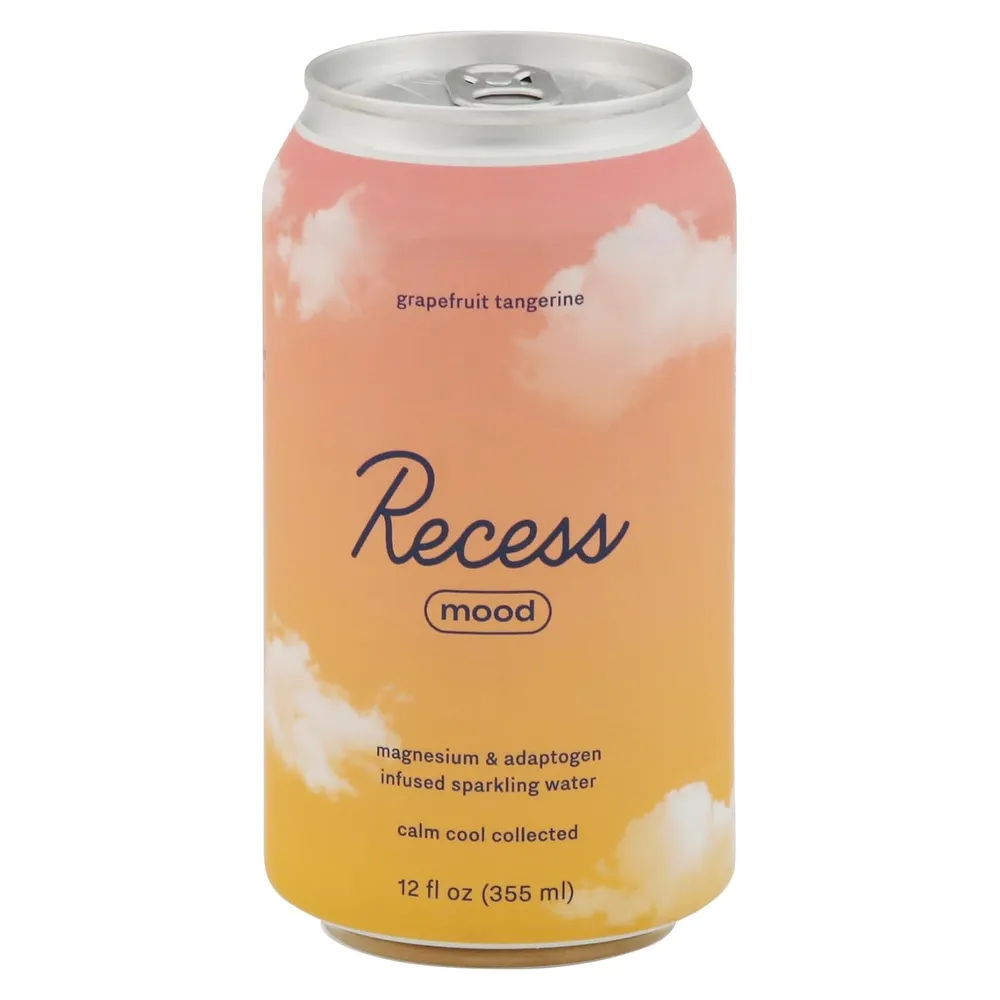
- Grapefruit Tangerine (12 Cans: $32.97)
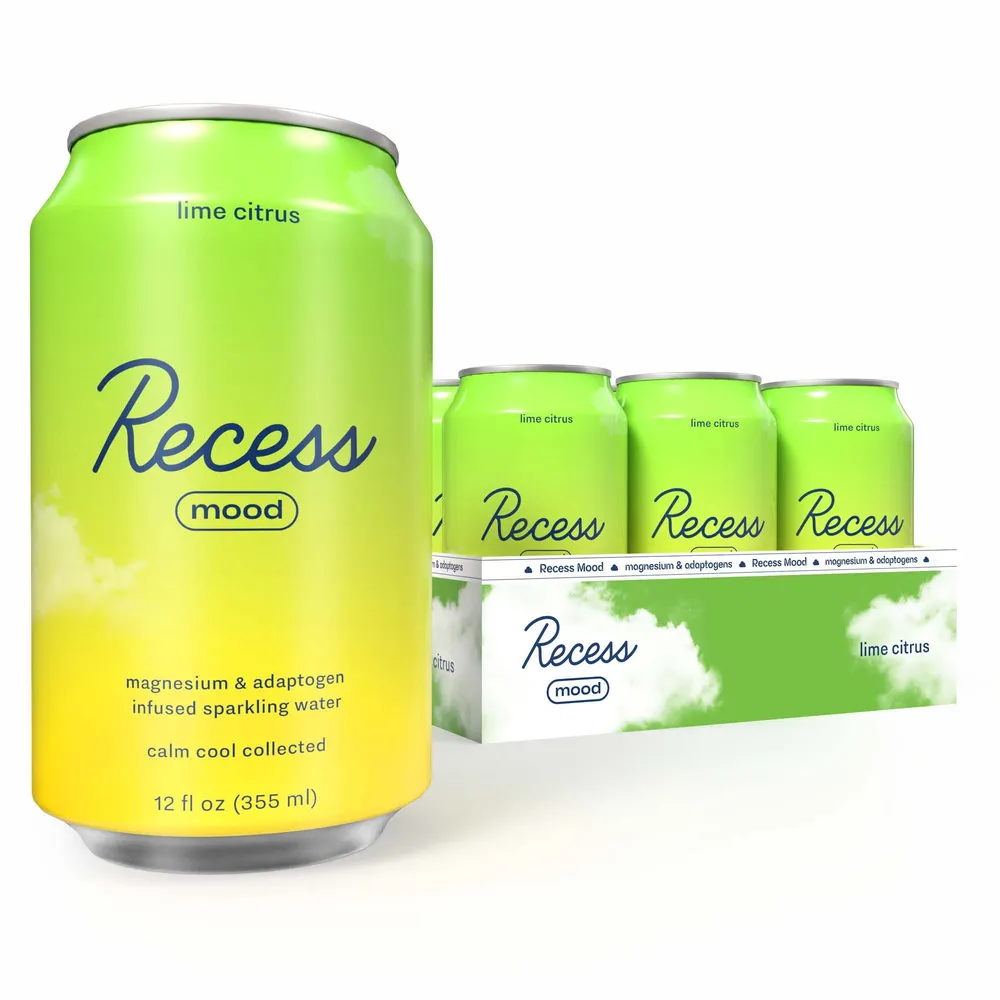
- Lime Citrus (12 Cans: $32.97)
- Orange Vanilla (12 Cans: $32.97)
- Peach Ginger (12 Cans: $32.97)
- Pink Lemonade (12 Cans: $32.97)
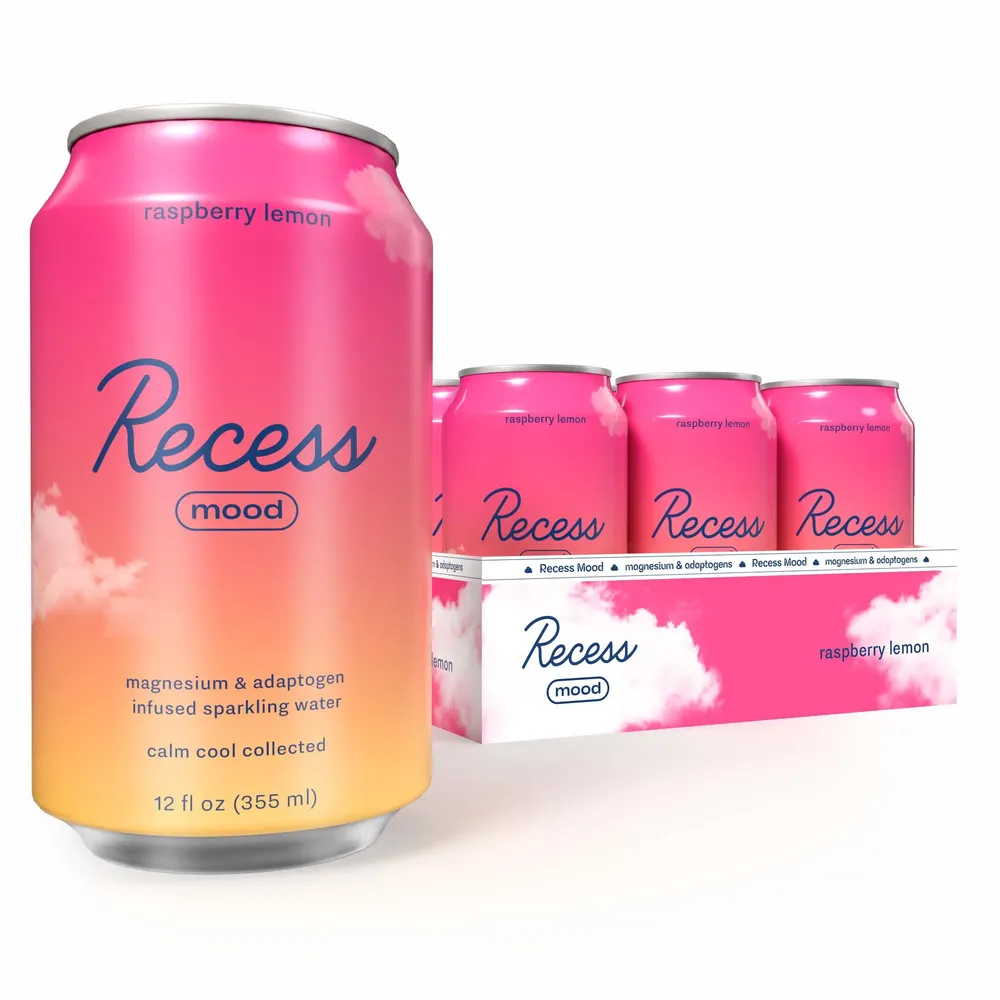
- Raspberry Lemon (12 Cans: $29.97)
- Strawberry Rose (12 Cans: $29.97)
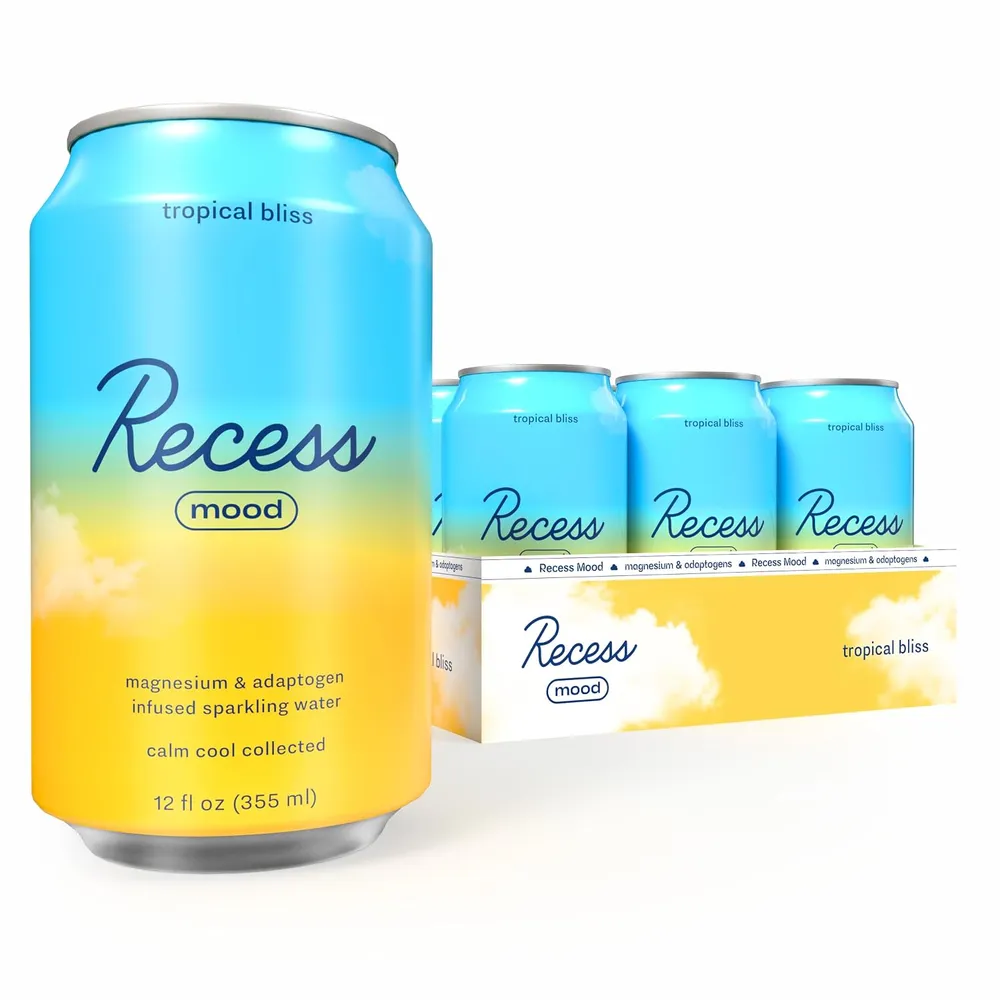
- Tropical Bliss (12 Cans: $32.97)
- Variety Pack (12 Cans: $29.97)
A Wind-Down Can, Not a Supplement
Recess Mood is a good pick if you want a low-sugar sparkling water with no caffeine on the label, a calming theme, a strong 15% DV of magnesium per can, and smarter-than-average ingredient choices like Magtein and P5P. If you're chasing the effects from the Magtein studies, those took gram-level daily doses, and one can isn't built to deliver that.
References
- Slutsky, Inna, et al. "Enhancement of learning and memory by elevating brain magnesium." Neuron, 2010. https://doi.org/10.1016/j.neuron.2009.12.026
- Sun, Qifeng, et al. "Regulation of structural and functional synapse density by L-threonate through modulation of intraneuronal magnesium concentration." Neuropharmacology, 2016. https://doi.org/10.1016/j.neuropharm.2016.05.006
- Lopresti, Adrian L, et al. "The effects of magnesium L-threonate (Magtein®) on cognitive performance and sleep quality in adults: a randomised, double-blind, placebo-controlled trial." Frontiers in nutrition, 2025. https://doi.org/10.3389/fnut.2025.1729164
- Liu, Guosong, et al. "Efficacy and Safety of MMFS-01, a Synapse Density Enhancer, for Treating Cognitive Impairment in Older Adults: A Randomized, Double-Blind, Placebo-Controlled Trial." Journal of Alzheimer's disease : JAD, 2016. https://doi.org/10.3233/jad-150538
- Hausenblas, Heather A, et al. "Magnesium-L-threonate improves sleep quality and daytime functioning in adults with self-reported sleep problems: A randomized controlled trial." Sleep medicine: X, 2024. https://doi.org/10.1016/j.sleepx.2024.100121
- Ni, Yuncheng, et al. "A Randomized, Double-Blind, Placebo-Controlled Trial to Evaluate the Therapeutic Effect of Magnesium-L-Threonate Supplementation for Persistent Pain After Breast Cancer Surgery." Breast cancer (Dove Medical Press), 2023. https://doi.org/10.2147/bctt.s413435
- EFSA Panel on Nutrition, Novel Foods and Food Allergens (NDA), et al. "Safety of magnesium l-threonate as a novel food pursuant to regulation (EU) 2015/2283 and bioavailability of magnesium from this source in the context of Directive 2002/46/EC." EFSA journal. European Food Safety Authority, 2024. https://doi.org/10.2903/j.efsa.2024.8656
- Shakeri, Abolfazl, et al. "Melissa officinalis L. - A review of its traditional uses, phytochemistry and pharmacology." Journal of ethnopharmacology, 2016. https://doi.org/10.1016/j.jep.2016.05.010
- Ghazizadeh, Javid, et al. "The effects of lemon balm (Melissa officinalis L.) on depression and anxiety in clinical trials: A systematic review and meta-analysis." Phytotherapy research : PTR, 2021. https://doi.org/10.1002/ptr.7252
- Bano, Aasiya, et al. "The possible "calming effect" of subchronic supplementation of a standardised phospholipid carrier-based Melissa officinalis L. extract in healthy adults with emotional distress and poor sleep conditions: results from a prospective, randomised, double-blinded, placebo-controlled clinical trial." Frontiers in pharmacology, 2023. https://doi.org/10.3389/fphar.2023.1250560
- Kennedy, D O, et al. "Modulation of mood and cognitive performance following acute administration of Melissa officinalis (lemon balm)." Pharmacology, biochemistry, and behavior, 2002. https://doi.org/10.1016/s0091-3057(02)00777-3
- Mathews, Imogen Maria, et al. "Clinical Efficacy and Tolerability of Lemon Balm (Melissa officinalis L.) in Psychological Well-Being: A Review." Nutrients, 2024. https://doi.org/10.3390/nu16203545
- Moshfeghinia, Reza, et al. "The effects of L-theanine supplementation on the outcomes of patients with mental disorders: a systematic review." BMC Psychiatry, 2024. https://doi.org/10.1186/s12888-024-06285-y
- Juneja, L. "L-theanine—a unique amino acid of green tea and its relaxation effect in humans." Trends in Food Science & Technology, 1999. https://doi.org/10.1016/s0924-2244(99)00044-8
- Hidese, Shinsuke, et al. "Effects Of L Theanine Administration On Stress Related Symptoms And Cognitive Functions In Healthy Adults A Randomized Controlled Trial." Nutrients, 2019. https://doi.org/10.3390/nu11102362
- Williams, Jackson L, et al. "The Effects Of Green Tea Amino Acid L Theanine Consumption On The Ability To Manage Stress And Anxiety Levels A Systematic Review." Plant foods for human nutrition (Dordrecht, Netherlands), 2020. https://doi.org/10.1007/s11130-019-00771-5
- Moulin, Marc, et al. "Safety and Efficacy of AlphaWave® L-Theanine Supplementation for 28 Days in Healthy Adults with Moderate Stress: A Randomized, Double-Blind, Placebo-Controlled Trial." Neurology and therapy, 2024. https://doi.org/10.1007/s40120-024-00624-7
- Camfield, David A, et al. "Acute effects of tea constituents L-theanine, caffeine, and epigallocatechin gallate on cognitive function and mood: a systematic review and meta-analysis." Nutrition reviews, 2014. https://doi.org/10.1111/nure.12120
- Fatima, Ghizal, et al. "Magnesium Matters A Comprehensive Review Of Its Vital Role In Health And Diseases." Cureus, 2024. https://doi.org/10.7759/cureus.71392
- Pouteau, Etienne, et al. "Superiority of magnesium and vitamin B6 over magnesium alone on severe stress in healthy adults with low magnesemia: A randomized, single-blind clinical trial." PloS one, 2018. https://doi.org/10.1371/journal.pone.0208454
- di Salvo, Martino Luigi, et al. "Vitamin B(6) salvage enzymes: mechanism, structure and regulation." Biochimica et Biophysica Acta (BBA) - Proteins and Proteomics, 2011. https://doi.org/10.1016/j.bbapap.2010.12.006
- EFSA Panel on Nutrition, Novel Foods and Food Allergens (NDA), et al. "Scientific opinion on the tolerable upper intake level for vitamin B6." EFSA journal. European Food Safety Authority, 2023. https://doi.org/10.2903/j.efsa.2023.8006
- Vrolijk, Misha F. et al. "The vitamin B6 paradox: Supplementation with high concentrations of pyridoxine leads to decreased vitamin B6 function." Toxicology in Vitro, 2017. https://doi.org/10.1016/j.tiv.2017.07.009
- EFSA, Panel on Food Additives and Flavourings (FAF), et al. "Safety of use of Monk fruit extract as a food additive in different food categories." EFSA journal. European Food Safety Authority, 2019. https://doi.org/10.2903/j.efsa.2019.5921
- Yeung, Andy Wai Kan. "Bibliometric analysis on the literature of monk fruit extract and mogrosides as sweeteners." Frontiers in nutrition, 2023. https://doi.org/10.3389/fnut.2023.1253255
- Goodman, Matthew J. "The “Natural” vs. “Natural Flavors” Conflict in Food Labeling: A Regulatory Viewpoint." Food and drug law journal, 2017. https://pubmed.ncbi.nlm.nih.gov/29140655/