RVIVL
25 grams of protein, zero shaker, zero added sugar
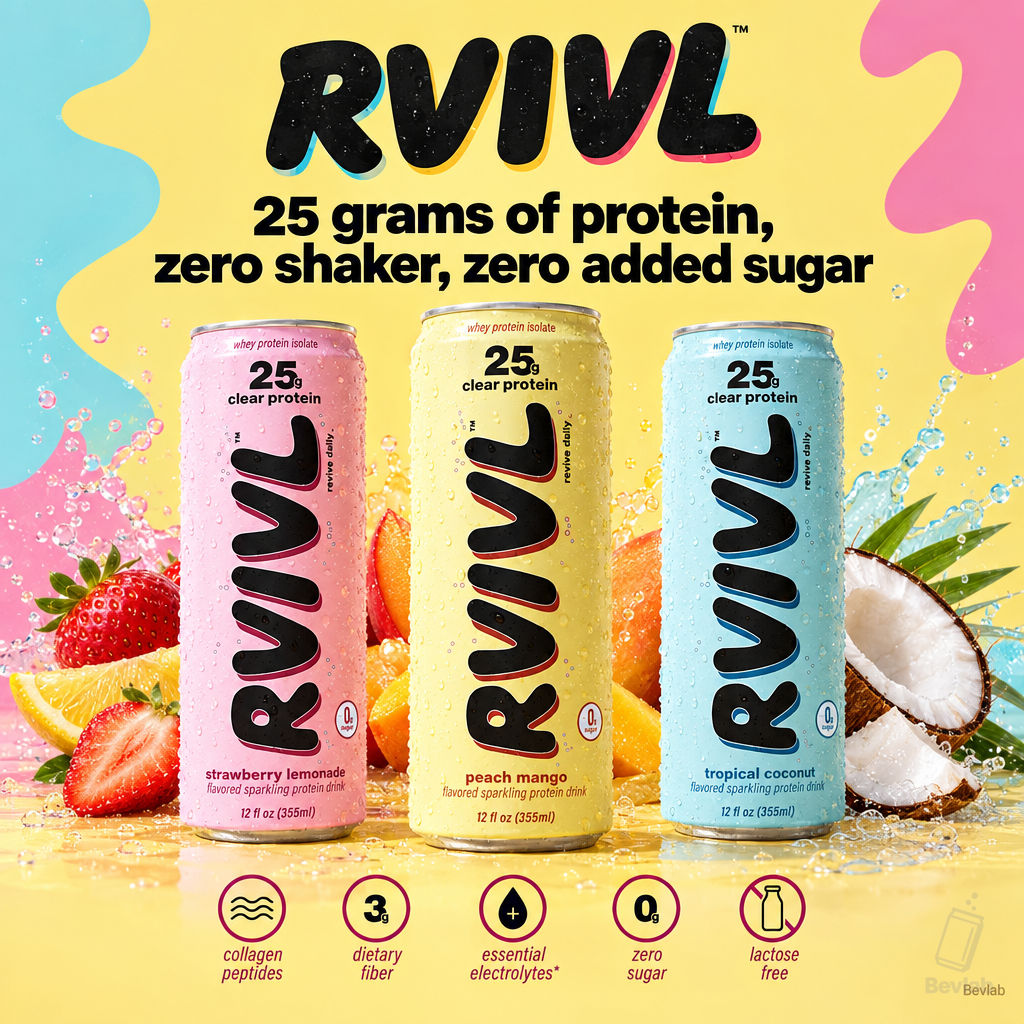
RVIVL packs 25g of whey isolate and collagen into a clear, carbonated 120-calorie can built for the protein-shake-skeptical crowd.
Most people trying to hit a daily protein number have two options: carry a shaker bottle and deal with the mess, or pack the chicken and rice. RVIVL is betting there's a third option. It's a clear, carbonated can that pours and drinks like flavored sparkling water, but the label reads like a protein shake: 25g of protein, 3g of fiber, a trio of electrolytes, and a dose of collagen peptides, all for 120 calories and zero added sugar.
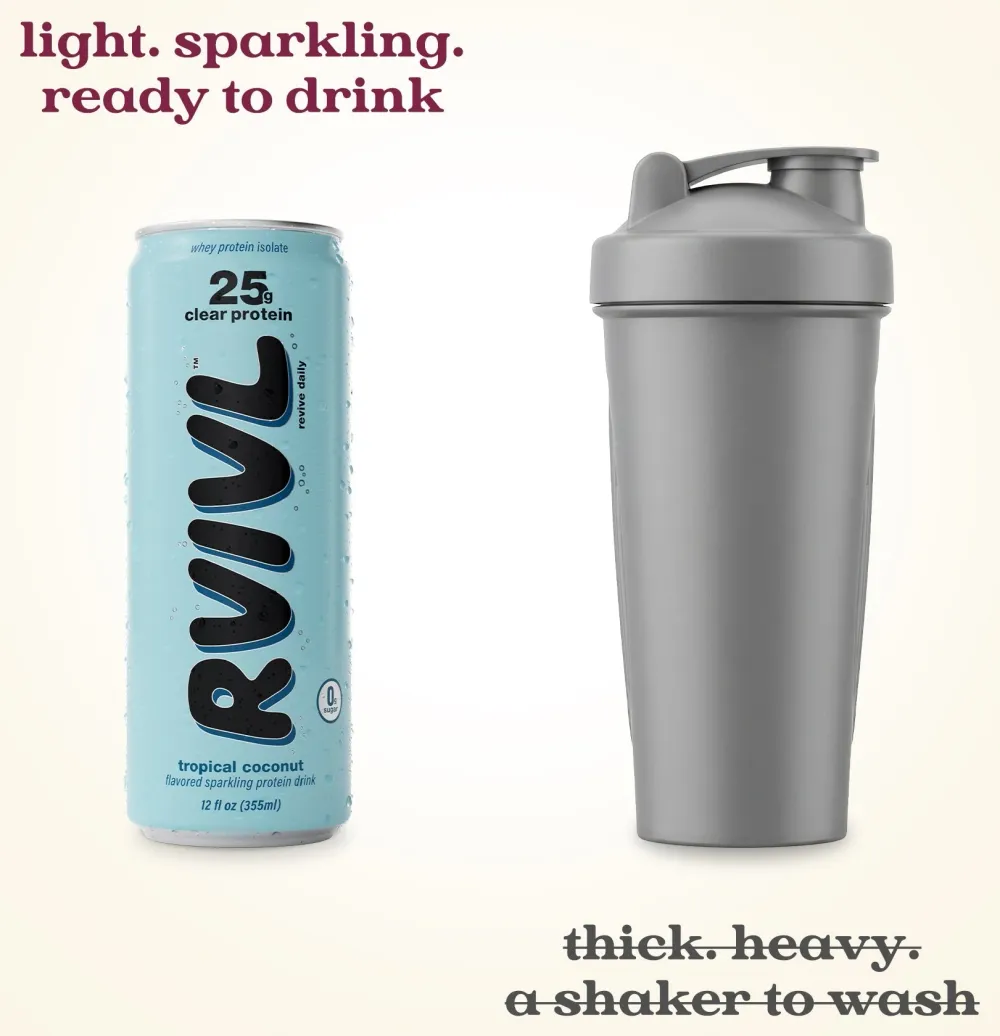
The pitch is specific. RVIVL isn't trying to be an energy drink or a recovery shake with bubbles bolted on. It's built around whey protein isolate rather than whey concentrate, which the brand says is what lets the can carbonate instead of foaming. It's worth understanding what's actually happening in the can before deciding if it earns a spot in the fridge.
RVIVL Nutrition Facts
- Calories: 120
- Total Fat: 0g (0% DV)
- Cholesterol: 5mg (2% DV)
- Total Carbohydrate: 10g (4% DV)
- Dietary Fiber: 3g (11% DV)
- Total Sugars: 0g
- Added Sugars: 0g (0% DV)
- Protein: 25g (43% DV)
- Vitamins and Minerals
- Sodium: 105mg (5% DV)
- Potassium: 210mg (4% DV)
- Calcium: 20mg (2% DV)
RVIVL Ingredients
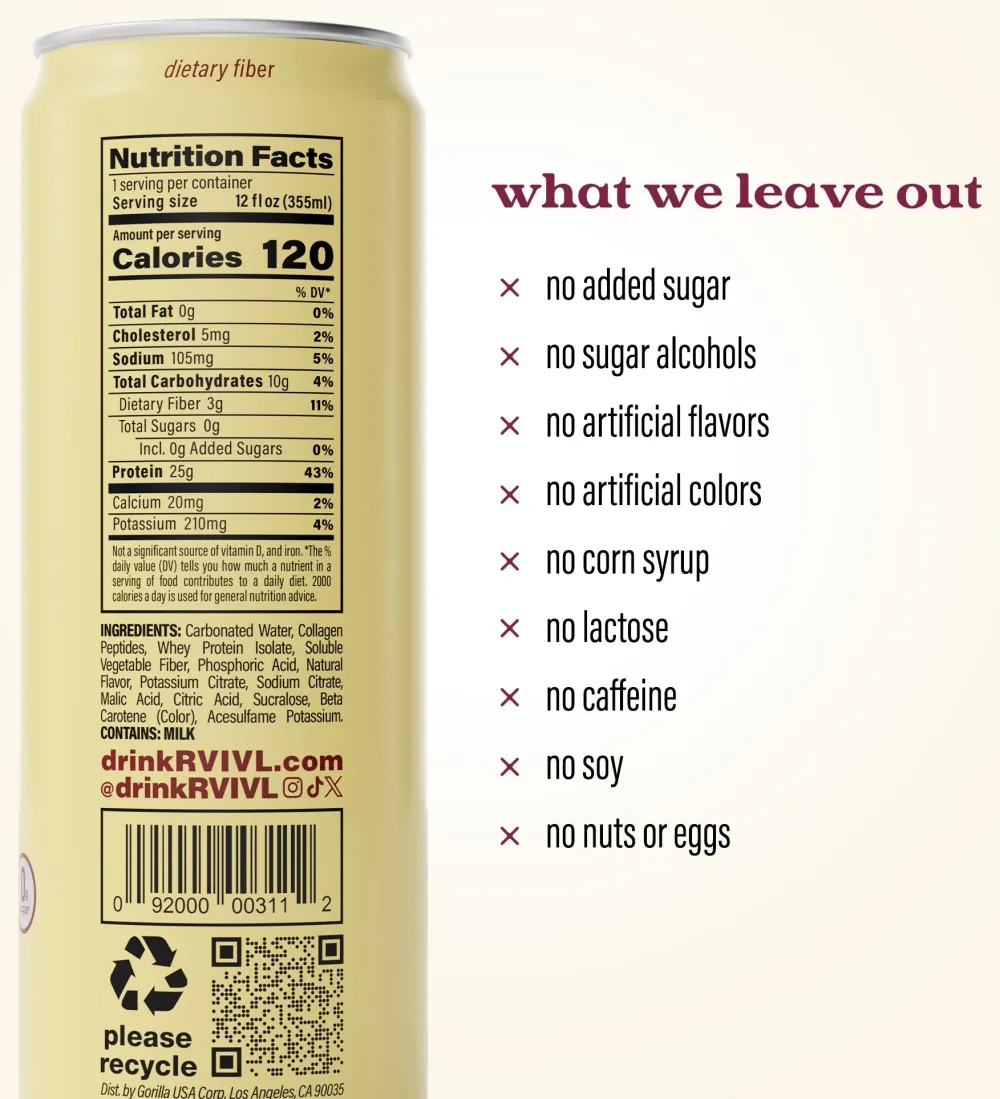
Each 12 fl oz can lists the following ingredients: carbonated water, collagen peptides, whey protein isolate, soluble vegetable fiber, phosphoric acid, natural flavor, potassium citrate, sodium citrate, malic acid, citric acid, sucralose, beta carotene (color), and acesulfame potassium. The can carries a milk allergen warning.
-
Whey Protein Isolate
Whey protein isolate is the more heavily filtered cousin of whey concentrate, processed further to strip out most of the lactose, fat, and carbohydrate that would otherwise make a protein drink cloudy and thick.[1] RVIVL attributes its carbonation to that extra filtration, since there's less fat and residual sugar left to interfere with the bubbles. Whey produces fast aminoacidemia and a large leucine spike relative to other protein sources, and human trials dosing 20g or more of isolate after resistance exercise have shown meaningfully elevated myofibrillar protein synthesis compared to lower doses.[2] Older research comparing whey directly to casein found it drove a faster and larger muscle-protein-synthetic response in older adults as well.[3] RVIVL doesn't break out how much of its 25g total protein comes from whey isolate versus collagen peptides, so the isolate's individual contribution isn't disclosed. Worth flagging too: whey isolate is still a dairy protein. RVIVL calls itself lactose-free thanks to the filtering process, but the can is explicit that it isn't dairy-free, and it carries a milk allergen warning.
-
Collagen Peptides
Collagen peptides are hydrolyzed fragments of structural connective-tissue protein, typically sourced from bovine, porcine, or marine material, though RVIVL's label doesn't specify the source animal. Once ingested, these peptides are absorbed as di- and tripeptides rich in glycine, proline, and hydroxyproline, which the body can use both as raw material for its own collagen synthesis and as signaling molecules that stimulate fibroblast and chondrocyte activity.[4] Clinical trials using 2.5g/day of specific collagen peptides have shown improved skin elasticity over 8 weeks,[5] and higher doses in the 8-10g/day range have reduced joint pain in both osteoarthritis patients and healthy athletes over several months.[6] A more directly relevant study tested a 25g whey plus 5g collagen blend, similar in concept to RVIVL's whey-isolate-and-collagen pairing, and found it increased both myofibrillar and connective-tissue protein synthesis more than whey alone.[7] RVIVL doesn't disclose its own whey-to-collagen ratio, so it's not possible to confirm whether the can reaches the doses used in that research.
-
Soluble Vegetable Fiber
Soluble vegetable fiber is the only fiber ingredient on RVIVL's label, and its position on the ingredient list, ahead of the acids and flavoring, suggests it's a meaningful part of the formula by weight. The can's Nutrition Facts panel lists 3g of Dietary Fiber in total, though RVIVL doesn't break out how much of that specifically comes from this ingredient. Soluble fibers like this one generally ferment slowly in the colon and are commonly used in zero-sugar beverages and bars to add body, support digestive regularity, and contribute to a feeling of fullness without adding digestible carbohydrate. There isn't a dedicated research base behind "soluble vegetable fiber" as a single defined ingredient the way there is for something like inulin or soluble corn fiber, so it's best understood here as a functional fiber and texture ingredient rather than a clinically dosed active.
-
Sucralose
Sucralose is a chlorinated derivative of table sugar used across RVIVL's lineup to hit 0g of sugar without losing sweetness. Regulatory reviews, including a recent EFSA re-evaluation, have concluded that current authorized use levels don't raise a safety concern and that the existing Acceptable Daily Intake doesn't need revision.[8] The research on sucralose and blood sugar is genuinely mixed. One acute study found a single sucralose dose before a glucose tolerance test raised peak glucose and insulin in obese adults who didn't regularly consume non-nutritive sweeteners,[9] and a 14-day trial in healthy adults found a measurable drop in insulin sensitivity at a dose equivalent to 15% of the ADI.[10] A larger, more rigorously controlled 14-day trial, however, found no changes to fasting glucose or HbA1c, even as it detected shifts in gut microbiome composition tied to individual glycemic responses.[11] A separate 6-week trial found no effect on body weight either way.[12] None of this makes sucralose dangerous at beverage-level doses, but it's not metabolically inert for every person either.
-
Acesulfame Potassium
Acesulfame potassium, or Ace-K, is the second sweetener on RVIVL's label, paired with sucralose as part of the can's zero-added-sugar sweetening system. Ace-K is heat- and acid-stable, which is part of why it pairs well with sucralose in formulas that need shelf stability.[13] In a clinical trial testing a sucralose-plus-Ace-K blend before a carbohydrate-heavy breakfast, the combination significantly lowered the 2-hour insulin response compared to sucrose, without triggering compensatory overeating later in the day.[14] A 20-week controlled study in mice found Ace-K at ADI-matched doses didn't increase body weight, fat mass, or impair glucose tolerance relative to plain water.[15] Regulatory reviews pulling together dozens of genotoxicity and carcinogenicity studies have also found no consistent cancer or DNA-damage signal tied to Ace-K.[16] Most of the more concerning Ace-K research involves doses far above what a can or two of a beverage like this would deliver.
-
Vitamins and Minerals
-
Sodium (as Sodium Citrate) - 105mg (5% DV)
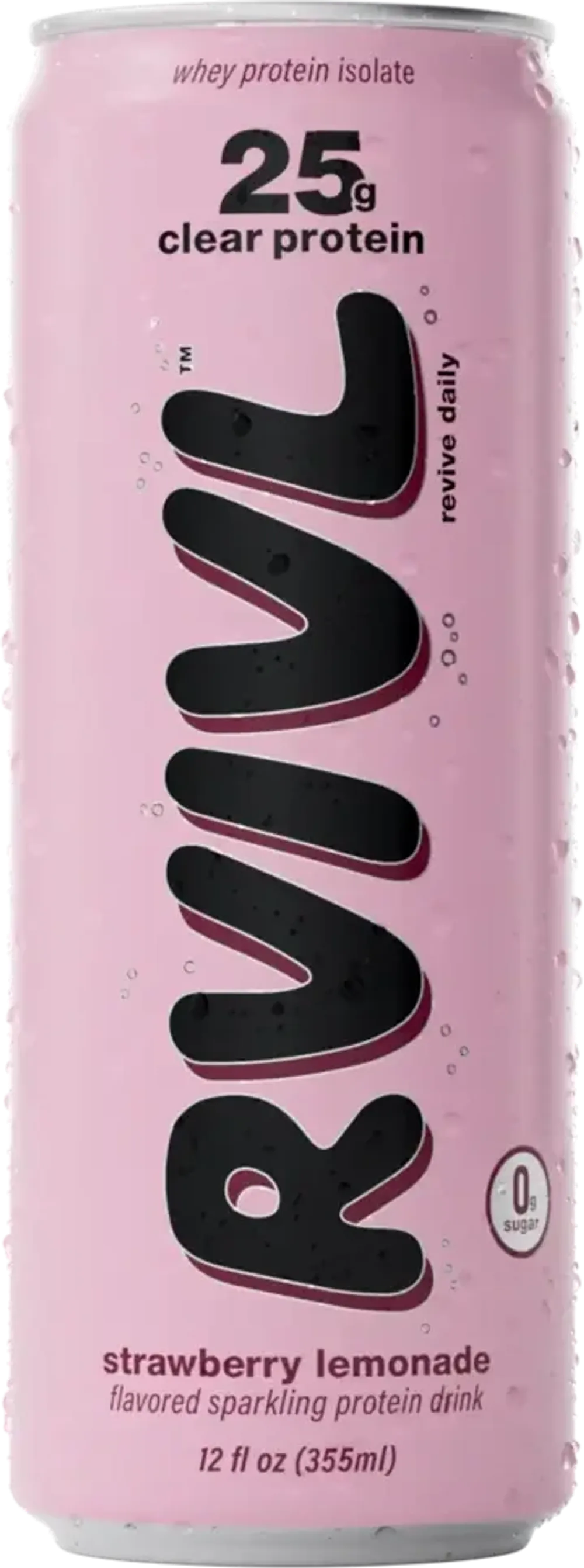
Sodium on RVIVL's label is attributed mainly to sodium citrate, which does double duty as a pH buffer alongside the can's other acids and as a modest electrolyte contribution, though dairy protein and other ingredients can contribute trace amounts as well. At 105mg per can, it's more in line with rounding out the can's acid balance than replacing what's lost in sweat.
-
Potassium (as Potassium Citrate) - 210mg (4% DV)
Potassium is one of the more well-documented shortfall nutrients in the American diet, with typical intake running well below the recommended target.[17] The sodium-to-potassium ratio in the diet matters more for blood pressure than either mineral alone, and most Western diets skew too far toward sodium.[18] At 210mg total, most of RVIVL's potassium likely comes from the added potassium citrate, though dairy protein naturally contributes some as well. Either way, it's a small but real amount toward that balance, alongside its functional role as part of the formula's acid system.
-
Calcium - 20mg (2% DV)
Calcium at 20mg per can likely comes from the dairy-derived whey protein isolate rather than a separately added mineral. It's a minor contribution toward daily calcium needs and isn't positioned by the brand as a bone-health ingredient.
-
-
Other Ingredients
- Carbonated Water - the base of the can and the reason it drinks like a sparkling water instead of a shake.
- Phosphoric Acid - an acidulant that helps set the can's tartness and pH, the same acid used in cola beverages.
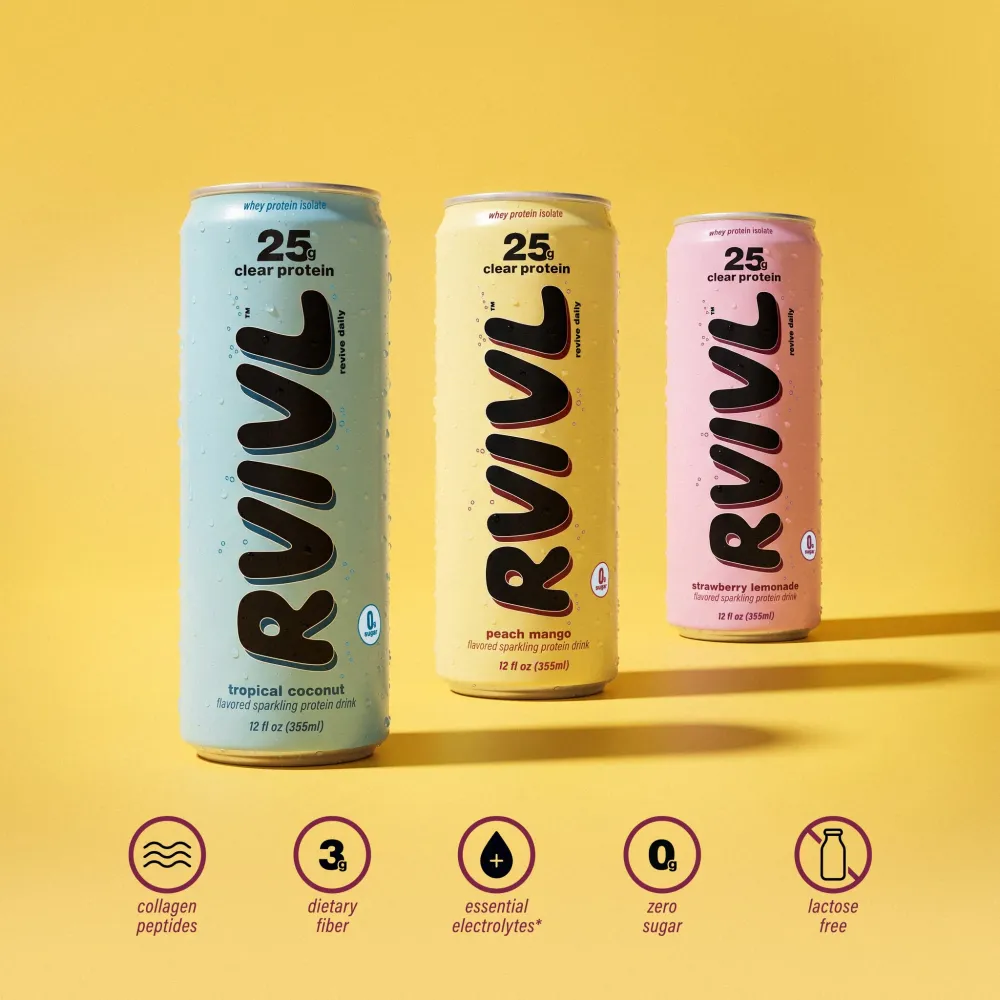
- Natural Flavor - supplies the coconut, strawberry-lemon, and peach-mango flavor notes across the three launch SKUs.
- Malic Acid - a tart, apple-like acid that rounds out the sweetness profile alongside citric acid.
- Citric Acid - a common acidulant that adds brightness and helps stabilize the formula's shelf life.
- Beta Carotene (Color) - used here for its color properties rather than as a dosed nutritional ingredient.
Why a Protein Drink Instead of a Protein Shake
Most protein shakes on the market use whey concentrate, which tends to be opaque and thick, with a chalky aftertaste some people associate with the category. RVIVL instead uses a more heavily filtered whey protein isolate, which strips out more fat, carbohydrate, and lactose, resulting in a thinner, clearer liquid. The brand positions that difference as central to why the can carbonates cleanly instead of foaming. Building a 25g-protein, 120-calorie, zero-added-sugar can around an isolate base is a tighter formulation challenge than a typical powder-and-shaker approach.
Built for the Can-in-Your-Bag Crowd
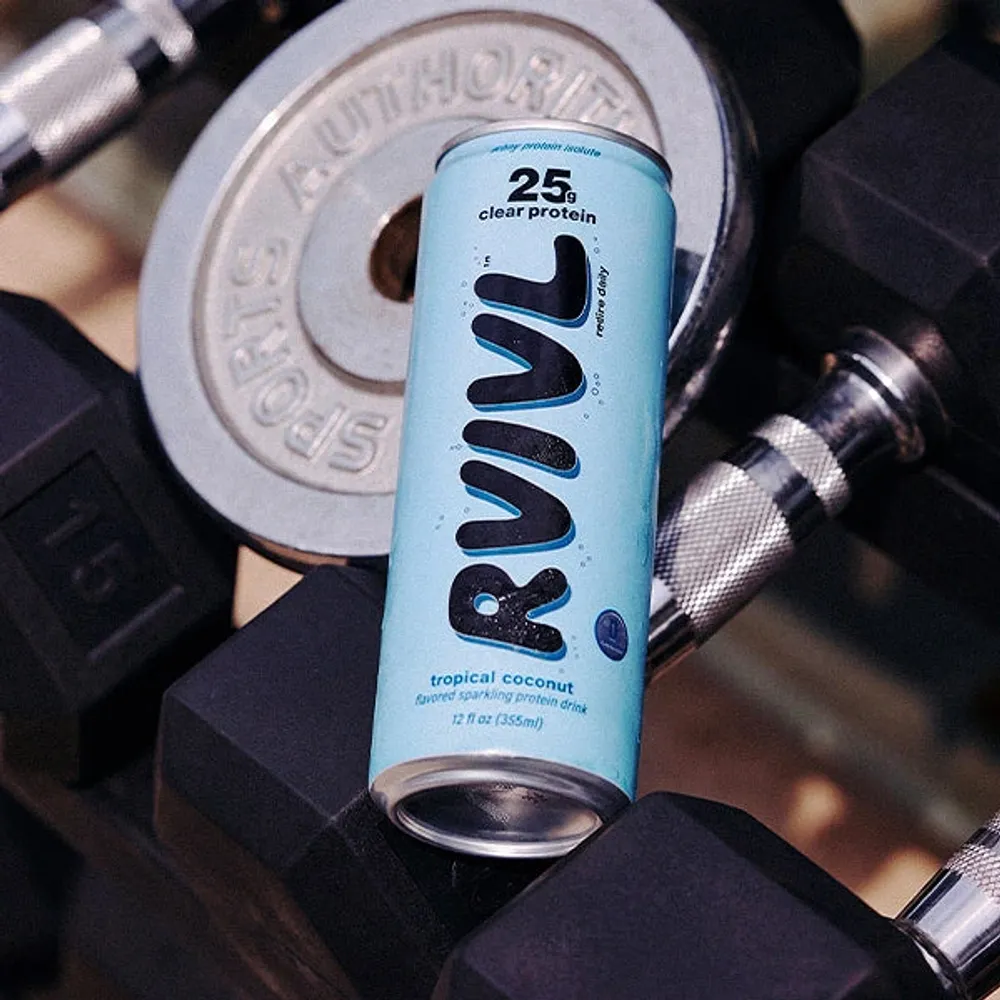
RVIVL's positioning leans hard into two groups: people doing post-workout recovery who don't want to carry a shaker, and people managing a smaller appetite, whether from intermittent fasting, a GLP-1 medication, or just not being that hungry, who still need to hit a protein target. A cold, finishable 120-calorie can is an easier ask for both groups than a powder-and-shaker routine, and it's the clearest reason this format exists instead of just another tub of isolate powder.
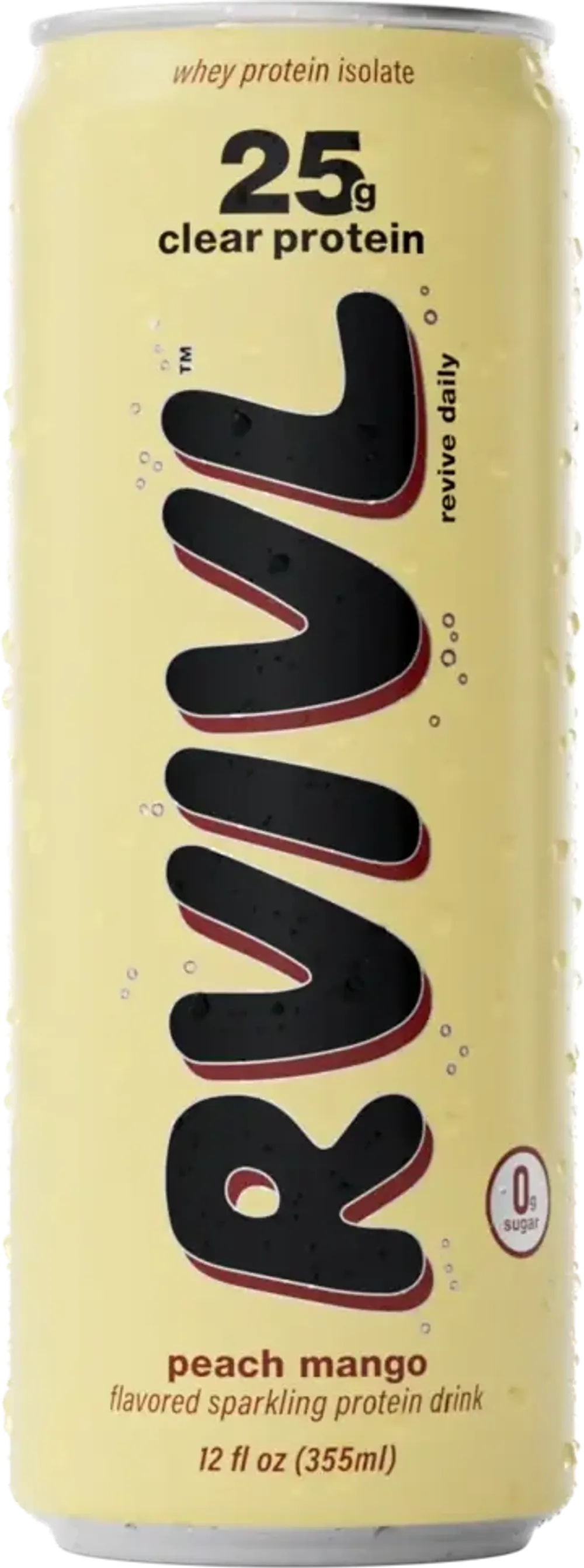
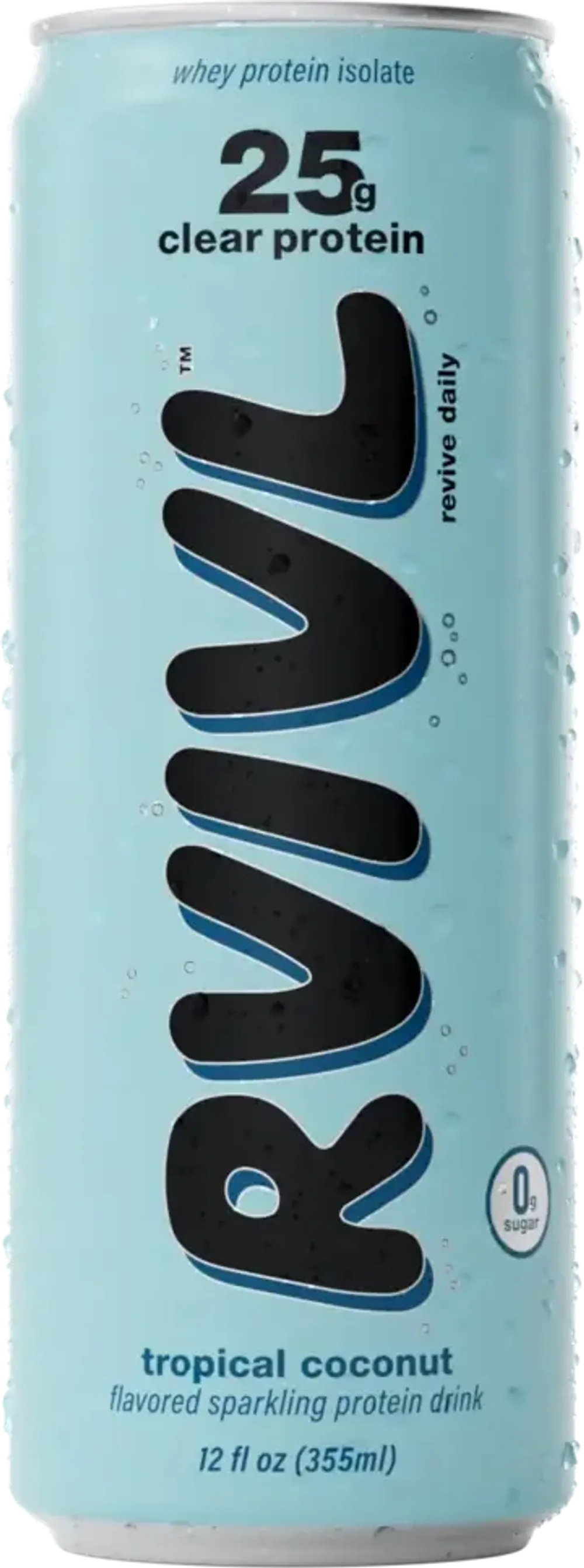
The launch lineup covers three flavors: Tropical Coconut, Strawberry Lemonade, and Peach Mango, each built on the same base formula with flavor-specific natural flavor blends.
Does RVIVL's Formula Back Up the Pitch
The formula holds up on its core claim: 25g of protein and 3g of fiber for 120 calories with zero added sugar is a genuinely hard combination to hit, and the whey isolate plus collagen pairing has real research behind it, even if RVIVL doesn't disclose the split. It's a fit for people who want their protein number without a shaker, provided they're comfortable with the milk allergen and the sucralose/Ace-K sweetener system.
Follow @BevlabMedia on TikTok and Instagram for more breakdowns like this one.
References
- Goulding, D.A. et al. "Milk proteins: An overview." Milk Proteins, 2020. https://doi.org/10.1016/B978-0-12-815251-5.00002-5
- Witard, Oliver C, et al. "Myofibrillar muscle protein synthesis rates subsequent to a meal in response to increasing doses of whey protein at rest and after resistance exercise." The American journal of clinical nutrition, 2014. https://doi.org/10.3945/ajcn.112.055517
- Pennings, Bart, et al. "Whey Protein Stimulates Postprandial Muscle Protein Accretion More Effectively Than Do Casein And Casein Hydrolysate In Older Men." The American journal of clinical nutrition, 2011. https://doi.org/10.3945/ajcn.110.008102
- Li, Peng, et al. "Roles Of Dietary Glycine Proline And Hydroxyproline In Collagen Synthesis And Animal Growth." Amino acids, 2018. https://doi.org/10.1007/s00726-017-2490-6
- Proksch, E, et al. "Oral Supplementation Of Specific Collagen Peptides Has Beneficial Effects On Human Skin Physiology A Double Blind Placebo Controlled Study." Skin pharmacology and physiology, 2014. https://doi.org/10.1159/000351376
- Clark, Kristine L, et al. "24 Week Study On The Use Of Collagen Hydrolysate As A Dietary Supplement In Athletes With Activity Related Joint Pain." Current medical research and opinion, 2008. https://doi.org/10.1185/030079908X291967
- Aussieker, Thorben, et al. "Ingestion of a Whey Plus Collagen Protein Blend Increases Myofibrillar and Muscle Connective Protein Synthesis Rates." Medicine and science in sports and exercise, 2025. https://doi.org/10.1249/MSS.0000000000003596
- EFSA, Panel on Food Additives and Flavourings (FAF), et al. "Re-evaluation of sucralose (E 955) as a food additive and evaluation of a new application on extension of use of sucralose (E 955) in fine bakery wares." EFSA journal. European Food Safety Authority, 2026. https://doi.org/10.2903/j.efsa.2026.9854
- Pepino, M Yanina, et al. "Sucralose affects glycemic and hormonal responses to an oral glucose load." Diabetes care, 2013. https://doi.org/10.2337/dc12-2221
- Romo-Romo, Alonso, et al. "Sucralose decreases insulin sensitivity in healthy subjects: a randomized controlled trial." The American journal of clinical nutrition, 2018. https://doi.org/10.1093/ajcn/nqy152
- Suez, Jotham, et al. "Personalized microbiome-driven effects of non-nutritive sweeteners on human glucose tolerance." Cell, 2022. https://doi.org/10.1016/j.cell.2022.07.016
- Daher, Mira, et al. "The Effect of Non-Nutritive Sweeteners' Consumption on Body Weight: A Randomized-Controlled Trial." Food science & nutrition, 2025. https://doi.org/10.1002/fsn3.70691
- Chowdhury, Chandrama Roy, et al. "Beyond sweetness: A review of the health and safety of acesulfame-K." Food chemistry, 2026. https://doi.org/10.1016/j.foodchem.2025.147290
- Almiron-Roig, Eva, et al. "Impact of acute consumption of beverages containing plant-based or alternative sweetener blends on postprandial appetite, food intake, metabolism, and gastro-intestinal symptoms: Results of the SWEET beverages trial." Appetite, 2023. https://doi.org/10.1016/j.appet.2023.106515
- Rathaus, Moran, et al. "Long-term metabolic effects of non-nutritive sweeteners." Molecular metabolism, 2024. https://doi.org/10.1016/j.molmet.2024.101985
- Marchitti, Satori A, et al. "Lack of Genotoxic and Carcinogenic Potential for Nonsugar Sweeteners: A Review of Animal and Mechanistic Evidence." Advances in nutrition (Bethesda, Md.), 2025. https://doi.org/10.1016/j.advnut.2025.100552
- Weaver, Connie M. "Potassium and health." Advances in nutrition (Bethesda, Md.), 2013. https://doi.org/10.3945/an.112.003533
- Adrogué, Horacio J, et al. "Sodium and potassium in the pathogenesis of hypertension." The New England journal of medicine, 2007. https://doi.org/10.1056/NEJMra064486
Tagged