NO CAP! Soda Pop
The soda stripped down to the part people actually want
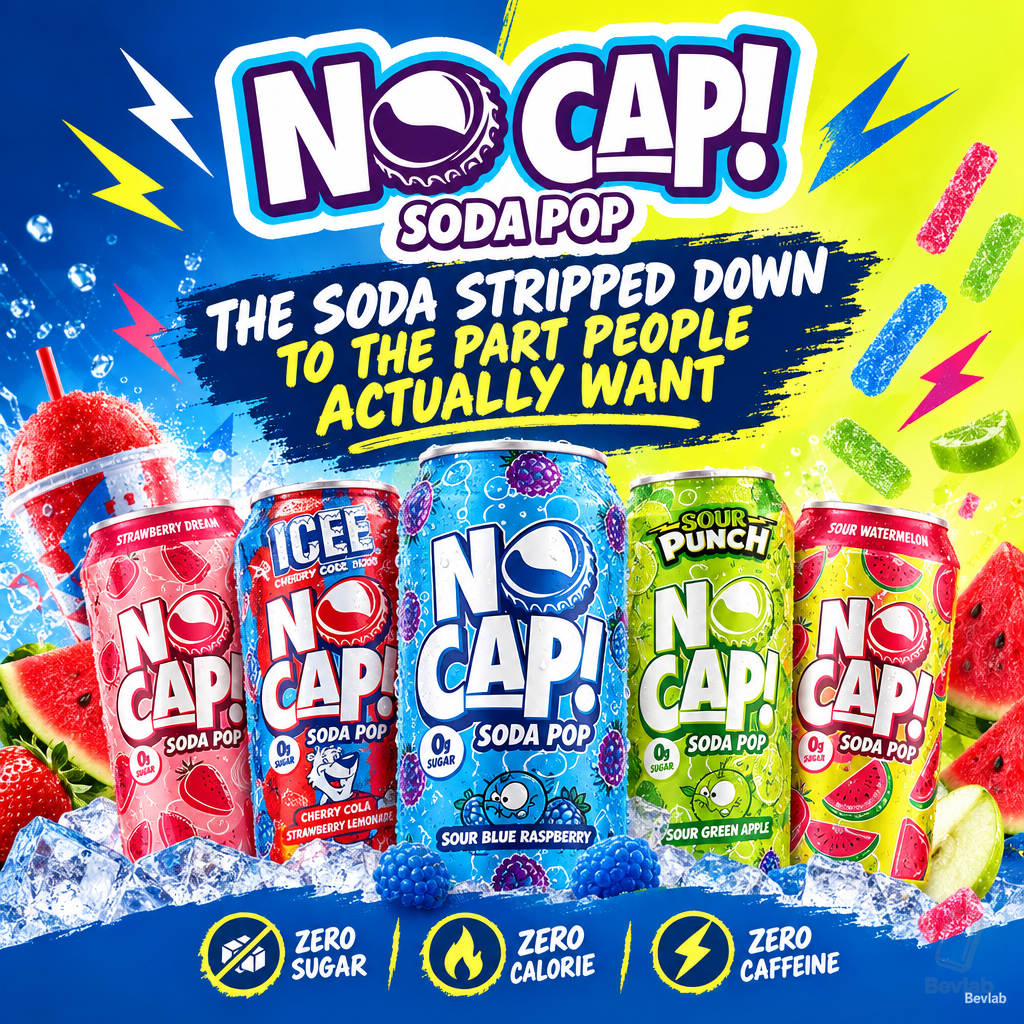
NO CAP! Soda Pop's zero-sugar, zero-calorie formula leans on allulose and citrate salts to recreate soda flavor without the sugar crash.
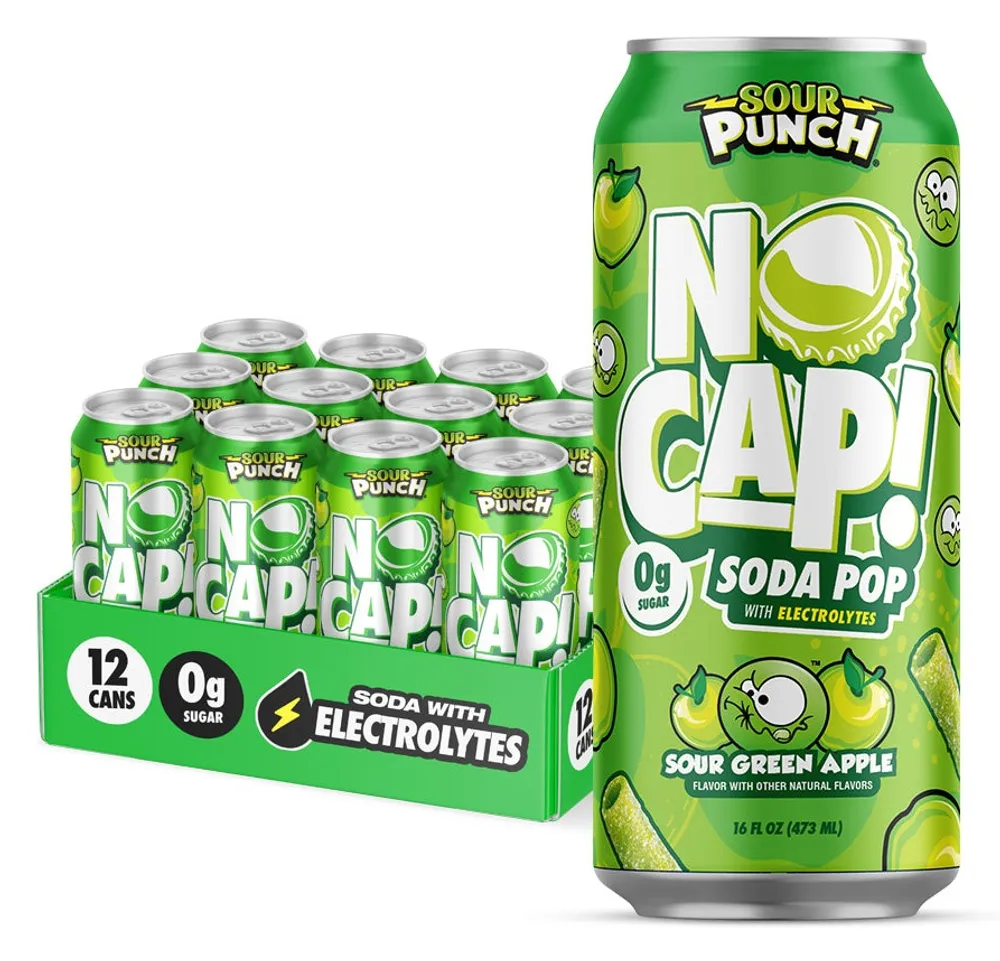
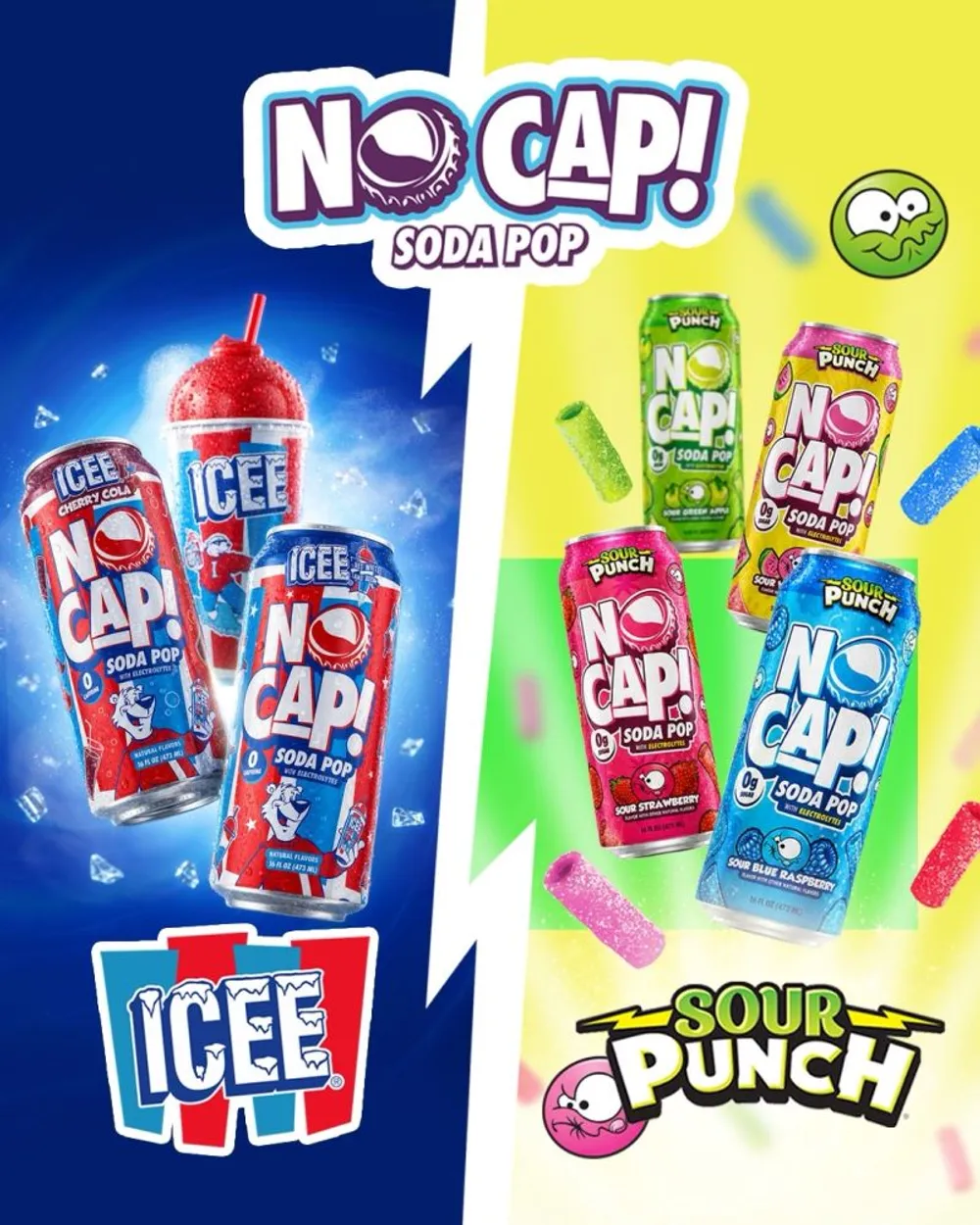
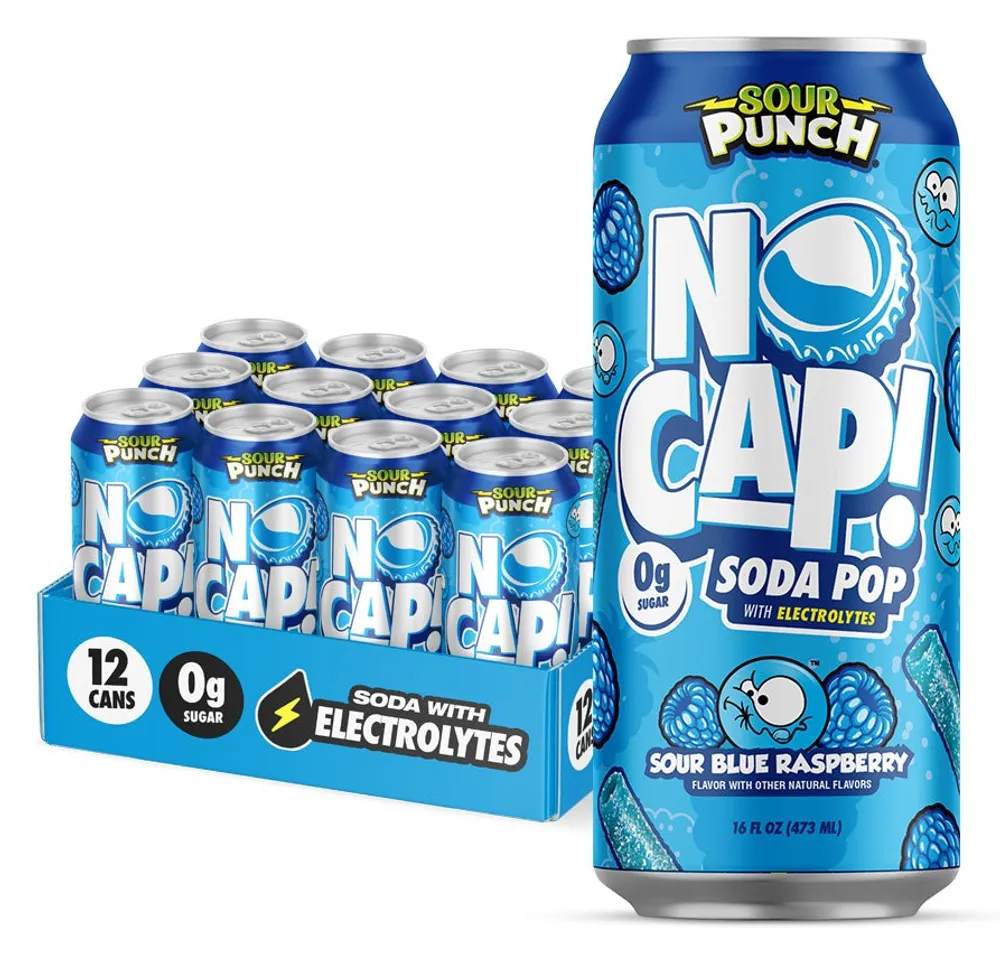
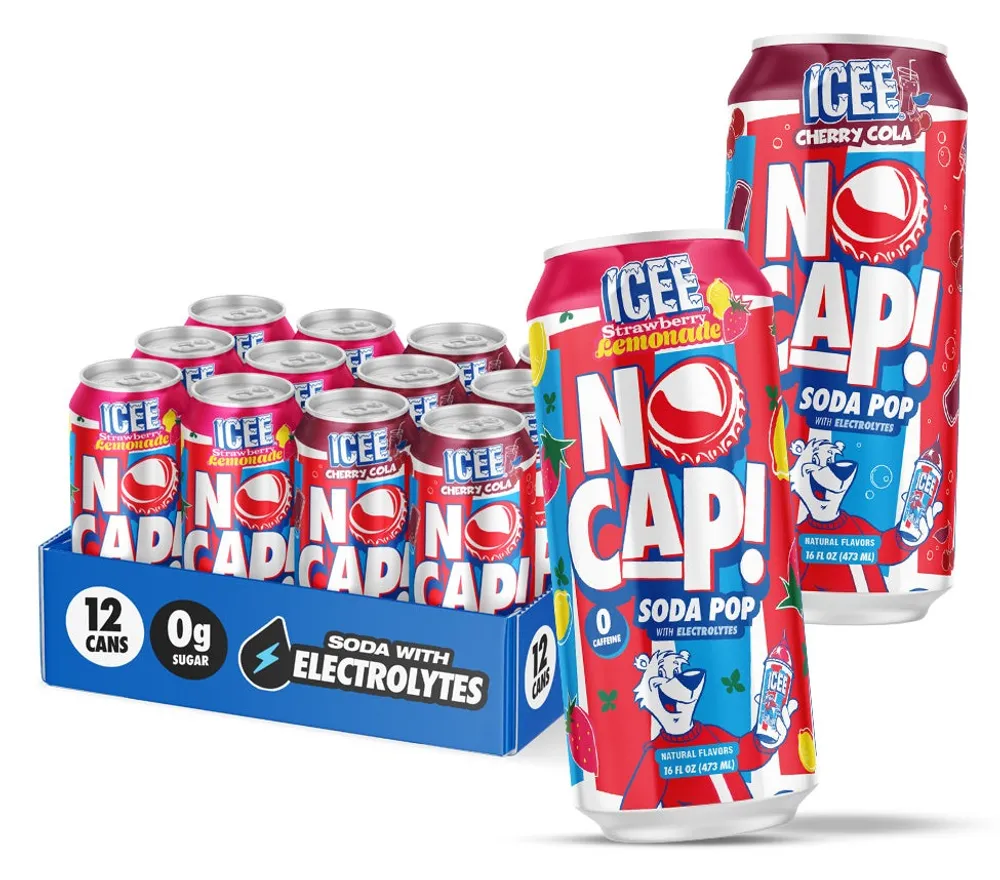
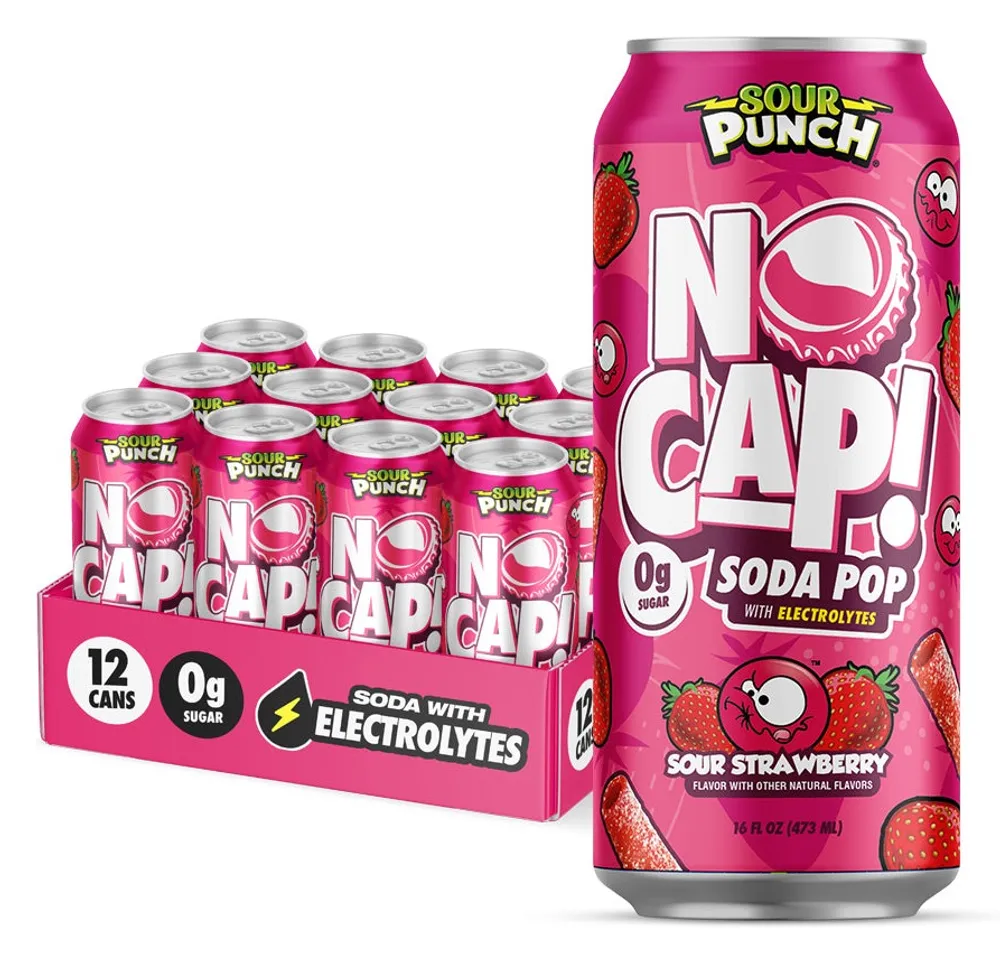
The popular NO CAP! Soda Pop picked up two candy-aisle crossovers in short order: a four-flavor Sour Punch lineup (Sour Watermelon, Sour Strawberry, Sour Green Apple, and Sour Blue Raspberry) and a slushie-inspired team-up with ICEE built around a Cherry Cola Strawberry Lemonade can. Both moves lean on the same instinct that built the brand: borrowing a familiar, nostalgic name and delivering it zero sugar, zero calorie, and zero caffeine. NO CAP! Soda Pop is the father-son project behind that pitch, co-founded by Sam Wilson and Vinny Wilson, and the collabs are a good entry point into a formula that hasn't changed much since the original lineup.
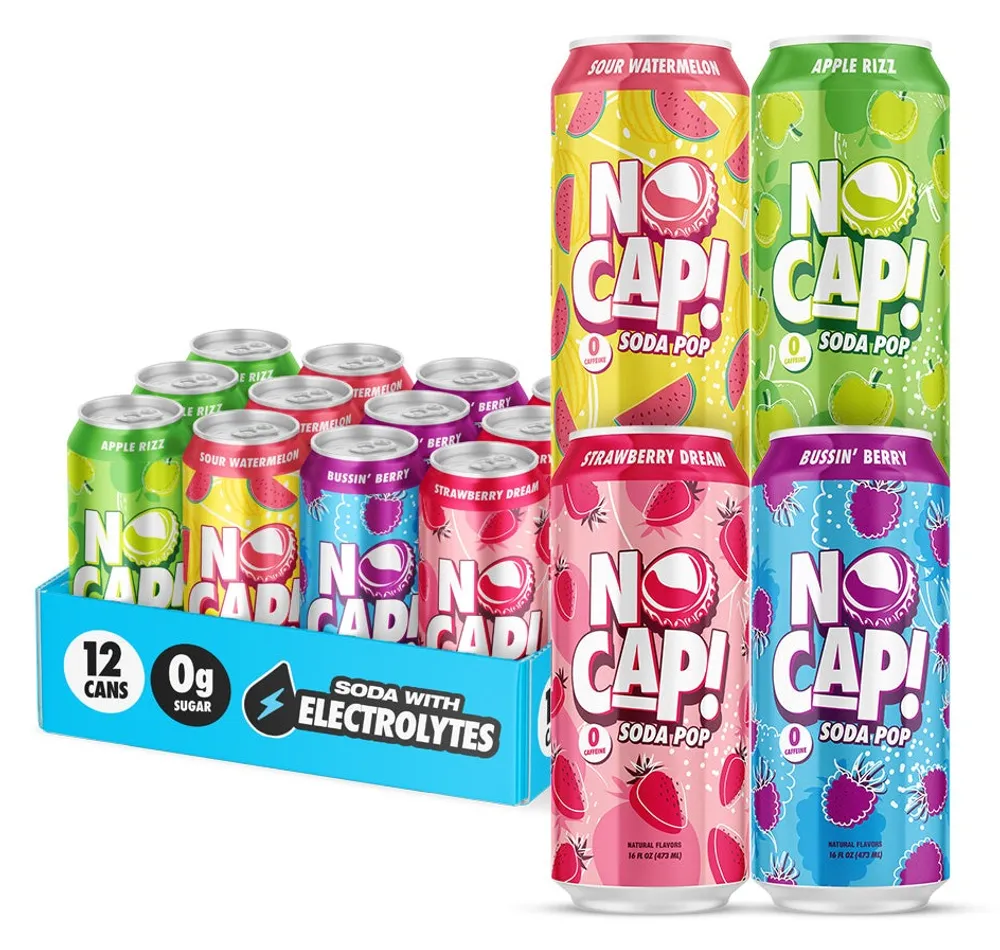
Every can in the range, from a core flavor like Four Watermelon to the newer Sour Punch and ICEE extensions, runs on the same base: carbonated water, a rare sugar called allulose, citric acid for tartness, natural flavors, and a trio of citrate mineral salts handling sodium, potassium, and calcium. None of it needs a chemistry degree to parse, which is more or less the whole point of the brand.
NO CAP! Soda Pop Nutrition Facts
- Calories: 0
- Total Fat: 0g (0% DV)
- Total Carbohydrate: 5g (2% DV)
- Total Sugars: 0g
- Added Sugars: 0g (0% DV)
- Total Sugars: 0g
- Protein: 0g
- Vitamins and Minerals
- Sodium: 45mg (2% DV)
- Potassium: 100mg (2% DV)
- Calcium: 30mg (2% DV)
NO CAP! Soda Pop Ingredients
Each 16 fl oz can provides the following:
-
Carbonated Water
Carbonated Water is the base of every NO CAP! can, supplying the fizz and mildly acidic bite that makes a soda feel like a soda rather than flavored water. Carbonation also triggers a handful of acute physiological responses that researchers are still mapping out. Small crossover trials have found that drinking carbonated water produces short-lived changes in blood pressure, cerebral blood flow, and post-exercise mood compared with still water.[1,2] These are brief, lab-measured signals from controlled studies, not evidence that fizzy water changes long-term health outcomes, and they say nothing specific about a flavored, sweetened can like this one. For NO CAP!, carbonation's real job is texture, turning a sugar-free base into something that reads as a full-flavor soda instead of a diet substitute.
-
Allulose
Allulose is the ingredient doing the heavy lifting on the "zero sugar, zero calorie" claim. It's a rare sugar found in trace amounts in figs and molasses that tastes close to identical to table sugar but isn't metabolized the same way, contributing close to zero usable calories per gram.[3] Human trials have found that allulose blunts the blood sugar spike that follows a sugary meal, with doses in the 5-10g range producing small but meaningful reductions in post-meal glucose compared to placebo.[4] A separate trial in US adults found a dose-dependent drop in both glucose and insulin at 7.5g and 10g doses added to a sucrose load.[5] NO CAP! doesn't disclose how much allulose is in a can, so none of that research translates into a specific claim about this product. What it does explain is why a zero-sugar soda can still taste like one, since allulose is one of the few sweeteners that mimics sucrose's sweetness curve closely enough to carry a cola or fruit-soda flavor without an artificial aftertaste.
-
Citric Acid
Citric Acid supplies the tartness that keeps a zero-sugar soda from tasting flat. It's the same acid found naturally in citrus fruit (lemon juice alone runs around 48 grams per liter) and it's used industrially as a pH regulator, preservative, and flavor enhancer in beverages.[6] Citrate is also a normal part of human metabolism, a central intermediate in the Krebs cycle that produces cellular energy.[7] In a can of soda, though, its job is purely sensory: balancing the sweetness of allulose and stevia so the drink reads as bright and carbonated rather than syrupy.
-
Natural Flavors
Natural Flavors is a regulatory category, not a single ingredient. Under FDA rules, anything derived from a fruit, vegetable, spice, or similar source material can be labeled "natural flavor" regardless of how processed or concentrated it is, which is why two completely different soda brands can both list "natural flavor" on cans that taste nothing alike.[8] For NO CAP!, this is the line item doing the actual flavor-matching work, whether that's Four Watermelon in the core lineup or Cherry Cola Strawberry Lemonade in the ICEE collaboration. It carries no nutritional or functional role of its own. It exists purely to make the can taste like what the name promises.
-
Sodium Citrate
Sodium Citrate shows up in sports nutrition research as a pre-workout buffering agent, dosed as high as 500mg per kilogram of body weight to delay fatigue during short, high-intensity exercise.[9] That's not what it's doing here. NO CAP! doesn't disclose how much sodium citrate is in a can, and the amount almost certainly isn't anywhere near an ergogenic dose. It's also the primary contributor to the 45mg of sodium on the Nutrition Facts panel. In a soda formula, sodium citrate is a buffering salt that smooths out the sharp edge of citric acid and helps stabilize the drink's pH, a far more modest job than the exercise-performance research around it would suggest.
-
Vitamins and Minerals
-
Potassium (as Potassium Citrate) - 100mg (2% DV)
Potassium is an essential mineral and the primary ion inside your cells, and most adults in the US fall well short of recommended intake.[10] Research on potassium supplementation, mostly at doses in the 2,340-4,700mg range, has linked it to measurable reductions in blood pressure and a lower sodium-to-potassium ratio associated with cardiovascular risk.[11,12] The 100mg in a can of NO CAP! is a small fraction of those studied amounts, closer to a modest electrolyte contribution than a dose that moves the needle on its own.
-
Calcium (as Calcium Citrate) - 30mg (2% DV)
Calcium is best known for its role in bone health, where sustained intake above roughly 1,000mg per day has been linked to reduced fracture risk in postmenopausal women and older adults.[13] At 30mg per can, NO CAP! contributes a small amount toward that daily total, nowhere near a supplemental dose. Calcium citrate is also well absorbed relative to other calcium salts, which likely factored into its use here alongside the rest of the citrate buffering system.
-
-
Other Ingredients
- Stevia Leaf Extract - a zero-calorie natural sweetener that works alongside allulose to round out the sweetness curve without adding sugar.
- Fruit and Vegetable Juice (Color) - a natural colorant derived from fruit and vegetable concentrates, used to give each flavor its characteristic hue without synthetic dyes.
From Four Watermelon To Sour Punch And ICEE
NO CAP! Soda Pop launched with a core lineup built around familiar soda territory, including the Four Watermelon can referenced for this breakdown, each built on the same zero sugar, zero calorie, zero caffeine formula. The brand has since leaned on collaborations to extend that formula into new flavor territory rather than reinvent it. The Sour Punch lineup launched in four flavors, translating the candy brand's sour-and-sweet profile into a can. The ICEE collaboration took a different angle, borrowing the slushie brand's cherry cola and strawberry lemonade combination for a flavor built on nostalgia rather than a single fruit note. Both partnerships follow the same brief as the core lineup: recognizable flavor, none of the ingredients NO CAP! built its name on avoiding.
- Apple Rizz (12 Cans: $43.72)
- Bussin Berry (12 Cans: $29.99)
- Sour Watermelon (12 Cans: $44.71)
- Strawberry Dream (12 Cans: $29.99)
- Strawberry Lemonade (12 Cans: $29.99)
- Variety Pack (12 Cans: $29.99)
Soda Drinkers Skipping The Diet Aisle
- Zero-sugar soda drinkers burned by diet-soda aftertaste: the allulose-and-stevia combination is built to avoid the artificial sweetener bite that keeps some shoppers away from the diet shelf entirely.
- Retailers testing zero-sugar shelf space: the Sour Punch and ICEE collaborations give buyers two recognizable names to pair with an otherwise unfamiliar brand.
A Short Label That Still Tastes Like Soda
NO CAP! Soda Pop backs up its "zero sugar, zero calorie, zero caffeine" pitch with a formula that's genuinely short: carbonated water, allulose, citric acid, natural flavors, three citrate mineral salts, stevia, and a fruit-and-vegetable color. There's no proprietary blend and nothing on the label that needs an asterisk. It's a solid pick for soda drinkers who want the real flavor experience without the sugar guilt, whether that's a core can or one of the Sour Punch and ICEE collaborations.
Follow @BevlabMedia on TikTok and Instagram for more breakdowns like this one.
References
- Kajiki, Masanobu, et al. "Ingesting carbonated water post-exercise in the heat transiently ameliorates hypotension and enhances mood state." Experimental physiology, 2024. https://doi.org/10.1113/EP091925
- Kosugi, Wataru, et al. "Effect of carbonated water on cerebral blood flow in the frontal region: a study using near-infrared spectroscopy." Frontiers in behavioral neuroscience, 2024. https://doi.org/10.3389/fnbeh.2024.1409123
- Xia, Yu, et al. "Research Advances of d-allulose: An Overview of Physiological Functions, Enzymatic Biotransformation Technologies, and Production Processes." Foods (Basel, Switzerland), 2021. https://doi.org/10.3390/foods10092186
- Tani, Yuma, et al. "Allulose For The Attenuation Of Postprandial Blood Glucose Levels In Healthy Humans A Systematic Review And Meta Analysis." PloS one, 2023. https://doi.org/10.1371/journal.pone.0281150
- Franchi, Francesco, et al. "Effects of D-allulose on glucose tolerance and insulin response to a standard oral sucrose load: results of a prospective, randomized, crossover study." BMJ open diabetes research & care, 2021. https://doi.org/10.1136/bmjdrc-2020-001939
- Penniston, Kristina L, et al. "Quantitative assessment of citric acid in lemon juice, lime juice, and commercially-available fruit juice products." Journal of endourology, 2008. https://doi.org/10.1089/end.2007.0304
- Vesnina, Anna, et al. "Citric Acid Cycle Genes and Nutrigenetics." International journal of molecular sciences, 2026. https://doi.org/10.3390/ijms27052360
- Goodman, Matthew J. "The “Natural” vs. “Natural Flavors” Conflict in Food Labeling: A Regulatory Viewpoint." Food and drug law journal, 2017. https://pubmed.ncbi.nlm.nih.gov/29140655/
- Urwin, Charles S, et al. "Factors Influencing Blood Alkalosis and Other Physiological Responses, Gastrointestinal Symptoms, and Exercise Performance Following Sodium Citrate Supplementation: A Review." International journal of sport nutrition and exercise metabolism, 2021. https://doi.org/10.1123/ijsnem.2020-0192
- Weaver, Connie M. "Potassium and health." Advances in nutrition (Bethesda, Md.), 2013. https://doi.org/10.3945/an.112.003533
- He, Feng J, et al. "Beneficial effects of potassium on human health." Physiologia plantarum, 2008. https://doi.org/10.1111/j.1399-3054.2007.01033.x
- Adrogué, Horacio J, et al. "Sodium and potassium in the pathogenesis of hypertension." The New England journal of medicine, 2007. https://doi.org/10.1056/NEJMra064486
- Clarke, B.L. "Use Of Calcium Or Calcium In Combination With Vitamin D Supplementation To Prevent Fractures And Bone Loss In People Aged 50 Years And Older A Meta Analysis." Yearbook of Endocrinology, 2008. https://doi.org/10.1016/s0084-3741(08)79096-6
Tagged