SkyPop Protein Soda
Soda That Actually Tastes Like Soda, With a Protein Boost Baked In
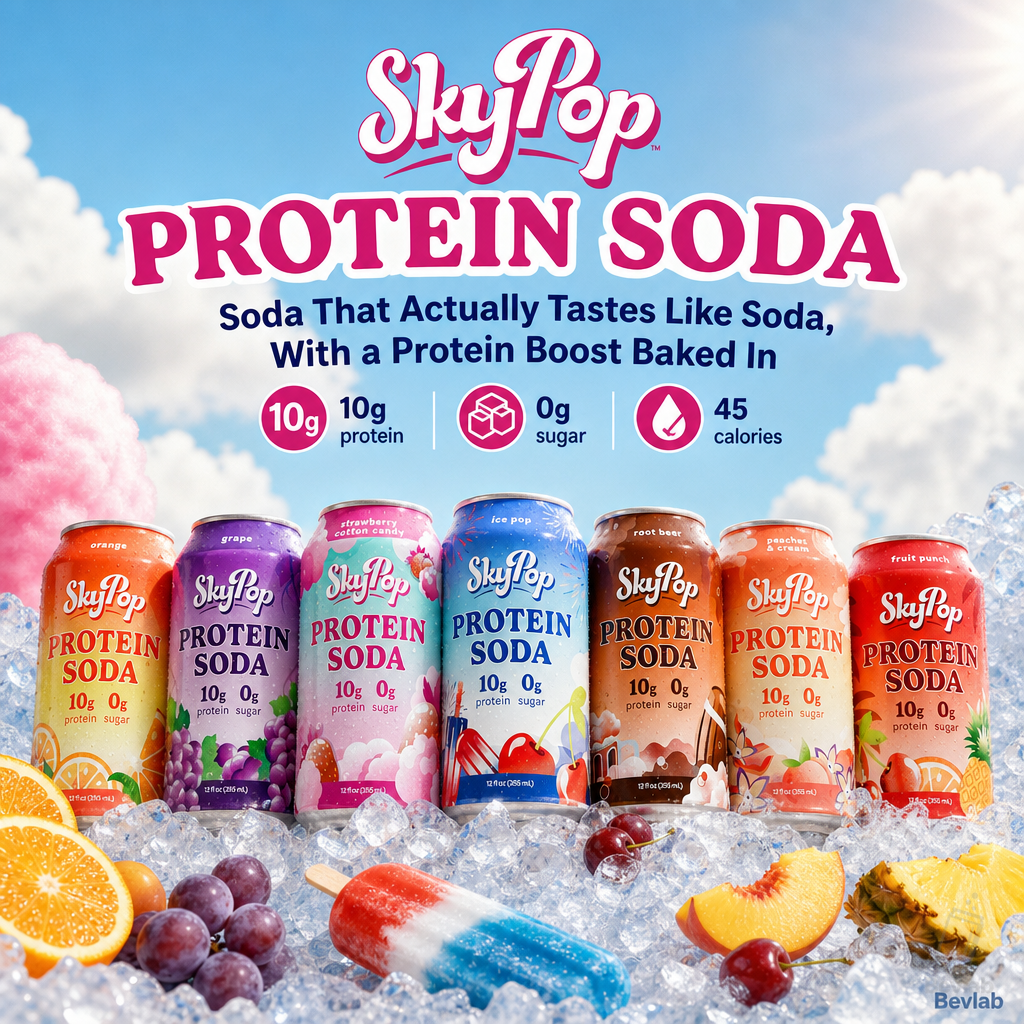
SkyPop Protein Soda packs 10g of whey protein and 45 calories into a zero-sugar can built to taste like real soda. Here's what's inside.
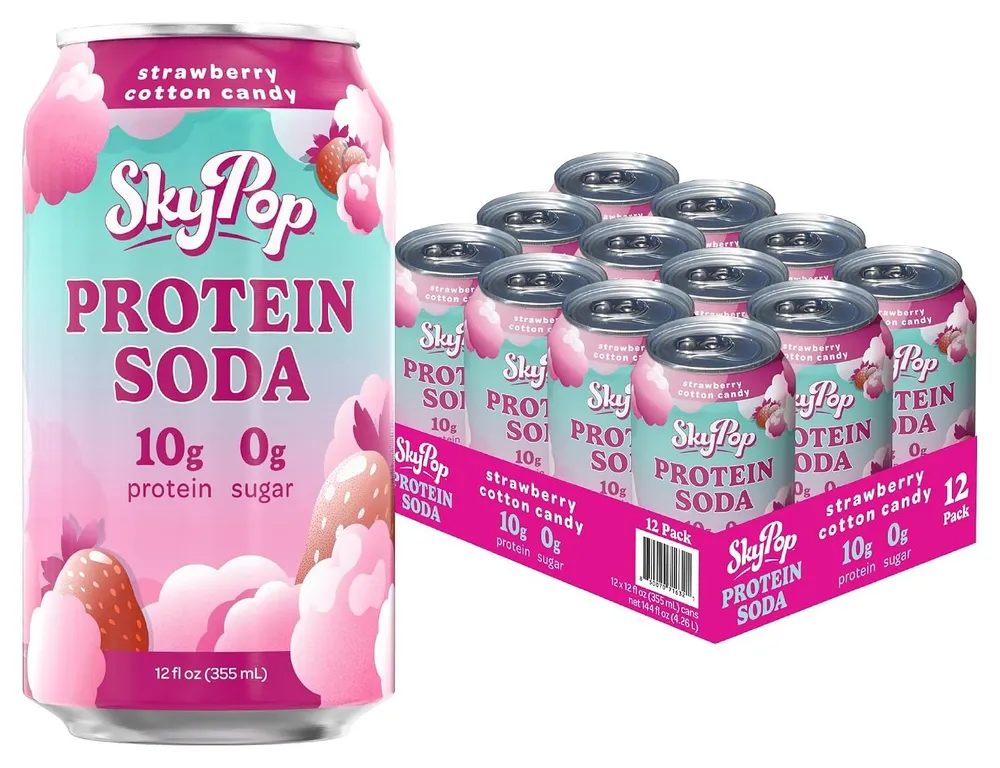
SkyPop Protein Soda is making a simple bet: you don't have to give up soda to cut sugar and add protein, you just need a better can. Each 12 fl oz (355mL) can delivers 10g of complete whey protein, zero sugar, and only 45 calories, built around flavors that read like a candy aisle rather than a supplement shelf: Orange, Fruit Punch, Grape, Root Beer, Peaches & Cream, Ice Pop, and Strawberry Cotton Candy.
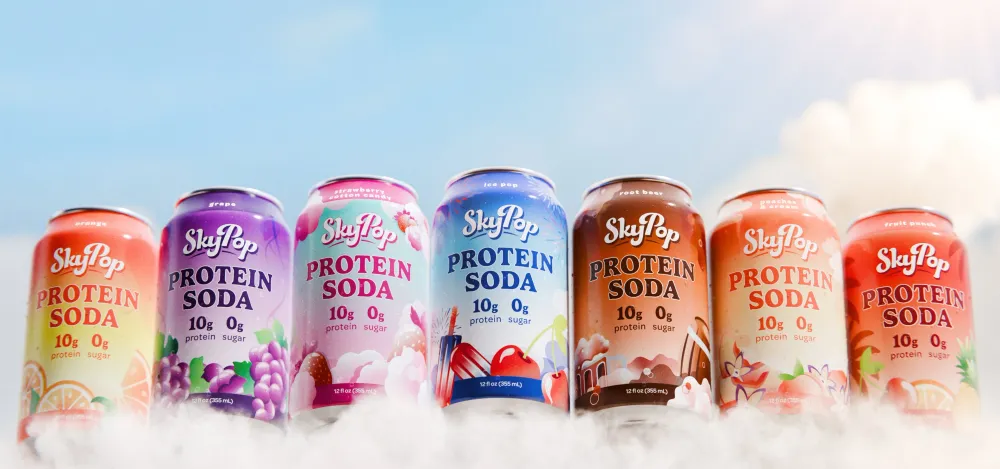
The brand didn't start out this way. SkyPop began as Don't Quit, a protein soda aimed squarely at gym-goers, before a full rebrand stripped out the "workout soda" framing and rebuilt the identity around something broader: playful can art, nostalgic flavors, and a pitch that works whether you're mid-workout or just raiding the fridge on a Tuesday. That shift lines up with where protein soda is heading as a category, while SkyPop continues expanding its retail footprint.
SkyPop Protein Soda Nutrition Facts
Per 1 can (355mL / 12 fl oz):
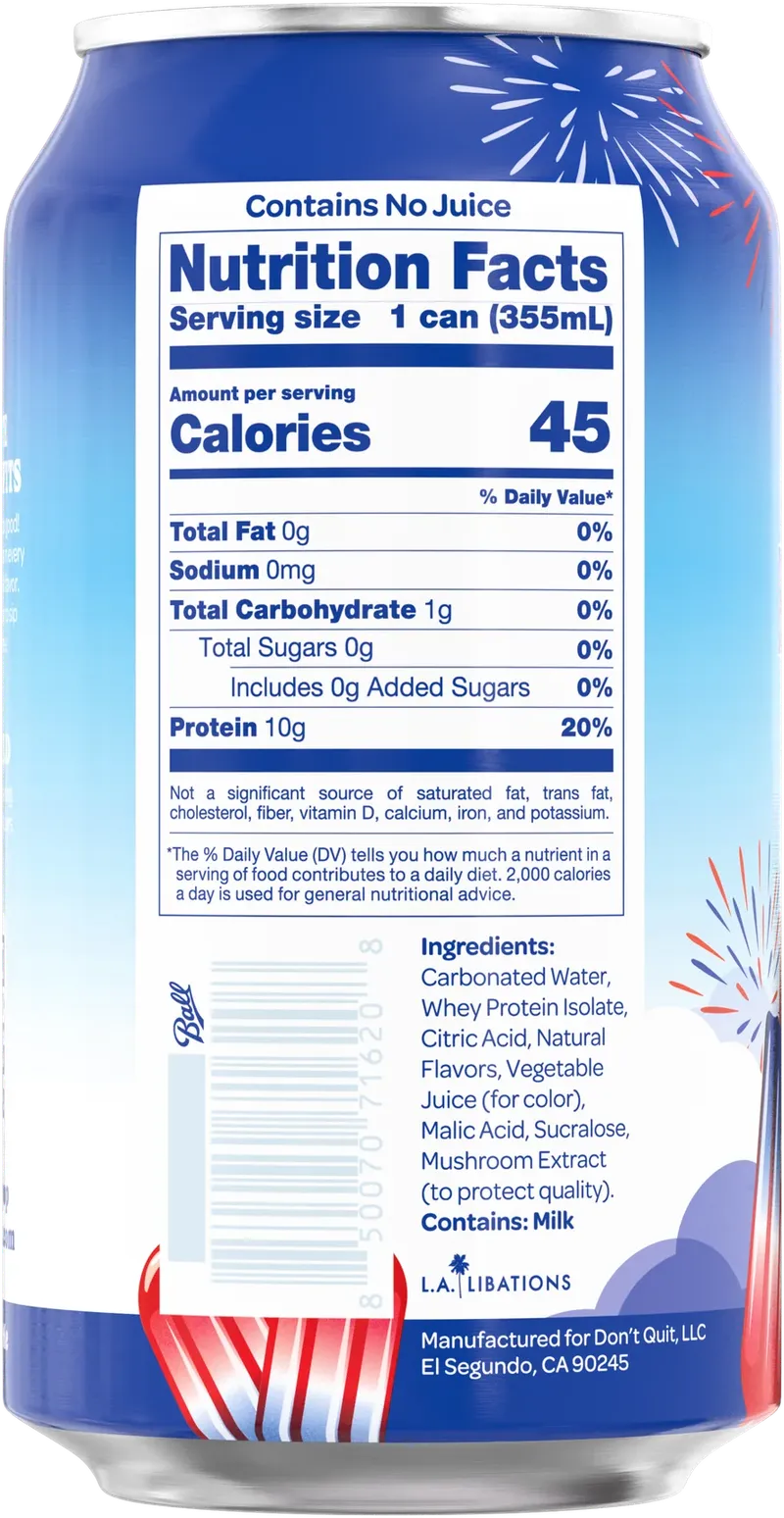
- Calories: 45
- Total Fat: 0g (0% DV)
- Sodium: 0mg (0% DV)
- Total Carbohydrate: 1g (0% DV)
- Total Sugars: 0g
- Added Sugars: 0g (0% DV)
- Protein: 10g (20% DV)
The can isn't a significant source of saturated fat, trans fat, cholesterol, fiber, vitamin D, calcium, iron, or potassium. This is a protein-and-taste play, not a fortified multivitamin drink.
SkyPop Protein Soda Ingredients
Here's what's actually in the can, in the order it appears on the label.
-
Carbonated Water
Carbonated Water is the base of every can, providing the soda-like carbonation that separates SkyPop from a typical protein shake.
-
Whey Protein Isolate - 10g Protein
Whey Protein Isolate is the reason this can qualifies as a protein soda instead of just a soda. Whey is a fast-digesting complete protein rich in leucine, an amino acid involved in muscle protein synthesis. In a controlled dosing study on resistance-trained men, 20g and 40g servings of whey protein isolate increased muscle protein synthesis more than no protein, while 10g did not reach the same response in that protocol.[1]
That doesn't make 10g pointless. Whey delivers amino acids quickly,[2] and long-term strength and lean-mass gains are driven largely by getting enough total protein across the day rather than maximizing every single serving.[3] A 10g can is an easy way to add to that daily total without turning a soda break into a full protein shake.
-
Citric Acid
Citric Acid is a common beverage acidulant that adds a clean tartness and helps keep sweetness from tasting flat.[4] In SkyPop, its role is flavor balance rather than some special functional benefit.
-
Natural Flavors
Natural Flavors carries the flavor identity of each SkyPop variety, from Root Beer to Strawberry Cotton Candy and Peaches & Cream. The exact flavor blend is proprietary and isn't broken out further on the label.[5]
-
Vegetable Juice (Color)
Vegetable Juice (Color) supplies plant-derived coloring rather than acting as a functional ingredient. Vegetable-derived pigments are widely used to color foods and beverages.[6]
-
Malic Acid
Malic Acid adds a sharper, lingering tartness that pairs well with citric acid in soda formulas. Its role here is straightforward: flavor balance.
-
Sucralose
Sucralose provides SkyPop's sugar-free sweetness. Regulators continue to maintain established acceptable-intake limits for sucralose,[7] and typical consumer intake remains well below those limits.[8]
-
Mushroom Extract (Preservative)
Mushroom Extract is included to protect product quality, not as a nootropic or adaptogen. Mushroom-derived glycolipids can inhibit spoilage yeasts and bacteria in acidic beverages, which explains the preservative role here.[9]
Flavors Available
- Grape (12 Cans: $26.98)
- Orange (12 Cans: $26.98)
- Peaches & Cream (1 Can: $2.39)
- Root Beer (12 Cans: $26.98)
- Strawberry Cotton Candy (12 Cans: $26.98)
Who It's For
- Soda drinkers trying to cut sugar without cutting the ritual: If you miss regular soda but don't want the sugar, SkyPop is built to close that gap without asking you to drink a traditional protein shake.
- People who don't want a full protein shake with every snack: 10g is a modest, easy-to-drink dose rather than a post-workout maximizer, which makes this a fit for casual, anytime protein rather than serious training nutrition.
A Protein Soda That Remembers It's Supposed to Taste Good
SkyPop isn't trying to out-protein the sports nutrition aisle: 10g of whey, zero sugar, and 45 calories is enough to make a can feel purposeful, while the flavor lineup keeps it in soda territory rather than supplement territory. If you want a better-for-you soda swap that doesn't taste like a compromise, this is one of the more approachable options on shelves right now.
References
- Witard, Oliver C, et al. "Myofibrillar muscle protein synthesis rates subsequent to a meal in response to increasing doses of whey protein at rest and after resistance exercise." The American journal of clinical nutrition, 2014. https://doi.org/10.3945/ajcn.112.055517
- Pennings, Bart, et al. "Whey Protein Stimulates Postprandial Muscle Protein Accretion More Effectively Than Do Casein And Casein Hydrolysate In Older Men." The American journal of clinical nutrition, 2011. https://doi.org/10.3945/ajcn.110.008102
- Morton, Robert W, et al. "A systematic review, meta-analysis and meta-regression of the effect of protein supplementation on resistance training-induced gains in muscle mass and strength in healthy adults." British journal of sports medicine, 2018. https://doi.org/10.1136/bjsports-2017-097608
- Książek, Ewelina. "Citric Acid: Properties, Microbial Production, and Applications in Industries." Molecules (Basel, Switzerland), 2023. https://doi.org/10.3390/molecules29010022
- Goodman, Matthew J. "The “Natural” vs. “Natural Flavors” Conflict in Food Labeling: A Regulatory Viewpoint." Food and drug law journal, 2017. https://pubmed.ncbi.nlm.nih.gov/29140655/
- Sigurdson, Gregory T, et al. "Natural Colorants: Food Colorants from Natural Sources." Annual review of food science and technology, 2017. https://doi.org/10.1146/annurev-food-030216-025923
- EFSA, Panel on Food Additives and Flavourings (FAF), et al. "Re-evaluation of sucralose (E 955) as a food additive and evaluation of a new application on extension of use of sucralose (E 955) in fine bakery wares." EFSA journal. European Food Safety Authority, 2026. https://doi.org/10.2903/j.efsa.2026.9854
- Daher, Mira, et al. "Trends and amounts of consumption of low-calorie sweeteners: A cross-sectional study." Clinical nutrition ESPEN, 2022. https://doi.org/10.1016/j.clnesp.2022.01.006
- Galasong, Yupawadee, et al. "Natural glycolipids inhibits certain yeasts and lactic acid bacteria pertinent to the spoilage of shelf stable beverages." Food Control, 2023. https://doi.org/10.1016/j.foodcont.2022.109544
Tagged