Prés Protein Coffee RTD
20 grams of protein, four flavors, and one incredibly smooth finish.
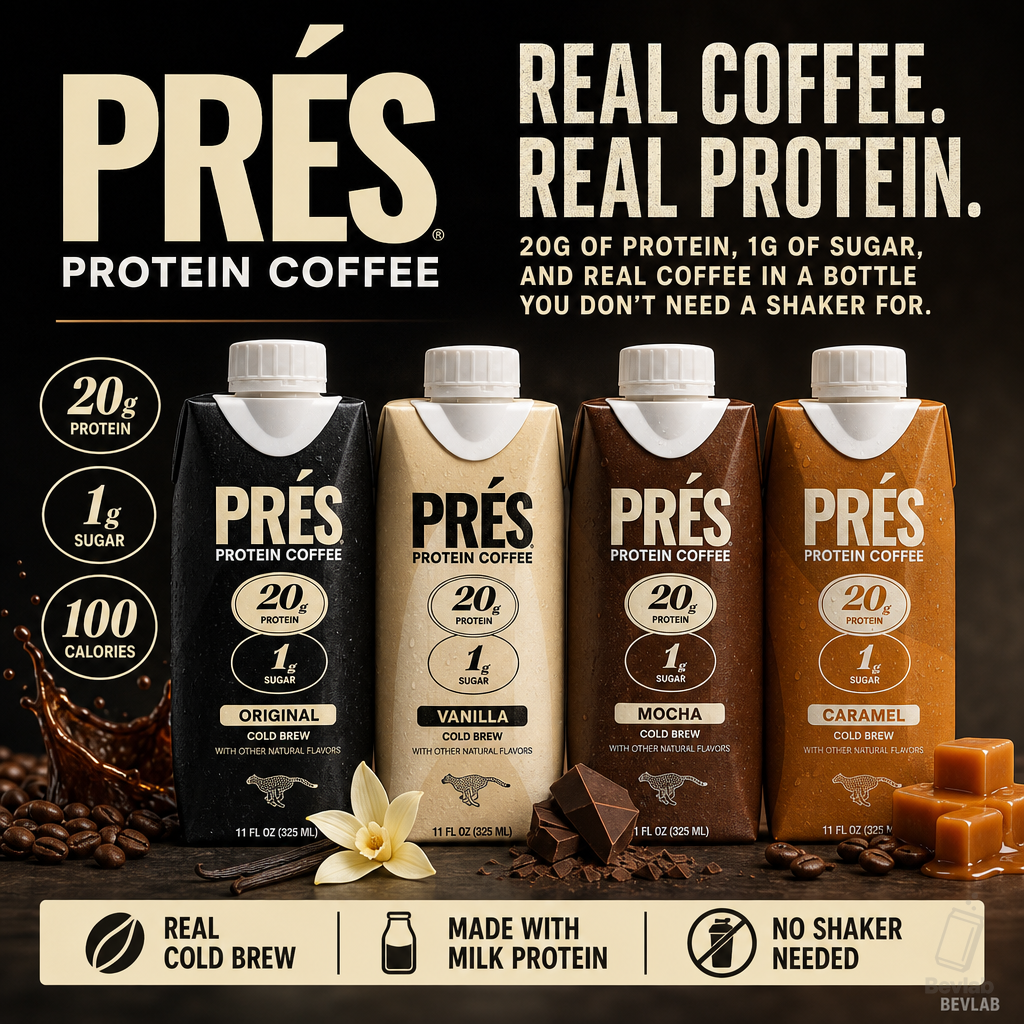
Prés Protein Coffee packs 20g of milk protein into a cold brew RTD across four flavors. Here's what's really in the bottle.
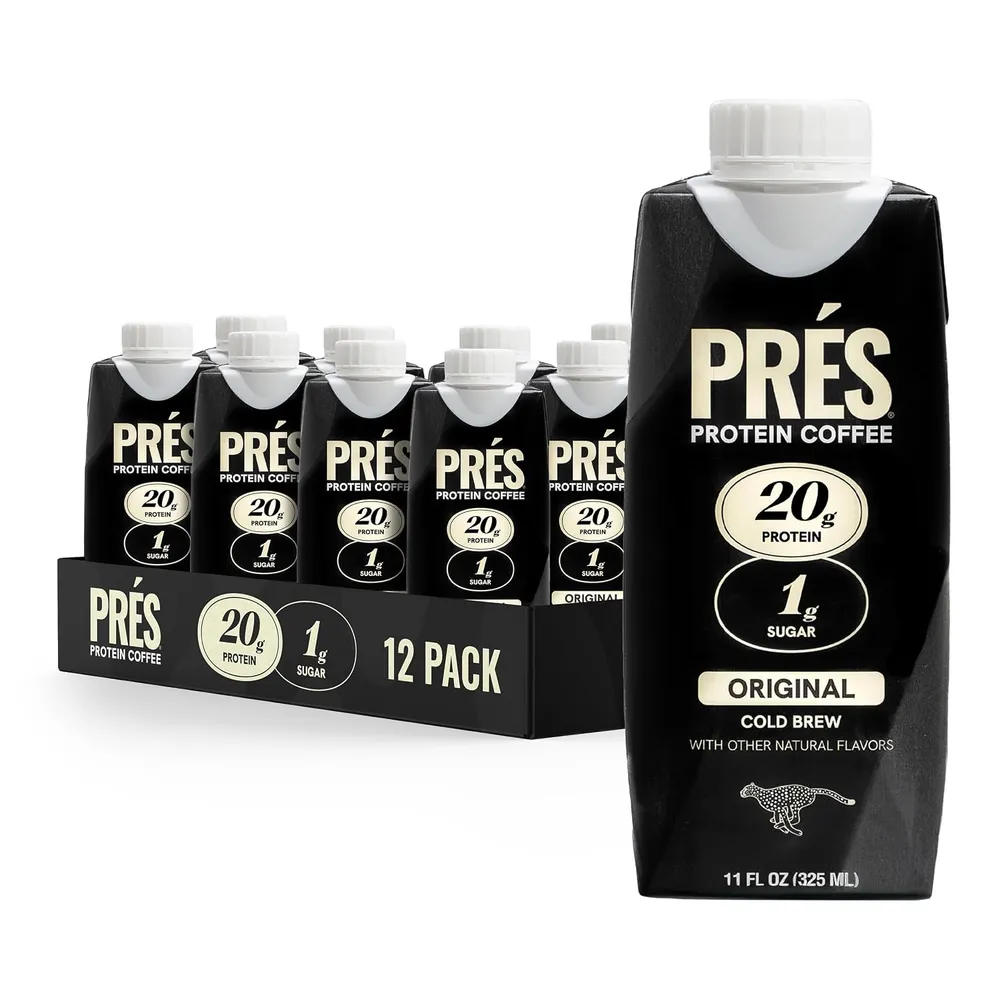
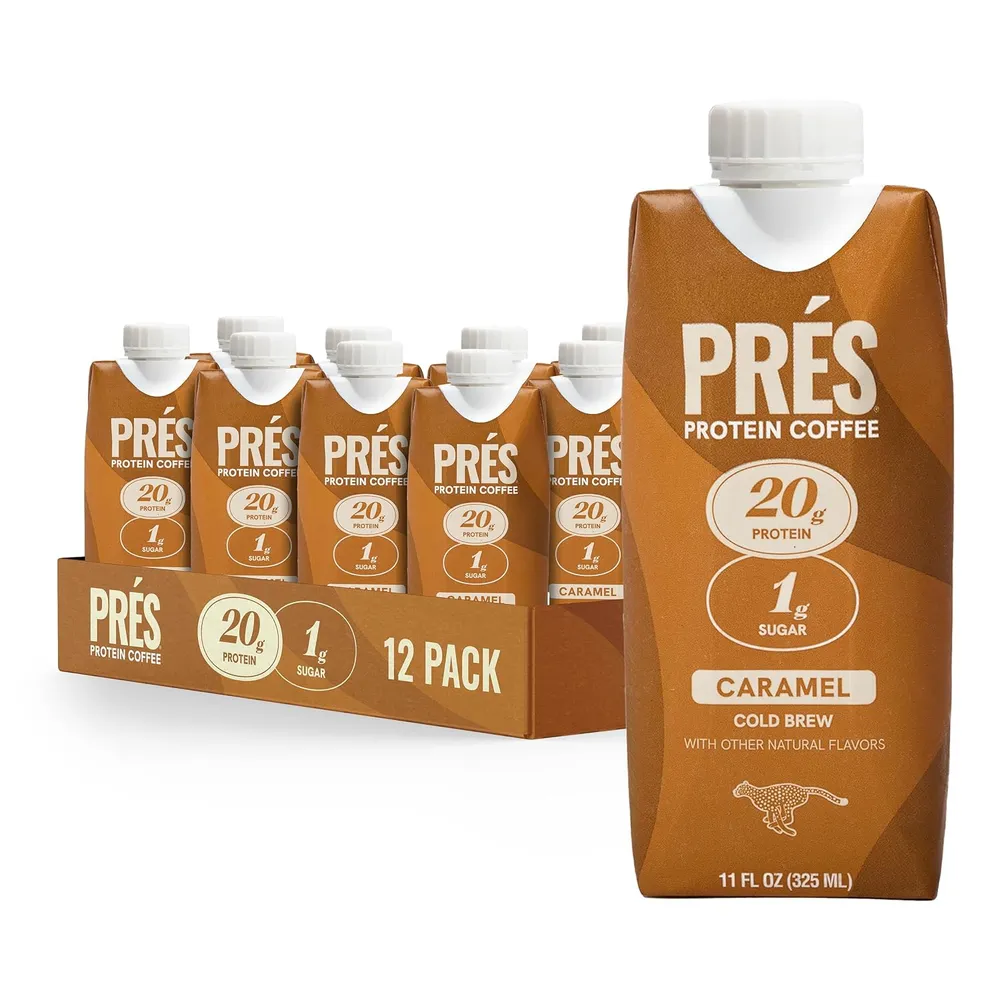
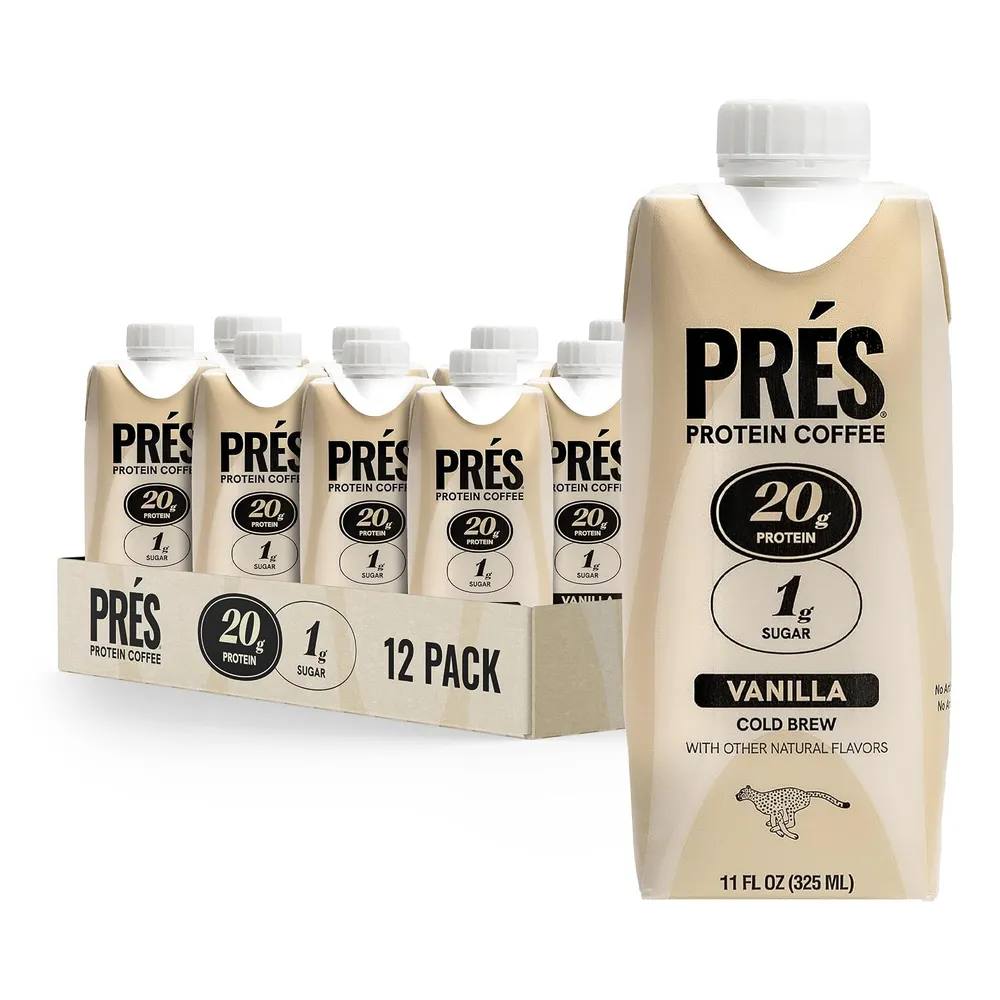
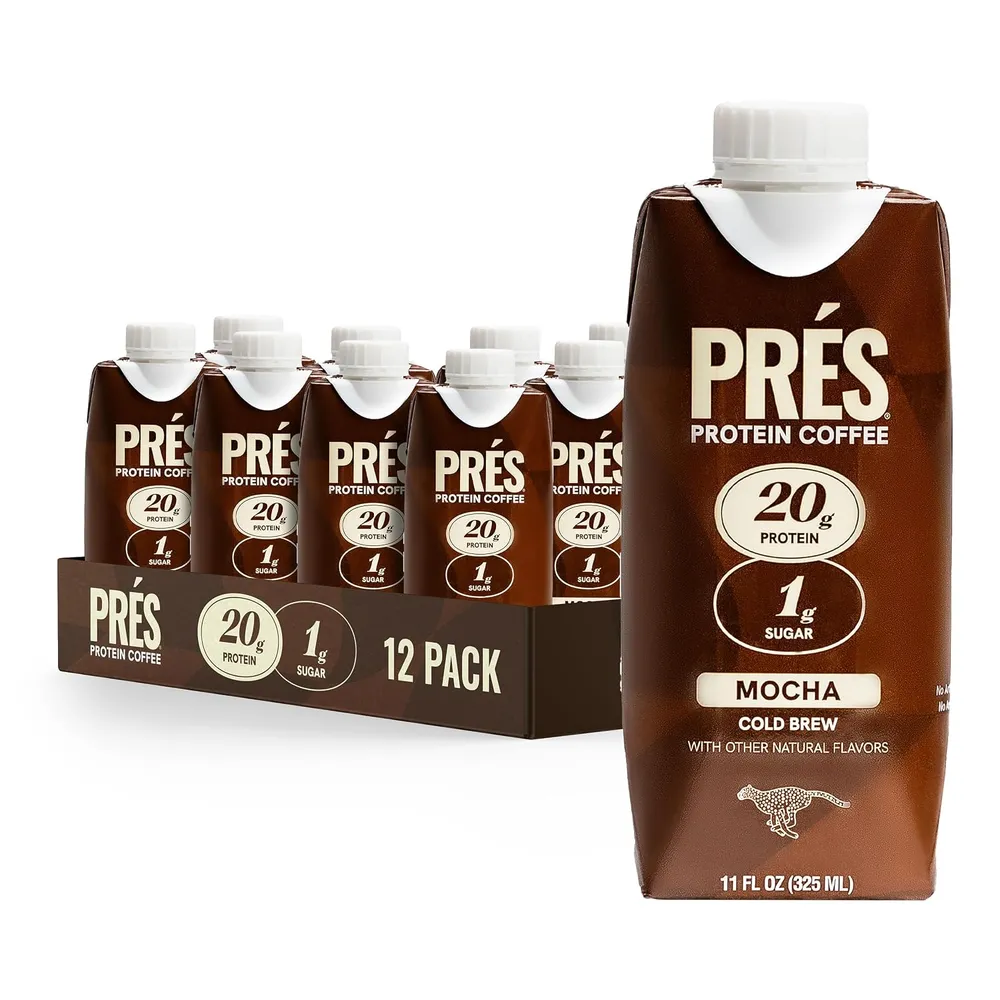
Prés Protein Coffee is a cold brew RTD built around a simple pitch: 20 grams of milk protein and real coffee, without the thick, milkshake texture most protein drinks carry. The name is pronounced "PREZ," short for Protein + Espresso, and the brand describes the format as something you drink like actual coffee rather than a recovery shake you choke down after a workout. It ships in four flavors, Original, Vanilla, Mocha, and Caramel, all sharing the same 100-calorie, 20g-protein, 1g-sugar backbone.
At 325mL a bottle with 20g protein and a claimed 99% lactose-free milk protein base, Prés is chasing a specific gap: people who want a protein hit in their morning coffee routine without reaching for a shaker bottle. Here's what's actually in the bottle, ingredient by ingredient. But let us tell you -- these flavors are smooth!
Prés Protein Coffee Nutrition Facts
Per 325mL bottle (reflecting the reviewed Original label, with other flavors sharing the same core protein and sugar numbers per the brand):
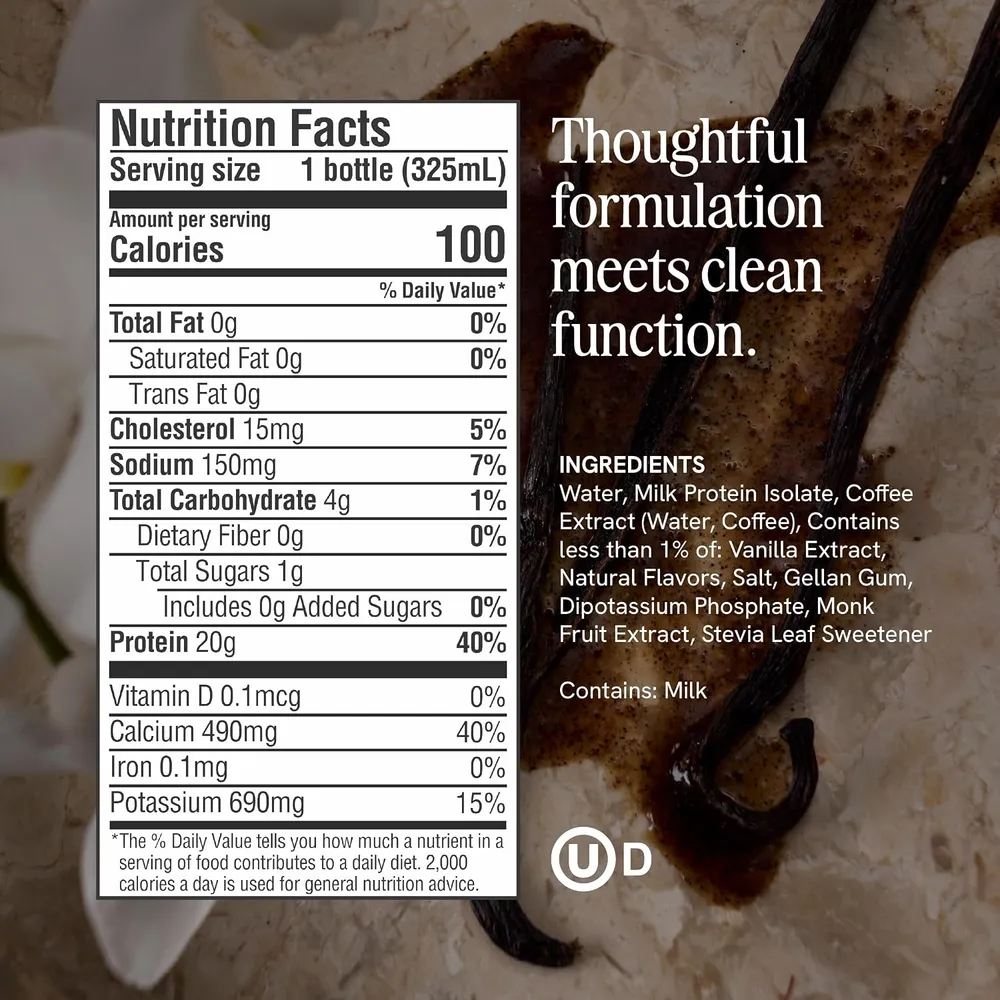
- Calories: 100
- Total Fat: 0g
- Saturated Fat: 0g
- Trans Fat: 0g
- Cholesterol: 15mg (5% DV)
- Sodium: 150mg (7% DV)
- Total Carbohydrate: 4g (1% DV)
- Dietary Fiber: 0g
- Total Sugars: 1g
- Added Sugars: 0g (0% DV)
- Protein: 20g (40% DV)
- Vitamin D: 0.1mcg (0% DV)
- Calcium: 490mg (40% DV)
- Iron: 0.1mg (0% DV)
- Potassium: 690mg (15% DV)
Prés Protein Coffee Ingredients
Prés doesn't disclose per-ingredient milligram amounts on the label beyond the "contains less than 1%" bucket, so most of the sections below describe function rather than exact dose.
-
Water
Water is the first ingredient on the label and makes up the bulk of the bottle. It's the base for the cold brew process and the vehicle that carries the milk protein and coffee extract into solution. It's easy to write off as filler, but water is doing real physiological work too: it's the primary determinant of how a beverage handles temperature and hydration, and it plays an active role in normal fluid balance and thermoregulation once it's in your body.[1] For a shelf-stable bottle meant to sit in a bag or cupholder until you're ready for it, the water base is also part of why Prés doesn't need refrigeration until you crack it open.
-
Milk Protein Isolate
Milk Protein Isolate is the sole protein source in Prés Protein Coffee, and it's what's responsible for the bottle's headline 20g of protein per serving. This isn't a whey-only or casein-only ingredient: milk protein isolate retains the native ratio found in dairy, roughly 80% casein to 20% whey.[2] That blend matters because the two proteins digest on different timelines. Whey clears the stomach fast and spikes blood amino acids quickly, while casein coagulates in the acidic gut environment and releases more slowly, and combining them appears to produce a longer window of elevated muscle protein synthesis than either fraction alone.[3]
Clinical evidence for dairy protein specifically, not just protein supplementation in general, backs this up: fluid milk, which shares the same casein-to-whey ratio, outperformed an isonitrogenous soy beverage and a carbohydrate control for lean mass gains over a 12-week resistance training block.[4] Broader meta-analytic data across dozens of trials confirms protein supplementation, milk-based sources included, reliably improves fat-free mass and strength gains during resistance training.[5] According to Prés, its version is filtered with low heat from fresh skim milk to stay 99% lactose-free without denaturing the proteins, which is also part of why it doesn't taste chalky the way some protein-forward drinks do.
-
Coffee (as Coffee Extract)
Coffee shows up here as a coffee extract (water and coffee), and it's doing double duty as flavor backbone and caffeine source. Caffeine's ability to sharpen short-term alertness is well established, but the research on whole coffee, as opposed to isolated caffeine, is where things get interesting. Large cohort studies have repeatedly linked coffee drinking to lower all-cause mortality, and a UK Biobank analysis using genetic caffeine-metabolism data found the association held regardless of how fast someone metabolizes caffeine, and even in decaf drinkers, pointing to coffee's polyphenols and other non-caffeine compounds as a likely driver.[6] Coffee intake is also one of the more consistent dietary correlates of lower type 2 diabetes risk in dose-response meta-analyses.[7]
Here's the part worth noting: different flavors may have different caffeine doses! The brand's FAQ page states 120mg per bottle across the board, but the Original Cold Brew product page lists 150mg, while the Vanilla, Mocha, and Caramel product pages each list 120mg. We'll update this section if that's incorrect.
-
Monk Fruit Extract
Monk Fruit Extract is one of two sweeteners doing the "1g of sugar" trick here, working alongside stevia leaf sweetener to hit Prés's sweetness target without added sugar. The active compounds are mogrosides, a family of sweet-tasting molecules that interact with the tongue's sweet-taste receptors but pass through digestion largely unmetabolized, so they don't register as a carbohydrate or trigger much of an insulin response.[8]
Monk fruit extract holds GRAS status in the US across several independent safety notices, and it's approved in a handful of other major markets.[9] Most of the research behind it, glucose regulation, lipid shifts, gut microbiome effects, comes from animal models rather than large human trials, so any metabolic benefit beyond "it's sweet without the sugar" should be treated as preliminary.[9] At the doses used in a beverage like this, it's functioning purely as a sweetener, not a metabolic ingredient.
-
Natural Flavors
Natural Flavors is a regulatory catch-all, not a single ingredient. Under FDA rules, it covers any flavor-contributing extract, oil, or distillate derived from a plant, animal, or dairy source, as long as its role in the product is flavoring rather than nutrition.[10]
In a milk-based cold brew like this one, natural flavors are almost certainly from the vanilla, mocha (cocoa), or caramel character on top of the dairy and coffee base itself, since those carry no nutritional or functional role beyond taste.[11]
-
Salt
Salt (sodium chloride) sits in the same sub-1% bucket as most of Prés's supporting ingredients, and its job here is almost certainly taste rather than electrolyte replacement. Sodium is a well-documented bitterness suppressor: at the taste-receptor level, it can measurably dial down the perceived bitterness of proteins and other bitter compounds without needing much of it.[12] That matters in a milk-protein RTD, since protein isolates and concentrates can carry a bitter edge and astringency that formulators often mask with a pinch of salt.[13] The label shows 150mg of sodium per bottle (7% DV), a modest and unremarkable amount for a dairy-based beverage and not something that positions this as a hydration or electrolyte product.
-
Gellan Gum
Gellan Gum is the ingredient doing the invisible work of keeping this dairy protein drink from separating in the bottle, and it might be one of the heroes in this formula since it's such a smooth texture.
This is a fermentation-derived polysaccharide used industrially as a stabilizer and suspending agent, and at the sub-1% level it appears here, its job is texture, not physiology.[14] There's a genuinely interesting body of research on gellan gum's ability to blunt post-meal blood sugar spikes when it's cooked directly into rice at much higher concentrations, around 3% of the rice's dry weight, where it forms a gel that physically slows starch digestion in the stomach.[15] That's not the mechanism at play in a beverage like this one though: at typical suspending-agent doses, gellan gum isn't expected to produce a meaningful metabolic effect, and Prés isn't making that claim.
On the regulatory side, gellan gum is permitted for direct addition to food in the United States under 21 CFR 172.665, and it's a separately authorized food additive in the EU (E418), where a 2018 EFSA re-evaluation concluded no numerical acceptable daily intake was needed and found no safety concern at expected exposure levels.[16] It's also not meaningfully fermented by gut bacteria and passes through largely intact.[17]
-
Dipotassium Phosphate (Phosphorus)
Dipotassium Phosphate is the last named ingredient on the label, sitting in the same sub-1% bucket as the gellan gum and salt. Functionally, it's most likely there as a buffering and stabilizing agent: phosphate salts are commonly used in the food industry to help keep dairy proteins from clumping or settling out during a product's shelf life.[18] The nutrition panel doesn't break out a phosphorus percentage, which lines up with the ingredient being used at a small, functional dose rather than as a meaningful source of dietary phosphorus.
Phosphorus itself is an essential mineral involved in bone structure, ATP production, and cell signaling, and most of the human research on phosphate supplementation looks at either athletic loading protocols using several grams per day or bone and kidney effects at chronic high intakes.[19] Neither scenario applies to a beverage using dipotassium phosphate at well under 1% of the formula. There's also a broader food-safety conversation about rising additive phosphate intake across the packaged food supply, but this product isn't a meaningful contributor to that given how little of the ingredient it takes to do its job here.[20]
-
Vitamins and Minerals
-
Vitamin D - 0.1mcg (0% DV)
At 0.1mcg per bottle, the Vitamin D here rounds to 0% of the Daily Value. It's a trace carryover from the dairy base rather than a meaningful dose, so don't count on Prés for your vitamin D.
-
Calcium - 490mg (40% DV)
Calcium is where this drink actually earns a real nutrition claim: 490mg per bottle covers 40% of the Daily Value, all naturally occurring from the milk protein isolate base. That's a solid calcium contribution for a beverage, on par with or ahead of a glass of milk.
-
Iron - 0.1mg (0% DV)
Iron shows up at just 0.1mg, rounding to 0% DV. This isn't an iron-fortified product, and dairy proteins aren't a significant iron source to begin with.
-
Potassium - 690mg (15% DV)
At 690mg per bottle, Potassium covers 15% of the Daily Value, again primarily a byproduct of the dairy protein base rather than an added electrolyte. Most people fall well short of recommended potassium intake, and population data consistently link a higher dietary potassium-to-sodium ratio with better blood pressure outcomes.[21] A 690mg contribution from one bottle is a meaningful dent in that gap, even if it isn't this product's headline feature.
-
-
Other Ingredients
- Vanilla Extract - a natural vanilla flavoring note that appears to run underneath all four flavors as a base layer, not just the Vanilla Cold Brew SKU.
- Stevia Leaf Sweetener - a zero-calorie, plant-derived sweetener that works alongside monk fruit extract to hit the "1g sugar" target without added sugar.
Flavors Available
Prés Protein Coffee comes in four flavors: Original, Vanilla, Mocha, and Caramel, all built on the same cold brew and milk protein base described above. Original leans into a stripped-down profile with no artificial flavors, while Vanilla, Mocha, and Caramel layer vanilla, cocoa, and caramel character onto that same foundation without changing the core protein or sugar numbers.
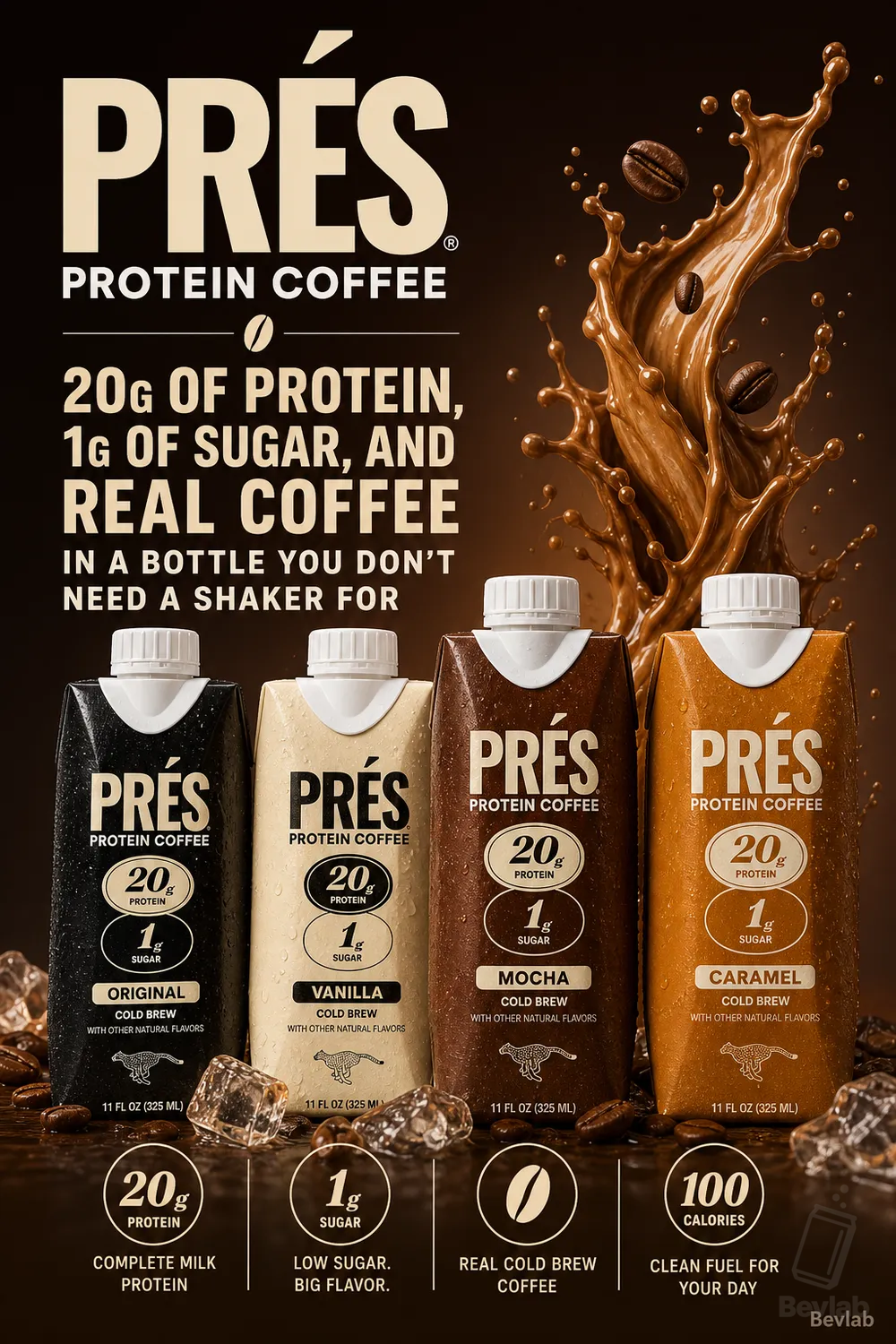
While at the 2026 Future Nutra Innovation Summit, Bevlab founder Mike Roberto has tasted Original, Vanilla, and Mocha (Caramel is still on his list), and his consistent note across all three is how smooth they drink for a milk-protein beverage, a category that can easily turn chalky. Vanilla was his favorite of the three.
- Caramel Cold Brew (12 Cartons: $29.99)
- Mocha Cold Brew (12 Cartons: $22.49)
- Original Cold Brew (12 Cartons: $22.49)
- Original Espresso (4 Cartons: $13.99)
- Vanilla Cold Brew (12 Cartons: $20.99)
Who It's For
- Coffee drinkers who don't love protein shakes: if the thick, chalky texture of a typical shake turns you off, a cold-brew-forward format with 20g of protein and only 1g of sugar is a real alternative worth trying.
- People managing added sugar closely: at 0g added sugar and a dual monk-fruit and stevia sweetener system, this fits cleanly into low-sugar or keto-style eating patterns without leaning on artificial sweeteners.
A Cold Brew That Actually Delivers on Protein
Folks, this one's a keeper. The Vanilla flavor especially. You won't believe it's naturally sweetened.
Prés backs up its "Protein + Espresso" pitch: 20g of real dairy protein, a genuine calcium contribution, and a sugar profile that undercuts most flavored coffee drinks on the shelf. The caffeine-labeling inconsistency on Original is a paperwork problem Prés needs to clean up, not a formula problem. If you want your morning coffee to double as a protein hit without the shake texture, this is worth a try.
Follow @BevlabMedia on TikTok and Instagram for more RTD breakdowns.
References
- Jéquier, E, et al. "Water as an essential nutrient: the physiological basis of hydration." European journal of clinical nutrition, 2010. https://doi.org/10.1038/ejcn.2009.111
- Goulding, D.A. et al. "Milk proteins: An overview." Milk Proteins, 2020. https://doi.org/10.1016/B978-0-12-815251-5.00002-5
- Kanda, Atsushi, et al. "Effects of Whey, Caseinate, or Milk Protein Ingestion on Muscle Protein Synthesis after Exercise." Nutrients, 2016. https://doi.org/10.3390/nu8060339
- Hartman, Joseph W, et al. "Consumption of fat-free fluid milk after resistance exercise promotes greater lean mass accretion than does consumption of soy or carbohydrate in young, novice, male weightlifters." The American journal of clinical nutrition, 2007. https://doi.org/10.1093/ajcn/86.2.373
- Morton, Robert W, et al. "A systematic review, meta-analysis and meta-regression of the effect of protein supplementation on resistance training-induced gains in muscle mass and strength in healthy adults." British journal of sports medicine, 2018. https://doi.org/10.1136/bjsports-2017-097608
- Loftfield, Erikka, et al. "Association of Coffee Drinking With Mortality by Genetic Variation in Caffeine Metabolism: Findings From the UK Biobank." JAMA internal medicine, 2018. https://doi.org/10.1001/jamainternmed.2018.2425
- Ding, Ming, et al. "Caffeinated and decaffeinated coffee consumption and risk of type 2 diabetes: a systematic review and a dose-response meta-analysis." Diabetes care, 2014. https://doi.org/10.2337/dc13-1203
- Yeung, Andy Wai Kan. "Bibliometric analysis on the literature of monk fruit extract and mogrosides as sweeteners." Frontiers in nutrition, 2023. https://doi.org/10.3389/fnut.2023.1253255
- EFSA, Panel on Food Additives and Flavourings (FAF), et al. "Safety of use of Monk fruit extract as a food additive in different food categories." EFSA journal. European Food Safety Authority, 2019. https://doi.org/10.2903/j.efsa.2019.5921
- Goodman, Matthew J. "The “Natural” vs. “Natural Flavors” Conflict in Food Labeling: A Regulatory Viewpoint." Food and drug law journal, 2017. https://pubmed.ncbi.nlm.nih.gov/29140655/
- Singh, Nidhi, et al. "Natural food flavours: a healthier alternative for bakery industry-a review." Journal of food science and technology, 2024. https://doi.org/10.1007/s13197-023-05782-4
- Breslin, P A, et al. "Salt enhances flavour by suppressing bitterness." Nature, 1997. https://doi.org/10.1038/42388
- Leksrisompong, Pattarin, et al. "Bitter taste inhibiting agents for whey protein hydrolysate and whey protein hydrolysate beverages." Journal of food science, 2012. https://doi.org/10.1111/j.1750-3841.2012.02800.x
- Norton, Abigail B. et al. "Acid gelation of low acyl gellan gum relevant to self-structuring in the human stomach." Food Hydrocolloids, 2011. https://doi.org/10.1016/j.foodhyd.2010.10.007
- Alshammari, Norah A, et al. "Structuring white rice with gellan gum reduces the glycemic response in healthy humans." Food research international (Ottawa, Ont.), 2024. https://doi.org/10.1016/j.foodres.2024.115090
- EFSA, Panel on Food Additives and Nutrient Sources added to Food (ANS), et al. "Re-evaluation of gellan gum (E 418) as food additive." EFSA journal. European Food Safety Authority, 2018. https://doi.org/10.2903/j.efsa.2018.5296
- de Campos, Costa Mirian Aparecida, et al. "New high-specificity fibers with strong and consistent responses across individuals." Food & function, 2026. https://doi.org/10.1039/d5fo02728d
- Calvo, Mona S, et al. "Industrial Use of Phosphate Food Additives: A Mechanism Linking Ultra-Processed Food Intake to Cardiorenal Disease Risk?." Nutrients, 2023. https://doi.org/10.3390/nu15163510
- Serna, Juan, et al. "Importance of Dietary Phosphorus for Bone Metabolism and Healthy Aging." Nutrients, 2020. https://doi.org/10.3390/nu12103001
- Dunford, Elizabeth K, et al. "Phosphate-based additives in processed foods: is excess exposure a cause for concern? A cross-sectional examination of the United States packaged food supply." The American journal of clinical nutrition, 2025. https://doi.org/10.1016/j.ajcnut.2025.01.009
- Khaw, K T, et al. "The association between blood pressure, age, and dietary sodium and potassium: a population study." Circulation, 1988. https://doi.org/10.1161/01.CIR.77.1.53
Tagged