Unwind Sparkling Calm: Brain-Targeted Magnesium, Can-Sized Dose
Zero caffeine, 25 calories, and a pitch for feeling a little less bothered
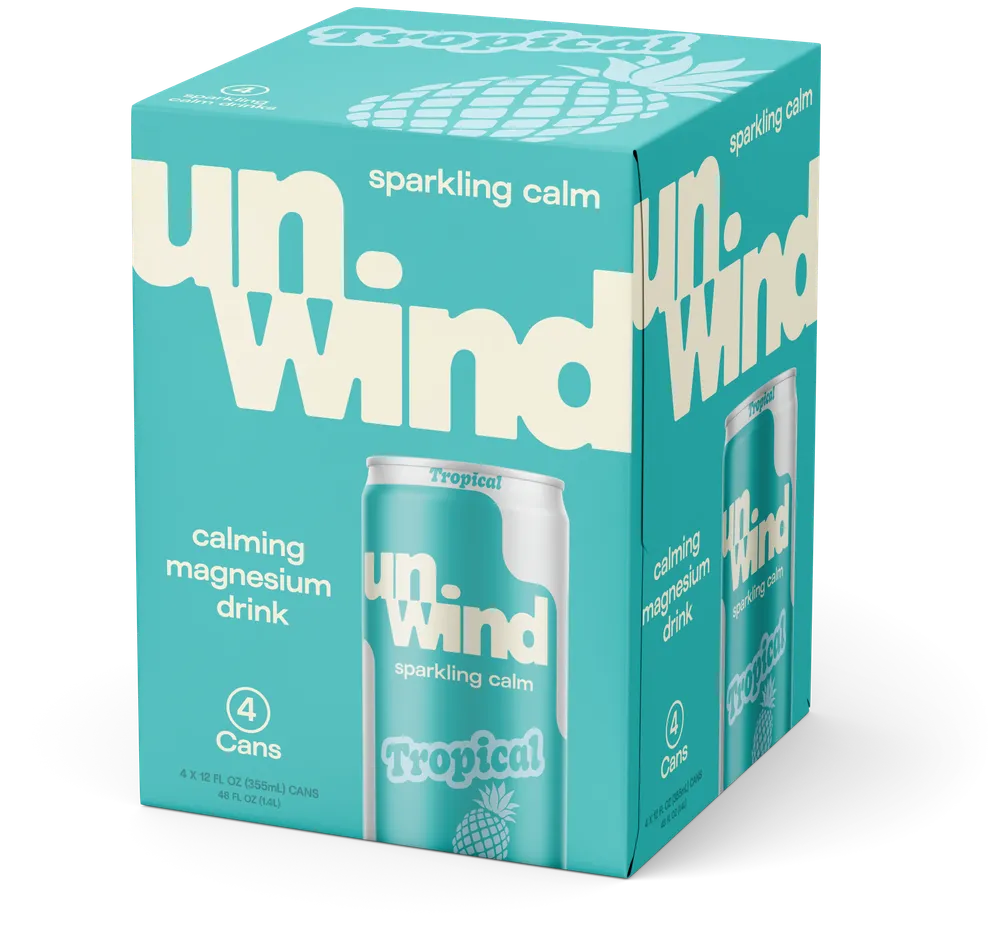
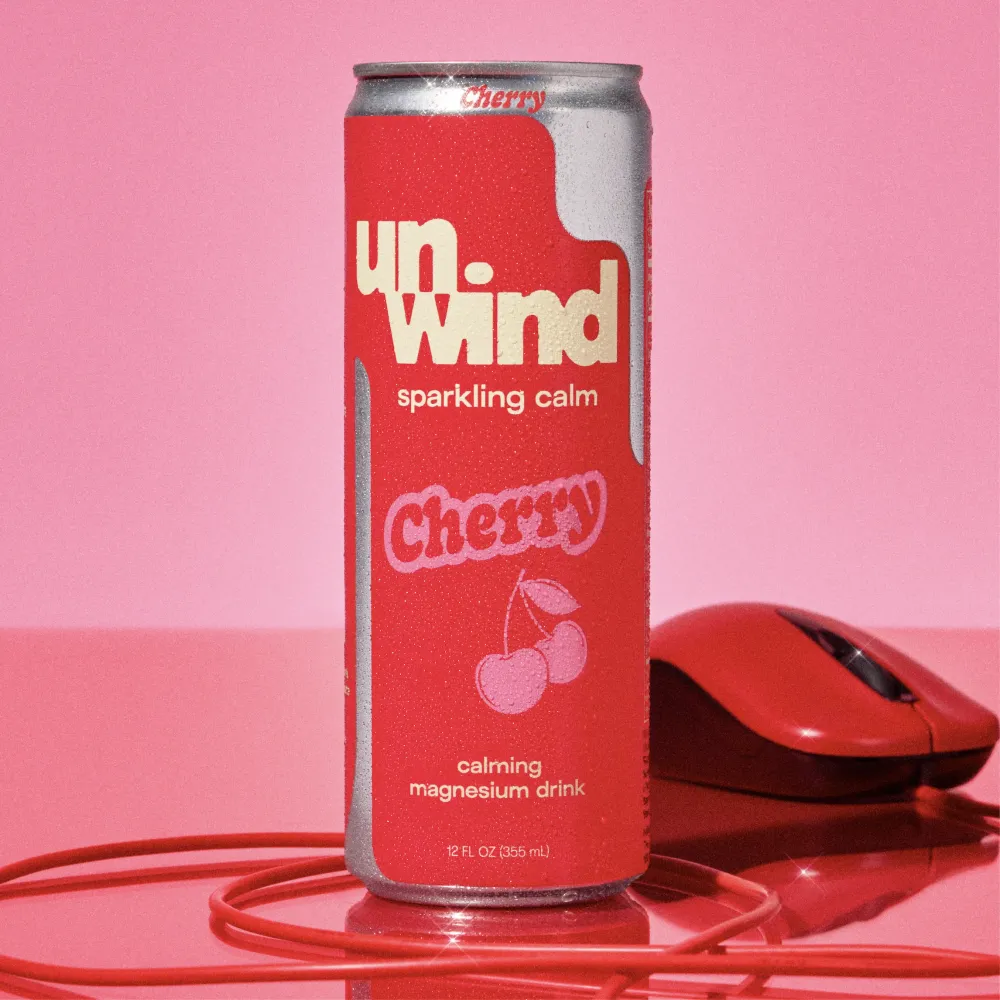
Unwind Sparkling Calm puts 250mg of Magtein magnesium L-threonate in a caffeine-free 12 fl oz soda, alongside L-theanine and chamomile.
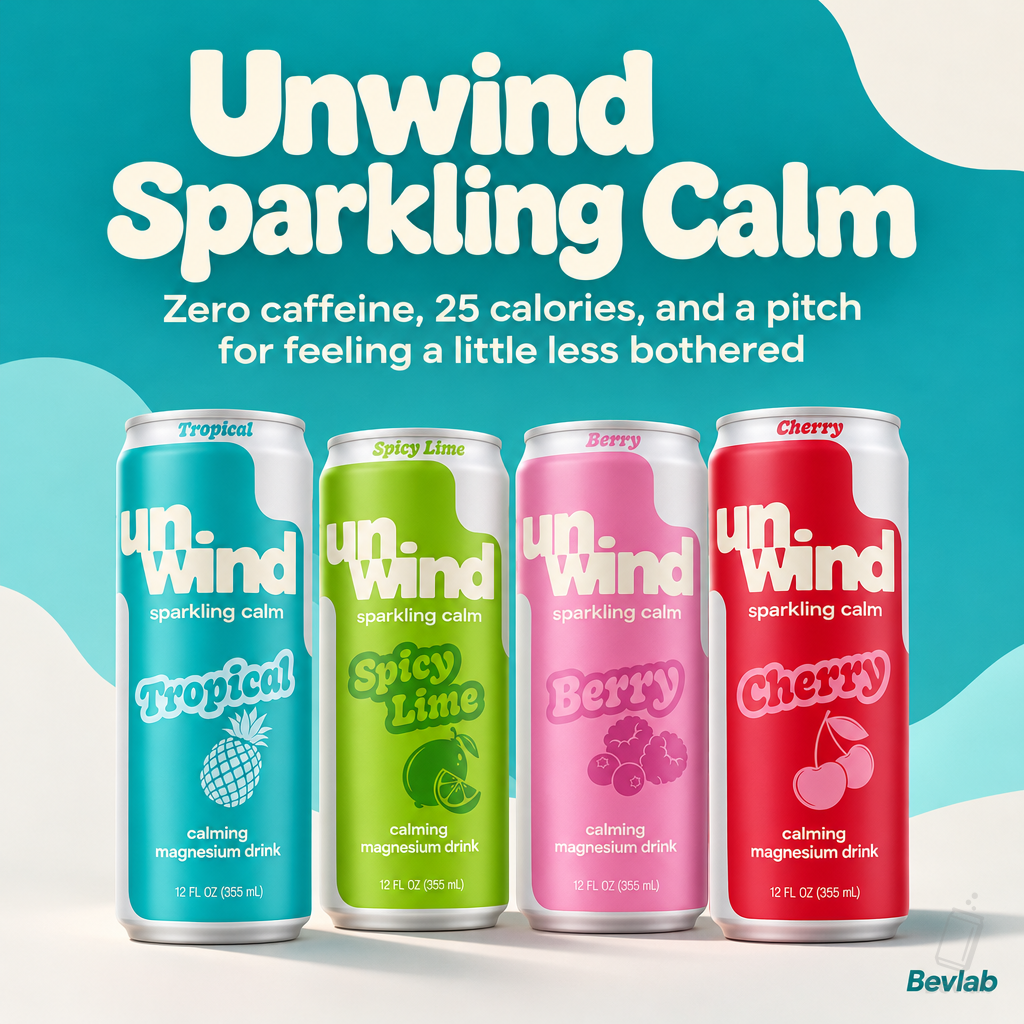
Unwind Sparkling Calm is a caffeine-free sparkling drink from Unwind, a brand founded in 2026 by beverage entrepreneurs Justin Tidwell and Anthony Puterman, the founders of Nowadays. It's built for the moments when, in the brand's words, you're "ready to be a little less 'on.'" The headline ingredient is one you usually find in capsule bottles, not soda cans. It's Magtein, a patented form of magnesium L-threonate that was developed to raise magnesium levels in the brain.
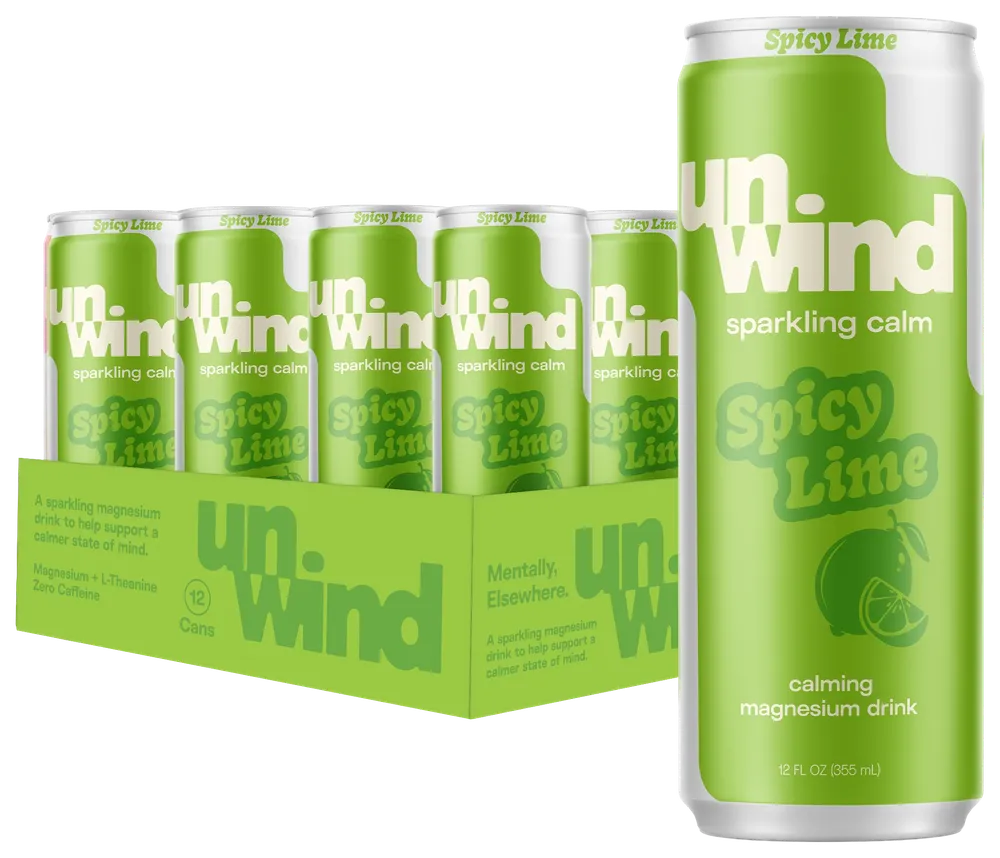
Each 12 fl oz can pairs 250mg of Magtein with magnesium bisglycinate, L-theanine, and chamomile bud extract. That works out to 42mg of total magnesium (10% DV), 25 calories, and zero caffeine. Unwind launched the drink in October 2026 at participating Walmart stores and through its own online store, with five flavors in the launch lineup. It's a different lane from the energy aisle: a can you'd reach for after work, not before it.
A Calm Drink That Skips the Sleepy Pitch
Plenty of "relaxation" drinks quietly lean toward bedtime. Unwind says outright that it isn't a sleep drink. The brand describes the goal as feeling "a little calmer while staying clear-headed and present," and it suggests drinking a can after work, between plans, before dinner, or whenever life feels like a lot.
That framing shapes the formula. You won't find melatonin or a heavy botanical sedative stack here. You get two magnesium forms, an amino acid best known from green tea, and chamomile, all in a lightly sweetened soda. With no caffeine, there's no clock to watch either. A late-afternoon can won't add stimulation to an already busy day.
The brand keeps its promises modest: "A little calmer. A little less bothered." That's the right size of claim for what's in the can, as the ingredient breakdown below shows.
Unwind Sparkling Calm Nutrition Facts
Each can is one 12 fl oz (355mL) serving:
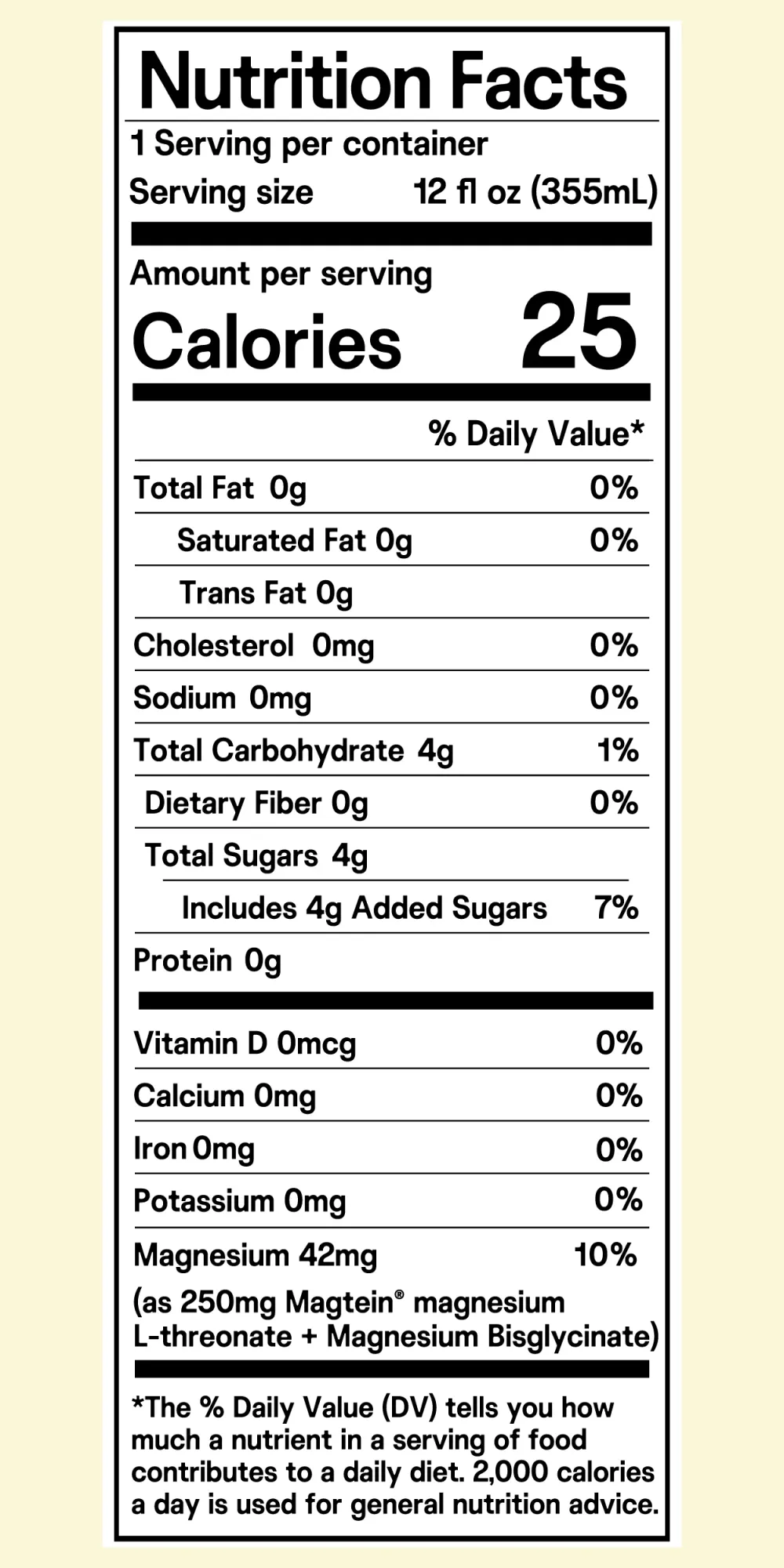
- Calories: 25
- Total Fat: 0g (0% DV)
- Total Carbohydrate: 4g (1% DV)
- Dietary Fiber: 0g (0% DV)
- Total Sugars: 4g
- Added Sugars: 4g (7% DV)
- Protein: 0g
- Vitamins and Minerals
- Sodium: 0mg (0% DV)
- Magnesium: 42mg (10% DV)
The macros are small. Four grams of added sugar is a fraction of what a regular soda carries, and Unwind pairs that sugar with stevia Reb M to keep the can at 25 calories. The magnesium line is the only nutrient that really matters here, and the panel notes that the 42mg comes from 250mg of Magtein magnesium L-threonate plus magnesium bisglycinate.
Unwind Sparkling Calm Ingredients
Each 12 fl oz serving provides the following key actives:
-
Magtein® Magnesium L-Threonate - 250mg
Magtein is the branded form of magnesium L-threonate, a magnesium salt bound to L-threonic acid. Researchers built it to get more magnesium into the brain. In the 2010 rat work that introduced it, raising brain magnesium this way improved learning and memory, alongside changes in the synapses of the hippocampus.[1] Later cell studies suggest that the threonate half of the molecule does the delivery work. It raised magnesium inside neurons in ways other common magnesium partners didn't.[2]
There are human trials too. In a 6-week study of 100 adults unhappy with their sleep, 2g/day of Magtein improved an overall cognition score and reaction time compared with placebo. It also improved one self-reported sleep measure, though wearable sleep tracking didn't change.[3] A 21-day trial in 80 adults found that 1g/day improved several ring-tracked sleep scores and self-reported mood, energy, and alertness.[4]
The catch is dose. Those trials used 1-2g a day, and one can gives you 250mg. Unwind caps intake at 2,000mg of Magtein per day, which is eight cans. Magtein is also mostly threonate by weight: only about 8% of the compound is magnesium.[5] So 250mg of Magtein and the 42mg magnesium figure on the label measure different things.
-
Magnesium Bisglycinate
Magnesium bisglycinate is magnesium bound to the amino acid glycine, and it's the second magnesium source in the can. Unwind doesn't break out how much of the 42mg total comes from bisglycinate and how much comes from Magtein, so the amount of this form on its own isn't disclosed.
Bisglycinate has a reputation as the "gentle, well-absorbed" magnesium, but the research is more mixed than the marketing suggests. Reviews of magnesium absorption find that dose, food, a person's starting magnesium levels, and how researchers take measurements all change the results. That makes a single "best form" ranking hard to defend.[6,7] In one crossover study of 40 healthy adults, a single 375mg dose of bisglycinate didn't significantly raise blood magnesium over six hours. The study was funded by the maker of a competing ingredient and measured only short-term blood levels.[8]
The closest match to Unwind's positioning is a 4-week trial in 155 adults who reported poor sleep. There, 250mg/day of magnesium as bisglycinate improved insomnia scores slightly more than placebo. The effect was small, and other mood measures didn't separate from placebo.[9] That study dose is several times the magnesium in a full can.
-
L-Theanine
L-theanine is an amino acid that comes mainly from the tea plant. It's a big part of why a cup of green tea feels calmer than a cup of coffee. A 200mL cup of green tea carries roughly 25-60mg.[10] Unwind doesn't disclose how much L-theanine goes into each can.
In early human brain-wave research, 50-200mg doses pushed people toward the relaxed-focus state within about 40 minutes, without making them drowsy.[11] A systematic review found that 200mg reduced heart rate and other stress responses during a mental arithmetic challenge compared with placebo.[12] In a 4-week trial in 30 healthy adults, 200mg/day lowered stress-related symptom scores and improved sleep quality ratings compared with placebo.[13]
The results aren't uniformly positive. A 28-day study using 400mg/day found that stress scores dropped just as much in the placebo group.[14] Theanine is often paired with caffeine to smooth out the jittery edge. Unwind uses it with no caffeine at all, which fits the calm-but-present feeling the brand describes.
-
Chamomile Bud Extract
Chamomile is the familiar herbal-tea flower, and Unwind lists chamomile bud extract as part of its calm trio with magnesium L-threonate and L-theanine. The amount per can isn't disclosed, and the brand doesn't name a standardized extract.
Without a dose, there isn't much to measure it against, so it's best to treat chamomile here as a supporting player rather than the engine of the formula. Its main job may be the one you'd expect from a soda built for winding down: it fits the ritual and ties the can to the cup of tea a lot of people already reach for at night. If you're judging the formula, the Magtein dose and the undisclosed theanine amount matter more.
-
Vitamins and Minerals
-
Magnesium (as Magtein® Magnesium L-Threonate and Magnesium Bisglycinate) - 42mg (10% DV)
Magnesium is an essential mineral involved in energy production and muscle and nerve function. Each can supplies 42mg, or 10% of the Daily Value, split across the two forms above. The label doesn't say how the 42mg divides between them. That makes Unwind a modest magnesium source by supplement standards, but a notable one for a 25-calorie soda.
-
-
Sweeteners and Flavors
-
Sugar
Sugar accounts for the 4g of added sugar per can, which is 7% of the Daily Value. That's a small amount for a soda, and it gives the drink a real-sugar body that zero-sugar cans sometimes lack.
-
Stevia Reb M
Stevia Reb M is a sweet compound from the stevia leaf. It's known for a cleaner, less bitter taste than older stevia extracts. Here it fills in sweetness so the can can stay at 4g of sugar and 25 calories without tasting thin.
-
Natural Flavors
Natural flavors carry the flavor of each variety in the lineup. Unwind doesn't specify the sources, which is standard practice for flavor systems.
-
-
Other Ingredients
- Carbonated Water - The base of the drink and the source of the sparkle.
- Citric Acid - Adds tartness and brightens the fruit flavors.
Five Flavors and a Spicy Outlier
Unwind's launch lineup was mostly fruit-forward, with Spicy Lime as the one curveball for anyone who wants a little heat in a calm drink.
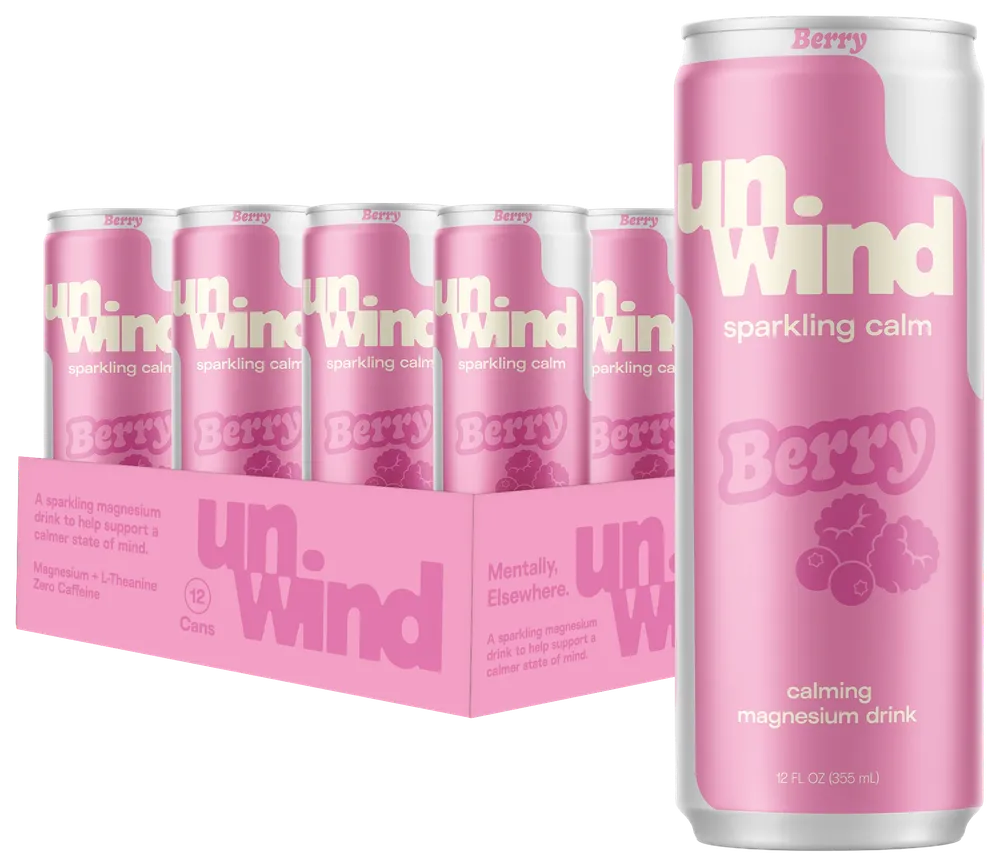
- Berry (Not in stock at any PricePlow partner stores)
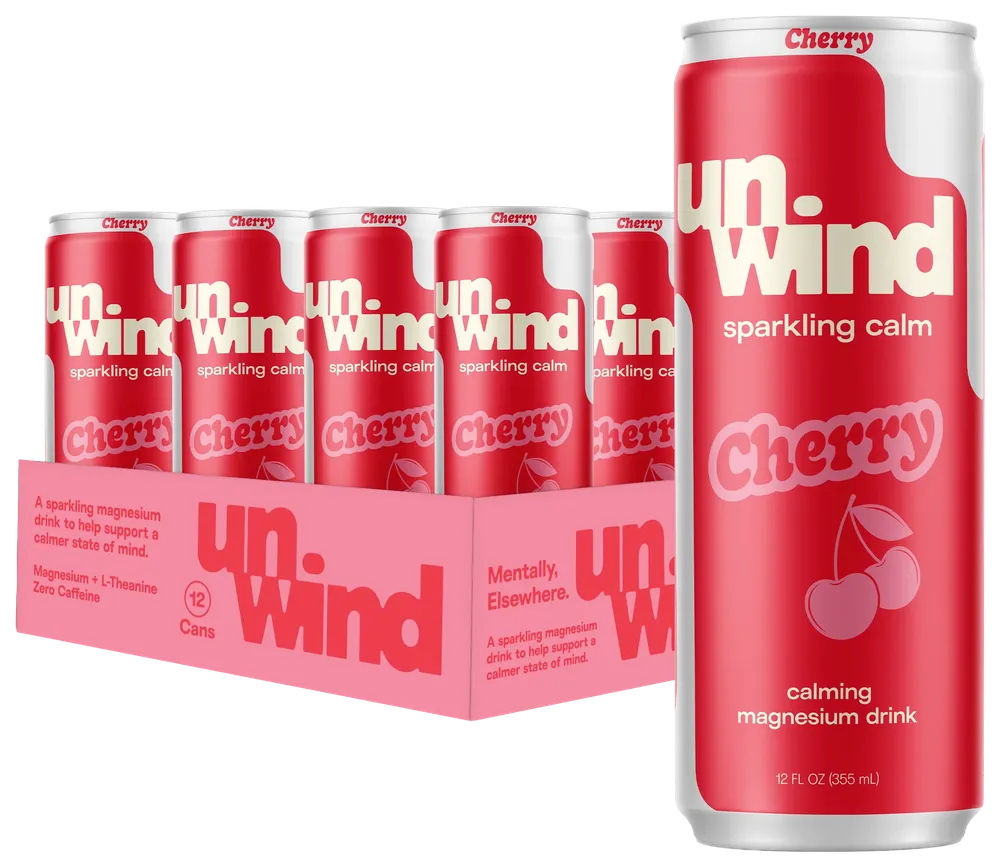
- Cherry (Not in stock at any PricePlow partner stores)
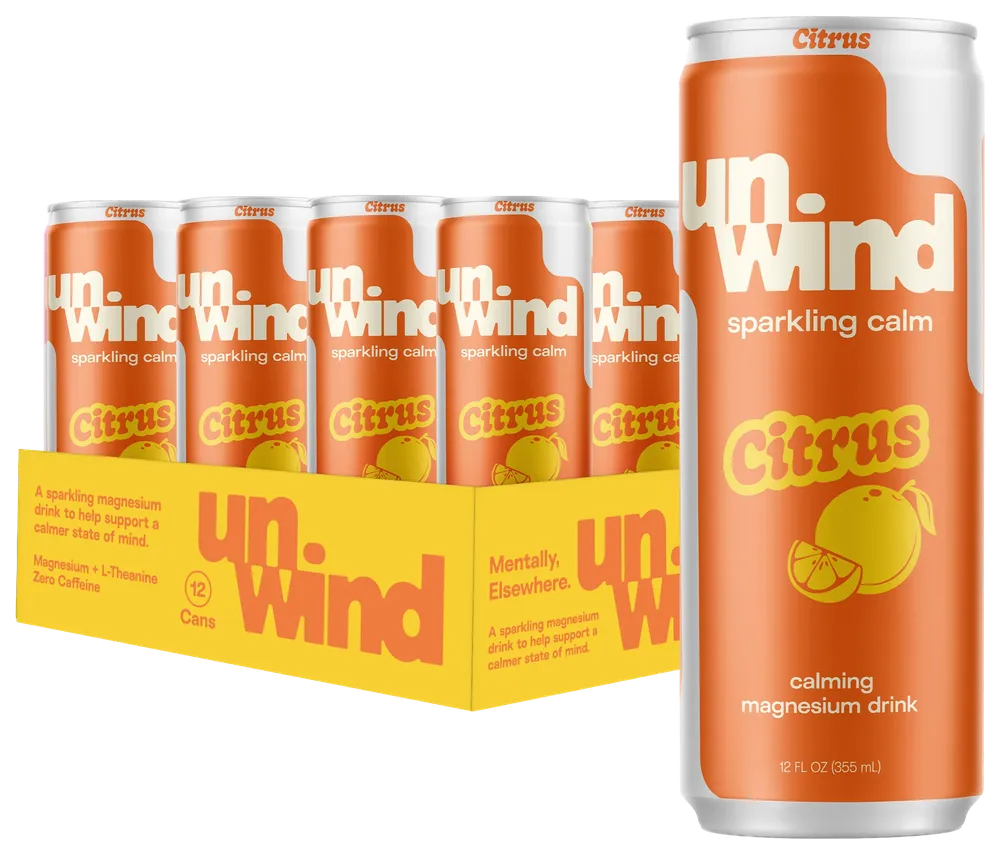
- Citrus (Not in stock at any PricePlow partner stores)
- Spicy Lime (Not in stock at any PricePlow partner stores)
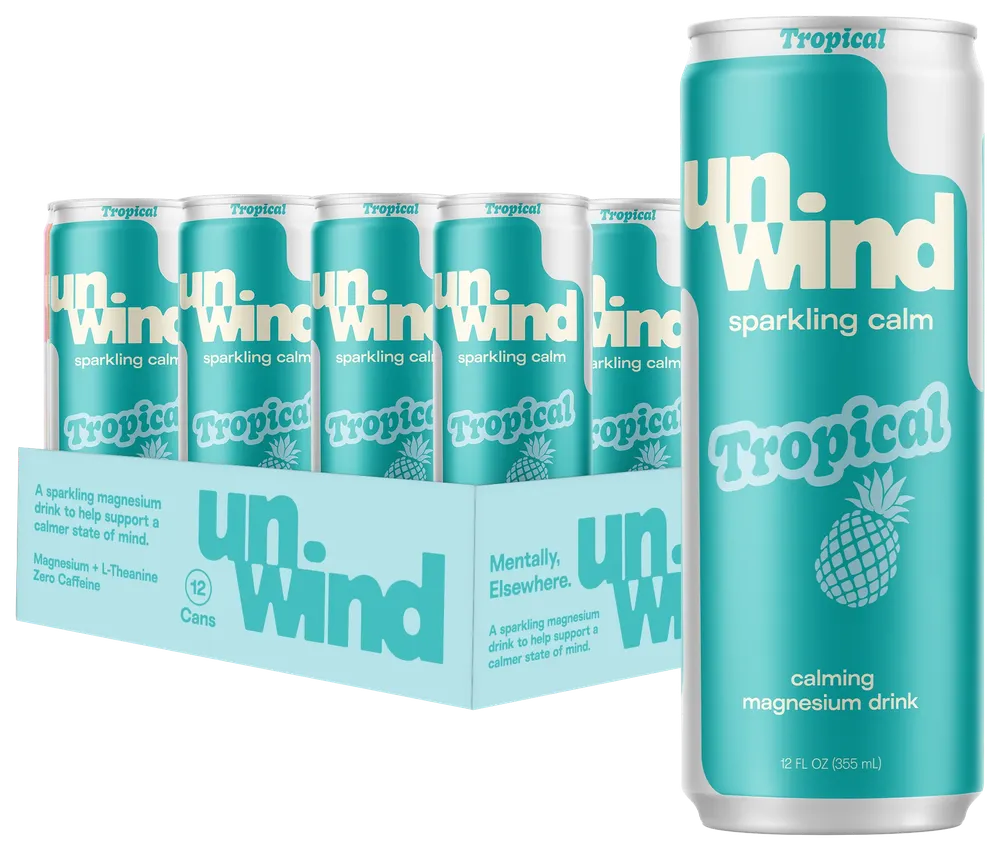
- Tropical (Not in stock at any PricePlow partner stores)
Before You Stack Cans
The brand's own guidance is worth repeating:
- Pregnant, nursing, or on medication: Unwind says to check with a healthcare professional before drinking it, and it doesn't recommend the drink for children.
- Heavy users: The brand says not to exceed 2,000mg of Magtein per day, which is eight cans. It suggests starting with one can and seeing how it works for you.
Where Unwind Lands
Unwind Sparkling Calm is for people who want a caffeine-free, low-sugar can with a calm-leaning formula and a modest pitch. One can's Magtein dose sits well below what the human trials tested and the theanine and chamomile amounts aren't disclosed, so treat it as a pleasant wind-down soda with a smart magnesium choice rather than a supplement replacement.
Follow @BevlabMedia on TikTok and Instagram for more drinks from outside the energy aisle.
References
- Slutsky, Inna, et al. "Enhancement of learning and memory by elevating brain magnesium." Neuron, 2010. https://doi.org/10.1016/j.neuron.2009.12.026
- Sun, Qifeng, et al. "Regulation of structural and functional synapse density by L-threonate through modulation of intraneuronal magnesium concentration." Neuropharmacology, 2016. https://doi.org/10.1016/j.neuropharm.2016.05.006
- Lopresti, Adrian L, et al. "The effects of magnesium L-threonate (Magtein®) on cognitive performance and sleep quality in adults: a randomised, double-blind, placebo-controlled trial." Frontiers in nutrition, 2025. https://doi.org/10.3389/fnut.2025.1729164
- Hausenblas, Heather A, et al. "Magnesium-L-threonate improves sleep quality and daytime functioning in adults with self-reported sleep problems: A randomized controlled trial." Sleep medicine: X, 2024. https://doi.org/10.1016/j.sleepx.2024.100121
- EFSA Panel on Nutrition, Novel Foods and Food Allergens (NDA), et al. "Safety of magnesium l-threonate as a novel food pursuant to regulation (EU) 2015/2283 and bioavailability of magnesium from this source in the context of Directive 2002/46/EC." EFSA journal. European Food Safety Authority, 2024. https://doi.org/10.2903/j.efsa.2024.8656
- Pardo, Marta R, et al. "Bioavailability of magnesium food supplements: A systematic review." Nutrition (Burbank, Los Angeles County, Calif.), 2021. https://doi.org/10.1016/j.nut.2021.111294
- Schuchardt, Jan Philipp, et al. "Intestinal Absorption and Factors Influencing Bioavailability of Magnesium-An Update." Current nutrition and food science, 2017. https://doi.org/10.2174/1573401313666170427162740
- Pajuelo, David; Meissner, Justyna M; Negra, Teresa; Connolly, Alan; Mullor, Jose L. "Comparative Clinical Study on Magnesium Absorption and Side Effects After Oral Intake of Microencapsulated Magnesium (MAGSHAPE™ Microcapsules) Versus Other Magnesium Sources." Nutrients, 2024. https://doi.org/10.3390/nu16244367
- Schuster, Julius; Cycelskij, Igor; Lopresti, Adrian; Hahn, Andreas. "Magnesium Bisglycinate Supplementation in Healthy Adults Reporting Poor Sleep: A Randomized, Placebo-Controlled Trial." Nature and Science of Sleep, 2025. https://doi.org/10.2147/nss.s524348
- Moshfeghinia, Reza, et al. "The effects of L-theanine supplementation on the outcomes of patients with mental disorders: a systematic review." BMC Psychiatry, 2024. https://doi.org/10.1186/s12888-024-06285-y
- Juneja, L. "L-theanine—a unique amino acid of green tea and its relaxation effect in humans." Trends in Food Science & Technology, 1999. https://doi.org/10.1016/s0924-2244(99)00044-8
- Williams, Jackson L, et al. "The Effects of Green Tea Amino Acid L-Theanine Consumption on the Ability to Manage Stress and Anxiety Levels: a Systematic Review." Plant foods for human nutrition (Dordrecht, Netherlands), 2020. https://doi.org/10.1007/s11130-019-00771-5
- Hidese, Shinsuke, et al. "Effects of L-Theanine Administration on Stress-Related Symptoms and Cognitive Functions in Healthy Adults: A Randomized Controlled Trial." Nutrients, 2019. https://doi.org/10.3390/nu11102362
- Moulin, Marc, et al. "Safety and Efficacy of AlphaWave® L-Theanine Supplementation for 28 Days in Healthy Adults with Moderate Stress: A Randomized, Double-Blind, Placebo-Controlled Trial." Neurology and therapy, 2024. https://doi.org/10.1007/s40120-024-00624-7
Tagged