Product Review
Versa Energy Drink
PEScience finally built the energy drink its own customers kept begging for, and skipped the usual pile of B-vitamins.
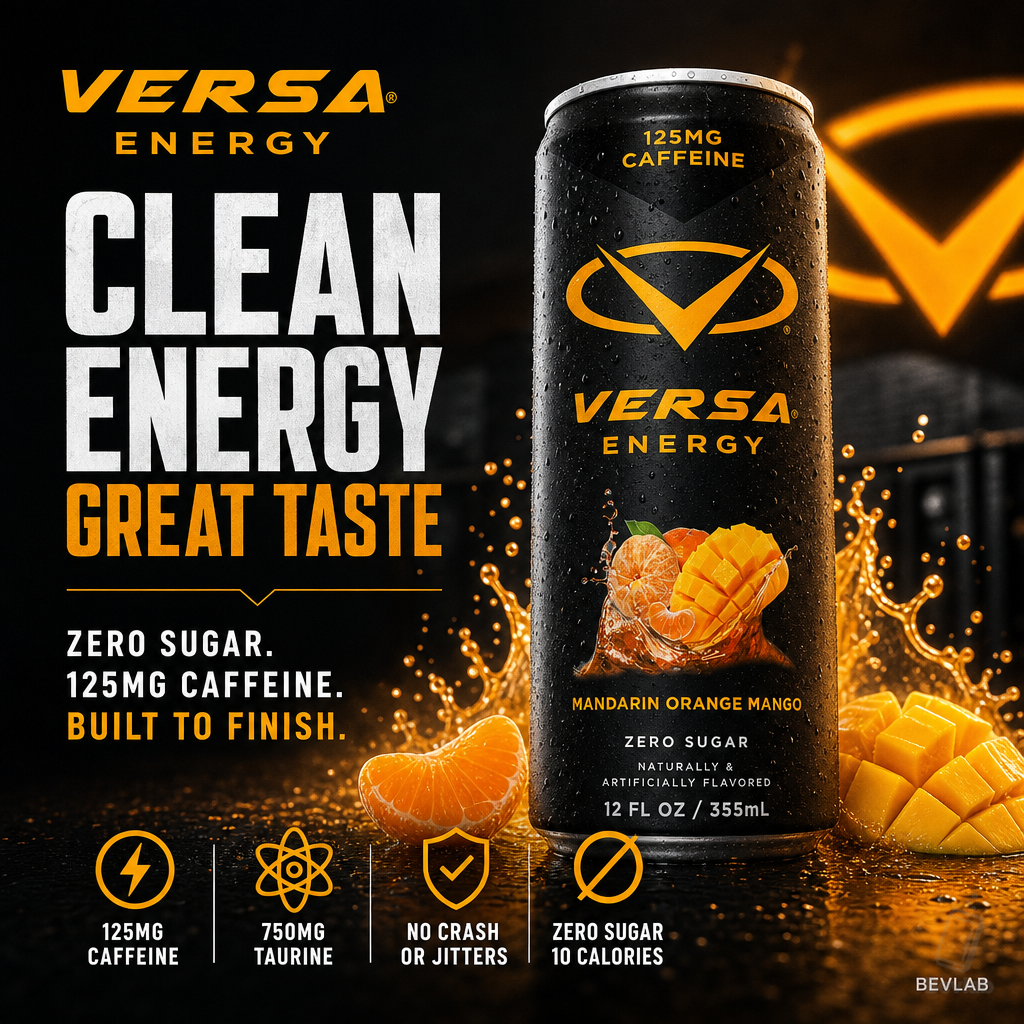
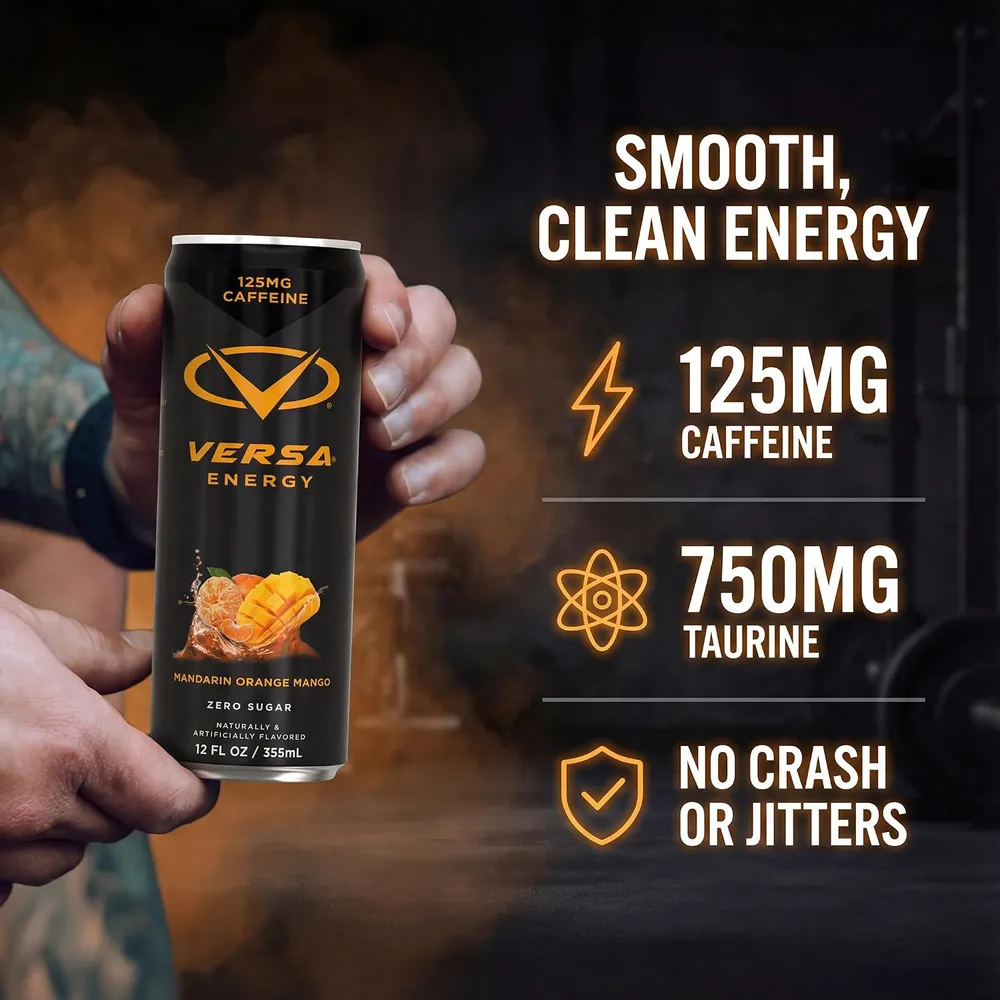
PEScience Versa Energy Drink has zero-sugar and 125mg caffeine built around flavor first and no nonsense.
Most energy drinks are good for a sip or two before the sweetness or aftertaste wears you down. Others are simply way overformulated, with low-quality ingredients that can potentially do more harm than good.
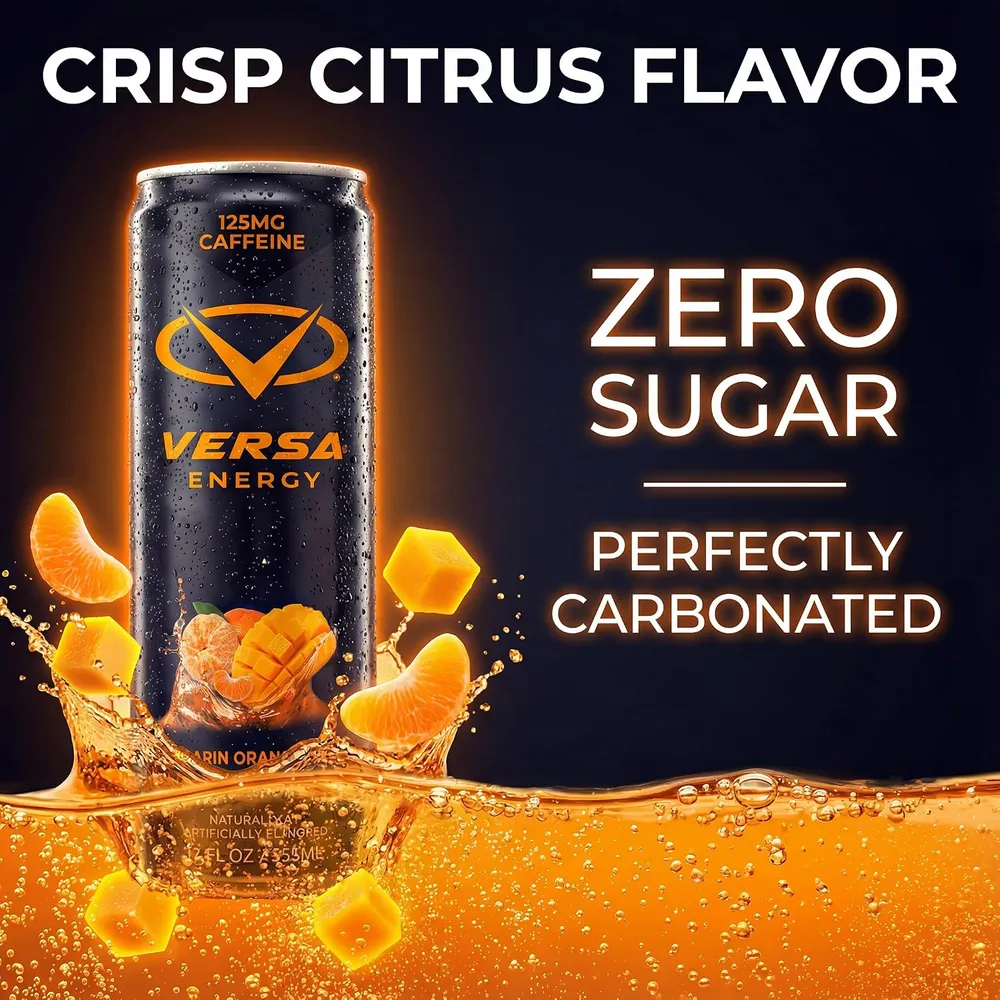
That's the exact problem Versa Energy Drink was built to solve. PEScience has spent over a decade making protein powders, pre-workouts, and gut health products, but it stayed out of the RTD energy drink category for most of that time, despite years of customer and retailer requests. Versa is the answer: a zero-sugar, 125mg caffeine energy drink that PEScience says it only released once the flavor was genuinely a step above the rest of the shelf.
Watch Related Videos
Bevlab VideosWhy PEScience Finally Made an Energy Drink
PEScience's own account of Versa's origin is refreshingly blunt: most energy drinks are enjoyable for maybe three sips before they turn on you, and the brand didn't want to release one unless it could clear that bar by "an order of magnitude." According to PEScience's story behind the brand, Versa launched at the start of the company's 14th year in business, built around one simple caffeine number (125mg) instead of stacking in extras just to look aggressive on a spec sheet.
That restraint shows up everywhere in the formula. PEScience has been vocal that it left out the stacked B-vitamin blends that show up on nearly every competing can, arguing that a single dose of B-vitamins doesn't meaningfully move the needle on energy no matter what decades of label copy have implied. It's a formula built to be finished, not just cracked open. The company also backs its products with a multi-stage testing program that checks raw materials and finished cans for heavy metals, microbial contamination, and label-claim accuracy, which matters more in a category where "proprietary blend" still shows up far too often.
Versa Energy Drink Nutrition Facts
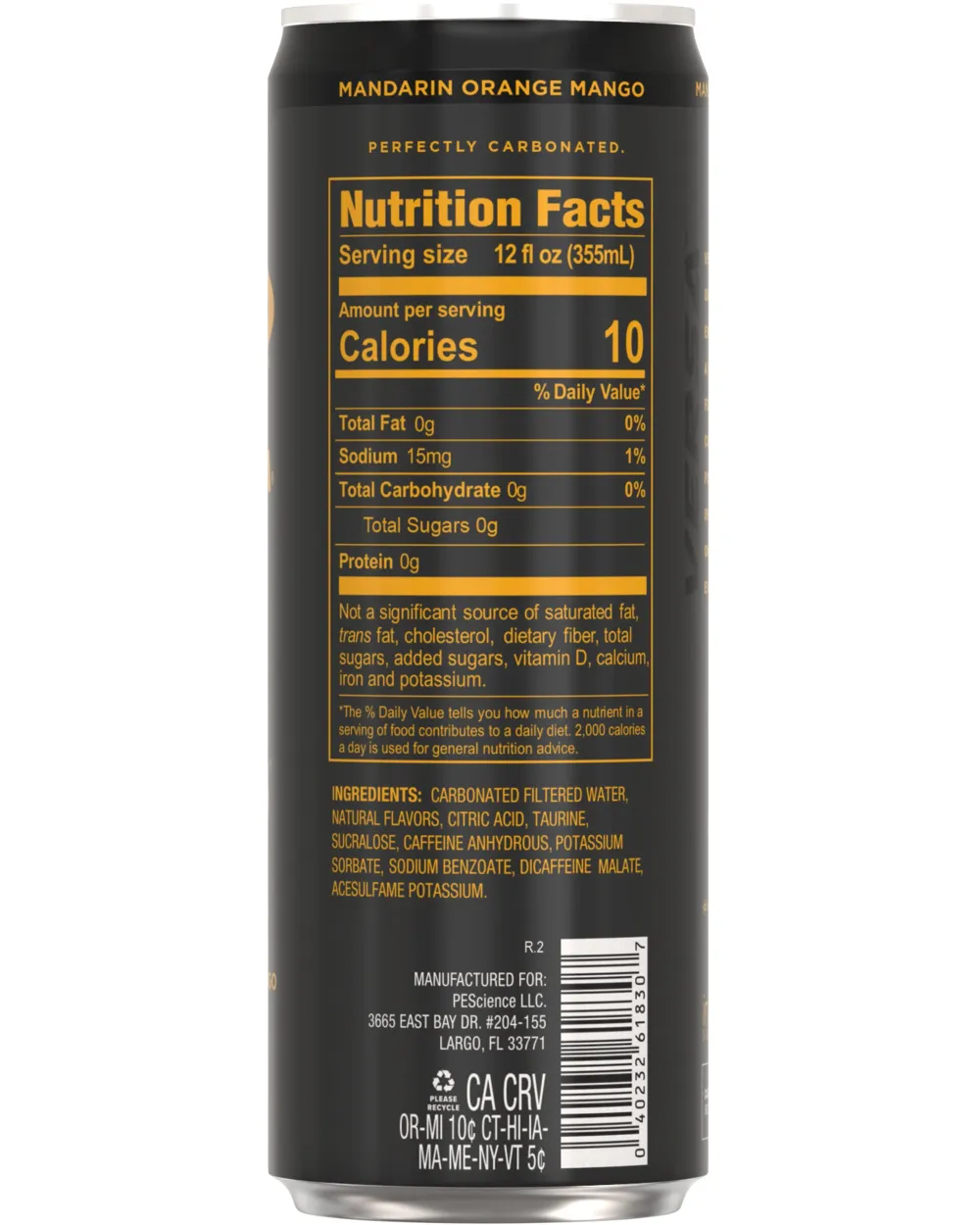
Per 12 fl oz can (based on the Mandarin Orange Mango label, which shares PEScience's standard Versa formula across flavors):
- Calories: 10
- Total Fat: 0g
- Sodium: 15mg
- Total Carbohydrate: 0g
- Total Sugars: 0g
- Added Sugars: 0g
- Protein: 0g
That's about as clean a macro panel as an energy drink gets. There's no sugar to argue about and nothing hiding in the carb column. The tradeoff, as always with a 10-calorie can, is that the flavor has to do all the work.
Versa Energy Drink Ingredients
-
Caffeine (as Caffeine Anhydrous and Dicaffeine Malate) - 125mg
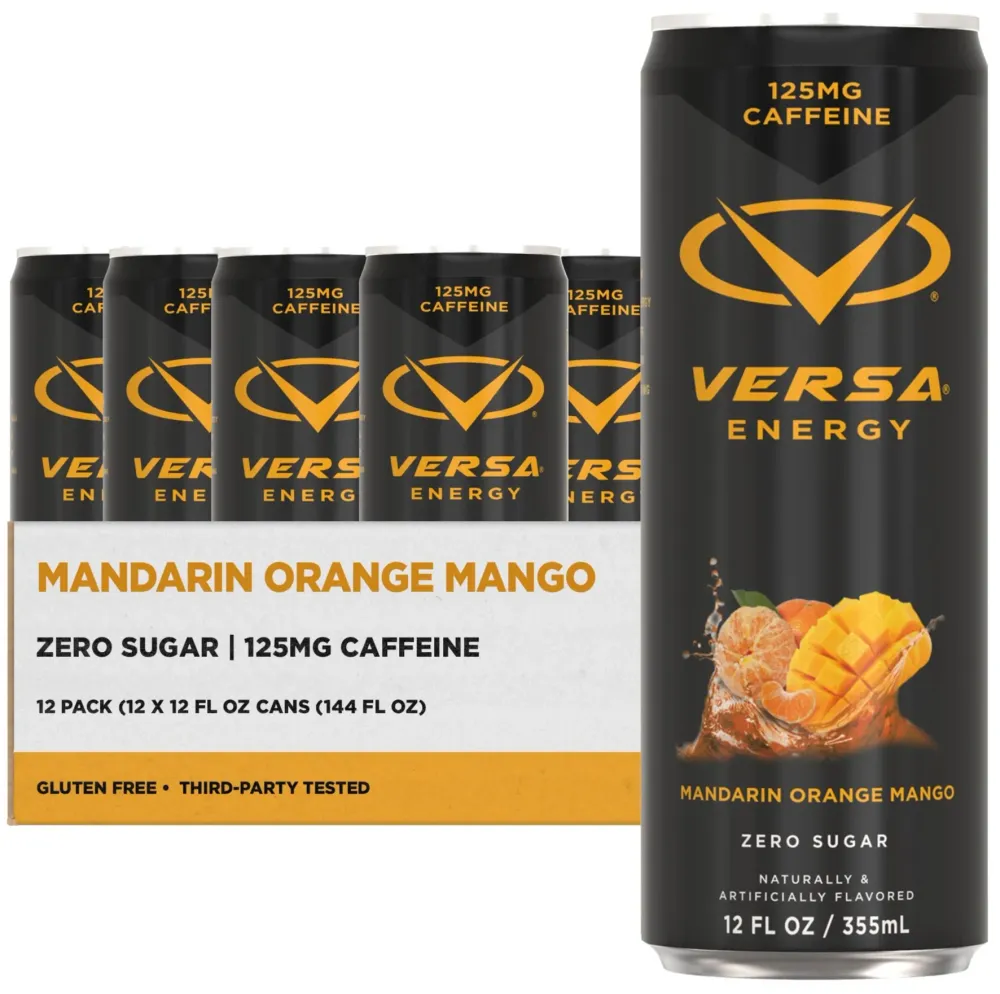
Caffeine is the only stimulant doing any work here, split across two delivery forms: standard caffeine anhydrous and dicaffeine malate, a caffeine-malic acid salt sold commercially as Infinergy. Both forms release the same active compound once dissolved, so the total 125mg figure is what actually matters, not which form supplies it. PEScience states the 125mg total on its own product pages and marketing copy, though it isn't printed as a line item on the can's Nutrition Facts panel itself.
Mechanically, caffeine works by blocking the tiredness signal in your brain, adenosine, which frees up stimulating neurotransmitters like dopamine and norepinephrine to keep firing.[1] At doses in the 3-6mg/kg range, research backs improved endurance, alertness, and modest strength gains,[2,3] and a systematic review found no consistent adverse effects at intakes up to 400mg/day in healthy adults.[4] At 125mg, Versa lands well below the 200-300mg range common in Bang, Reign, or Celsius, which is exactly the point PEScience is making: this is a can built for two-a-day use, not a single ceiling-hitting dose. One caveat worth knowing: caffeine measurably disrupts sleep even when taken as much as six hours before bed,[5] so this reads as a daytime or pre-workout can rather than a late-night one.
-
Taurine
Taurine is the other headline active, and it's the amino acid most associated with the "energy drink" taste and stack, though its actual research base runs well beyond flavor. In cardiovascular studies, chronic taurine dosing (typically 1.5-3g/day over weeks to months) has been linked to meaningful reductions in blood pressure, heart rate, and other cardiometabolic markers.[6,7] There's also a specific reason taurine and caffeine keep showing up together: a network meta-analysis found the combination outperformed either ingredient alone for anaerobic capacity and reaction time.[8]
Cognitive claims for taurine on its own are weaker than marketing often suggests, with most acute human trials showing small or inconsistent benefits when taurine isn't paired with caffeine.[9] PEScience doesn't publish the specific taurine dose in Versa, so there's no way to confirm whether it lands in the clinically studied range. What's clear is that taurine carries a strong safety record even at doses well above what a can like this would deliver.[10]
-
Sweeteners
-
Sucralose
Sucralose is the primary sweetener carrying Versa's zero-sugar taste, a chlorinated sucrose derivative roughly 600 times sweeter than sugar. Regulatory reviews, including EFSA's most recent re-evaluation, have kept its Acceptable Daily Intake unchanged, finding no safety concern under current approved uses.[11] Real-world consumption surveys show most people land far below that daily limit even with regular diet beverage intake.[12]
-
Acesulfame Potassium
Acesulfame Potassium, or Ace-K, is paired with sucralose here, which is standard practice since the two sweeteners round out each other's taste profile and improve overall sweetness quality. A weight-of-evidence review across dozens of studies, high-throughput toxicity assays, and animal carcinogenicity bioassays found no consistent genotoxic or carcinogenic signal for Ace-K.[13] A comprehensive safety review also notes it's excreted from the body largely unchanged, which is part of why regulators have treated it as one of the more inert sweeteners on the market.[14]
-
-
Other Ingredients
- Natural Flavors - The catch-all term for the plant- and fermentation-derived flavor compounds that build Versa's actual taste. This is where PEScience's flavor-first pitch lives or dies.
- Citric Acid - A tart, naturally occurring acid used here for tang and to help stabilize the drink's pH and shelf life.
- Potassium Sorbate - A common mold and yeast inhibitor that helps carbonated beverages stay stable and safe to drink well past the day they're canned.
- Sodium Benzoate - Listed on the can's ingredient panel and mapped to benzoic acid, this is another long-standing antimicrobial preservative, especially effective in lower-pH beverages like this one.
- Carbonated Filtered Water - The base of the can and the source of the carbonation that gives Versa its fizz.
Flavors Available
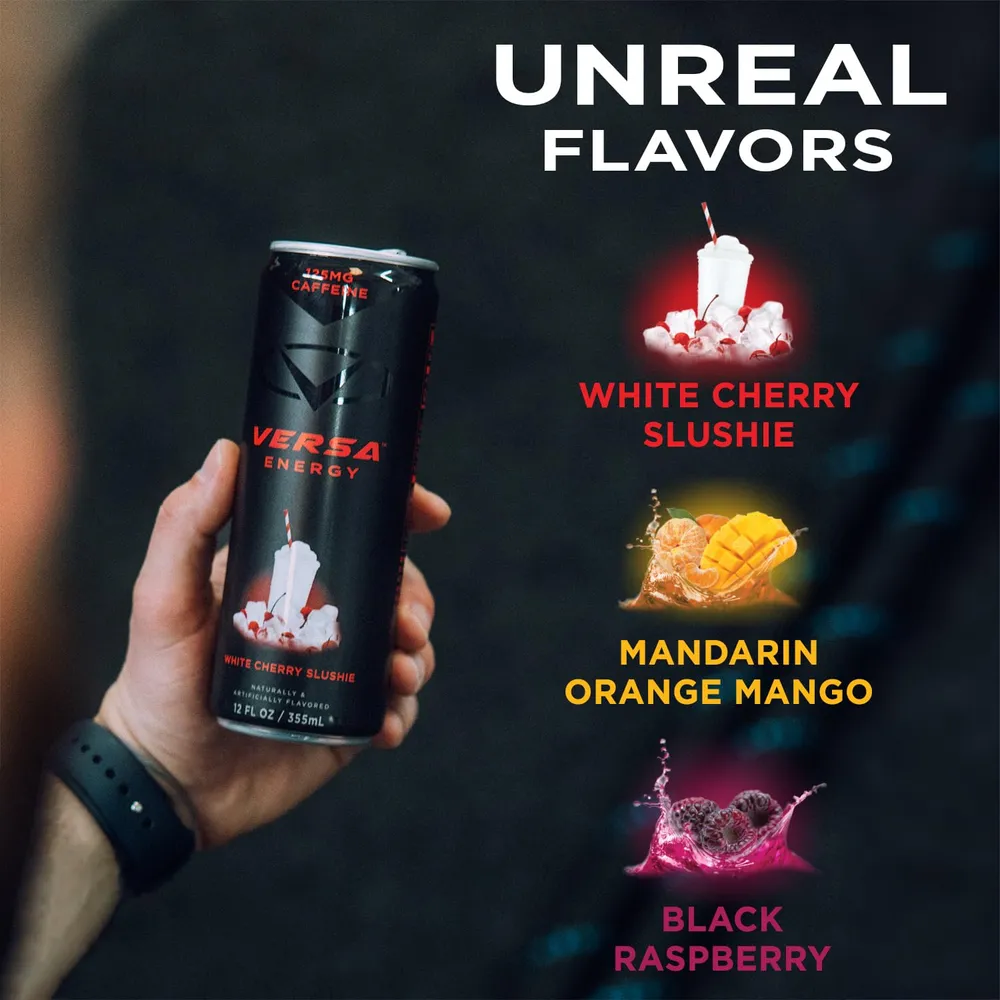
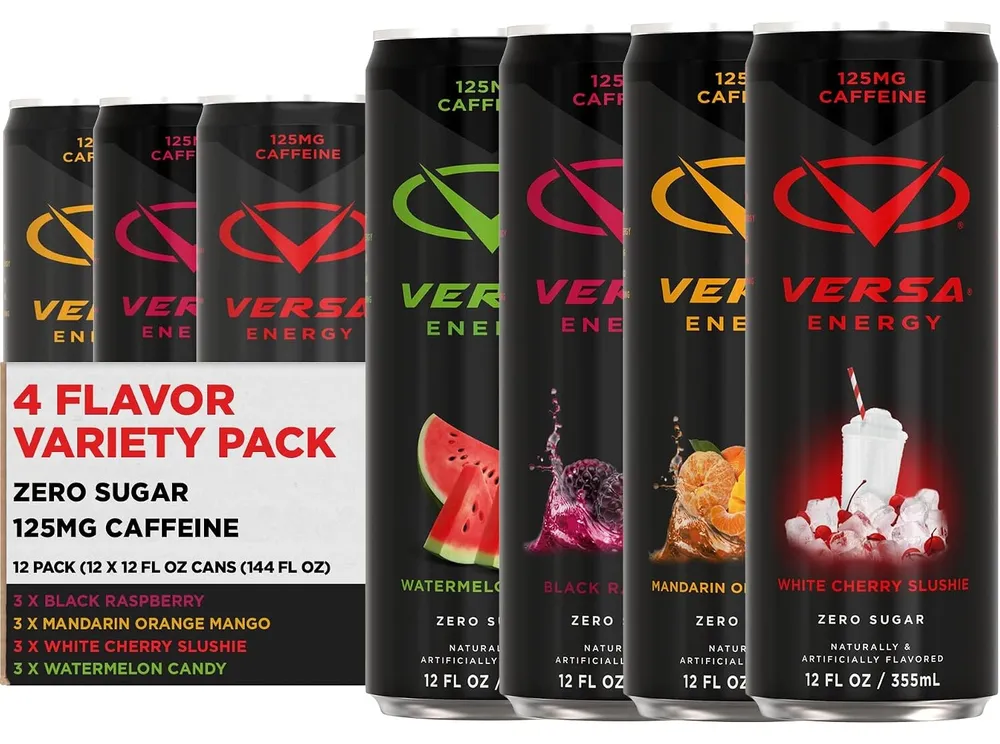
PEScience currently lists four Versa flavors on its site: Black Raspberry, White Cherry Slushie, Mandarin Orange Mango, and Watermelon Candy, along with a Variety 12-pack for anyone who wants to sample all four before committing to a favorite, plus a 4-pack sized specifically for trying it out.
- Black Raspberry (12 Cans: $24.99)
- Mandarin Orange Mango (12 Cans: $24.99)
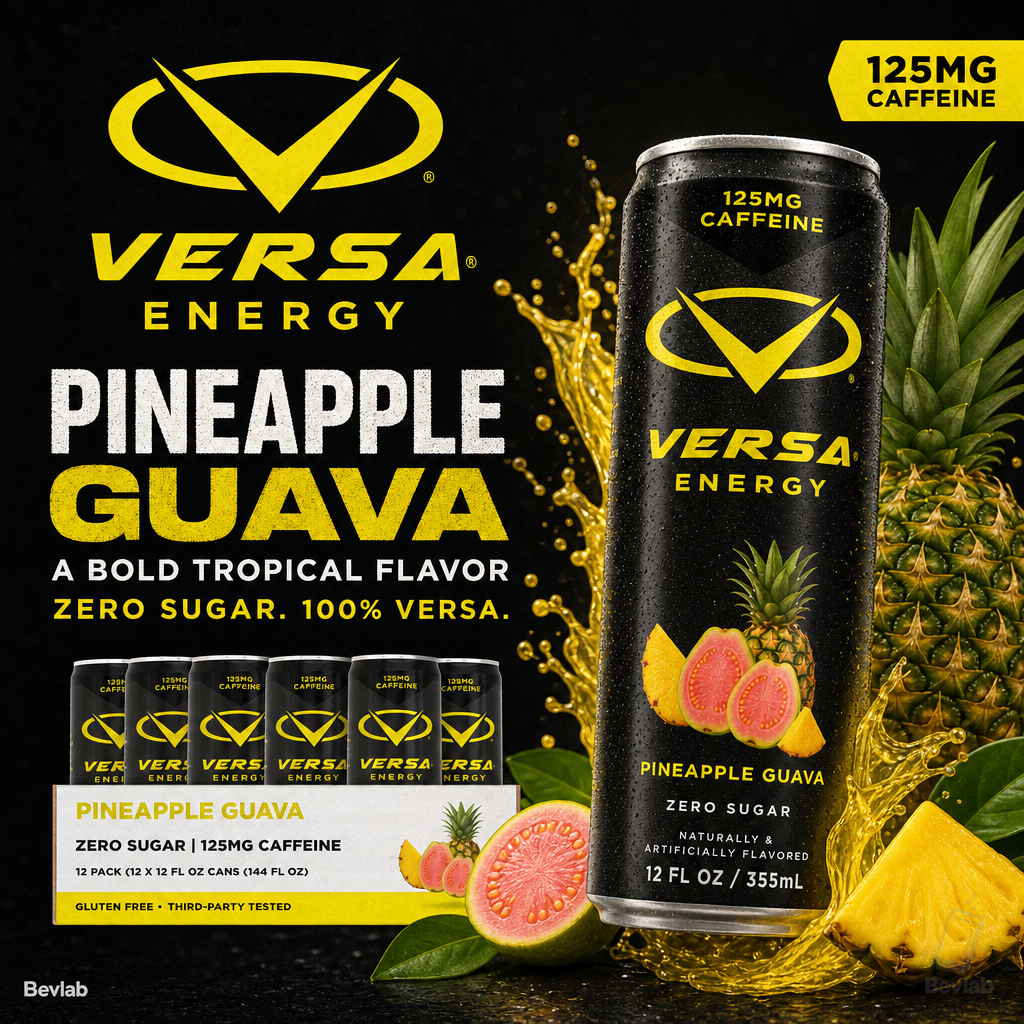
- Pineapple Guava (12 Cans: $24.99)
- Variety Pack (4 Cans: $8.50)
- Watermelon Candy (12 Cans: $24.99)
- White Cherry Slushie (12 Cans: $24.99)
Who It's For
- Two-can-a-day drinkers: At 125mg per can, Versa is built for people who want the option to have a second can later without needing to think hard about their daily caffeine total.
- Sugar-conscious flavor chasers: Anyone who's given up on zero-sugar energy drinks because they taste chalky or medicinal is exactly who PEScience is chasing here.
A Stripped-Down Formula That Bets Everything on Taste
Versa isn't trying to out-caffeinate anyone, and it isn't hiding a proprietary blend behind a vitamin wall. It's a straightforward 125mg, zero-sugar can that bets on flavor and a clean caffeine-taurine pairing, and it's a strong pick for anyone who wants moderate energy without the sugar or the filler.
More Related Videos
Bevlab VideosREELS
Product Review
Flavor Review
REELS
Follow @BevlabMedia on TikTok and Instagram for more energy drink breakdowns.
References
- Fredholm, Bertil B. et al. "Actions of Caffeine in the Brain with Special Reference to Factors That Contribute to Its Widespread Use." Pharmacological Reviews, 1999. https://doi.org/10.1016/S0031-6997(24)01396-6
- Guest, Nanci S. et al. "International Society Of Sports Nutrition Position Stand Caffeine And Exercise Performance." Journal of the International Society of Sports Nutrition, 2021. https://doi.org/10.1186/s12970-020-00383-4
- McLellan, Tom M. et al. "A Review Of Caffeine S Effects On Cognitive Physical And Occupational Performance." Neuroscience & Biobehavioral Reviews, 2016. https://doi.org/10.1016/j.neubiorev.2016.09.001
- Wikoff, Daniele, et al. "Systematic review of the potential adverse effects of caffeine consumption in healthy adults, pregnant women, adolescents, and children." Food and chemical toxicology : an international journal published for the British Industrial Biological Research Association, 2017. https://doi.org/10.1016/j.fct.2017.04.002
- Drake, Christopher, et al. "Caffeine effects on sleep taken 0, 3, or 6 hours before going to bed." Journal of clinical sleep medicine : JCSM : official publication of the American Academy of Sleep Medicine, 2013. https://doi.org/10.5664/jcsm.3170
- Tzang, Chih-Chen, et al. "Insights into the cardiovascular benefits of taurine: a systematic review and meta-analysis." Nutrition journal, 2024. https://doi.org/10.1186/s12937-024-00995-5
- Tzang, Chih-Chen, et al. "Taurine reduces the risk for metabolic syndrome: a systematic review and meta-analysis of randomized controlled trials." Nutrition & diabetes, 2024. https://doi.org/10.1038/s41387-024-00289-z
- Deng, Hengzhi, et al. "Caffeine and taurine: a systematic review and network meta-analysis of their individual and combined effects on physical capacity, cognitive function, and physiological markers." Journal of the International Society of Sports Nutrition, 2025. https://doi.org/10.1080/15502783.2025.2566371
- Moore, Jack A, et al. "Cognitive Effects of Taurine and Related Sulphur-Containing Amino Acids: A Systematic Review of Human Trials and Considerations for Plant-Based Dietary Transitions." Foods (Basel, Switzerland), 2026. https://doi.org/10.3390/foods15040634
- Santulli, Gaetano, et al. "Functional Role of Taurine in Aging and Cardiovascular Health: An Updated Overview." Nutrients, 2023. https://doi.org/10.3390/nu15194236
- EFSA, Panel on Food Additives and Flavourings (FAF), et al. "Re-evaluation of sucralose (E 955) as a food additive and evaluation of a new application on extension of use of sucralose (E 955) in fine bakery wares." EFSA journal. European Food Safety Authority, 2026. https://doi.org/10.2903/j.efsa.2026.9854
- Daher, Mira, et al. "Trends and amounts of consumption of low-calorie sweeteners: A cross-sectional study." Clinical nutrition ESPEN, 2022. https://doi.org/10.1016/j.clnesp.2022.01.006
- Marchitti, Satori A, et al. "Lack of Genotoxic and Carcinogenic Potential for Nonsugar Sweeteners: A Review of Animal and Mechanistic Evidence." Advances in nutrition (Bethesda, Md.), 2025. https://doi.org/10.1016/j.advnut.2025.100552
- Chowdhury, Chandrama Roy, et al. "Beyond sweetness: A review of the health and safety of acesulfame-K." Food chemistry, 2026. https://doi.org/10.1016/j.foodchem.2025.147290
Tagged