Raw Nutrition Grass-Fed Isolate Protein RTD
30 grams of grass-fed protein, zero added sugar, and a formula built for people who read labels
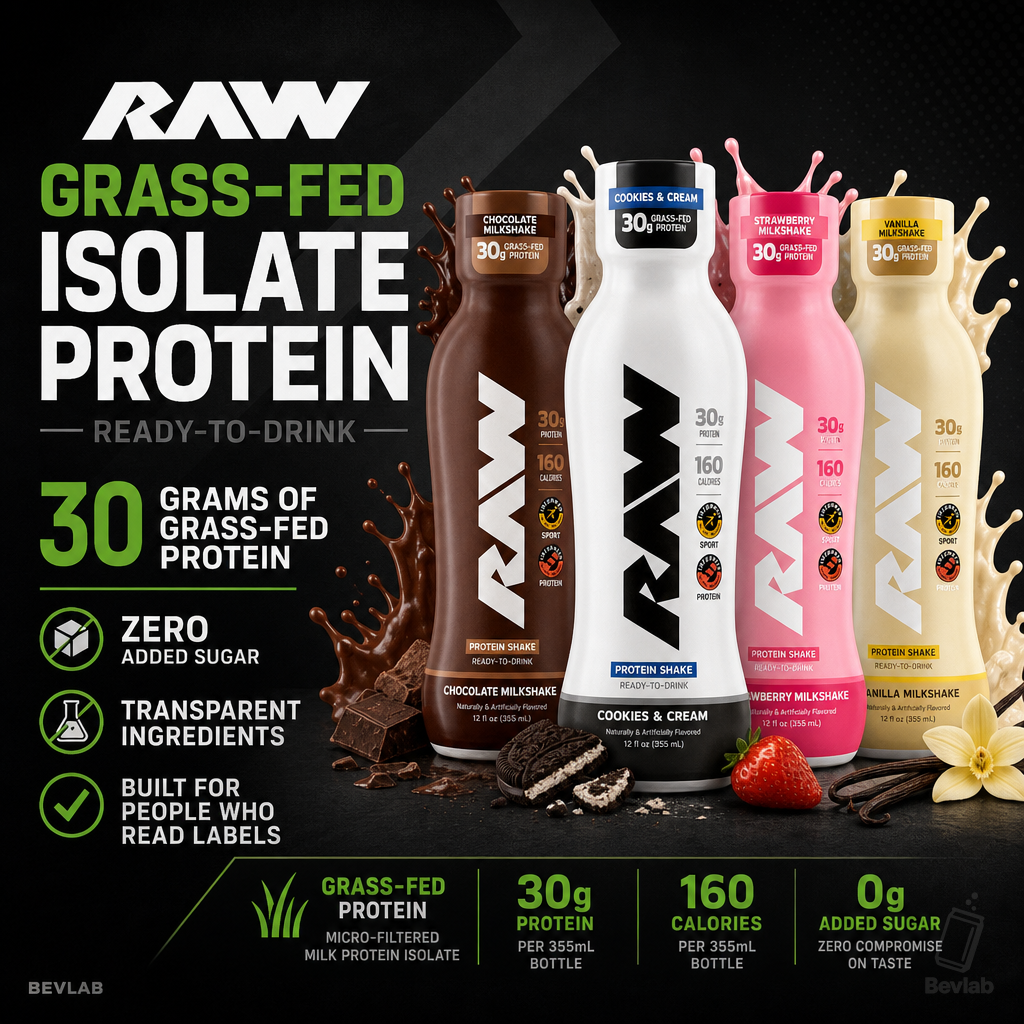
A full ingredient breakdown of RAW Nutrition's Grass-Fed Isolate Protein RTD, covering the protein blend, MCT oil, and sweeteners.
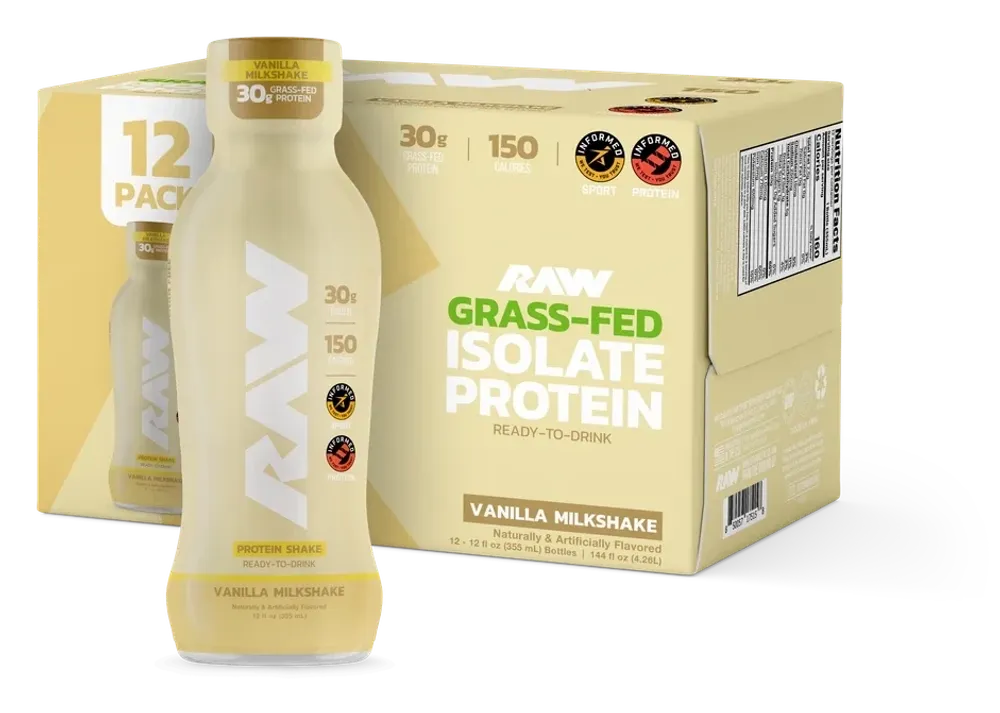
RAW Nutrition's Grass-Fed Isolate Protein RTD is exactly what it sounds like: a ready-to-drink protein shake built around micro-filtered grass-fed protein isolate, with no added sugar. At 30g of protein and 160 calories per 355mL bottle, it's positioned as a straightforward grab-and-go option for people who want a clean macro profile without mixing a shaker.
What separates a protein RTD worth writing about from one that's just another can on the shelf is what's actually inside it. RAW's label shows a milk protein isolate and calcium caseinate blend, an included MCT oil fat source, meaningful calcium and potassium content, and a sweetener stack built around sucralose, acesulfame potassium, and Reb-M. None of that is hidden behind a proprietary blend. Here's what each piece is doing.
RAW Nutrition Grass-Fed Isolate Protein RTD Nutrition Facts
Per 355mL bottle (1 serving per container):
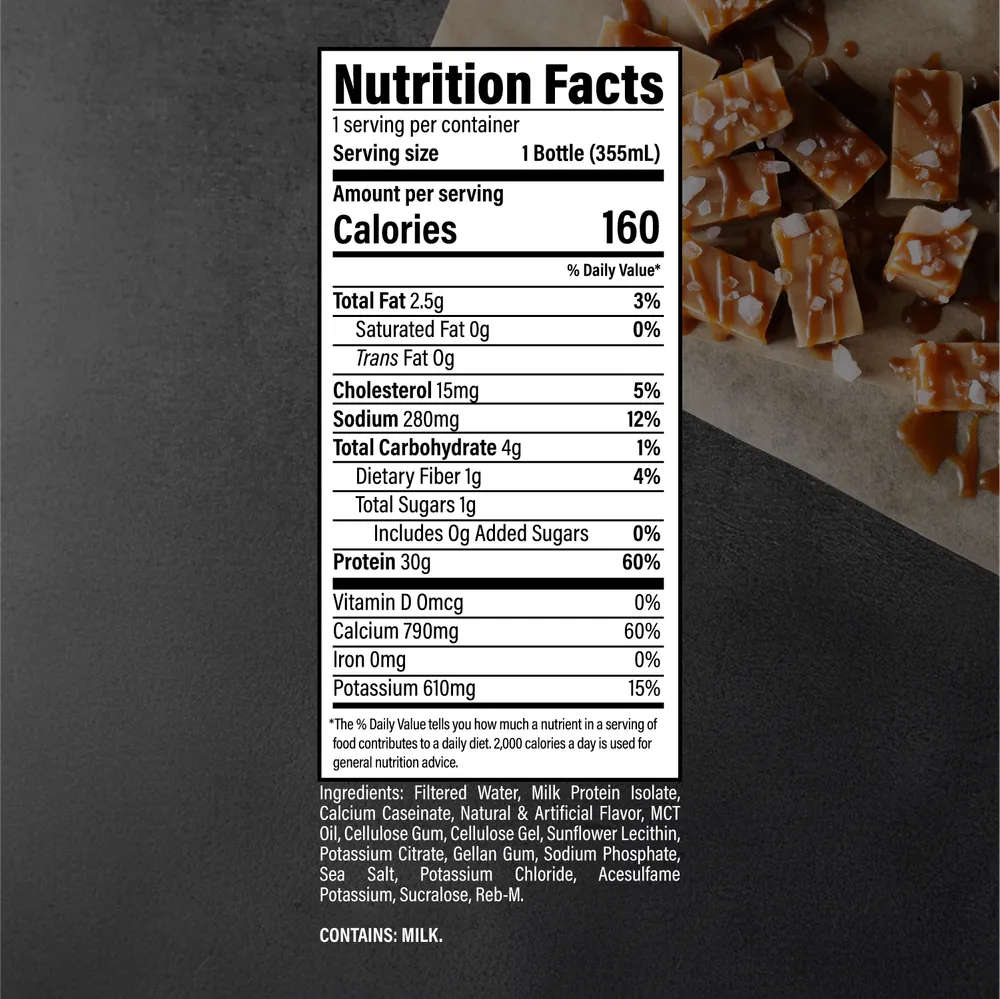
- Calories: 160
- Total Fat: 2.5g
- Saturated Fat: 0g
- Cholesterol: 15mg
- Sodium: 280mg
- Total Carbohydrate: 4g
- Dietary Fiber: 1g
- Total Sugars: 1g (0g Added Sugars)
- Protein: 30g
- Vitamin D: 0mcg (0% DV)
- Calcium: 790mg (60% DV)
- Iron: 0mg (0% DV)
- Potassium: 610mg (15% DV)
Grass-Fed Isolate Protein RTD Ingredients
Each bottle provides the following key actives:
-
Milk Protein Isolate
Milk protein isolate is the backbone of this formula, and it's a smart choice for an RTD specifically because it delivers both fractions of milk protein in one ingredient. Whole milk protein is naturally about 80% casein and 20% whey, and each fraction behaves differently in your stomach.[1] Whey digests fast and produces a quick spike in blood amino acids, while casein coagulates in stomach acid and releases amino acids gradually over hours.[2] That combination is why milk protein blends have shown a body-composition edge over isolated whey or soy in some resistance-training studies, with one 10-week trial finding a whey-plus-casein supplement outgained a whey-plus-BCAA-plus-glutamine comparator on lean mass despite similar training and strength gains across groups.[3] For a grab-and-go shake, that slower tail-end amino acid release means the protein isn't gone in an hour.
-
Casein Protein (as Calcium Caseinate)
The second protein source here is calcium caseinate, a purified casein fraction that reinforces the slow-digesting side of the protein blend. Casein's defining trick is that it clots in gastric acid, which physically slows digestion and stretches out amino acid delivery for hours rather than minutes.[4] In a 12-week resistance training study, nightly casein-based protein intake before sleep produced greater gains in muscle mass, quadriceps cross-sectional area, and strength than a non-caloric placebo, even in subjects already eating close to their daily protein target.[5] Dosing here isn't broken out separately from milk protein isolate on the label, so you're getting a blended total rather than two clearly divided doses, but the combination lines up with what the sports nutrition literature calls a fast-plus-slow protein strategy.
-
MCT Oil (as MCT Oil)
MCT oil is a fat source built from medium-chain fatty acids, mostly caprylic (C8) and capric (C10) acid, that are absorbed and metabolized differently than the long-chain fats in most foods. Instead of routing through the lymphatic system, MCFAs go straight to the liver via the portal vein and can bypass much of the carnitine shuttle that long-chain fats need for mitochondrial entry, which means faster access to usable energy.[6] The label doesn't disclose how much MCT oil is in this formula, so it's worth treating as an included fat source rather than a dosed functional ingredient. Separately, research on MCFAs at higher, disclosed intakes has shown metabolic benefits: one controlled trial found substituting 30g/day of long-chain saturated fat with MCFAs prevented the insulin resistance that developed on a high-fat overfeeding diet in that study population.[7] Whether this bottle's MCT content approaches that range isn't something the label lets you calculate, and total fat here is just 2.5g per serving.
-
Vitamins and Minerals
-
Vitamin D (as Vitamin D3) - 0mcg (0% DV)
The label lists Vitamin D3 but rounds to 0mcg per serving, meaning this bottle isn't providing a meaningful dose. Vitamin D3 is best known for driving intestinal calcium absorption in a dose-dependent way,[8] but at this level it's not contributing to that pathway in any measurable sense here.
-
Calcium - 790mg (60% DV)
Calcium shows up in real quantity in this formula, delivering 60% of your daily value from a combination of calcium caseinate and added calcium. Calcium is the direct trigger for muscle contraction, binding to troponin-C to expose the myosin-binding sites that let muscle fibers generate force.[9] A meta-analysis of nearly 64,000 participants found that total calcium intake above 1,200mg/day (from diet and supplementation combined) was associated with greater fracture-risk reduction than lower intakes.[10] That's a population-level intake threshold, not a claim about this specific product, but a 790mg contribution from one bottle covers a large share of a typical daily calcium target.
-
Iron - 0mg (0% DV)
Iron appears on the label but at 0mg, so this isn't functioning as an iron source in this product. Iron is essential for oxygen transport and energy metabolism when present in meaningful amounts,[11] but that's not the story in this particular formula.
-
Potassium - 610mg (15% DV)
Potassium comes in at 610mg, sourced from potassium citrate and potassium chloride further down the ingredient list. Potassium is the primary intracellular ion in the body and plays a direct role in vascular tone through inwardly rectifying potassium channels, contributing to blood pressure regulation.[12] Population-level cohort data has also linked the ratio of sodium to potassium intake to cardiovascular outcomes more strongly than either mineral in isolation.[13] This bottle contains both minerals, 610mg potassium and 280mg sodium, though a single serving's mineral content doesn't determine a person's overall dietary pattern.
-
-
Other Ingredients
- Filtered Water - the base of the formula and the primary vehicle for everything else in the can.
- Cellulose Gum and Cellulose Gel - insoluble fiber-derived thickeners that stabilize the protein suspension and prevent the settling or separation that can happen in high-protein RTDs over shelf life.
- Sunflower Lecithin - an emulsifier that helps keep the fat (from the MCT oil) and water phases blended, and can improve heat stability of the whey/casein protein during processing.
- Potassium Citrate and Potassium Chloride - the two potassium salts that add up to the 610mg potassium mineral content listed in the nutrition panel.
- Gellan Gum - a texture and suspension agent that helps keep the protein evenly distributed in solution without a gritty or chalky mouthfeel.
- Sodium Phosphate (as Sodium Hexametaphosphate) - a calcium-chelating stabilizer commonly used in protein beverages to extend heat stability and reduce sedimentation during processing.
- Sea Salt - contributes to the 280mg sodium on the label and helps round out flavor by suppressing bitterness from the protein base.
- Acesulfame Potassium and Sucralose - the primary non-nutritive sweeteners providing most of the sweetness without adding sugar or calories.
- Rebaudioside M - a stevia-derived sweetener known for a cleaner, less bitter taste profile than older stevia extracts, typically used to round out the sweetness curve alongside sucralose and Ace-K.
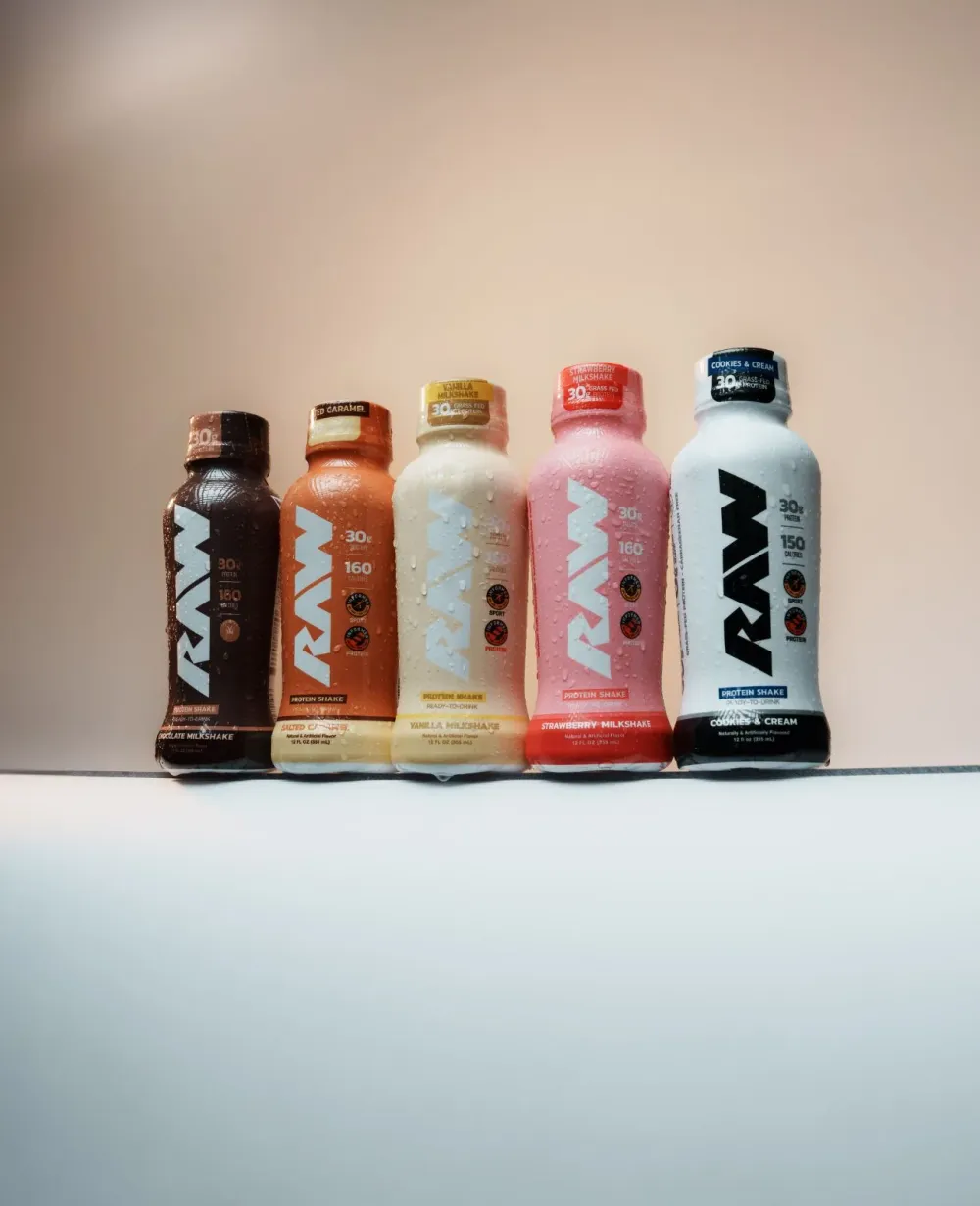
- Natural & Artificial Flavor - the flavoring system responsible for the specific taste of each SKU in the lineup.
Flavors Available
- Chocolate Milkshake (12 Bottles: $42.50)
- Cookies & Cream (12 Bottles: $42.50)
- Mocha Latte (12 Bottles: $42.50)
- Salted Caramel (12 Bottles: $71.99)
- Strawberry Milkshake (12 Bottles: $42.50)
- Vanilla Milkshake (12 Bottles: $42.50)
Who It's For
- People who want a grab-and-go protein source with a full amino acid profile: the milk protein isolate and calcium caseinate blend delivers both fast- and slow-digesting protein without needing a shaker.
- Anyone tracking daily calcium intake: at 790mg per bottle, this covers a meaningful share of a typical calcium target alongside the protein content.
A Transparent Ingredient List
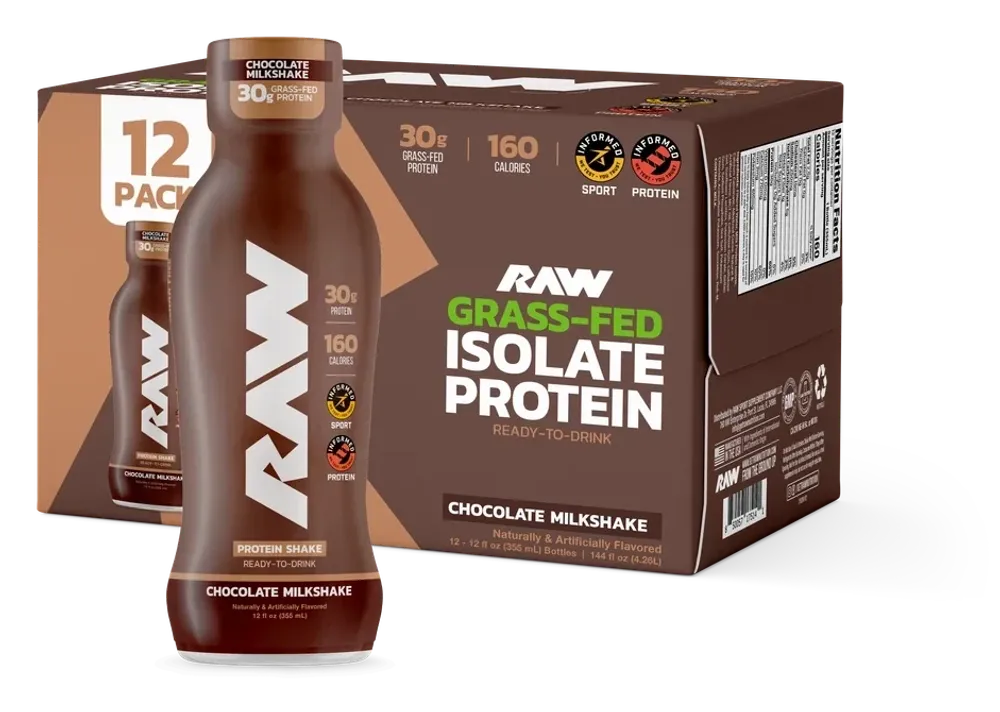
RAW Nutrition doesn't hide anything behind a proprietary blend here. The protein blend combines fast- and slow-digesting sources, the mineral content is disclosed in real amounts rather than token doses, and the sweetener stack (sucralose, acesulfame potassium, and Reb-M) is standard for the zero-sugar RTD category. The formula does include cellulose gum, cellulose gel, and gellan gum for texture and stability, so it's not a gum-free product, but nothing on the label is disguised. For a fully disclosed protein RTD with a real calcium and potassium contribution, this one holds up.
References
- Goulding, D.A. et al. "Milk proteins: An overview." Milk Proteins, 2020. https://doi.org/10.1016/B978-0-12-815251-5.00002-5
- Lorieau, Lucie, et al. "Whey-based cheese provides more postprandial plasma leucine than casein-based cheese: A pig study." Food chemistry, 2019. https://doi.org/10.1016/j.foodchem.2018.10.097
- Kerksick, Chad M, et al. "The effects of protein and amino acid supplementation on performance and training adaptations during ten weeks of resistance training." Journal of strength and conditioning research, 2006. https://pubmed.ncbi.nlm.nih.gov/16937979/
- Boirie, Y, et al. "Slow and fast dietary proteins differently modulate postprandial protein accretion." Proceedings of the National Academy of Sciences of the United States of America, 1997. https://doi.org/10.1073/pnas.94.26.14930
- Snijders, Tim, et al. "Protein Ingestion before Sleep Increases Muscle Mass and Strength Gains during Prolonged Resistance-Type Exercise Training in Healthy Young Men." The Journal of nutrition, 2015. https://doi.org/10.3945/jn.114.208371
- Schönfeld, Peter, et al. "Short- and medium-chain fatty acids in energy metabolism: the cellular perspective." Journal of lipid research, 2016. https://doi.org/10.1194/jlr.R067629
- Lundsgaard, Anne-Marie, et al. "Small Amounts of Dietary Medium-Chain Fatty Acids Protect Against Insulin Resistance During Caloric Excess in Humans." Diabetes, 2021. https://doi.org/10.2337/db20-0582
- Aloia, John F, et al. "Vitamin D Supplementation Increases Calcium Absorption Without A Threshold Effect Complete." The American journal of clinical nutrition, 2014. https://doi.org/10.3945/ajcn.113.067199
- Gehlert, Sebastian, et al. "Ca2 Dependent Regulations And Signaling In Skeletal Muscle From Electro Mechanical Coupling To Adaptation." International journal of molecular sciences, 2015. https://doi.org/10.3390/ijms16011066
- Clarke, B.L. "Use Of Calcium Or Calcium In Combination With Vitamin D Supplementation To Prevent Fractures And Bone Loss In People Aged 50 Years And Older A Meta Analysis." Yearbook of Endocrinology, 2008. https://doi.org/10.1016/s0084-3741(08)79096-6
- Ganz, Tomas. "Systemic iron homeostasis." Physiological reviews, 2013. https://doi.org/10.1152/physrev.00008.2013
- Haddy, Francis J, et al. "Role of potassium in regulating blood flow and blood pressure." American journal of physiology. Regulatory, integrative and comparative physiology, 2006. https://doi.org/10.1152/ajpregu.00491.2005
- Cook, Nancy R, et al. "Joint Effects of Sodium and Potassium Intake on Subsequent Cardiovascular Disease: The Trials of Hypertension Prevention (TOHP) Follow-up Study." Archives of internal medicine, 2009. https://doi.org/10.1001/archinternmed.2008.523
Tagged