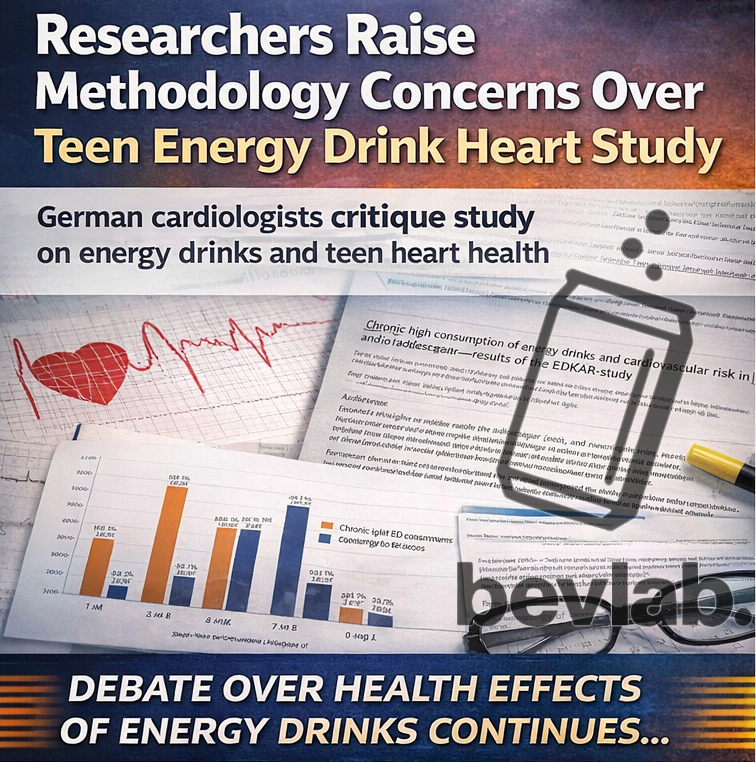
China's $9 Billion Energy Drink Market Has Goji Berries and We Want In
China's energy drink market hit $9.1 billion in 2025 and is projected to nearly double by 2032. Here's what the category looks like from the inside, and why the ingredient story is more interesting than the growth numbers.
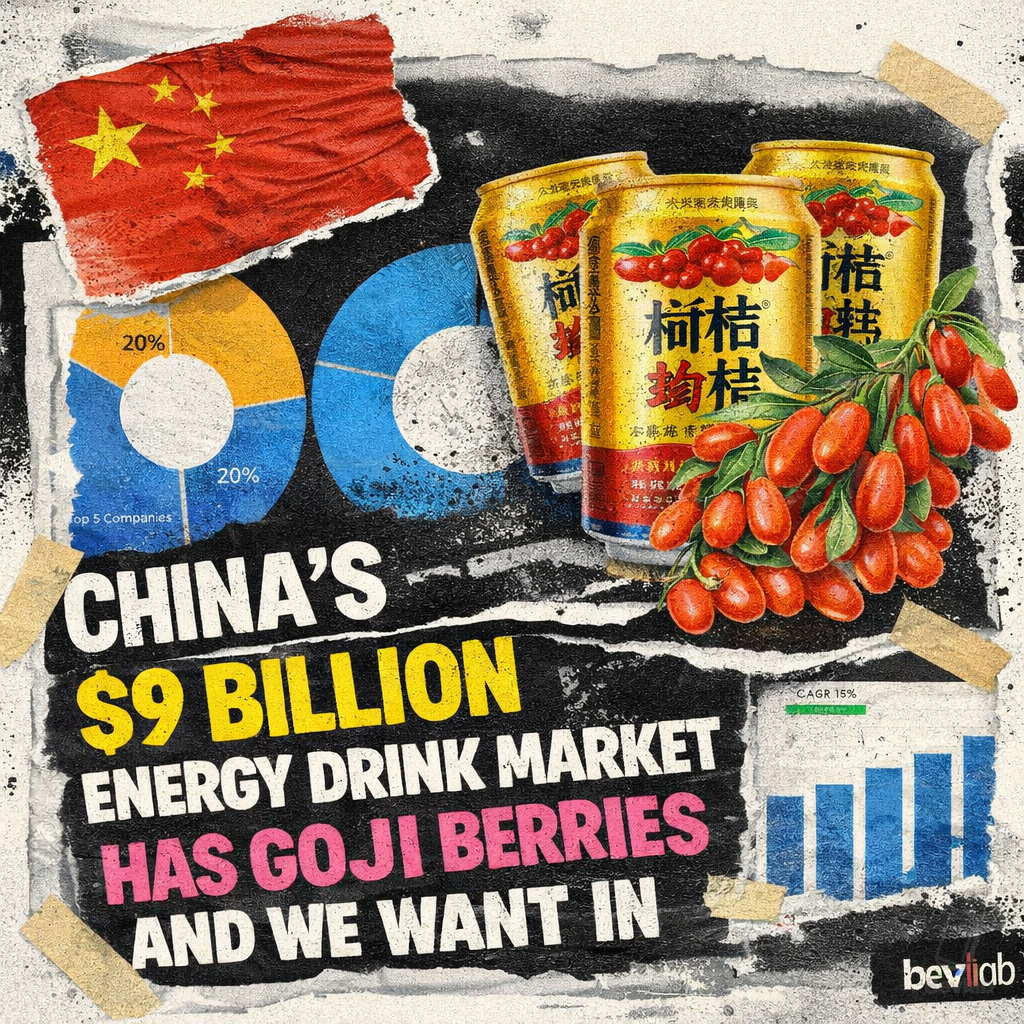
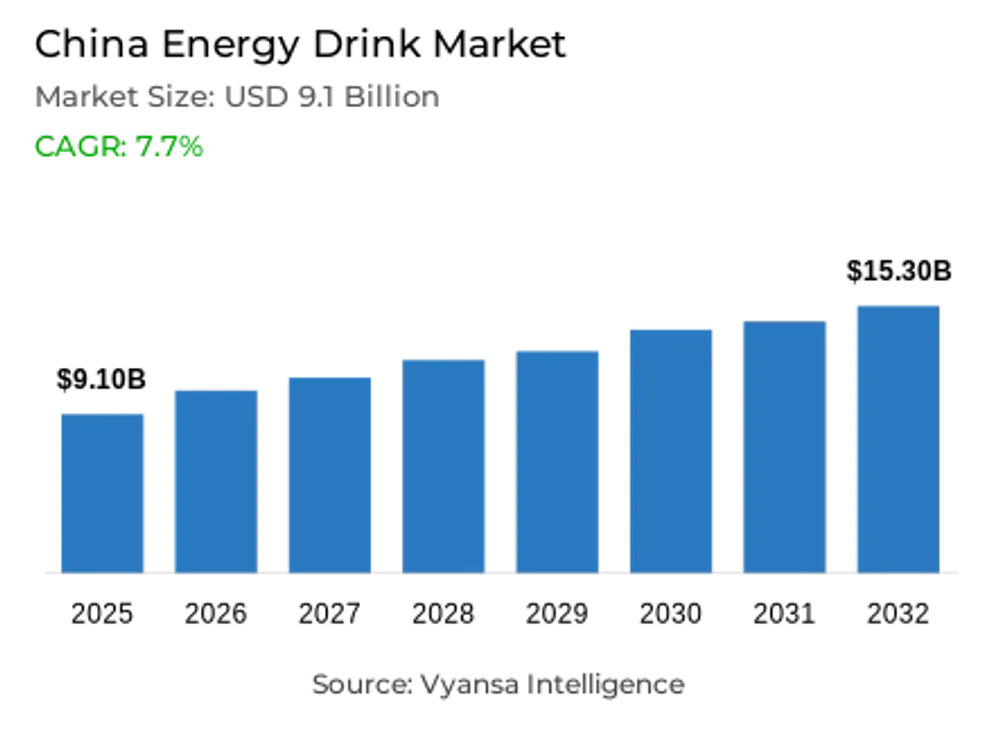
China's energy drink scene is massive, growing fast, and stacking ingredients you won't find in a US convenience store. A March 2026 market report from Vyansa Intelligence pegs the country's energy drink category at $9.1 billion in 2025, with projections to hit $15.3 billion by 2032 -- a CAGR somewhere in the 7.7-8.3% range (the press release and the report page give slightly different numbers).[1]
For context: the US market sits at roughly $22 billion and is growing at under 3% annually. China is half the size but moving more than twice as fast. That gap is closing.
Who's Running the Market
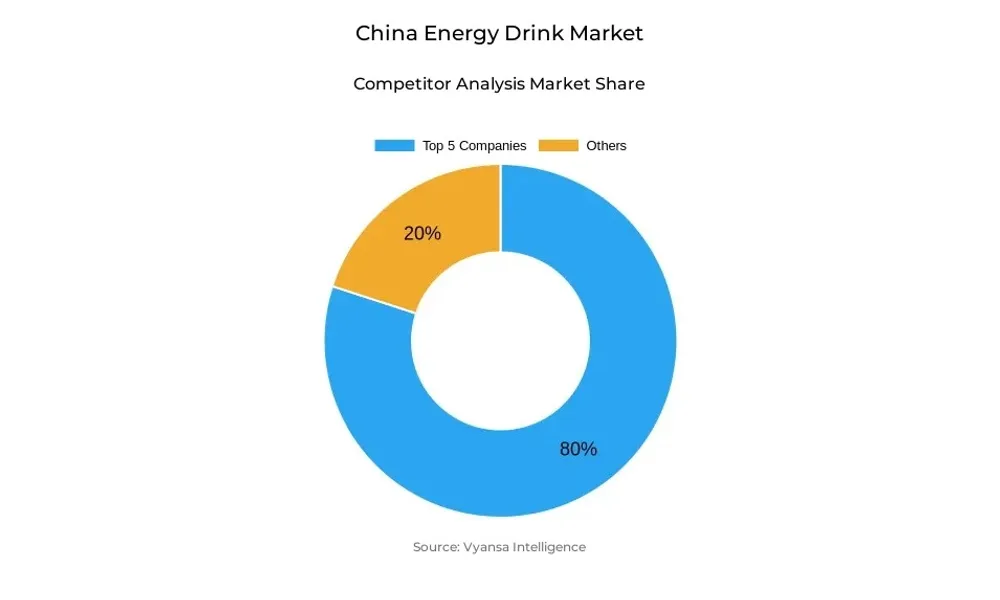
The competitive landscape is highly consolidated -- five companies control about 80% of the market. The names are a mix of familiar and surprising:
- Red Bull Vitamin Drink Co Ltd (the Thai brand's Chinese licensee)
- Shenzhen Eastroc Beverage Co Ltd - budget-dominant, aggressive pricing, reportedly the brand forcing competitors to either innovate or cut costs
- Warhorse (Beijing) Beverage Co Ltd - a domestic player with a name that would crush in the US
- Coca-Cola China Ltd
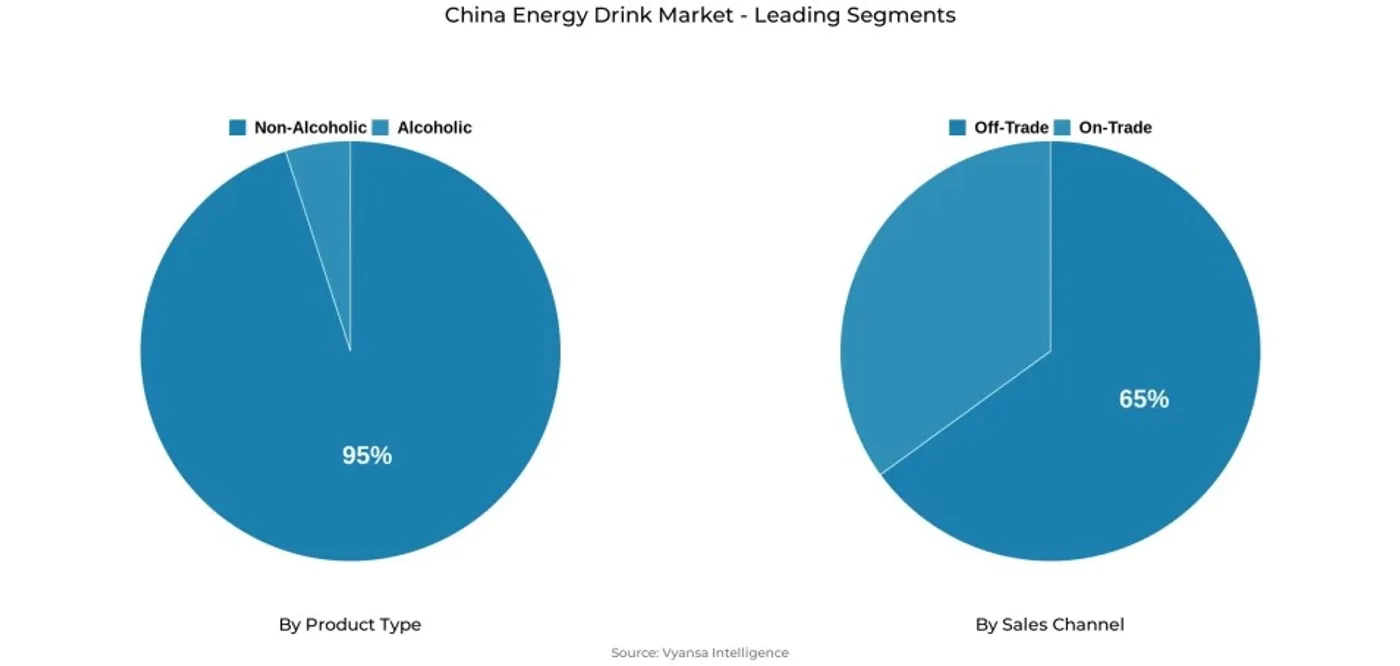
- Budweiser Brewing Co China - yes, an alcoholic beverage company is a top-5 energy drink player, though the 95% non-alcoholic split means their energy play is almost certainly non-alcoholic SKUs
Monster is present but not in the top 5, though the brand is actively investing. In 2024, they launched Predator Energy Gold Strike across select Chinese provinces in a 500ml PET bottle, non-carbonated. That format choice is notable: non-carbonated energy drinks are a smaller niche in the US but clearly a real play in China. TCP Group, which makes Krating Daeng (the original Red Bull), announced a third Chinese manufacturing facility in Guangxi in 2024, targeting early 2025 operations.
The Ingredient Story Is the Interesting Part
This is where it gets fun. Chinese energy drink brands aren't just running the standard caffeine-taurine-B-vitamin stack. The market report calls out ginseng, goji berries, L-carnitine, and various plant extracts as growth areas, especially in the premium segment, where brands are leaning into traditional Chinese herbs as functional differentiators.
Ginseng has a real research base for mental performance and fatigue reduction. Goji berries are packed with antioxidants and have been used in Chinese wellness for centuries. Pairing these with modern energy drink formats isn't pandering to health trends -- it's a legitimate product direction that the US market has barely touched. A few domestic brands have experimented with adaptogens, but nothing like what China is building at scale.
The low-sugar movement is also accelerating there, same as everywhere else. Monster's China strategy reportedly includes sugar-free variants, and the report projects the low-sugar segment to outgrow conventional over the 2026-2032 forecast window.
What to Make of the Numbers
A few honest caveats: Vyansa Intelligence published this as a press release promoting a paid market report, and we don't have independent verification of their methodology or their track record. Market research firms vary enormously in quality. The CAGR discrepancy between their press release (8.27%) and the report landing page (7.7%) is minor but worth flagging -- that kind of inconsistency happens when summaries get written separately from underlying models.
The overall story still holds up regardless. China is a massive, fast-growing energy drink market with a consolidated competitive top, a dominant budget player in Eastroc pressuring the whole field, and a genuine functional ingredient angle that most Western coverage ignores entirely.
The distribution data is also worth filing away: 65% off-trade, dominated by supermarkets, hypermarkets, convenience stores, and e-commerce. The on-trade segment (bars, restaurants, venues) accounts for the other 35%, which is higher than what you'd see in most Western markets. Energy drinks living on-trade at that scale is a different consumption culture entirely.
We Want to Try These
Here's the honest reaction to all this data: we want to crack a can of Warhorse. We want to try whatever Eastroc is doing to dominate on price. We'd love to see how goji and ginseng actually taste in an RTD energy format versus a supplement or a tea, and if we could "Americanize" it with some of our partners.
The US energy drink aisle has gotten more interesting over the last few years, but it's still largely working from the same flavor and ingredient playbook. China's category is building something structurally different... not just bigger. If any of these brands ever make it to US shelves, we'll be first in line.
Follow @BevlabMedia on TikTok and Instagram -- if we ever track down any of these, we'll crack them on camera.
References
- Vyansa Intelligence. "China Energy Drink Market to Reach USD 15.3 Billion by 2032, Amid Retail Expansion and Rising Functional Beverage Demand." PR Newswire, March 11, 2026. https://www.prnewswire.com/news-releases/china-energy-drink-market-to-reach-usd-15-3-billion-by-2032--amid-retail-expansion-and-rising-functional-beverage-demand-says-vyansa-intelligence-302711081.html
Tagged