Study: Iraqi High Schoolers Drink Energy Drinks at Nearly 3X the Global Rate
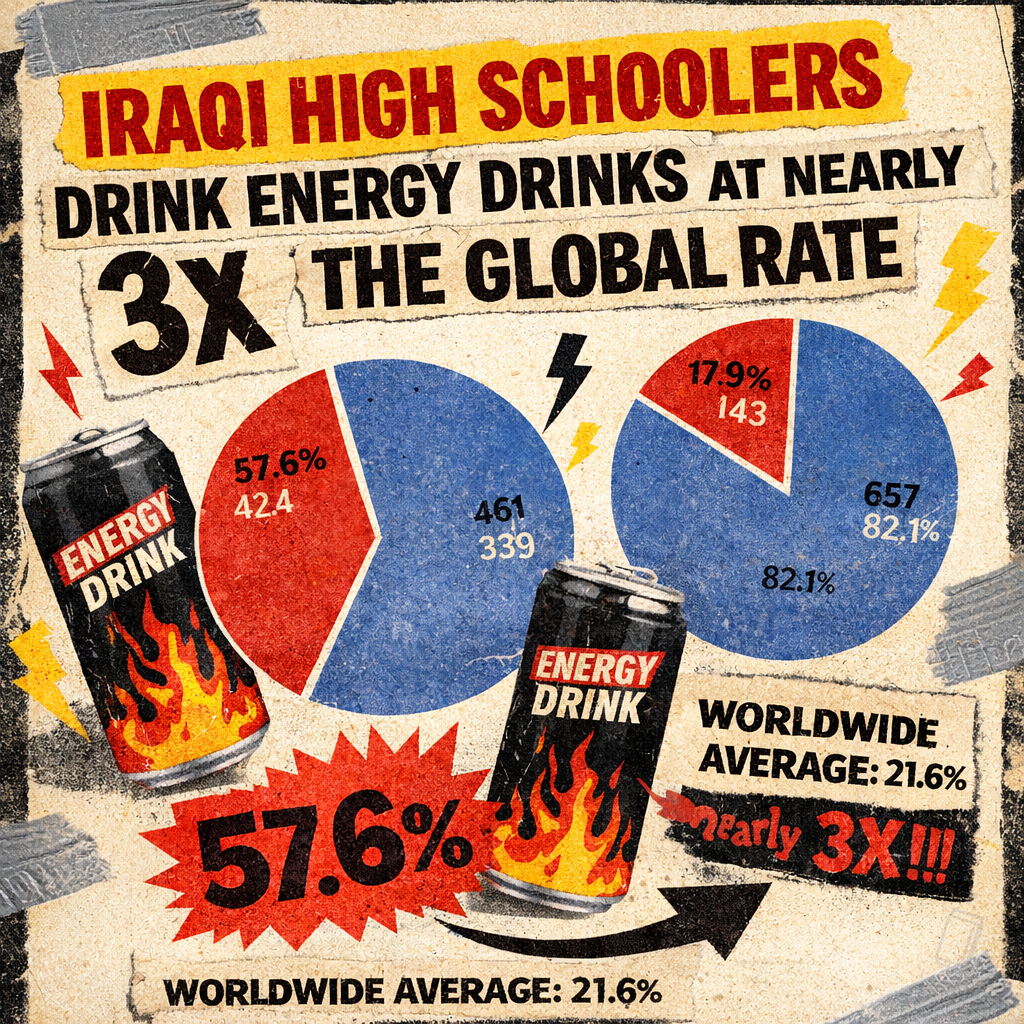
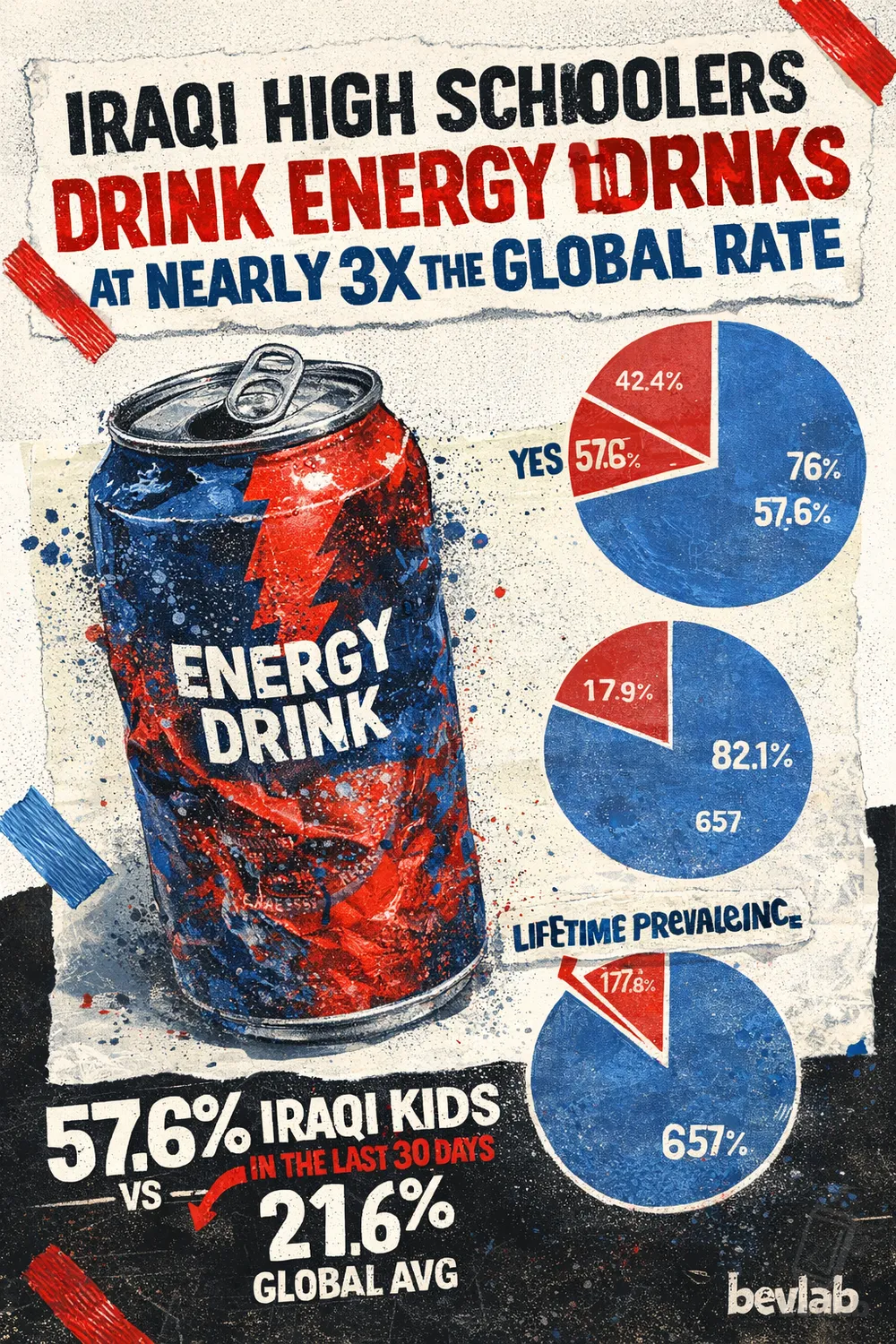
A new cross-sectional study from Erbil finds 57.6% of Iraqi high school students drank an energy drink in the past 30 days... nearly TRIPLE the worldwide average of 21.6%!
If you had to guess which country's teenagers were leading the world in energy drink consumption, Iraq probably wasn't your first pick. But a new study out of Erbil makes a strong case.
Al-keji and Othman, publishing in PLOS One in March 2026, surveyed 800 high school students across 20 schools in Erbil (the capital of Iraq's Kurdistan Region). Their headline number: 57.6% of students reported drinking an energy drink in the previous 30 days.[1] The worldwide 30-day average, according to a 2024 global meta-analysis cited in the paper, sits at 21.6%.[2] That's not even a modest gap... Iraq's current consumption rate is nearly triple the global benchmark, and it blows past comparison countries like Saudi Arabia (29.3% among university students) and Germany (61.7% lifetime prevalence, not 30-day).
@bevlabmedia High schoolers in Iraq drink 3X more energy drinks than global average 😳
For context on what "nearly triple" actually means for the beverage world: this is a country where more than half of high schoolers cracked an Enny last month. We definitely don't see that in too many places.
Why Iraq? The Numbers Make More Sense Than You'd Think
The study offers some useful context. Energy drinks in Iraq are described as affordable and widely available -- two conditions that reliably drive consumption anywhere. The Kurdistan Region also has a young population, and the paper notes that students frequently cite studying for exams, staying alert, and project work as their primary reasons for reaching for an energy drink. Academic stress and caffeine are a global pairing, but in a country with limited recreational options and strong cultural emphasis on educational performance, the connection runs deep.
The Gulf region broadly mirrors this pattern. The paper notes 45-60% lifetime prevalence among secondary school students in nearby Gulf countries, suggesting Iraq's numbers aren't an anomaly so much as a reflection of regional norms. What makes the Erbil figure striking is that it's measuring current 30-day use, not just lifetime exposure.
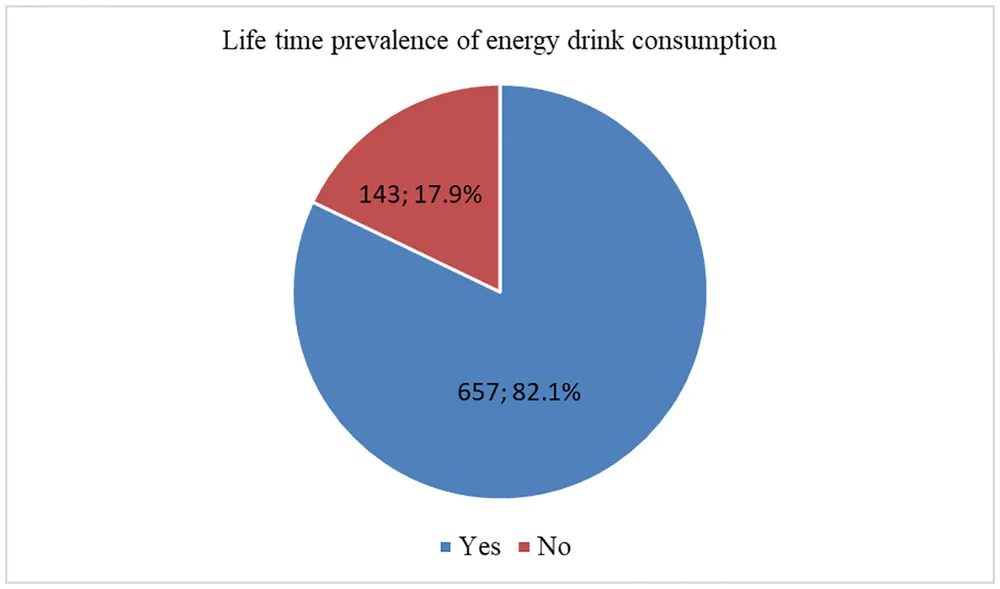
Lifetime prevalence in the study came in at 82.1% - higher than the global estimate of 54.7% and Germany's 61.7%. For comparison, the U.S. lifetime prevalence sits around 66%. Iraq's "tried it once" number is higher than America's, and its active monthly use rate runs laps around the rest of the world.
What the Study Found
The cross-sectional study ran from October 2024 through March 2025, using multistage cluster sampling across 20 of Erbil's 72 high schools. Students ranged from 15 to 20 years old, with a mean age of about 16.5. The sample skewed slightly female (57.3%), which the authors attribute to a higher number of female schools in the target population.
Key findings from the multivariate analysis:
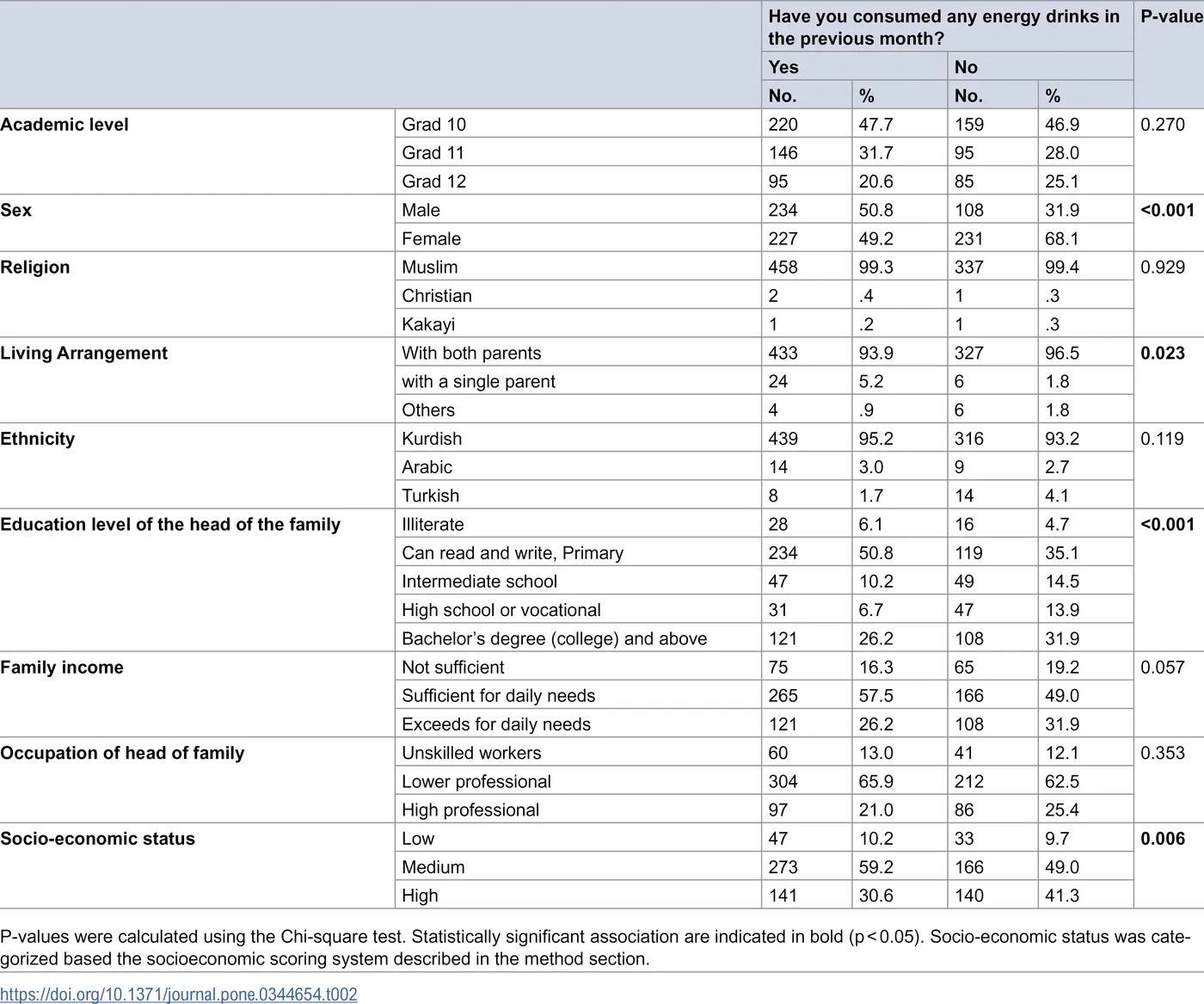
- Males were more than twice as likely to report past-month consumption compared to females (p < 0.001)
- Students living with a single parent had 2.7x the odds of past-month consumption compared to those living with both parents (p = 0.035)
- Socioeconomic status and parental education showed significant associations in the bivariate analysis but dropped out as independent predictors once the multivariate model controlled for other variables
Religion, ethnicity, and family income showed no statistically significant association with consumption.
The Gender Gap Has Context
Male-skewed energy drink consumption is consistent across the published literature: Spain, Chile, and Lebanon all show the same pattern... although there's one notable section we'll be covering soon. In the Iraqi context, the authors point to a specific cultural dynamic: women who drink in public face social judgment that men don't. That norm likely suppresses both actual female consumption and self-reported consumption on a survey. The 50.8% vs. 49.2% split in raw male/female consumers looks almost even, but the adjusted odds ratio tells the real story once you control for the fact that the sample itself had more female students.
The single-parent finding is worth noting, though the wide confidence interval signals the estimate is imprecise. Only 30 students in the sample lived with a single parent, which isn't enough to draw strong conclusions. The direction of the finding aligns with Western research on parental supervision and adolescent dietary behavior, but the study authors themselves flag the need for larger samples to confirm it.
Our Take
This is a solid prevalence study for what it is -- a well-sampled cross-sectional survey with a large enough n to produce reliable estimates for the Erbil high school population. The methodology is straightforward and the numbers are credible.
What it can't tell us is causation. Cross-sectional designs take a snapshot; they don't tell you whether stress drives consumption, consumption drives stress, or whether both are downstream of something else entirely. Self-reported data on consumption also carries recall and social desirability bias -- especially for female respondents in a cultural context where female public drinking is stigmatized. The actual female consumption rate is likely higher than what the survey captured.
The authors' conclusion -- calling for stricter marketing regulations and educational interventions -- is a standard public health recommendation that may or may not follow logically from a prevalence study that doesn't measure harm. High consumption rates and harmful consumption rates aren't the same thing, and this study doesn't establish that Iraqi teenagers are experiencing adverse health outcomes at elevated rates. It establishes that they're drinking a lot of energy drinks. Those are different claims.
For a broader look at how researchers sometimes overreach in adolescent energy drink research, our coverage of the EDKAR methodology debate is worth reading -- a recent letter challenged a cardiovascular risk study on similar methodological grounds, with the original research ultimately showing no cardiovascular differences in adolescents.
The 57.6% 30-day figure is striking, and it tells you something meaningful about energy drink culture in this part of the world. What it doesn't tell you is whether that's a problem. That's a different study for a different day, but until then, stay safe Iraqis... we'd love to try your local flavors.
Follow @BevlabMedia on TikTok and Instagram for more research coverage and category news.
References
- Al-keji SA, Othman SM. "Prevalence and consumption patterns of energy drinks among Iraqi adolescents: A cross-sectional study." PLOS One, March 10, 2026. https://journals.plos.org/plosone/article?id=10.1371/journal.pone.0344654
- Aonso-Diego, Gema, et al. “Prevalence of Energy Drink Consumption World-Wide: A Systematic Review and Meta-Analysis.” Addiction (Abingdon, England), vol. 119, no. 3, 15 Nov. 2023. doi:10.1111/add.16390. https://onlinelibrary.wiley.com/doi/10.1111/add.16390