Bang Energy Drink
300mg, zero sugar, and a formula that outlasted the circus
A full breakdown of Bang Energy's formula in one plain-English explainer.
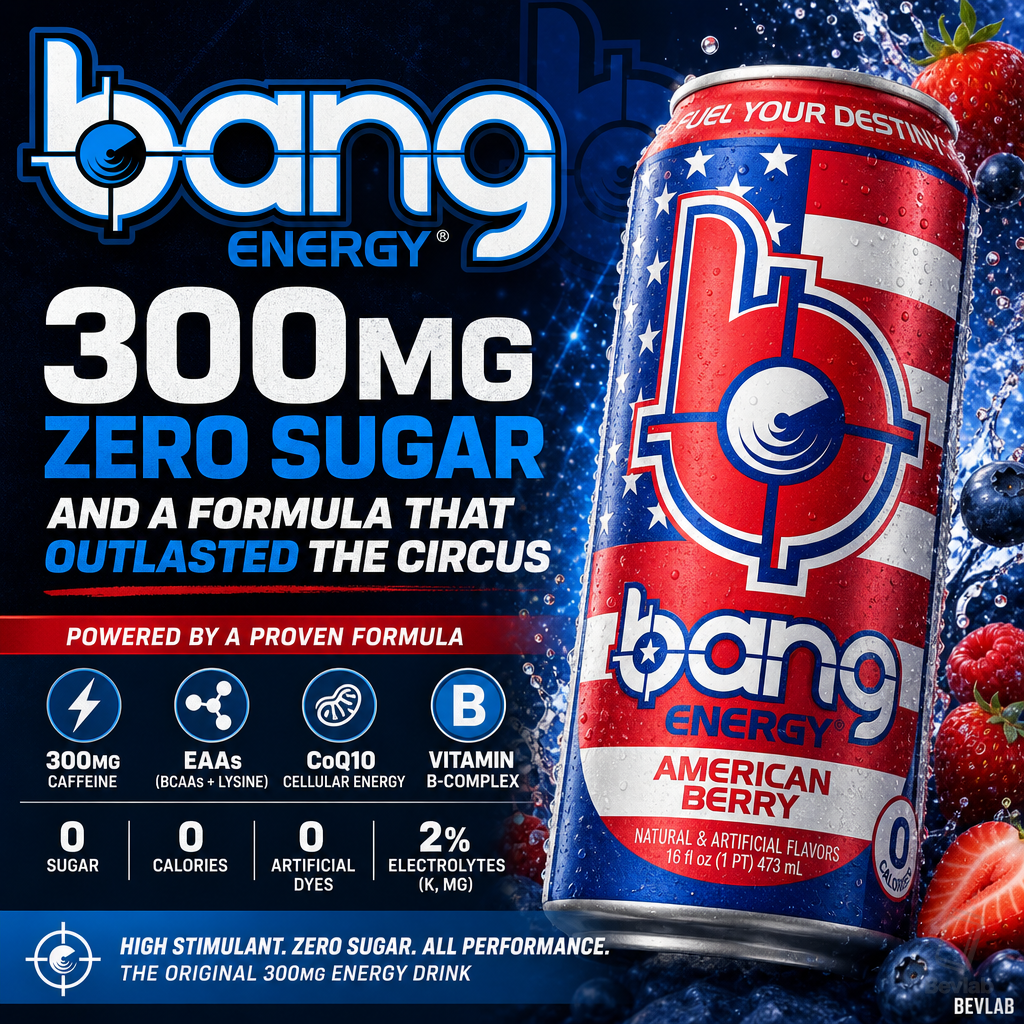
Bang Energy is one of those products that has been through more drama than most beverages ever survive. The VPX era, the Jack Owoc circus, the Monster lawsuit, the PepsiCo fallout, the bankruptcy, the acquisition. All of that happened. And somehow the drink is still on shelves, still moving, still cracking 300mg caffeine into a zero-sugar can with a flavor lineup that people actually seek out.
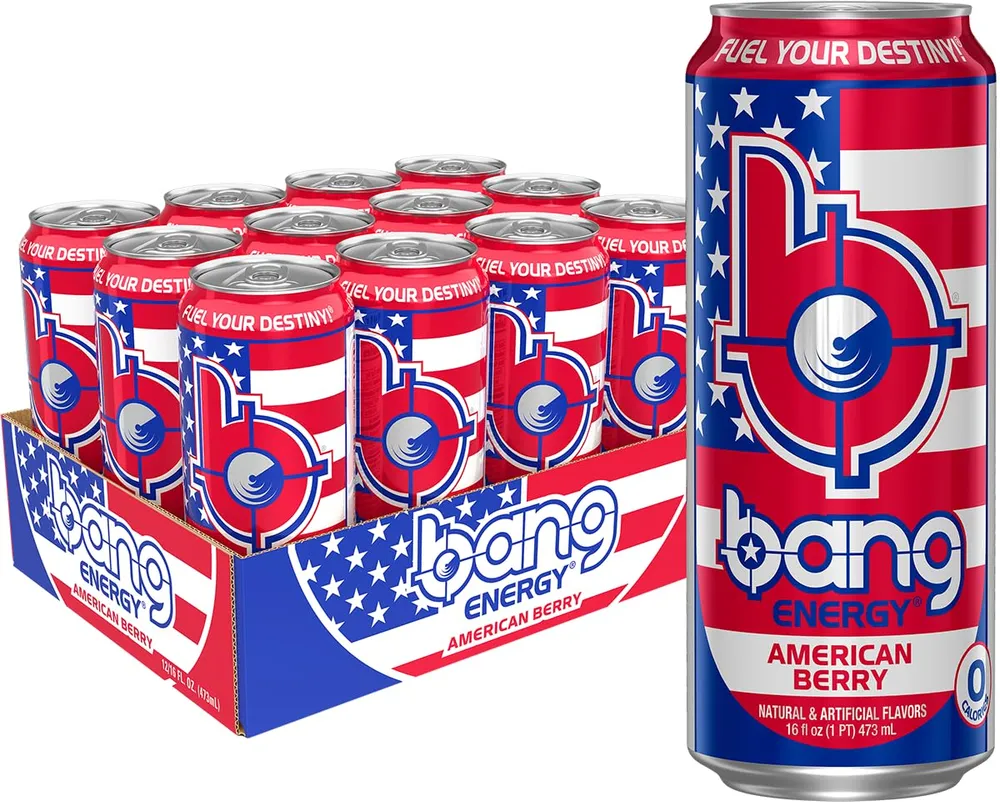
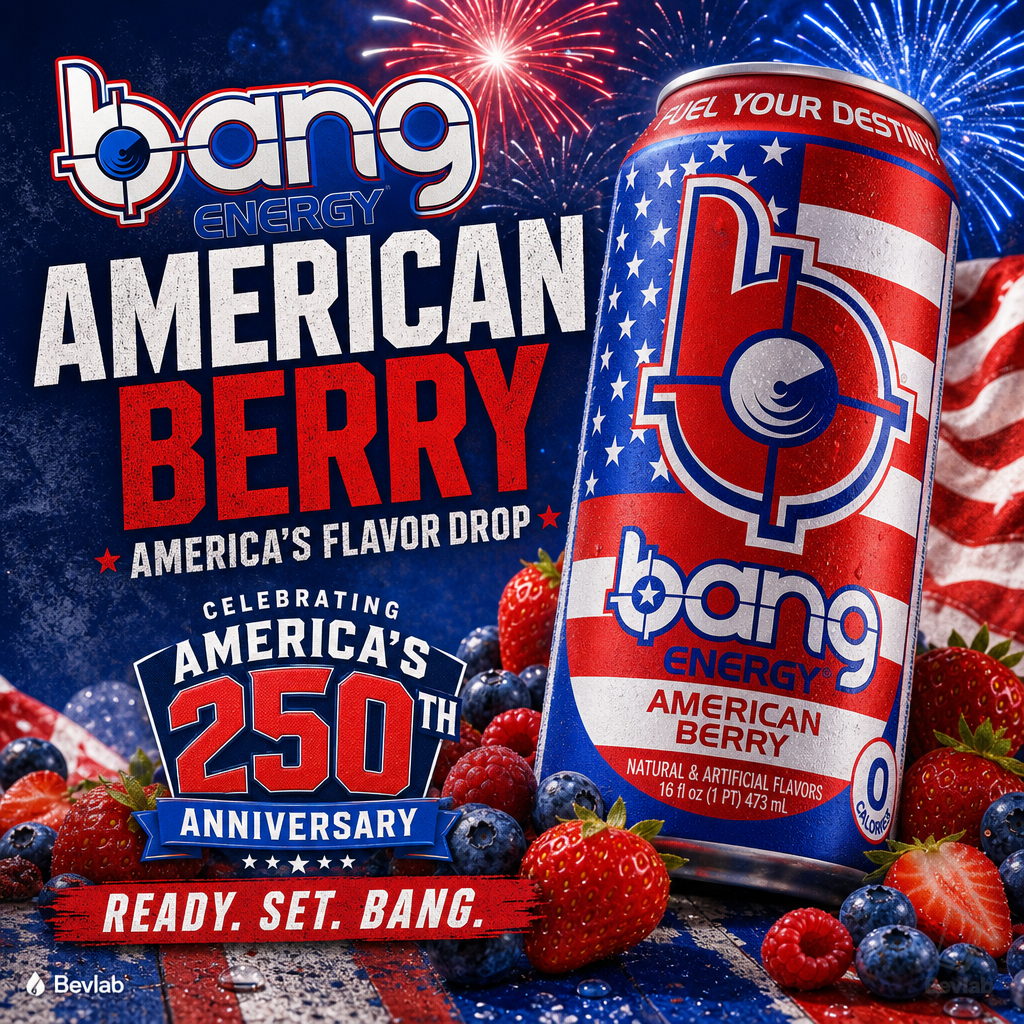
Monster acquired Bang's assets in 2023 and has kept the core formula intact while rolling out new flavors -- including American Berry in 2025, pegged to America's 250th anniversary. The production chaos is gone. What's left is a straightforward high-stimulant energy drink built around a few ingredients that matter: a serious caffeine dose, essential amino acids, CoQ10, and a full B-vitamin stack. Here's what the label actually shows.
Watch Related Videos
Bevlab VideosBang Energy Nutrition Facts
Per 16 fl oz can:
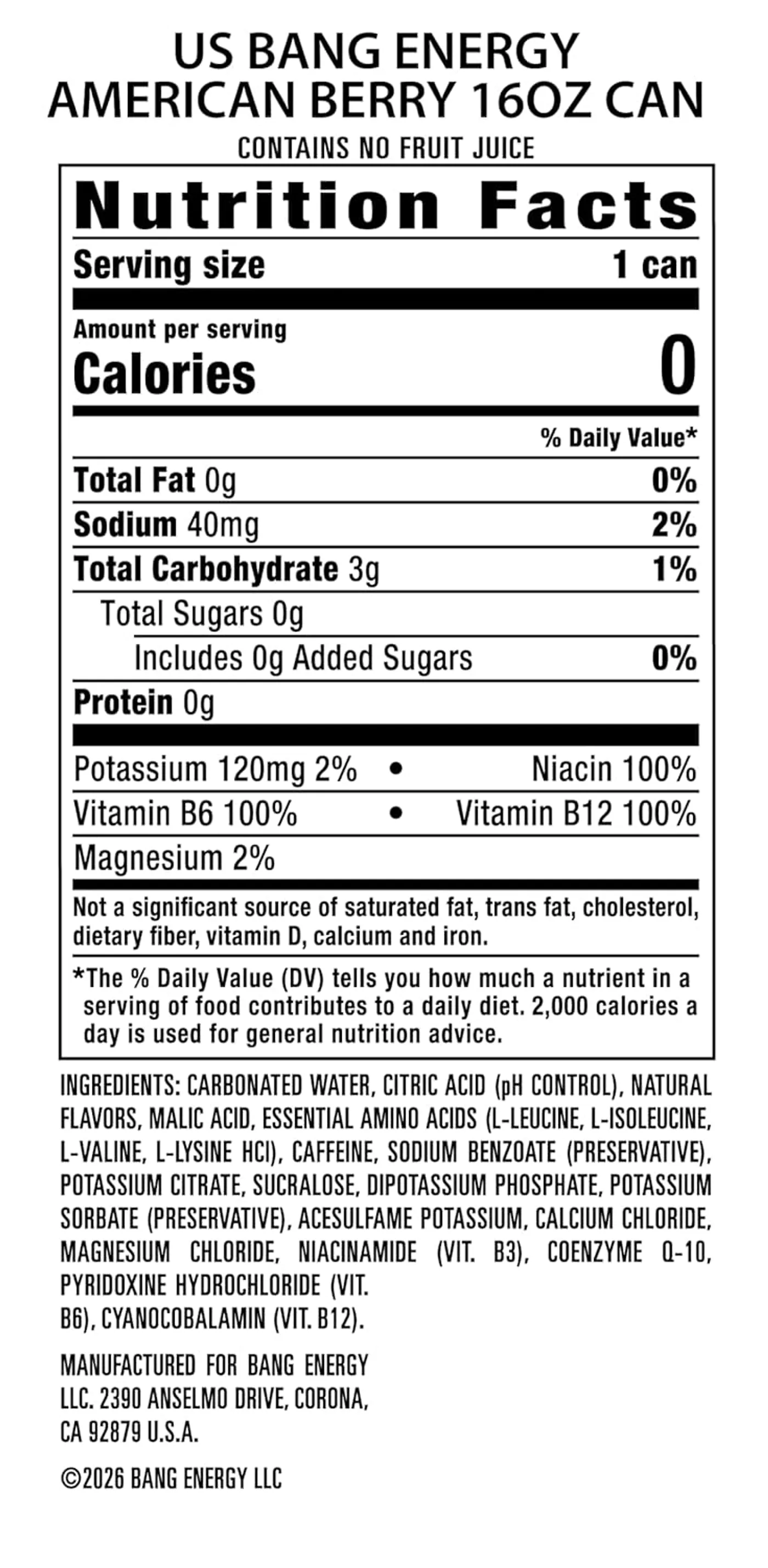
- Calories: 0
- Total Fat: 0g
- Total Carbohydrate: 3g
- Total Sugars: 0g
- Added Sugars: 0g
- Protein: 0g
- Sodium: 40mg (2% DV)
- Potassium: 120mg (2% DV)
- Niacin: 100% DV
- Vitamin B6: 100% DV
- Vitamin B12: 100% DV
- Magnesium: 2% DV
Bang Energy Ingredients
Each 16 fl oz can provides the following:
-
Caffeine
Caffeine is the reason you crack a Bang. The label lists it as CAFFEINE without specifying the source or exact milligram amount, but Bang has consistently communicated 300mg per can across all of its marketing. That puts it at the high end of the mainstream energy drink category, roughly in line with the 3-6mg/kg range that research identifies as the sweet spot for endurance and cognitive performance.[1]
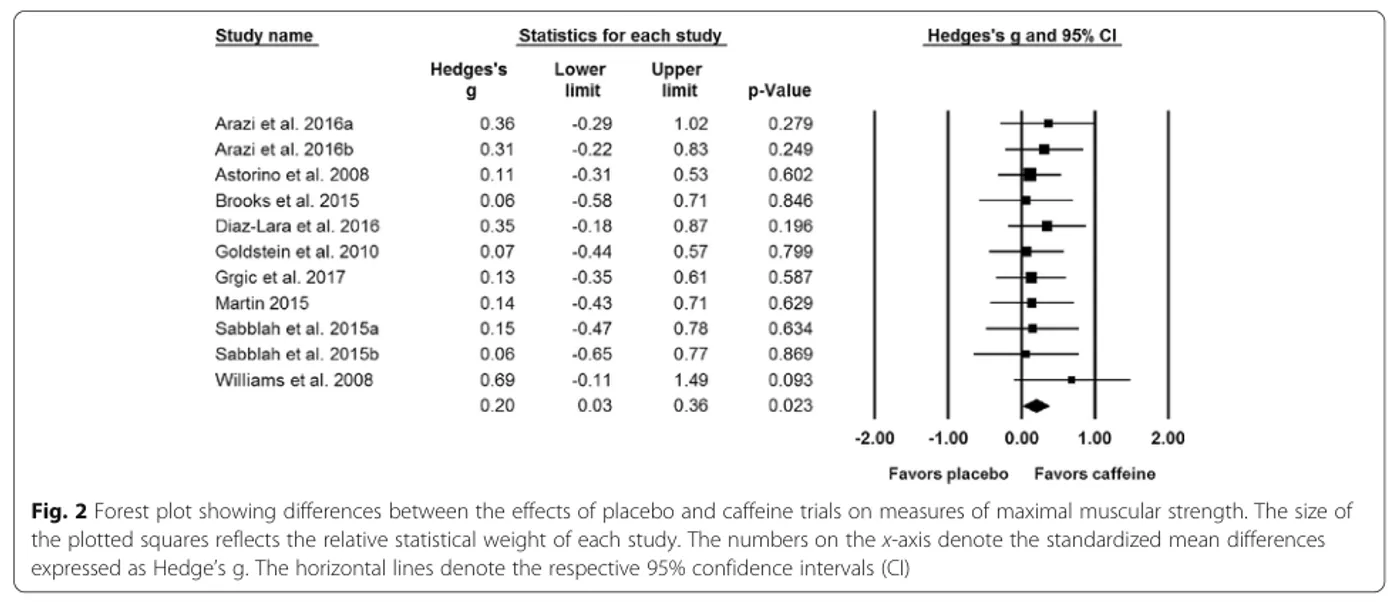
The Effects Of Caffeine Intake On Muscle Strength And Power A Systematic Review And Meta Analysis.[2] At 300mg, you're blocking the signal that makes you feel tired and pushing stimulatory neurotransmitters like dopamine and norepinephrine higher.[3] Research shows meaningful improvements in reaction time, sustained attention, and vigilance at doses in this range, with the most reliable benefits showing up in tasks requiring extended focus.[3] There's also real support for strength and power output -- a 2024 umbrella meta-analysis confirmed caffeine improves muscle strength and muscular endurance.[4]
For most people, 300mg hits hard. If you're not a habitual high-dose caffeine user, this is a one-can situation.
-
Essential Amino Acids (L-Leucine, L-Isoleucine, L-Valine, L-Lysine HCl)
The label lists Essential Amino Acids as a blend of L-leucine, L-isoleucine, L-valine, and L-lysine HCl. No individual doses are disclosed. This is a partial EAA stack: four of the nine essential amino acids, with three of the four being BCAAs.
Why does this matter in an energy drink? Leucine specifically triggers the mTORC1 pathway, which sets off the cellular machinery for building and repairing muscle protein.[5,6] The ISSN's position stand on EAA supplementation confirms that free-form EAA blends are robust stimulators of muscle protein synthesis across both trained and untrained populations.[7] The limitation with Bang's partial stack is that all nine essential amino acids are required to sustain protein synthesis. If your diet doesn't cover the missing five, the anabolic signal leucine triggers can't run its full course.[8]
The practical takeaway: this isn't a meal replacement or post-workout protein supplement. But if you're drinking Bang around training, the EAA content gives your muscles something to work with, assuming the rest of your diet fills the gaps.
-
Coenzyme Q10
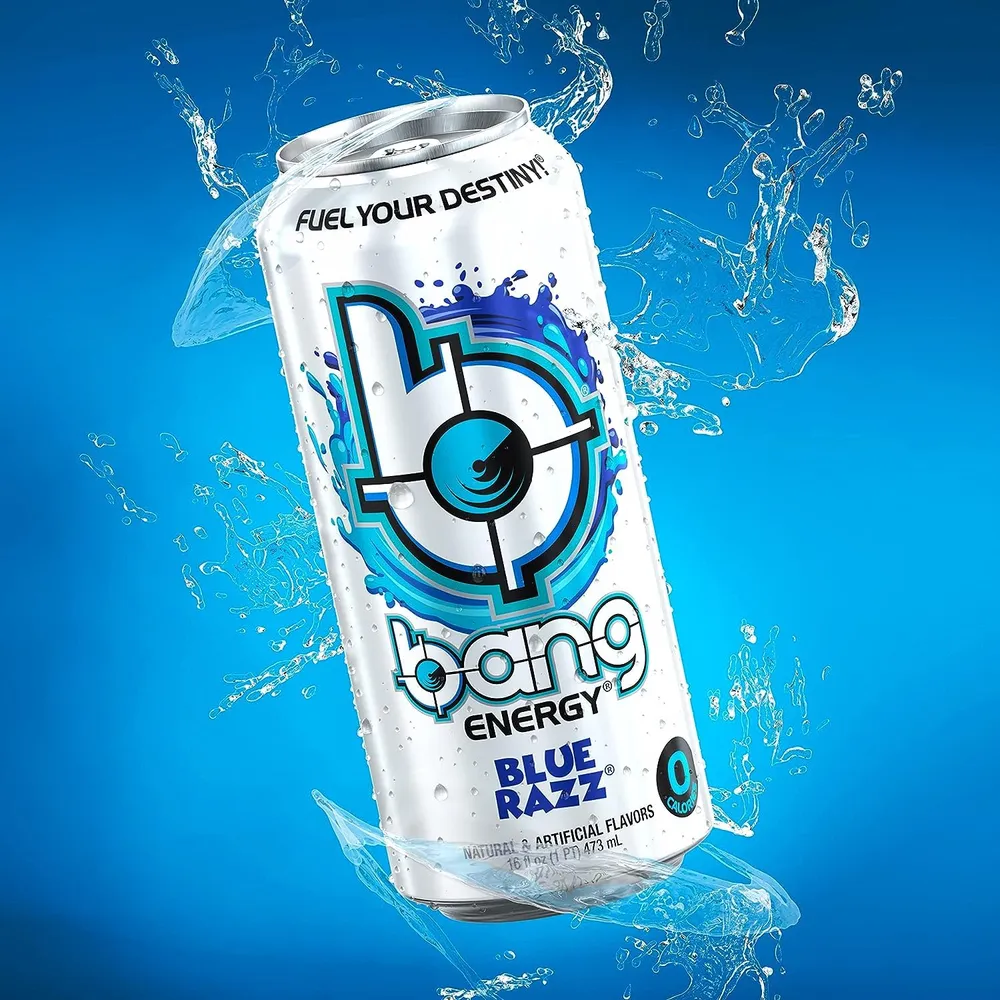
Bang has included CoQ10 since its early days. The dose isn't disclosed on the label, but the ingredient's presence gives the formula a functional angle beyond raw stimulant power.
CoQ10 is synthesized endogenously from tyrosine and serves two key roles: it shuttles electrons through the mitochondrial electron transport chain to drive ATP production, and in its reduced form (ubiquinol) it acts as the only fat-soluble antioxidant your body makes itself.[9] Both functions are directly relevant to energy and recovery. A meta-analysis of 13 RCTs found that CoQ10 supplementation produced a significant reduction in fatigue scores compared to placebo, with greater dose and longer duration correlating with stronger effects.[10] Cardiovascular benefits are also well-documented.[11]
The limitation here is the unlisted dose. Research showing meaningful fatigue reduction tends to use 100mg or more, often higher. Without knowing how much is in the can, it's hard to say whether Bang's CoQ10 inclusion is clinically meaningful or more of a label ingredient. The ingredient itself has a strong evidence base, and its presence at least signals intent.
-
Vitamins and Minerals
-
Niacin (as Niacinamide / Vitamin B3) - 100% DV
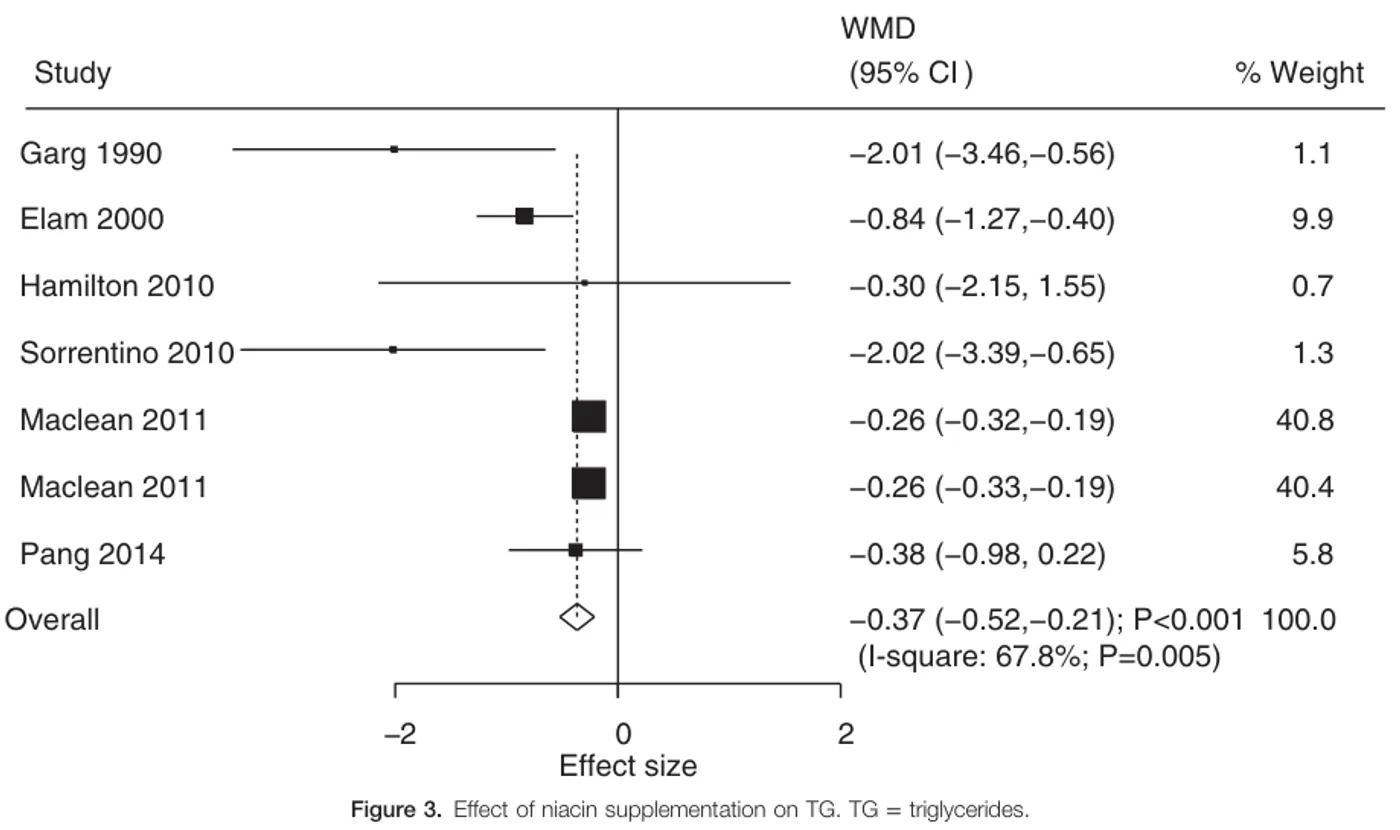
Effect of niacin supplementation on TG. TG = triglycerides.[12] Niacin in Bang's formula is delivered as niacinamide, the form of vitamin B3 that doesn't cause skin flushing. Niacinamide is a precursor to NAD+ and NADP+, coenzymes that sit at the center of hundreds of redox reactions driving energy metabolism in every cell.[13] At 100% DV, this is a nutritionally adequate dose, not a therapeutic one, but enough to cover daily requirements and support the cellular energy production that makes Bang's caffeine hit land cleanly. Niacinamide also doesn't carry the liver toxicity risk associated with high-dose nicotinic acid, making it the safer and more appropriate choice for a beverage format.[14]
-
Vitamin B6 (as Pyridoxine Hydrochloride) - 100% DV
Vitamin B6 is delivered as pyridoxine hydrochloride, the most common supplemental form. In the body, it converts to pyridoxal-5'-phosphate (PLP), the active coenzyme that participates in over 140 enzymatic reactions, including the synthesis of dopamine, serotonin, and GABA.[15] That neurotransmitter connection is relevant in the context of an energy drink: the B6 here supports the same brain chemistry caffeine is pushing on. At 100% DV, you're covering your daily requirement. Pyridoxine HCl requires hepatic conversion to PLP, which becomes a consideration at much higher doses, but at DV-level amounts it's a non-issue.[16]
-
Vitamin B12 (as Cyanocobalamin) - 100% DV
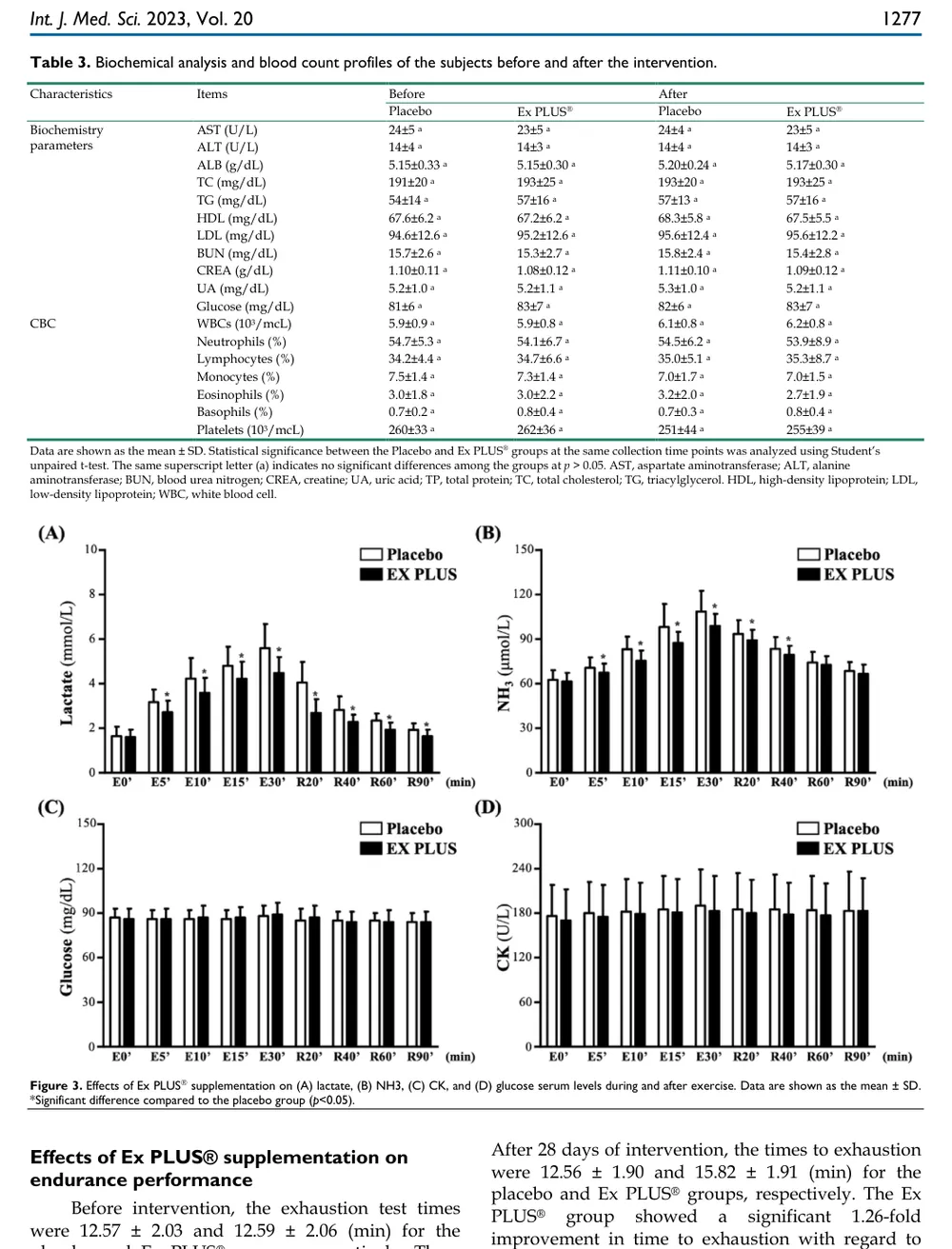
Table 3. Biochemical analysis and blood count profiles of the subjects before and after the intervention.[17] Vitamin B12 is delivered as cyanocobalamin, the most stable and cost-effective supplemental form. B12 is essential for red blood cell formation, myelin maintenance, and one-carbon metabolism.[18] The research on B12 for energy and performance is clear on one thing: if you're deficient, supplementing produces meaningful improvements in fatigue and cognitive function.[19] If you're not deficient, the incremental benefit is modest.[20] At 100% DV, Bang covers your daily requirement, which matters most for vegans and others who may be running lower on B12 from diet alone.
-
Potassium (as Potassium Citrate and Dipotassium Phosphate) - 120mg (2% DV)
Potassium appears here in two salt forms: potassium citrate and dipotassium phosphate. At 120mg, you're getting 2% of the daily Adequate Intake, a modest contribution to electrolyte balance rather than a meaningful supplemental dose. The physiological case for potassium is solid: it regulates blood pressure through sodium opposition, supports muscle contraction, and covers sweat losses during exercise.[21,22] The dose here won't move the needle on blood pressure or cardiovascular outcomes, but it adds a small electrolyte dimension to what is otherwise a pure stimulant drink.[23]
-
Magnesium (as Magnesium Chloride) - 2% DV
Magnesium is listed as magnesium chloride, contributing 2% of the daily RDA. Like potassium, this is a trace electrolyte contribution rather than a therapeutic dose. Meaningful supplemental research on muscle recovery and blood pressure tends to use 350-500mg/day.[24,25] The inclusion makes sense as a formula rounding element alongside the other electrolytes, and magnesium chloride is a well-absorbed inorganic salt that won't cause GI issues at this dose.[26]
-
Calcium (as Calcium Chloride) - Not a significant source
Calcium is present as calcium chloride, though the label notes it's not a significant source. Its role here is likely functional rather than nutritional: calcium chloride is commonly used in beverages as a mineral salt that helps with carbonation stability and adds a subtle crispness to the mouthfeel. No meaningful contribution to your daily calcium needs from a can of Bang.
-
-
Other Ingredients
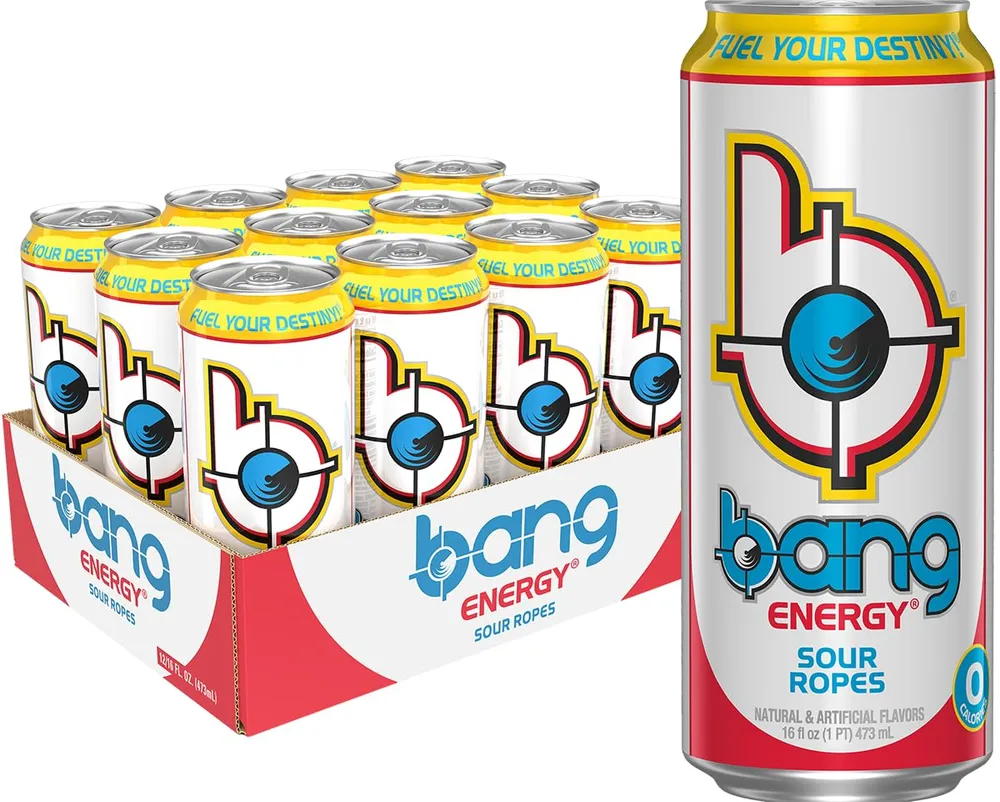
Bang Energy Drink Sour -
Carbonated Water -- the base of every Bang can. The carbonation gives the drink its signature crispness and may contribute to a brief alertness boost post-exercise, with research showing carbonated water produces greater mood improvement and reduced sleepiness compared to still water during recovery.[27]
-
Citric Acid (pH Control) -- a weak organic acid that controls acidity, prevents microbial growth, and contributes to the tart flavor profile. It's one of the most widely used food additives globally and is GRAS-classified by the FDA.[28]
-
Natural Flavors -- the proprietary blend of flavoring compounds responsible for each Bang flavor's character. These are GRAS-assessed by the Flavor and Extract Manufacturers Association and function purely to deliver taste and aroma.[29]
-
Malic Acid -- a dicarboxylic acid naturally found in fruits that adds a sharper, longer-lasting tartness than citric acid alone. Also a TCA cycle intermediate, with some research suggesting it may reduce exercise-associated blood lactate.[30]
-
Sodium Benzoate (Preservative) -- a common antimicrobial preservative effective at the low pH typical of carbonated beverages. GRAS at up to 0.1% by weight in the US. One formulation note worth flagging: sodium benzoate and ascorbic acid can react in the presence of trace metal ions to form benzene, but Bang doesn't contain added vitamin C, which removes that concern here.[31]
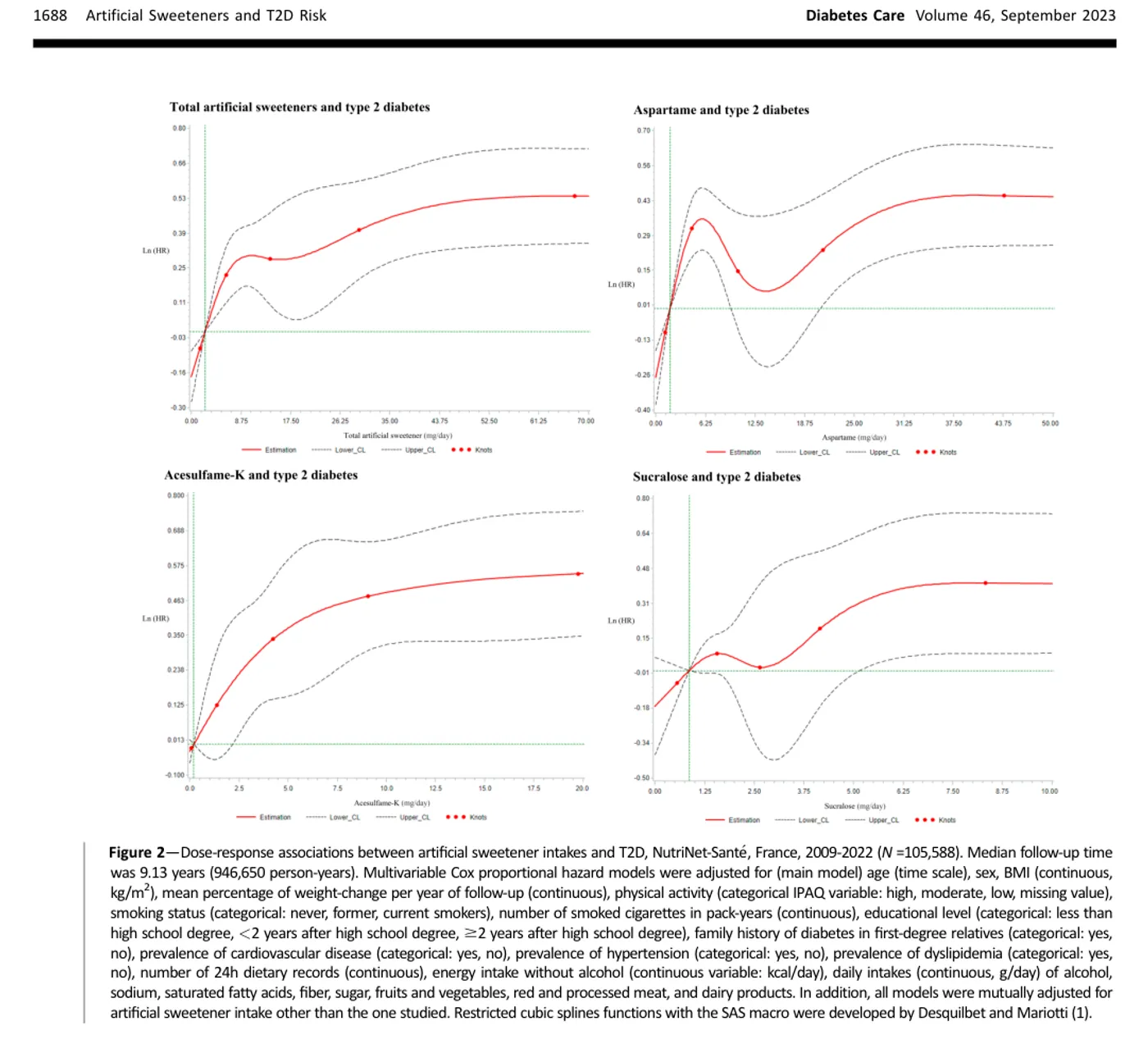
Artificial Sweeteners and Risk of Type 2 Diabetes in the Prospective NutriNet-Sante Cohort.[32] -
Sucralose -- a zero-calorie sweetener approximately 600 times sweeter than sugar, responsible for most of Bang's sweetness. FDA-approved with an ADI of 5mg/kg/day, and typical beverage use falls well below that threshold.[33]
-
Potassium Sorbate (Preservative) -- a mold and yeast inhibitor used alongside sodium benzoate for shelf stability. GRAS in the US, with a well-established ADI, and realistic dietary exposure in most populations runs well below any ceiling.[34]
-
Acesulfame Potassium -- a zero-calorie co-sweetener blended with sucralose to smooth out sweetness and reduce any artificial aftertaste. Standard practice in zero-sugar beverages.[35]
-
Flavors Available
- American Berry (12 Cans: $29.76)
- Any Means Orange (12 Cans: $25.56)
- Black Cherry Vanilla (12 Cans: $27.99)
- Blue Razz (12 Cans: $47.99)
- Candy Apple Crisp (12 Cans: $43.49)
- Cotton Candy (12 Cans: $26.98)
- Delish Strawberry Kiss (12 Cans: $27.99)
- Lime Pop Drop (12 Cans: $29.76)
- Peach Mango (12 Cans: $27.99)
- Sour Ropes (12 Cans: $29.76)
- Variety Pack (24 Cans: $79.99)
Who It's For
- High-stimulant seekers: If you want 300mg caffeine, zero sugar, and zero calories in a can you can find almost anywhere, Bang delivers exactly that. It's built for people who want the strongest mainstream energy drink experience without the sugar crash.
- Active people who don't want a dedicated pre-workout: The EAA blend and CoQ10 give Bang a light functional layer that generic energy drinks skip. It's not a replacement for a serious pre-workout, but it fits naturally into a training routine.
Bang Is Still Bang -- Just Without the Chaos
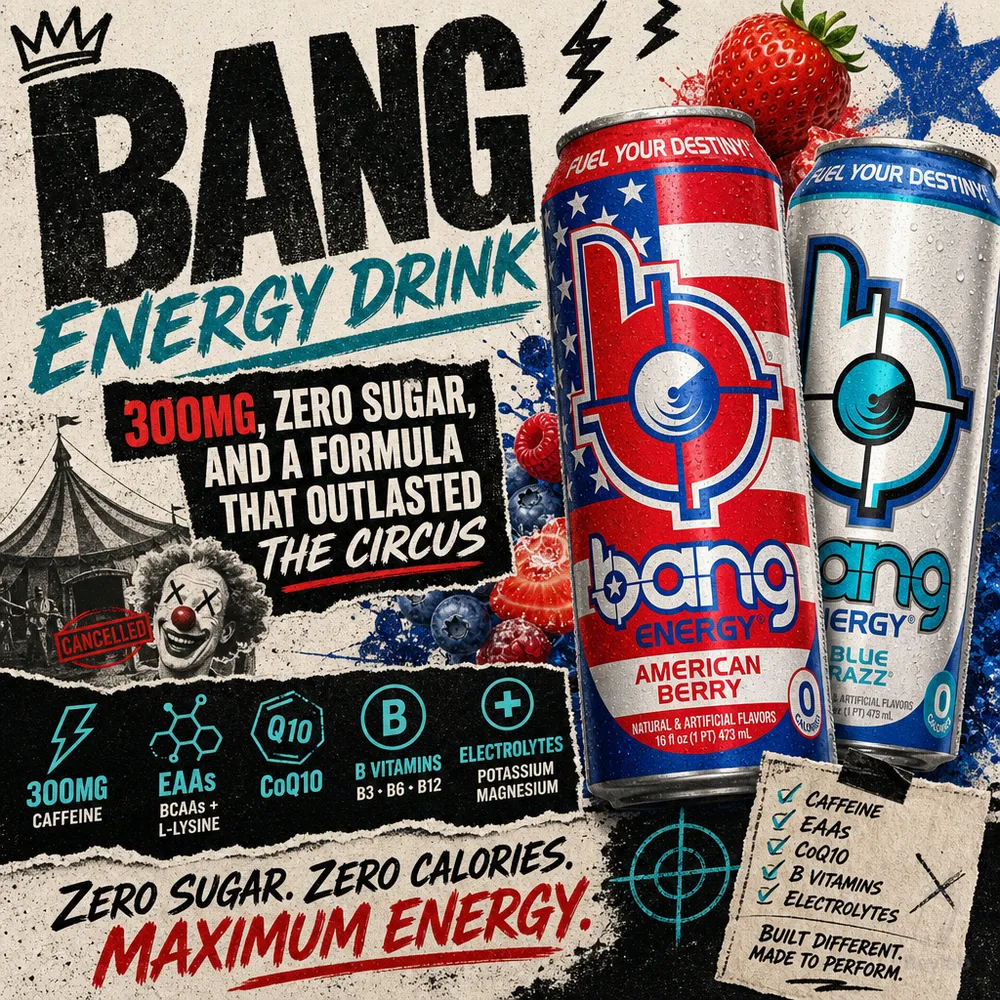
Monster cleaned up the brand, kept the formula, and kept the 300mg promise. What you're getting is a legitimate high-stimulant, zero-sugar energy drink with a functional supporting cast: EAAs for muscle protein signaling, CoQ10 for cellular energy and antioxidant support, and a full B-vitamin stack to keep the metabolic machinery running. The preservative system is standard for the category, the sweetener blend is clean, and the electrolyte contribution is modest but present. If 300mg of caffeine is what you're after, this is still one of the most direct ways to get there.
More Related Videos
Bevlab VideosProduct Comparison
REELS
References
- Guest, Nanci S. et al. "International Society Of Sports Nutrition Position Stand Caffeine And Exercise Performance." Journal of the International Society of Sports Nutrition, 2021. https://doi.org/10.1186/s12970-020-00383-4
- Grgic, Jozo, et al. "Effects Of Caffeine Intake On Muscle Strength And Power A Systematic Review And Meta Analysis." Journal of the International Society of Sports Nutrition, 2018. https://doi.org/10.1186/s12970-018-0216-0
- McLellan, Tom M. et al. "A Review Of Caffeine S Effects On Cognitive Physical And Occupational Performance." Neuroscience & Biobehavioral Reviews, 2016. https://doi.org/10.1016/j.neubiorev.2016.09.001
- Bilondi, Hossein Taghizadeh, et al. "The Effect Of Caffeine Supplementation On Muscular Strength And Endurance A Meta Analysis Of Meta Analyses." Heliyon, 2024. https://doi.org/10.1016/j.heliyon.2024.e35025
- Anthony, Joshua C. et al. "Leucine Stimulates Translation Initiation In Skeletal Muscle Of Postabsorptive Rats Via A Rapamycin Sensitive Pathway." The Journal of Nutrition, 2000. https://doi.org/10.1093/jn/130.10.2413
- Wolfson, Rachel L, et al. "Sestrin2 is a leucine sensor for the mTORC1 pathway." Science (New York, N.Y.), 2016. https://doi.org/10.1126/science.aab2674
- Ferrando, Arny A. et al. "International Society Of Sports Nutrition Position Stand Essential Amino Acid Supplementation On Skeletal Muscle And Performance." Journal of the International Society of Sports Nutrition, 2023. https://doi.org/10.1080/15502783.2023.2263409
- Wolfe, Robert R. "Branched-chain amino acids and muscle protein synthesis in humans: myth or reality?." Journal of the International Society of Sports Nutrition, 2017. https://doi.org/10.1186/s12970-017-0184-9
- Arenas-Jal, Marta, et al. "Coenzyme Q10 supplementation: Efficacy, safety, and formulation challenges." Comprehensive reviews in food science and food safety, 2020. https://doi.org/10.1111/1541-4337.12539
- Tsai, I-Chen, et al. "Effectiveness of Coenzyme Q10 Supplementation for Reducing Fatigue: A Systematic Review and Meta-Analysis of Randomized Controlled Trials." Frontiers in pharmacology, 2022. https://doi.org/10.3389/fphar.2022.883251
- Fotino, A Domnica, et al. "Effect of coenzyme Q₁₀ supplementation on heart failure: a meta-analysis." The American journal of clinical nutrition, 2012. https://doi.org/10.3945/ajcn.112.040741
- Xiang, Dan, et al. "Effectiveness of niacin supplementation for patients with type 2 diabetes: A meta-analysis of randomized controlled trials." Medicine, 2020. https://doi.org/10.1097/MD.0000000000021235
- Gasperi, Valeria, et al. "Niacin In The Central Nervous System An Update Of Biological Aspects And Clinical Applications." International Journal of Molecular Sciences, 2019. https://doi.org/10.3390/ijms20040974
- Kaye, Alan D, et al. "Niacin and Stroke: The Role of Supplementation and Emerging Concepts in Clinical Practice, a Narrative Review." Current issues in molecular biology, 2025. https://doi.org/10.3390/cimb47060400
- di, Salvo Martino Luigi, et al. "Di Salvo2010 Vitamin B6 Salvage Enzymes Mechanism Structure And Regulation." Biochimica et Biophysica Acta (BBA) - Proteins and Proteomics, 2011. https://doi.org/10.1016/j.bbapap.2010.12.006
- Vrolijk, Misha F. et al. "The Vitamin B6 Paradox Supplementation With High Concentrations Of Pyridoxine Leads To Decreased Vitamin B6 Function." Toxicology in Vitro, 2017. https://doi.org/10.1016/j.tiv.2017.07.009
- Lee, Mon-Chien, et al. "A Functional Evaluation Of Anti Fatigue And Exercise Performance Improvement Following Vitamin B Complex Supplementation In Healthy Humans A Randomized Double Blind Trial." International Journal of Medical Sciences, 2023. https://doi.org/10.7150/ijms.86738
- Lyon, Peter, et al. "B Vitamins And One Carbon Metabolism Implications In Human Health And Disease." Nutrients, 2020. https://doi.org/10.3390/nu12092867
- Ueno, Asako, et al. "Influences Of Vitamin B12 Supplementation On Cognition And Homocysteine In Patients With Vitamin B12 Deficiency And Cognitive Impairment." Nutrients, 2022. https://doi.org/10.3390/nu14071494
- Markun, Stefan, et al. "Effects Of Vitamin B12 Supplementation On Cognitive Function Depressive Symptoms And Fatigue A Systematic Review Meta Analysis And Meta Regression." Nutrients, 2021. https://doi.org/10.3390/nu13030923
- He, Feng J, et al. "Beneficial effects of potassium on human health." Physiologia plantarum, 2008. https://doi.org/10.1111/j.1399-3054.2007.01033.x
- Montain, Scott J, et al. "Sweat mineral-element responses during 7 h of exercise-heat stress." International journal of sport nutrition and exercise metabolism, 2007. https://doi.org/10.1123/ijsnem.17.6.574
- Haddy, Francis J, et al. "Role of potassium in regulating blood flow and blood pressure." American journal of physiology. Regulatory, integrative and comparative physiology, 2006. https://doi.org/10.1152/ajpregu.00491.2005
- Tarsitano, Maria Grazia, et al. "Effects Of Magnesium Supplementation On Muscle Soreness In Different Type Of Physical Activities A Systematic Review." Journal of translational medicine, 2024. https://doi.org/10.1186/s12967-024-05434-x
- Alharran, Abdullah M, et al. "Impact Of Magnesium Supplementation On Blood Pressure An Umbrella Meta Analysis Of Randomized Controlled Trials." Current therapeutic research, clinical and experimental, 2024. https://doi.org/10.1016/j.curtheres.2024.100755
- Fatima, Ghizal, et al. "Magnesium Matters A Comprehensive Review Of Its Vital Role In Health And Diseases." Cureus, 2024. https://doi.org/10.7759/cureus.71392
- Kajiki, Masanobu, et al. "Ingesting carbonated water post-exercise in the heat transiently ameliorates hypotension and enhances mood state." Experimental physiology, 2024. https://doi.org/10.1113/EP091925
- Ciriminna, Rosaria, et al. "Citric acid: emerging applications of key biotechnology industrial product." Chemistry Central journal, 2017. https://doi.org/10.1186/s13065-017-0251-y
- Davidsen, Jeanne M, et al. "FEMA GRAS assessment of natural flavor complexes: Asafetida oil, garlic oil and onion oil." Food and chemical toxicology : an international journal published for the British Industrial Biological Research Association, 2023. https://doi.org/10.1016/j.fct.2022.113580
- Qiang, Fu. "Effect Of Malate Oligosaccharide Solution On Antioxidant Capacity Of Endurance Athletes." The Open Biomedical Engineering Journal, 2015. https://doi.org/10.2174/1874120701509010326
- Nyman, Patricia J, et al. "Evaluation of accelerated UV and thermal testing for benzene formation in beverages containing benzoate and ascorbic acid." Journal of food science, 2010. https://doi.org/10.1111/j.1750-3841.2010.01536.x
- Debras, Charlotte, et al. "Artificial Sweeteners and Risk of Type 2 Diabetes in the Prospective NutriNet-Santé Cohort." Diabetes care, 2023. https://doi.org/10.2337/dc23-0206
- Daher, Mira, et al. "Trends and amounts of consumption of low-calorie sweeteners: A cross-sectional study." Clinical nutrition ESPEN, 2022. https://doi.org/10.1016/j.clnesp.2022.01.006
- et al. "Opinion on the follow-up of the re-evaluation of sorbic acid (E200) and potassium sorbate (E202) as food additives." EFSA journal. European Food Safety Authority, 2019. https://doi.org/10.2903/j.efsa.2019.5625
- Chowdhury, Chandrama Roy, et al. "Beyond sweetness: A review of the health and safety of acesulfame-K." Food chemistry, 2026. https://doi.org/10.1016/j.foodchem.2025.147290
Tagged