BODi P90X Energy Drink Launched, But We Need the Full Label
The P90X brand bets on a peat-and-apple wildcard
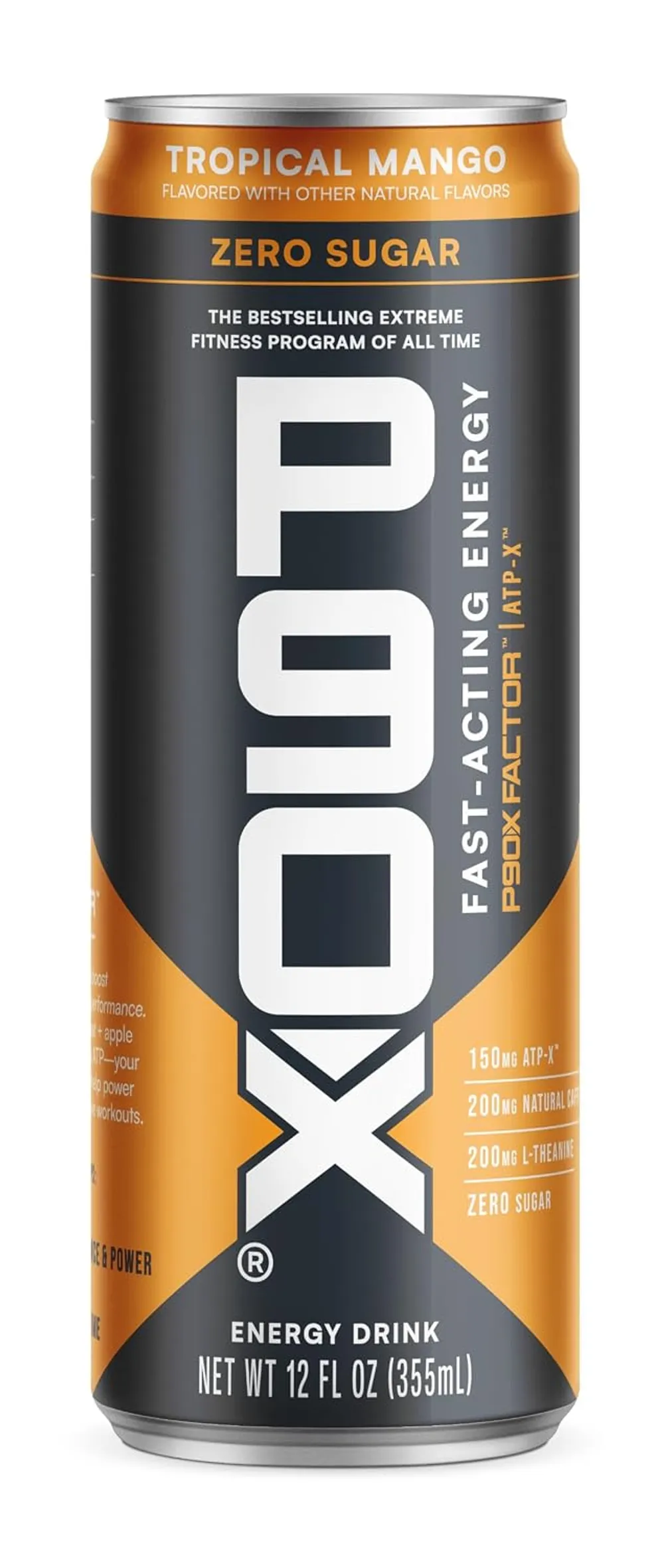
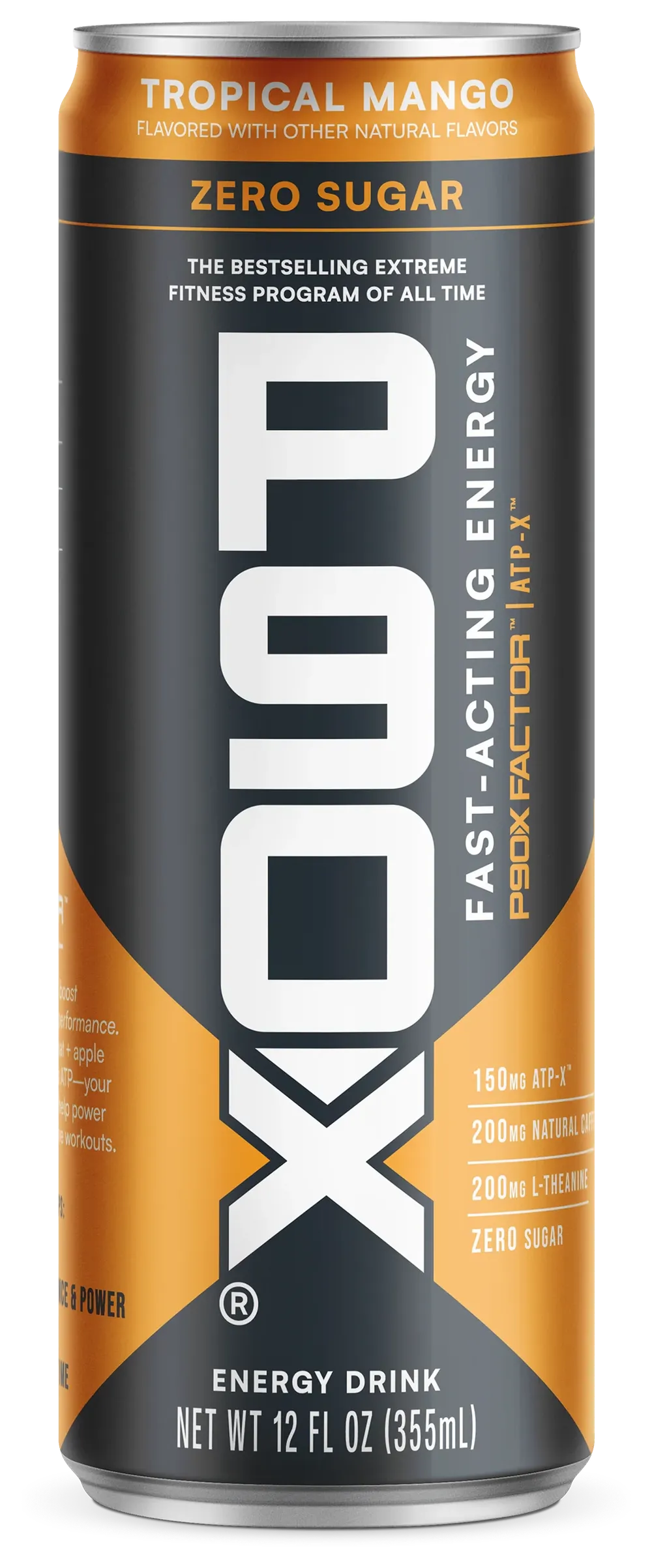
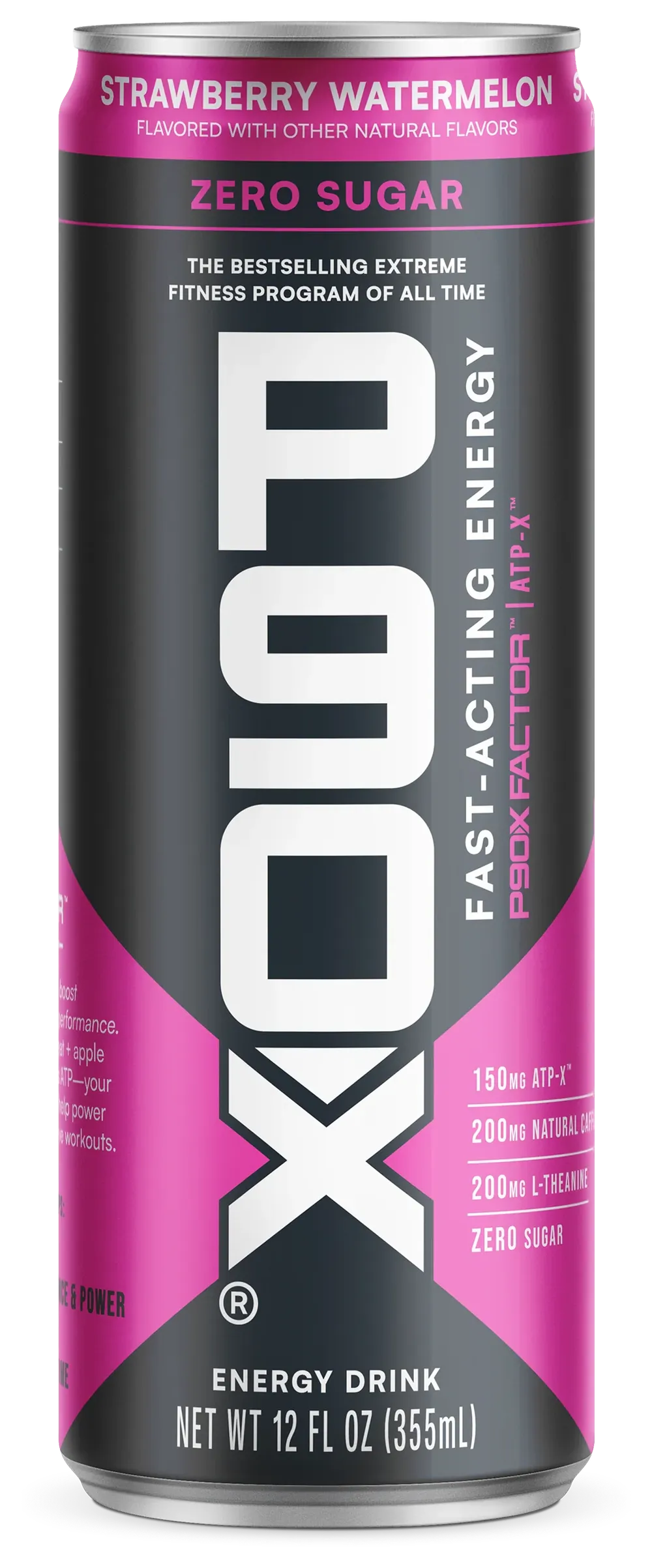
BODi's P90X Energy Drink matches 200mg of caffeine with an equal 200mg of L-theanine, a focus-first ratio from the company behind Beachbody.
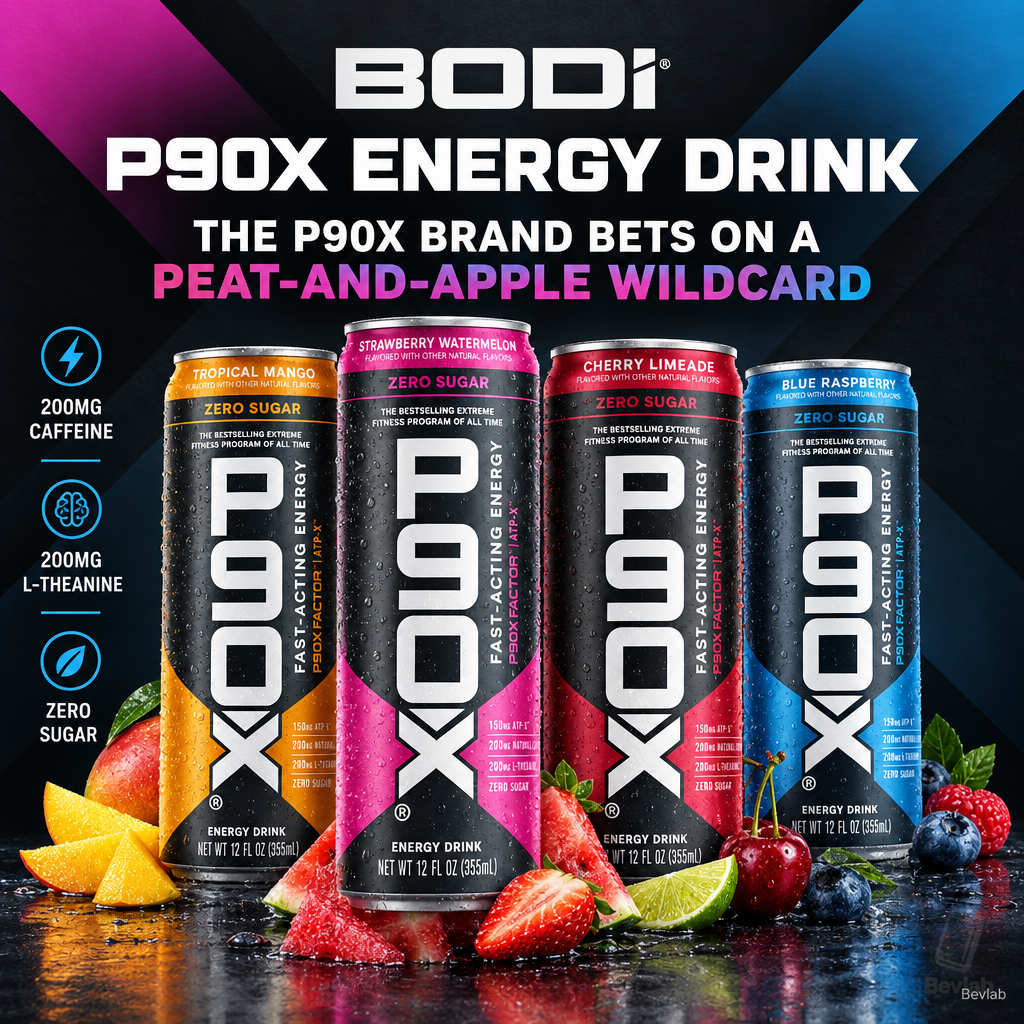
BODi is the company behind P90X and Beachbody. Carl Daikeler and Jon Congdon founded it in 1998, and it has been selling at-home workouts and nutrition ever since. Now the P90X name is on a can. BODi P90X Energy Drink is a zero-sugar energy drink with a simple core: 200mg of caffeine matched one-to-one with 200mg of L-theanine. On top of that, BODi adds a signature ingredient called ATP-X, which it describes as a peat-and-apple extract for cellular energy.
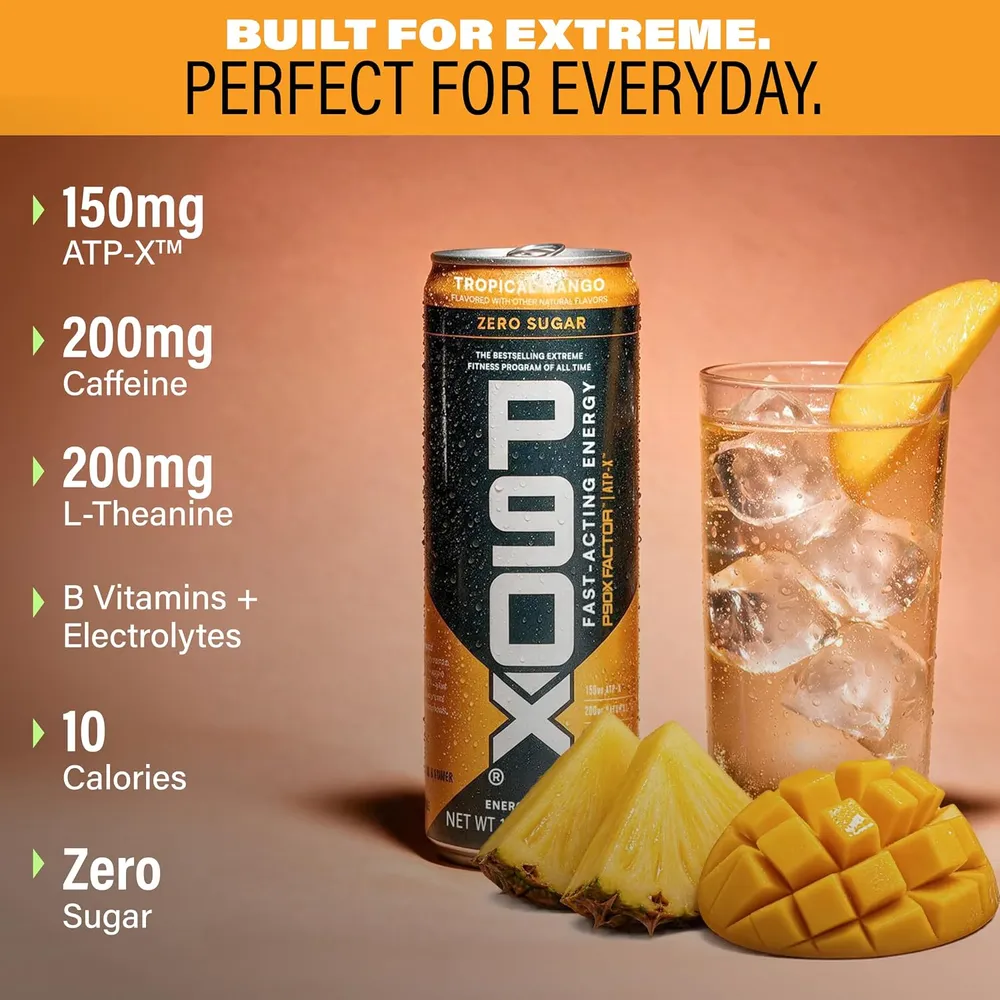
BODi pitches it for workdays, deadlines, travel, and training, so it isn't only for people halfway through a 90-day program. The caffeine and theanine pairing has good research behind it. The rest is harder to judge. BODi names several more actives without confirmed amounts, and the full ingredient list wasn't available at time of publication. We cover both in the ingredients section.
BODi P90X Energy Drink Nutrition Facts
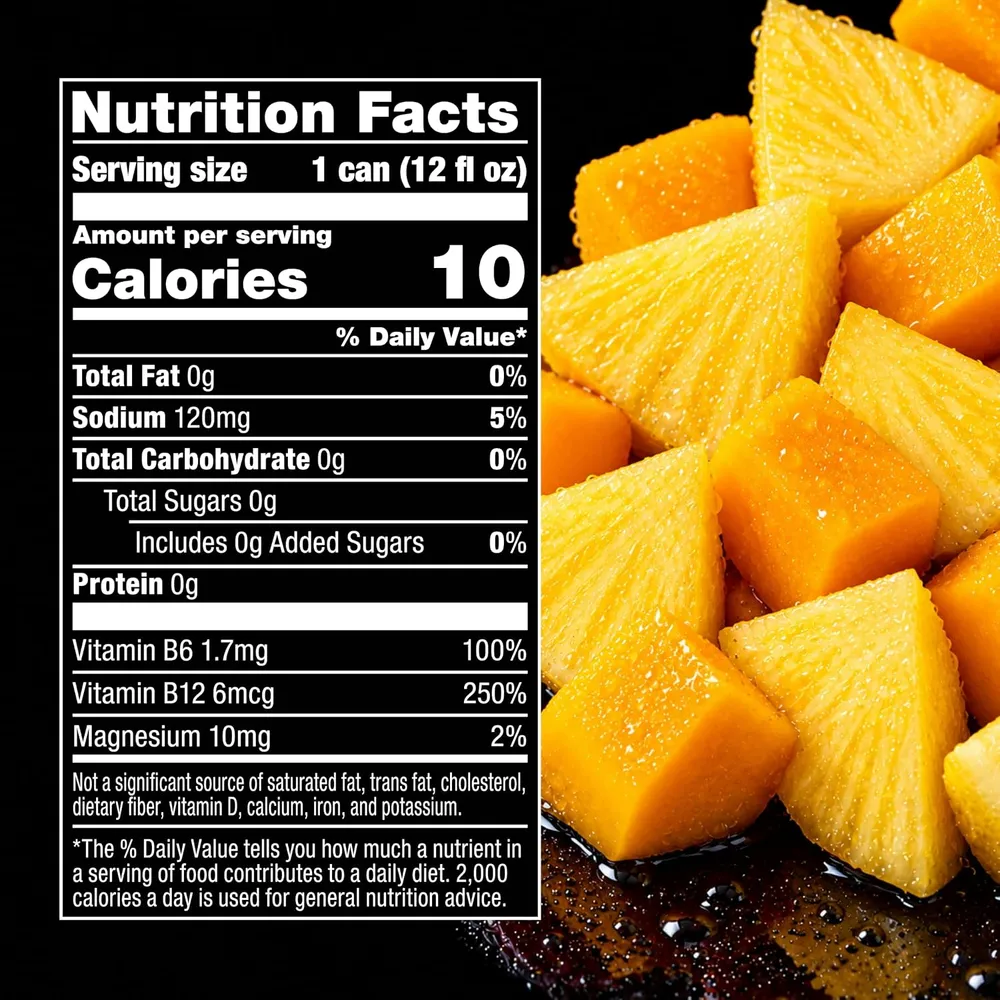
BODi leads with zero sugar, and the panel backs that up: 10 calories, no carbs, and no sugar. The vitamin and mineral rows are short, with B6, B12, sodium, and a little magnesium.
- Calories: 10
- Total Fat: 0g (0% DV)
- Total Carbohydrate: 0g (0% DV)
- Total Sugars: 0g
- Added Sugars: 0g (0% DV)
- Total Sugars: 0g
- Protein: 0g
- Vitamins and Minerals
- Sodium: 120mg (5% DV)
- Vitamin B6: 1.7mg (100% DV)
- Vitamin B12: 6mcg (250% DV)
- Magnesium: 10mg (2% DV)
The sweetener behind a 10-calorie can isn't confirmed yet. More on that below.
BODi P90X Energy Drink Ingredients
Each can provides the following key actives:
-
Natural Caffeine - 200mg
Caffeine does most of the work here. BODi labels it "natural caffeine" but doesn't name the source. Caffeine blocks adenosine, the signal that makes you feel tired, which is why it raises alertness and pushes fatigue back.[1,2] A broad review found that roughly 40-300mg improves alertness, vigilance, attention, and reaction time in both rested and sleep-restricted people. Effects on memory and complex reasoning were less consistent.[2] A separate review of placebo-controlled studies found that caffeine improved both simple and complex attention tasks, and the authors concluded those gains weren't just relief from withdrawal.[3]
For training, the International Society of Sports Nutrition supports caffeine for endurance and for several strength and power measures. Most of that research used about 3-6mg/kg of body weight.[4,5] For a 70kg adult, 3mg/kg works out to 210mg, so one can lands just under the bottom of that range. Response also varies a lot from person to person, depending on genetics, medications, smoking, and hormones.[6]
Timing matters. In a small sleep study, 400mg taken as early as six hours before bed still disrupted sleep compared to placebo.[7] That's twice what this can holds, but it's still a good reason to drink your afternoon can early. For healthy adults, the research generally supports up to 400mg a day without overt adverse effects.[8]
-
L-Theanine - 200mg
L-theanine is an amino acid found mostly in tea leaves. At 50-200mg, it has been linked to the relaxed-focus state, starting within about 40 minutes.[9] The 200mg here sits at the top of that range.
Theanine's research is strongest when it's paired with caffeine. A meta-analysis of 11 trials found the combination improved alertness and attention switching compared to placebo. The authors also noted that caffeine seemed to drive most of the attention gains in the first hour.[10] In one crossover study, 250mg L-theanine plus 150mg caffeine improved reaction time, working-memory speed, and alertness and reduced tiredness. Neither ingredient fully matched those results alone.[11] The study closest to this can used 200mg L-theanine with 160mg caffeine. On an attention task, the two produced additive improvements in reaction time.[12]
Daily use has some support too. In a four-week trial in healthy adults, 200mg a day improved stress, mood, and sleep-quality scores compared to placebo.[13] Clinical trials of up to 900mg a day for as long as 10 weeks reported no serious adverse events, though most of those trials were small.[14]
-
Vitamins and Minerals
-
Vitamin B6 - 1.7mg (100% DV)
Vitamin B6 covers a full day's Daily Value. Your body converts it into pyridoxal-5'-phosphate, the active form that helps process amino acids and make dopamine and serotonin. That fits a focus pitch, but you won't feel a lift from it unless you're running low. At 1.7mg, it sits far below the 100mg adult upper limit.
-
Vitamin B12 - 6mcg (250% DV)
Vitamin B12 helps your body turn food into usable energy and keeps red blood cells and nerves working normally. Taking more than you need won't make you feel more energetic if your levels are already fine. Still, 6mcg is a modest amount, and no upper limit has been set for B12.
-
Sodium - 120mg (5% DV)
Sodium is the main electrolyte on the panel. At 120mg, it adds a little toward what you lose in sweat. It won't fully replace what a long, hard training session takes out of you.
-
Magnesium - 10mg (2% DV)
Magnesium plays a part in muscle signaling and recovery. At 10mg, though, it reads more like a label line than a dose you'd plan your day around.
-
-
Brand-Listed Extras
-
ATP-X
ATP-X is what BODi calls the "P90X Factor," a signature ingredient the brand says goes into every P90X supplement. BODi describes it as a clinically studied mix of ancient peat and apple extract that helps boost ATP, the molecule your cells burn for fuel.
That description, and the 150mg printed on the front of the can, match elevATP, FutureCeuticals' branded ancient peat and apple extract, which its own studies used at 150mg. BODi doesn't confirm the supplier, though.
We'd like to see the evidence. Beyond peat and apple, the exact makeup and standardization aren't confirmed, and neither are the details of the studies behind "clinically studied": which dose, on whom, and measuring what. A higher ATP reading in a study also isn't the same as feeling more awake at 3pm. Until BODi shares the makeup and the research, treat ATP-X as a brand claim rather than a known quantity.
-
L-Citrulline, Taurine, L-Tyrosine, and Alpha GPC
BODi also names L-citrulline, taurine, L-tyrosine, and alpha GPC, with no amounts for any of them. Without numbers, there's no way to tell whether these are working doses. If BODi publishes the amounts, we'll judge them on the numbers.
-
-
Other Ingredients
A full ingredients statement wasn't available at time of publication. That leaves open what sweetens a zero-sugar, 10-calorie can, which preservatives or other additives it contains, and whether the flavors are natural or artificial. We'll update this page once the complete list is out.
A Lineup of Fruit Flavors
BODi launched P90X Energy in several fruit flavors. The Nutrition Facts above come from a single flavor's panel, so the other flavors may differ slightly.
- Tropical Mango (12 Cans: $34.99)
Strong Core, Missing Fine Print
If you want a zero-sugar can with 200mg of caffeine and a full 200mg of L-theanine, P90X Energy delivers a pairing with real research behind it, and it works for both workdays and training. ATP-X and the extras without confirmed amounts are where the marketing gets ahead of the evidence. Buy it for the caffeine and theanine, and treat everything else as unconfirmed until BODi publishes the full ingredient list.
References
- Fredholm, Bertil B. et al. "Actions of Caffeine in the Brain with Special Reference to Factors That Contribute to Its Widespread Use." Pharmacological Reviews, 1999. https://doi.org/10.1016/S0031-6997(24)01396-6
- McLellan, Tom M. et al. "A Review Of Caffeine S Effects On Cognitive Physical And Occupational Performance." Neuroscience & Biobehavioral Reviews, 2016. https://doi.org/10.1016/j.neubiorev.2016.09.001
- Einöther, Suzanne J L, et al. "Caffeine as an attention enhancer: reviewing existing assumptions." Psychopharmacology, 2013. https://doi.org/10.1007/s00213-012-2917-4
- Goldstein, Erica R, et al. "International Society Of Sports Nutrition Position Stand Caffeine And Performance." Journal of the International Society of Sports Nutrition, 2010. https://doi.org/10.1186/1550-2783-7-5
- Guest, Nanci S. et al. "International Society Of Sports Nutrition Position Stand Caffeine And Exercise Performance." Journal of the International Society of Sports Nutrition, 2021. https://doi.org/10.1186/s12970-020-00383-4
- Nehlig, Astrid. "Interindividual Differences in Caffeine Metabolism and Factors Driving Caffeine Consumption." Pharmacological reviews, 2018. https://doi.org/10.1124/pr.117.014407
- Drake, Christopher, et al. "Caffeine effects on sleep taken 0, 3, or 6 hours before going to bed." Journal of clinical sleep medicine : JCSM : official publication of the American Academy of Sleep Medicine, 2013. https://doi.org/10.5664/jcsm.3170
- Wikoff, Daniele, et al. "Systematic review of the potential adverse effects of caffeine consumption in healthy adults, pregnant women, adolescents, and children." Food and chemical toxicology : an international journal published for the British Industrial Biological Research Association, 2017. https://doi.org/10.1016/j.fct.2017.04.002
- Juneja, L. "L-theanine—a unique amino acid of green tea and its relaxation effect in humans." Trends in Food Science & Technology, 1999. https://doi.org/10.1016/s0924-2244(99)00044-8
- Camfield, David A, et al. "Acute effects of tea constituents L-theanine, caffeine, and epigallocatechin gallate on cognitive function and mood: a systematic review and meta-analysis." Nutrition reviews, 2014. https://doi.org/10.1111/nure.12120
- Haskell, Crystal F, et al. "The Effects Of L Theanine Caffeine And Their Combination On Cognition And Mood." Biological psychology, 2008. https://doi.org/10.1016/j.biopsycho.2007.09.008
- Kahathuduwa, Chanaka N, et al. "Acute Effects Of Theanine Caffeine And Theanine Caffeine Combination On Attention." Nutritional neuroscience, 2017. https://doi.org/10.1080/1028415X.2016.1144845
- Hidese, Shinsuke, et al. "Effects Of L Theanine Administration On Stress Related Symptoms And Cognitive Functions In Healthy Adults A Randomized Controlled Trial." Nutrients, 2019. https://doi.org/10.3390/nu11102362
- Moshfeghinia, Reza, et al. "The effects of L-theanine supplementation on the outcomes of patients with mental disorders: a systematic review." BMC Psychiatry, 2024. https://doi.org/10.1186/s12888-024-06285-y
Tagged