CWENCH Hydration: A Zero-Sugar Sports Drink Built Around Sodium
Ten calories, no sugar, and the official sports drink of the Toronto Maple Leafs
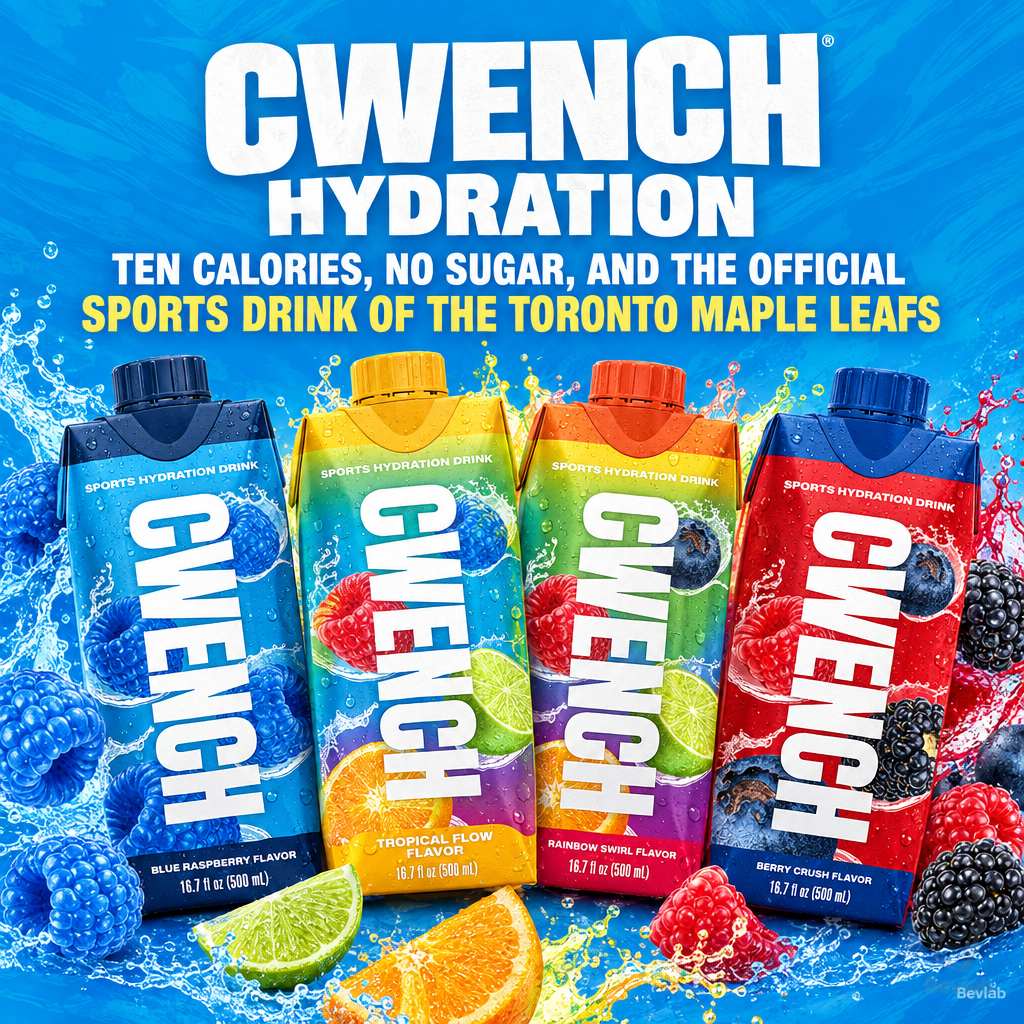
CWENCH Hydration's Blue Raspberry label lists 240mg sodium, 80mg potassium, 10 calories, and no sugar per 500mL serving.
Sodium leads the mineral lineup in CWENCH Hydration, a zero-sugar ready-to-drink sports drink with no caffeine. The brand credits its Chief Performance Officer, Andy O'Brien, with the formula, and the label shows a sodium-first approach with smaller amounts of potassium, magnesium, and calcium behind it.
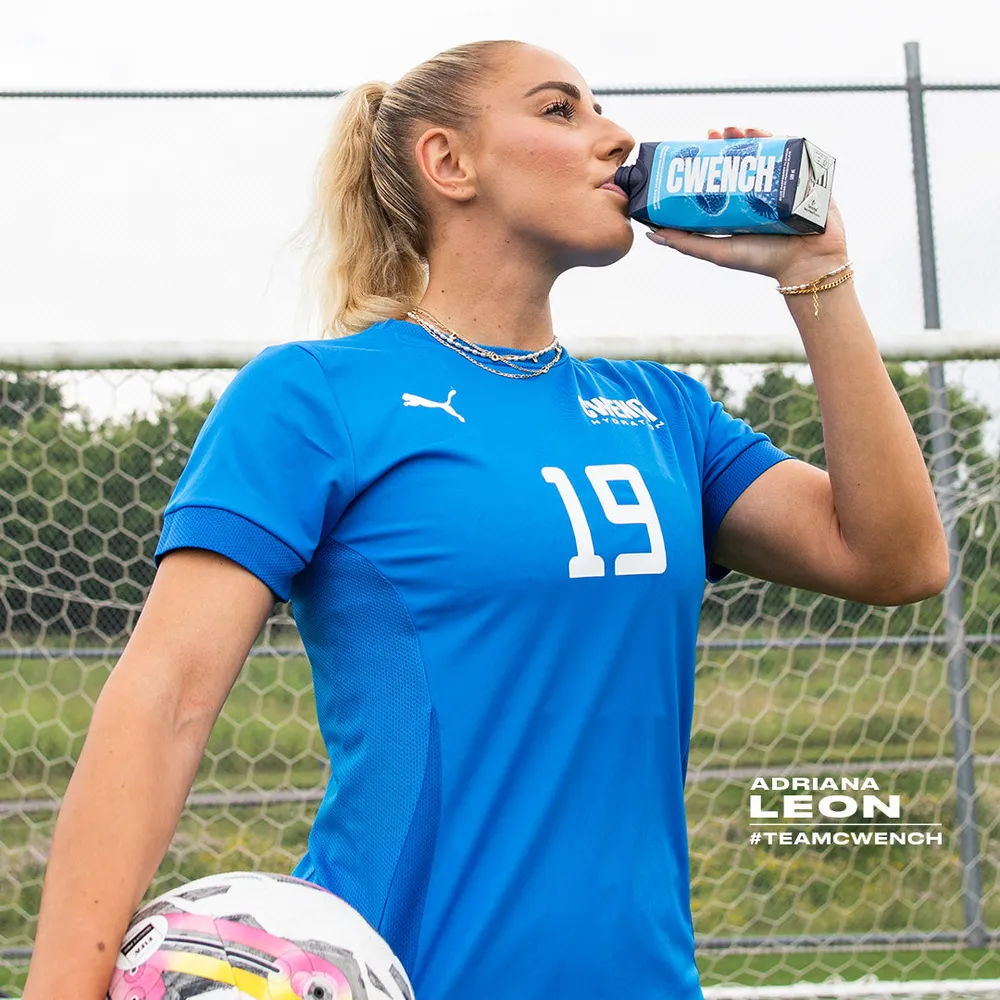
The brand also has a hockey story. On September 29, 2026, CWENCH announced a three-year agreement with MLSE that makes it the Official Sports Drink of the Toronto Maple Leafs, and the announcement also names the Toronto Marlies. That's a big stage, but what matters for your cooler is what's in the drink.
As a sodium-first beverage, this is one for athletes who sweat.
CWENCH Hydration Nutrition Facts
These figures come from the U.S. Blue Raspberry label, which lists one 16.7 fl oz (500mL) serving per container. Other flavors can vary slightly.
- Calories: 10
- Total Fat: 0g (0% DV)
- Total Carbohydrate: 1g (0% DV)
- Dietary Fiber: 0g (0% DV)
- Total Sugars: 0g
- Added Sugars: 0g (0% DV)
- Protein: 0g
- Vitamins and Minerals
- Sodium: 240mg (10% DV)
- Potassium: 80mg (2% DV)
- Magnesium: 20mg (4% DV)
- Calcium: 40mg (4% DV)
Sodium is the headline here. At 240mg against 80mg of potassium, the label works out to a 3:1 sodium-to-potassium ratio by weight. Everything else is minimal, so the drink is basically electrolytes and flavor.
CWENCH Hydration Ingredients
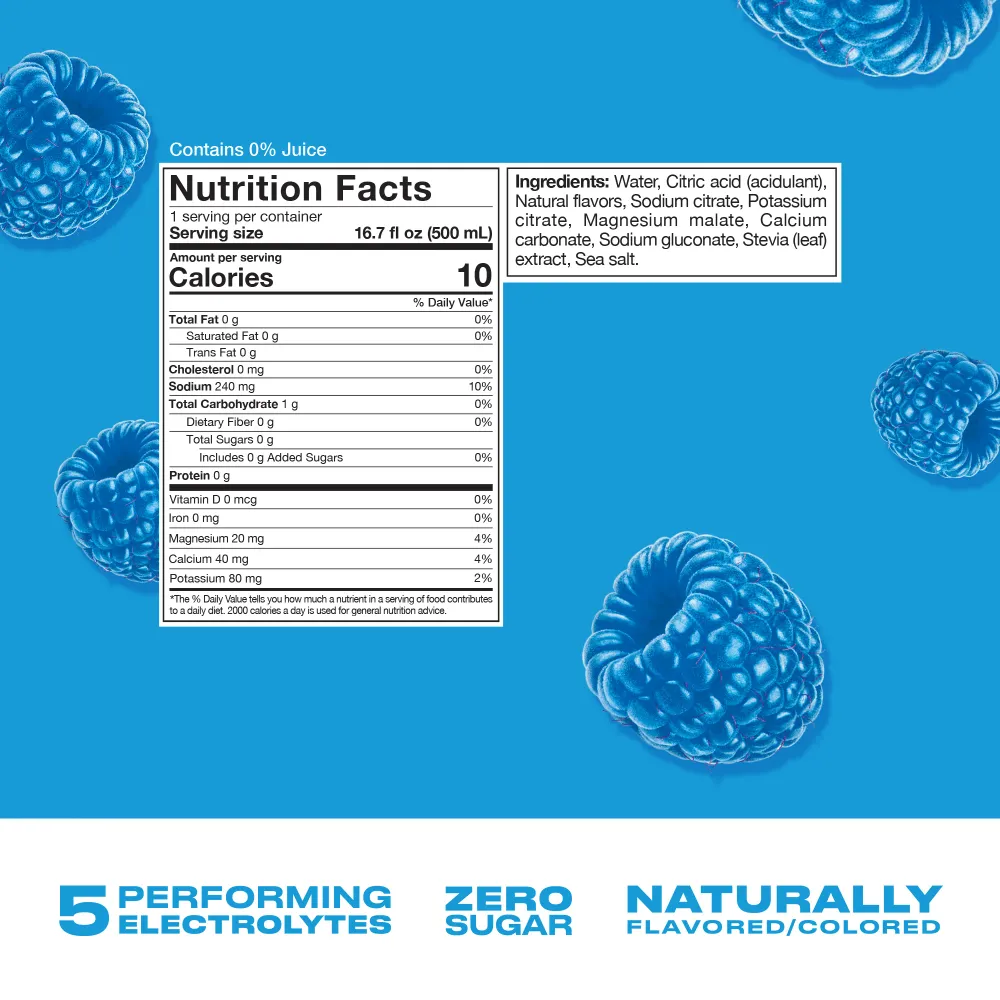
The ingredient statement reads: water, citric acid (acidulant), natural flavors, sodium citrate, potassium citrate, magnesium malate, calcium carbonate, sodium gluconate, stevia (leaf) extract, and sea salt. The brand doesn't disclose amounts for the individual ingredients, only the nutrient totals above. Those totals are not the weights of the salts that supply them.
-
Sodium Citrate
Sodium citrate is the sodium salt of citric acid, so it supplies both sodium and citrate. The 240mg of sodium on the label is a total across every sodium-containing ingredient, not this one alone, and the amount of sodium citrate itself isn't disclosed.
Most research on this ingredient comes from sports studies built around blood alkalizing, where protocols have used about 500mg/kg of body weight, or roughly 35g for a 70kg person.[1] Stomach distress rose with dose in that review, from 25% of participants below 500mg/kg to 81% above it.[1] That's a very different exposure from a sports drink, where sodium citrate supplies sodium and citrate in an undisclosed, small amount.
-
Sea Salt
Sea salt adds sodium chloride and is one of three sodium sources on the label. Its amount isn't disclosed either.
Sodium matters in a sports drink because reviews of rehydration say replacing both water and sodium helps your body hold onto the fluid you drink.[2] How much you need varies a lot. Sweat sodium concentration ranged from 15 to 99mEq/L across 44 professional football players.[3] In a controlled seven-hour heat study of seven heat-acclimated subjects, sweat carried roughly 860 to 1,050mg of sodium per liter.[4] Against that, one 240mg serving covers only a fraction of what a heavy sweater loses.
Don't count on salt as a cramp fix. A study of ultra-distance runners found no electrolyte difference between those who cramped and those who didn't, while tennis case work links cramping to sodium deficits.[5,6] The evidence is mixed.
-
Potassium - 80mg (2% DV)

Potassium appears on the label as potassium citrate. The 80mg is the declared potassium total, not the weight of the citrate salt, and the salt's amount isn't disclosed.
The best-supported potassium research involves far bigger intakes. Reviews describe blood pressure benefits in studies at roughly 2,340mg a day or more.[7,8] At 80mg and 2% DV, one serving is a modest contribution next to those studied exposures.
The ratio is where the formula leans in. Sweat in the seven-hour heat study carried about 222mg/L of potassium next to the sodium figure above, a ratio of roughly 4:1 or wider.[4] The label's 3:1 sits in the same neighborhood.
-
Magnesium - 20mg (4% DV)
Magnesium is listed as magnesium malate, with 20mg of magnesium declared per serving. The amount of magnesium malate isn't disclosed.
Trials on stress and muscle damage used about 300 to 400mg of magnesium a day, 15 to 20 times what's in a serving of this drink.[9,10] The athletic evidence is suggestive rather than settled, since many human studies measured physiological markers instead of actual performance.[11] A Cochrane review also found no clinically meaningful cramp benefit in older adults.[12] Read the 20mg as a small supporting mineral, not a performance feature.
-
Calcium Carbonate
Calcium carbonate is the calcium source. The panel declares 40mg of elemental calcium per serving (4% DV), and the brand doesn't disclose how much calcium carbonate that takes. For scale, one trial gave 3g of calcium carbonate to deliver 1,200mg of elemental calcium.[13]
Most calcium carbonate research involves much larger exposures in specific populations. Dialysis trials using gram-scale phosphate-binder doses found more coronary calcification with calcium carbonate than with sevelamer in patients with advanced kidney disease.[14,15] In the Women's Health Initiative, postmenopausal women took 1,000mg of elemental calcium as carbonate plus vitamin D daily for about seven years.[16] Across 36,282 women, heart attack, coronary death, and stroke didn't differ significantly from placebo, though urinary stones were more common.[17,18] At 40mg, a serving is a small fraction of those exposures, and none of the studies tested a beverage.
-
Stevia (as Leaf Extract)
Stevia extract sweetens the drink without calories. The label says "Stevia (leaf) extract" without naming specific steviol glycosides or an amount, so you can't tell which glycosides dominate. That matters for taste, since stevioside tends to carry more bitterness and a lingering metallic edge while rebaudioside A and M taste cleaner.[19,20]
On safety, regulators set an acceptable daily intake of 4mg/kg of body weight in steviol equivalents.[19] In a four-week trial of 59 healthy adults, a steviol glycoside beverage at about a quarter of that limit didn't change gut microbiome composition compared with a sucrose beverage, though nausea was more common in the stevia group (15% versus 0%).[21]
-
Other Ingredients
- Water - It's first on the list, so it makes up most of the 500mL serving and carries everything else.
- Citric Acid - Labeled as an acidulant, it adds tartness and keeps the drink's acidity in range.
- Natural Flavors - They supply the flavor on this label and carry no nutritional role. The label doesn't say what they're derived from.
- Sodium Gluconate - This sodium salt of gluconic acid is printed on the label with no amount. Any sodium it supplies counts toward the 240mg total.
Pick Your Flavor, Read the Panel
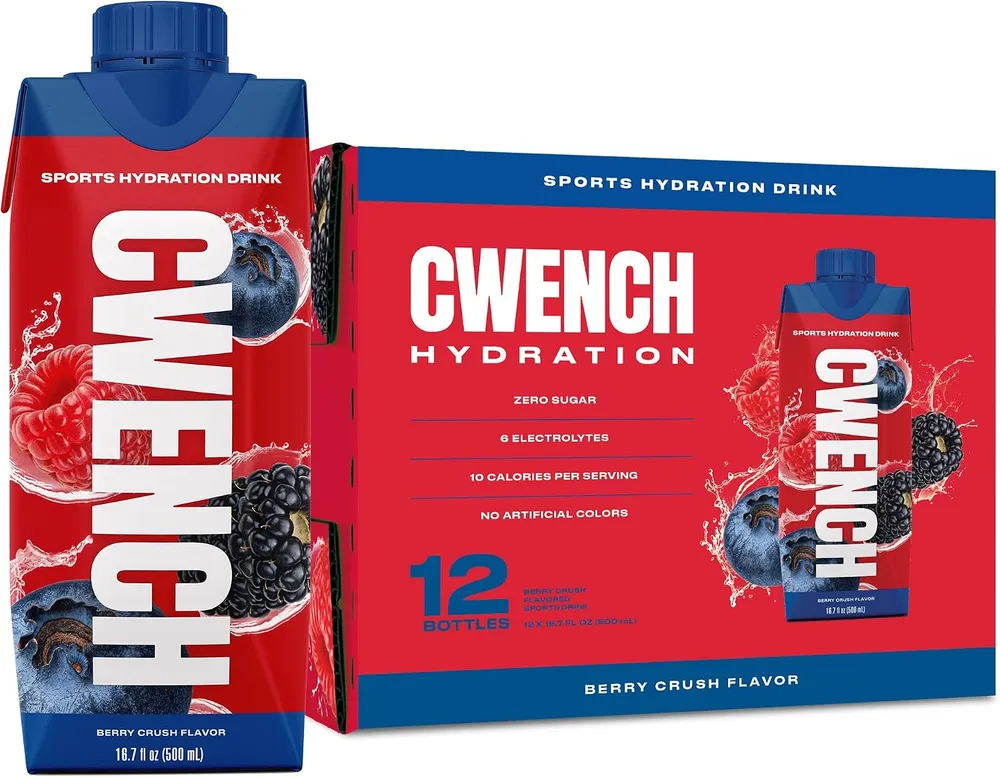
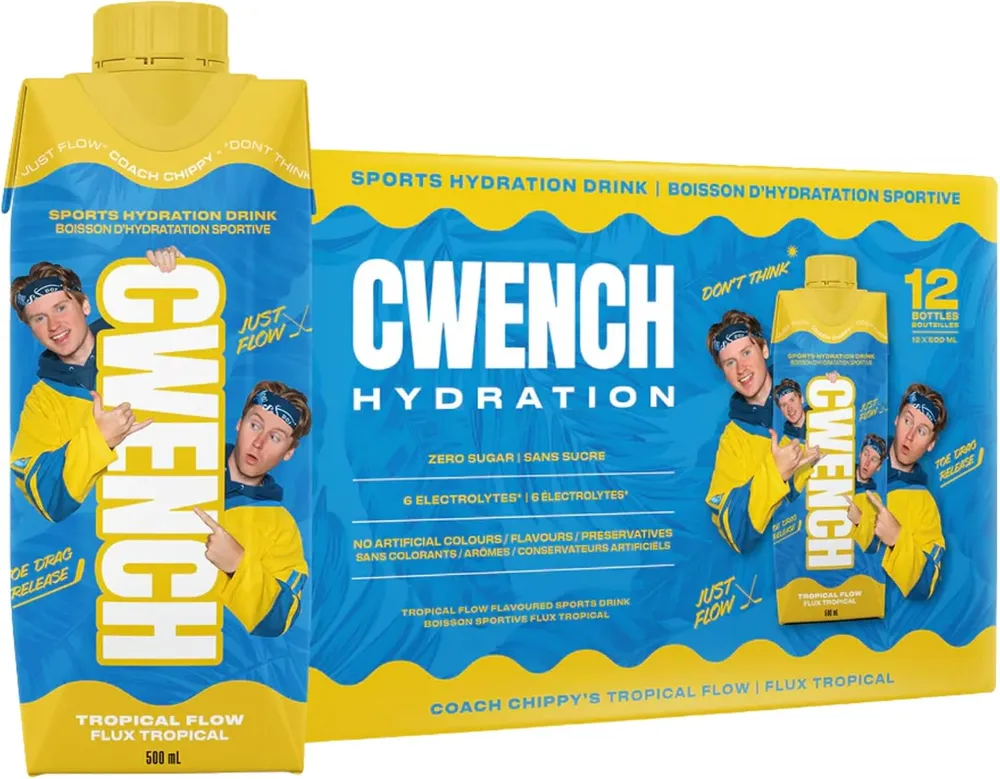
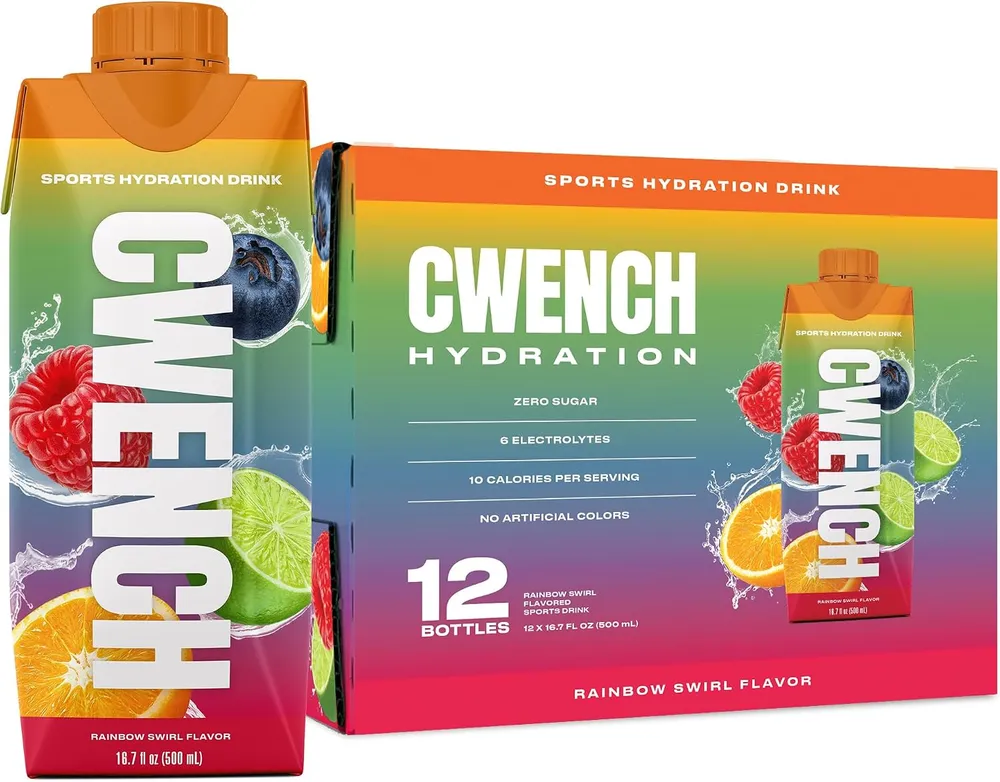
Panels vary by flavor and market, so check the one on the flavor you pick up before comparing numbers across versions. The widget below tracks the lineup as it changes.
- Berry Crush (12 Bottles: $39.99)
- Blue Raspberry (12 Bottles: $39.99)
- Rainbow Swirl (12 Bottles: $39.99)
- Tropical Flow (12 Bottles: $36.49)
A Sodium-First Sports Drink
CWENCH Hydration suits people who want sodium-forward electrolytes without sugar or caffeine, whether that's a gym session, a rink, or a long day on your feet. The label backs up the positioning on sodium, while potassium, magnesium, and calcium sit at small supporting amounts. Heavy sweaters in the heat will still need more sodium than one serving delivers.
Follow @BevlabMedia on TikTok and Instagram for more hydration and Enny coverage.
References
- Urwin, Charles S, et al. "Factors Influencing Blood Alkalosis and Other Physiological Responses, Gastrointestinal Symptoms, and Exercise Performance Following Sodium Citrate Supplementation: A Review." International journal of sport nutrition and exercise metabolism, 2021. https://doi.org/10.1123/ijsnem.2020-0192
- Maughan, R J, et al. "Dehydration and rehydration in competative sport." Scandinavian journal of medicine & science in sports, 2010. https://doi.org/10.1111/j.1600-0838.2010.01207.x
- Godek, Sandra Fowkes, et al. "Sweat rates, sweat sodium concentrations, and sodium losses in 3 groups of professional football players." Journal of athletic training, 2010. https://doi.org/10.4085/1062-6050-45.4.364
- Montain, Scott J, et al. "Sweat mineral-element responses during 7 h of exercise-heat stress." International journal of sport nutrition and exercise metabolism, 2007. https://doi.org/10.1123/ijsnem.17.6.574
- Schwellnus, M P, et al. "Serum electrolyte concentrations and hydration status are not associated with exercise associated muscle cramping (EAMC) in distance runners." British journal of sports medicine, 2004. https://doi.org/10.1136/bjsm.2003.007021
- Bergeron, M F. "Heat cramps: fluid and electrolyte challenges during tennis in the heat." Journal of science and medicine in sport, 2003. https://doi.org/10.1016/S1440-2440(03)80005-1
- Weaver, Connie M. "Potassium and health." Advances in nutrition (Bethesda, Md.), 2013. https://doi.org/10.3945/an.112.003533
- He, Feng J, et al. "Beneficial effects of potassium on human health." Physiologia plantarum, 2008. https://doi.org/10.1111/j.1399-3054.2007.01033.x
- Pouteau, Etienne, et al. "Superiority of magnesium and vitamin B6 over magnesium alone on severe stress in healthy adults with low magnesemia: A randomized, single-blind clinical trial." PloS one, 2018. https://doi.org/10.1371/journal.pone.0208454
- Córdova, Alfredo, et al. "Impact Of Magnesium Supplementation In Muscle Damage Of Professional Cyclists Competing In A Stage Race." Nutrients, 2019. https://doi.org/10.3390/nu11081927
- Zhang, Yijia, et al. "Can Magnesium Enhance Exercise Performance." Nutrients, 2017. https://doi.org/10.3390/nu9090946
- Garrison, Scott R, et al. "Magnesium For Skeletal Muscle Cramps." The Cochrane database of systematic reviews, 2020. https://doi.org/10.1002/14651858.CD009402.pub3
- Bischoff-Ferrari, Heike A, et al. "Effect of calcium supplementation on fracture risk: a double-blind randomized controlled trial." The American journal of clinical nutrition, 2008. https://doi.org/10.1093/ajcn/87.6.1945
- Asmus, Hans-Gernot, et al. "Two year comparison of sevelamer and calcium carbonate effects on cardiovascular calcification and bone density." Nephrology, dialysis, transplantation : official publication of the European Dialysis and Transplant Association - European Renal Association, 2005. https://doi.org/10.1093/ndt/gfh894
- Kakuta, Takatoshi, et al. "Effect of sevelamer and calcium-based phosphate binders on coronary artery calcification and accumulation of circulating advanced glycation end products in hemodialysis patients." American journal of kidney diseases : the official journal of the National Kidney Foundation, 2011. https://doi.org/10.1053/j.ajkd.2010.10.055
- Jackson, Rebecca D, et al. "Calcium plus vitamin D supplementation and the risk of fractures." The New England journal of medicine, 2006. https://doi.org/10.1056/nejmoa055218
- Hsia, Judith, et al. "Calcium/vitamin D supplementation and cardiovascular events." Circulation, 2007. https://doi.org/10.1161/circulationaha.106.673491
- Wallace, Robert B, et al. "Urinary tract stone occurrence in the Women's Health Initiative (WHI) randomized clinical trial of calcium and vitamin D supplements." The American journal of clinical nutrition, 2011. https://doi.org/10.3945/ajcn.110.003350
- Orellana-Paucar, Adriana Monserrath. "Steviol Glycosides From Stevia Rebaudiana An Updated Overview Of Their Sweetening Activity Pharmacological Properties And Safety Aspects." Molecules (Basel, Switzerland), 2023. https://doi.org/10.3390/molecules28031258
- Prakash, Indra, et al. "Development Of Next Generation Stevia Sweetener Rebaudioside M." Foods (Basel, Switzerland), 2014. https://doi.org/10.3390/foods3010162
- Kwok, David, et al. "Comparison of a Daily Steviol Glycoside Beverage compared with a Sucrose Beverage for Four Weeks on Gut Microbiome in Healthy Adults." The Journal of nutrition, 2024. https://doi.org/10.1016/j.tjnut.2024.01.032
Tagged