Kirkland Signature Prebiotic Soda: Costco Takes On Olipop and Poppi
The fiber soda playbook, sold by the 18-can case
Costco's house-brand prebiotic soda gets 6g of fiber per can from cassava root and organic agave inulin, with 35 calories and 5g of sugar.
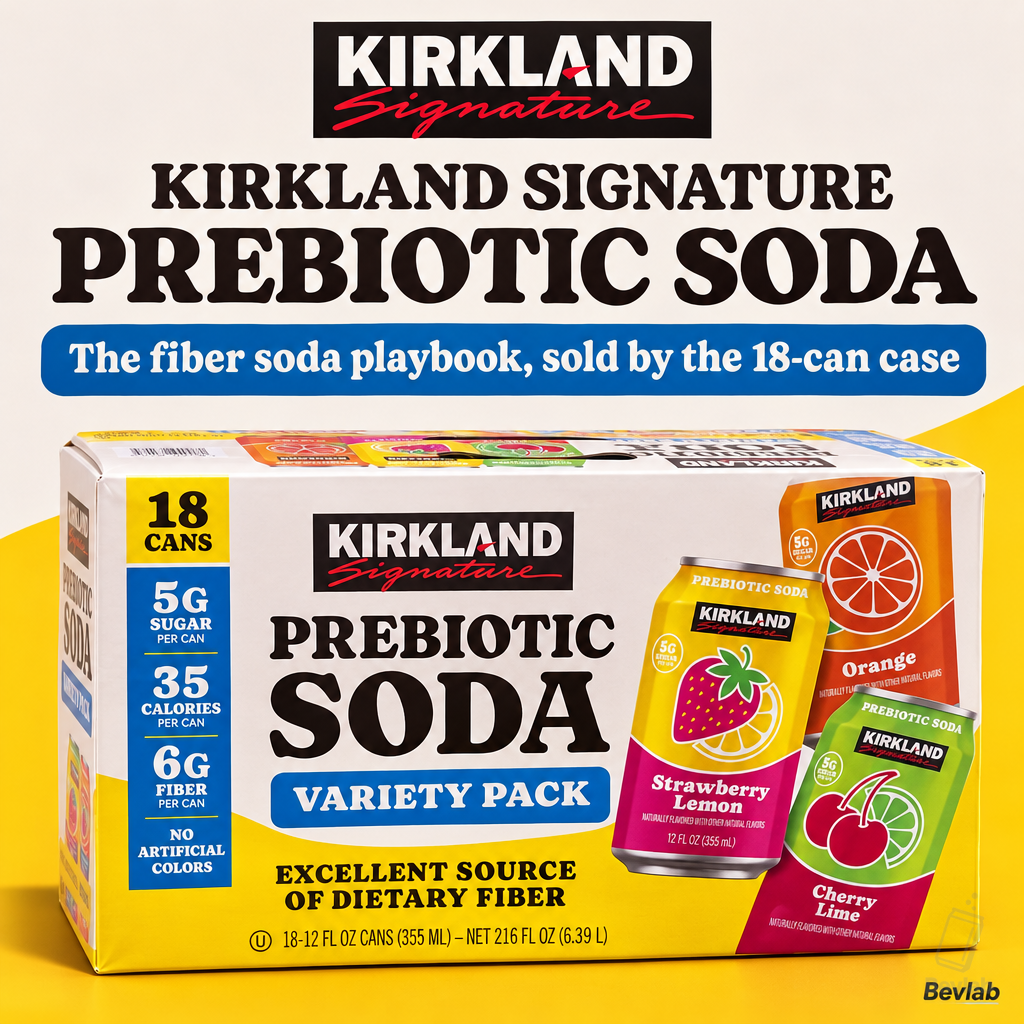
Costco is taking its house label into the prebiotic soda fight. Kirkland Signature Prebiotic Soda goes after the lane where Olipop and Poppi set the pace. It runs the same basic play (fiber, apple cider vinegar, a little real sugar, and stevia) and sells it the Costco way, as an 18-can variety pack built for a warehouse cart instead of a single can in the cooler.
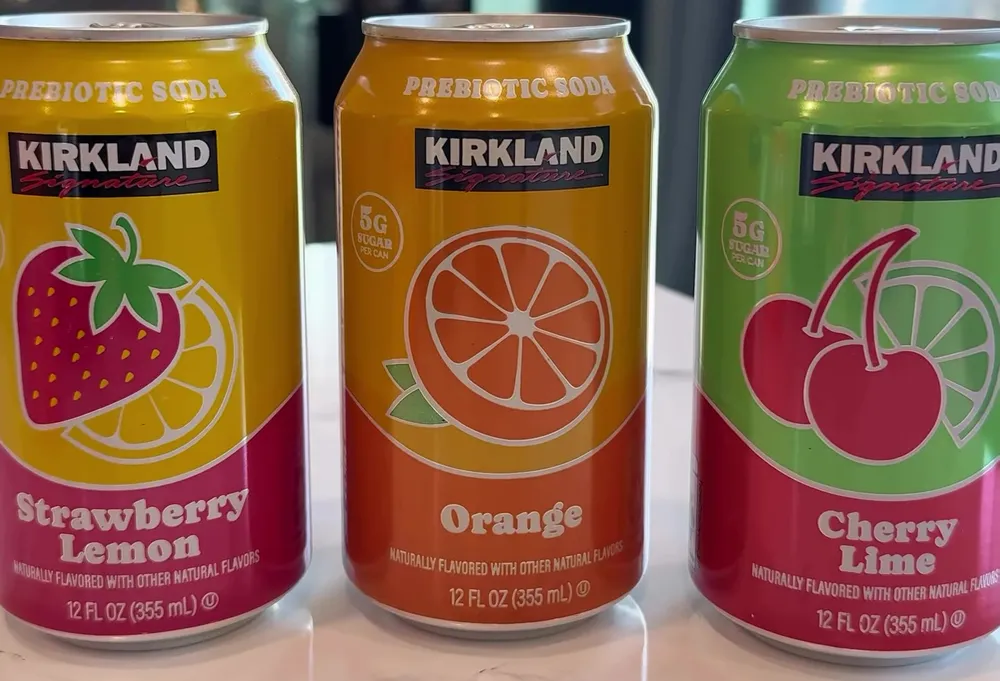
The soda reached Costco warehouses in November 2026 with three launch flavors: Strawberry Lemon, Cherry Lime, and Orange. Every 12 fl oz can comes in at 35 calories with 6g of fiber and 5g of total sugar. That fiber comes from two sources, cassava root fiber and organic agave inulin. Warehouse value is the pitch. For current pricing and availability, use the PricePlow links on this page.
Kirkland Signature Prebiotic Soda Nutrition Facts
Serving size: 1 can (12 fl oz, 355mL)
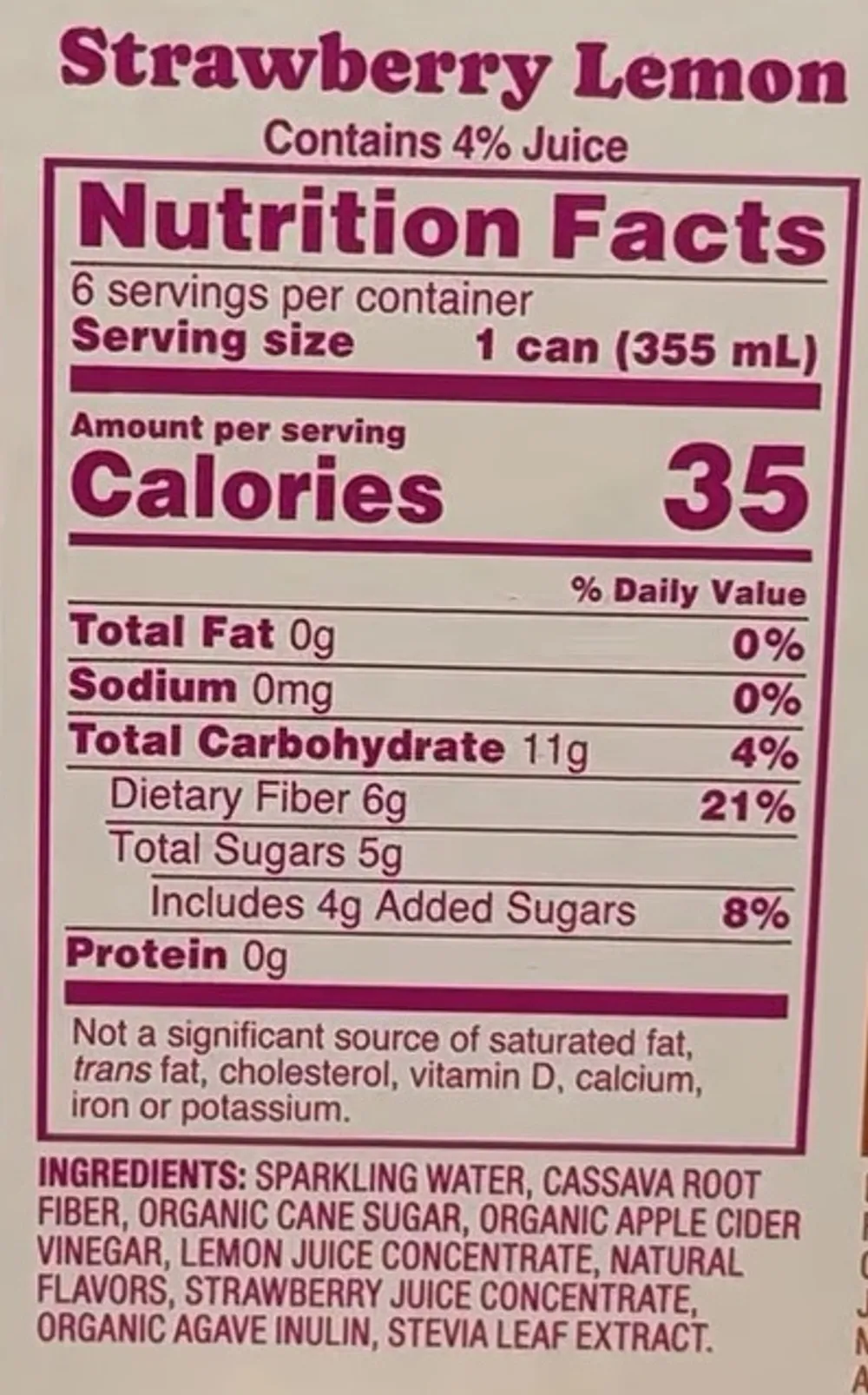
- Calories: 35
- Total Fat: 0g (0% DV)
- Total Carbohydrate: 11g (4% DV)
- Dietary Fiber: 6g (21% DV)
- Total Sugars: 5g
- Added Sugars: 4g (8% DV)
- Protein: 0g
These numbers are from the Strawberry Lemon can. Cherry Lime and Orange match it on calories, fiber, and total sugar, but each lists 12g of carbohydrate, and Orange lists 3g of added sugar instead of 4g.
Fiber is the story here. Six of the 11g of carbs on the panel are fiber, which is more than half the carbohydrate in the can. That 6g covers 21% of the Daily Value (28g per day), so one can gets you a little over a fifth of the way. The sugar side stays light: 5g total, 4g of it added, at 35 calories a can. If you drink regular soda and want to cut back without switching to diet, this is the trade-off the category is selling.
Kirkland Signature Prebiotic Soda Ingredients
Ingredient order shifts a little between flavors, and the three labels use slightly different juice blends. The shared core is below. Costco doesn't disclose individual amounts for any of these ingredients, so the 6g fiber total on the panel is the only hard number for the functional side of the formula.
Each 12 fl oz (355mL) can provides the following key actives:
-
Cassava Root Fiber
Cassava root fiber is the second ingredient on all three flavors, right behind the sparkling water, so by weight it's the main fiber in the can. Cassava is the plant tapioca comes from. The label doesn't name the exact type of fiber, but in the research, soluble tapioca fiber usually means tapioca resistant maltodextrin. That's tapioca starch restructured so your digestive enzymes can't break most of it down, which is why it counts as fiber instead of sugar.[1]
That resistance shows up in blood work. In a crossover trial of 16 healthy adults, a large 50g dose of tapioca resistant maltodextrin produced much smaller blood sugar and insulin bumps at 30 minutes than the same amount of glucose or regular tapioca maltodextrin.[2] Looking at resistant maltodextrin more broadly, a meta-analysis of 29 trials found that roughly 3.8-13.5g per day increased stool frequency by about 0.7 bowel movements per week compared to placebo.[3] At very high doses, gas is the main downside.[2]
Two caveats. The 6g on the panel covers both fibers in the can, so it isn't the cassava dose. And the bowel-function data comes from resistant maltodextrin as a class, not this exact ingredient.
-
Organic Apple Cider Vinegar
Organic apple cider vinegar is fourth on the Strawberry Lemon label and third on Cherry Lime and Orange. It's fermented apple juice, and its main active compound is acetic acid.[4]
The best-known human finding is about meals. In a set of crossover trials, about 10g of vinegar taken with a starchy meal cut the after-meal blood sugar rise by 23-28% in healthy adults.[5] The effect vanished when vinegar was taken five hours before eating, and it didn't appear when the meal was pure glucose. That suggests vinegar works by slowing carbohydrate digestion. Longer body-weight trials used 15-30mL per day for up to 12 weeks, and in one of them the results faded within four weeks of stopping.[6,7]
Costco doesn't list how much ACV is in a can, so there's no way to line it up against those study amounts. Read it as one of the category's signature ingredients, not as a dose matched to the research. One practical note: vinegar is acidic, and lab testing found every vinegar variety tested caused measurable enamel erosion.[8] If you sip cans all day, a quick water rinse is a reasonable habit.
-
Organic Agave Inulin
Organic agave inulin is the second fiber, and it's the ingredient that most directly earns the "prebiotic" name. Inulin is a fructan, a chain of fructose units your small intestine can't digest. It reaches the colon intact, where gut bacteria ferment it.[9] Its most consistently replicated effect in people is boosting Bifidobacterium, a group of gut bacteria that inulin feeds selectively.[10] Fermentation also produces short-chain fatty acids such as butyrate, which colon cells use as fuel.[11]
Most inulin research uses chicory root inulin, so the agave version in this can won't necessarily behave the same way. Inulin also sits near the end of every label, behind the juice concentrates and natural flavors, which makes it a smaller share by weight than the cassava fiber. Costco doesn't disclose the exact amount.
Tolerance matters more than hype here. A review of 17 inulin trials found that 0.75-5g per day caused only mild gas, while 7.5-20g brought mild-to-moderate bloating in some studies.[12] Inulin-type fructans are also restricted on low-FODMAP diets. If fructans give you trouble, try one can before committing to the case.
-
Sweeteners and Flavors
-
Organic Cane Sugar
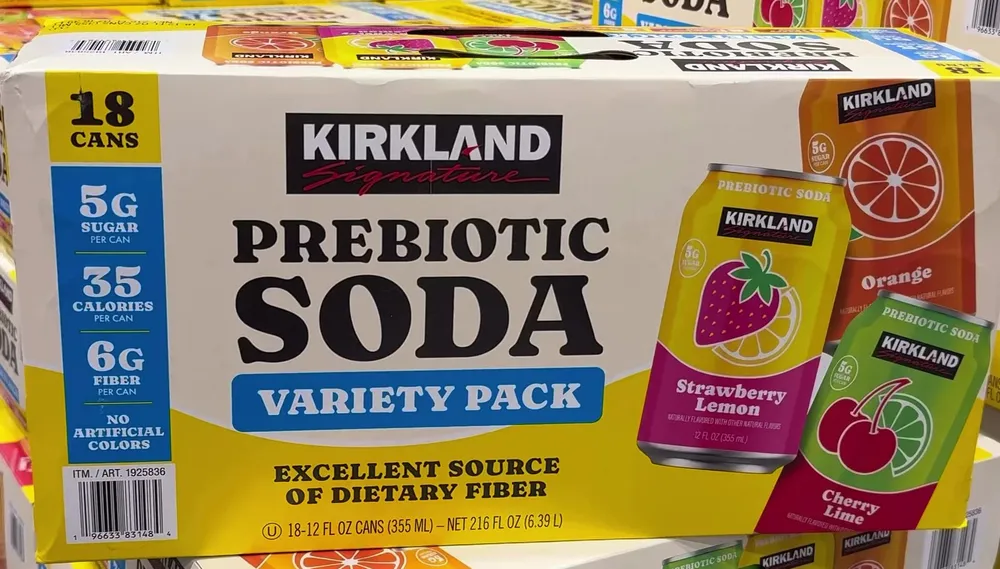
Photo: @costcochika on Instagram Organic cane sugar is ordinary sucrose, which breaks down into equal parts glucose and fructose. It's the only caloric sweetener listed, and it sits third on Strawberry Lemon and fourth on Cherry Lime and Orange. With added sugar at 3-4g depending on flavor, the sugar here rounds out the taste instead of making this a full-sugar soda. For your teeth, how often you have sugar matters as much as how much.[13]
-
Stevia Leaf Extract
Stevia leaf extract fills the sweetness gap that 4g of sugar can't cover. Its sweet compounds, steviol glycosides, are hundreds of times sweeter than sugar and add no calories.[14] That matters for a gut-focused soda: in a four-week trial in healthy adults, a daily stevia-sweetened drink didn't change gut microbiome composition compared with a sucrose drink, though mild nausea was more common in the stevia group.[15] The amount per can isn't disclosed.
-
Natural Flavors
Natural flavors are defined by where they come from (plants, fruit, and similar sources), not by a specific chemical identity.[16] They're there for taste and aroma only. Every flavor in the lineup uses them alongside real juice concentrates.
-
Fruit Juice Concentrates
Juice concentrates carry the flavor names. Strawberry Lemon uses lemon and strawberry juice concentrates, Cherry Lime uses cherry, lime, and lemon, and Orange uses orange, lemon, and apple. The box lists the juice content at 3% for Cherry Lime, 4% for Strawberry Lemon, and 6% for Orange.
-
-
Other Ingredients
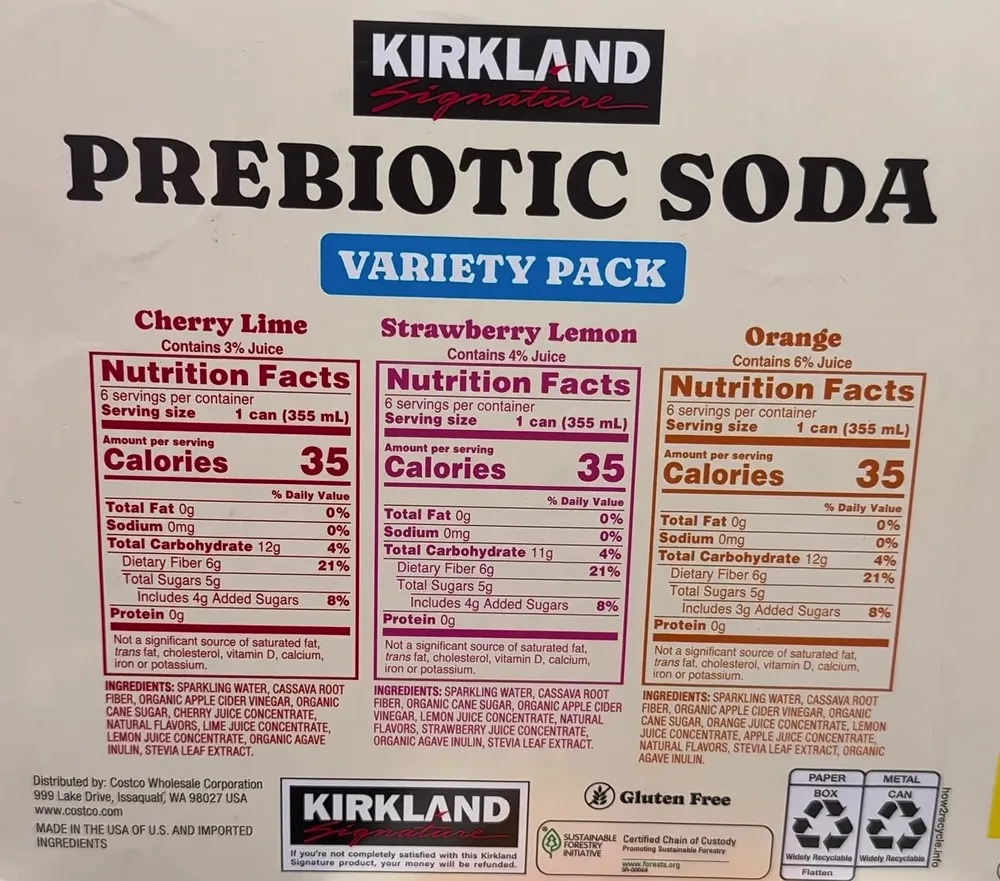
Photo: @costcochika on Instagram - Sparkling water - The carbonated base of every can and the first ingredient on all three labels.
The Prebiotic Soda Playbook, Kirkland Style
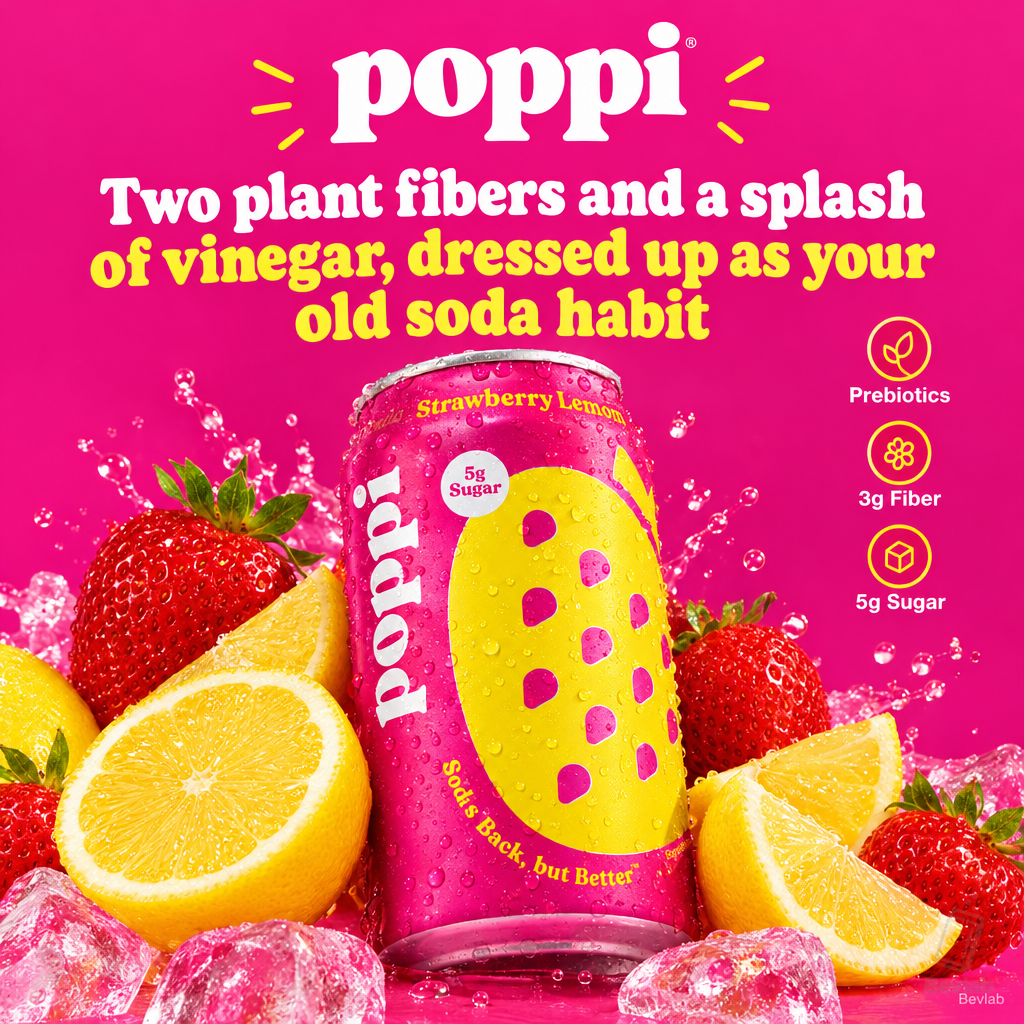
The prebiotic soda formula has become recognizable: a fiber source, apple cider vinegar, a few grams of real sugar, and stevia to finish the sweetness. Brands differ on the details, but that's the template Kirkland is working from, and it checks every box.
Where it stands out is the fiber. It uses two sources, cassava root fiber first and agave inulin further down, which together hit 6g per can. The ingredient list is short too: nine ingredients on Strawberry Lemon and ten on Cherry Lime and Orange, with no proprietary blends. The box marks it gluten free and says it's made in the USA from U.S. and imported ingredients, distributed by Costco Wholesale Corporation.
Where it follows the pack is disclosure. You get a fiber total and a sugar total, but no gram amounts for the vinegar, the inulin, or the cassava fiber on its own. That's enough to compare the macros side by side with whatever's in your fridge, but not enough to say this can matches the ACV or inulin amounts from the research.
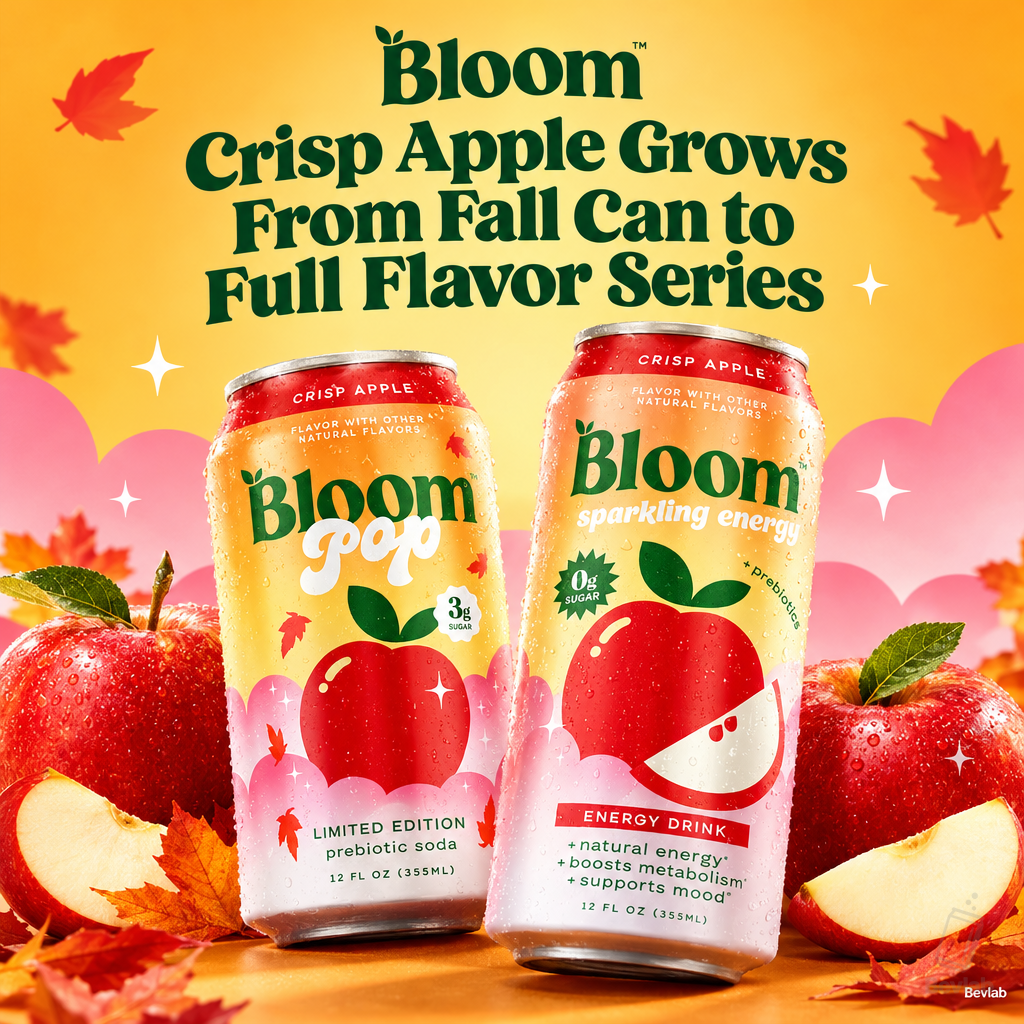
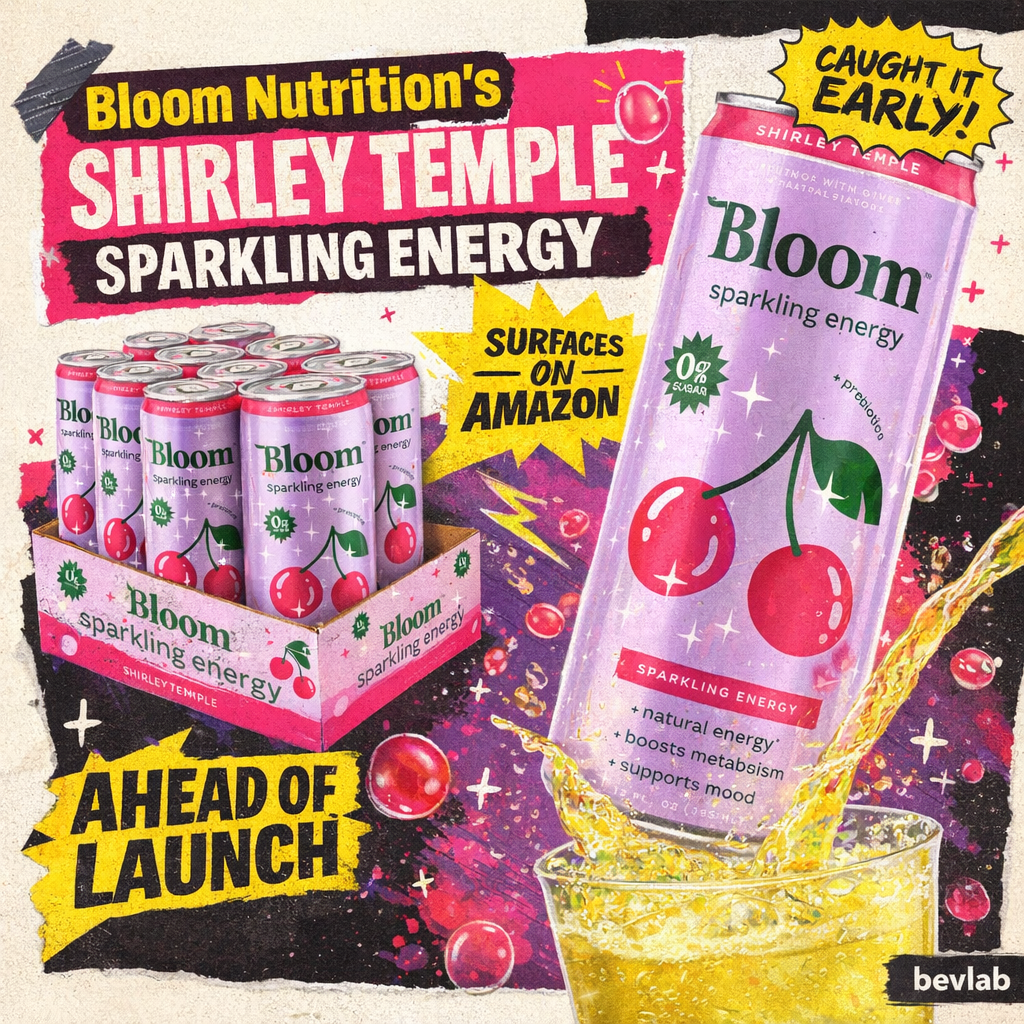
So the difference from Olipop and Poppi comes down to the store and the format, not anything exotic in the can. Kirkland took a formula shape shoppers already know, put a big fiber number on it, and packed it into an 18-count case for people who already buy their sparkling water by the flat.
Three Flavors, Three Juice Levels
Orange has the most juice of the launch trio at 6% and the least added sugar at 3g, so it's the pick if you're reading labels closely. Cherry Lime has the least juice at 3%.
- Variety Pack (Not in stock at any PricePlow partner stores)
Costco's Fiber Soda Holds Its Own
Kirkland Signature Prebiotic Soda delivers the category's core numbers (35 calories, 5g of sugar, and 6g of fiber) with an ingredient list that's easy to read, but the vinegar and inulin doses aren't disclosed, so don't expect it to stand in for a fiber supplement. Start with a single can if inulin tends to bloat you.
Follow @BevlabMedia on TikTok and Instagram for the next warehouse-aisle drop.
References
- Astina, Junaida, et al. "Tapioca Resistant Maltodextrin as a Carbohydrate Source of Oral Nutrition Supplement (ONS) on Metabolic Indicators: A Clinical Trial." Nutrients, 2022. https://doi.org/10.3390/nu14050916
- Astina, Junaida, et al. "Attenuation of glycaemic and insulin responses following tapioca resistant maltodextrin consumption in healthy subjects: a randomised cross-over controlled trial." Journal of nutritional science, 2020. https://doi.org/10.1017/jns.2020.22
- Watanabe, Norikazu, et al. "Effects of resistant maltodextrin on bowel movements: a systematic review and meta-analysis." Clinical and experimental gastroenterology, 2018. https://doi.org/10.2147/CEG.S153924
- Petsiou, Eleni I, et al. "Effect and mechanisms of action of vinegar on glucose metabolism, lipid profile, and body weight." Nutrition reviews, 2014. https://doi.org/10.1111/nure.12125
- Johnston, Carol S, et al. "Examination of the antiglycemic properties of vinegar in healthy adults." Annals of nutrition & metabolism, 2010. https://doi.org/10.1159/000272133
- Kondo, Tomoo, et al. "Vinegar intake reduces body weight, body fat mass, and serum triglyceride levels in obese Japanese subjects." Bioscience, biotechnology, and biochemistry, 2009. https://doi.org/10.1271/bbb.90231
- Castagna, Alberto, et al. "Effect of Apple Cider Vinegar Intake on Body Composition in Humans with Type 2 Diabetes and/or Overweight: A Systematic Review and Meta-Analysis of Randomized Controlled Trials." Nutrients, 2025. https://doi.org/10.3390/nu17183000
- Willershausen, Ines, et al. "In vitro study on dental erosion caused by different vinegar varieties using an electron microprobe." Clinical laboratory, 2014. https://doi.org/10.7754/clin.lab.2013.130528
- Carlson, Justin L, et al. "Health Effects and Sources of Prebiotic Dietary Fiber." Current Developments in Nutrition, 2018. https://doi.org/10.1093/cdn/nzy005
- Meyer, D, et al. "The bifidogenic effect of inulin and oligofructose and its consequences for gut health." European journal of clinical nutrition, 2009. https://doi.org/10.1038/ejcn.2009.64
- den Besten, Gijs, et al. "The role of short-chain fatty acids in the interplay between diet, gut microbiota, and host energy metabolism." Journal of Lipid Research, 2013. https://doi.org/10.1194/jlr.r036012
- Mysonhimer, Annemarie R, et al. "Gastrointestinal Effects and Tolerance of Nondigestible Carbohydrate Consumption." Advances in nutrition (Bethesda, Md.), 2022. https://doi.org/10.1093/advances/nmac094
- Sheiham, A. "Dietary effects on dental diseases." Public health nutrition, 2001. https://doi.org/10.1079/phn2001142
- Orellana-Paucar, Adriana Monserrath. "Steviol Glycosides from Stevia rebaudiana: An Updated Overview of Their Sweetening Activity, Pharmacological Properties, and Safety Aspects." Molecules (Basel, Switzerland), 2023. https://doi.org/10.3390/molecules28031258
- Kwok, David, et al. "Comparison of a Daily Steviol Glycoside Beverage compared with a Sucrose Beverage for Four Weeks on Gut Microbiome in Healthy Adults." The Journal of nutrition, 2024. https://doi.org/10.1016/j.tjnut.2024.01.032
- Goodman, Matthew J. "The “Natural” vs. “Natural Flavors” Conflict in Food Labeling: A Regulatory Viewpoint." Food and drug law journal, 2017. https://pubmed.ncbi.nlm.nih.gov/29140655/