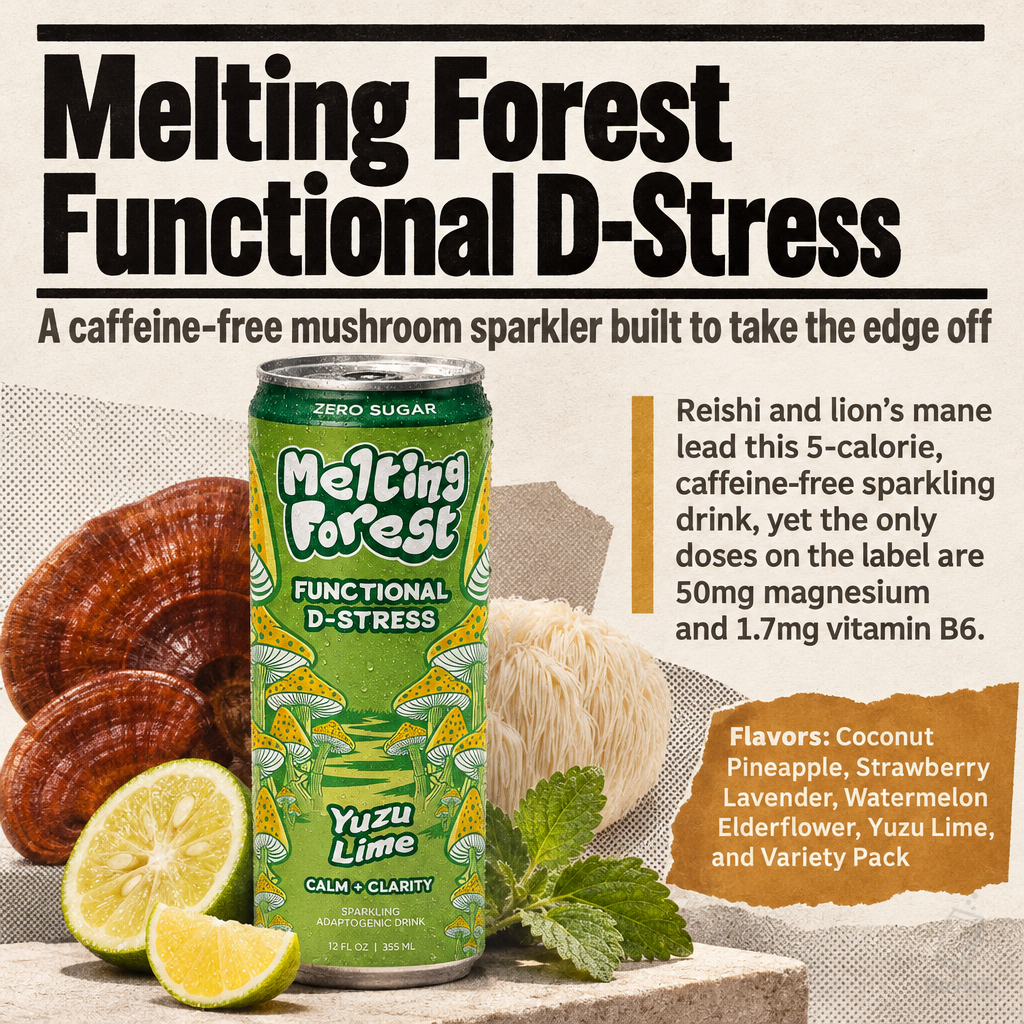
Melting Forest Functional D-Stress: Calm Botanicals, Hidden Doses
A caffeine-free mushroom sparkler built to take the edge off
Reishi and lion's mane lead this 5-calorie, caffeine-free sparkling drink, yet the only doses on the label are 50mg magnesium and 1.7mg vitamin B6.
Melting Forest started in 2023 in Corona, California, betting that functional mushrooms belong in a sparkling can, not a capsule bottle. Melting Forest Functional D-Stress is the brand's wind-down drink and the caffeine-free sibling to its Energy line. In November 2026 it went into nearly 2,000 Target stores nationwide. The cans that went to Target have a different formula from the D-Stress some early fans know. The older Mushroom D-Stress used rhodiola, and Functional D-Stress replaces it with KSM-66 ashwagandha.
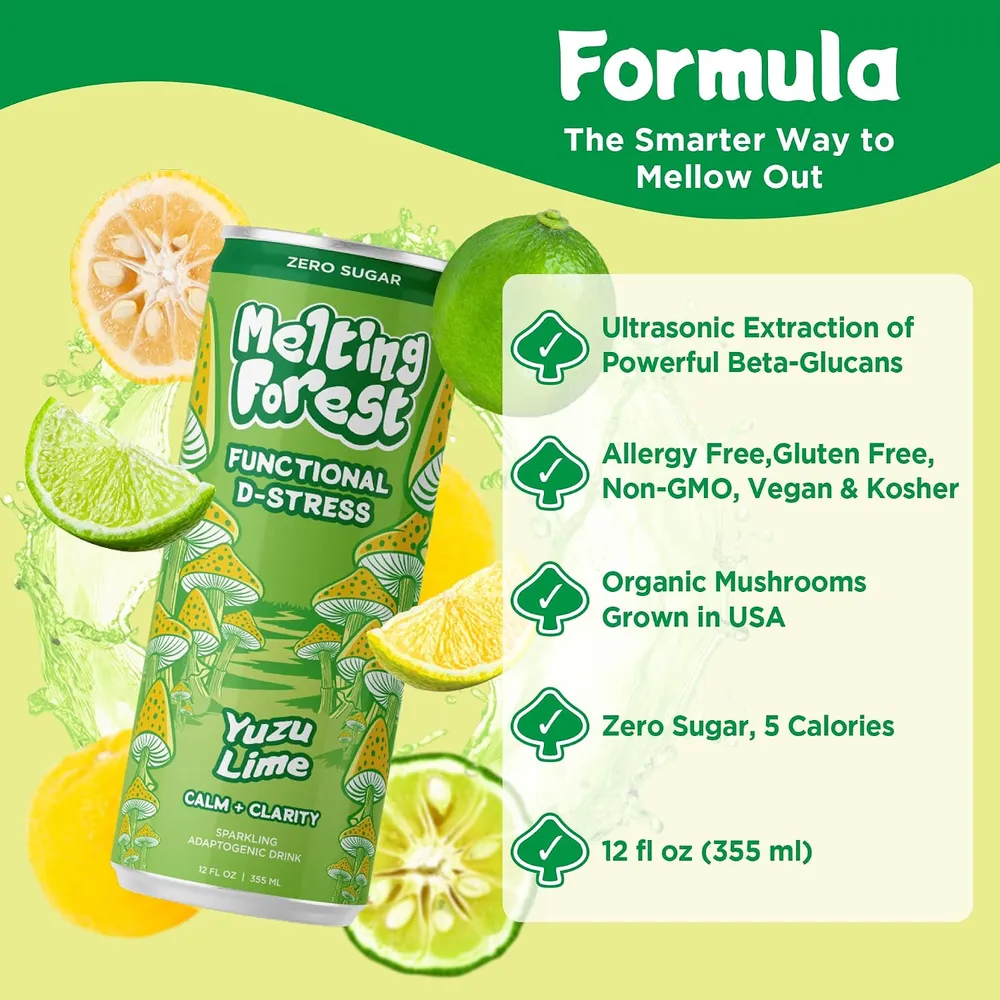
The rest of the stack still aims at calm: organic reishi and lion's mane, AlphaWave L-theanine, organic lemon balm, magnesium citrate, and vitamin B6, all in a 12 fl oz can with 5 calories, zero sugar, and no caffeine. The tradeoff is transparency. Melting Forest prints amounts only for the magnesium and B6. The mushrooms, theanine, ashwagandha, and lemon balm all have research worth knowing, but there's no way to compare the can against study doses.
From Mushroom D-Stress to Functional D-Stress
The new name comes with a new formula. An older Watermelon Elderflower can of Mushroom D-Stress listed Rhodiolife rhodiola extract. It also listed its reishi and lion's mane as branded Immulink MBG extracts standardized to 70% beta-glucan, and it was sweetened with erythritol and Rebaudioside A. The panel showed 3g of sugar alcohol.
The Functional D-Stress label (from the Yuzu Lime can) is different in four ways:
- KSM-66 Organic Ashwagandha Root Extract is on the list, and rhodiola is gone.
- The mushrooms are listed simply as Organic Reishi Extract and Organic Lion's Mane Extract, with no beta-glucan standardization printed.
- Lemon balm is now listed as organic.
- Stevia leaf extract is the only sweetener listed, and the panel shows 0g sugar alcohol and 0g total carbohydrate.
The Functional D-Stress can doesn't list rhodiola, so this article goes by the label.
Melting Forest Functional D-Stress Nutrition Facts
These numbers are from the Yuzu Lime can (12 fl oz), and other flavors may vary slightly.
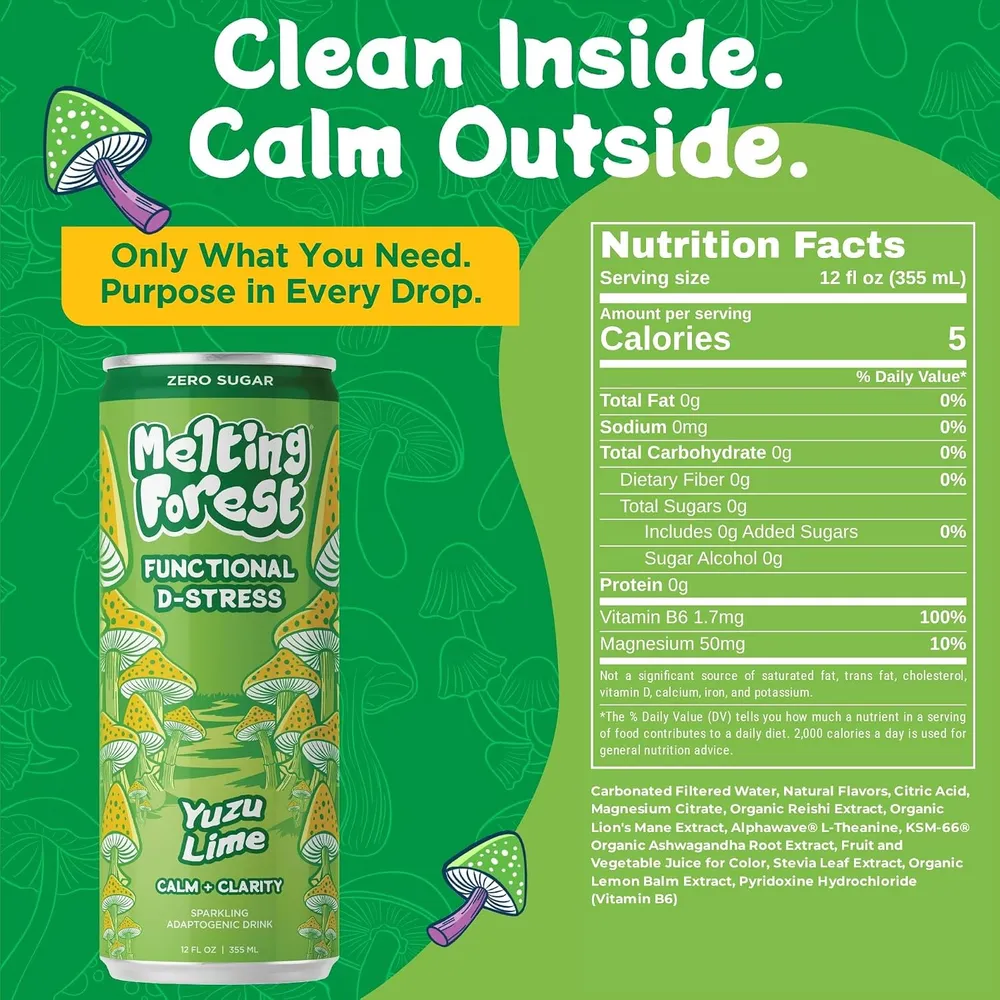
- Calories: 5
- Total Fat: 0g (0% DV)
- Total Carbohydrate: 0g (0% DV)
- Dietary Fiber: 0g (0% DV)
- Total Sugars: 0g
- Added Sugars: 0g (0% DV)
- Sugar Alcohol: 0g
- Protein: 0g
- Vitamins and Minerals
- Sodium: 0mg (0% DV)
- Vitamin B6: 1.7mg (100% DV)
- Magnesium: 50mg (10% DV)
Melting Forest Functional D-Stress Ingredients
Each 12 fl oz can provides the following key actives:
-
Organic Reishi Extract
Reishi (Ganoderma lucidum) is a tough, woody mushroom with centuries of use in Chinese and wider Asian traditional medicine. Its two main families of active compounds are polysaccharides such as beta-glucans and bitter triterpenes called ganoderic acids.[1]
The strongest human evidence comes from a 2005 trial in 132 people with neurasthenia, a condition marked by persistent fatigue and low well-being. Eight weeks of a reishi polysaccharide extract at 5.4g/day reduced fatigue and improved well-being more than placebo. About twice as many people on reishi were rated meaningfully improved.[2] On the other hand, a 30-day trial of a reishi plus cordyceps supplement found no cognitive benefit in healthy young adults.[3]
Most of the stress research is in animals. In chronically stressed mice, a compound from reishi spores lowered the stress hormone corticosterone and restored serotonin and norepinephrine.[4] That's a mouse study using an isolated fraction, not people drinking a mushroom extract.
Melting Forest doesn't disclose how much organic reishi extract is in each can, so you can't compare it with the 5.4g used in the human trial. Think of it as a supporting player in the calm stack rather than the main driver.
-
Organic Lion's Mane Extract
Lion's mane (Hericium erinaceus) is the shaggy white mushroom that functional brands reach for when they want a focus angle. In cell studies, an extract of the fruiting body increased production of nerve growth factor, a protein involved in nerve cell growth and survival.[5]
The human trials are small and mostly from Japan. In 30 older adults with mild cognitive impairment, about 3g/day of dried fruiting-body powder for 16 weeks improved cognitive scores compared with placebo. The gains faded within four weeks of stopping.[6] Closer to what D-Stress is selling, a 28-day pilot in 41 healthy young adults taking 1.8g/day found lower self-rated stress than placebo. But a second stress scale didn't change, and some memory results favored placebo.[7] A systematic review of the Japanese trials concluded that lion's mane may help symptoms of cognitive impairment but didn't show benefits for depression or anxiety symptoms.[8]
The can lists organic lion's mane extract without an amount, so it can't be matched to those gram-level, multi-week protocols. Read the clarity side of the D-Stress pitch as what the ingredient is meant to do, not as a measured effect of this drink.
-
L-Theanine (as AlphaWave)
L-theanine is the amino acid behind green tea's mellow side, and this can uses AlphaWave, a branded version. In human brain-wave studies, theanine at 50-200mg was linked to the relaxed-focus state within about 40 minutes.[9] That's why it turns up in so many calm drinks, and why the better energy drinks pair it with caffeine.
A systematic review found that 200mg reduced stress responses such as heart rate during a mental arithmetic stress test, compared with placebo. The authors concluded that 200-400mg/day may help people who are acutely stressed or highly anxious, but that the evidence doesn't support it as a standalone treatment for anxiety disorders.[10]
AlphaWave has its own trial: 400mg/day for 28 days in moderately stressed adults. Perceived stress dropped in both the theanine and placebo groups, with no significant difference between them.[11] That result is a reminder of how strong the placebo effect is in stress research.
The label doesn't print the theanine amount. Theanine is one of the few calm ingredients that has been studied at doses small enough to fit in a can, but you can't confirm where this one lands.
-
KSM-66 Organic Ashwagandha Root Extract
KSM-66 is a branded ashwagandha extract made only from the root of Withania somnifera. Ixoreal Biomed produces it and standardizes it to at least 5% withanolides.[12,13] It's the biggest change in this formula, and it has more clinical trials behind it than anything else in the can.
In 64 chronically stressed adults, 600mg/day for 60 days cut Perceived Stress Scale scores by 44%, compared with 5.5% on placebo. Morning cortisol fell 27.9% versus 7.9%.[14] A dose-comparison trial found that both 250mg/day and 600mg/day lowered perceived stress and cortisol over eight weeks, but only 600mg/day beat placebo on a clinician-rated anxiety scale.[15] In people with insomnia and anxiety, 600mg/day for 10 weeks shortened the time it took to fall asleep and improved sleep quality.[16]
The catch: every one of those trials used capsules at 250mg/day or more, taken for eight to 12 weeks. The can doesn't disclose how much KSM-66 it contains. Don't assume a can delivers a study dose, and don't expect one can to reproduce effects that built up over weeks. The trials also didn't establish safety in pregnancy, with long-term use, or alongside medications, so if any of those apply to you, talk to your doctor first.
-
Organic Lemon Balm Extract
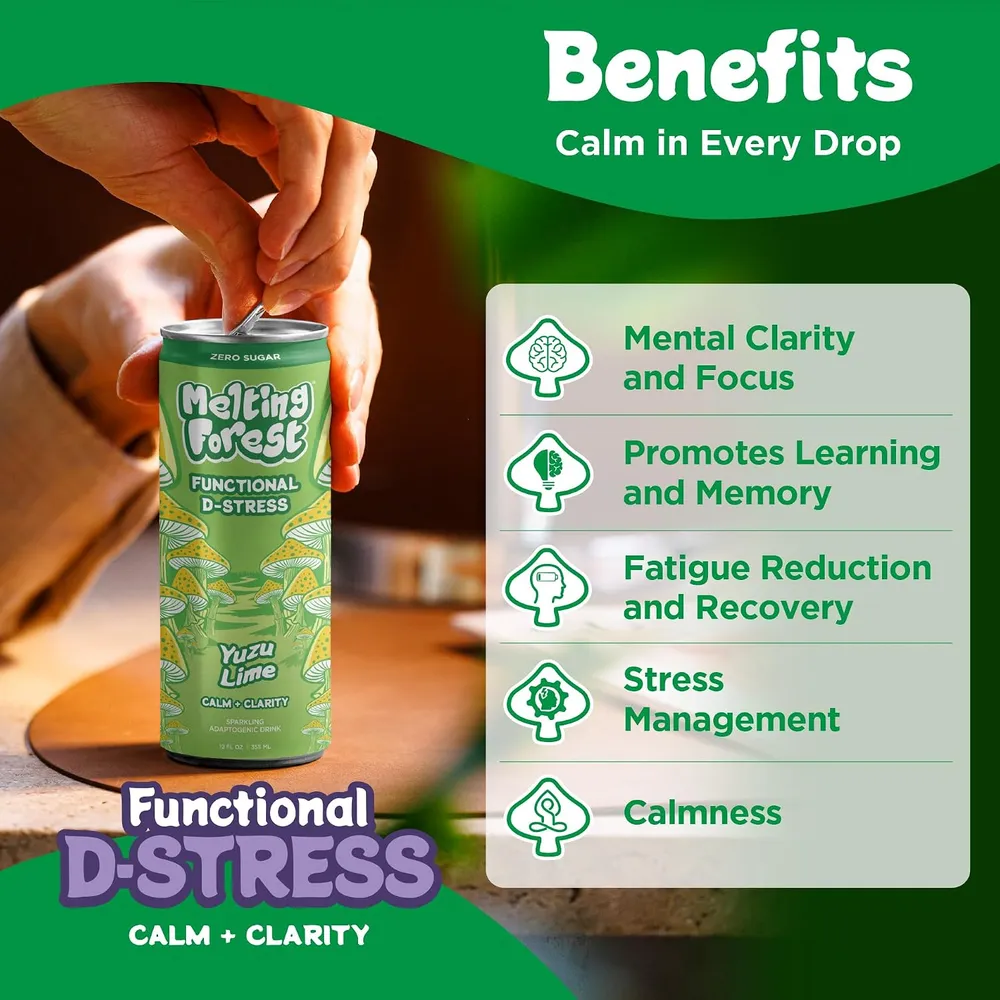
Lemon balm (Melissa officinalis) is a lemon-scented herb in the mint family with a long history in European, Mediterranean, and Middle Eastern traditional medicine.[17] The usual explanation for its calming effect is support for GABA, the brain's main calming signal, but that idea rests mostly on animal and cell research.[18]
The human results look promising. A 2021 meta-analysis of randomized trials in people with anxiety or depressive symptoms found that lemon balm improved both compared with placebo. The authors noted that there were few trials and wide variation between them.[19] In 100 healthy adults with moderate stress or poor sleep, 400mg/day of a standardized extract for three weeks improved stress, anxiety, and mood scores.[20]
The dose changes the effect. In a single-dose study, 300mg raised self-rated calmness, while 900mg lowered alertness at every time point.[21] That matters for a drink you might reach for in the middle of the day. The can doesn't disclose its lemon balm amount, so you can't tell where it falls in that range.
-
Vitamins and Minerals
-
Vitamin B6 (as Pyridoxine Hydrochloride) - 1.7mg (100% DV)
Vitamin B6 appears as pyridoxine hydrochloride at a full 100% DV. Your body converts it to pyridoxal-5'-phosphate, a coenzyme used in more than 140 reactions, including making neurotransmitters. At 1.7mg, the can sits well below the 12mg/day adult upper limit that Europe's food safety authority set over nerve-related concerns.[22] Your total intake from multivitamins and other fortified products still counts.
-
Magnesium (as Magnesium Citrate) - 50mg (10% DV)
Magnesium comes as magnesium citrate at 10% DV. It's an essential mineral involved in energy metabolism and in muscle and nerve function. In a trial of stressed adults with low magnesium levels, 300mg/day of magnesium, with or without 30mg/day of B6, lowered stress scores in both groups over eight weeks. That trial had no placebo arm.[23] This can carries a fraction of those amounts.
-
-
Sweeteners and Flavors
-
Stevia Leaf Extract
Stevia leaf extract is the only sweetener on the Functional D-Stress label. Its sweet compounds, steviol glycosides, are hundreds of times sweeter than sugar and add no calories, which is how the can stays at 5 calories with 0g sugar. Regulators set an acceptable daily intake of 4mg/kg of body weight (as steviol equivalents), and normal sweetener use falls well below it.[24]
-
Natural Flavors
Natural flavors do the flavor work. Under U.S. rules, a natural flavor is defined by its source (plants, fruit, and similar materials) rather than its chemistry. It doesn't have to come from the fruit named on the can.[25] They're in the can for taste, not function.
-
-
Other Ingredients
- Carbonated Filtered Water - The base of the drink, and the source of its fizz.
- Citric Acid - Adds tartness and helps control acidity, which suits a citrus-forward flavor like Yuzu Lime.
- Fruit and Vegetable Juice for Color - Plant-derived color used instead of synthetic dyes.
Three Flavors for the Target Rollout
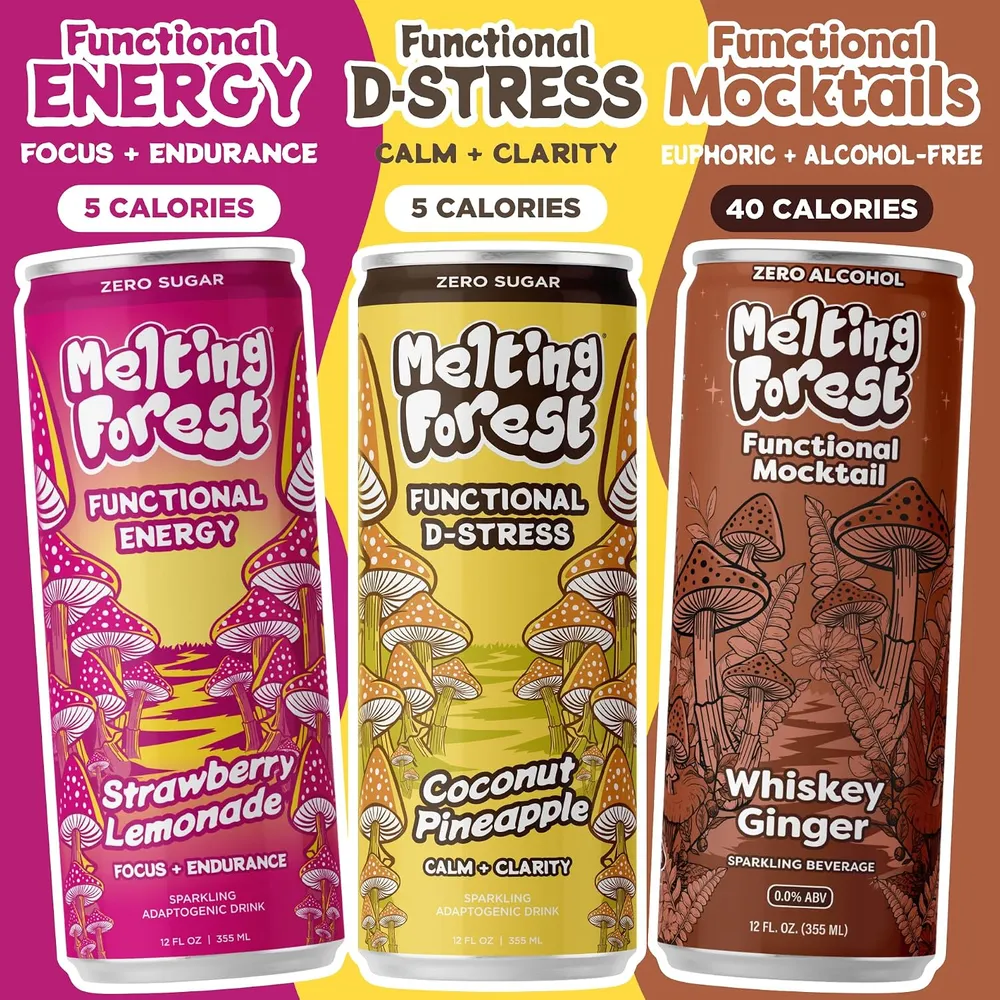
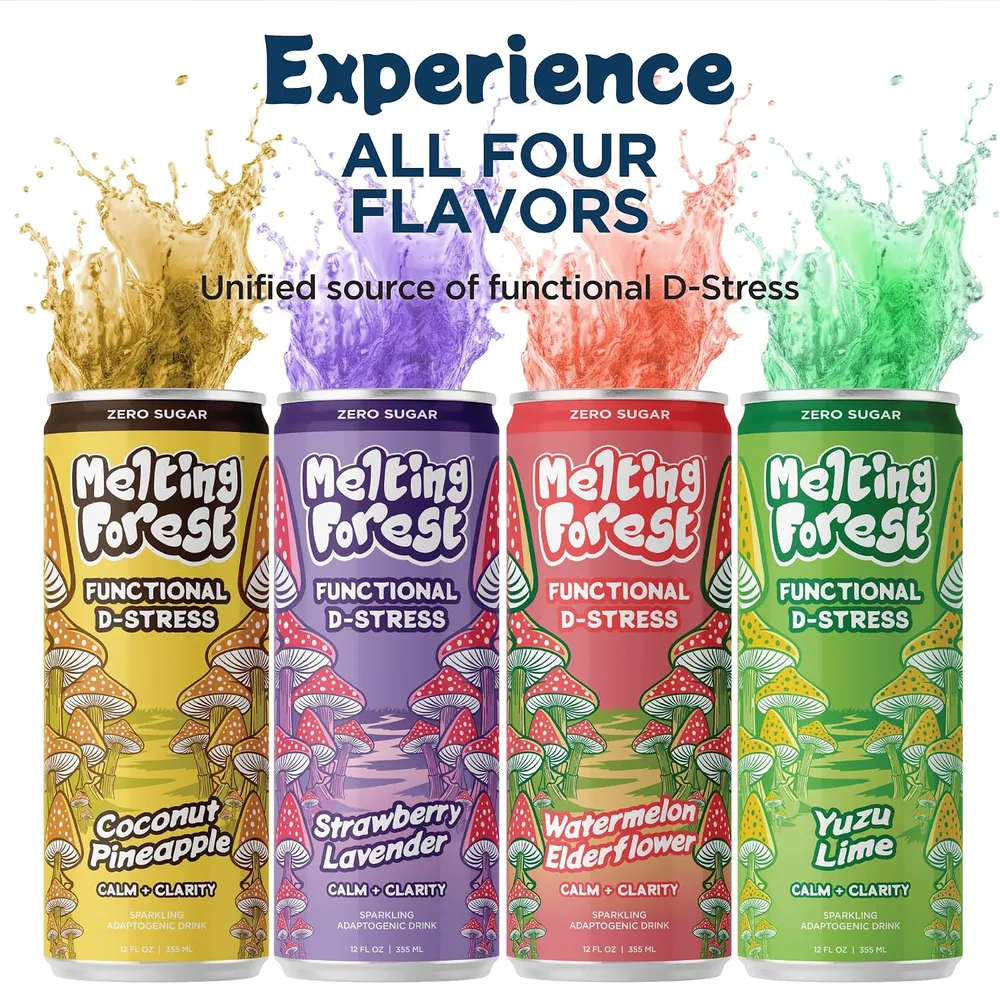
The November 2026 Target rollout put the same three flavors in every store: Strawberry Lavender, Coconut Pineapple, and Yuzu Lime.
- Coconut Pineapple (12 Cans: $34.99)
- Strawberry Lavender (12 Cans: $35.99)
- Variety Pack (12 Cans: $34.99)
- Watermelon Elderflower (12 Cans: $34.99)
- Yuzu Lime (12 Cans: $34.99)
Where Functional D-Stress Lands
Functional D-Stress is for you if you want a zero-caffeine, zero-sugar can for the afternoon or evening with ingredients chosen for calm. Swapping rhodiola for KSM-66 puts an ingredient with real clinical trials at the center of the formula, but no amounts are printed for the mushrooms, theanine, ashwagandha, or lemon balm. Buy it as a smart soda swap, not a replacement for the capsule doses used in the research.
Follow @BevlabMedia on TikTok and Instagram for more calm-can coverage.
References
- Lian, Wenhui, et al. "The Biological Activity of Ganoderma lucidum on Neurodegenerative Diseases: The Interplay between Different Active Compounds and the Pathological Hallmarks." Molecules (Basel, Switzerland), 2024. https://doi.org/10.3390/molecules29112516
- Tang, Wenbo, et al. "A randomized, double-blind and placebo-controlled study of a Ganoderma lucidum polysaccharide extract in neurasthenia." Journal of medicinal food, 2005. https://doi.org/10.1089/jmf.2005.8.53
- Tsuk, Sharon, et al. "Clinical Effects of a Commercial Supplement of Ophiocordyceps sinensis and Ganoderma lucidum on Cognitive Function of Healthy Young Volunteers." International journal of medicinal mushrooms, 2017. https://doi.org/10.1615/IntJMedMushrooms.2017021202
- Zhao, Shuang, et al. "Antidepressant-like effect of Ganoderma lucidum spore polysaccharide-peptide mediated by upregulation of prefrontal cortex brain-derived neurotrophic factor." Applied microbiology and biotechnology, 2021. https://doi.org/10.1007/s00253-021-11634-y
- Mori, Koichiro, et al. "Nerve growth factor-inducing activity of Hericium erinaceus in 1321N1 human astrocytoma cells." Biological and Pharmaceutical Bulletin, 2008. https://doi.org/10.1248/bpb.31.1727
- Mori, Koichiro, et al. "Improving effects of the mushroom Yamabushitake (Hericium erinaceus) on mild cognitive impairment: a double-blind placebo-controlled clinical trial." Phytotherapy research : PTR, 2009. https://doi.org/10.1002/ptr.2634
- Docherty, Sarah, et al. "The Acute and Chronic Effects of Lion's Mane Mushroom Supplementation on Cognitive Function, Stress and Mood in Young Adults: A Double-Blind, Parallel Groups, Pilot Study." Nutrients, 2023. https://doi.org/10.3390/nu15224842
- Cortonesi, Pietra McDonnel Matheus; Almeida, Laura Fogaça de; Pinheiro, Rafael Monteiro Tancredi; Périco, Cintia de Azevedo-Marques; Castaldelli-Maia, João Maurício. "Use of Hericium erinaceus as a potential therapeutic of mental disorders: a systematic review." Debates em Psiquiatria, 2023. https://doi.org/10.25118/2763-9037.2023.v13.443
- Juneja, L. "L-theanine—a unique amino acid of green tea and its relaxation effect in humans." Trends in Food Science & Technology, 1999. https://doi.org/10.1016/s0924-2244(99)00044-8
- Williams, Jackson L, et al. "The Effects of Green Tea Amino Acid L-Theanine Consumption on the Ability to Manage Stress and Anxiety Levels: a Systematic Review." Plant foods for human nutrition (Dordrecht, Netherlands), 2020. https://doi.org/10.1007/s11130-019-00771-5
- Moulin, Marc, et al. "Safety and Efficacy of AlphaWave® L-Theanine Supplementation for 28 Days in Healthy Adults with Moderate Stress: A Randomized, Double-Blind, Placebo-Controlled Trial." Neurology and therapy, 2024. https://doi.org/10.1007/s40120-024-00624-7
- Ambiye, Vijay R, et al. "Clinical Evaluation of the Spermatogenic Activity of the Root Extract of Ashwagandha (Withania somnifera) in Oligospermic Males: A Pilot Study." Evidence-based complementary and alternative medicine : eCAM, 2013. https://doi.org/10.1155/2013/571420
- Wankhede, Sachin, et al. "Examining the effect of Withania somnifera supplementation on muscle strength and recovery: a randomized controlled trial." Journal of the International Society of Sports Nutrition, 2015. https://doi.org/10.1186/s12970-015-0104-9
- Chandrasekhar, K, et al. "A prospective, randomized double-blind, placebo-controlled study of safety and efficacy of a high-concentration full-spectrum extract of ashwagandha root in reducing stress and anxiety in adults." Indian journal of psychological medicine, 2012. https://doi.org/10.4103/0253-7176.106022
- Salve, Jaysing, et al. "Adaptogenic and Anxiolytic Effects of Ashwagandha Root Extract in Healthy Adults: A Double-blind, Randomized, Placebo-controlled Clinical Study." Cureus, 2019. https://doi.org/10.7759/cureus.6466
- Langade, Deepak, et al. "Efficacy and Safety of Ashwagandha (Withania somnifera) Root Extract in Insomnia and Anxiety: A Double-blind, Randomized, Placebo-controlled Study." Cureus, 2019. https://doi.org/10.7759/cureus.5797
- Shakeri, Abolfazl, et al. "Melissa officinalis L. - A review of its traditional uses, phytochemistry and pharmacology." Journal of ethnopharmacology, 2016. https://doi.org/10.1016/j.jep.2016.05.010
- Mathews, Imogen Maria, et al. "Clinical Efficacy and Tolerability of Lemon Balm (Melissa officinalis L.) in Psychological Well-Being: A Review." Nutrients, 2024. https://doi.org/10.3390/nu16203545
- Ghazizadeh, Javid, et al. "The effects of lemon balm (Melissa officinalis L.) on depression and anxiety in clinical trials: A systematic review and meta-analysis." Phytotherapy research : PTR, 2021. https://doi.org/10.1002/ptr.7252
- Bano, Aasiya, et al. "The possible "calming effect" of subchronic supplementation of a standardised phospholipid carrier-based Melissa officinalis L. extract in healthy adults with emotional distress and poor sleep conditions: results from a prospective, randomised, double-blinded, placebo-controlled clinical trial." Frontiers in pharmacology, 2023. https://doi.org/10.3389/fphar.2023.1250560
- Kennedy, D O, et al. "Modulation of mood and cognitive performance following acute administration of Melissa officinalis (lemon balm)." Pharmacology, biochemistry, and behavior, 2002. https://doi.org/10.1016/s0091-3057(02)00777-3
- EFSA Panel on Nutrition, Novel Foods and Food Allergens (NDA), et al. "Scientific opinion on the tolerable upper intake level for vitamin B6." EFSA journal. European Food Safety Authority, 2023. https://doi.org/10.2903/j.efsa.2023.8006
- Pouteau, Etienne, et al. "Superiority of magnesium and vitamin B6 over magnesium alone on severe stress in healthy adults with low magnesemia: A randomized, single-blind clinical trial." PloS one, 2018. https://doi.org/10.1371/journal.pone.0208454
- Orellana-Paucar, Adriana Monserrath. "Steviol Glycosides from Stevia rebaudiana: An Updated Overview of Their Sweetening Activity, Pharmacological Properties, and Safety Aspects." Molecules (Basel, Switzerland), 2023. https://doi.org/10.3390/molecules28031258
- Goodman, Matthew J. "The “Natural” vs. “Natural Flavors” Conflict in Food Labeling: A Regulatory Viewpoint." Food and drug law journal, 2017. https://pubmed.ncbi.nlm.nih.gov/29140655/