Joyburst Protein Soda: Candy Soda with a Small Protein Bump
Candy-shop fizz with a modest protein bump
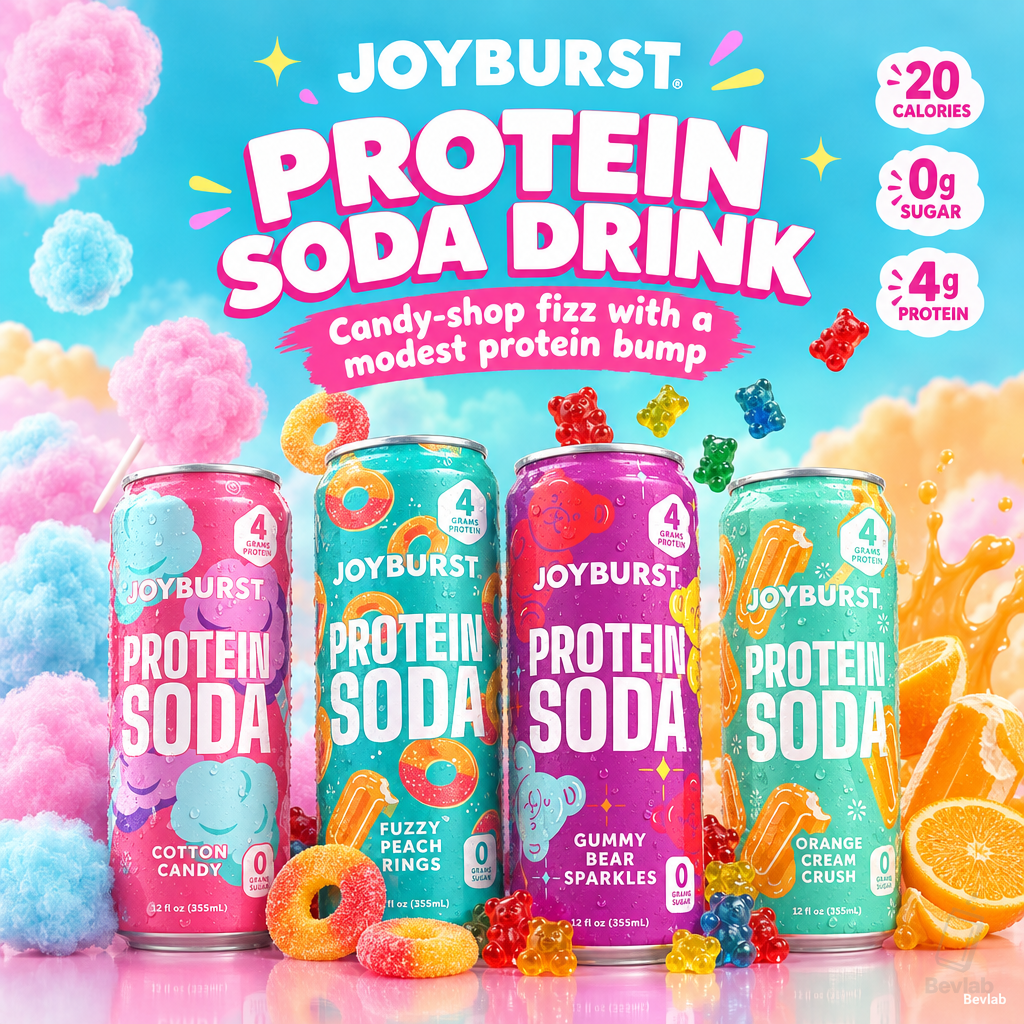
A 20-calorie, zero-sugar soda from Joyburst that gets its 4g of protein from whey isolate and collagen peptides, in four flavors.
Cotton Candy, Fuzzy Peach Rings, Gummy Bear Sparkles, and Orange Cream Crush: Joyburst Protein Soda Drink is a (currently) four-flavor line that asks a sweet-shop soda to do a little extra work. The Gummy Bear Sparkles can lists 20 calories, 0g of sugar, and 4g of protein per 355mL. That puts it in "nudge" territory, not shake territory. 4g isn't much, but it's not nothing.
Joyburst, the Canadian sugar-free beverage brand, is taking its playbook into soda here. The ingredient list is short, and the sweetener and preservative matter as much as the protein, so they get plenty of space below.
Joyburst Protein Soda Drink Nutrition Facts
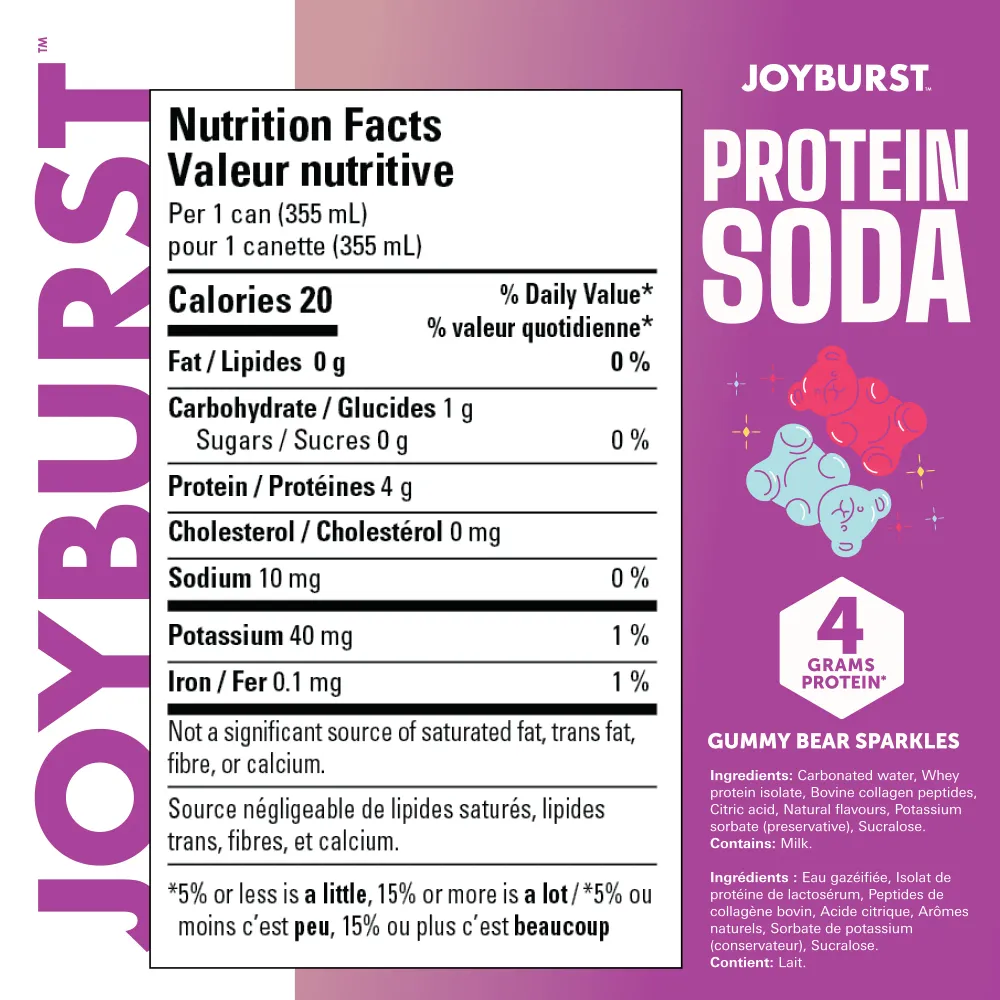
The panel numbers below are from the Gummy Bear Sparkles can and are scoped to that flavor. Serving size is one 355mL can.
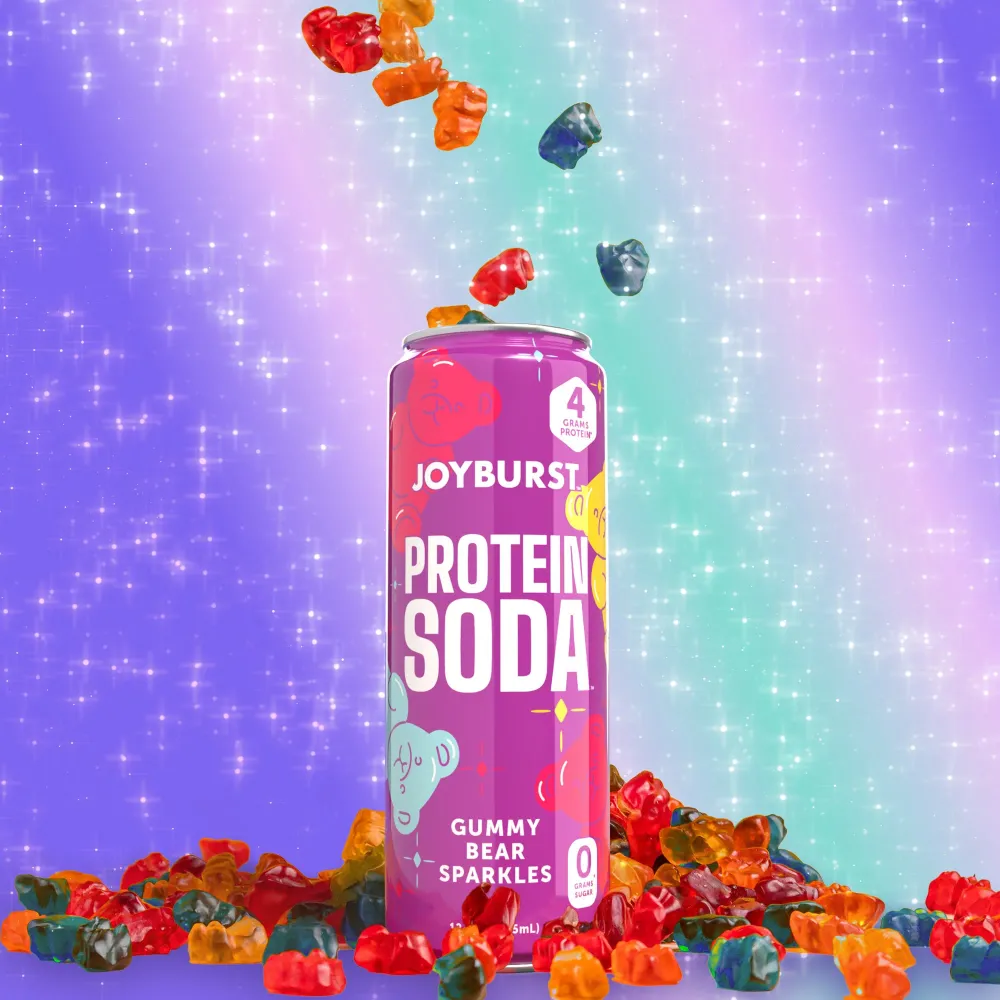
- Calories: 20
- Total Fat: 0g (0% DV)
- Cholesterol: 0mg
- Total Carbohydrate: 1g
- Total Sugars: 0g (0% DV)
- Protein: 4g
- Vitamins and Minerals
- Sodium: 10mg (0% DV)
- Potassium: 40mg (1% DV)
- Iron: 0.1mg (1% DV)
Protein is the headline, and 4g is small. Studies on muscle building tend to use 20g or more per serving, so think of this as a bonus on top of a soda you'd drink anyway, not a recovery drink.
Protein Soda Drink Ingredients
Each 355mL can contains the following. The brand doesn't print individual amounts for any of these, and the 4g protein total covers both proteins combined.
-
Whey Protein Isolate
Whey protein isolate is the first protein on the label and the better-studied of the two. Whey digests quickly and is rich in leucine, the amino acid that tells muscle to start building. In older men given 20g, whey produced faster amino acid appearance and a bigger muscle-building response than casein.[1]
Dose is the catch. In resistance-trained young men after a workout, 20g of whey isolate raised muscle protein building by about 49% versus none, while 10g didn't produce a significant change.[2] This can lists 4g of total protein from whey and collagen together, so those results definitely don't map onto a soda. Across a full day, total protein intake matters more than any single serving. In resistance-training studies, extra protein stopped adding lean mass above roughly 1.6g/kg of body weight per day.[3]
Whey comes from milk, and collagen here is bovine, so this isn't a vegan soda.
-
Bovine Collagen Peptides
Collagen peptides are the second protein. Bovine collagen is broken into small peptide chains rich in glycine, proline, and hydroxyproline, the amino acids your body uses to build its own collagen.[4]
Most of the human research is on skin and joints, at daily doses a soda likely can't match. Women taking 2.5g/day of specific collagen peptides for eight weeks showed better skin elasticity than placebo.[5] A pooled analysis of skin trials found improvements in hydration and elasticity too.[6] In collegiate athletes, 10g/day for 24 weeks eased activity-related joint pain versus placebo, with no difference showing at 12 weeks.[7]
Joyburst doesn't disclose the collagen amount. Whey is listed first and the total protein is 4g, so collagen is only part of that. A trial pairing 25g of whey with 5g of collagen raised muscle protein building and, at rest, connective tissue protein building.[8] That is far more protein than a can holds.
-
Carbonated Water
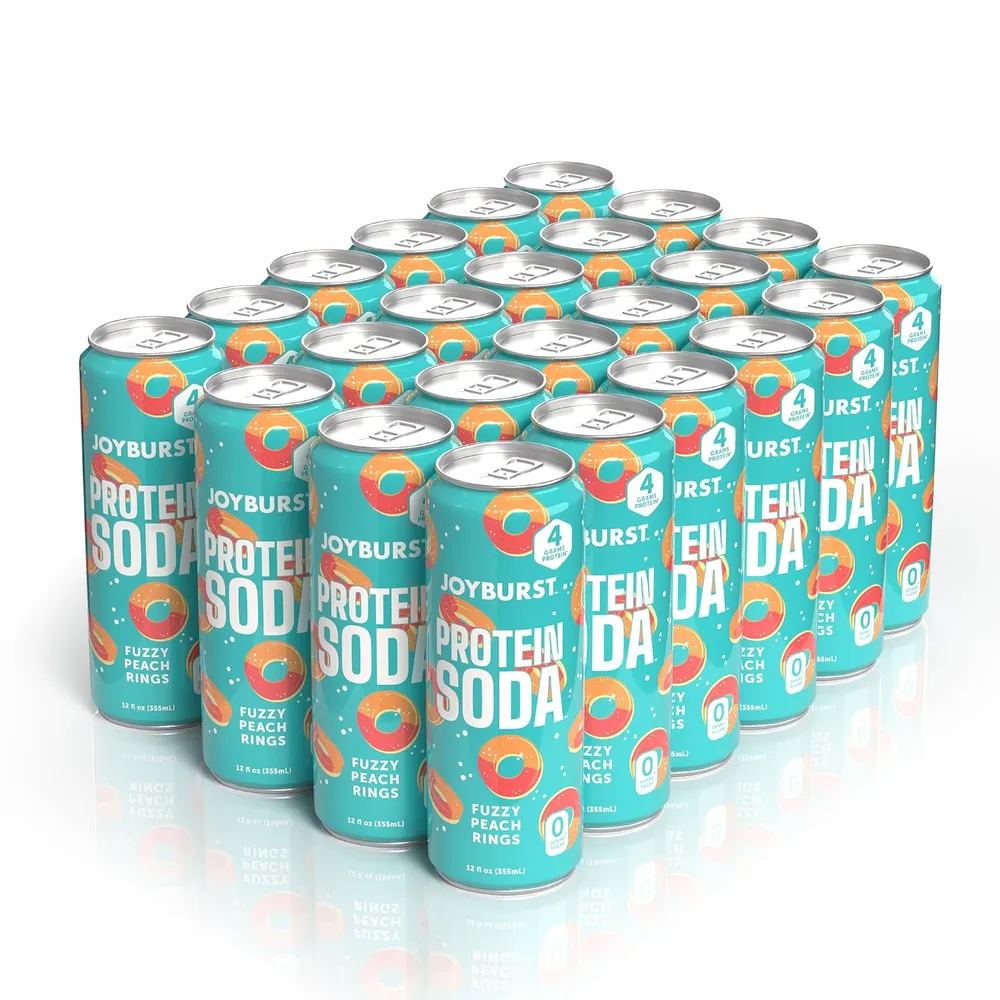
Carbonated water is the base, and the reason this is a soda and not a shake. The fizz does more than feel good. In a small crossover trial of 12 active adults, cold carbonated water after hard exercise in the heat caused a brief rise in blood pressure and brain blood flow velocity versus still water. It also left people feeling more refreshed in the mouth and less sleepy later in recovery.[9] Those are short-lived sensory effects, not a performance boost.
On teeth, plain carbonated water changed saliva acidity much less than a sugar-sweetened soda in an adolescent crossover trial. It still produced a modest increase in bacterial growth on teeth, which plain water didn't.[10] A flavored soda with added acid and sweetener isn't plain carbonated water, so don't treat that finding as a green light or a warning.
-
Sucralose
Sucralose is the sweetener, listed last, and the amount isn't disclosed. It's a chlorinated sugar derivative about 600 times sweeter than sugar.[11] Most of it passes through unabsorbed and isn't burned for energy, which is why it adds no calories.[12] EFSA's 2026 re-evaluation kept the acceptable daily intake at 15mg/kg of body weight and found no safety concern at authorized uses.[12]
The research on blood sugar and gut effects is mixed. A 14-day trial in 66 healthy adults, using about 15% of the daily intake limit, found a drop in insulin sensitivity.[13] A 120-person trial found sucralose changed glucose-tolerance responses and gut microbiome makeup in some people, with no change in HbA1c or fasting glucose after 14 days.[14] Responses varied a lot from person to person. If you avoid sweeteners, this isn't your soda.
-
Potassium Sorbate
Potassium sorbate is the preservative, there to keep microbes in check. The can doesn't give an amount. EFSA's 2019 follow-up set a group acceptable daily intake of 11mg/kg of body weight for sorbic acid and potassium sorbate.[15]
The rest of the research is lab and animal work, and the findings are mixed. Human lymphocytes exposed to 125-1,000 micrograms/mL showed DNA damage markers,[16] while other assays found no genotoxic signal.[17] Mice given 150-1,000mg/kg for 10 weeks developed liver inflammation that eased after a washout period.[18] None of it shows harm in people at food-level amounts, and those controlled exposures can't be mapped onto a can with an undisclosed dose. Potassium sorbate is a common, regulated preservative, and this research doesn't change that.
-
Other Ingredients
- Citric acid - adds the tartness that makes a candy-style soda taste bright, and helps control acidity.
- Natural flavors - listed on the can as "natural flavours," these supply the candy profiles. It's a regulatory category defined by where the flavor comes from, and the label doesn't name the sources.
Four Flavors, One Fizz Format
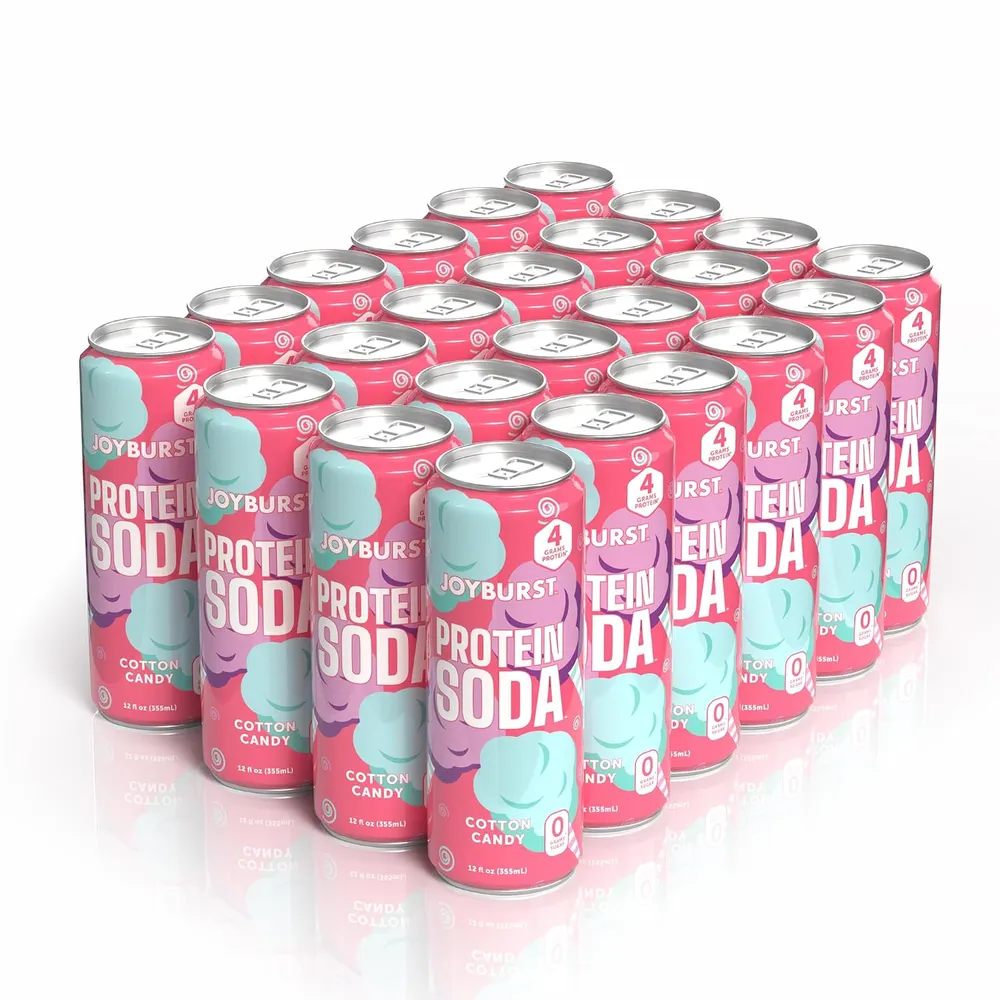
- Cotton Candy (24 Cans: $60.99)
- Fuzzy Peach Rings (24 Cans: $60.99)
- Gummy Bear Sparkles (24 Cans: $60.99)
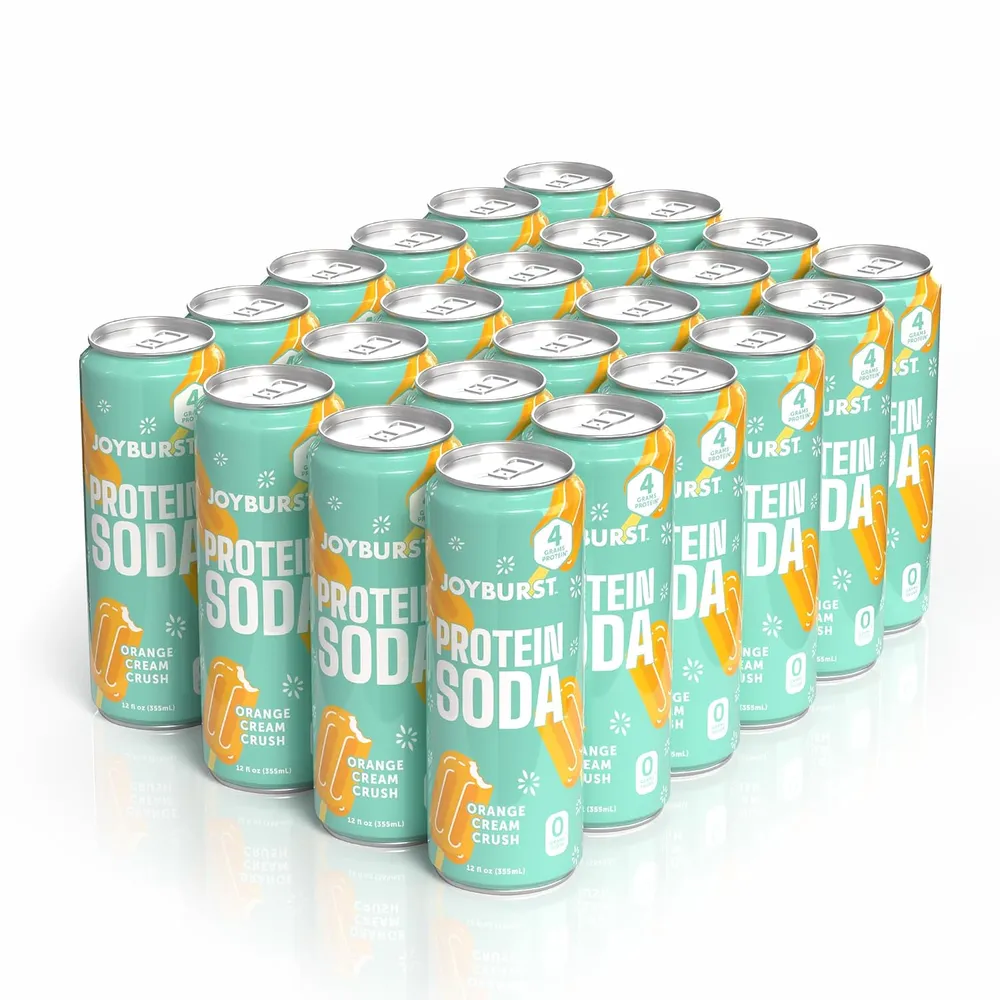
- Orange Cream Crush (24 Cans: $60.99)
- Variety Pack (12 Cans: $63.99)
The Variety Pack is a way to buy the four flavors together, not a fifth flavor. Don't confuse this line with Joyburst's separate Protein Soda Max, which is a higher-protein product at 30g per can.
Joyburst's Bigger Soda Bet
Joyburst is led by co-founders Brad Woodgate and Zelka Ridjosic Traikos, who serves as President. The founders say the Ontario-based company reached roughly $100M in annual sales in its fourth year with no outside investors. The broader lineup runs from hydration and energy drinks to stick packs, creatine soda, and protein coffee. The pattern is familiar formats (soda, coffee) with a functional hook attached. Protein Soda is the clearest version of that idea.
Who Should Skip It
- Milk allergy: whey is a milk protein.
- Sweetener avoiders: the sweetener is sucralose.
- Serious protein seekers: at 4g per can, this won't replace a shake.
A Soda With a Protein Assist
This is a zero-sugar soda with a small protein bonus, and 4g supports nothing bigger than that. If you want candy-style flavors and a short label, it delivers, but if protein is the point, look for a higher-dose product.
References
- Pennings, Bart, et al. "Whey Protein Stimulates Postprandial Muscle Protein Accretion More Effectively Than Do Casein And Casein Hydrolysate In Older Men." The American journal of clinical nutrition, 2011. https://doi.org/10.3945/ajcn.110.008102
- Witard, Oliver C, et al. "Myofibrillar muscle protein synthesis rates subsequent to a meal in response to increasing doses of whey protein at rest and after resistance exercise." The American journal of clinical nutrition, 2014. https://doi.org/10.3945/ajcn.112.055517
- Morton, Robert W, et al. "A systematic review, meta-analysis and meta-regression of the effect of protein supplementation on resistance training-induced gains in muscle mass and strength in healthy adults." British journal of sports medicine, 2018. https://doi.org/10.1136/bjsports-2017-097608
- Li, Peng, et al. "Roles Of Dietary Glycine Proline And Hydroxyproline In Collagen Synthesis And Animal Growth." Amino acids, 2018. https://doi.org/10.1007/s00726-017-2490-6
- Proksch, E, et al. "Oral Supplementation Of Specific Collagen Peptides Has Beneficial Effects On Human Skin Physiology A Double Blind Placebo Controlled Study." Skin pharmacology and physiology, 2014. https://doi.org/10.1159/000351376
- Pu, Szu-Yu, et al. "Effects Of Oral Collagen For Skin Anti Aging A Systematic Review And Meta Analysis." Nutrients, 2023. https://doi.org/10.3390/nu15092080
- Clark, Kristine L, et al. "24 Week Study On The Use Of Collagen Hydrolysate As A Dietary Supplement In Athletes With Activity Related Joint Pain." Current medical research and opinion, 2008. https://doi.org/10.1185/030079908X291967
- Aussieker, Thorben, et al. "Ingestion of a Whey Plus Collagen Protein Blend Increases Myofibrillar and Muscle Connective Protein Synthesis Rates." Medicine and science in sports and exercise, 2025. https://doi.org/10.1249/MSS.0000000000003596
- Kajiki, Masanobu, et al. "Ingesting carbonated water post-exercise in the heat transiently ameliorates hypotension and enhances mood state." Experimental physiology, 2024. https://doi.org/10.1113/EP091925
- Barajas-Torres, Guadalupe Carolina, et al. "Effects of Carbonated Beverage Consumption on Oral pH and Bacterial Proliferation in Adolescents: A Randomized Crossover Clinical Trial." Life (Basel, Switzerland), 2022. https://doi.org/10.3390/life12111776
- Bourguignon, Léa, et al. "Sucralose as a Way to Enhance Regulatory T Cells, the SWEET Trial: Clinical Research Protocol." Canadian journal of kidney health and disease, 2026. https://doi.org/10.1177/20543581261418540
- EFSA, Panel on Food Additives and Flavourings (FAF), et al. "Re-evaluation of sucralose (E 955) as a food additive and evaluation of a new application on extension of use of sucralose (E 955) in fine bakery wares." EFSA journal. European Food Safety Authority, 2026. https://doi.org/10.2903/j.efsa.2026.9854
- Romo-Romo, Alonso, et al. "Sucralose decreases insulin sensitivity in healthy subjects: a randomized controlled trial." The American journal of clinical nutrition, 2018. https://doi.org/10.1093/ajcn/nqy152
- Suez, Jotham, et al. "Personalized microbiome-driven effects of non-nutritive sweeteners on human glucose tolerance." Cell, 2022. https://doi.org/10.1016/j.cell.2022.07.016
- EFSA, Panel on Food Additives and Flavourings (FAF), et al. "Opinion on the follow-up of the re-evaluation of sorbic acid (E200) and potassium sorbate (E202) as food additives." EFSA journal. European Food Safety Authority, 2019. https://doi.org/10.2903/j.efsa.2019.5625
- Mamur, Sevcan, et al. "Does potassium sorbate induce genotoxic or mutagenic effects in lymphocytes?." Toxicology in vitro : an international journal published in association with BIBRA, 2010. https://doi.org/10.1016/j.tiv.2009.12.021
- Jung, R, et al. "Evaluation of the genotoxic potential of sorbic acid and potassium sorbate." Food and chemical toxicology : an international journal published for the British Industrial Biological Research Association, 1992. https://doi.org/10.1016/0278-6915(92)90130-d
- Xiao, Nanhai, et al. "Effects of potassium sorbate on systemic inflammation and gut microbiota in normal mice: A comparison of continuous intake and washout period." Food and chemical toxicology : an international journal published for the British Industrial Biological Research Association, 2024. https://doi.org/10.1016/j.fct.2024.114443
Tagged