Proda Protein Soda: Whey for People Who Skip the Shaker
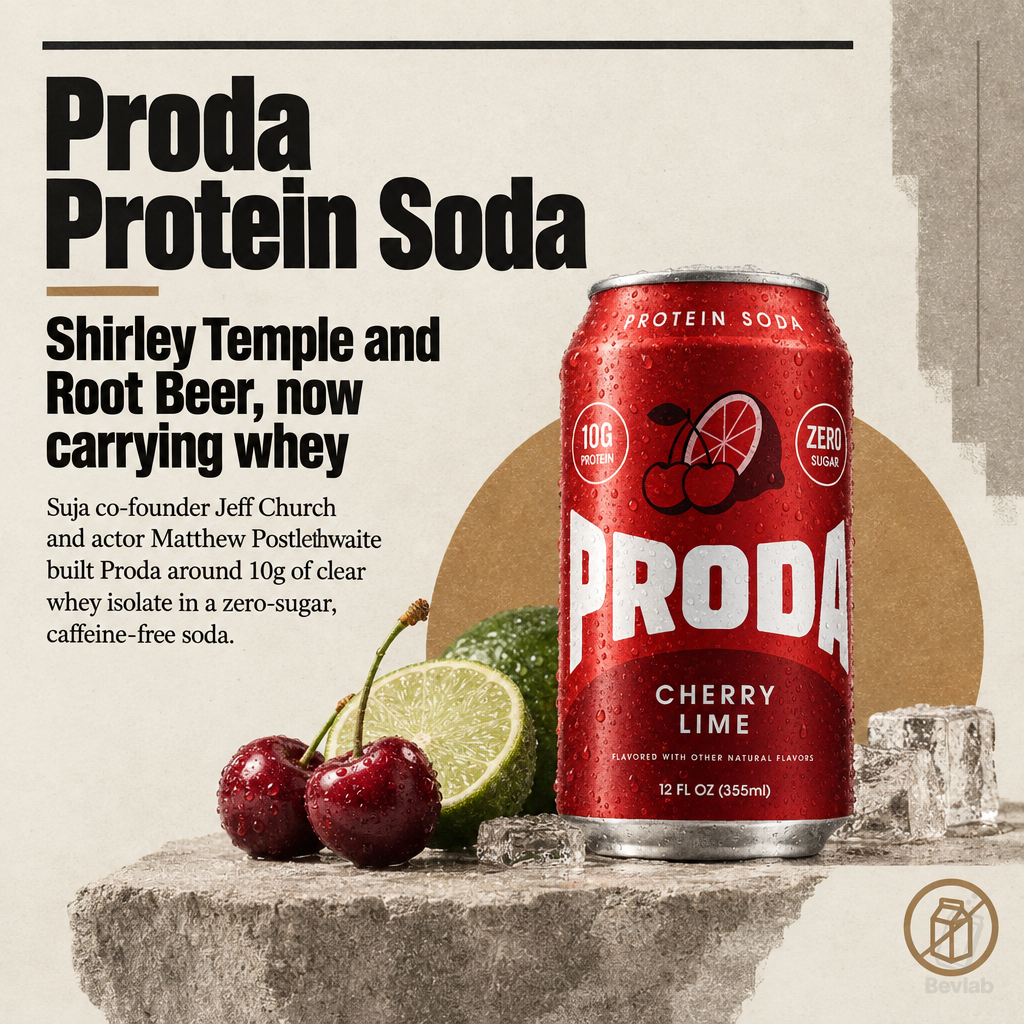
Shirley Temple and Root Beer, now carrying whey
Suja co-founder Jeff Church and actor Matthew Postlethwaite built Proda around 10g of clear whey isolate in a zero-sugar, caffeine-free soda.
Proda Protein Soda comes from Proda, a Los Angeles brand co-founded by Suja Juice co-founder Jeff Church and actor Matthew Postlethwaite, best known for his role in Peaky Blinders. The idea runs against the usual protein-drink playbook. Proda isn't chasing lifters. It wants protein to be something you crack open with lunch, like any other soda. In the March 2026 launch announcement, Church said traditional protein drinks and the newer protein sodas have "over-indexed on the fitness and muscle building space." Proda was built to go the other way.
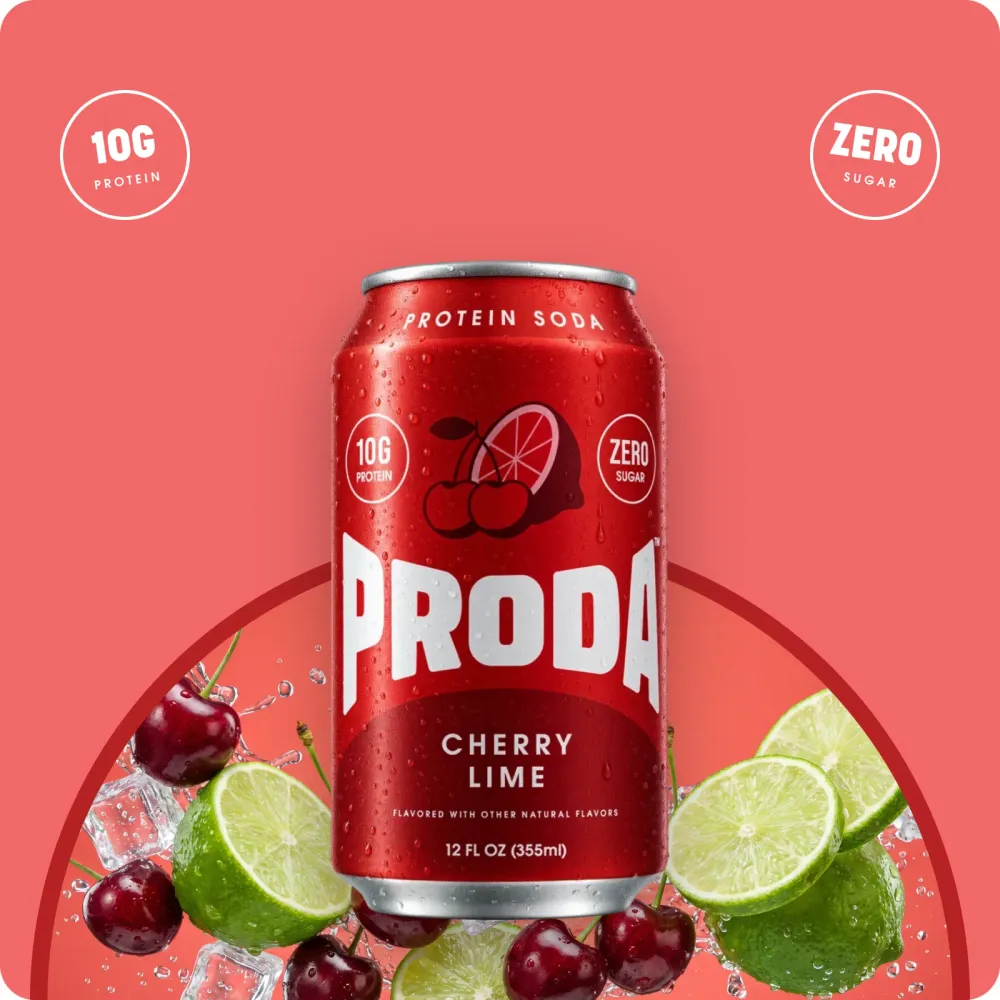
The format is a 12 fl oz can of carbonated soda carrying 10g of what the brand calls clear whey protein isolate, with zero sugar and sweetness from stevia and monk fruit. It's caffeine-free, so it doesn't compete with the energy drinks in the cooler, but it's after the same fridge space as every other better-for-you soda. Proda launched nationwide at Sprouts Farmers Market on April 1, 2026, with Sprouts signed on as its exclusive national launch partner.
Proda Protein Soda Nutrition Facts
Protein is the whole story here, so the panel is worth a look. A serving is one can. These numbers come from a single flavor's label, and other flavors may vary slightly.
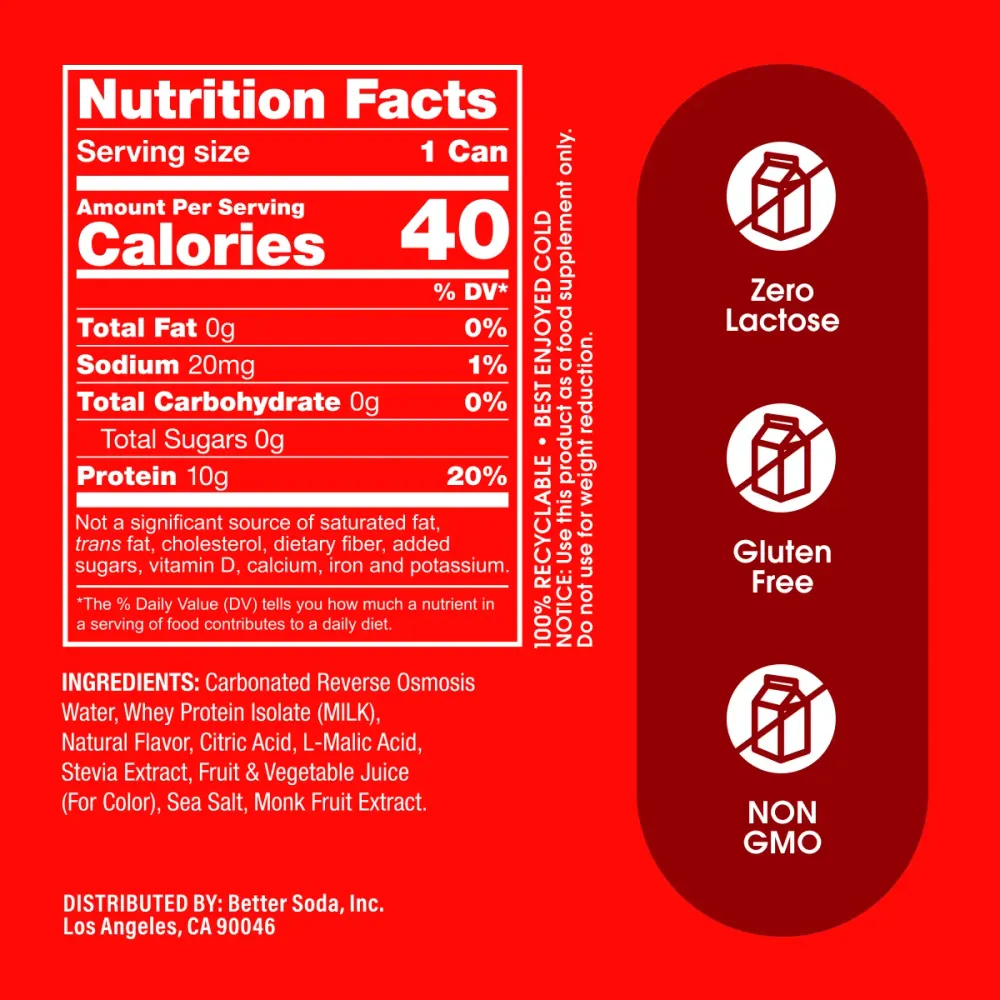
- Calories: 40
- Total Fat: 0g (0% DV)
- Total Carbohydrate: 0g (0% DV)
- Total Sugars: 0g
- Protein: 10g (20% DV)
- Vitamins and Minerals
- Sodium: 20mg (1% DV)
The math is tidy. Protein carries about 4 calories per gram, so 10g of whey accounts for roughly all 40 calories on the label. With no fat, no carbs, and no sugar, you're drinking fizzy, flavored protein and not much else.
Built for a Random Tuesday
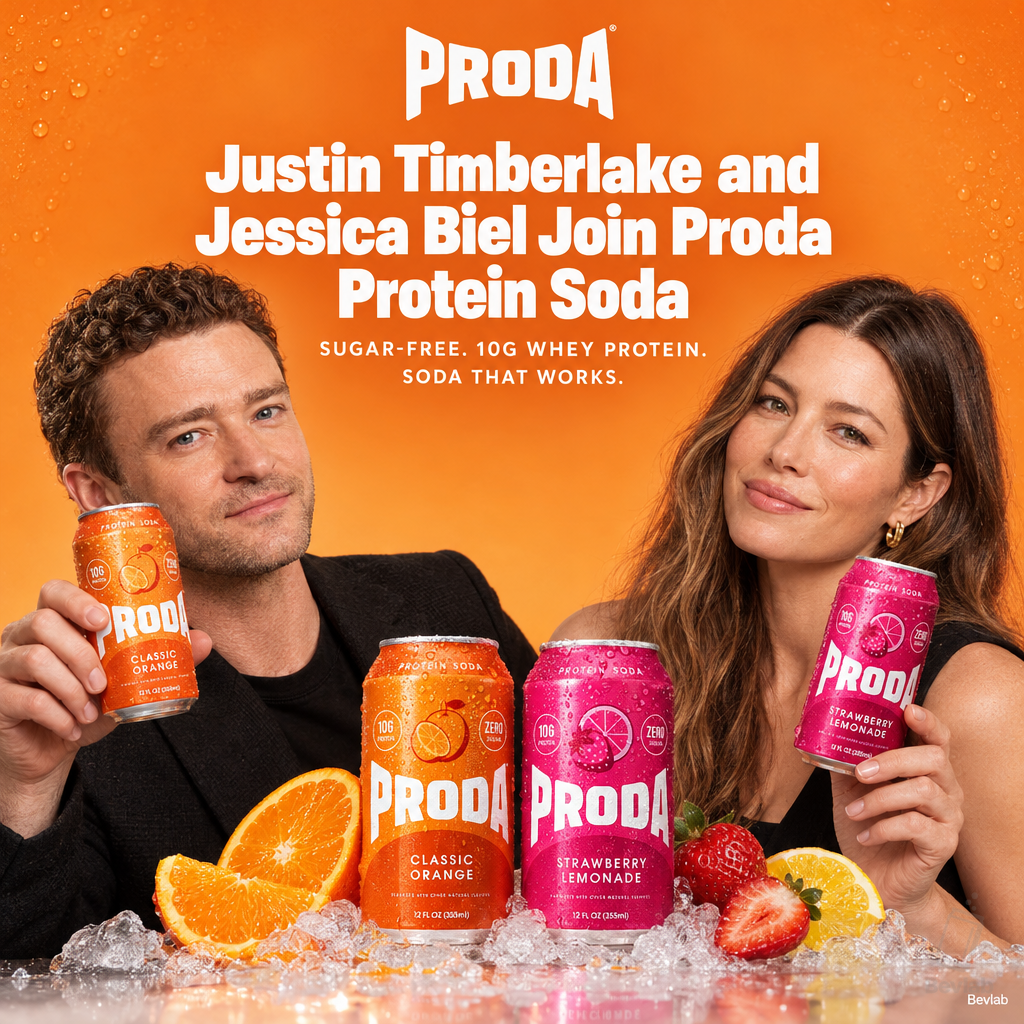
Postlethwaite says watching his family's health journeys, along with his work with other protein brands, pushed him to make protein more approachable for all ages. According to the launch announcement, the team spent nearly a year and a half and over 1,000 hours on development. His reasoning: "if it doesn't taste amazing, none of the rest matters." In October 2026, Justin Timberlake, Jessica Biel, and Joey Gonzalez, executive chairman of the Barry's fitness studios, came on board as investors, with Timberlake and Biel working on flavors and creative.
The product page states the positioning plainly: "Post-workout? Sure. Afternoon slump? Absolutely. Random Tuesday? That's the whole point." That framing matters when you look at the dose. At 10g of protein, Proda isn't trying to be a 30g recovery shake. It's a soda that happens to carry a meaningful slice of your daily protein, and it should be judged that way.
Proda Protein Soda Ingredients
Each 12 fl oz can is built around one functional ingredient, whey protein isolate. The rest of the label handles fizz, tartness, sweetness, and color:
-
Whey Protein (as Whey Protein Isolate) - 10g
Whey protein isolate is the only functional ingredient here, and Proda describes it as a clear whey isolate. Whey is the soluble protein fraction of milk, separate from casein, and isolate is one of the main commercial forms alongside concentrate and hydrolysate.[1,2]
Whey has earned its reputation. Protein quality comes down to how many essential amino acids your body can actually digest and use, and animal proteins like whey tend to score well on digestibility and on leucine, the amino acid that helps switch on muscle protein synthesis.[3,4] In older men, 20g of whey drove more muscle building than the same amount of casein.[5] In a head-to-head with a plant protein blend at 20g, whey came out ahead unless the plant blend got extra leucine.[6]
The dose deserves an honest look. In resistance-trained young men, 20g and 40g of whey isolate after lifting boosted muscle protein building, but 10g didn't move it significantly.[7] Older adults appear to need even more protein per meal to max out that response.[8] A single can of Proda isn't a post-workout shake in disguise.
That isn't really its job, though. Across 49 training studies, the bigger driver of muscle and strength gains was getting enough total daily protein, with extra benefit for lean mass leveling off around 1.6g/kg/day.[9] Longer whey-plus-training studies show modest strength gains and small fat loss, with clearer benefits in younger, healthy people.[10] Proda's 10g counts toward that daily total, in a format you might reach for anyway.
The brand markets the cans as zero lactose, but whey is still a milk protein, and the label carries a MILK allergen statement. If you're allergic to milk, skip this one.
-
Carbonated Water
Carbonated reverse osmosis water is the base of the can, and the fizz is what makes this a soda rather than a protein shake. Most research on carbonation covers short-term effects. In 12 active adults recovering from cycling in the heat, carbonated water left people feeling more refreshed and less sleepy than still water did, along with a brief bump in blood pressure and brain blood flow.[11] In another small study, 200mL of carbonated water raised blood-flow markers in part of the brain's frontal region, though it didn't measure focus or performance.[12]
For your teeth, plain carbonated water had a much smaller effect on saliva acidity than sugary soda in adolescents, though it still raised plaque bacteria a bit compared with plain water.[13] Proda also adds two acids for flavor, so treat it like a soda, not like water. And carbonation won't help with weight loss. Even the researcher who proposed a metabolic mechanism concluded the effect is too small to matter.[14]
-
Citric Acid
Citric acid is the most widely used organic acid in the world, and about two-thirds of production goes into food.[15,16] In carbonated drinks it controls acidity and pH, and it gives the sharp sourness you know from citrus.[16] Fresh lemon and lime juice each carry roughly 46-48g/L of it.[17]
Nearly all commercial citric acid comes from fermenting sugars with the mold Aspergillus niger. Pfizer commercialized the process in 1923, and citric acid holds GRAS status in the U.S.[18,15] Your diet already supplies about 4g of citrate a day.[19] Citrate also sits at the center of the citric acid cycle, the main energy-producing pathway in your cells, but at soda levels it's a flavor ingredient, not an energy ingredient.[20] One case series linked manufactured citric acid to inflammatory reactions in four people, but no controlled research has confirmed that link.[18] Proda doesn't disclose the amount.
-
Malic Acid
L-Malic acid is the second acid on the label, and it's here to shape tartness. The L form is the one your body makes and uses. It's a normal intermediate in the citric acid cycle, where the enzyme fumarase converts fumarate into malate.[21] Commercial L-malic acid is produced through enzyme conversion or microbial fermentation.[22]
You'll sometimes see malic acid sold in supplements with energy or fatigue claims, but the human research doesn't support that at beverage levels. One endurance study combined malate with an oligosaccharide, so it can't separate malic acid's effect from the rest of the drink.[23] A 2023 review found three small trials in rheumatic conditions, mostly testing malic-acid lozenges and salivary stimulants to boost saliva flow. None of them speak to a soda.[24] In Proda, malic acid is a flavor tool, and the brand doesn't disclose how much is in each can.
-
Sweeteners and Flavors
-
Stevia Extract
Stevia extract comes from the leaves of Stevia rebaudiana. Its sweetness comes from steviol glycosides, which run hundreds of times sweeter than sugar with no calories. Gut bacteria break them down to steviol, which is absorbed and cleared mostly in urine.[25,26] Regulators set an acceptable daily intake of 4mg/kg body weight (as steviol equivalents), and normal sweetener use falls well below it.[27,26] On its own, stevia tends to leave bitter, metallic notes in protein drinks. In whey protein beverages, blending stevia at 25% with monk fruit removed those off-notes.[28] It's the same pairing Proda uses.
-
Monk Fruit Extract
Monk fruit extract comes from the dried fruit of Siraitia grosvenorii. Its sweetness comes from mogrosides, mainly mogroside V, and it has essentially no calories.[29] It holds GRAS status in the U.S. under several notices, though the European Food Safety Authority said in 2019 that the toxicity data weren't enough to approve it as an EU food additive.[29] Most of the health research on mogrosides comes from animals and lab models, not people. Monk fruit's off-notes are generally milder than stevia's, and blending helps both.[30]
-
Natural Flavor
Natural flavor is a regulatory category, not a single ingredient. Under FDA rules, it covers flavoring drawn from sources like fruit, vegetables, spices, or fermentation, where the main job is taste rather than nutrition.[31] The definition is about where the flavor came from, not its chemistry, so a natural and an artificial version of the same flavor molecule can be identical.[31] Many natural flavor complexes have been reviewed and affirmed GRAS by the FEMA Expert Panel.[32] Proda doesn't list specific sources, which is standard for the category.
-
-
Other Ingredients
- Fruit & Vegetable Juice (For Color) - Colors the soda with produce juice instead of synthetic dyes like Red 40. The FDA lists vegetable juice as a color additive exempt from certification.[33]
- Sea Salt - The whole can carries just 20mg of sodium, so this is a flavor tweak, not an electrolyte dose. Salt can suppress bitterness, and that effect has been shown with whey protein hydrolysate, so it may help round out the whey here.[34,35]
Soda-Fountain Nostalgia, Canned
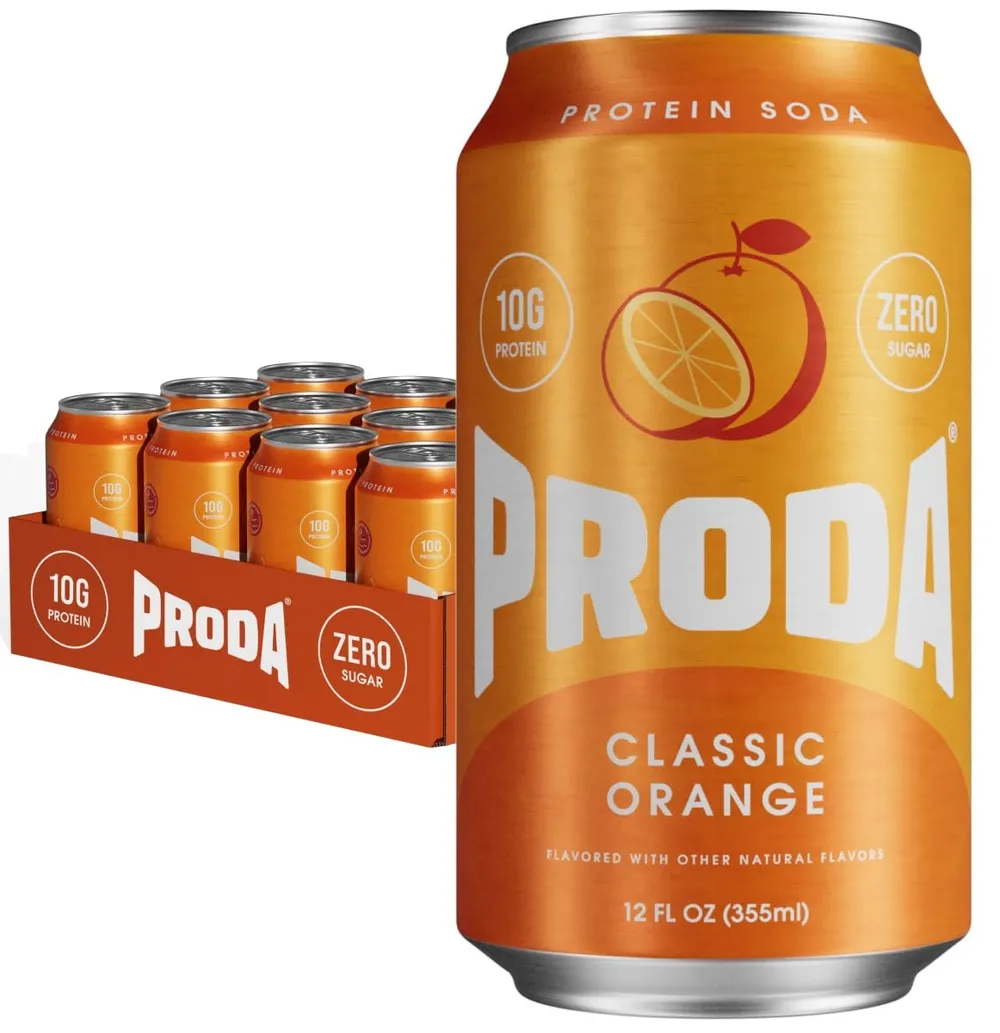
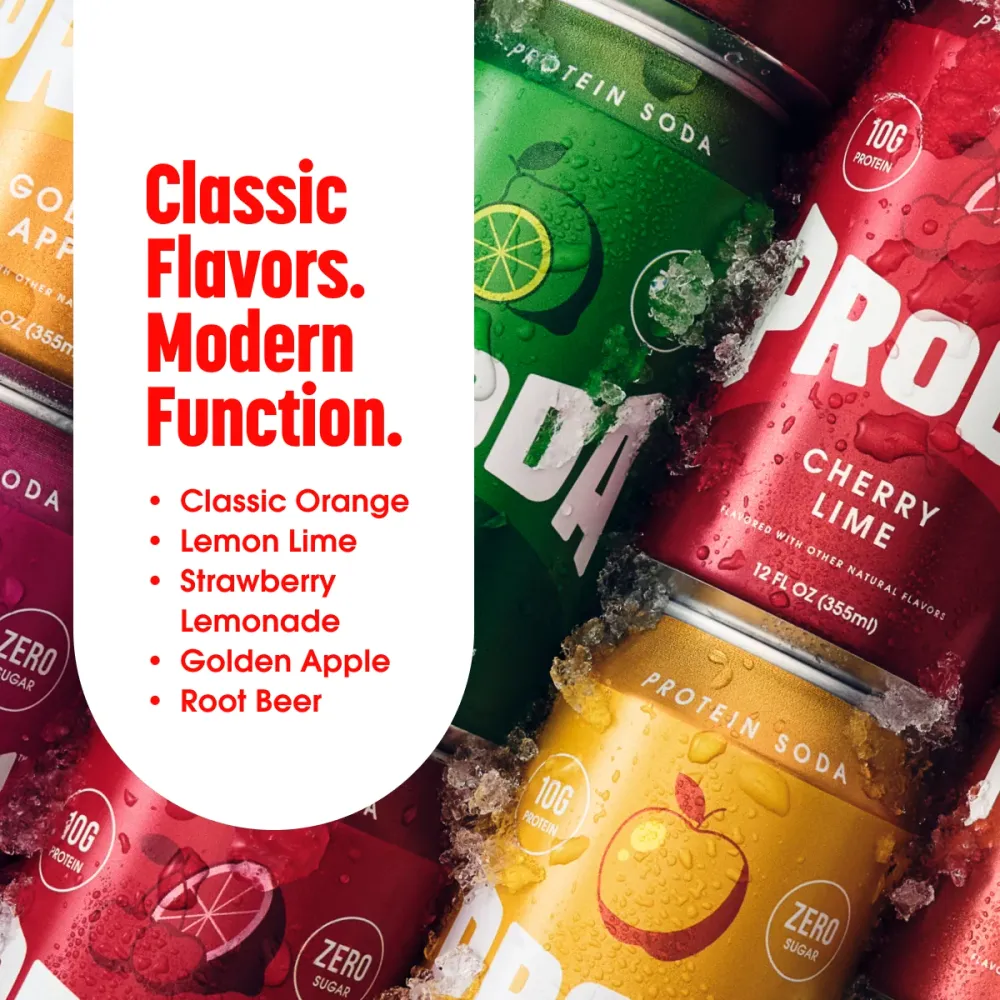
Proda's lineup leans hard on soda-fountain memories, with Shirley Temple and Root Beer sitting next to citrus picks like Classic Orange and Cherry Lime. The brand's own tagline for Cherry Lime sums up the approach: "2000s nostalgia, minus the corn syrup."
- Classic Orange (12 Cans: $31.96)
- Lemon Lime (12 Cans: $31.96)
- Root Beer (12 Cans: $31.96)
- Shirley Temple (12 Cans: $31.96)
- Strawberry Lemonade (12 Cans: $31.96)
- Variety Pack (12 Cans: $31.96)
Who Gets the Most From a Can
- Soda drinkers who want more protein: If you'd grab a soda with lunch anyway, this swaps the sugar for 10g of whey at 40 calories.
- Lifters: One can falls short of the 20g dose that clearly boosted post-workout muscle building in research, so treat it as a protein top-up and keep your recovery shake.
A Better Soda, Not a Recovery Shake
Proda Protein Soda puts 10g of whey isolate, zero sugar, and real carbonation into a can that looks and drinks like a soda. It fits a normal day without a shaker bottle, but a post-workout dose takes more than one can.
References
- Goulding, D.A. et al. "Milk proteins: An overview." Milk Proteins, 2020. https://doi.org/10.1016/B978-0-12-815251-5.00002-5
- Castro, Luis Henrique A, et al. "Comparative Meta Analysis Of The Effect Of Concentrated Hydrolyzed And Isolated Whey Protein Supplementation On Body Composition Of Physical Activity Practitioners." Nutrients, 2019. https://doi.org/10.3390/nu11092047
- Wolfe, Robert R, et al. "Protein quality as determined by the Digestible Indispensable Amino Acid Score: evaluation of factors underlying the calculation." Nutrition reviews, 2016. https://doi.org/10.1093/nutrit/nuw022
- van Vliet, Stephan, et al. "The Skeletal Muscle Anabolic Response to Plant- versus Animal-Based Protein Consumption." The Journal of nutrition, 2015. https://doi.org/10.3945/jn.114.204305
- Pennings, Bart, et al. "Whey Protein Stimulates Postprandial Muscle Protein Accretion More Effectively Than Do Casein And Casein Hydrolysate In Older Men." The American journal of clinical nutrition, 2011. https://doi.org/10.3945/ajcn.110.008102
- Lim, Changhyun, et al. "Muscle Protein Synthesis in Response to Plant-Based Protein Isolates With and Without Added Leucine Versus Whey Protein in Young Men and Women." Current developments in nutrition, 2024. https://doi.org/10.1016/j.cdnut.2024.103769
- Witard, Oliver C, et al. "Myofibrillar muscle protein synthesis rates subsequent to a meal in response to increasing doses of whey protein at rest and after resistance exercise." The American journal of clinical nutrition, 2014. https://doi.org/10.3945/ajcn.112.055517
- Moore, Daniel R, et al. "Protein Ingestion To Stimulate Myofibrillar Protein Synthesis Requires Greater Relative Protein Intakes In Healthy Older Versus Younger Men." The journals of gerontology. Series A, Biological sciences and medical sciences, 2014. https://doi.org/10.1093/gerona/glu103
- Morton, Robert W, et al. "A systematic review, meta-analysis and meta-regression of the effect of protein supplementation on resistance training-induced gains in muscle mass and strength in healthy adults." British journal of sports medicine, 2018. https://doi.org/10.1136/bjsports-2017-097608
- Li, Meng, et al. "Effect Of Whey Protein Supplementation During Resistance Training Sessions On Body Mass And Muscular Strength A Meta Analysis." Food & function, 2019. https://doi.org/10.1039/C9FO00182D
- Kajiki, Masanobu, et al. "Ingesting carbonated water post-exercise in the heat transiently ameliorates hypotension and enhances mood state." Experimental physiology, 2024. https://doi.org/10.1113/EP091925
- Kosugi, Wataru, et al. "Effect of carbonated water on cerebral blood flow in the frontal region: a study using near-infrared spectroscopy." Frontiers in behavioral neuroscience, 2024. https://doi.org/10.3389/fnbeh.2024.1409123
- Barajas-Torres, Guadalupe Carolina, et al. "Effects of Carbonated Beverage Consumption on Oral pH and Bacterial Proliferation in Adolescents: A Randomized Crossover Clinical Trial." Life (Basel, Switzerland), 2022. https://doi.org/10.3390/life12111776
- Takahashi, Akira. "Can carbonated water support weight loss?." BMJ nutrition, prevention & health, 2025. https://doi.org/10.1136/bmjnph-2024-001108
- Ciriminna, Rosaria, et al. "Citric acid: emerging applications of key biotechnology industrial product." Chemistry Central journal, 2017. https://doi.org/10.1186/s13065-017-0251-y
- Książek, Ewelina. "Citric Acid: Properties, Microbial Production, and Applications in Industries." Molecules (Basel, Switzerland), 2023. https://doi.org/10.3390/molecules29010022
- Penniston, Kristina L, et al. "Quantitative assessment of citric acid in lemon juice, lime juice, and commercially-available fruit juice products." Journal of endourology, 2008. https://doi.org/10.1089/end.2007.0304
- Sweis, Iliana E, et al. "Potential role of the common food additive manufactured citric acid in eliciting significant inflammatory reactions contributing to serious disease states: A series of four case reports." Toxicology reports, 2018. https://doi.org/10.1016/j.toxrep.2018.08.002
- Granchi, Donatella, et al. "Role of Citrate in Pathophysiology and Medical Management of Bone Diseases." Nutrients, 2019. https://doi.org/10.3390/nu11112576
- Vesnina, Anna, et al. "Citric Acid Cycle Genes and Nutrigenetics." International journal of molecular sciences, 2026. https://doi.org/10.3390/ijms27052360
- Mescam, Muriel, et al. "Identification Of The Catalytic Mechanism And Estimation Of Kinetic Parameters For Fumarase." The Journal of biological chemistry, 2011. https://doi.org/10.1074/jbc.M110.214452
- Wu, Na, et al. "Recent Advances In Microbial Production Of L Malic Acid." Applied Microbiology and Biotechnology, 2022. https://doi.org/10.1007/s00253-022-12260-y
- Qiang, Fu. "Effect Of Malate Oligosaccharide Solution On Antioxidant Capacity Of Endurance Athletes." The Open Biomedical Engineering Journal, 2015. https://doi.org/10.2174/1874120701509010326
- de Carvalho, Jozélio Freire, et al. "Malic Acid For The Treatment Of Rheumatic Diseases." Mediterranean journal of rheumatology, 2023. https://doi.org/10.31138/mjr.301223.mar
- Chatsudthipong, Varanuj, et al. "Stevioside and related compounds: therapeutic benefits beyond sweetness." Pharmacology & therapeutics, 2009. https://doi.org/10.1016/j.pharmthera.2008.09.007
- Orellana-Paucar, Adriana Monserrath. "Steviol Glycosides From Stevia Rebaudiana An Updated Overview Of Their Sweetening Activity Pharmacological Properties And Safety Aspects." Molecules (Basel, Switzerland), 2023. https://doi.org/10.3390/molecules28031258
- EFSA, Panel on Food Additives and Flavourings (FAF), et al. "Safety Of The Proposed Amendment Of The Specifications For Steviol Glycosides E 960 As A Food Additive." EFSA journal. European Food Safety Authority, 2019. https://doi.org/10.2903/j.efsa.2019.5867
- Parker, M N, et al. "Consumer Acceptance Of Natural Sweeteners In Protein Beverages." Journal of dairy science, 2018. https://doi.org/10.3168/jds.2018-14707
- EFSA, Panel on Food Additives and Flavourings (FAF), et al. "Safety of use of Monk fruit extract as a food additive in different food categories." EFSA journal. European Food Safety Authority, 2019. https://doi.org/10.2903/j.efsa.2019.5921
- Yeung, Andy Wai Kan. "Bibliometric analysis on the literature of monk fruit extract and mogrosides as sweeteners." Frontiers in nutrition, 2023. https://doi.org/10.3389/fnut.2023.1253255
- Goodman, Matthew J. "The “Natural” vs. “Natural Flavors” Conflict in Food Labeling: A Regulatory Viewpoint." Food and drug law journal, 2017. https://pubmed.ncbi.nlm.nih.gov/29140655/
- Rosol, Thomas J, et al. "FEMA GRAS assessment of natural flavor complexes: Lemongrass oil, chamomile oils, citronella oil and related flavoring ingredients." Food and chemical toxicology : an international journal published for the British Industrial Biological Research Association, 2023. https://doi.org/10.1016/j.fct.2023.113697
- Sigurdson, Gregory T, et al. "Natural Colorants: Food Colorants from Natural Sources." Annual review of food science and technology, 2017. https://doi.org/10.1146/annurev-food-030216-025923
- Breslin, P A, et al. "Salt enhances flavour by suppressing bitterness." Nature, 1997. https://doi.org/10.1038/42388
- Leksrisompong, Pattarin, et al. "Bitter taste inhibiting agents for whey protein hydrolysate and whey protein hydrolysate beverages." Journal of food science, 2012. https://doi.org/10.1111/j.1750-3841.2012.02800.x
Related Coverage