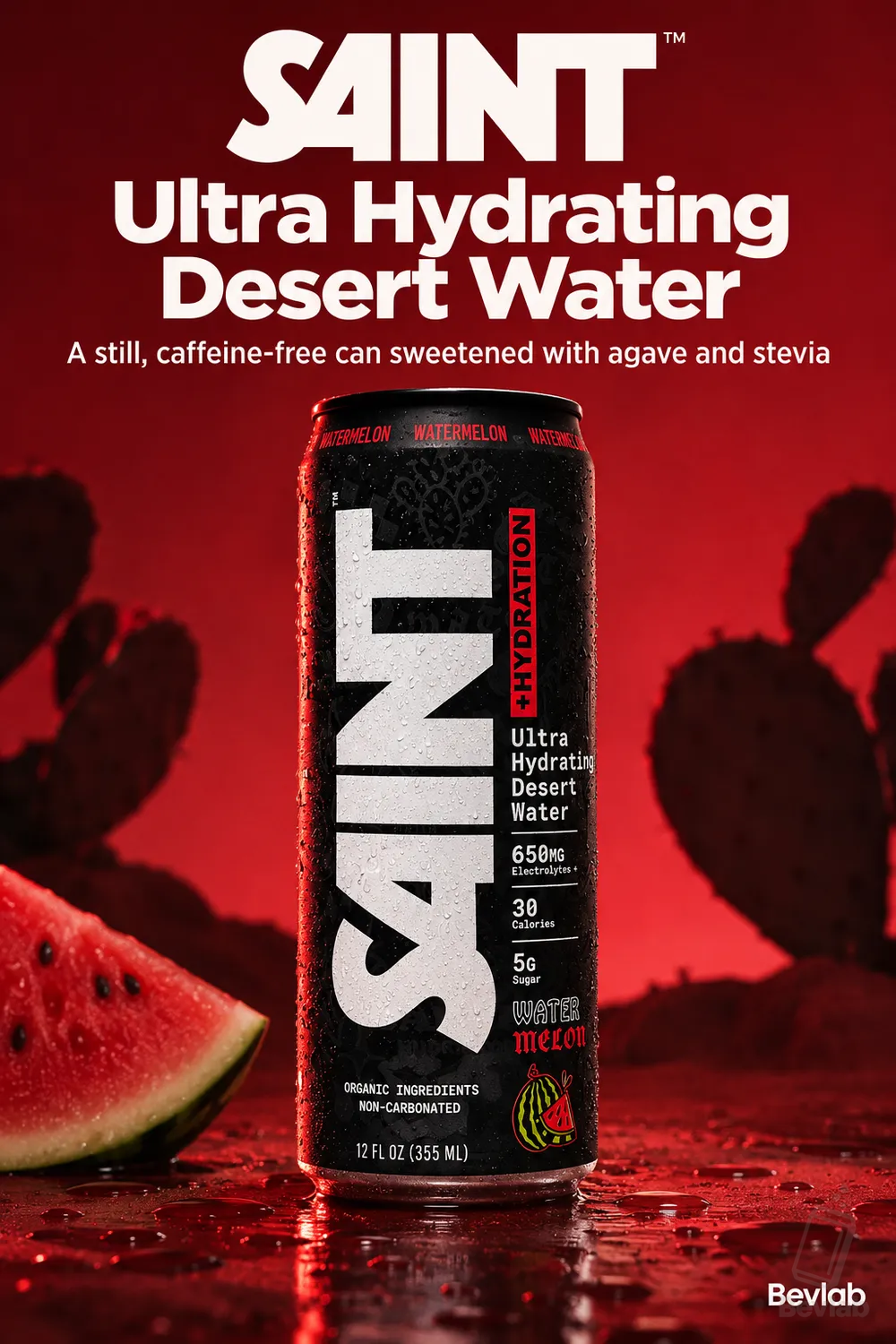
SAINT Ultra Hydrating Desert Water: Cactus Fruit Meets Calm
A still, caffeine-free can sweetened with agave and stevia
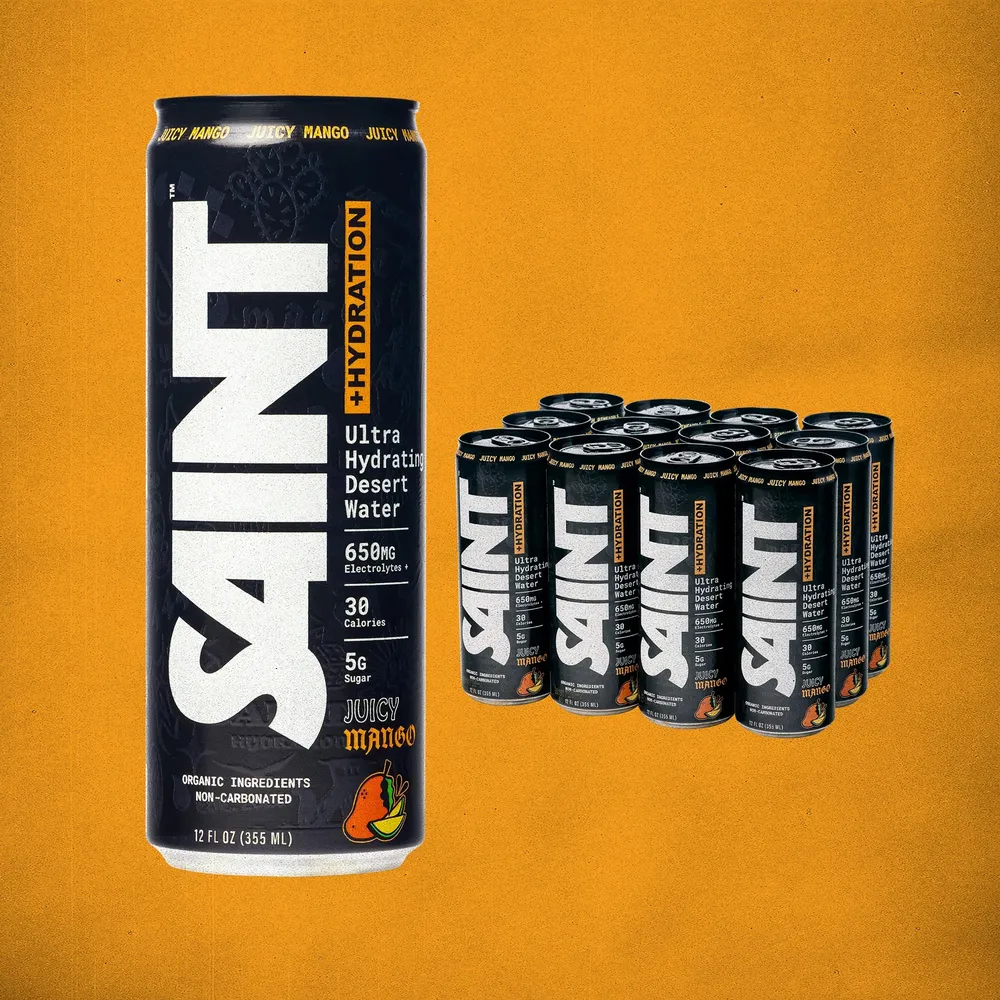
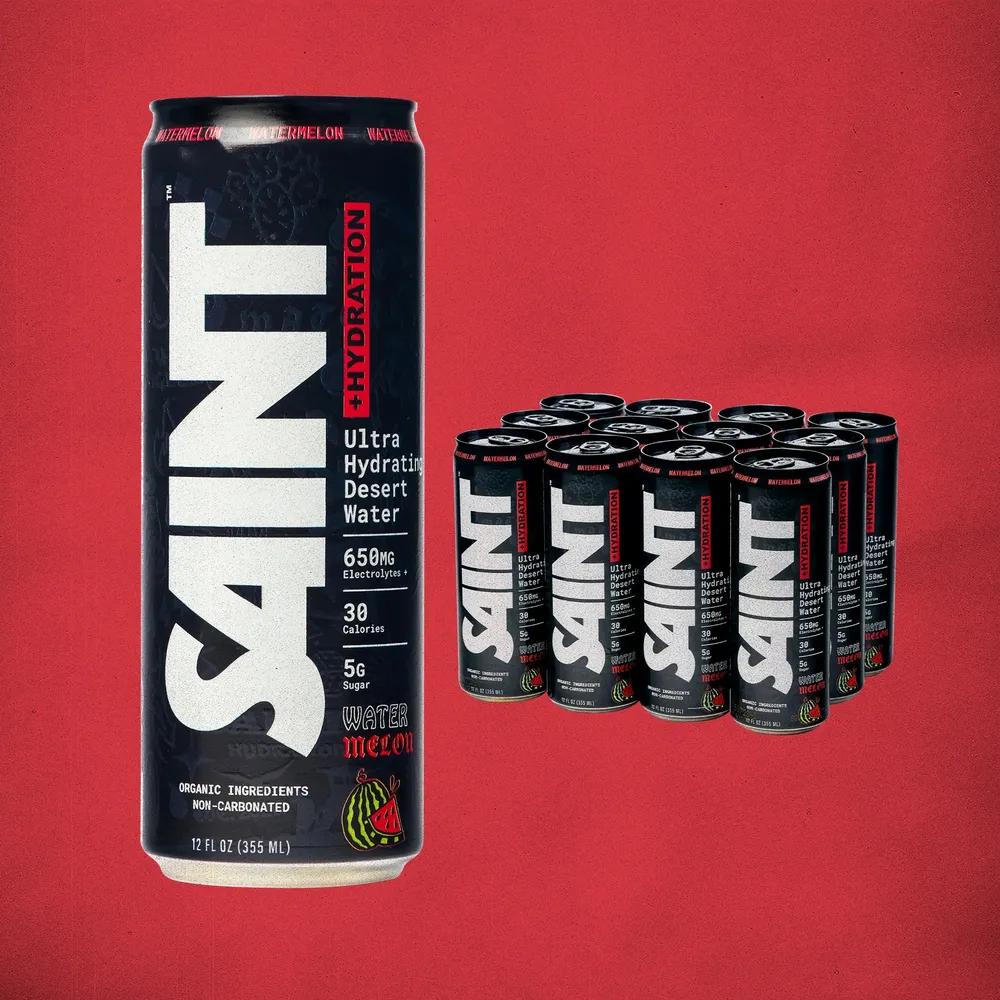
Each 12 fl oz can of SAINT's still hydration drink carries 200mg sodium, 200mg potassium, and 50mg magnesium over a ruby red prickly pear juice base.
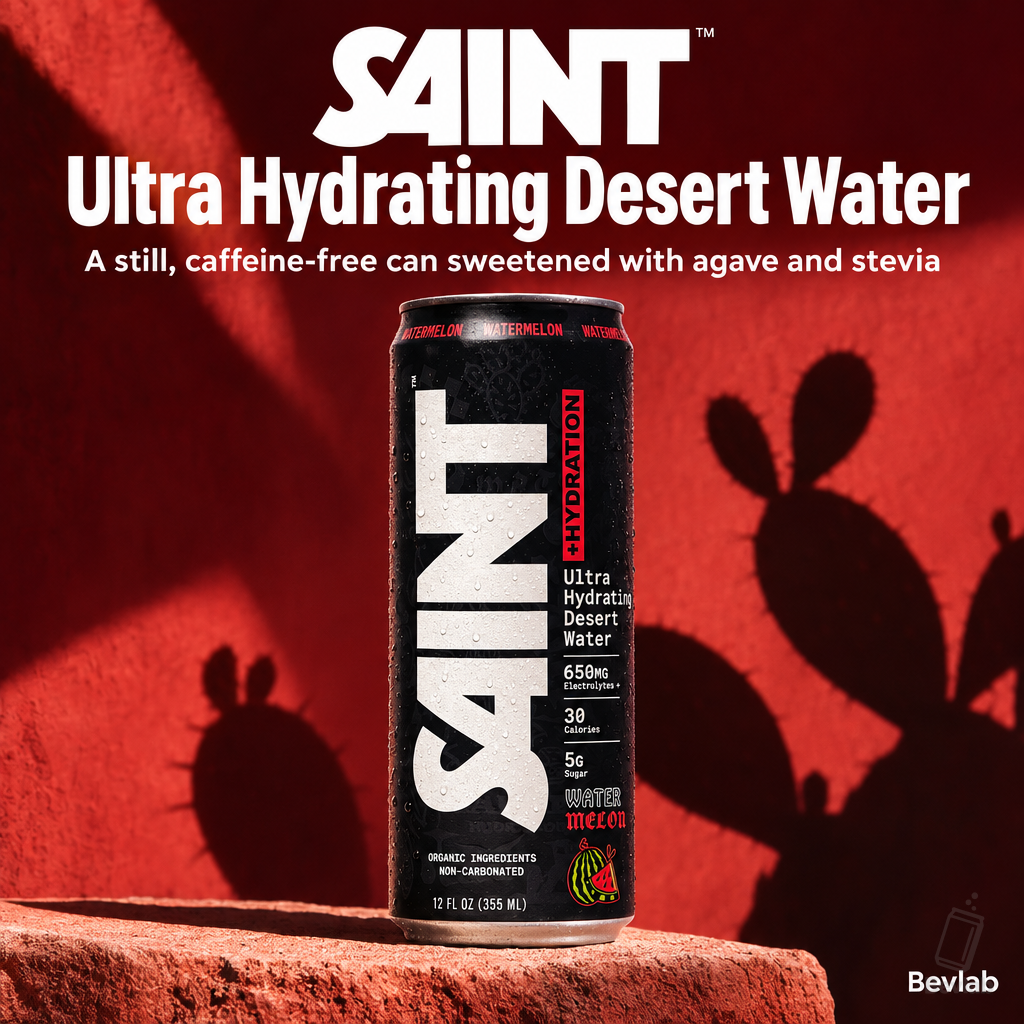
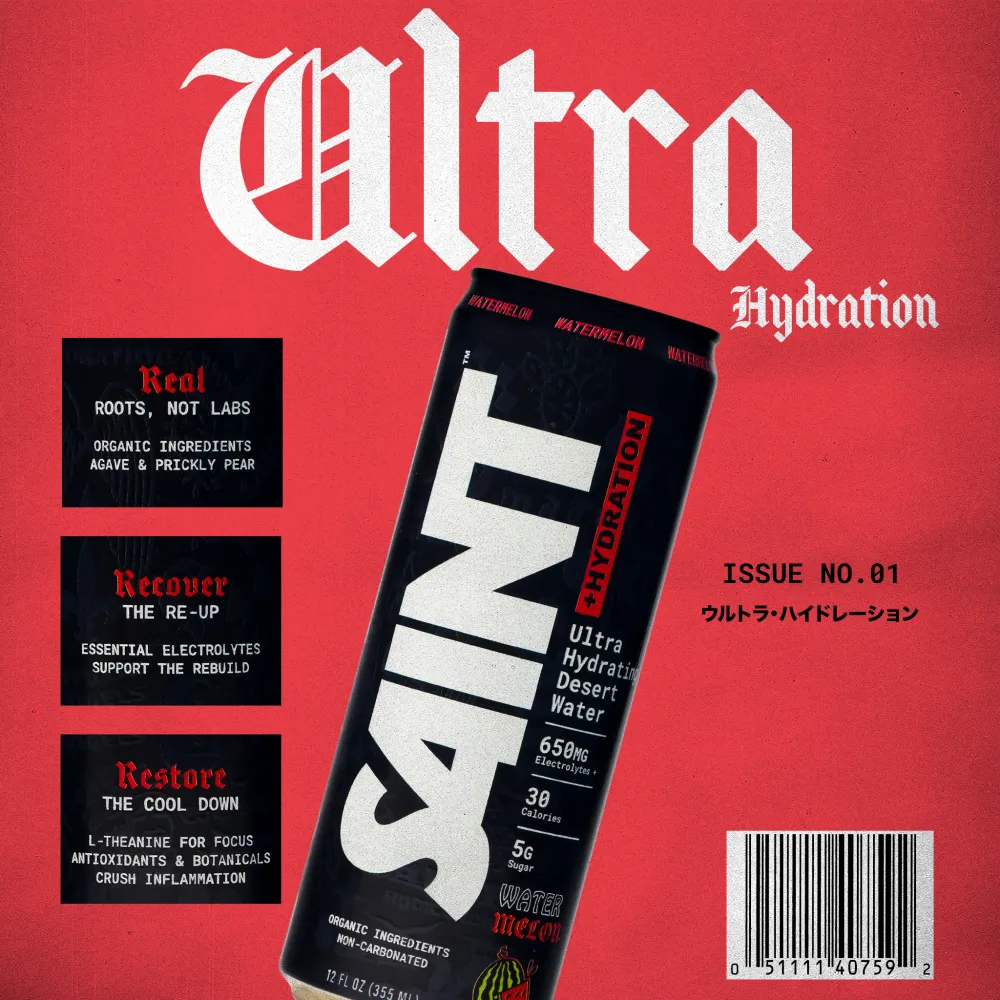
SAINT is a new hydration brand with a desert theme, and SAINT Ultra Hydrating Desert Water is the drink built around it. Unlike other hydration drinks, it's not just plain water with salts stirred in, either. The flavor and function comes from ruby red prickly pear juice concentrate, made from the fruit of the Opuntia cactus, and the can has no carbonation and no caffeine. Between that and the agave syrup used for sweetening, you get the desert in "desert water", a unique play on the category worth trying for that alone.
On top of it, the functional twist beside electrolytes and vitamin C is L-theanine, the relaxing tea amino acid best often used as caffeine's calming partner, but here it works on its own in a still electrolyte can.
SAINT: Hydration Doesn't Need to Be Boring
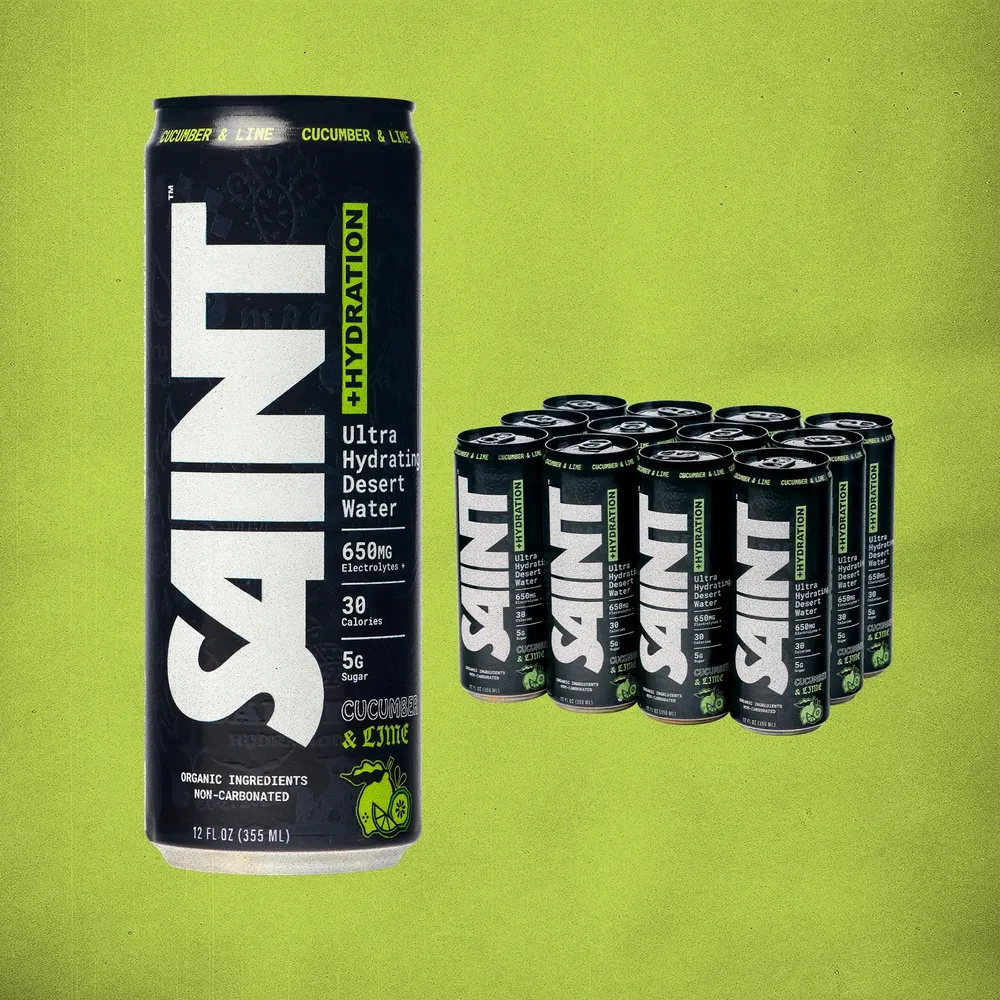
SAINT's founders argue that hydration has been boring, and quite honestly, they're right. This brand has an edge, and so does the formula.
Each 12oz can lists 30 calories, 200mg sodium, 200mg potassium, 50mg magnesium, and 179mg vitamin C. Organic agave syrup and stevia Reb M share the sweetening, which makes it a moderate, everyday hydration drink rather than a heavy-sweat recovery formula. Let's dive into it below.
SAINT Ultra Hydrating Desert Water Nutrition Facts
One can is one serving, 12 fl oz (355mL):
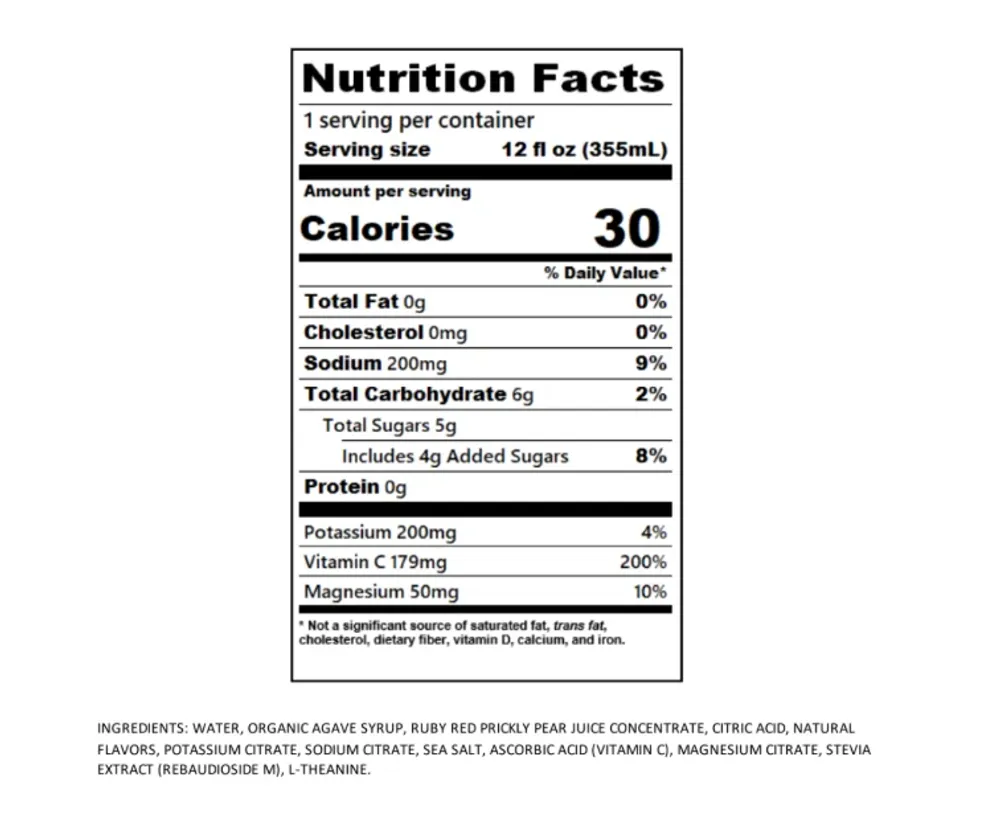
- Calories: 30
- Total Fat: 0g (0% DV)
- Total Carbohydrate: 6g (2% DV)
- Total Sugars: 5g
- Added Sugars: 4g (8% DV)
- Total Sugars: 5g
- Protein: 0g
- Vitamins and Minerals
- Sodium: 200mg (9% DV)
- Potassium: 200mg (4% DV)
- Vitamin C: 179mg (200% DV)
- Magnesium: 50mg (10% DV)
Sodium and potassium come in balanced at 200mg each, and vitamin C reaches 200% DV. At 5g of total sugar the can stays light, but it isn't a zero-sugar drink, so keep that in mind if you're counting.
SAINT Ultra Hydrating Desert Water Ingredients
Each 12 fl oz (355mL) can provides the following key actives:
-
Ruby Red Prickly Pear Juice Concentrate
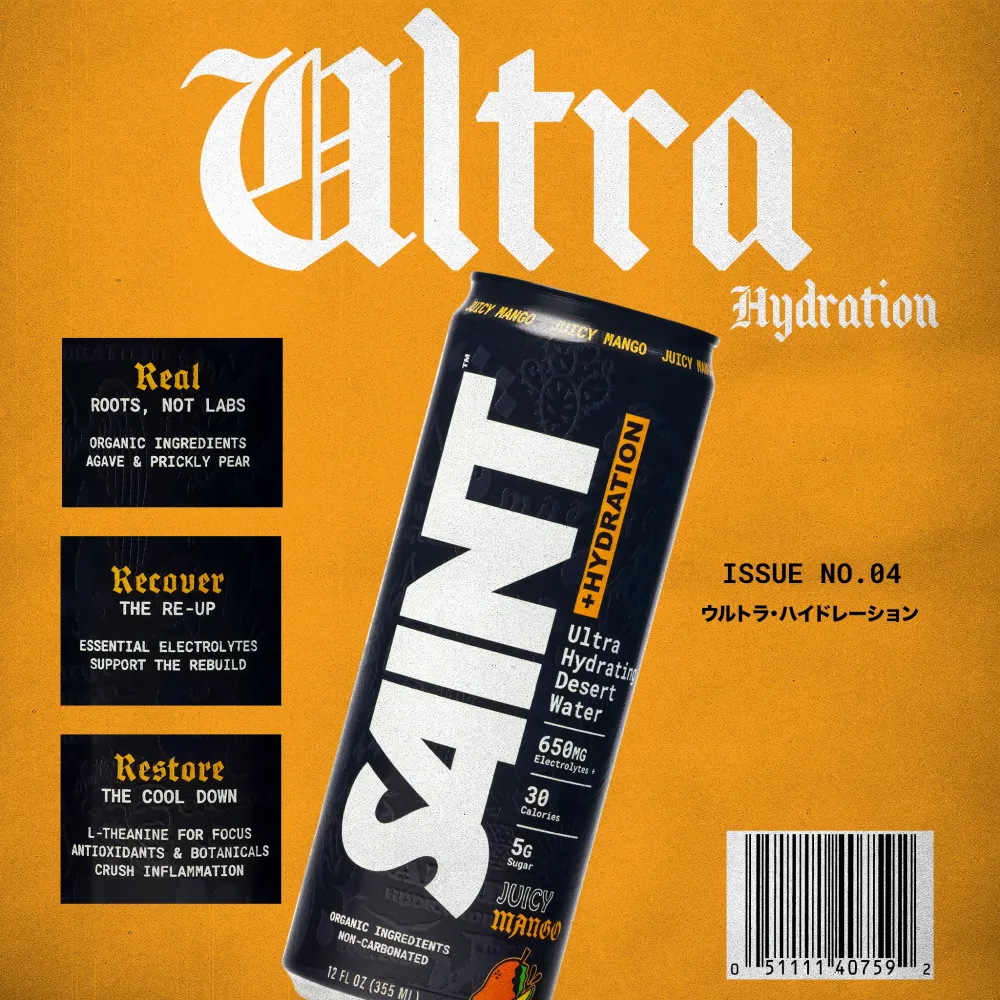
Prickly pear is the fruit of the Opuntia cactus, and it's where the "Desert Water" name comes from. The juice concentrate is third on the ingredient list, after water and agave syrup.
Prickly pear research is split between two parts of the plant that often get confused: the fruit, and the flat green pads (cladodes, sold as nopal). Scientists warn that the two behave differently and shouldn't be treated as the same thing.[1,2] That matters here because the blood sugar and weight-loss claims attached to prickly pear come from pad fiber and pad extracts, not fruit juice.[1]
The fruit research is smaller, but still equally impressive and interesting. The fruit contains vitamin C and pigments called betalains. In 18 healthy adults, 250g of fresh fruit pulp twice daily for two weeks lowered several oxidative stress markers, and vitamin C alone didn't.[3] SAINT includes both, just in case. A two-week feeding study in 28 adults using 200g of pulp twice daily lowered inflammatory markers.[4] The only juice study we found in active people included just eight women. Drinking 50mL of juice daily around a hard cycling test improved their antioxidant markers, but that study didn't measure performance or hydration.[5]
Note that those are food-sized servings though, and you can't easily match them to an undisclosed amount of concentrate. Read the prickly pear as the drink's flavor and identity.
-
L-Theanine - 50mg
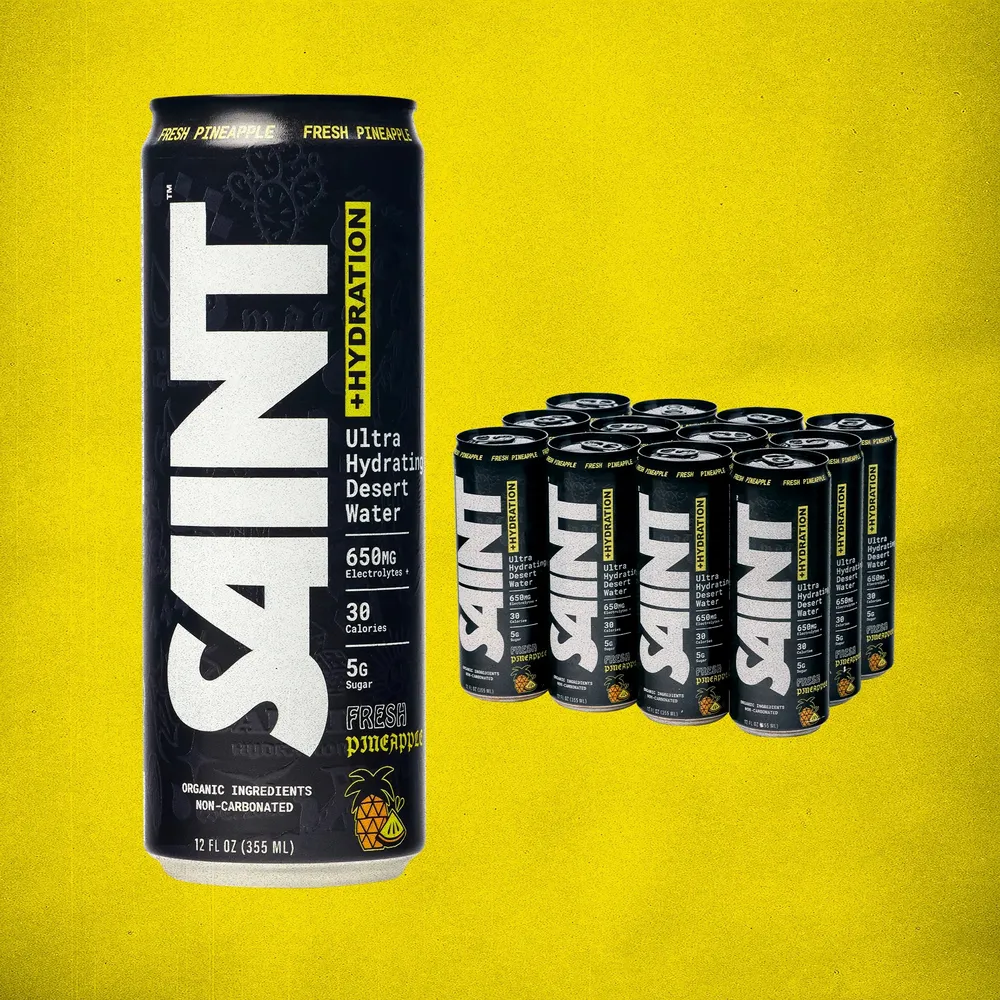
L-theanine is an amino acid from tea leaves. It's the only functional ingredient here that isn't about fluids. It's usually discussed alongside caffeine, but this can has no caffeine on the ingredient list, so the L-theanine works on its own.
In older human research, 50-200mg doses promoted the relaxed-focus state within about 40 minutes.[6] A systematic review found that 200mg reduced stress responses such as heart rate during a mental arithmetic task.[7] On its own, a single dose of about 100mg improved attention task performance in adults aged 50 to 69, though the benefit wasn't sustained over 12 weeks of daily use.[8] A four-week trial in 30 healthy adults taking 200mg nightly found improvements in stress-related symptoms, sleep quality, and verbal fluency scores.[9]
The caveat is that the strongest focus data pairs L-theanine with caffeine, and much of the attention gain in that research traces back to the caffeine dose.[10] Placebo responses also run large in stress studies.[11]
SAINT's FAQ page states that we have 50mg of L-theanine, which is in line with the bottom end of the successful research on it. Just a perfect hit to bring some relaxation without zonking out your day.
-
Vitamins and Minerals
-
Sodium (from Sodium Citrate and Sea Salt) - 200mg (9% DV)
Sodium comes from two label ingredients, sodium citrate and sea salt, for 200mg per can. It's the main electrolyte you lose in sweat, but losses vary a lot from person to person. One study of pro football players measured sodium losses from 642mg to 6.7g per hour.[12] Sodium citrate's performance research uses roughly 500mg per kilogram of body weight, far beyond anything a can delivers.[13]
-
Potassium (as Potassium Citrate) - 200mg (4% DV)
Potassium from potassium citrate matches sodium at 200mg. In an eight-man study, drinks containing potassium helped people hold on to fluid after exercise better than a glucose-only drink.[14] Another trial found that extra potassium didn't beat a standard sodium-containing sports drink for rehydration.[15] At 4% DV, it adds a little toward your daily potassium.
-
Magnesium (as Magnesium Citrate) - 50mg (10% DV)
Magnesium comes from magnesium citrate, at 50mg per can. You lose small amounts of it in sweat.[16,17] Human performance evidence for extra magnesium is limited and may depend on whether you're low to begin with.[18] At 10% DV, treat it as a top-up toward your daily intake, not a performance ingredient.
-
Vitamin C (as Ascorbic Acid) - 179mg (200% DV)
Vitamin C, as ascorbic acid, is the biggest number on the panel at 179mg. In a controlled depletion and repletion study, blood levels rose steeply between 30 and 100mg/day, and 200mg/day was already past the steep part of the curve.[19] Another analysis found 200mg/day generally brought blood levels into the target range within one to two weeks.[20] A can covers adequacy comfortably. Alongside L-theanine, this brings the "plus" in "Electrolytes +".
-
-
Sweeteners and Flavors
-
Organic Agave Syrup
Organic agave syrup is the second ingredient and the only syrup on the label. The panel lists 5g of total sugars per can, 4g of them added (8% DV). That's a small amount for a fruit-flavored drink, but it rules out a zero-sugar claim. SAINT doesn't break out how much agave goes in.
SAINT's FAQ also explains that sugars "help carry electrolytes into the body", and they're right - the transporters are glucose-dependent and work far better when you have a bit of it around. This is why official "ORS" (oral rehydration systems) include it -- because it works.
-
Stevia Extract (Rebaudioside M)
Stevia extract (Rebaudioside M), or Reb M, supplies the rest of the sweetness without adding calories. Reb M is a rarer stevia compound, estimated at roughly 200-350 times as sweet as sugar, with a cleaner taste than older stevia extracts.[21] In a 126-person taste study, Reb M came closer to sugar on sweetness and bitterness than Reb A, though its sweetness still lingered longer than sugar's.[22] European regulators found no safety concern for fermentation-made Reb M at the use levels proposed.[23]
-
Natural Flavors
Natural flavors shape each flavor. Under FDA rules, "natural" describes where a flavor comes from, not its chemistry, and the label doesn't have to name the specific source.[24] They're there for taste.
-
-
Other Ingredients
- Water is the first ingredient and the base of the drink. SAINT keeps it non-carbonated.
- Citric acid adds tartness and helps control the drink's acidity.
What the Formula Does and Doesn't Do
The electrolytes are balanced and moderate, working perfectly with the all-day, anytime consumption style the brand pushes. With 200mg each of sodium and potassium, plus a little magnesium, a can fits desk days, warm afternoons, and easy workouts. It isn't built for insanely long, sweaty sessions, nor does it pretend to be. Research on fast rehydration after hard exercise discusses much saltier drinks than this one.[25]
The vitamin C delivers what the panel promises, and the other two ingredients pull in the drink's identity and give a bit more than your average drink. We'd love to see more prickly pear concentrate research, as it looks promising. 50mg L-theanine is a great starter amount, enough to support relaxation but not enough to put you down for the day.
It's a unique, lightly sweetened electrolyte water with a cool desert identity.
The Fruit-Forward Flavors
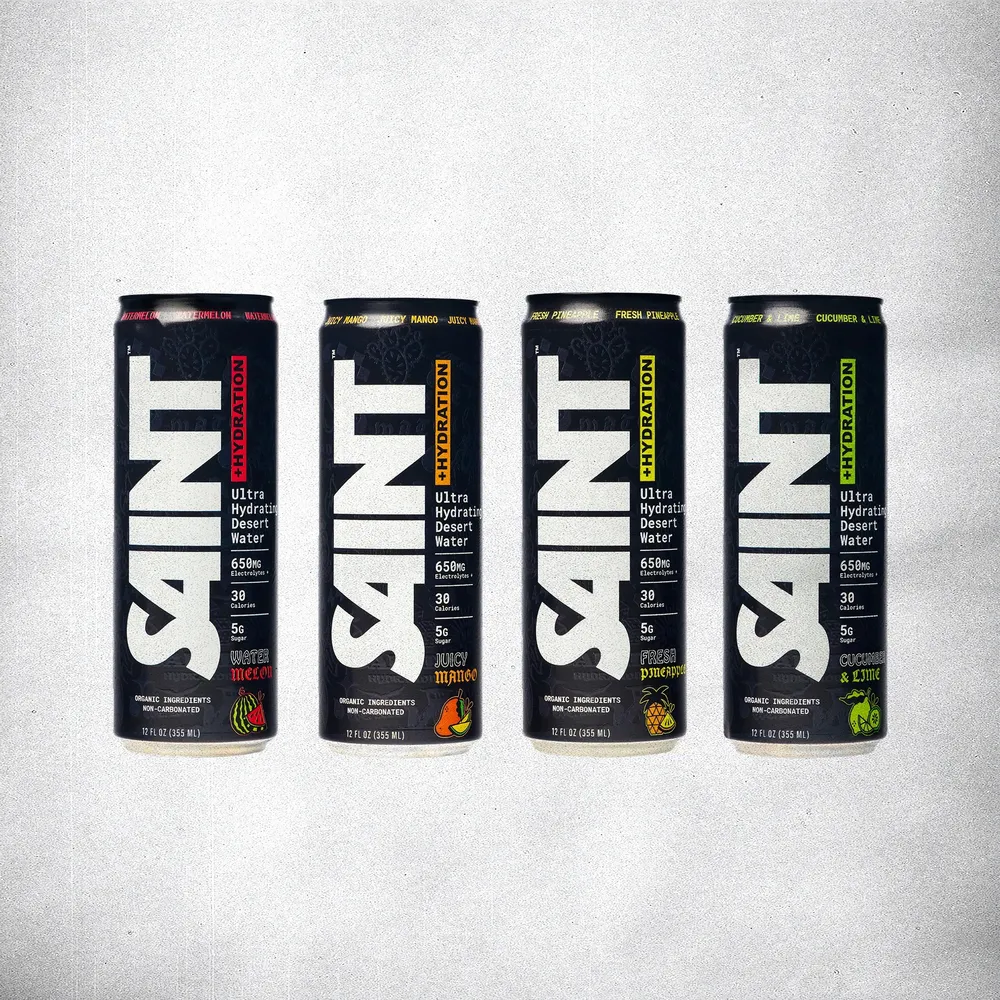
SAINT's lineup leans fruit-forward, with options such as Watermelon and Cucumber & Lime alongside a variety pack. The live list below shows what's available now.
- Cucumber & Lime (12 Cans: $30.99)
- Fresh Pineapple (12 Cans: $30.99)
- Jucy Mango (12 Cans: $30.99)
- Variety Pack (12 Cans: $30.99)
- Watermelon (12 Cans: $30.99)
SAINT is plant-based, has no artificial sweeteners, and is non-GMO -- hence the Clean Hydration label on the bottom of their site.
Still Water With a Desert Story
SAINT Ultra Hydrating Desert Water suits people who want a still, caffeine-free electrolyte drink with only a few grams of sugar and a flavor that stands out from the usual lemon-lime. The sodium, potassium, and vitamin C back up the everyday hydration pitch.
Exciting launch, and we're proud to have SAINT sponsor our social media channels this month! After all, hydration has been boring, and these guys are doing something about it.
References
- Gouws, Caroline A, et al. "Effects of the Consumption of Prickly Pear Cacti (Opuntia spp.) and its Products on Blood Glucose Levels and Insulin: A Systematic Review." Medicina (Kaunas, Lithuania), 2019. https://doi.org/10.3390/medicina55050138
- Gouws, Caroline, et al. "The effects of Prickly Pear fruit and cladode (Opuntia spp.) consumption on blood lipids: A systematic review." Complementary therapies in medicine, 2020. https://doi.org/10.1016/j.ctim.2020.102384
- Tesoriere, Luisa, et al. "Supplementation with cactus pear (Opuntia ficus-indica) fruit decreases oxidative stress in healthy humans: a comparative study with vitamin C." The American journal of clinical nutrition, 2004. https://doi.org/10.1093/ajcn/80.2.391
- Attanzio, Alessandro, et al. "Short-term cactus pear [Opuntia ficus-indica (L.) Mill] fruit supplementation ameliorates the inflammatory profile and is associated with improved antioxidant status among healthy humans." Food & nutrition research, 2018. https://doi.org/10.29219/fnr.v62.1262
- Bellafiore, Marianna, et al. "Redox and autonomic responses to acute exercise-post recovery following Opuntia ficus-indica juice intake in physically active women." Journal of the International Society of Sports Nutrition, 2021. https://doi.org/10.1186/s12970-021-00444-2
- Juneja, L. "L-theanine—a unique amino acid of green tea and its relaxation effect in humans." Trends in Food Science & Technology, 1999. https://doi.org/10.1016/s0924-2244(99)00044-8
- Williams, Jackson L, et al. "The Effects of Green Tea Amino Acid L-Theanine Consumption on the Ability to Manage Stress and Anxiety Levels: a Systematic Review." Plant foods for human nutrition (Dordrecht, Netherlands), 2020. https://doi.org/10.1007/s11130-019-00771-5
- Baba, Yoshitake, et al. "Effects of l-Theanine on Cognitive Function in Middle-Aged and Older Subjects: A Randomized Placebo-Controlled Study." Journal of medicinal food, 2021. https://doi.org/10.1089/jmf.2020.4803
- Hidese, Shinsuke, et al. "Effects of L-Theanine Administration on Stress-Related Symptoms and Cognitive Functions in Healthy Adults: A Randomized Controlled Trial." Nutrients, 2019. https://doi.org/10.3390/nu11102362
- Camfield, David A, et al. "Acute effects of tea constituents L-theanine, caffeine, and epigallocatechin gallate on cognitive function and mood: a systematic review and meta-analysis." Nutrition reviews, 2014. https://doi.org/10.1111/nure.12120
- Moulin, Marc, et al. "Safety and Efficacy of AlphaWave® L-Theanine Supplementation for 28 Days in Healthy Adults with Moderate Stress: A Randomized, Double-Blind, Placebo-Controlled Trial." Neurology and therapy, 2024. https://doi.org/10.1007/s40120-024-00624-7
- Godek, Sandra Fowkes, et al. "Sweat rates, sweat sodium concentrations, and sodium losses in 3 groups of professional football players." Journal of athletic training, 2010. https://doi.org/10.4085/1062-6050-45.4.364
- Urwin, Charles S, et al. "Factors Influencing Blood Alkalosis and Other Physiological Responses, Gastrointestinal Symptoms, and Exercise Performance Following Sodium Citrate Supplementation: A Review." International journal of sport nutrition and exercise metabolism, 2021. https://doi.org/10.1123/ijsnem.2020-0192
- Maughan, R J; Owen, J H; Shirreffs, S M; Leiper, J B. "Post-exercise rehydration in man: effects of electrolyte addition to ingested fluids." European Journal of Applied Physiology and Occupational Physiology, 1994. https://doi.org/10.1007/bf01094790
- Pérez-Idárraga, Alexandra, et al. "Postexercise rehydration: potassium-rich drinks versus water and a sports drink." Applied physiology, nutrition, and metabolism = Physiologie appliquee, nutrition et metabolisme, 2014. https://doi.org/10.1139/apnm-2013-0434
- Montain, Scott J, et al. "Sweat mineral-element responses during 7 h of exercise-heat stress." International journal of sport nutrition and exercise metabolism, 2007. https://doi.org/10.1123/ijsnem.17.6.574
- Beller, G A; Maher, J T; Hartley, L H; Bass, D E; Wacker, W E. "Changes in serum and sweat magnesium levels during work in the heat." Aviation, Space, and Environmental Medicine, 1975. https://pubmed.ncbi.nlm.nih.gov/1131135
- Zhang, Yijia, et al. "Can Magnesium Enhance Exercise Performance?." Nutrients, 2017. https://doi.org/10.3390/nu9090946
- Levine, M, et al. "Vitamin C pharmacokinetics in healthy volunteers: evidence for a recommended dietary allowance." Proceedings of the National Academy of Sciences of the United States of America, 1996. https://doi.org/10.1073/pnas.93.8.3704
- Carr, Anitra C, et al. "Marginal Ascorbate Status (Hypovitaminosis C) Results in an Attenuated Response to Vitamin C Supplementation." Nutrients, 2016. https://doi.org/10.3390/nu8060341
- Prakash, Indra, et al. "Development Of Next Generation Stevia Sweetener Rebaudioside M." Foods (Basel, Switzerland), 2014. https://doi.org/10.3390/foods3010162
- Tao, Ran, et al. "Consumer-Based Sensory Characterization of Steviol Glycosides (Rebaudioside A, D, and M)." Foods (Basel, Switzerland), 2020. https://doi.org/10.3390/foods9081026
- EFSA, Panel on Food Additives and Flavourings (FAF), et al. "Safety evaluation of the food additive steviol glycosides, predominantly Rebaudioside M, produced by fermentation using Yarrowia lipolyticaVRM." EFSA journal. European Food Safety Authority, 2023. https://doi.org/10.2903/j.efsa.2023.8387
- Goodman, Matthew J. "The “Natural” vs. “Natural Flavors” Conflict in Food Labeling: A Regulatory Viewpoint." Food and drug law journal, 2017. https://pubmed.ncbi.nlm.nih.gov/29140655/
- Burke, L M. "Nutrition for post-exercise recovery." Australian journal of science and medicine in sport, 1997. https://pubmed.ncbi.nlm.nih.gov/9127682/
Tagged