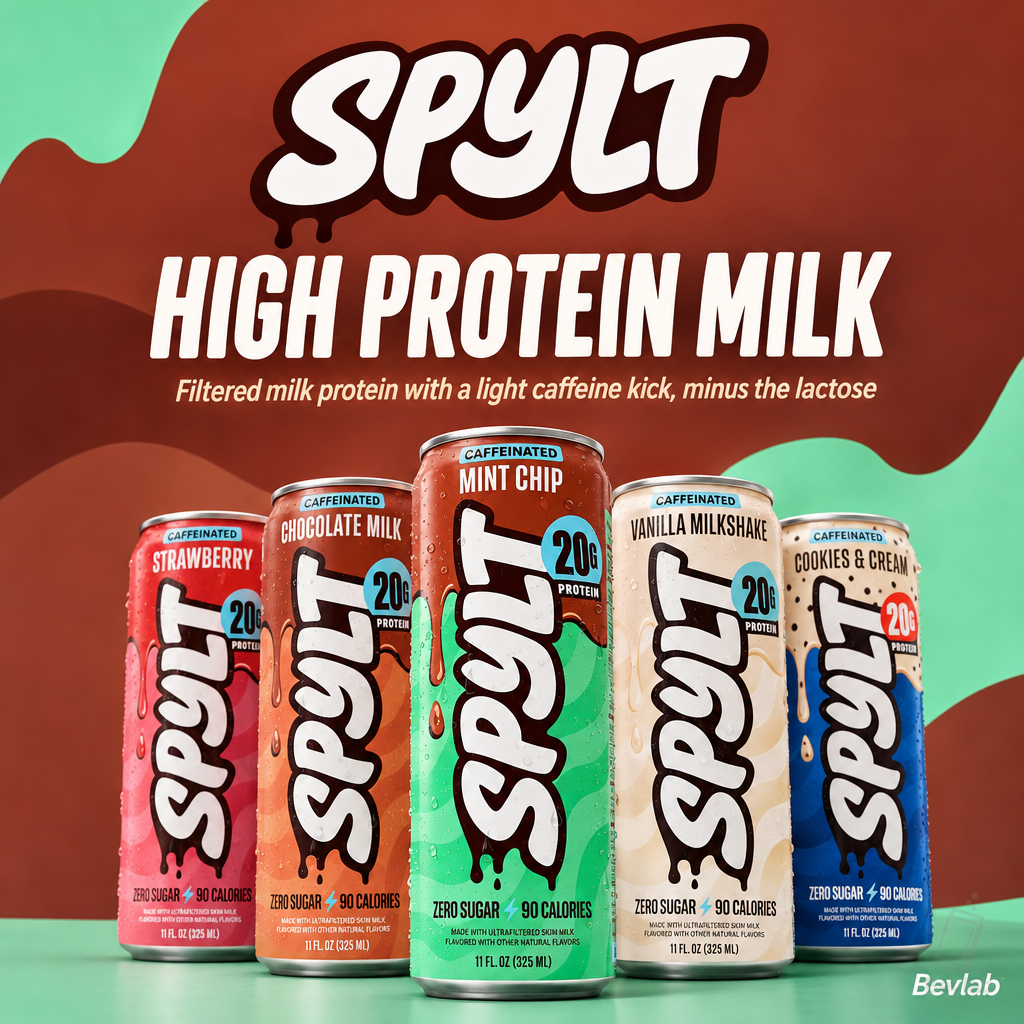
Spylt High Protein Milk: Lunchbox Milk, Grown Up and Caffeinated
Filtered milk protein with a light caffeine kick, minus the lactose
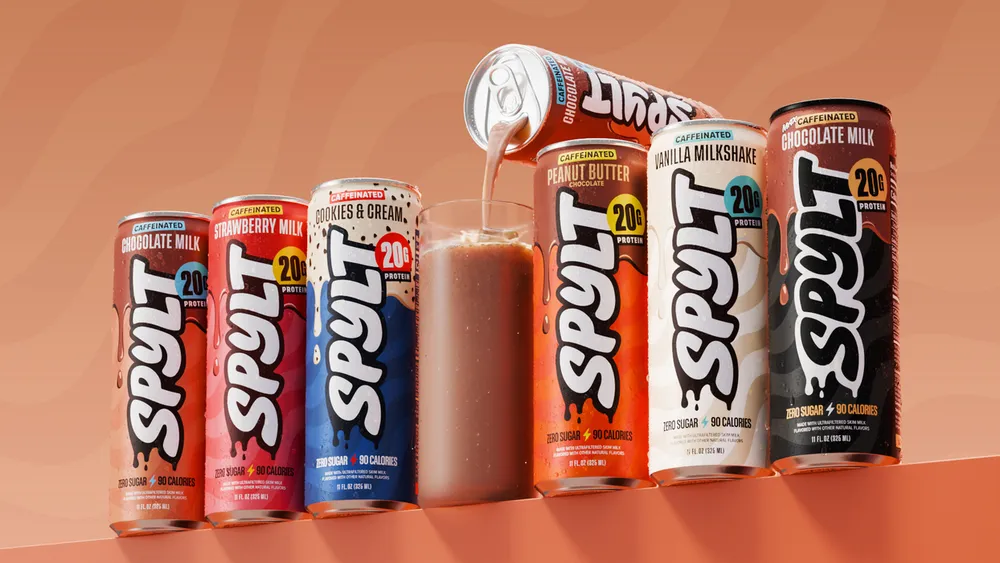
Spylt filters skim milk, adds lactase, and works in caffeine, so the Vanilla Milkshake can lands at 20g protein and 0g sugar in 90 calories.
Spylt High Protein Milk takes the most familiar drink in the fridge and rebuilds it for adults who want protein and a little lift from the same can. Spylt starts with ultrafiltered skim milk, adds lactase so it can sell the drink as lactose-free, sweetens it without sugar, and adds caffeine. You get a shelf-stable 11 fl oz can that falls somewhere between a protein shake and an iced latte without quite being either one.
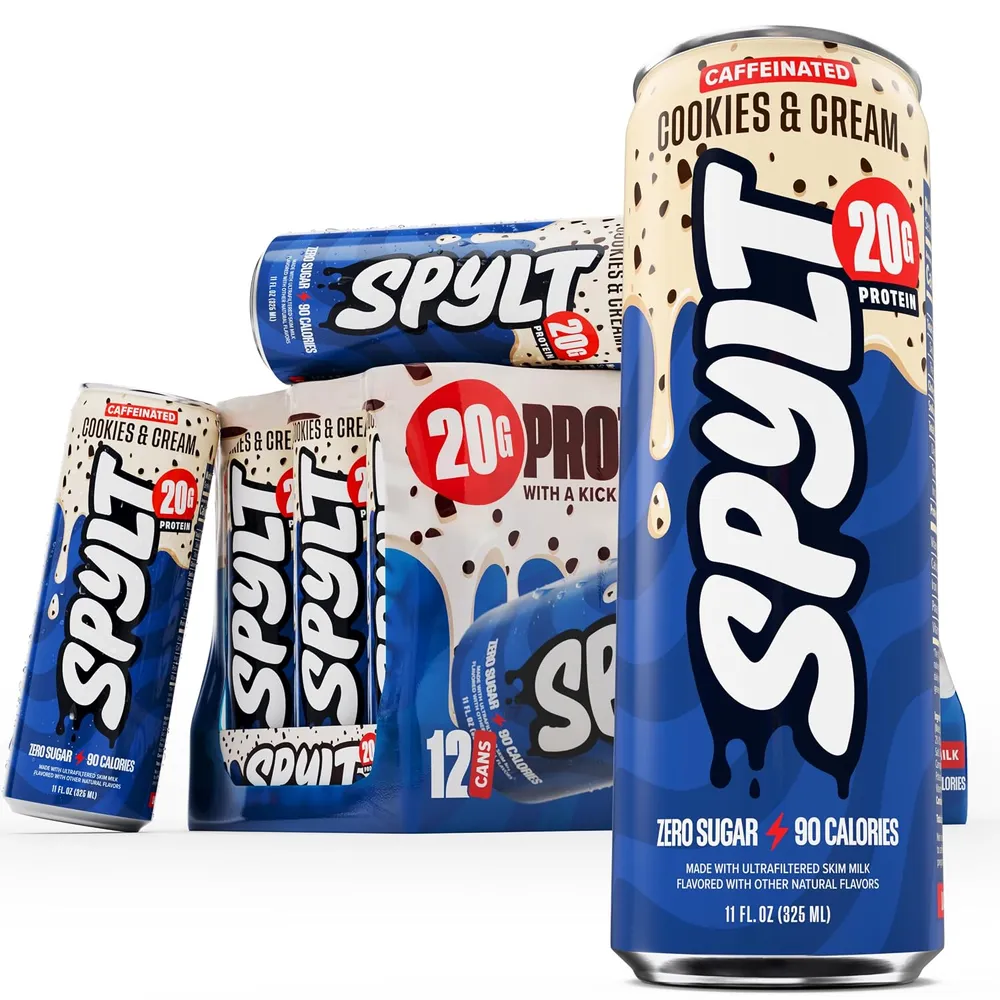
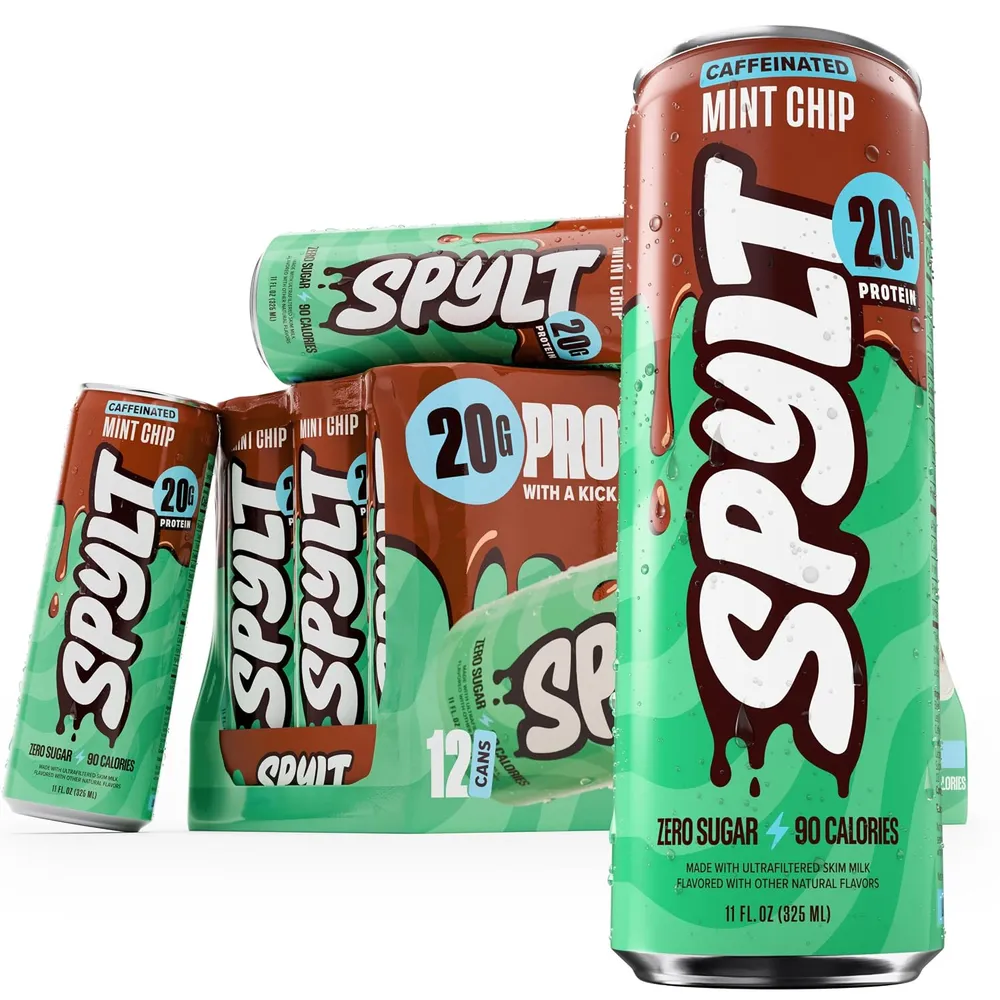
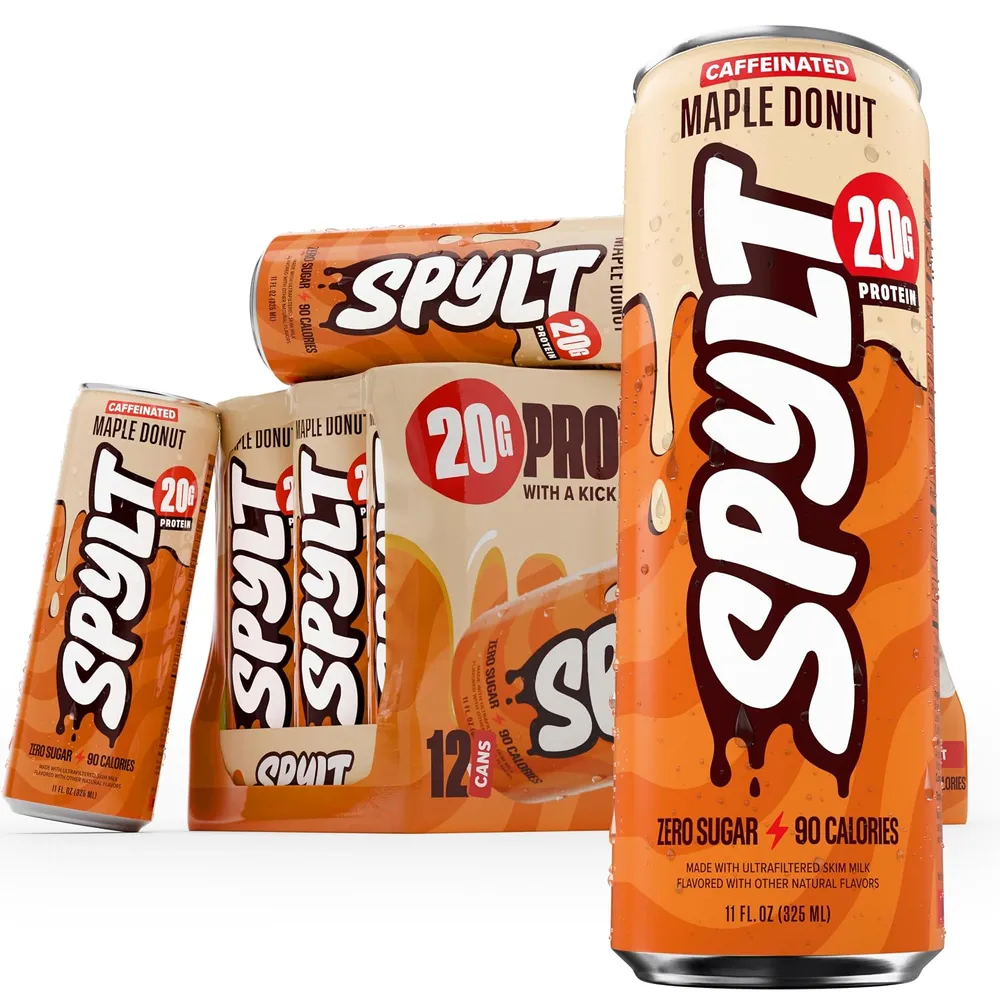
The reason it's on our radar: in November 2026, Spylt released a limited-edition Mint Chip flavor on Amazon. It's an ice-cream-inspired mix of chocolate and cool mint, sold in 12-packs. It follows earlier limited drops like Maple Donut and Banana Milk through Amazon and TikTok Shop, and the core cans are sold across grocery and convenience retail. The numbers below come from the Vanilla Milkshake can, and other flavors may differ slightly.
Spylt High Protein Milk Nutrition Facts
These numbers are for one 11 fl oz can of Vanilla Milkshake:
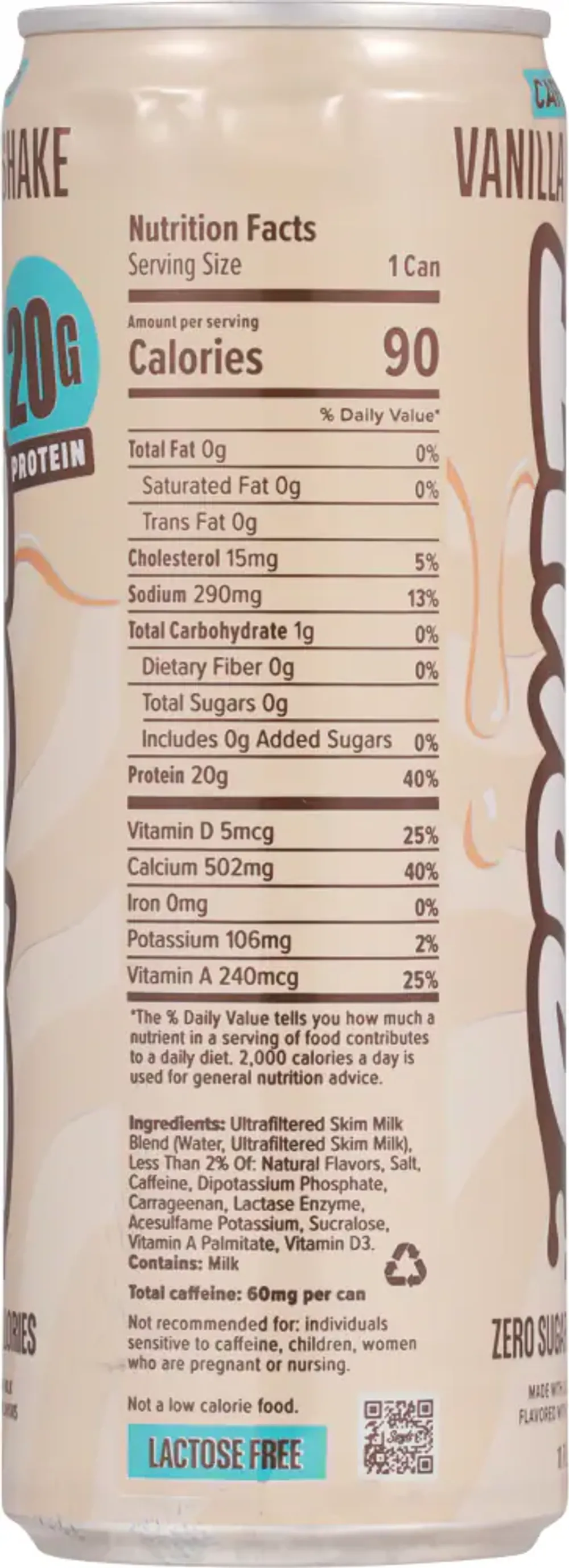
- Calories: 90
- Total Fat: 0g (0% DV)
- Cholesterol: 15mg (5% DV)
- Total Carbohydrate: 1g (0% DV)
- Dietary Fiber: 0g (0% DV)
- Total Sugars: 0g
- Added Sugars: 0g (0% DV)
- Protein: 20g (40% DV)
- Vitamins and Minerals
- Sodium: 290mg (13% DV)
- Potassium: 106mg (2% DV)
- Calcium: 502mg (40% DV)
- Vitamin A: 240mcg (25% DV)
- Vitamin D3: 5mcg (200 IU, 25% DV)
The macros are simple. Fat and carbs barely register, so nearly all of the 90 calories come from protein. The other number worth noticing is calcium. At 40% DV, it matches the protein's share of the Daily Value.
Spylt High Protein Milk Ingredients
The Vanilla Milkshake label lists: Ultrafiltered Skim Milk Blend (Water, Ultrafiltered Skim Milk), Less Than 2% Of: Natural Flavors, Salt, Caffeine, Dipotassium Phosphate, Carrageenan, Lactase Enzyme, Acesulfame Potassium, Sucralose, Vitamin A Palmitate, Vitamin D3.
Each 11 fl oz can provides the following key actives:
-
Ultrafiltered Skim Milk
Ultrafiltered skim milk does most of the work in this drink. It's the only protein ingredient on the list, so it accounts for the 20g of protein on the panel. Ultrafiltration runs milk through a membrane that holds back the proteins and lets water, lactose, and some minerals pass through. That lets a dairy processor raise protein and cut lactose without adding a powder.[1,2] How much shifts depends on the process. In one skim milk study, about 76% of the lactose but only 16% of the calcium ended up in the filtered-off liquid.[3] That helps explain how a filtered milk drink can still carry plenty of calcium, though no study measured Spylt's can.
Extra protein also changes how skim milk comes across. In trained-panel testing, raising protein made skim milk seem more like higher-fat milk, and perceived richness tracked closely with how white the milk looked.[4] That's a plausible reason a fat-free can can still pass as a "Milkshake."
Shelf-stable dairy drinks are harder to make than they look. The protein has to survive heat processing and then storage without settling or gelling.[5,6] Researchers have studied how dipotassium phosphate and heat affect proteins and minerals in milk protein beverages.[7] Spylt uses it at under 2% of the formula.
-
Lactase
Lactase is the enzyme your gut uses to split lactose into glucose and galactose. Many adults make less of it after childhood. When lactose reaches the colon undigested, gut bacteria ferment it, which causes the gas, bloating, and cramps people associate with milk.[8] One review puts global lactose intolerance at roughly 57-65% of people.[8]
Adding the enzyme directly to milk is an old, well-tested approach. In lactose-intolerant adults, milk pretreated with lactase eliminated the digestive complaints and diarrhea that regular milk caused.[9] In children with lactase deficiency, lactose-hydrolyzed milk caused fewer symptoms than ordinary milk.[10] In another trial, incubating a liquid supplement overnight with an over-the-counter lactase cut its lactose by 80%.[11]
Spylt doesn't disclose how much lactase goes in, and the amount matters. A dose-response trial found that enzyme doses had to scale with the amount of lactose they were up against.[12] With filtration plus lactase, Spylt markets the can as lactose-free, but tolerance still varies from person to person. One flag: breaking down lactose releases free galactose, so people with galactosemia, a rare inherited disorder, should treat this like any other source of galactose.
-
Caffeine - 60mg
Caffeine turns a protein milk into a morning can. It blocks the signal that makes you feel tired, which is why it reliably sharpens alertness.[13] Spylt keeps the dose light: the label lists 60mg per can, well under a third of a 200mg energy drink.
Small doses still have measurable effects. A review of caffeine's cognitive effects found that about 40-300mg can improve alertness, vigilance, attention, and reaction time.[14] In a crossover study of 27 regular caffeine users, just 50mg improved subjective alertness and accuracy when switching attention between tasks.[15] Spylt is going for a gentle lift.
A low dose per can also leaves room in your day. A large safety review found that intakes up to 400mg/day weren't linked to overt adverse effects in healthy adults, and it set lower benchmarks for pregnancy and younger people.[16] Timing still matters. In one sleep study, 400mg taken even six hours before bed disrupted sleep.[17] That's far more than this can holds, but caffeine sensitivity varies a lot between people.[18] An afternoon can won't affect everyone the same way. It's still a caffeinated drink, so it's not for kids or anyone avoiding caffeine.
-
Vitamins and Minerals
-
Calcium - 502mg (40% DV)
Calcium is the panel's quiet standout. One can covers 40% of the Daily Value. The ingredient list has no added calcium source, so it comes with the filtered milk. If Spylt replaces a glass of milk in your day, you're not giving up calcium to get the extra protein.
-
Sodium - 290mg (13% DV)
Salt appears in the under-2% group, and the panel shows 290mg sodium. That's a noticeable amount for a 90-calorie drink, so count it if you're watching sodium. Salt also helps with flavor in protein drinks. In sensory testing, sodium chloride reduced bitterness in a heavily hydrolyzed whey protein, though the effect depended on the protein.[19]
-
Potassium - 106mg (2% DV)
Potassium comes from the milk itself and from dipotassium phosphate, which is likely there as a buffering salt to help the milk proteins hold up. At 2% DV, it doesn't make this an electrolyte drink. Count Spylt as a protein and calcium source, not a potassium source.
-
Vitamin A (as Retinyl Palmitate) - 240mcg (25% DV)
Vitamin A palmitate is the one addition we'd happily see removed. Preformed vitamin A is fat-soluble and builds up in the liver. In a small autopsy study of 27 US adults, a third met a liver-based definition of excess vitamin A.[20] That sample is too small to estimate a population rate. Still, fortified foods and supplements all count toward the same upper limit, which EFSA sets at 3,000mcg RE/day for adults.[21] Unless you're actually deficient, you don't need more vitamin A from a protein milk.
-
Vitamin D3 - 5mcg (200 IU, 25% DV)
Vitamin D3 is added here as a modest top-up at 5mcg (200 IU). Vitamin D helps your gut absorb calcium, so it fits well with the 502mg here. Don't read it as a bone-health promise, though. In a large trial of midlife and older adults, 2,000 IU/day didn't reduce fractures compared with placebo.[22]
-
-
Sweeteners and Flavors
-
Sucralose
Sucralose is a chlorinated sugar derivative about 600 times sweeter than sugar.[23] EFSA's 2026 re-evaluation kept its acceptable daily intake at 15mg/kg body weight and found no safety concern at reported uses.[24] The research isn't entirely clean. A 14-day trial found lower insulin sensitivity in healthy adults consuming 15% of the ADI.[25] Another trial linked sucralose to microbiome and glucose-response changes that differed from person to person.[26]
-
Acesulfame Potassium
Acesulfame potassium (Ace-K) is roughly 150-200 times sweeter than sugar. It's often blended with sucralose because the pair tastes more like sugar than either does alone.[27] Your body barely processes it. About 99% is absorbed and excreted unchanged in urine within a day.[27] In the SWEET beverages trial, a sucralose and Ace-K drink taken before breakfast produced a lower insulin response than a sucrose drink.[28]
-
Natural Flavors
Natural flavors are defined by the source of the flavoring compounds, not their chemistry. A natural vanilla flavor doesn't have to come from vanilla beans.[29] Here they make up less than 2% of the formula and handle the flavor in Vanilla Milkshake. Mint Chip's flavor system may be different.
-
-
Other Ingredients
- Water - Listed first in the skim milk blend.
- Carrageenan - A seaweed-derived thickener and stabilizer that keeps milk and protein drinks from separating and improves mouthfeel.[30] It's an approved food additive, and EFSA found no carcinogenicity or genotoxicity concern for food-grade carrageenan.[31] A small trial in healthy men did link 500mg/day to increased gut permeability.[32] Spylt doesn't disclose its amount, and if you have IBD, it's worth asking your clinician about additives like this.
Mint Chip and the Limited-Drop Playbook
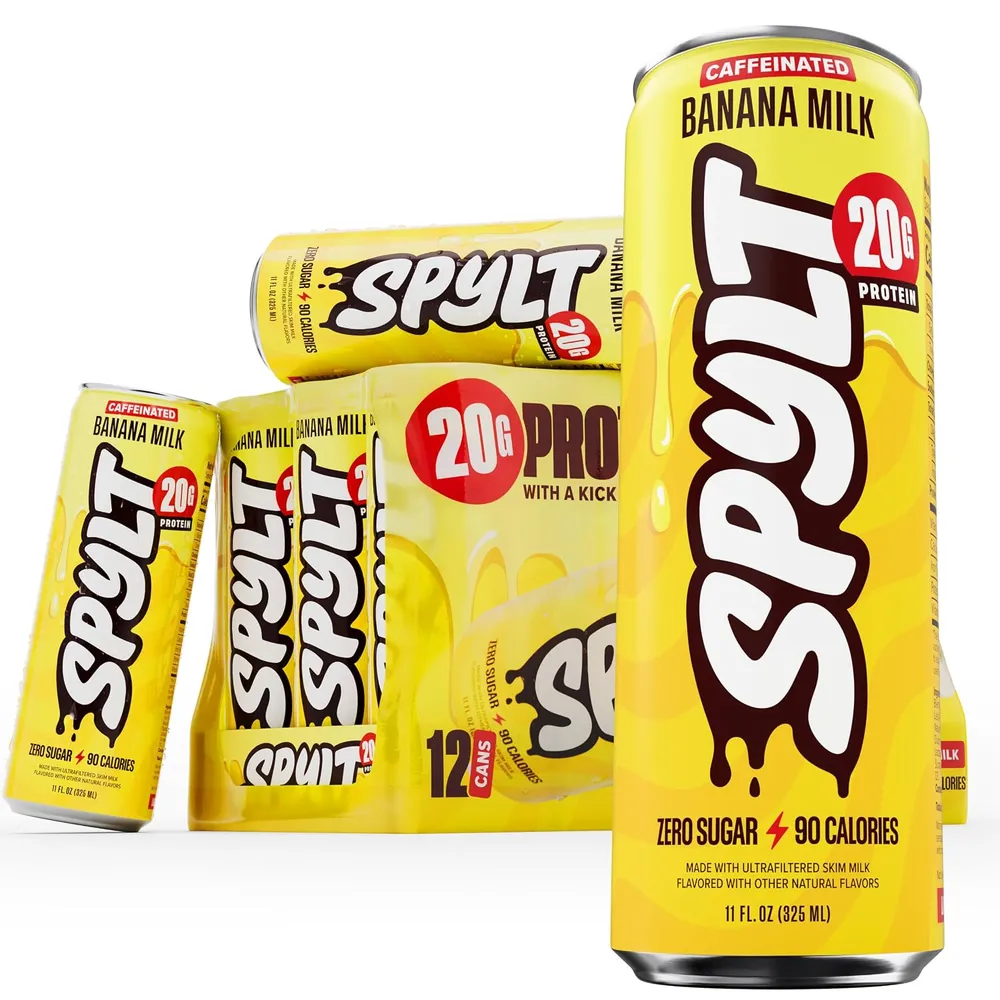
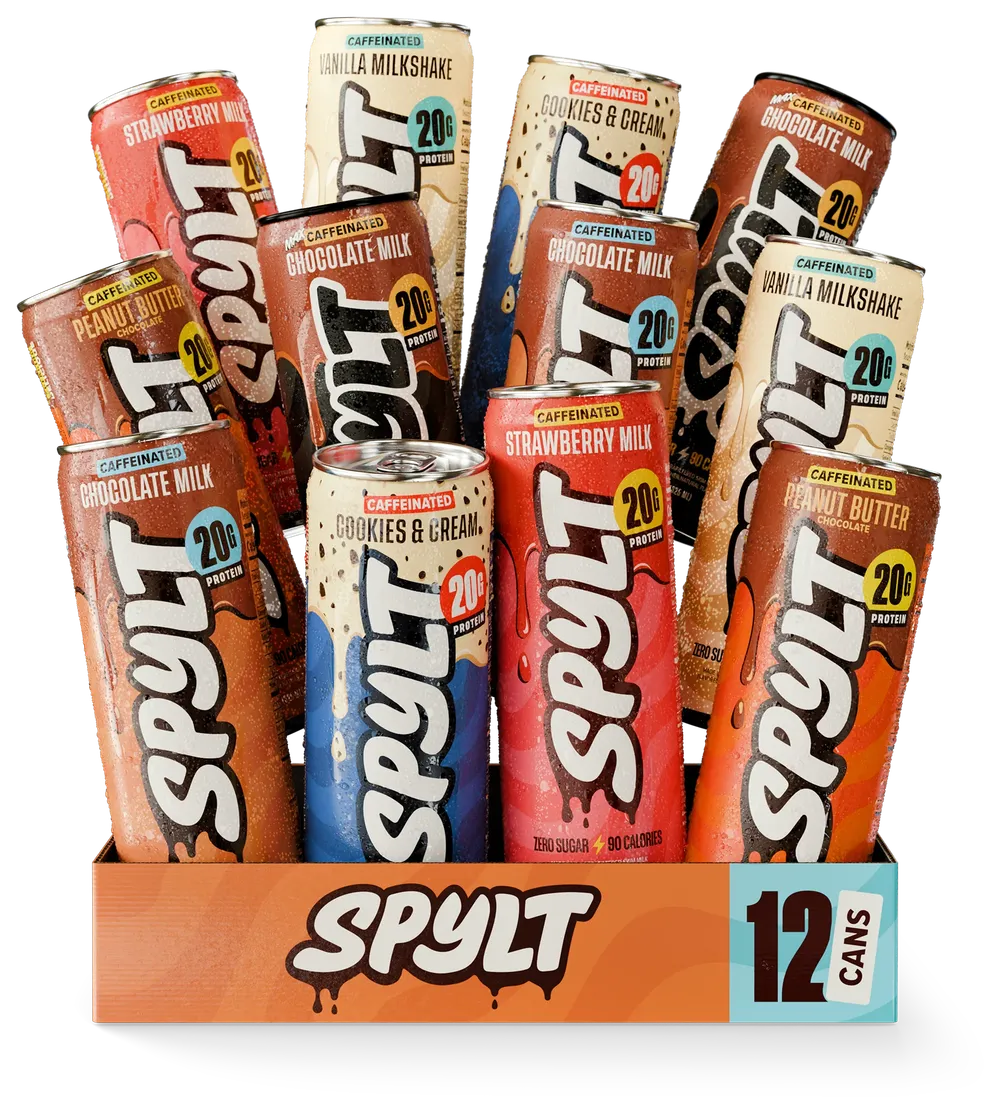
Mint Chip arrived on Amazon in November 2026 as the latest in a run of limited flavors that includes Maple Donut and Banana Milk. Check the lineup below rather than assuming any flavor is still around. Our formula notes come from Vanilla Milkshake, so check Mint Chip's own panel before assuming the numbers match.
- Banana (12 Cans: $39.99)
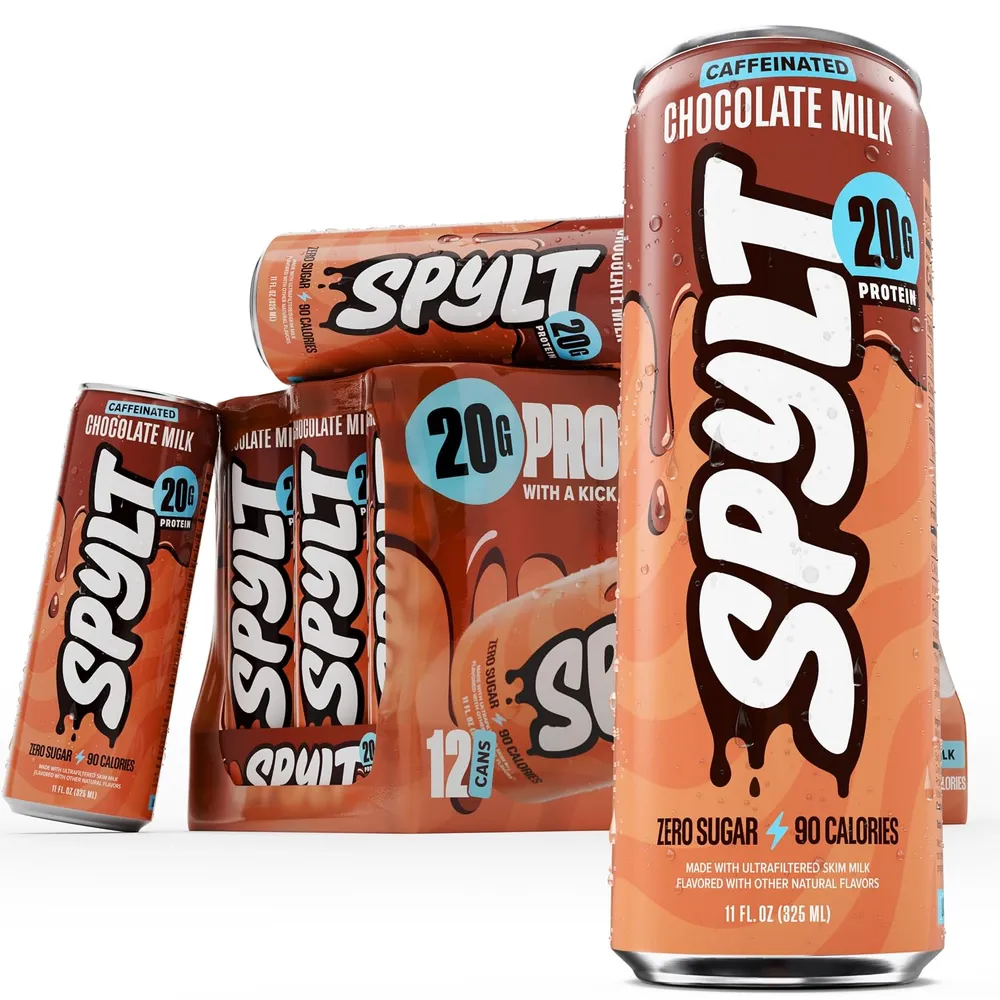
- Chocolate (12 Cans: $39.99)
- Cookies & Cream (12 Cans: $39.99)
- Maple Donut (12 Cans: $39.99)
- Mint Chip (12 Cans: $39.99)
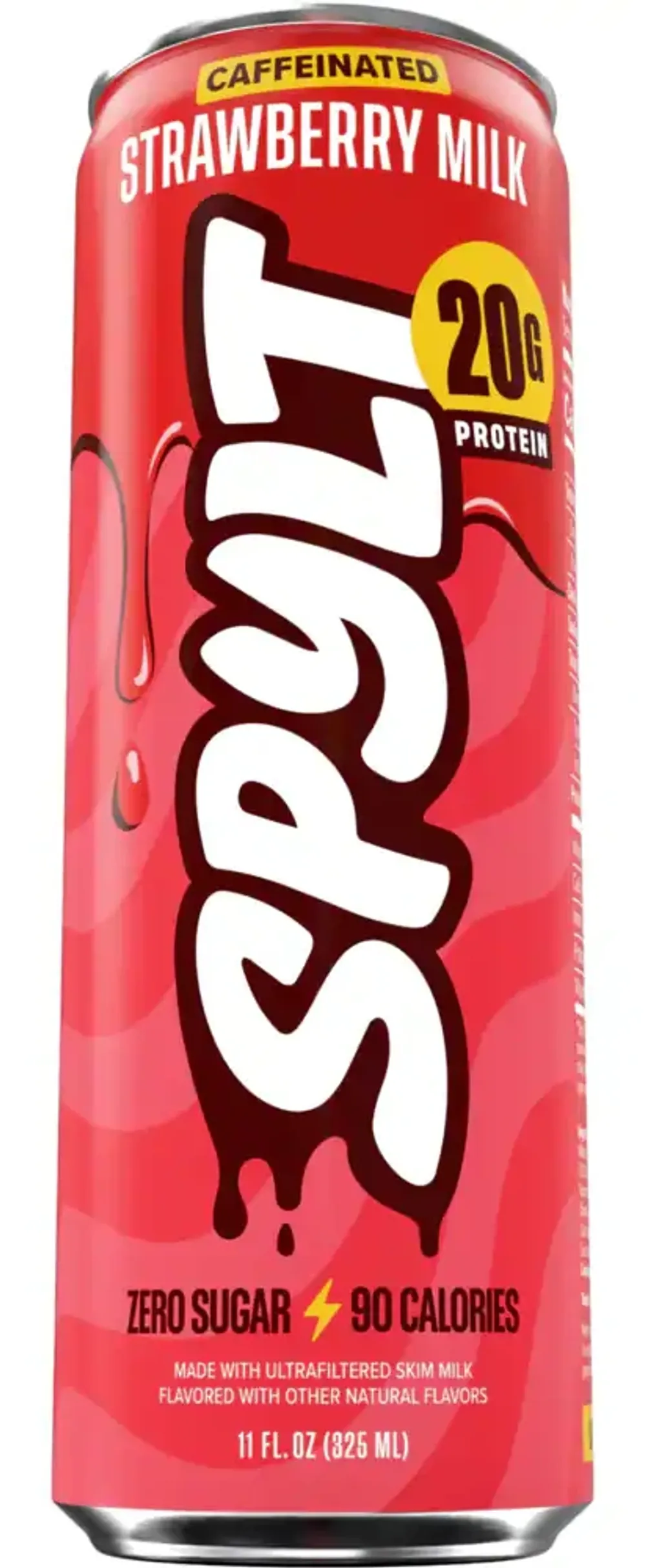
- Strawberry (12 Cans: $39.99)
- Vanilla Milkshake (12 Cans: $39.99)
- Variety Pack (12 Cans: $39.99)
The Lactose-Shy and Coffee-Light
- Milk drinkers who've backed away from lactose: Spylt markets the can as lactose-free and gets there with filtration plus added lactase, though individual tolerance still varies.
- People who want protein with a small lift: 20g of milk protein and 60mg of caffeine in one can covers a quick breakfast without an energy drink-sized dose.
Where Spylt Lands
Spylt High Protein Milk makes the most sense if you already pair a protein shake with a coffee, since the Vanilla Milkshake formula delivers 20g of filtered milk protein, zero sugar, plenty of calcium, and a light caffeine dose in one can. We'd still skip the added vitamin A.
Follow @BevlabMedia on TikTok and Instagram to catch Spylt's next limited drop.
References
- Reig, Mònica, et al. "Use of Membrane Technologies in Dairy Industry: An Overview." Foods (Basel, Switzerland), 2021. https://doi.org/10.3390/foods10112768
- Hernandez, A J, et al. "Milk beverage base with lactose removed with ultrafiltration: Effect of fat and protein concentration on sensory and physical properties." Journal of dairy science, 2024. https://doi.org/10.3168/jds.2023-23715
- Vyas, H K, et al. "Process for calcium retention during skim milk ultrafiltration." Journal of dairy science, 2003. https://doi.org/10.3168/jds.S0022-0302(03)73872-7
- Quiñones, H J, et al. "Influence of protein standardization by ultrafiltration on the viscosity, color, and sensory properties of skim and 1% milk." Journal of dairy science, 1997. https://doi.org/10.3168/jds.S0022-0302(97)76285-4
- Singh, R, et al. "Invited review: Shelf-stable dairy protein beverages-Scientific and technological aspects." Journal of dairy science, 2022. https://doi.org/10.3168/jds.2022-22208
- de Souza, Alisson Borges, et al. "Stability of milk proteins subjected to UHT treatments: challenges and future perspectives." Critical reviews in food science and nutrition, 2024. https://doi.org/10.1080/10408398.2023.2250865
- Pranata, Joice, et al. "Effect of dipotassium phosphate addition and heat on proteins and minerals in milk protein beverages." Journal of dairy science, 2024. https://doi.org/10.3168/jds.2023-23768
- Catanzaro, Roberto, et al. "Lactose intolerance: An update on its pathogenesis, diagnosis, and treatment." Nutrition research (New York, N.Y.), 2021. https://doi.org/10.1016/j.nutres.2021.02.003
- Nagy, L, et al. "Efficacy testing of beta-galactosidase with H2 breath test in patients with carbohydrate malabsorption." Acta medica Hungarica, 1987. https://pubmed.ncbi.nlm.nih.gov/3118327/
- Nielsen, O H, et al. "Calcium absorption and acceptance of low-lactose milk among children with primary lactase deficiency." Journal of pediatric gastroenterology and nutrition, 1984. https://doi.org/10.1097/00005176-198403000-00009
- Suarez, F L, et al. "Nutritional supplements used in weight-reduction programs increase intestinal gas in persons who malabsorb lactose." Journal of the American Dietetic Association, 2001. https://doi.org/10.1016/S0002-8223(01)00349-2
- Lin, M Y, et al. "Comparative effects of exogenous lactase (beta-galactosidase) preparations on in vivo lactose digestion." Digestive diseases and sciences, 1993. https://doi.org/10.1007/BF01297079
- Fredholm, Bertil B. et al. "Actions of Caffeine in the Brain with Special Reference to Factors That Contribute to Its Widespread Use." Pharmacological Reviews, 1999. https://doi.org/10.1016/S0031-6997(24)01396-6
- McLellan, Tom M. et al. "A Review Of Caffeine S Effects On Cognitive Physical And Occupational Performance." Neuroscience & Biobehavioral Reviews, 2016. https://doi.org/10.1016/j.neubiorev.2016.09.001
- Owen, Gail N, et al. "The combined effects of L-theanine and caffeine on cognitive performance and mood." Nutritional neuroscience, 2008. https://doi.org/10.1179/147683008X301513
- Wikoff, Daniele, et al. "Systematic review of the potential adverse effects of caffeine consumption in healthy adults, pregnant women, adolescents, and children." Food and chemical toxicology : an international journal published for the British Industrial Biological Research Association, 2017. https://doi.org/10.1016/j.fct.2017.04.002
- Drake, Christopher, et al. "Caffeine effects on sleep taken 0, 3, or 6 hours before going to bed." Journal of clinical sleep medicine : JCSM : official publication of the American Academy of Sleep Medicine, 2013. https://doi.org/10.5664/jcsm.3170
- Nehlig, Astrid. "Interindividual Differences in Caffeine Metabolism and Factors Driving Caffeine Consumption." Pharmacological reviews, 2018. https://doi.org/10.1124/pr.117.014407
- Leksrisompong, Pattarin, et al. "Bitter taste inhibiting agents for whey protein hydrolysate and whey protein hydrolysate beverages." Journal of food science, 2012. https://doi.org/10.1111/j.1750-3841.2012.02800.x
- Olsen, Kiersten, et al. "Serum retinyl esters are positively correlated with analyzed total liver vitamin A reserves collected from US adults at time of death." The American journal of clinical nutrition, 2018. https://doi.org/10.1093/ajcn/nqy190
- EFSA Panel on Nutrition, Novel Foods and Food Allergens (NDA), et al. "Scientific opinion on the tolerable upper intake level for preformed vitamin A and β-carotene." EFSA journal. European Food Safety Authority, 2024. https://doi.org/10.2903/j.efsa.2024.8814
- LeBoff, Meryl S, et al. "Supplemental Vitamin D and Incident Fractures in Midlife and Older Adults." The New England journal of medicine, 2022. https://doi.org/10.1056/nejmoa2202106
- Bourguignon, Léa, et al. "Sucralose as a Way to Enhance Regulatory T Cells, the SWEET Trial: Clinical Research Protocol." Canadian journal of kidney health and disease, 2026. https://doi.org/10.1177/20543581261418540
- EFSA, Panel on Food Additives and Flavourings (FAF), et al. "Re-evaluation of sucralose (E 955) as a food additive and evaluation of a new application on extension of use of sucralose (E 955) in fine bakery wares." EFSA journal. European Food Safety Authority, 2026. https://doi.org/10.2903/j.efsa.2026.9854
- Romo-Romo, Alonso, et al. "Sucralose decreases insulin sensitivity in healthy subjects: a randomized controlled trial." The American journal of clinical nutrition, 2018. https://doi.org/10.1093/ajcn/nqy152
- Suez, Jotham, et al. "Personalized microbiome-driven effects of non-nutritive sweeteners on human glucose tolerance." Cell, 2022. https://doi.org/10.1016/j.cell.2022.07.016
- Chowdhury, Chandrama Roy, et al. "Beyond sweetness: A review of the health and safety of acesulfame-K." Food chemistry, 2026. https://doi.org/10.1016/j.foodchem.2025.147290
- Almiron-Roig, Eva, et al. "Impact of acute consumption of beverages containing plant-based or alternative sweetener blends on postprandial appetite, food intake, metabolism, and gastro-intestinal symptoms: Results of the SWEET beverages trial." Appetite, 2023. https://doi.org/10.1016/j.appet.2023.106515
- Goodman, Matthew J. "The “Natural” vs. “Natural Flavors” Conflict in Food Labeling: A Regulatory Viewpoint." Food and drug law journal, 2017. https://pubmed.ncbi.nlm.nih.gov/29140655/
- Liu, Fang, et al. "Food-grade carrageenans and their implications in health and disease." Comprehensive reviews in food science and food safety, 2021. https://doi.org/10.1111/1541-4337.12790
- EFSA, Panel on Food Additives and Nutrient Sources added to Food (ANS), et al. "Re-evaluation of carrageenan (E 407) and processed Eucheuma seaweed (E 407a) as food additives." EFSA journal. European Food Safety Authority, 2018. https://doi.org/10.2903/j.efsa.2018.5238
- Wagner, Robert, et al. "Carrageenan and insulin resistance in humans: a randomised double-blind cross-over trial." BMC medicine, 2024. https://doi.org/10.1186/s12916-024-03771-8