One Caffeine Dose, 3.5 Hours of Repeated-Sprint Benefits
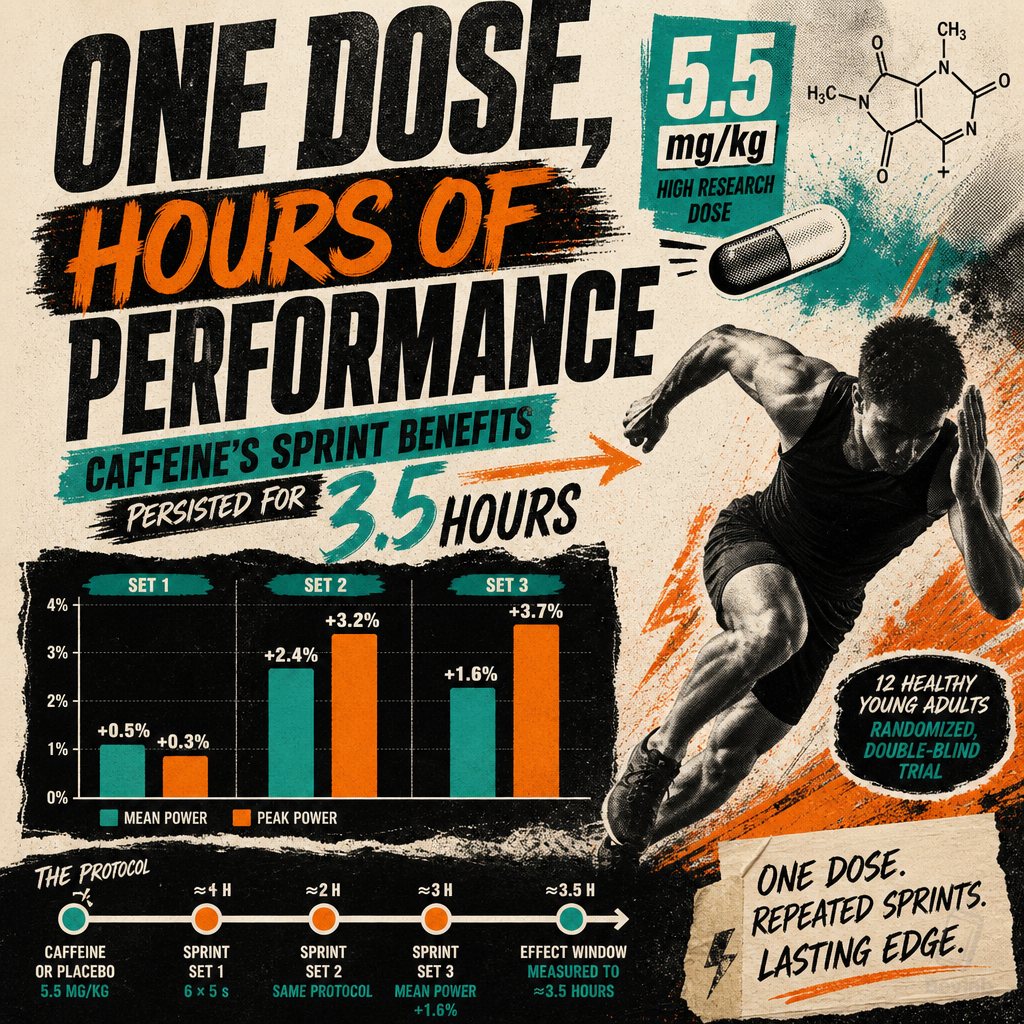
Researchers had 12 healthy young adults (8 men, 4 females) complete two trials: one with caffeine (5.5mg/kg) and one with placebo, in randomized order.
One Dose, Three and a Half Hours: What This Caffeine Study Actually Found
Most caffeine and sprint research answers a simple question: does it work? For a while, we've known that it does. But a new randomized, double-blind trial asks something even more useful: does a single pre-workout dose still deliver a sprint benefit hours later, deep into a long session or a multi-event day?[1] The answer, with some real caveats, is now also a resounding yes.
The Setup
Thirteen healthy young adults enrolled in the trial. One female participant withdrew during the caffeine condition due to symptoms possibly related to caffeine, leaving 12 analyzed participants (4 females, 8 males), average age 24 (plus or minus 3 years), average mass 64.4kg (plus or minus 8.8kg).[1]
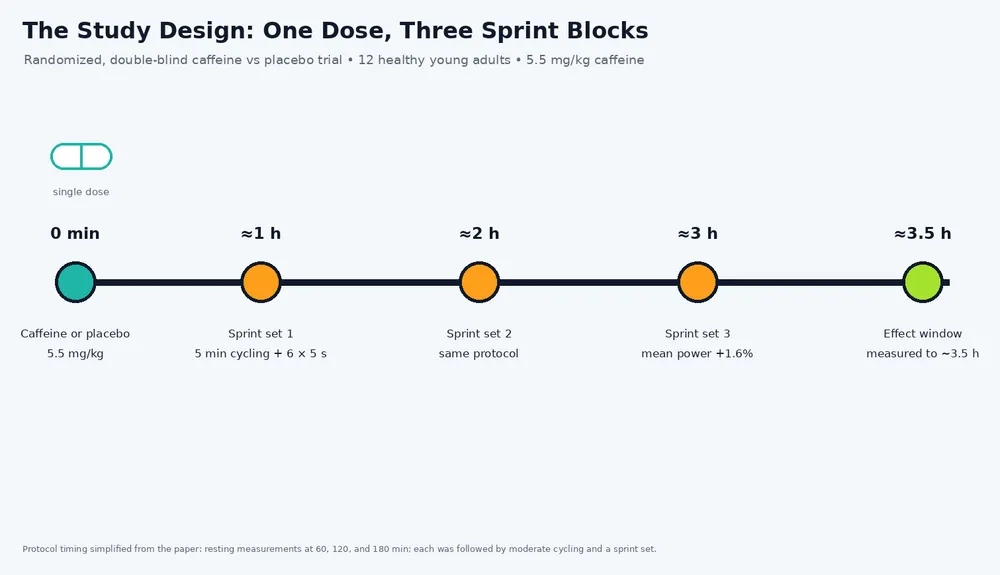
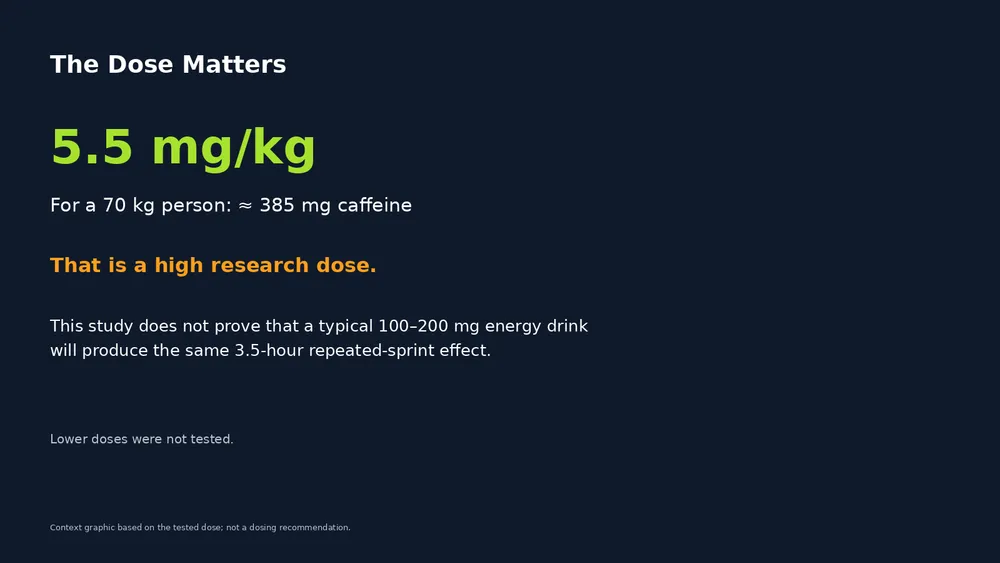
Each person completed two trials in randomized order: 5.5mg/kg of caffeine or a glucose placebo, consumed about 60 minutes before exercise. For a standard 70kg person, that works out to roughly 385mg, a high research dose well above what you'd get from a typical energy drink (though we've seen higher!). Nothing here should be read as a recommendation to match that number.
The protocol ran three sprint sets spaced across 60, 120, and 180 minutes post-ingestion. Each set paired 5 minutes of moderate cycling with six 5-second all-out sprints. Researchers tracked plasma caffeine and noradrenaline levels, perceived exertion, leg muscle pain, heart rate, respiratory measures including end-tidal CO2, and blood flow through the middle cerebral and carotid arteries using Doppler and ultrasound.[1]
What the Data Showed
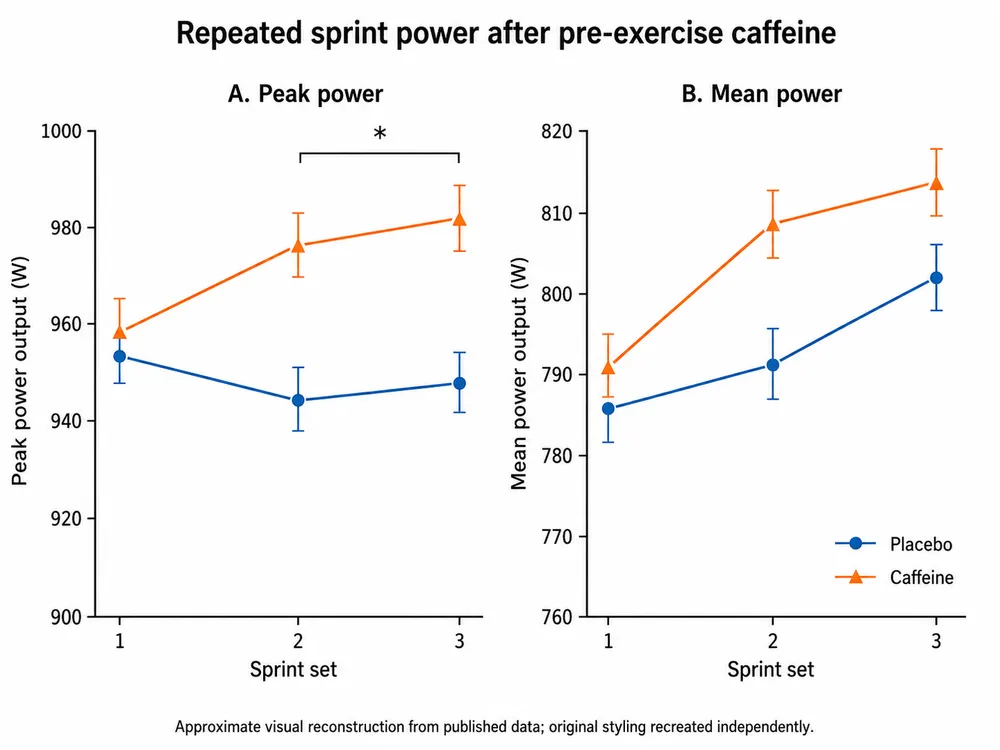
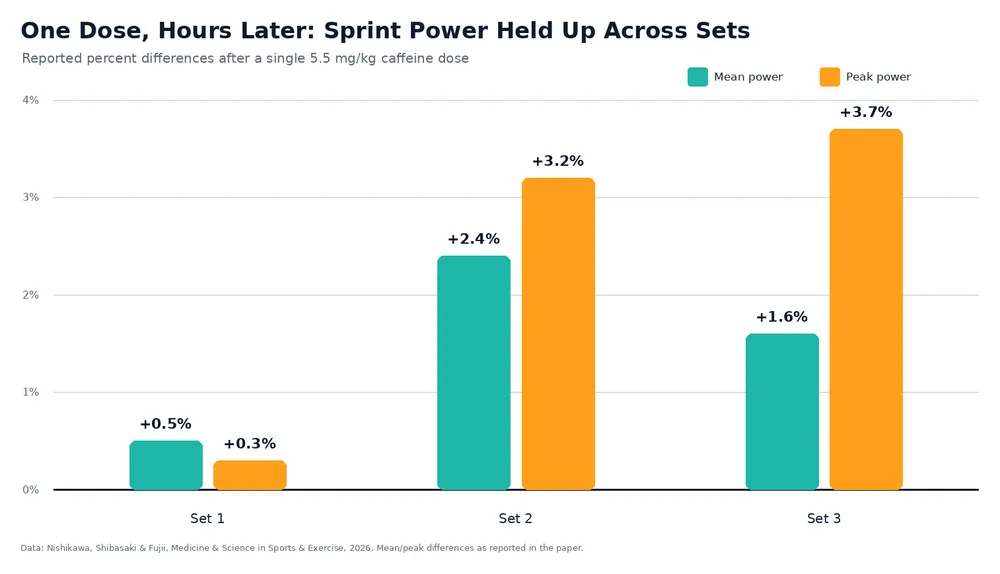
Mean sprint power was higher with caffeine across all three sets: +0.5%, +2.4%, and +1.6% for sets one through three compared to placebo.[1] Peak power gains followed a similar shape (+0.3%, +3.2%, +3.7%), with the set-two and set-three differences reaching statistical significance. Total work across the session was also greater with caffeine.
One thing the study didn't find: a difference in percent power decrement between conditions. That means caffeine didn't clearly blunt fatigue here. The researchers note that performance held up fairly well in both conditions, so the protocol may not have been demanding enough to fully separate an anti-fatigue effect from a straightforward power boost.
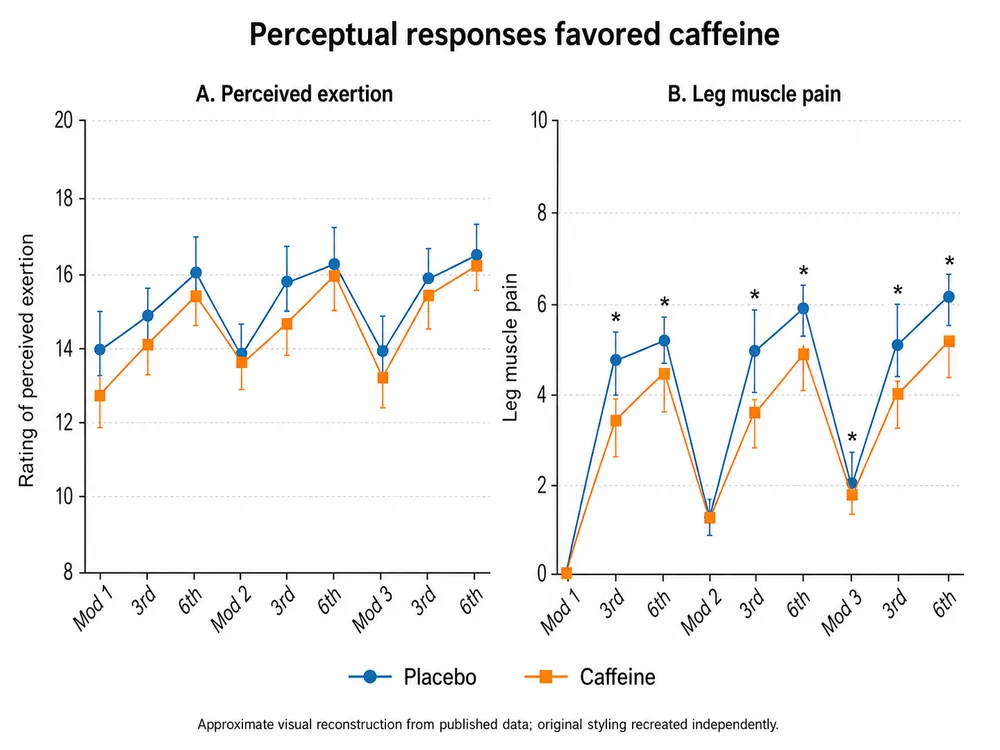
Plasma caffeine hit 14,689 ng/mL just 30 minutes after ingestion and peaked at 16,464 ng/mL around the 120-minute mark, staying elevated through the full 3.5-hour window. Noradrenaline responses during sprinting were higher with caffeine, RPE and leg muscle pain were both lower, and heart rate ran higher throughout.
What Might Explain It
The elevated noradrenaline is the most likely driver of the sustained power output. Noradrenaline is the hormone behind your body's fight-or-flight response, and higher levels during sprinting line up with both the power gains and the lower perceived pain and effort.
The stranger finding: end-tidal CO2 and blood velocity through the middle cerebral artery both dropped with caffeine, and carotid blood flow was reduced too, even as performance improved. That's consistent with caffeine's known effect on narrowing blood vessels in the brain. What that reduced flow actually means functionally in this setting isn't clear from this study, and the researchers don't treat it as either a benefit or a concern.
Safety and Who This Applies To
Two participants had adverse symptoms, and one woman withdrew mid-trial. Understand that this is like a 130lb woman taking 325mg caffeine -- not a ton, but definitely not a lightweight dose either! Obviously individual response to a dose this size varies quite a bit.
Worth flagging: these weren't heavy caffeine users either. Habitual caffeine intake in this group was low, averaging 71.4mg per day with a range of 0 to 141mg, and only 4 of the 12 participants qualified as habitual consumers. This is a crew of folks who basically drink a cup of coffee a day. A group of regular high-dose caffeine users could respond differently, so don't extend these findings to daily heavy users without more data.
Sleep wasn't measured in this study. The researchers speculate, as a hypothesis only, that dosing earlier in the day might preserve the extended performance benefit while reducing the risk of caffeine disrupting sleep later on, compared with redosing closer to bedtime. That's a reasonable direction for future research, not a conclusion this study actually tested.
The Practical Takeaway
The novel part here isn't that caffeine helps sprint performance. That's been well established for a while.
Instead, it's that a single dose kept producing measurable gains three and a half hours after ingestion, across three separate sprint sets, without a second dose. For anyone structuring caffeine around a tournament, a long practice, or a multi-match day, that's a useful data point on timing, not a new dosing rule. With 12 people in the analysis and a high research-grade dose, this needs replication before it becomes a general guideline.
Don't forget to follow @Bevlabmedia on Instagram and TikTok to stay in the loop.
References
- Nishikawa, M., Shibasaki, M., Fujii, N. "Pre-Exercise Caffeine Enhances Repeated Sprint Performance and Alters Physiological and Perceptual Responses with Effects Lasting up to 3.5 h." Medicine & Science in Sports & Exercise, accepted ahead of print, 2026. DOI: 10.1249/MSS.0000000000004129. PMID: 42679046.
Tagged