Agape Energy Drink: The Can That Starts the Conversation
A touch of clover honey, green tea caffeine, and a mission printed on every can
Agape Energy ties each flavor to a Bible passage, with a QR code that unpacks the verse, and builds the drink on 200mg of caffeine from green tea extract.
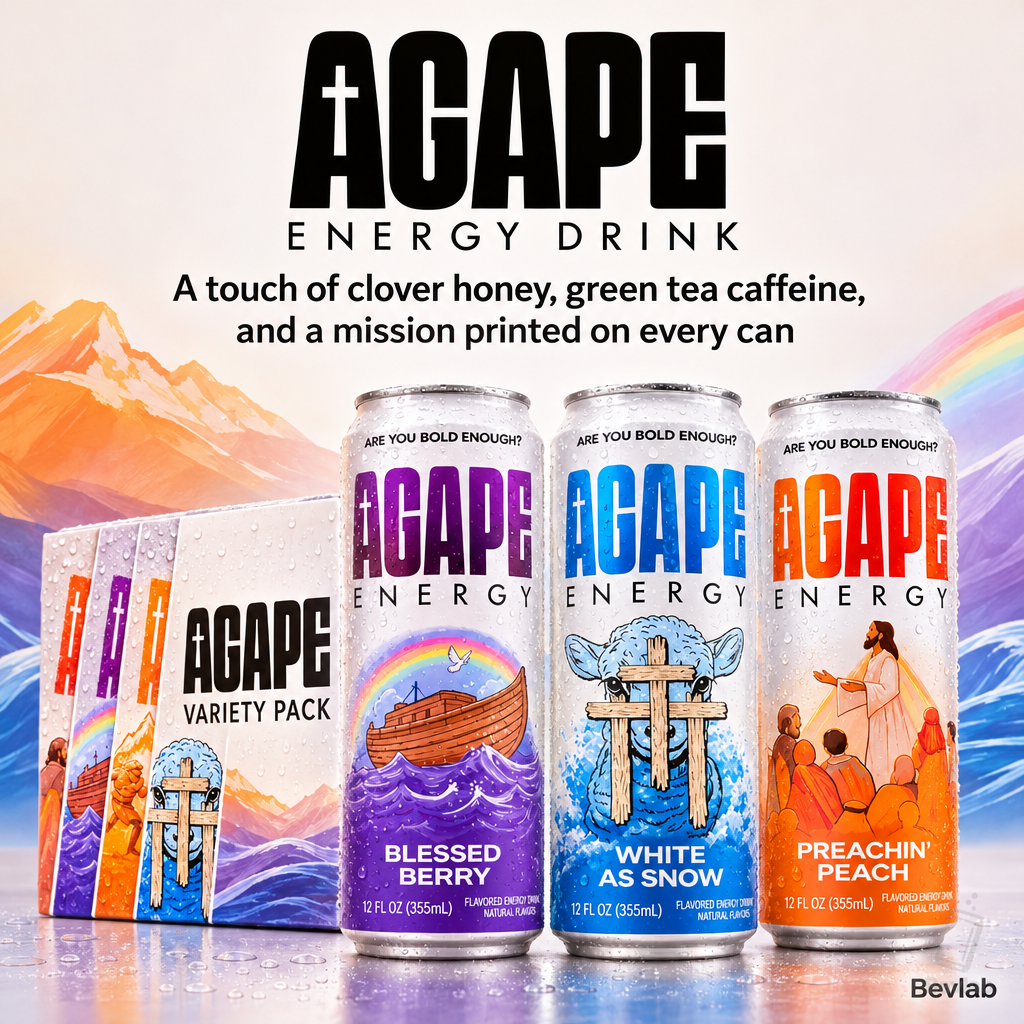
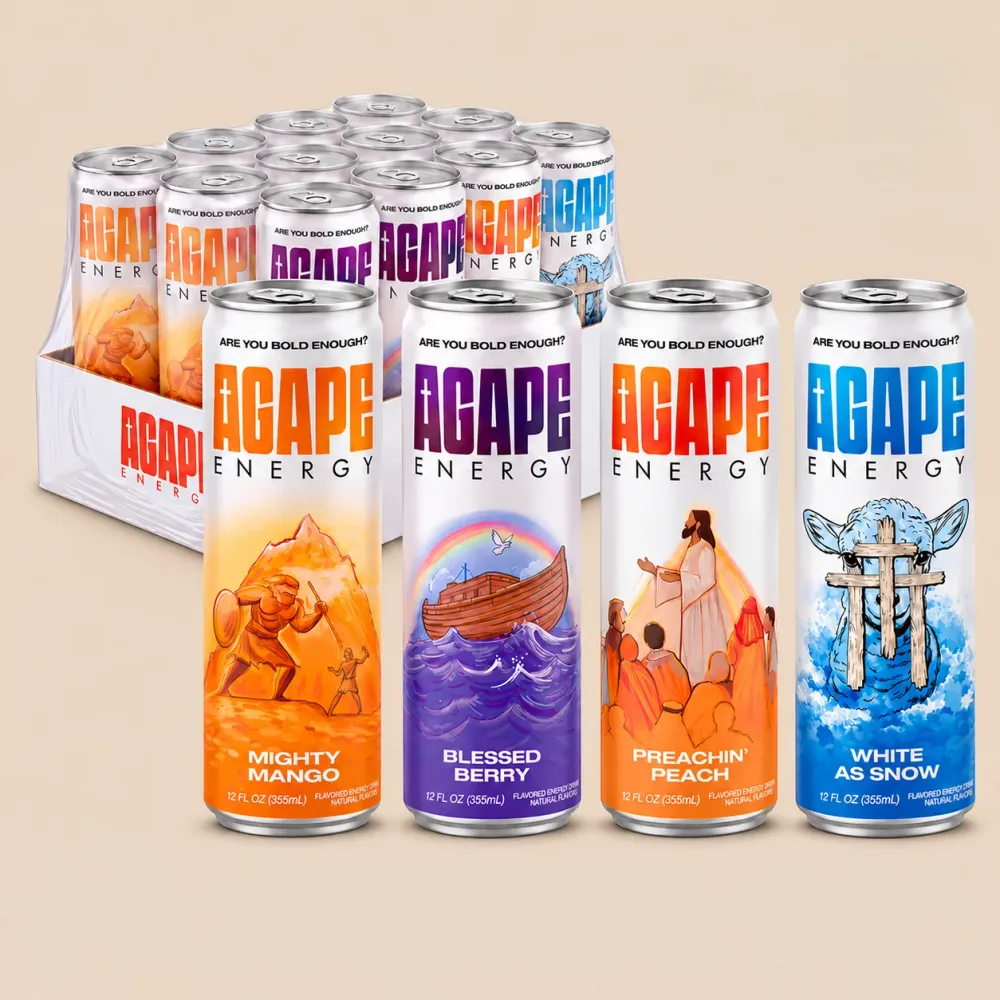
Agape Energy built its entire brand around one line: "Making Jesus Impossible to Ignore." Its flagship, Agape Energy Drink, carries that mission. Every flavor is tied to a specific Bible passage, and a QR code on the can leads to a deeper breakdown of that verse. The idea is that handing someone a can opens a conversation about faith. That pitch spread fast online.
The formula is simpler than the mission. It's 200mg of caffeine from green tea extract, a little Grade A clover honey at the front of the sweetener system, and a half-day's worth of vitamins B6 and B12. Bevlab's Cody Fernley cracked open White As Snow, the flavor built around Isaiah 1:18, and came away impressed. His take comes after the label walkthrough.
Agape Energy Drink Nutrition Facts
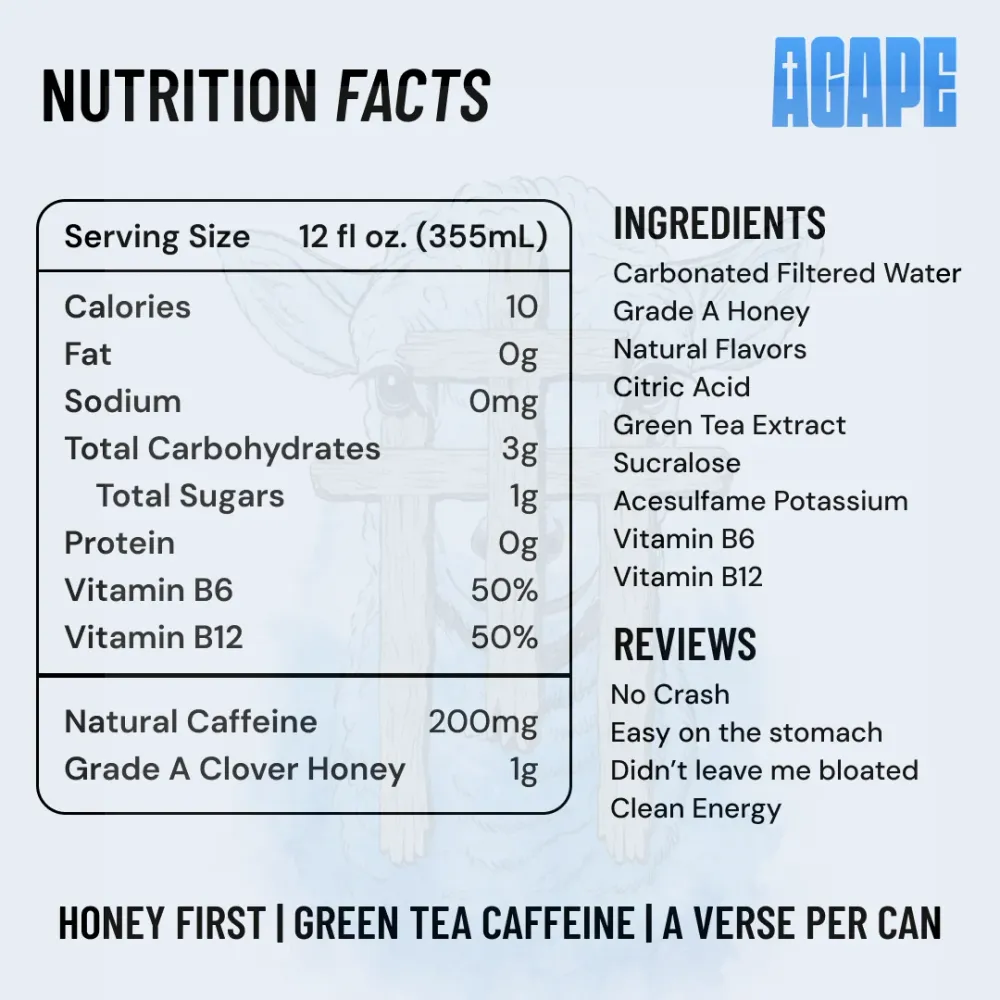
- Calories: 10
- Total Fat: 0g
- Total Carbohydrate: 3g
- Total Sugars: 1g
- Protein: 0g
- Vitamins and Minerals
- Sodium: 0mg
- Vitamin B6: 50% DV
- Vitamin B12: 50% DV
Honey is the hook here, but it doesn't turn this into a sugar drink. Total sugars stay at 1g per 12 fl oz (355mL) can, and sucralose and acesulfame potassium supply the rest of the sweetness. That's how the can stays this light.
Agape Energy Drink Ingredients
Each 12 fl oz (355mL) can provides the following key actives:
-
Natural Caffeine (as Green Tea Extract) - 200mg
Caffeine does the heavy lifting, and all 200mg comes from green tea extract. The ingredient list has no separate caffeine line. Caffeine blocks the signal that makes you feel tired, which is why it reliably sharpens alertness. A broad review of the research found that roughly 40-300mg can improve alertness, vigilance, attention, and reaction time in both rested and sleep-restricted people, though effects on memory and complex reasoning were less consistent.[1] A separate review of placebo-controlled studies concluded that caffeine improves both simple and complex attention tasks, and that the benefit isn't explained by regular drinkers simply reversing withdrawal.[2]
For dosing, one can is half of the 400mg/day that a large safety review found was generally not linked to overt adverse effects in healthy adults. That review supported a lower 300mg/day during pregnancy and a cautious 2.5mg/kg/day for kids and teens.[3] Timing matters too. In a small crossover study, 400mg taken even six hours before bed measurably disrupted sleep.[4] That's double this can, but a late-afternoon Agape still deserves some thought. How strongly you feel 200mg also varies with genetics, medications, smoking, and hormones.[5]
-
Green Tea Extract
Green tea extract is where the caffeine comes from. The label ties the full 200mg of caffeine to it but doesn't disclose anything else the extract delivers, such as catechins like EGCG. So treat it here as a caffeine source, not a green tea supplement.
That distinction matters because most green tea extract research is about catechins, and the type of green tea product changes the results. In a crossover study of 50 healthy men, brewed green tea improved blood vessel function, but an extract and isolated EGCG matched for EGCG content did not.[6] Weight-loss meta-analyses of catechin-containing green tea products report small average effects, roughly 0.7kg to 1.3kg, pooled across very different products.[7,8] None of that maps cleanly onto a can with undisclosed catechin content.
The safety research has the same caveat. EFSA linked supplemental intakes of 800mg EGCG per day or more to elevated liver enzymes, and a year-long trial of a high-EGCG extract found more liver-enzyme elevations than placebo.[9,10] Those studies used concentrated catechin supplements, which are a different exposure from a drink's caffeine source. Still, if you already take a green tea capsule, remember that this can adds another green tea source to your day.
-
Vitamins and Minerals
-
Vitamin B6 - 50% DV
Vitamin B6 comes in at 50% of the Daily Value per can. Your body converts it into pyridoxal-5'-phosphate, a coenzyme involved in amino acid metabolism and neurotransmitter production. That's a modest everyday amount. The B6 safety concerns in the research involve high-dose supplements taken for long periods, so it's only worth tracking if you stack several fortified products in a day.
-
Vitamin B12 - 50% DV
Vitamin B12 also hits 50% DV. It's essential for red blood cell formation, DNA synthesis, and healthy nerve function. Research hasn't shown that extra B12 gives a noticeable energy boost to people who aren't low in it, so treat it as nutritional backup rather than a performance ingredient. B12 has no established upper intake limit.
-
-
Sweeteners and Flavors
-
Grade A Clover Honey - 1g
Grade A Clover Honey is second on the ingredient list, right after carbonated water and ahead of every other sweetener. The label lists 1g per can. That's a small amount of real honey, more of a flavor note than a sugar source. Cody's tasting notes suggest you can taste it on the finish (more on that below).
-
Sucralose
Sucralose is a zero-calorie sweetener about 600 times sweeter than sugar. Agape doesn't disclose how much is in the can. EFSA's 2026 re-evaluation kept its acceptable daily intake at 15mg/kg of body weight and found no safety concern at reported uses.[11] The metabolic research is more mixed. In a 14-day trial of 120 healthy adults given daily sachets totaling 102mg of sucralose, it shifted gut bacteria and blunted glucose tolerance in some people, and responses varied widely from person to person.[12]
-
Acesulfame Potassium
Acesulfame potassium (Ace-K) is the second zero-calorie sweetener, also in an undisclosed amount. It's often paired with sucralose because the blend tastes more like sugar and covers the slight bitterness Ace-K can have on its own. Your body absorbs it and excretes nearly all of it unchanged within about a day.[13] A weight-of-evidence review of animal bioassays and dozens of lab tests found no genotoxic or carcinogenic potential.[14]
-
Natural Flavors
Natural flavors give each flavor its profile. Under FDA rules, a natural flavor is defined by its source, such as fruit, plants, or fermentation, rather than its chemical structure. A natural and an artificial version of the same flavor molecule can be chemically identical.[15] Natural flavors are there for taste, not function.
-
-
Other Ingredients
- Carbonated Filtered Water - The base of the drink and the source of its fizz.
- Citric Acid - Adds tartness and brightness and helps hold the drink's acidity steady, which keeps the flavor consistent.
A Verse Behind Every Flavor
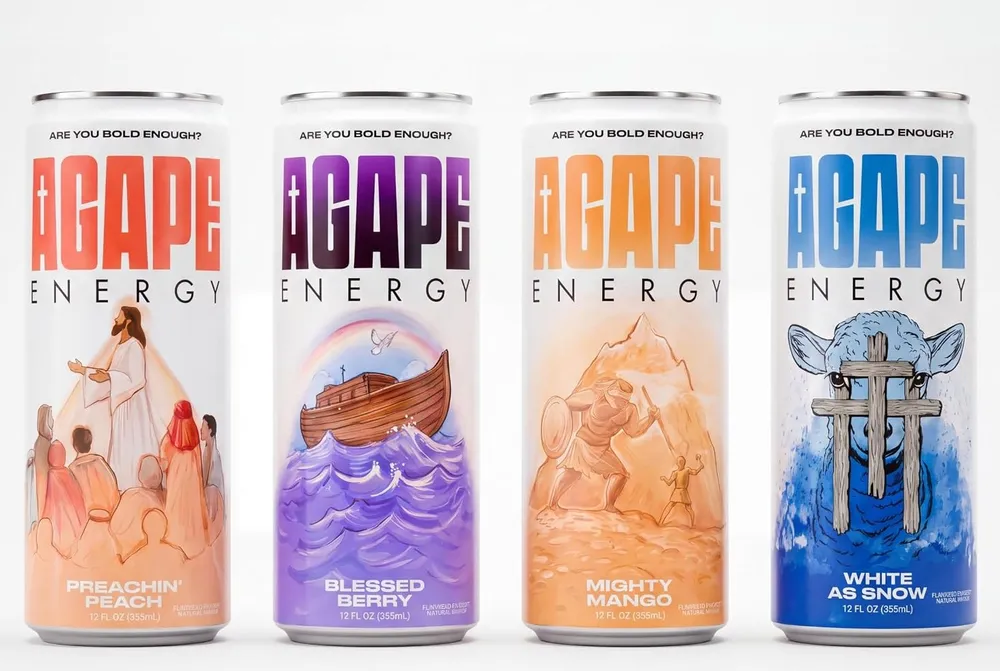
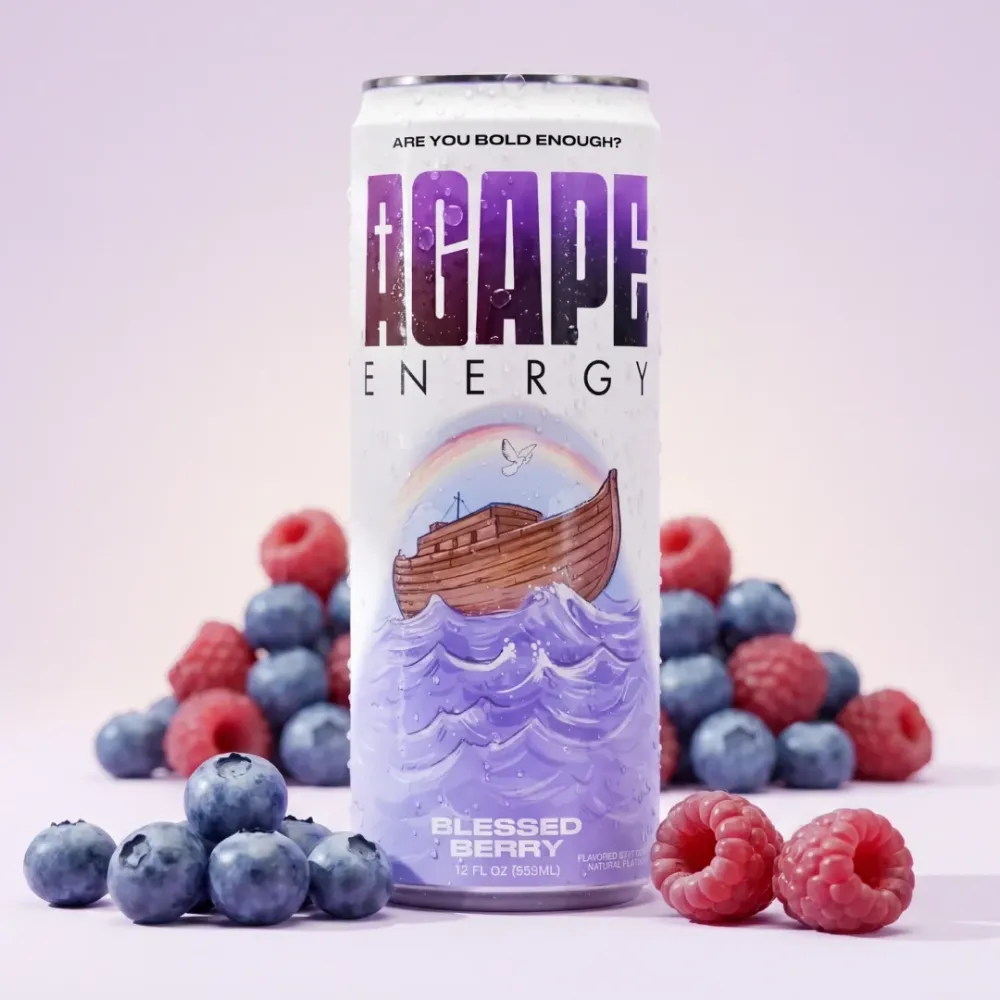
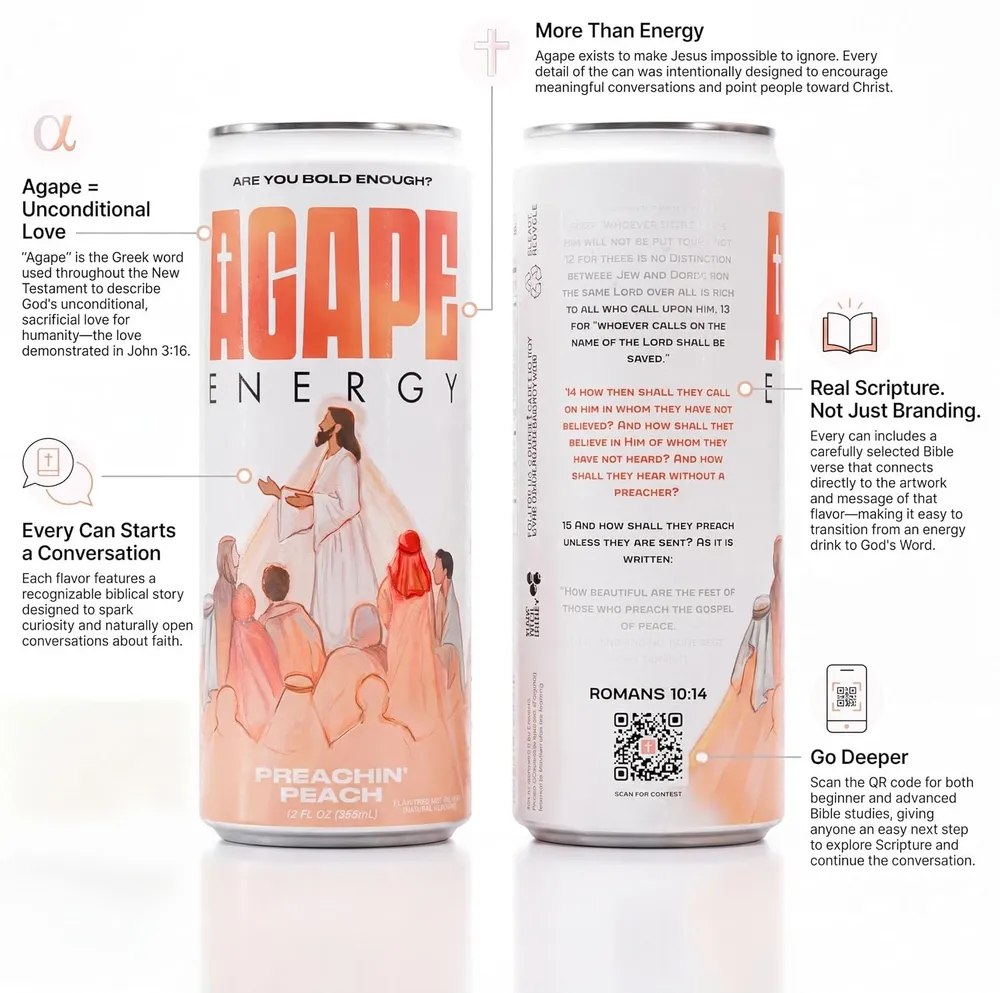
Agape's biggest differentiator isn't in the formula. Each flavor carries a scripture chosen to match its story, and the QR code leads to a breakdown of that passage: what it means, where it comes from, and how it applies to everyday life. The goal is for a can on a desk, in a locker room, or at the gym to prompt the question for you. Someone asks about the verse, and the conversation starts.
The brand pushes the same idea beyond the can. It has a companion app built around Scripture reading, prayer requests, and community features, plus an ambassador program for fans who want to represent the brand. Agape sells faith-forward apparel, too. The drink is the entry point, and the mission is the product.
That's unusual for the energy drink aisle, where branding usually leans on extreme sports, gaming, or gym culture. Agape is aimed at a crowd that rarely gets a can built specifically for them.
Cody's Take on White As Snow
White As Snow is built around Isaiah 1:18, and it's the flavor Cody tested on camera.
Up front, Cody says it goes for a White Monster-type vibe. On the back end it gets a little sweeter instead of smoothing out, which he thinks is the honey. He still didn't find it too sweet, and he came away "really impressed," enough to want to try the rest of the line. His notes cover White As Snow only. You can browse the other flavors below.
- Variety Pack (12 Cans: $34.99)
Faith First, and the Formula Holds Up
Agape Energy Drink is for believers who want their daily can to say something, and for anyone who likes a moderate 200mg green tea caffeine hit with almost no sugar. The label is short with no proprietary blends, and Cody's White As Snow review suggests the flavor backs up the mission.
Follow @BevlabMedia on TikTok and Instagram for Cody's next taste test.
References
- McLellan, Tom M. et al. "A Review Of Caffeine S Effects On Cognitive Physical And Occupational Performance." Neuroscience & Biobehavioral Reviews, 2016. https://doi.org/10.1016/j.neubiorev.2016.09.001
- Einöther, Suzanne J L, et al. "Caffeine as an attention enhancer: reviewing existing assumptions." Psychopharmacology, 2013. https://doi.org/10.1007/s00213-012-2917-4
- Wikoff, Daniele, et al. "Systematic review of the potential adverse effects of caffeine consumption in healthy adults, pregnant women, adolescents, and children." Food and chemical toxicology : an international journal published for the British Industrial Biological Research Association, 2017. https://doi.org/10.1016/j.fct.2017.04.002
- Drake, Christopher, et al. "Caffeine effects on sleep taken 0, 3, or 6 hours before going to bed." Journal of clinical sleep medicine : JCSM : official publication of the American Academy of Sleep Medicine, 2013. https://doi.org/10.5664/jcsm.3170
- Nehlig, Astrid. "Interindividual Differences in Caffeine Metabolism and Factors Driving Caffeine Consumption." Pharmacological reviews, 2018. https://doi.org/10.1124/pr.117.014407
- Lorenz, Mario, et al. "Tea-induced improvement of endothelial function in humans: No role for epigallocatechin gallate (EGCG)." Scientific reports, 2017. https://doi.org/10.1038/s41598-017-02384-x
- Hursel, R, et al. "The effects of green tea on weight loss and weight maintenance: a meta-analysis." International Journal of Obesity, 2009. https://doi.org/10.1038/ijo.2009.135
- Dehzad, Mohammad Jafar, et al. "Effects of green tea supplementation on obesity indices and adipokines in adults: a grade-assessed systematic review and dose-response meta-analysis of randomised controlled trials." International journal of food sciences and nutrition, 2025. https://doi.org/10.1080/09637486.2025.2496400
- EFSA, Panel on Food Additives and Nutrient Sources added to Food (ANS), et al. "Scientific opinion on the safety of green tea catechins." EFSA journal. European Food Safety Authority, 2018. https://doi.org/10.2903/j.efsa.2018.5239
- Dostal, Allison M, et al. "The safety of green tea extract supplementation in postmenopausal women at risk for breast cancer: results of the Minnesota Green Tea Trial." Food and chemical toxicology : an international journal published for the British Industrial Biological Research Association, 2015. https://doi.org/10.1016/j.fct.2015.05.019
- EFSA, Panel on Food Additives and Flavourings (FAF), et al. "Re-evaluation of sucralose (E 955) as a food additive and evaluation of a new application on extension of use of sucralose (E 955) in fine bakery wares." EFSA journal. European Food Safety Authority, 2026. https://doi.org/10.2903/j.efsa.2026.9854
- Suez, Jotham, et al. "Personalized microbiome-driven effects of non-nutritive sweeteners on human glucose tolerance." Cell, 2022. https://doi.org/10.1016/j.cell.2022.07.016
- Chowdhury, Chandrama Roy, et al. "Beyond sweetness: A review of the health and safety of acesulfame-K." Food chemistry, 2026. https://doi.org/10.1016/j.foodchem.2025.147290
- Marchitti, Satori A, et al. "Lack of Genotoxic and Carcinogenic Potential for Nonsugar Sweeteners: A Review of Animal and Mechanistic Evidence." Advances in nutrition (Bethesda, Md.), 2025. https://doi.org/10.1016/j.advnut.2025.100552
- Goodman, Matthew J. "The “Natural” vs. “Natural Flavors” Conflict in Food Labeling: A Regulatory Viewpoint." Food and drug law journal, 2017. https://pubmed.ncbi.nlm.nih.gov/29140655/
Tagged