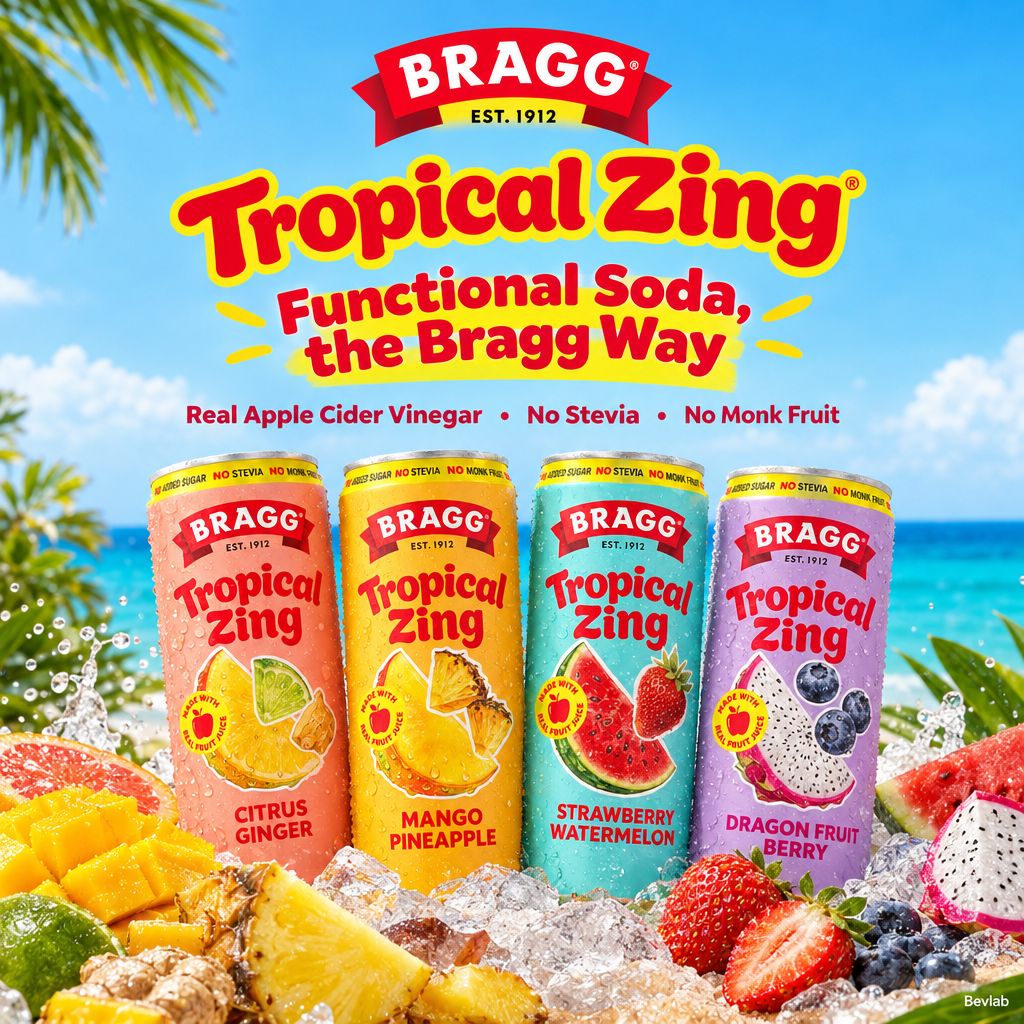
Bragg Tropical Zing: A Tablespoon of ACV You Don't Have to Wince At
America's vinegar brand trades the shot glass for a sparkling can
Bragg Tropical Zing puts a tablespoon of organic apple cider vinegar in a sparkling 12oz can sweetened only by fruit juice, with no stevia or monk fruit.
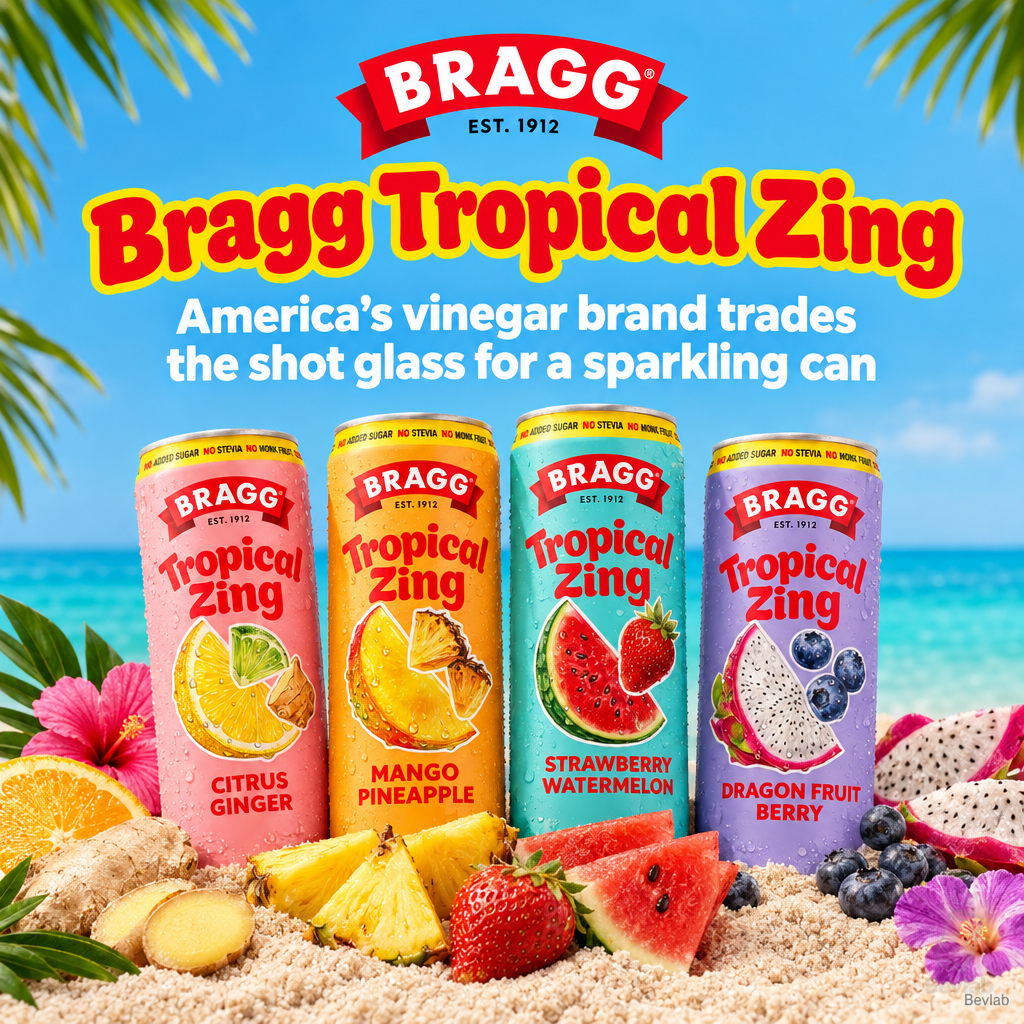
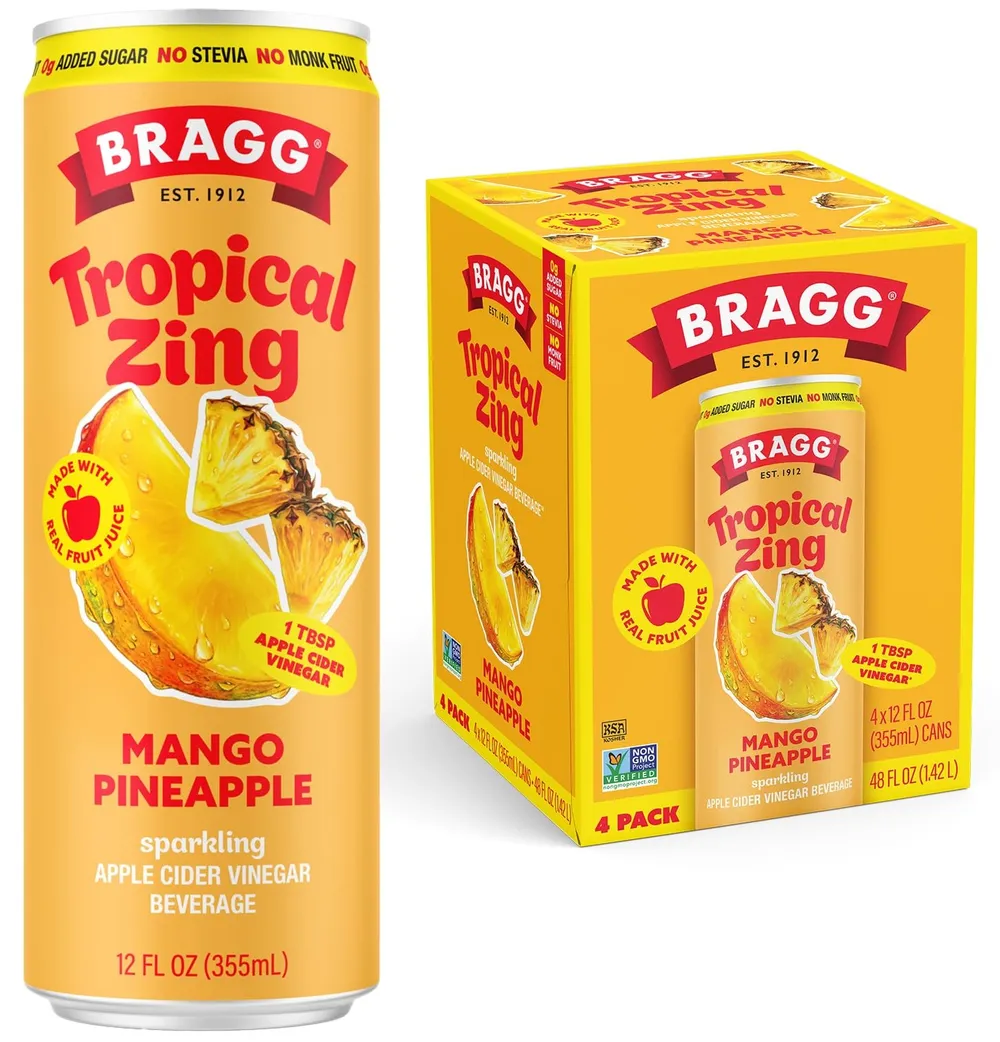
Bragg has sold apple cider vinegar since Paul Bragg started the company in Santa Barbara in 1912. For most of that history, the pitch came with a catch: you had to drink the stuff. Bragg Tropical Zing is the company's fix. It launched in October 2026 as a 12oz sparkling drink with one tablespoon of Bragg Organic Apple Cider Vinegar in every can, mixed with fruit juice concentrates and bubbles so the vinegar comes across as tartness instead of a dare.
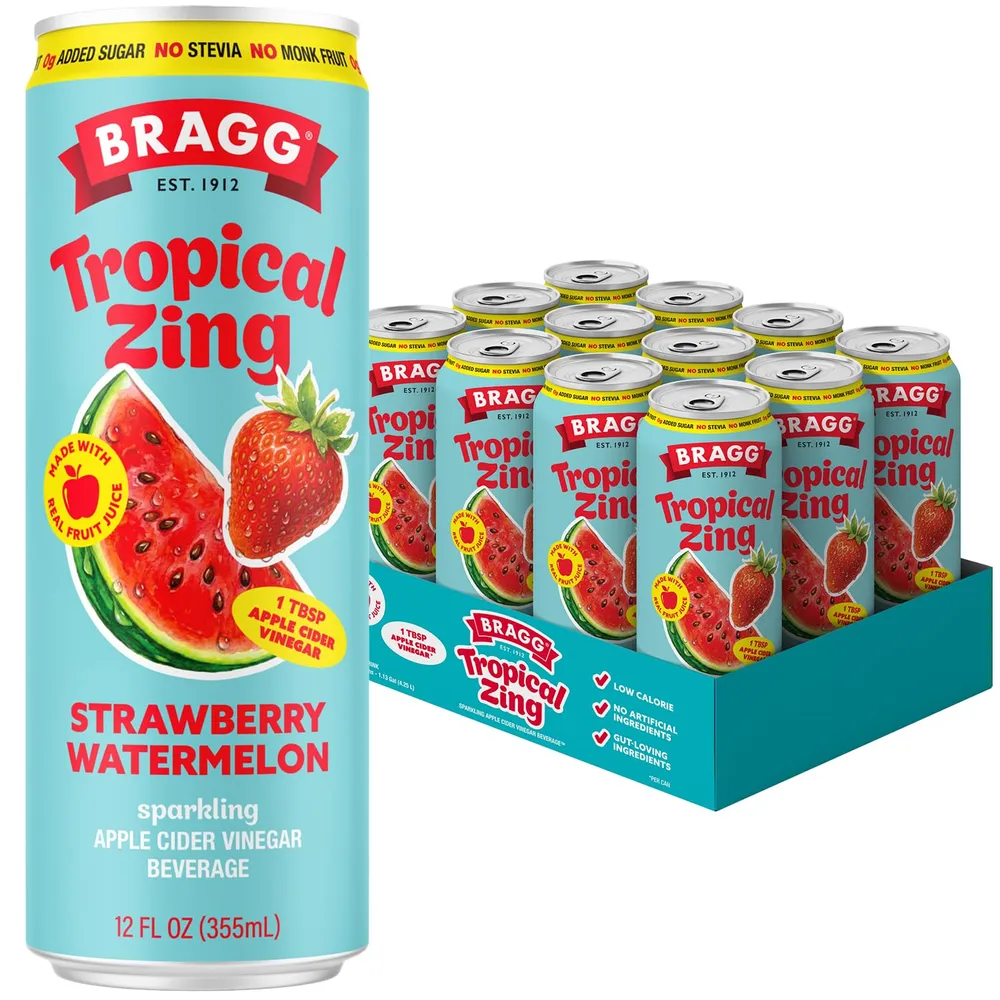
The sweetener is the interesting part. Bragg left out stevia and monk fruit completely, even though its existing ready-to-drink ACV Refreshers use both, and let fruit juice do the sweetening. That gets each can to 40 calories with 0g added sugar, though the juice still brings 9g of total sugars. There's no caffeine anywhere on the label, so this is a daily-ritual drink and a soda swap, not an energy drink. Tropical Zing launched in four-packs on Amazon, with a wider e-commerce rollout planned for late October 2026.
Bragg Tropical Zing Nutrition Facts
These numbers come from the Mango Pineapple can. The other flavors vary slightly.
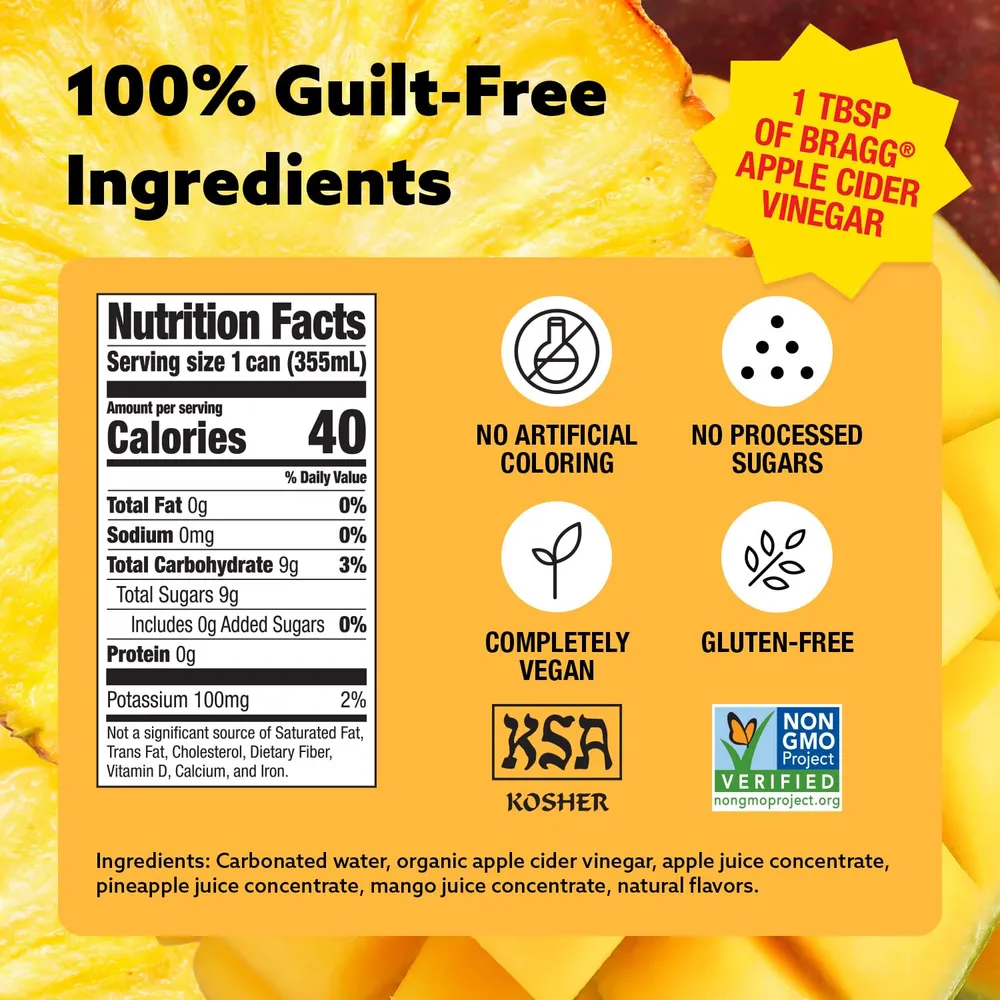
- Serving Size: 1 can (355mL)
- Calories: 40
- Total Fat: 0g (0% DV)
- Total Carbohydrate: 9g (3% DV)
- Total Sugars: 9g
- Added Sugars: 0g (0% DV)
- Total Sugars: 9g
- Protein: 0g
- Vitamins and Minerals
- Sodium: 0mg (0% DV)
- Potassium: 100mg (2% DV)
The "0g added sugar" line is accurate as printed, but it doesn't make the can sugar-free. The 9g of total sugars come from the fruit juice concentrates, which are the only sweeteners in the ingredient list. That's a light load next to regular soda, but it adds up if you're drinking more than one can a day.
Bragg Tropical Zing Ingredients
Each 12oz (355mL) can provides the following:
-
Organic Apple Cider Vinegar - 1 Tbsp

Apple cider vinegar is apple juice fermented twice. Yeast turns the fruit sugars into alcohol, then Acetobacter bacteria turn that alcohol into acetic acid, the compound behind vinegar's bite and most of its research. Bragg uses its own organic vinegar and puts a full tablespoon (about 15mL) in each can. The label doesn't give the acetic acid content.
The research mostly covers blood sugar and body weight. In healthy adults, about 10g of vinegar taken with a starchy meal cut the post-meal glucose rise by roughly a quarter compared with placebo. The effect showed up only when the vinegar was taken with the meal and paired with complex carbs.[1] A 2025 meta-analysis of seven trials in people with type 2 diabetes found lower fasting blood sugar, with bigger effects above 10mL/day.[2] Another 2025 meta-analysis of 10 trials in adults with overweight or type 2 diabetes found modest reductions in body weight, BMI, and waist circumference.[3]
Keep these findings in proportion. Much of the human data comes from short experiments and small trials.[4] Most participants already had elevated blood sugar or excess weight, which isn't the same as a healthy adult drinking one sparkling can. Vinegar's acidity also wore down tooth enamel in lab testing,[5] so diluting it in a full can is a sensible way to take it.
-
Carbonated Water
Carbonated water is the base of the drink and the reason it can stand in for a soda. Carbonation does have measurable effects. In a crossover study of 12 active adults recovering from exercise in the heat, cold carbonated water briefly raised blood pressure and brain blood flow more than still water did. Participants also reported bigger gains in mouth refreshment and bigger drops in sleepiness later in recovery.[6] Those effects were short-lived, and they don't support any performance claim.
On your teeth, plain carbonated water lowered saliva pH far less than sugar-sweetened soda in a trial of 18 adolescents, though it still slightly increased bacterial growth in dental plaque.[7] What about the idea that bubbles help with weight loss? A 2025 report on that question concluded the effect is too small to matter.[8]
-
Vitamins and Minerals
-
Potassium - 100mg (2% DV)
Potassium comes in at 100mg (2% DV) on the Mango Pineapple can. That's a small amount, and Bragg doesn't market Tropical Zing as a hydration or electrolyte drink. Think of it as a minor extra.
-
-
Sweeteners and Flavors
-
Apple Juice Concentrate
Apple juice concentrate comes right after the vinegar on the label and is one of the main sources of the can's sweetness and its 9g of sugar. Bragg doesn't disclose how much is in the can. Reviews of the research on moderate 100% fruit juice intake (roughly 75-224mL/day) haven't linked it to worse blood sugar control or a higher risk of type 2 diabetes.[9] That research covers whole glasses of juice, not a splash of concentrate in a sparkling can.
-
Pineapple and Mango Juice Concentrates
Pineapple juice concentrate and mango juice concentrate set the flavor of the Mango Pineapple can, and the label doesn't give either amount. These ingredients are specific to that flavor. Other flavors use their own fruit blends.
-
Natural Flavors
Natural flavors round out each flavor's profile. Under U.S. rules, "natural flavor" is defined by where the flavoring comes from, not by its chemistry, so a natural flavor can be chemically identical to an artificial one.[10] Bragg doesn't say what the flavors are made from. They're in the can for taste, not function.
-
One Tablespoon, Half the Trial Dose
A tablespoon sounds like a lot of vinegar until you compare it with the clinical work. In the 2025 body-composition meta-analysis, 30mL/day was the only dose group with a significant drop in body weight. Lower doses of 5-15mL/day didn't reach significance for weight, though BMI improved at both levels.[3] One can gives you about 15mL, which is half of that.
The best-known weight trial did find results at 15mL. Obese Japanese adults drinking 15mL or 30mL of vinegar a day for 12 weeks lost more weight and body fat than the placebo group, with bigger effects at the higher dose. The gains disappeared within four weeks of stopping, and the researchers saw no liver or kidney problems at either dose.[11] Glucose results in pooled trials also took more than eight weeks to become clear.[12]
So consistency matters more than any single can. If you want to reach the 30mL used in the trials, two cans a day gets you there, along with 18g of fruit sugar. If you're after the post-meal glucose effect, the research points to drinking it with a carb-containing meal, not between meals.
The Tropical Launch Lineup
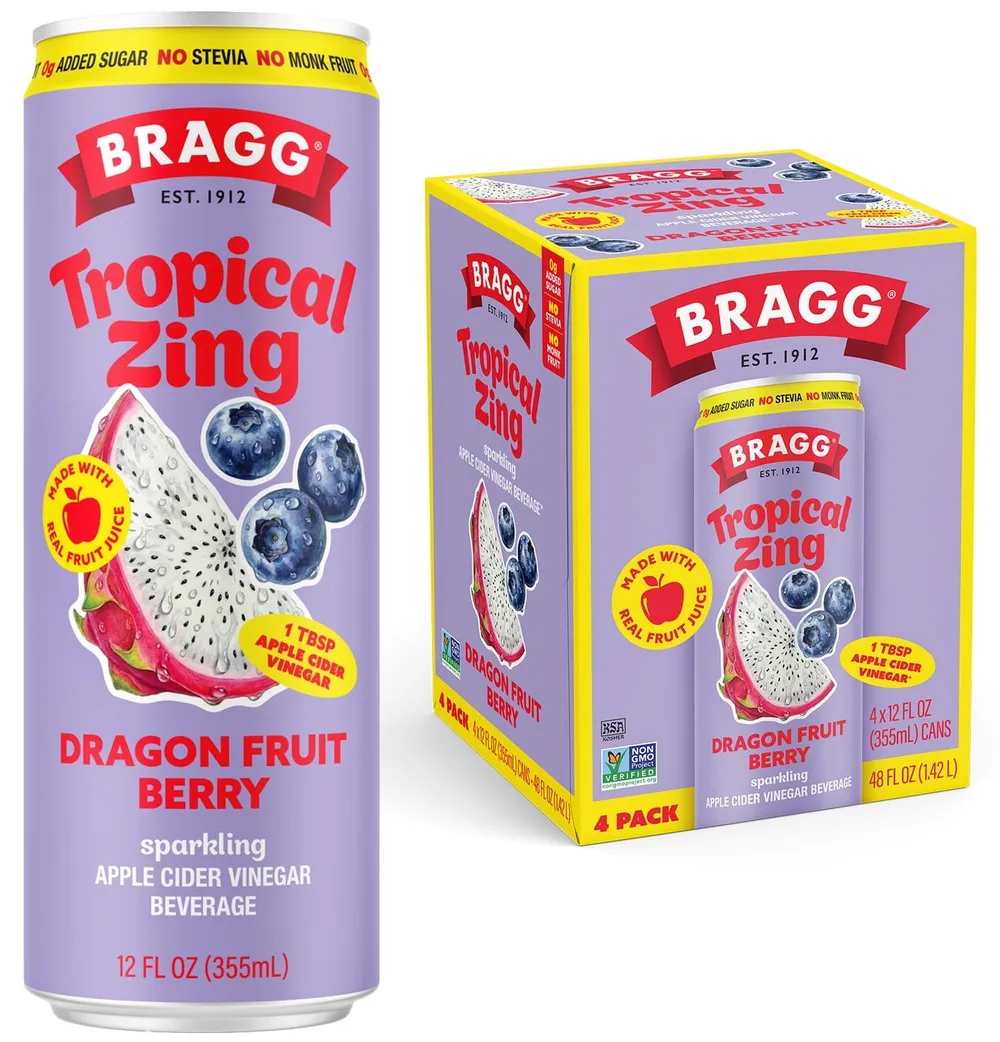
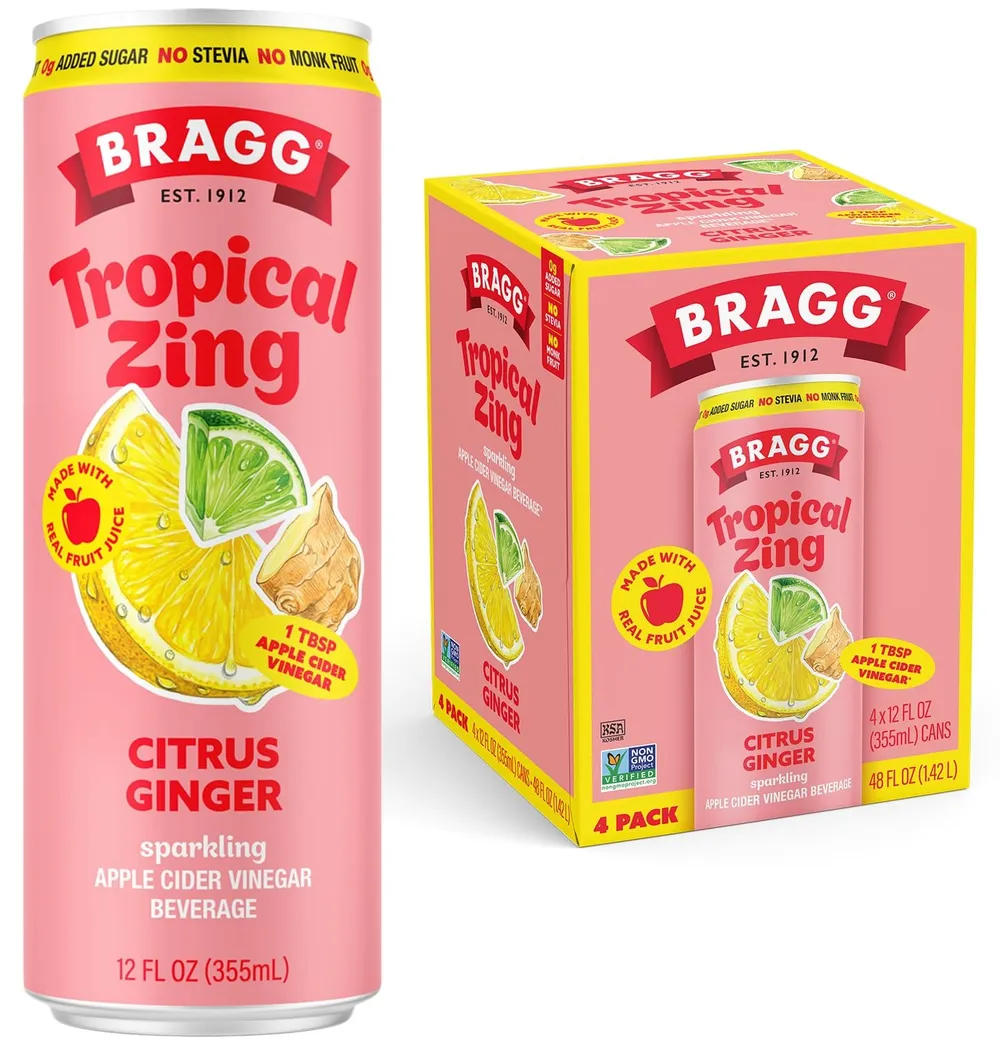
Tropical Zing launched with four flavors. Each one uses its own juice blend, so the ingredient list and nutrition numbers shift a little from can to can.
- Citrus Ginger (4 Cans: $8.99)
- Dragon Fruit Berry (4 Cans: $8.99)
- Mango Pineapple (4 Cans: $8.99)
- Strawberry Watermelon (4 Cans: $8.99)
A Better Way to Take Your Vinegar
Tropical Zing is for Bragg fans who are done taking straight vinegar shots and for soda drinkers who want something tart with a functional ingredient in it. The label is short, and dropping stevia and monk fruit will appeal to anyone who can't stand that aftertaste. Just know one can delivers half the top ACV dose used in the weight research, plus 9g of fruit sugar, so treat it as an easy daily tablespoon.
Follow @BevlabMedia on TikTok and Instagram for more drinks worth a closer look.
References
- Johnston, Carol S, et al. "Examination of the antiglycemic properties of vinegar in healthy adults." Annals of nutrition & metabolism, 2010. https://doi.org/10.1159/000272133
- Arjmandfard, Donya, et al. "Effects of apple cider vinegar on glycemic control and insulin sensitivity in patients with type 2 diabetes: A GRADE-assessed systematic review and dose-response meta-analysis of controlled clinical trials." Frontiers in nutrition, 2025. https://doi.org/10.3389/fnut.2025.1528383
- Castagna, Alberto, et al. "Effect of Apple Cider Vinegar Intake on Body Composition in Humans with Type 2 Diabetes and/or Overweight: A Systematic Review and Meta-Analysis of Randomized Controlled Trials." Nutrients, 2025. https://doi.org/10.3390/nu17183000
- Petsiou, Eleni I, et al. "Effect and mechanisms of action of vinegar on glucose metabolism, lipid profile, and body weight." Nutrition reviews, 2014. https://doi.org/10.1111/nure.12125
- Willershausen, Ines, et al. "In vitro study on dental erosion caused by different vinegar varieties using an electron microprobe." Clinical laboratory, 2014. https://doi.org/10.7754/clin.lab.2013.130528
- Kajiki, Masanobu, et al. "Ingesting carbonated water post-exercise in the heat transiently ameliorates hypotension and enhances mood state." Experimental physiology, 2024. https://doi.org/10.1113/EP091925
- Barajas-Torres, Guadalupe Carolina, et al. "Effects of Carbonated Beverage Consumption on Oral pH and Bacterial Proliferation in Adolescents: A Randomized Crossover Clinical Trial." Life (Basel, Switzerland), 2022. https://doi.org/10.3390/life12111776
- Takahashi, Akira. "Can carbonated water support weight loss?." BMJ nutrition, prevention & health, 2025. https://doi.org/10.1136/bmjnph-2024-001108
- Ruxton, Carrie H S, et al. "Fruit Juices: Are They Helpful or Harmful? An Evidence Review." Nutrients, 2021. https://doi.org/10.3390/nu13061815
- Goodman, Matthew J. "The “Natural” vs. “Natural Flavors” Conflict in Food Labeling: A Regulatory Viewpoint." Food and drug law journal, 2017. https://pubmed.ncbi.nlm.nih.gov/29140655/
- Kondo, Tomoo, et al. "Vinegar intake reduces body weight, body fat mass, and serum triglyceride levels in obese Japanese subjects." Bioscience, biotechnology, and biochemistry, 2009. https://doi.org/10.1271/bbb.90231
- Hadi, Amir, et al. "The effect of apple cider vinegar on lipid profiles and glycemic parameters: a systematic review and meta-analysis of randomized clinical trials." BMC complementary medicine and therapies, 2021. https://doi.org/10.1186/s12906-021-03351-w