Joyburst Energy Drink: Candy-Colored Cans, Grown-Up Caffeine
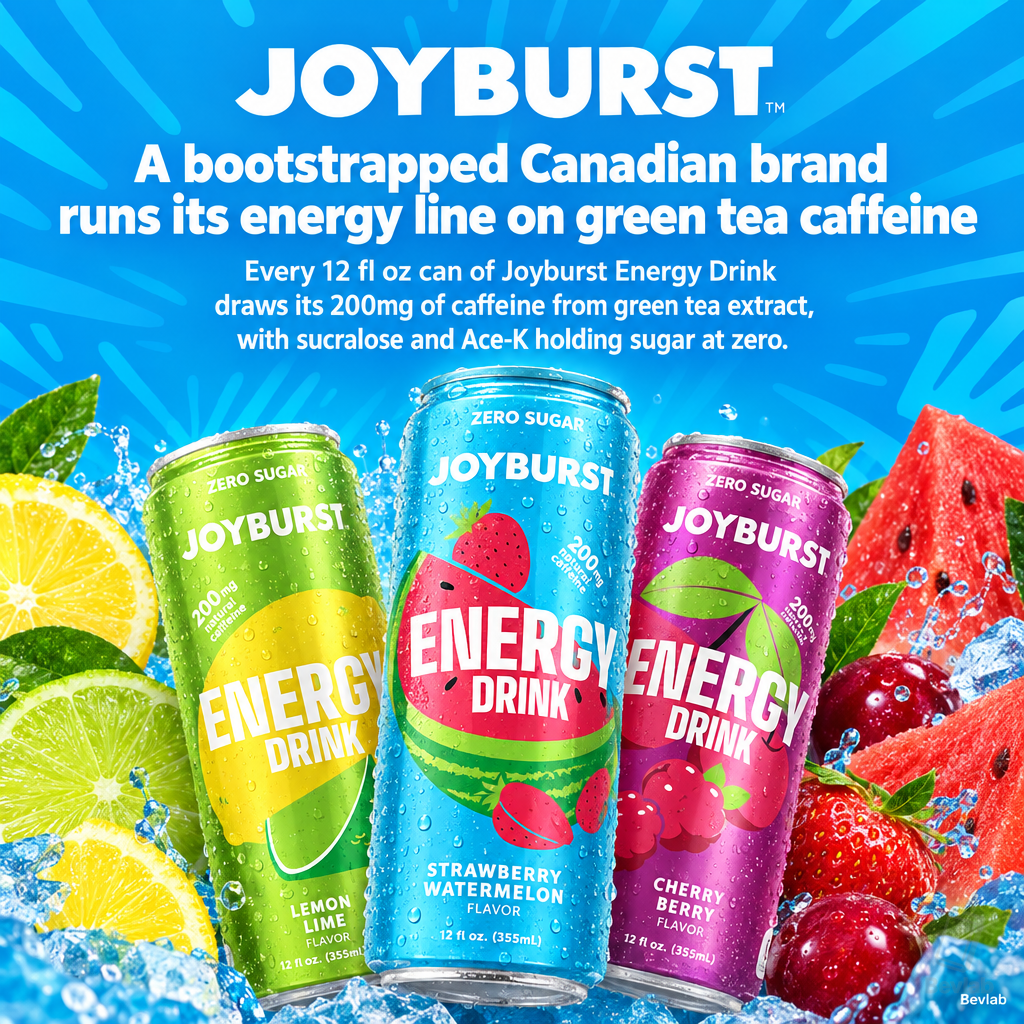
A bootstrapped Canadian brand runs its energy line on green tea caffeine
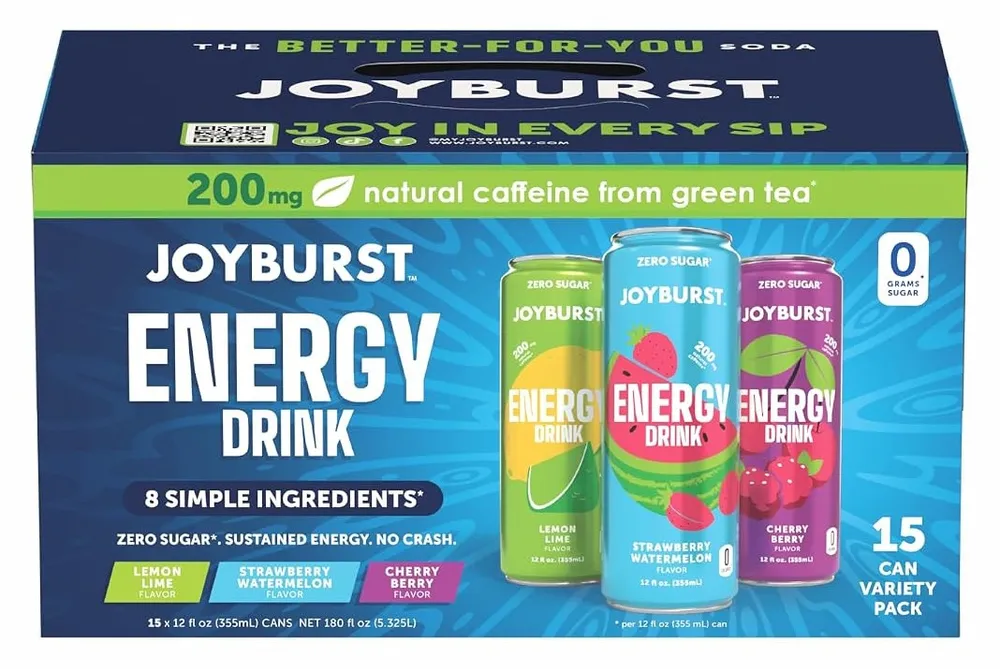
Every 12 fl oz can of Joyburst Energy Drink draws its 200mg of caffeine from green tea extract, with sucralose and Ace-K holding sugar at zero.
Joyburst Energy Drink comes from Joyburst, the Canadian beverage company co-founded by Brad Woodgate and Zelka Ridjosic Traikos. The name tells you the brand's whole mood. The cans are loud, fruity, and colorful, but the formula inside is a straightforward caffeine play: 200mg per can, all of it from green tea extract, with no sugar and no nootropic stack on top. Joyburst launched in Canada and reached US shelves around 2022. Since then the energy line has picked up company from hydration drinks, protein soda, creatine soda, and coffee.
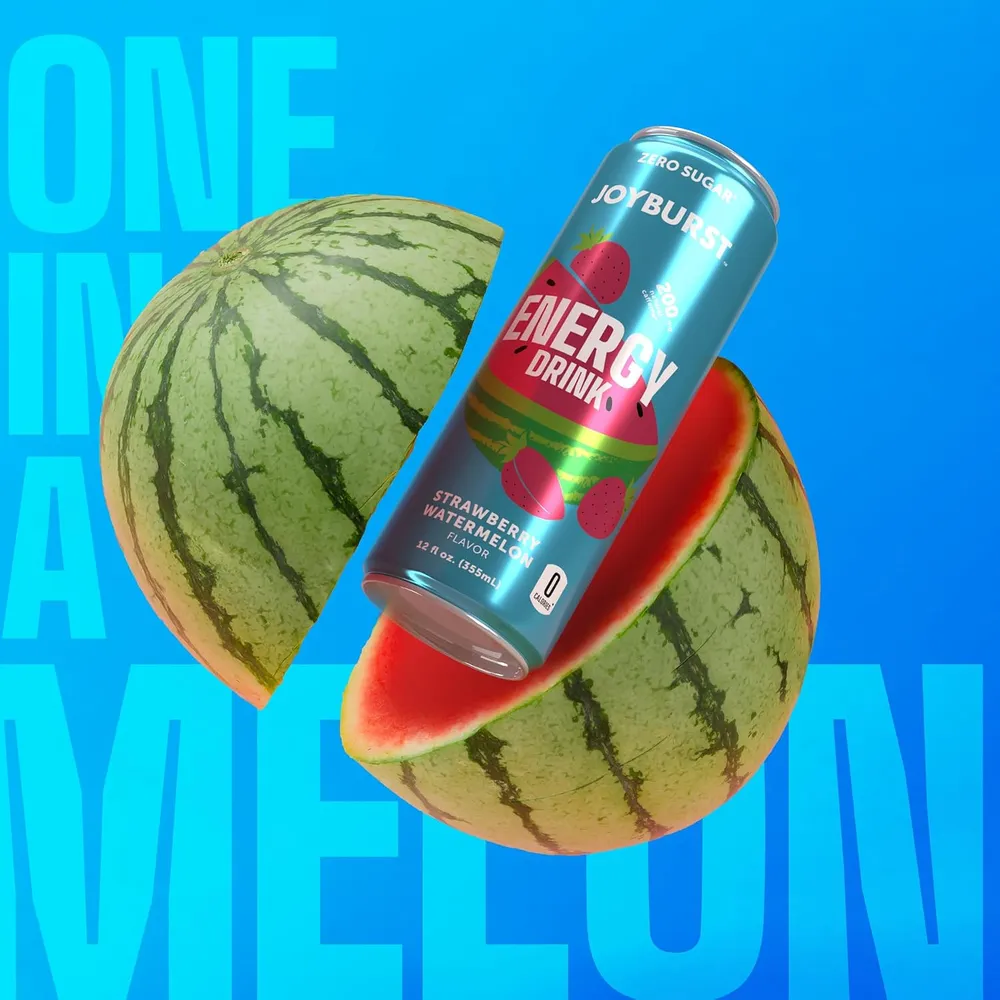
The US version is a 12 fl oz (355mL) can with 0 calories, 0g sugar, and 0g carbs. Sucralose and acesulfame potassium handle the sweetness, citric and malic acid bring the tartness, and the whole can lists only 25mg of sodium. If you want a solid caffeine dose without sugar or a long list of extras, this is about as uncomplicated as an energy drink gets.
Born in Lockdown, Built Near Toronto
Joyburst started during the COVID lockdowns as an attempt to bring more joy and color into a heavy stretch of time. That idea still drives the brand, from the saturated can art to flavor names that read like a summer playlist. The company is based in the Toronto suburbs, runs with a small team, and grew without venture capital or private equity. That's an uncommon path in a category where so many launches are investor-backed from day one.
Retail has been the growth engine. Joyburst's store list has included Walmart, Dollar Tree, Aldi, Sam's Club, and Costco, which is a lot of shelf space for a brand that started in a lockdown. Ridjosic Traikos, Joyburst's President and co-founder, has also led three straight Disney collaborations tied to Inside Out 2, Lilo & Stitch, and the live-action Moana.
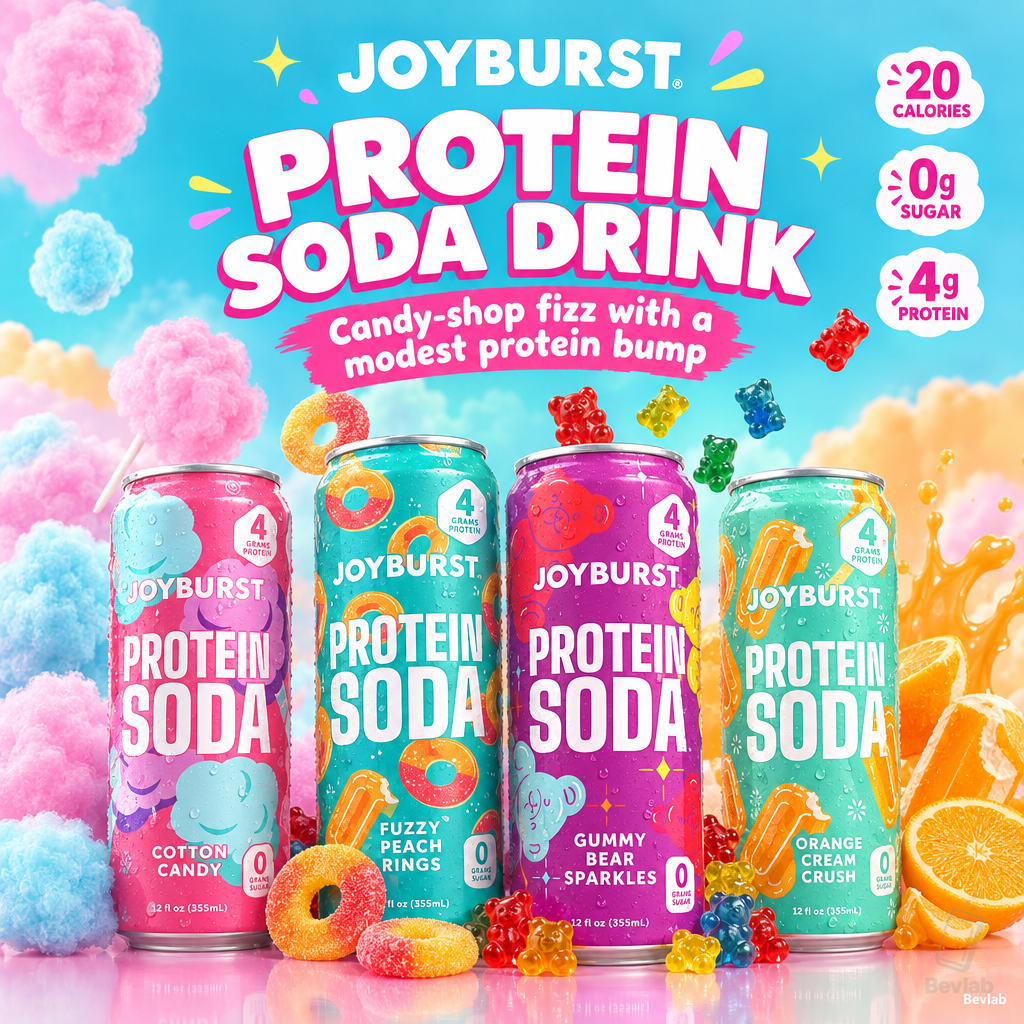
The energy drink is one piece of a wider lineup. Joyburst has expanded into Renew Hydration (electrolytes, B vitamins, and lion's mane), creatine soda, protein coffee, and the whey-and-collagen Joyburst Protein Soda. The drinks are made in Canada and Mexico, and the energy line is vegan.
Joyburst Energy Drink Ingredients
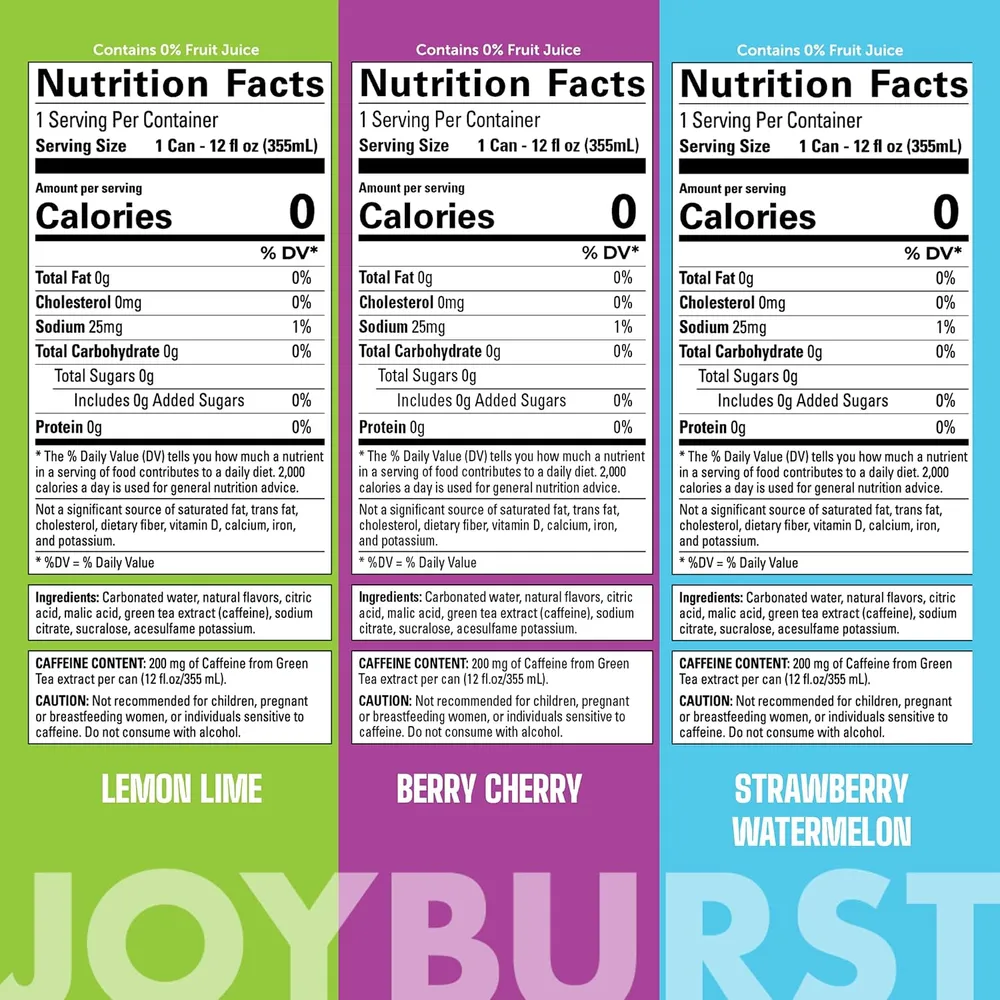
Each 12 fl oz (355mL) can contains the ingredients below. Caffeine is the only one with a disclosed amount, and it does nearly all the work. The rest of the list covers fizz, tartness, sweetness, and flavor.
-
Caffeine (as Green Tea Extract) - 200mg
Caffeine is the engine here, and Joyburst gets all 200mg from green tea extract. Count the extract as the caffeine source, not a separate green tea dose. The label doesn't list any other tea compounds, such as catechins. Caffeine blocks the tiredness signal in your brain, which is why it sharpens you up when you're dragging.[1] A broad review found that roughly 40-300mg can improve alertness, vigilance, attention, and reaction time in both rested and sleep-restricted people.[2] Placebo-controlled studies also show gains on both simple and complex attention tasks.[3]
For training, the ISSN points to about 3-6mg/kg of body weight for performance benefits, so 200mg lands at or below the low end of that range for most adults.[4] Individual response varies a lot with genetics, medications, smoking, and how much caffeine you already drink.[5]
A large safety review found that up to 400mg/day wasn't tied to overt adverse effects in healthy adults.[6] Two cans would put you at that line before any coffee. Timing matters too: 400mg taken six hours before bed still disrupted sleep.[7] The can cautions against use by children, pregnant or breastfeeding women, and caffeine-sensitive people, and says not to mix it with alcohol.
-
Carbonated Water
Carbonated water is the base, and the bubbles do more than carry flavor. In a small crossover trial, cold carbonated water after exercise in the heat raised "mouth exhilaration" and cut sleepiness more than still water did, though the effects were short-lived.[8] Another study found that 200mL of carbonated water increased blood flow in part of the brain's frontal region. That study didn't measure focus or performance.[9] The fizz may add a quick sensory kick, but the caffeine still does the energy work.
Carbonation's effect on blood pressure is still unsettled. A systematic review concluded the evidence isn't strong enough to say whether people with hypertension should avoid sparkling water.[10] For teeth, an adolescent trial found plain carbonated water acidified saliva far less than sugary soda, but it still raised oral bacteria compared with plain water.[11] Joyburst adds acids on top of the carbonation, so the finished drink won't behave exactly like plain seltzer.
-
Citric Acid
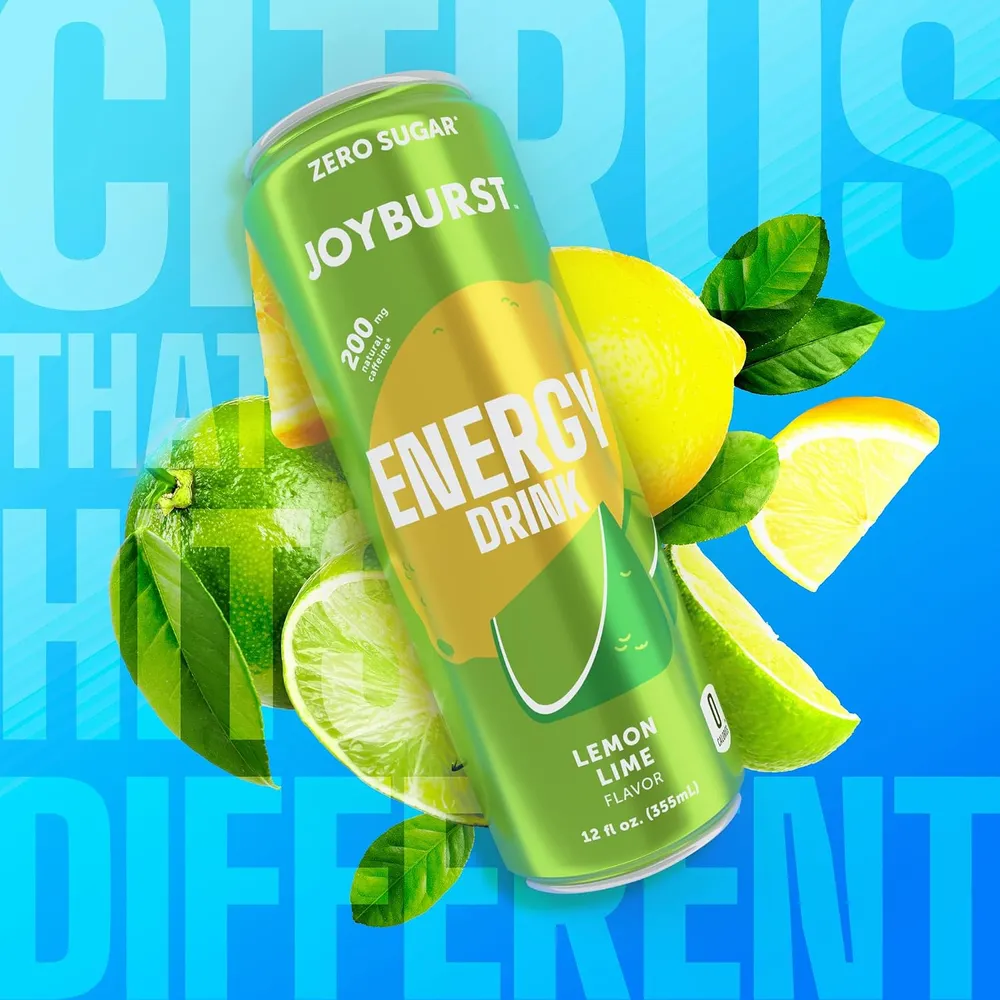
Citric acid is the beverage industry's default sour note. In carbonated drinks it acts as an acidulant and pH regulator, and it helps slow oxidation by binding metal ions.[12] It's the same acid that gives lemons their bite, and fresh lemon juice carries about 48g of it per liter.[13] Almost all commercial citric acid comes from fermentation with the mold Aspergillus niger.[14] It holds GRAS status in the US and carries the E330 designation in the EU.[15]
One case series of four people proposed that fermentation residues in manufactured citric acid might trigger inflammatory reactions in susceptible individuals. No controlled study has confirmed that idea.[14] Joyburst doesn't disclose the amount, and in this can its job is flavor and stability.
-
Malic Acid
Malic acid works with citric acid to fill out the tartness. Joyburst doesn't list an amount, and in a drink like this its main role is taste. Your body already knows the molecule. Malate is a normal step in the Krebs cycle, the process your cells use to turn food into usable energy.[16]
That biochemistry sometimes gets stretched into "energy ingredient" marketing, and the human evidence doesn't support it. One exercise study paired malate with an oligosaccharide, so it couldn't isolate malic acid's effect, and parts of its protocol were poorly reported.[17] Manufacturers can produce L-malic acid through microbial fermentation and enzyme-based processes.[18] In this can it's a flavor tool.
-
Sodium Citrate
Sodium citrate, the sodium salt of citric acid, buffers acidity so the sour edge stays balanced. Sports researchers use it at much larger amounts. The standard performance protocol is about 500mg/kg of body weight, which comes to tens of grams for most adults.[19] At those doses it raises the blood's buffering capacity. In one crossover trial it improved performance in elite fitness challenge athletes, though results across other sports are mixed.[20,19] Large doses can also expand plasma volume, and they often cause stomach trouble.[21,19]
None of that research describes a can that lists 25mg of total sodium. Here, sodium citrate is a flavor buffer, and Joyburst doesn't disclose the amount.
-
Sweeteners and Flavors
-
Sucralose
Sucralose is roughly 600 times sweeter than sugar and adds no meaningful calories.[22] EFSA's 2026 re-evaluation kept its acceptable daily intake at 15mg/kg and found no safety concern at reported uses.[23] The FDA's figure is lower, at 5mg/kg.[24] Human research on blood sugar is mixed. A 14-day trial in healthy adults found lower insulin sensitivity, and another trial showed glycemic effects that varied with each person's gut bacteria.[25,26] Joyburst doesn't disclose the amount.
-
Acesulfame Potassium
Acesulfame potassium (Ace-K) is about 150-200 times sweeter than sugar. It's often paired with sucralose to cover a slight bitterness and get closer to a sugar-like taste.[27] Almost all of it passes through the body unchanged and leaves in urine within a day.[27] A weight-of-evidence review found no genotoxic or carcinogenic potential.[28] One observational study linked higher intake to early puberty in girls, and that association still needs replication.[29] Joyburst lists Ace-K on the can but doesn't disclose the amount.
-
Natural Flavors
Natural flavors set the fruit profile in each can. Under US rules, "natural" describes where a flavor comes from, not its chemical structure, so natural and artificial versions of the same molecule can be identical.[30] Natural flavor complexes go through FEMA Expert Panel GRAS assessments built on toxicology and exposure data.[31] They're in the can for taste, with no functional effect, and Joyburst doesn't name the specific sources.
-
Pick a Color, Same Formula
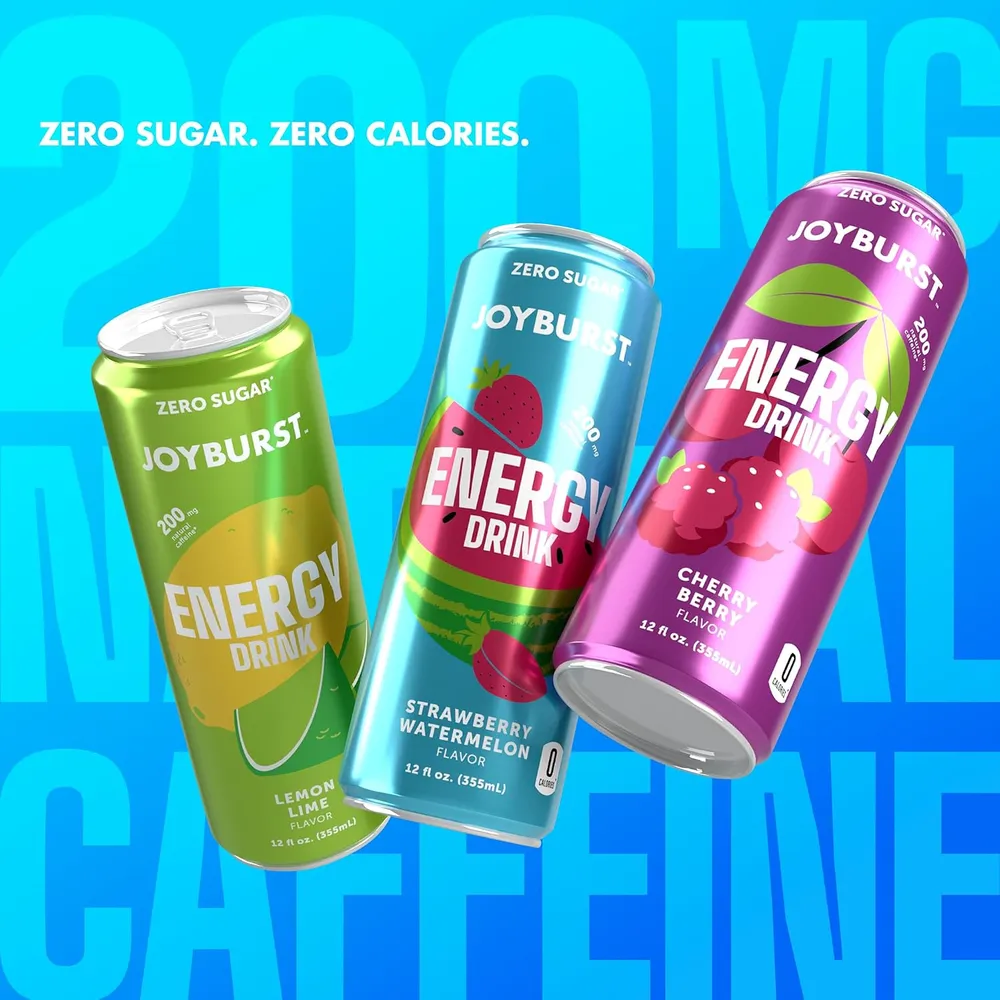
Lemon Lime, Cherry Berry (printed as Berry Cherry on the can), and Strawberry Watermelon all share the same US formula, down to the 200mg of caffeine. Choosing between them is purely a taste call.
- Variety Pack (15 Cans: $39.99)
Made for Coffee Swappers
Joyburst markets the drink as keto-friendly, and with 0 calories and 0g carbs per can, it also works as a cold, fizzy stand-in for a morning coffee. If you're caffeine-sensitive, pregnant, or breastfeeding, the can itself tells you to skip it.
A Simple Can That Knows Its Job
Joyburst Energy Drink is for drinkers who want 200mg of caffeine, zero sugar, and bright fruit flavor without decoding a nootropic blend. The formula is plain on purpose, and it delivers exactly what the label promises.
References
- Fredholm, Bertil B. et al. "Actions of Caffeine in the Brain with Special Reference to Factors That Contribute to Its Widespread Use." Pharmacological Reviews, 1999. https://doi.org/10.1016/S0031-6997(24)01396-6
- McLellan, Tom M. et al. "A Review Of Caffeine S Effects On Cognitive Physical And Occupational Performance." Neuroscience & Biobehavioral Reviews, 2016. https://doi.org/10.1016/j.neubiorev.2016.09.001
- Einöther, Suzanne J L, et al. "Caffeine as an attention enhancer: reviewing existing assumptions." Psychopharmacology, 2013. https://doi.org/10.1007/s00213-012-2917-4
- Goldstein, Erica R, et al. "International Society Of Sports Nutrition Position Stand Caffeine And Performance." Journal of the International Society of Sports Nutrition, 2010. https://doi.org/10.1186/1550-2783-7-5
- Nehlig, Astrid. "Interindividual Differences in Caffeine Metabolism and Factors Driving Caffeine Consumption." Pharmacological reviews, 2018. https://doi.org/10.1124/pr.117.014407
- Wikoff, Daniele, et al. "Systematic review of the potential adverse effects of caffeine consumption in healthy adults, pregnant women, adolescents, and children." Food and chemical toxicology : an international journal published for the British Industrial Biological Research Association, 2017. https://doi.org/10.1016/j.fct.2017.04.002
- Drake, Christopher, et al. "Caffeine effects on sleep taken 0, 3, or 6 hours before going to bed." Journal of clinical sleep medicine : JCSM : official publication of the American Academy of Sleep Medicine, 2013. https://doi.org/10.5664/jcsm.3170
- Kajiki, Masanobu, et al. "Ingesting carbonated water post-exercise in the heat transiently ameliorates hypotension and enhances mood state." Experimental physiology, 2024. https://doi.org/10.1113/EP091925
- Kosugi, Wataru, et al. "Effect of carbonated water on cerebral blood flow in the frontal region: a study using near-infrared spectroscopy." Frontiers in behavioral neuroscience, 2024. https://doi.org/10.3389/fnbeh.2024.1409123
- Santana-Ramos, Héctor, et al. "Systematic Review of the Effects of Sparkling Water Consumption on Blood Pressure." Current nutrition reports, 2024. https://doi.org/10.1007/s13668-024-00562-8
- Barajas-Torres, Guadalupe Carolina, et al. "Effects of Carbonated Beverage Consumption on Oral pH and Bacterial Proliferation in Adolescents: A Randomized Crossover Clinical Trial." Life (Basel, Switzerland), 2022. https://doi.org/10.3390/life12111776
- Książek, Ewelina. "Citric Acid: Properties, Microbial Production, and Applications in Industries." Molecules (Basel, Switzerland), 2023. https://doi.org/10.3390/molecules29010022
- Penniston, Kristina L, et al. "Quantitative assessment of citric acid in lemon juice, lime juice, and commercially-available fruit juice products." Journal of endourology, 2008. https://doi.org/10.1089/end.2007.0304
- Sweis, Iliana E, et al. "Potential role of the common food additive manufactured citric acid in eliciting significant inflammatory reactions contributing to serious disease states: A series of four case reports." Toxicology reports, 2018. https://doi.org/10.1016/j.toxrep.2018.08.002
- Ciriminna, Rosaria, et al. "Citric acid: emerging applications of key biotechnology industrial product." Chemistry Central journal, 2017. https://doi.org/10.1186/s13065-017-0251-y
- Mescam, Muriel, et al. "Identification Of The Catalytic Mechanism And Estimation Of Kinetic Parameters For Fumarase." The Journal of biological chemistry, 2011. https://doi.org/10.1074/jbc.M110.214452
- Qiang, Fu. "Effect Of Malate Oligosaccharide Solution On Antioxidant Capacity Of Endurance Athletes." The Open Biomedical Engineering Journal, 2015. https://doi.org/10.2174/1874120701509010326
- Wu, Na, et al. "Recent Advances In Microbial Production Of L Malic Acid." Applied Microbiology and Biotechnology, 2022. https://doi.org/10.1007/s00253-022-12260-y
- Urwin, Charles S, et al. "Factors Influencing Blood Alkalosis and Other Physiological Responses, Gastrointestinal Symptoms, and Exercise Performance Following Sodium Citrate Supplementation: A Review." International journal of sport nutrition and exercise metabolism, 2021. https://doi.org/10.1123/ijsnem.2020-0192
- Nabilpour, Magshoud, et al. "Acute effects of sodium citrate supplementation on competitive performance and lactate level of elite fitness challenge athletes: A crossover, placebo-controlled, double-blind study." Journal of exercise science and fitness, 2024. https://doi.org/10.1016/j.jesf.2024.02.001
- Siegler, Jason C, et al. "The Hyperhydration Potential of Sodium Bicarbonate and Sodium Citrate." International journal of sport nutrition and exercise metabolism, 2022. https://doi.org/10.1123/ijsnem.2021-0179
- Bourguignon, Léa, et al. "Sucralose as a Way to Enhance Regulatory T Cells, the SWEET Trial: Clinical Research Protocol." Canadian journal of kidney health and disease, 2026. https://doi.org/10.1177/20543581261418540
- EFSA, Panel on Food Additives and Flavourings (FAF), et al. "Re-evaluation of sucralose (E 955) as a food additive and evaluation of a new application on extension of use of sucralose (E 955) in fine bakery wares." EFSA journal. European Food Safety Authority, 2026. https://doi.org/10.2903/j.efsa.2026.9854
- Chen, Junfeng, et al. "Long-term sucralose exposure accelerates ovarian aging via gut microbiota dysbiosis." NPJ science of food, 2026. https://doi.org/10.1038/s41538-026-00775-x
- Romo-Romo, Alonso, et al. "Sucralose decreases insulin sensitivity in healthy subjects: a randomized controlled trial." The American journal of clinical nutrition, 2018. https://doi.org/10.1093/ajcn/nqy152
- Suez, Jotham, et al. "Personalized microbiome-driven effects of non-nutritive sweeteners on human glucose tolerance." Cell, 2022. https://doi.org/10.1016/j.cell.2022.07.016
- Chowdhury, Chandrama Roy, et al. "Beyond sweetness: A review of the health and safety of acesulfame-K." Food chemistry, 2026. https://doi.org/10.1016/j.foodchem.2025.147290
- Marchitti, Satori A, et al. "Lack of Genotoxic and Carcinogenic Potential for Nonsugar Sweeteners: A Review of Animal and Mechanistic Evidence." Advances in nutrition (Bethesda, Md.), 2025. https://doi.org/10.1016/j.advnut.2025.100552
- Wu, Hung-Tsung, et al. "Consumption of the nonnutritive sweetener acesulfame potassium increases central precocious puberty risk." Journal of hazardous materials, 2024. https://doi.org/10.1016/j.jhazmat.2023.132529
- Goodman, Matthew J. "The “Natural” vs. “Natural Flavors” Conflict in Food Labeling: A Regulatory Viewpoint." Food and drug law journal, 2017. https://pubmed.ncbi.nlm.nih.gov/29140655/
- Rosol, Thomas J, et al. "FEMA GRAS assessment of natural flavor complexes: Lemongrass oil, chamomile oils, citronella oil and related flavoring ingredients." Food and chemical toxicology : an international journal published for the British Industrial Biological Research Association, 2023. https://doi.org/10.1016/j.fct.2023.113697
Tagged