Noolyte Hydration
995mg of electrolytes, 100mg of caffeine, and a Cognizin citicoline chaser
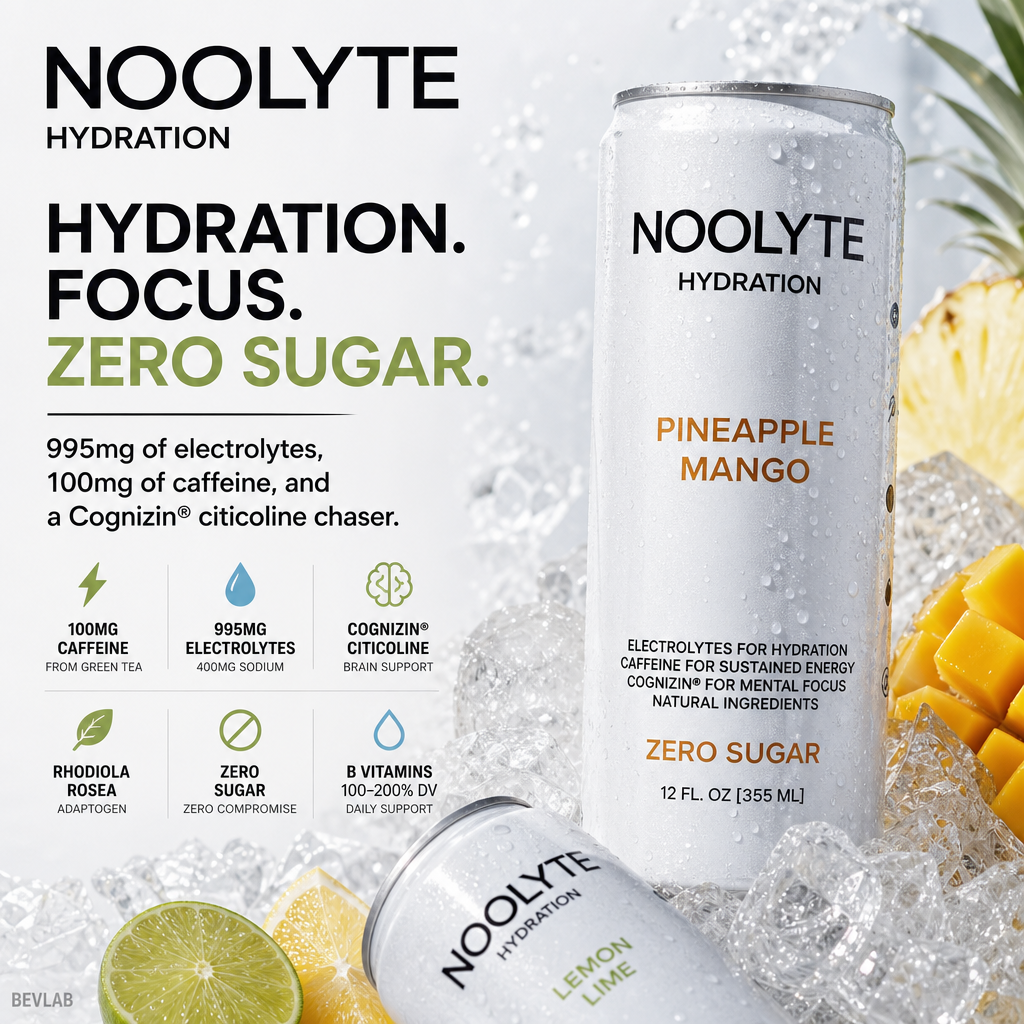
Noolyte Hydration packs 995mg of electrolytes into a zero-sugar can with 100mg caffeine, Cognizin citicoline, and far more!
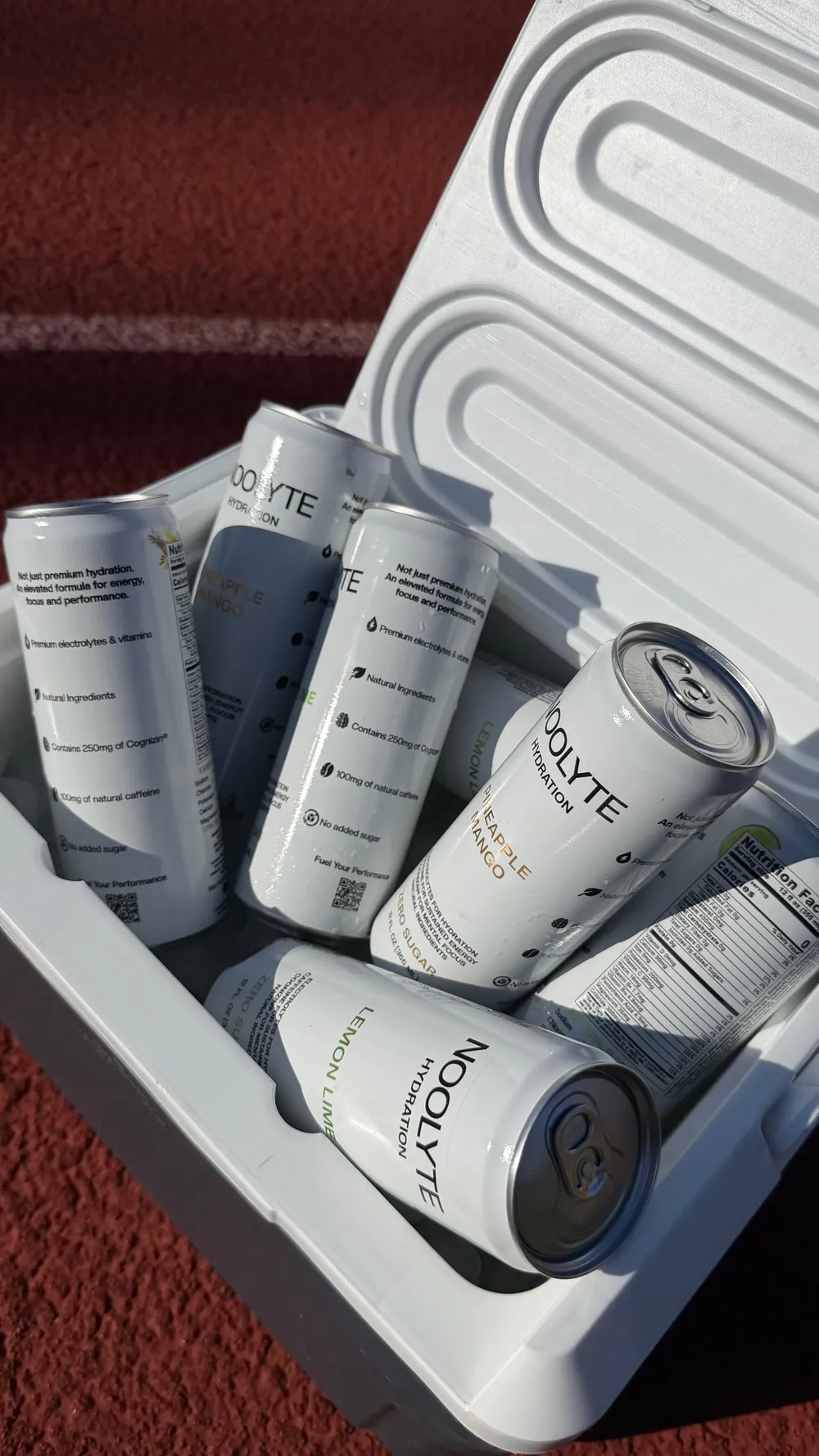
Noolyte Hydration is pitching itself less like a standard energy drink and more like a hydration product that happens to carry a caffeine and nootropic stack on top. The math on the can: 995mg of total electrolytes, led by a hefty 400mg of sodium, stacked with 100mg of caffeine, taurine, Cognizin citicoline, and Rhodiola, all in a zero-sugar package. That's a different bet than most cans in this category run, where the electrolyte panel is usually an afterthought next to the stimulant dose.
Whether that bet pays off depends on what's actually disclosed. Noolyte is transparent about its vitamin and mineral doses, less so about its nootropic actives, and that split is worth understanding before you crack one.
Noolyte Hydration Nutrition Facts
Per 12 fl oz (355mL) can:
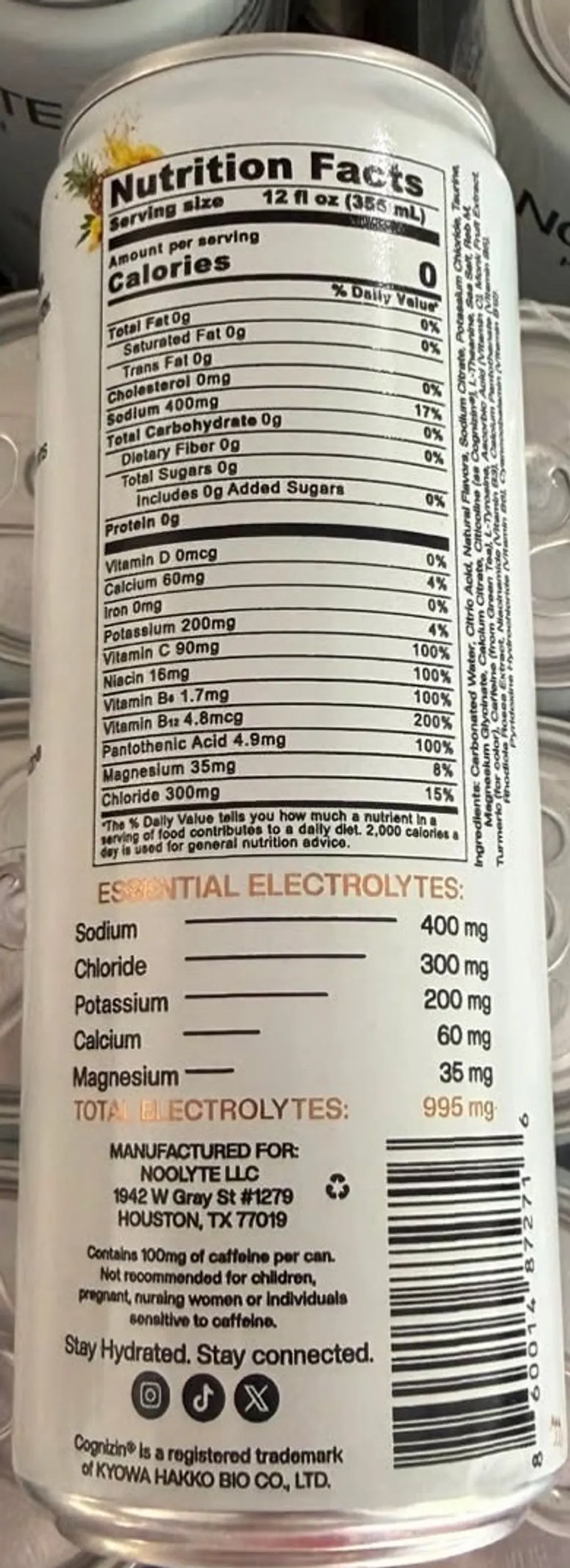
- Calories: 0
- Total Fat: 0g
- Sodium: 400mg (17%DV)
- Total Carbohydrate: 0g
- Total Sugars: 0g (includes 0g Added Sugars)
- Protein: 0g
- Vitamin C: 90mg (100%DV)
- Niacin: 16mg (100%DV)
- Vitamin B6: 1.7mg (100%DV)
- Vitamin B12: 4.8mcg (200%DV)
- Pantothenic Acid: 4.9mg (100%DV)
- Calcium: 60mg (4%DV)
- Potassium: 200mg (4%DV)
- Magnesium: 35mg (8%DV)
- Chloride: 300mg (15%DV)
- Total Electrolytes: 995mg
Noolyte Hydration Ingredients
Each 12 fl oz can provides the following key actives:
-
Caffeine - 100mg
The brand sources this caffeine from green tea rather than a synthetic anhydrous form, pairing it with taurine and citicoline instead of running it alone. At 100mg, this sits toward the lower end of the range that's actually been studied for measurable effects. Caffeine works primarily by blocking the adenosine receptors that make you feel tired, which is why even a modest dose like this can noticeably sharpen focus.[1] Reviews of caffeine's cognitive effects have found that doses as low as 32mg improve reaction time and sustained attention, with the effect holding through the higher end of the range (200-600mg) used in sleep-deprived or high-demand settings.[1] The ISSN's position stand on caffeine and exercise puts the ergogenic sweet spot for endurance and high-intensity training closer to 3-6mg/kg body weight.[2] That means Noolyte's 100mg dose is built more for everyday alertness than a pre-workout jolt. Safety reviews covering hundreds of studies have found that up to 400mg per day isn't associated with adverse cardiovascular, behavioral, or bone effects in healthy adults.[3] A single 100mg can leaves plenty of headroom before that ceiling.
-
Taurine
Taurine is a sulfur-containing amino acid that shows up in nearly every major energy drink, and Noolyte doesn't disclose the specific amount on its label. Unlike most amino acids, taurine isn't built into protein. It floats free inside cells in the heart, muscle, and brain, where it helps regulate calcium handling and cell volume.[4] Clinical trials on taurine's cardiovascular effects have found that doses between 1.5g and 3g per day can meaningfully lower blood pressure, heart rate, and fasting glucose over several weeks of daily use.[5] For exercise, a recent meta-analysis of acute single-dose taurine (typically 1-6g) found a small-to-moderate performance benefit, with the clearest gains in aerobic endurance and strength/power tasks.[6] Without a labeled dose, there's no way to know if Noolyte lands anywhere near those thresholds. Taurine is generally regarded as one of the safest amino acids studied, with no serious adverse effects reported at the doses used across this research.[4]
-
Citicoline (as Citicoline Sodium, Cognizin®)

Citicoline is the ingredient doing the cognitive heavy lifting here, and Noolyte uses the branded Cognizin form without stating the milligram amount on its label. In the body, citicoline splits into choline and cytidine, crosses into the brain, and gets rebuilt into the compound that feeds phosphatidylcholine production, the structural fat that makes up neuronal membranes.[7] Clinical trials on Cognizin specifically have used doses from 250mg to 2,000mg per day. A 12-week trial at 500mg/day in adults with age-related memory complaints found significant improvements in episodic memory and composite memory scores versus placebo.[8] Lower doses show benefits too. Both 250mg and 500mg per day reduced attention lapses on a sustained-attention test in healthy women over 28 days.[9] A Cochrane review pooling 14 trials found citicoline improves memory and behavioral outcomes with fewer adverse events than placebo.[10] Since Noolyte doesn't publish its Cognizin dose, there's no way to confirm whether the can lines up with the amounts used in these trials.
-
Rhodiola (as Rhodiola Rosea Extract)
Rhodiola rosea is the adaptogen in Noolyte's stack, added for stress resilience and mental fatigue rather than a jolt of energy, and again the label doesn't list a specific amount. Most of the strongest human trials use the standardized SHR-5 extract at doses between 170mg and 680mg per day.[11] A trial in physicians working night shifts found that 170mg/day for two weeks measurably improved a composite fatigue index covering memory, concentration, and calculation speed.[12] In a study of adults with diagnosed stress-related fatigue syndrome, essentially burnout, 576mg/day for four weeks improved burnout scores and normalized the cortisol awakening response compared to placebo.[13] The evidence for Rhodiola's effect on pure physical performance is much weaker and more inconsistent than its fatigue and mood data, with some trials showing improved endurance and others showing nothing at all.[14] Because Noolyte doesn't disclose its Rhodiola content, it's reasonable to treat this as a supporting player in the formula rather than a headline active.
-
Vitamins and Minerals
-
Vitamin C (as Ascorbic Acid) - 90mg (100%DV)
Vitamin C is dosed at 90mg, hitting 100% of the daily value. It's a nutrient your body can't make on its own, and it plays a central role in immune cell function.[15] A meta-analysis of common cold trials found that regular intake around this range can meaningfully cut the duration and severity of cold symptoms.[16] At 90mg, Noolyte covers a full day's baseline needs without pushing into gram-level territory.
-
Niacin (as Niacinamide) - 16mg (100%DV)
Niacin is dosed at 16mg, or 100% of the daily value. It's the raw material for NAD+, the redox cofactor your cells rely on for energy metabolism.[17] At this dose, niacin lines up with standard nutritional intake rather than the multi-gram amounts used in cholesterol research.[18] Don't expect a flush.
-
Vitamin B6 (as Pyridoxine Hydrochloride) - 1.7mg (100%DV)
Vitamin B6 comes in at 1.7mg, or 100% of the daily value. It's the precursor to pyridoxal-5'-phosphate, a cofactor used in over 140 enzymatic reactions including neurotransmitter synthesis.[19] This is a standard nutritional dose, well below the levels linked to peripheral neuropathy in long-term high-dose supplement use.[20]
-
Vitamin B12 (as Cyanocobalamin) - 4.8mcg (200%DV)
Vitamin B12 is dosed at 4.8mcg, or 200% of the daily value. B12 is essential for red blood cell formation and nerve function, and it's a common gap in plant-forward diets since it's found almost exclusively in animal foods.[21] There's no established upper limit for B12, and no toxicity has been reported even at doses far higher than this.[21]
-
Vitamin B5 (as Calcium Pantothenate) - 4.9mg (100%DV)
Vitamin B5 sits at 4.9mg, right around 100% of the daily value. Pantothenic acid is the building block for Coenzyme A, the molecule your mitochondria need for the Krebs cycle and dozens of other reactions.[22] It has very low toxicity even at high doses, and a standard nutritional amount like this one carries no meaningful safety concerns.[23]
-
Vitamin D3 - 0mcg (0%DV)
Vitamin D3 appears on the ingredient panel, but the nutrition facts list it at 0mcg and 0% of the daily value, meaning this can isn't delivering a measurable amount. Vitamin D typically supports calcium absorption and bone metabolism.[24] At this level, though, it isn't contributing anything functionally.
-
Calcium (as Calcium Lactate) - 60mg (4%DV)
Calcium is dosed at 60mg, about 4% of the daily value, acting here as part of the electrolyte blend rather than a bone-health play. Calcium triggers muscle contraction directly, working with the sarcoplasmic reticulum to drive the fiber-level mechanics of every squeeze and release.[25] It's a small contributor to the can's 995mg total electrolyte figure alongside sodium, potassium, and magnesium.
-
Iron - 0mg (0%DV)
Iron shows up on the ingredient panel, but the nutrition facts list it at 0mg, or 0% of the daily value, so it isn't functionally present in this formula. Iron plays a central role in oxygen transport and energy metabolism when present in meaningful amounts.[26] This can isn't delivering any.
-
Potassium (as Potassium Chloride) - 200mg (4%DV)
Potassium comes in at 200mg, about 4% of the daily value, and it's the largest single mineral contributor after sodium in this formula. Most people fall well short of recommended potassium intake, and the ratio of sodium to potassium in the diet matters more for blood pressure than either mineral alone.[27] Potassium also supports the vasodilation that helps blood reach working muscle during exercise.[28]
-
Magnesium (as Magnesium Citrate) - 35mg (8%DV)
Magnesium is dosed at 35mg, or 8% of the daily value, well below the 250-500mg used in clinical trials for muscle recovery.[29] It's a cofactor in hundreds of enzymatic reactions and acts as a natural calcium channel blocker that helps relax vascular smooth muscle.[30] At 35mg, it's a supporting piece of the electrolyte blend rather than a therapeutic dose on its own.
-
-
Other Ingredients
- Carbonated Water is the base of the can, providing the effervescence and mouthfeel. It's just water with dissolved CO2, no functional dose to speak of.
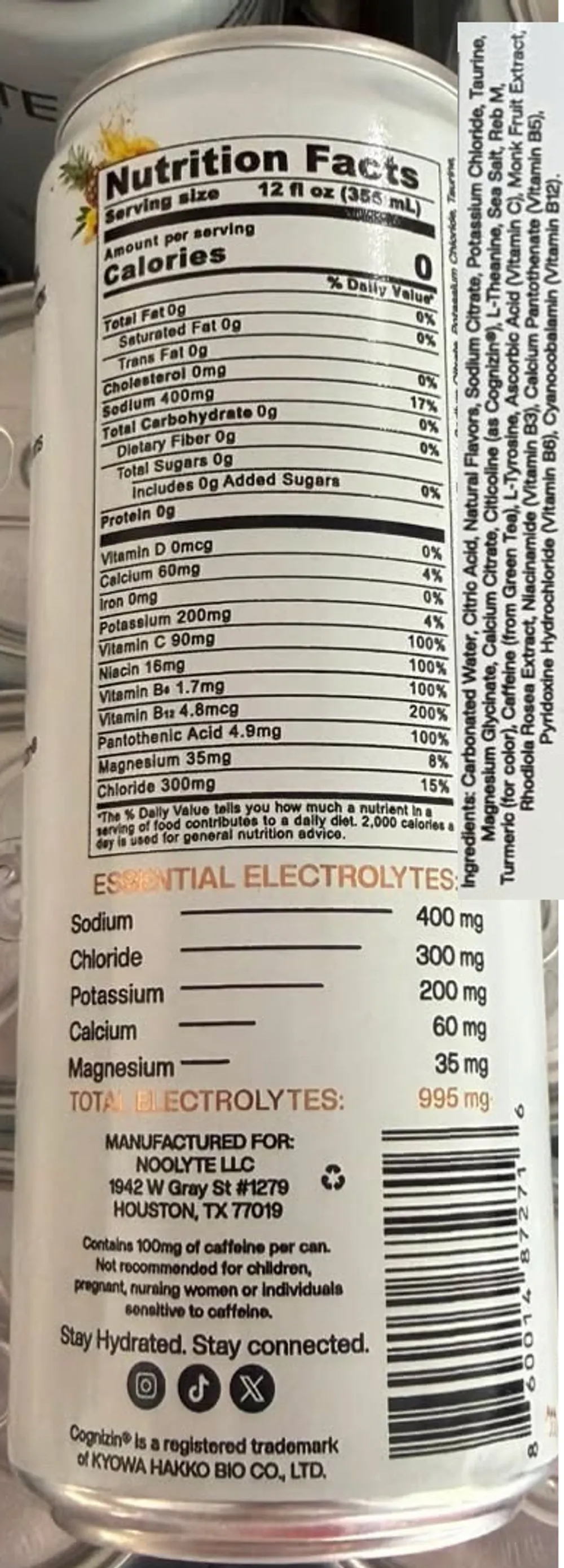
- Citric Acid is a common acidulant that balances tartness and helps stabilize the overall flavor profile.
- Natural Flavors is the broad flavoring blend responsible for Noolyte's taste. These are typically FEMA GRAS-affirmed flavor complexes derived from plant, fruit, or fermentation sources, present at levels far too low to carry any physiological effect.
- Sodium Citrate acts as a buffering agent and sodium source, contributing to the can's 400mg sodium figure while helping round out the tartness from citric acid.
- Sucralose is the non-caloric sweetener behind Noolyte's zero-sugar positioning. It's roughly 600 times sweeter than table sugar and passes through the body largely unabsorbed.
Who It's For
- Heavy sweaters and athletes: The 995mg electrolyte blend, especially that 400mg of sodium, is built for people who lose a lot through sweat and want more than the token electrolyte trace most energy drinks carry.
- Anyone sensitive to high-stimulant cans: At 100mg caffeine, Noolyte sits well below the 200-300mg range common in the category, making it a gentler option for daily use.
Strong on Electrolytes, Vague on the Extras
Noolyte's electrolyte math checks out, and 100mg of caffeine paired with full-value B-vitamins makes for a straightforward baseline, but taurine, citicoline, and Rhodiola all ship without disclosed amounts, leaving no way to confirm this can matches the doses behind the Cognizin or SHR-5 research it's built on. It's a solid hydration pick with a mild caffeine lift, not a match for anyone shopping specifically for a fully dosed nootropic stack.
References
- McLellan, Tom M. et al. "A Review Of Caffeine S Effects On Cognitive Physical And Occupational Performance." Neuroscience & Biobehavioral Reviews, 2016. https://doi.org/10.1016/j.neubiorev.2016.09.001
- Guest, Nanci S. et al. "International Society Of Sports Nutrition Position Stand Caffeine And Exercise Performance." Journal of the International Society of Sports Nutrition, 2021. https://doi.org/10.1186/s12970-020-00383-4
- Wikoff, Daniele, et al. "Systematic review of the potential adverse effects of caffeine consumption in healthy adults, pregnant women, adolescents, and children." Food and chemical toxicology : an international journal published for the British Industrial Biological Research Association, 2017. https://doi.org/10.1016/j.fct.2017.04.002
- Santulli, Gaetano, et al. "Functional Role of Taurine in Aging and Cardiovascular Health: An Updated Overview." Nutrients, 2023. https://doi.org/10.3390/nu15194236
- Tzang, Chih-Chen, et al. "Taurine reduces the risk for metabolic syndrome: a systematic review and meta-analysis of randomized controlled trials." Nutrition & diabetes, 2024. https://doi.org/10.1038/s41387-024-00289-z
- Deng, Hengzhi, et al. "Does One Shot Work? The Acute Impact of a Single Taurine Dose on Exercise Performance: A Meta-Analytic Review." Scandinavian journal of medicine & science in sports, 2025. https://doi.org/10.1111/sms.70123
- Conant, Richard, et al. "Therapeutic applications of citicoline for stroke and cognitive dysfunction in the elderly: a review of the literature." Alternative medicine review : a journal of clinical therapeutic, 2004. https://pubmed.ncbi.nlm.nih.gov/15005642/
- Nakazaki, Eri, et al. "Citicoline and Memory Function in Healthy Older Adults: A Randomized, Double-Blind, Placebo-Controlled Clinical Trial." The Journal of Nutrition, 2021. https://doi.org/10.1093/jn/nxab119
- McGlade, Erin, et al. "Improved Attentional Performance Following Citicoline Administration In Healthy Adult Women." Food and Nutrition Sciences, 2012. https://doi.org/10.4236/fns.2012.36103
- Fioravanti, M, et al. "Cytidinediphosphocholine (CDP-choline) for cognitive and behavioural disturbances associated with chronic cerebral disorders in the elderly." The Cochrane database of systematic reviews, 2005. https://doi.org/10.1002/14651858.CD000269.pub3
- Panossian, A, et al. "Rosenroot (Rhodiola rosea): traditional use, chemical composition, pharmacology and clinical efficacy." Phytomedicine : international journal of phytotherapy and phytopharmacology, 2010. https://doi.org/10.1016/j.phymed.2010.02.002
- Darbinyan, V, et al. "Rhodiola rosea in stress induced fatigue--a double blind cross-over study of a standardized extract SHR-5 with a repeated low-dose regimen on the mental performance of healthy physicians during night duty." Phytomedicine : international journal of phytotherapy and phytopharmacology, 2000. https://doi.org/10.1016/S0944-7113(00)80055-0
- Olsson, Erik M, et al. "A randomised, double-blind, placebo-controlled, parallel-group study of the standardised extract shr-5 of the roots of Rhodiola rosea in the treatment of subjects with stress-related fatigue." Planta medica, 2009. https://doi.org/10.1055/s-0028-1088346
- Walker, Thomas B, et al. "Does Rhodiola rosea possess ergogenic properties?." International journal of sport nutrition and exercise metabolism, 2006. https://doi.org/10.1123/ijsnem.16.3.305
- Carr, Anitra, et al. "Vitamin C And Immune Function." Nutrients, 2017. https://doi.org/10.3390/nu9111211
- Hemilä, Harri, et al. "Vitamin C reduces the severity of common colds: a meta-analysis." BMC public health, 2023. https://doi.org/10.1186/s12889-023-17229-8
- Yang, Yue, et al. "Nad Metabolism Bioenergetics Signaling And Manipulation For Therapy." Biochimica et Biophysica Acta (BBA) - Proteins and Proteomics, 2016. https://doi.org/10.1016/j.bbapap.2016.06.014
- Garg, Aakash, et al. "Role of Niacin in Current Clinical Practice: A Systematic Review." The American journal of medicine, 2017. https://doi.org/10.1016/j.amjmed.2016.07.038
- di, Salvo Martino Luigi, et al. "Vitamin B(6) salvage enzymes: mechanism, structure and regulation." Biochimica et Biophysica Acta (BBA) - Proteins and Proteomics, 2011. https://doi.org/10.1016/j.bbapap.2010.12.006
- Muhamad, Raman, et al. "The Role Of Vitamin B6 In Peripheral Neuropathy A Systematic Review." Nutrients, 2023. https://doi.org/10.3390/nu15132823
- Lyon, Peter, et al. "B Vitamins And One Carbon Metabolism Implications In Human Health And Disease." Nutrients, 2020. https://doi.org/10.3390/nu12092867
- Freese, Riitta, et al. "Pantothenic acid - a scoping review for Nordic Nutrition Recommendations 2023." Food & nutrition research, 2023. https://doi.org/10.29219/fnr.v67.10255
- Shichkin, Valentin P. "Vitamin B5 and vitamin U review: justification of combined use for the treatment of mucosa-associated gastrointestinal pathologies." Frontiers in pharmacology, 2025. https://doi.org/10.3389/fphar.2025.1587627
- Aloia, John F, et al. "Vitamin D Supplementation Increases Calcium Absorption Without A Threshold Effect Complete." The American journal of clinical nutrition, 2014. https://doi.org/10.3945/ajcn.113.067199
- Gehlert, Sebastian, et al. "Ca2 Dependent Regulations And Signaling In Skeletal Muscle From Electro Mechanical Coupling To Adaptation." International journal of molecular sciences, 2015. https://doi.org/10.3390/ijms16011066
- Ganz, Tomas. "Systemic iron homeostasis." Physiological reviews, 2013. https://doi.org/10.1152/physrev.00008.2013
- Adrogué, Horacio J, et al. "Sodium and potassium in the pathogenesis of hypertension." The New England journal of medicine, 2007. https://doi.org/10.1056/NEJMra064486
- Haddy, Francis J, et al. "Role of potassium in regulating blood flow and blood pressure." American journal of physiology. Regulatory, integrative and comparative physiology, 2006. https://doi.org/10.1152/ajpregu.00491.2005
- Alharran, Abdullah M, et al. "Impact Of Magnesium Supplementation On Blood Pressure An Umbrella Meta Analysis Of Randomized Controlled Trials." Current therapeutic research, clinical and experimental, 2024. https://doi.org/10.1016/j.curtheres.2024.100755
- Fatima, Ghizal, et al. "Magnesium Matters A Comprehensive Review Of Its Vital Role In Health And Diseases." Cureus, 2024. https://doi.org/10.7759/cureus.71392