
Bragg Enters Functional Soda with Tropical Zing Sparkling ACV Cans
Apple cider vinegar giant Bragg is launching Tropical Zing, a four-flavor line of 12oz sparkling ACV cans with a tablespoon of organic vinegar and no stevia or monk fruit.
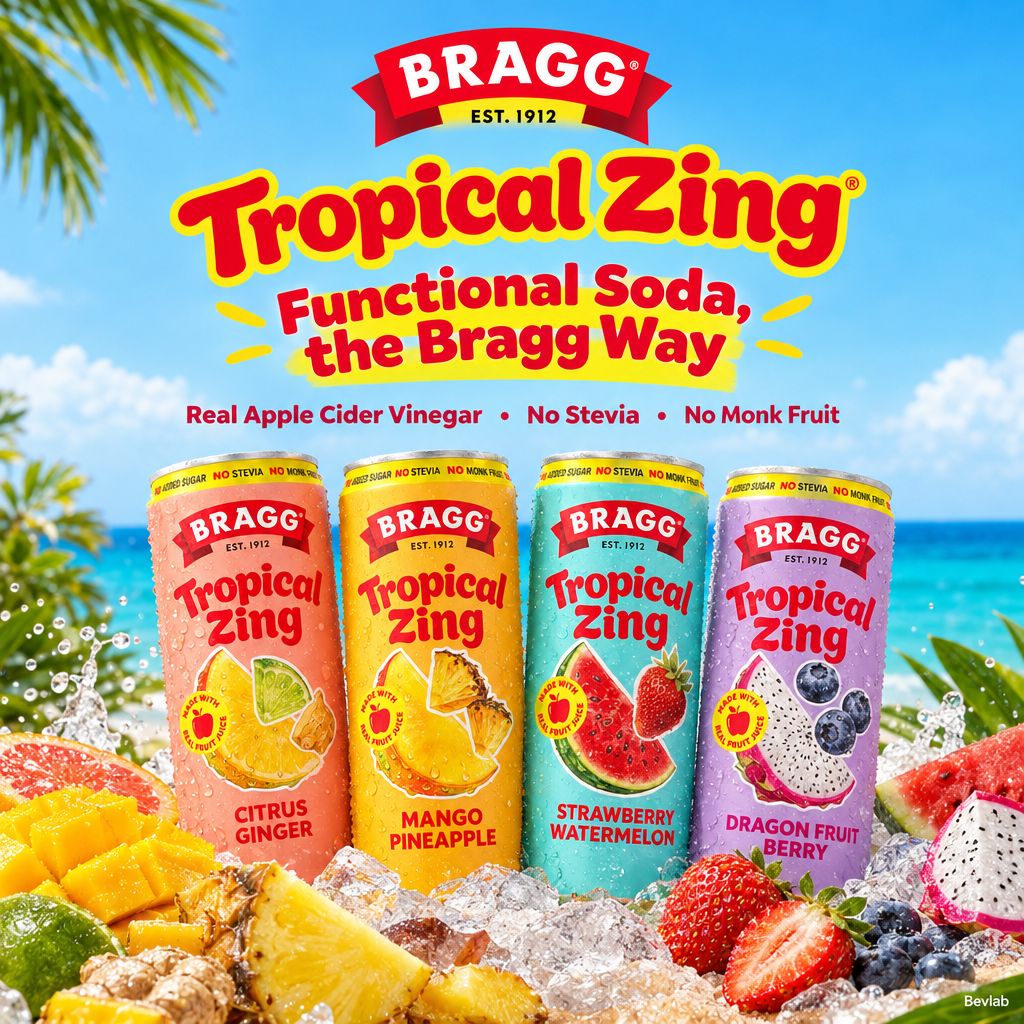
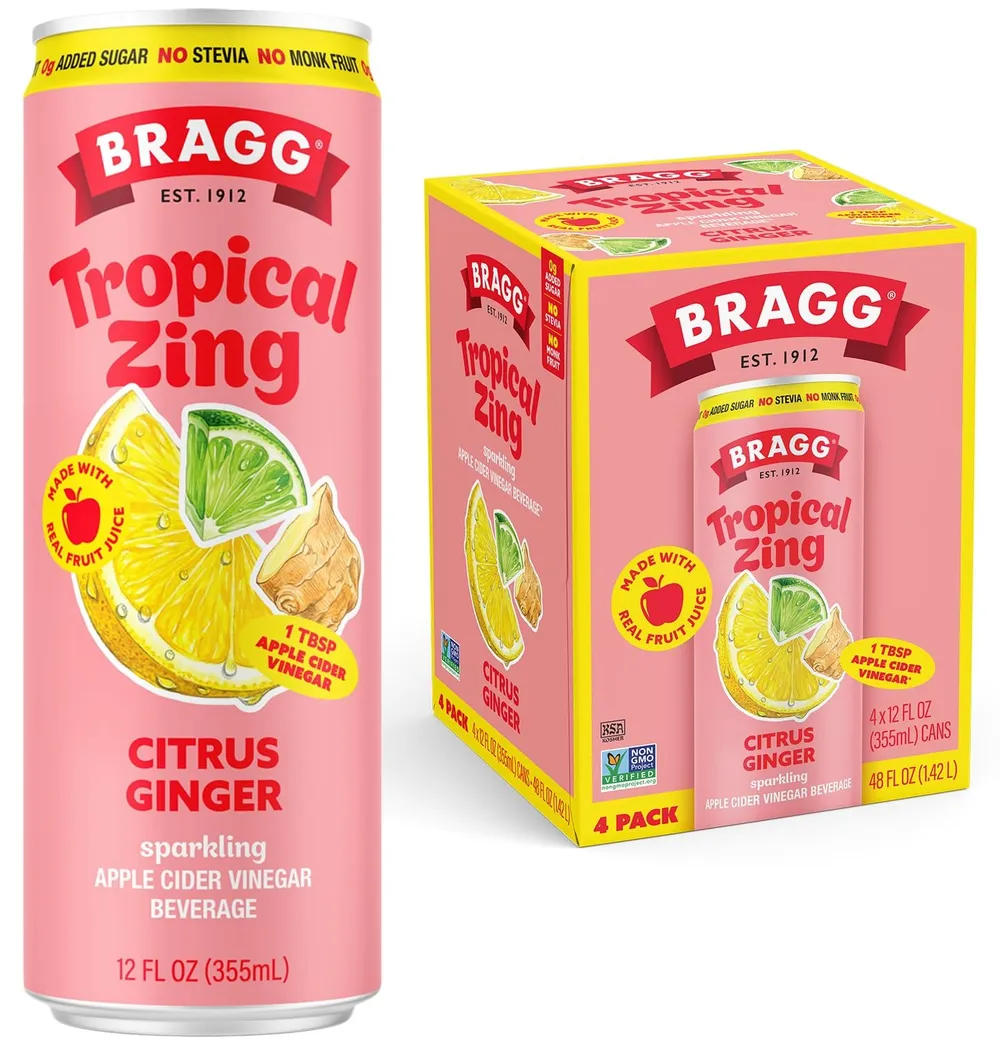
Bragg has been the default bottle of apple cider vinegar in American pantries since 1912. Now it's putting that vinegar in a can. Bragg Tropical Zing Sparkling Apple Cider Vinegar Beverage has launched in four flavors: Strawberry Watermelon, Mango Pineapple, Citrus Ginger, and Dragon Fruit Berry. Each 12oz can has one tablespoon (about 15mL) of Bragg's organic apple cider vinegar, 40 calories, and 0g added sugar, with no stevia or monk fruit.
That drops Bragg right into the functional soda aisle Olipop and Poppi built. And when it comes to the ACV part of the pitch, no brand has a better claim to it.
A Pantry Staple Goes Sparkling
This isn't Bragg's first drink. The brand has sold ready-to-drink products before, but Tropical Zing is a new line. Bragg says the flavors draw on the tropical regions that shaped the wellness thinking of founders Paul and Patricia Bragg.
The business case is simpler: taste. In a Bragg survey of 1,000 US adults run by Talker Research, about one in three said the taste of apple cider vinegar keeps them from making it a regular habit. A fruity sparkling can is the obvious fix. CEO Linda Boardman calls the line "a natural evolution" for the brand that "introduced generations of consumers to apple cider vinegar as a daily wellness ritual."
The cans are Non-GMO Project Verified, and Bragg lists them as vegan, gluten-free, and kosher, with no artificial ingredients.
Sweetened by Fruit Juice
This is the part the launch coverage skipped. The Mango Pineapple can lists 40 calories, 9g total carbohydrate, and 9g total sugars, with 0g of that counted as added sugar. The ingredient list is short: carbonated water, organic apple cider vinegar, apple juice concentrate, pineapple juice concentrate, mango juice concentrate, and natural flavors. These numbers are from the Mango Pineapple can, and the other flavors' panels may differ slightly.
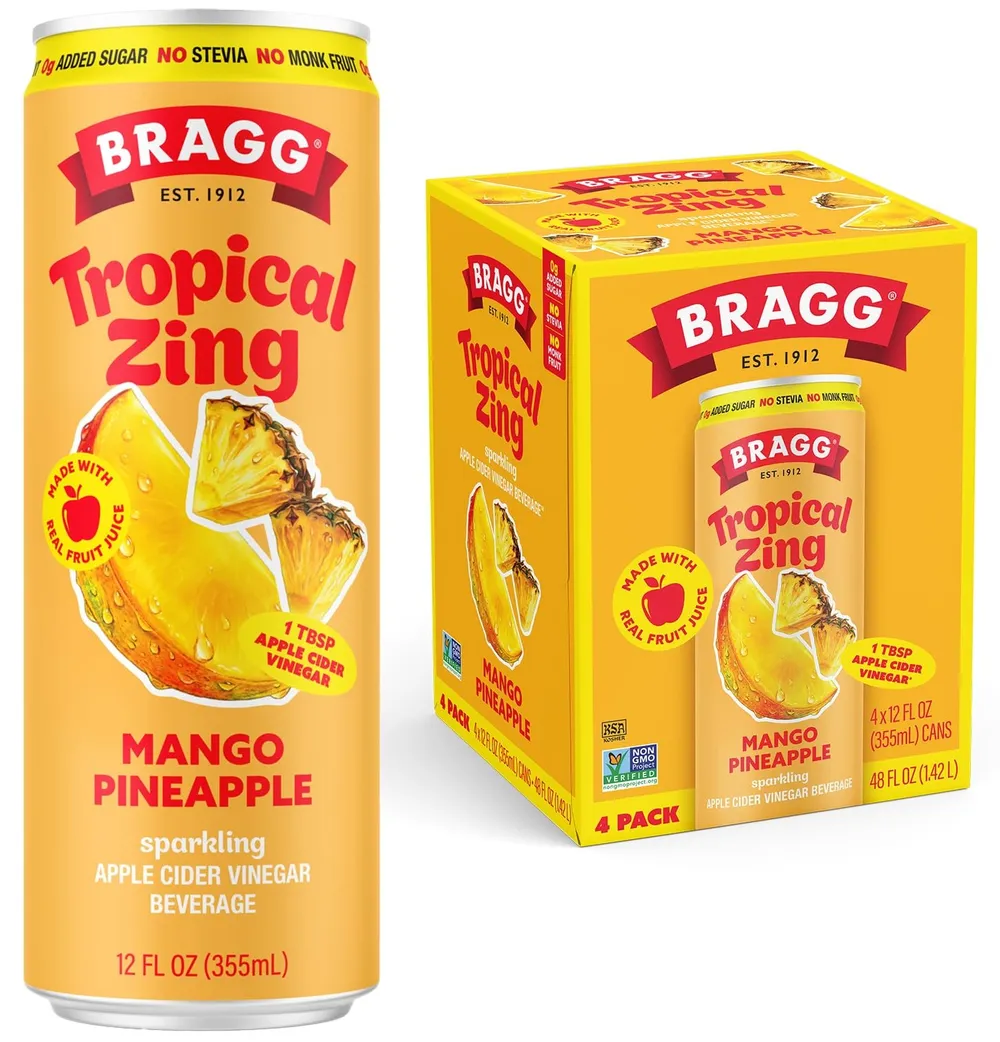
So the sweetness comes from the sugar in fruit juice concentrate, not from stevia, monk fruit, or any other zero-calorie sweetener. If you can't stand the aftertaste of those sweeteners, that's a win. Just don't confuse "0g added sugar" with "sugar-free." There are still 9g of sugar in the can.
What a Tablespoon Does in the Research
Vinegar research mostly looks at blood sugar, cholesterol, and body weight. A 2014 review found mixed results and concluded that bigger, longer, better-designed trials are needed before anyone makes definitive health claims.[1]
The strongest blood sugar data comes from people with type 2 diabetes. A 2025 meta-analysis of seven trials found ACV lowered fasting blood sugar and HbA1c, with larger effects above 10mL/day.[2] The trials it pooled used 13.75 to 30mL/day, so a 15mL can sits at the low end of that range. A 2021 meta-analysis of nine trials (686 adults, many with diabetes or overweight) found modest drops in fasting glucose and total cholesterol.[3] Several trials used 30mL/day (about two tablespoons). One was an 8-week trial in adults with type 2 diabetes, where participants and researchers knew who was getting ACV.[4]
The weight data is more demanding. A 2025 meta-analysis of 10 trials (789 adults with overweight or type 2 diabetes) found ACV reduced body weight, BMI, and waist size. But 30mL/day was the only dose that significantly reduced body weight. Doses of 5 to 15mL/day didn't reach significance.[5] Another 12-week trial paired 30mL/day with a calorie-restricted diet.[6] In other words, one can a day is half the dose that moved the scale, in people who already had weight or blood sugar issues.
Timing matters too. A set of crossover trials found about two teaspoons of vinegar at mealtime cut the post-meal blood sugar rise by about 20% when the meal was a bagel and juice. When the sugar came as pure dextrose (a simple sugar), vinegar did nothing.[7] The researchers say the effect seems tied to how complex carbs get digested. A juice-sweetened can sipped on its own is a different setup from vinegar taken with a starchy meal.
Mind Your Enamel

Vinegar is acidic. In a lab study, enamel slices from human teeth lost minerals after soaking in several vinegars for up to 8 hours, though the authors cautioned that real mouths don't work like a soaking dish.[8] A carbonated, juice-diluted can isn't the same as straight vinegar, but rinsing with water afterward makes sense if you drink one every day.
On Amazon Now, Wider Rollout in Late October
Tropical Zing is already on sale on Amazon in four-packs. Bragg says a wider rollout through major e-commerce retailers starts in late October 2026. For the full label breakdown and current prices, see our Bragg Tropical Zing product page.
Tropical Zing is the easiest way yet to get a daily tablespoon of ACV without the pucker, and skipping stevia and monk fruit will win over people who hate that aftertaste. Just treat it as a better-for-you soda, not a stand-in for the 30mL/day doses the weight research actually tested.
References
-
Petsiou et al. "Effect and mechanisms of action of vinegar on glucose metabolism, lipid profile, and body weight." Nutrition Reviews, 2014. https://pubmed.ncbi.nlm.nih.gov/25168916/
-
Arjmandfard et al. "Effects of apple cider vinegar on glycemic control and insulin sensitivity in patients with type 2 diabetes: A GRADE-assessed systematic review and dose-response meta-analysis of controlled clinical trials." Frontiers in Nutrition, 2025. https://pubmed.ncbi.nlm.nih.gov/39949546/
-
Hadi et al. "The effect of apple cider vinegar on lipid profiles and glycemic parameters: a systematic review and meta-analysis of randomized clinical trials." BMC Complementary Medicine and Therapies, 2021. https://pubmed.ncbi.nlm.nih.gov/34187442/
-
Jafarirad et al. "The improvement effect of apple cider vinegar as a functional food on anthropometric indices, blood glucose and lipid profile in diabetic patients: a randomized controlled clinical trial." Frontiers in Clinical Diabetes and Healthcare, 2023. https://pubmed.ncbi.nlm.nih.gov/38028980/
-
Castagna et al. "Effect of Apple Cider Vinegar Intake on Body Composition in Humans with Type 2 Diabetes and/or Overweight: A Systematic Review and Meta-Analysis of Randomized Controlled Trials." Nutrients, 2025. https://pubmed.ncbi.nlm.nih.gov/41010525/
-
Khezri et al. "Beneficial effects of Apple Cider Vinegar on weight management, Visceral Adiposity Index and lipid profile in overweight or obese subjects receiving restricted calorie diet: A randomized clinical trial." Journal of Functional Foods, 2018. https://doi.org/10.1016/j.jff.2018.02.003
-
Johnston et al. "Examination of the antiglycemic properties of vinegar in healthy adults." Annals of Nutrition and Metabolism, 2010. https://pubmed.ncbi.nlm.nih.gov/20068289/
-
Willershausen et al. "In vitro study on dental erosion caused by different vinegar varieties using an electron microprobe." Clinical Laboratory, 2014. https://pubmed.ncbi.nlm.nih.gov/24839821/