Teen Energy Drink Use Is Back Above 2010 Levels, Led by Young Athletes
A University of Michigan analysis of 158,946 US teens finds energy drink use fell through 2017, then rebounded to 35.4% among athletes in 2024.
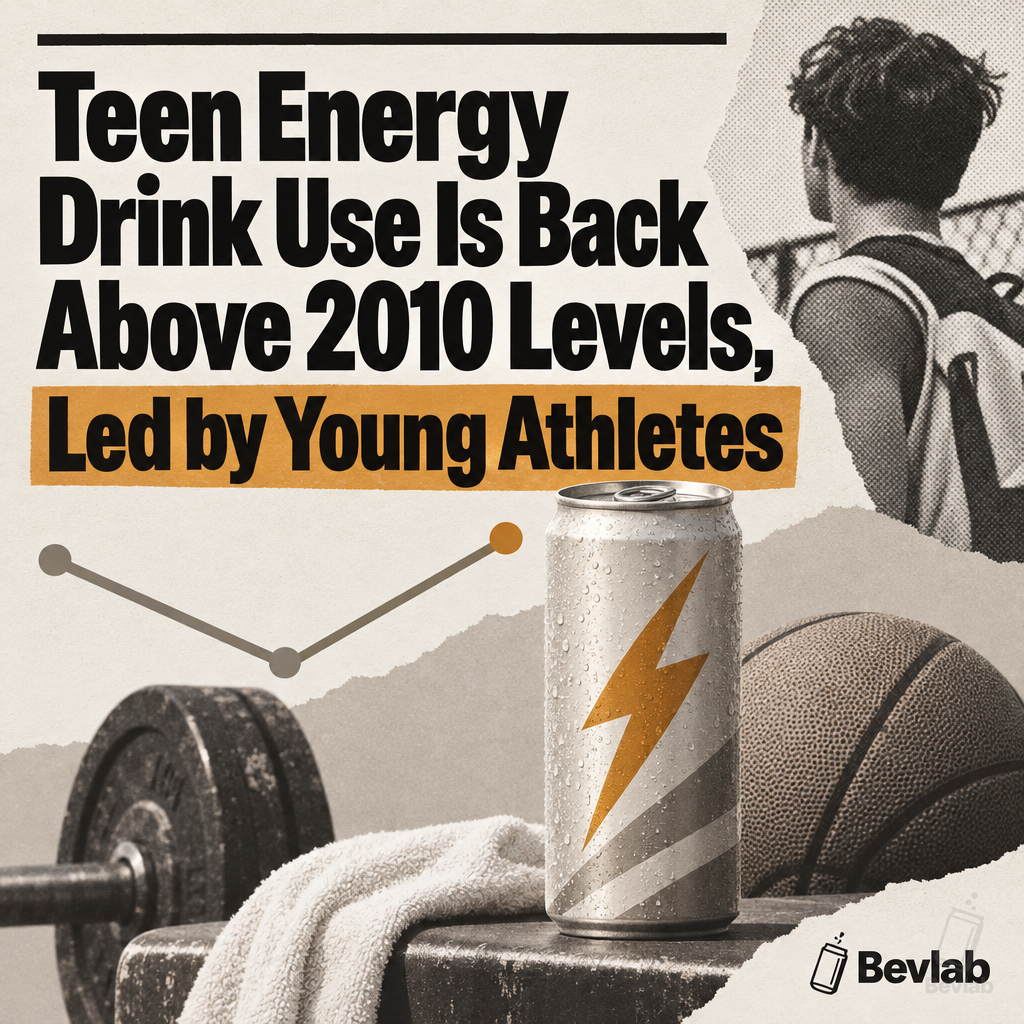
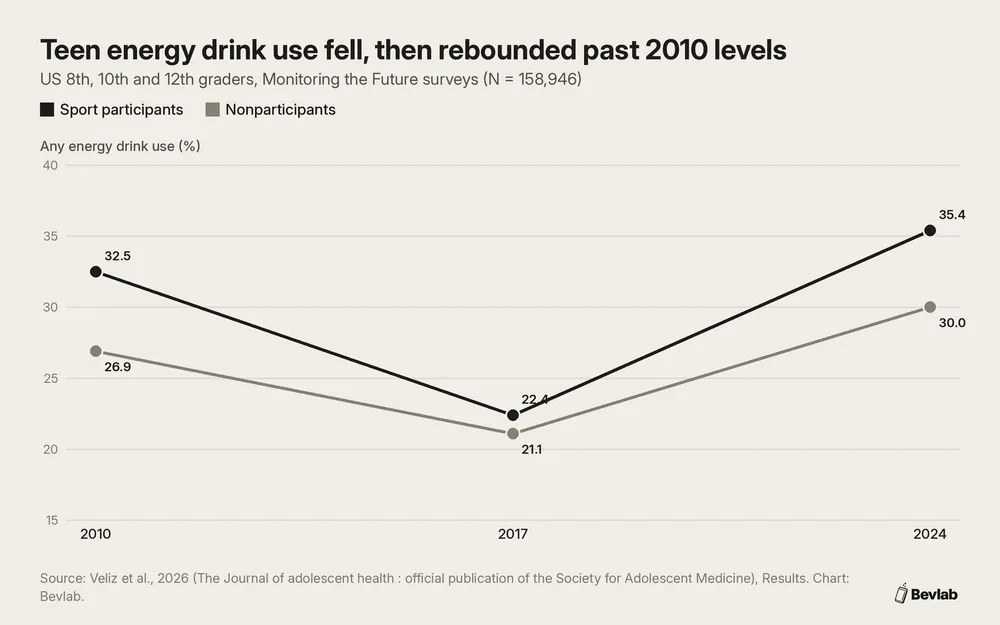
After years of decline, teen energy drink use is climbing again, and young athletes are leading it. A University of Michigan team analyzed 15 years of national survey data. They found that use among US 8th, 10th, and 12th graders dropped through 2017 and then rebounded past where it started in 2010.[1]
If you're a parent, read this first. Bevlab will never tell you it's fine for kids to drink energy drinks. If your teenager says they need caffeine to get through the day, the bigger worry is usually how they're sleeping, not the can itself.
What the Researchers Found
The study, published in the Journal of Adolescent Health, used Monitoring the Future survey data from 158,946 students surveyed between 2010 and 2024.[1] Across the whole sample, 27.3% of teens reported using energy drinks, 12.0% said they had at least one a day, and 5.1% said they had two or more a day.[1]
The trend makes a U shape. Among teens who didn't play sports, use fell from 26.9% in 2010 to 21.1% in 2017, then rose to 30.0% in 2024. Among sport participants, it went from 32.5% to 22.4%, then up to 35.4%.[1]
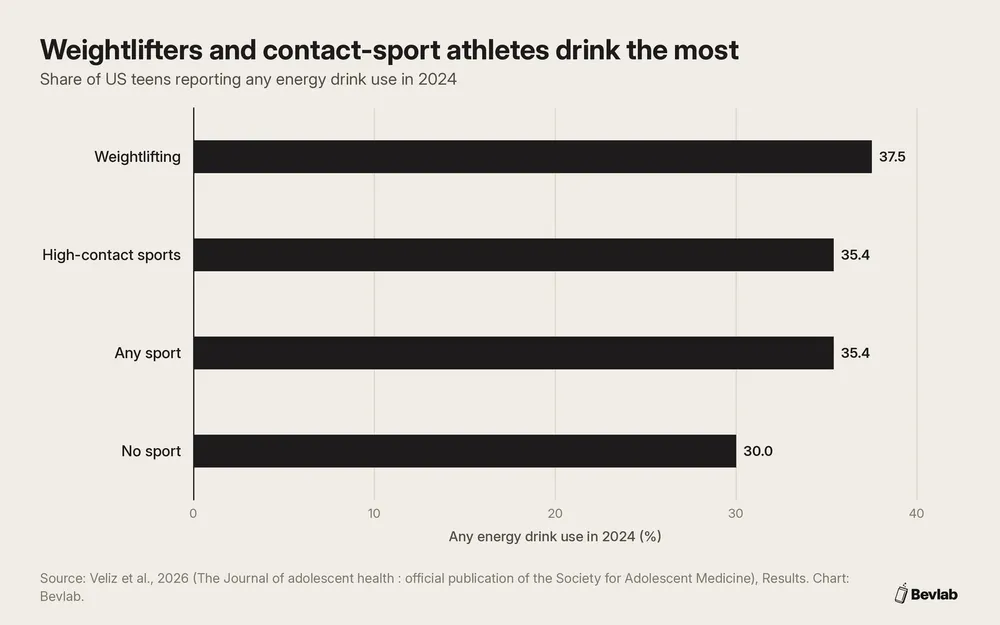
Some sports stood out in 2024. Among teens who lift weights, 37.5% reported energy drink use, and so did 35.4% of high-contact athletes. After the researchers adjusted for other factors, weightlifting and high-contact sports were each linked to roughly 23% to 24% higher prevalence of use.[1] The authors also found that girls are closing the gap with boys.[1]
The authors cite guidance of about 100mg of caffeine a day for adolescents and note that a single energy drink may meet or exceed it.[1] They suggest that marketing built around fitness and performance is a plausible driver of the rebound, but they didn't measure marketing exposure.[1]
What the Study Can't Tell You
This is a cross-sectional survey based on self-report. It shows patterns, not cause and effect. It didn't track total caffeine intake or the specific products teens drank. The survey question also named Red Bull, Full Throttle, Monster, and Rockstar as examples, so it may not fully reflect the brands teens choose today.[1]
Parents: Start With Sleep
Teenagers should have more natural energy than almost anyone. A teen who feels they need caffeine to function is telling you something about their sleep, and it's usually a serious problem. Before you argue about the can, find out what time they're actually falling asleep and how much screen time comes before bed.
Part of the problem isn't their fault. School start times are far too early for adolescents, and caffeine can easily become how a tired kid copes with a schedule that works against their body.
Older teens (16 and up) often drink something no matter what their parents say. For them, a lower-caffeine can is a more reasonable compromise than the 200mg to 300mg cans that crowd the cooler. Jocko Fuel GO has 95mg of caffeine per can, just under that roughly 100mg guidance. It's harm reduction, not a recommendation, and it doesn't fix anything.
For more on this argument, see our coverage of the teen energy drink debate.
The rebound is led by young athletes, and their parents and coaches can do the most about it by fixing sleep before anyone reaches for a can.
References
- Veliz, Philip T., et al. "Energy Drink Consumption Among U.S. Adolescents and Adolescent Athletes, 2010-2024." The Journal of Adolescent Health : Official Publication of the Society for Adolescent Medicine, Nov. 2026, doi:10.1016/j.jadohealth.2026.09.019. https://doi.org/10.1016/j.jadohealth.2026.09.019
Tagged