Yesly Energy: The Essentia Crew Takes a Measured Swing at Caffeine
A hydration brand learns to caffeinate without going overboard
Yesly Energy pairs 114mg of green tea caffeine with electrolytes and B vitamins in a stevia-sweetened, 10-15 calorie can.
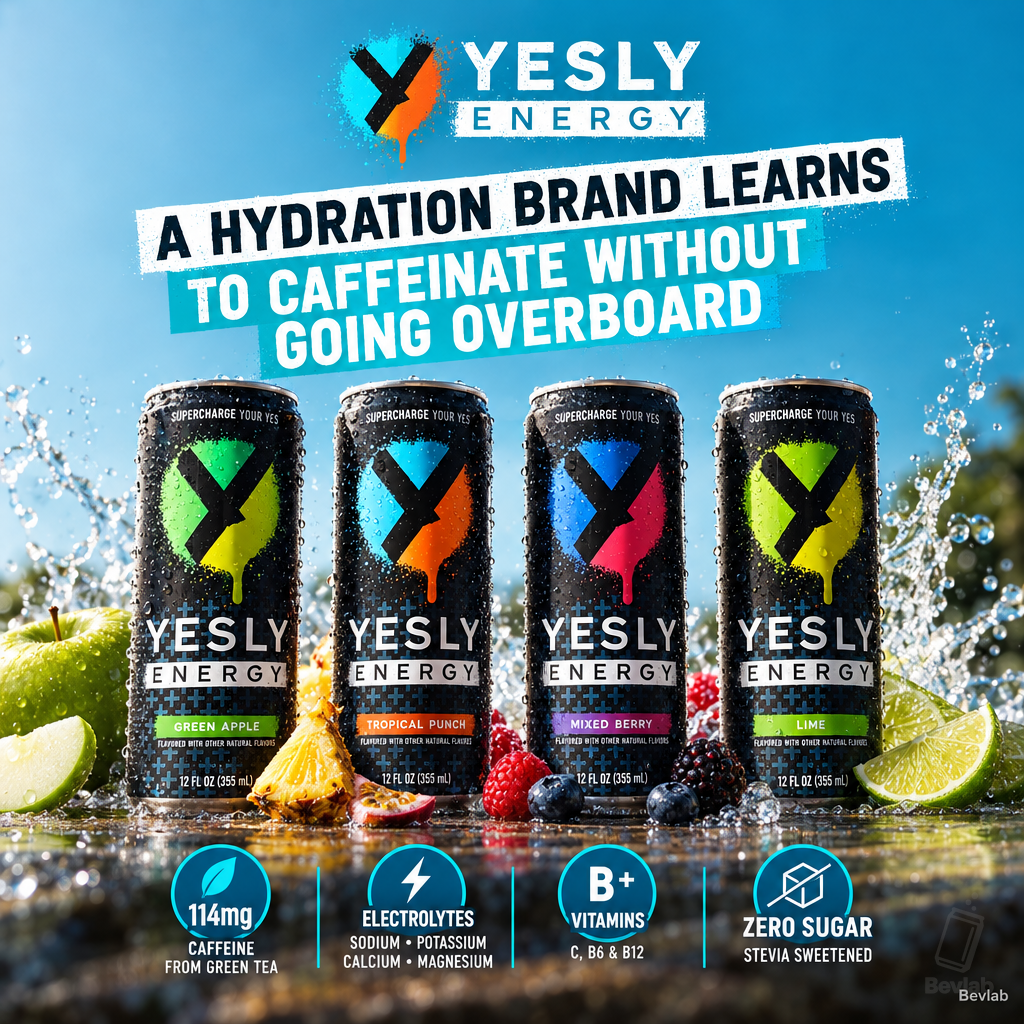
Ken Uptain spent two decades building Essentia into a national premium bottled water brand, then sold it to Nestlé in 2021. Yesly is his second act, started with former Essentia CEO Scott Miller as a canned enhanced water company based in Sarasota, Florida. Yesly Energy is the brand's caffeinated branch: the same hydration-first playbook (electrolytes, vitamins, stevia, no sugar) with a moderate dose of caffeine extracted from green tea layered on top.
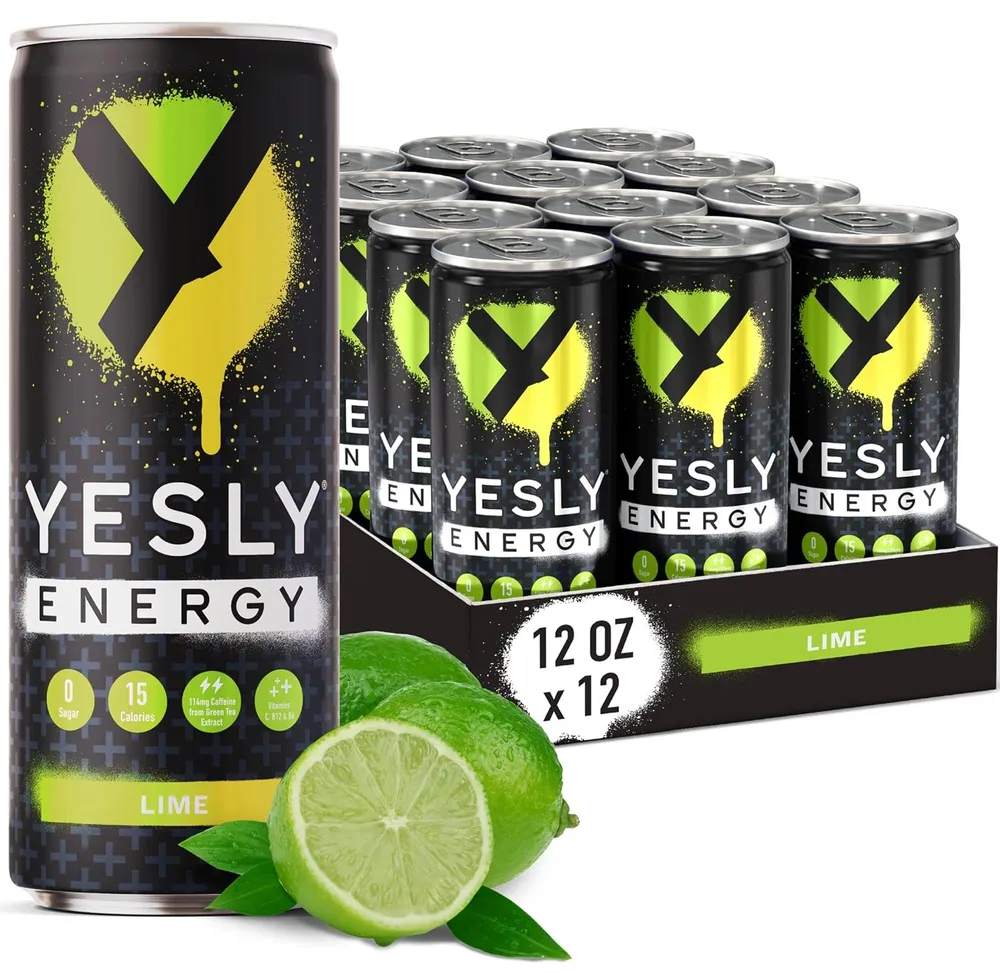
That moderate dose is the personality of the whole can. Each 12 fl oz can lists 114mg of caffeine, a restrained number for a drink with "Energy" on the front, and Yesly's product page pitches it as a caffeine boost from nature with zero sugar. Around the caffeine, the label stacks potassium, sodium, magnesium, and calcium with vitamin C and four B vitamins. It plays more like a functional water with a lift than a gym-bag stimulant, and that's the lane Yesly wants.
From Essentia to Yesly
Uptain founded Essentia in 1998 and grew it into a nationwide premium water player over the next two decades. Miller, previously CEO of Tampico Beverages, took over as Essentia's CEO in June 2020 and steered the final stretch before the Nestlé deal closed in March 2021, a sale reported in the high nine figures.
Neither of them stayed on the sidelines for long. In 2022 the pair announced Yesly, a line of enhanced still waters in tall 16 fl oz cans with vitamins B6, B12, and C, electrolytes, and stevia. Uptain financed the launch and took a supporting role, Miller became CEO, and Essentia's former head of finance, Justin Connell, signed on as CFO. The retail rollout was set to start in early 2023 through New York metro distributor Big Geyser, with California, Florida, and Seattle on the regional target list. The tagline, "Say yes to what's next," came straight out of the name.
Yesly now splits its range into Functional Water and Functional Energy, and the family resemblance is obvious once you compare them. The energy can keeps the vitamin C, B6, and B12 from the water line, keeps the electrolytes and stevia, and adds caffeine plus pantothenic acid and biotin.
The result is a drink built by water people. Instead of chasing the stimulant ceiling, Yesly Energy treats caffeine as one feature in a hydration drink, and the formula below reflects that.
Yesly Energy Nutrition Facts
These numbers come from the Green Apple can. Each 12 fl oz (355mL) can lists:
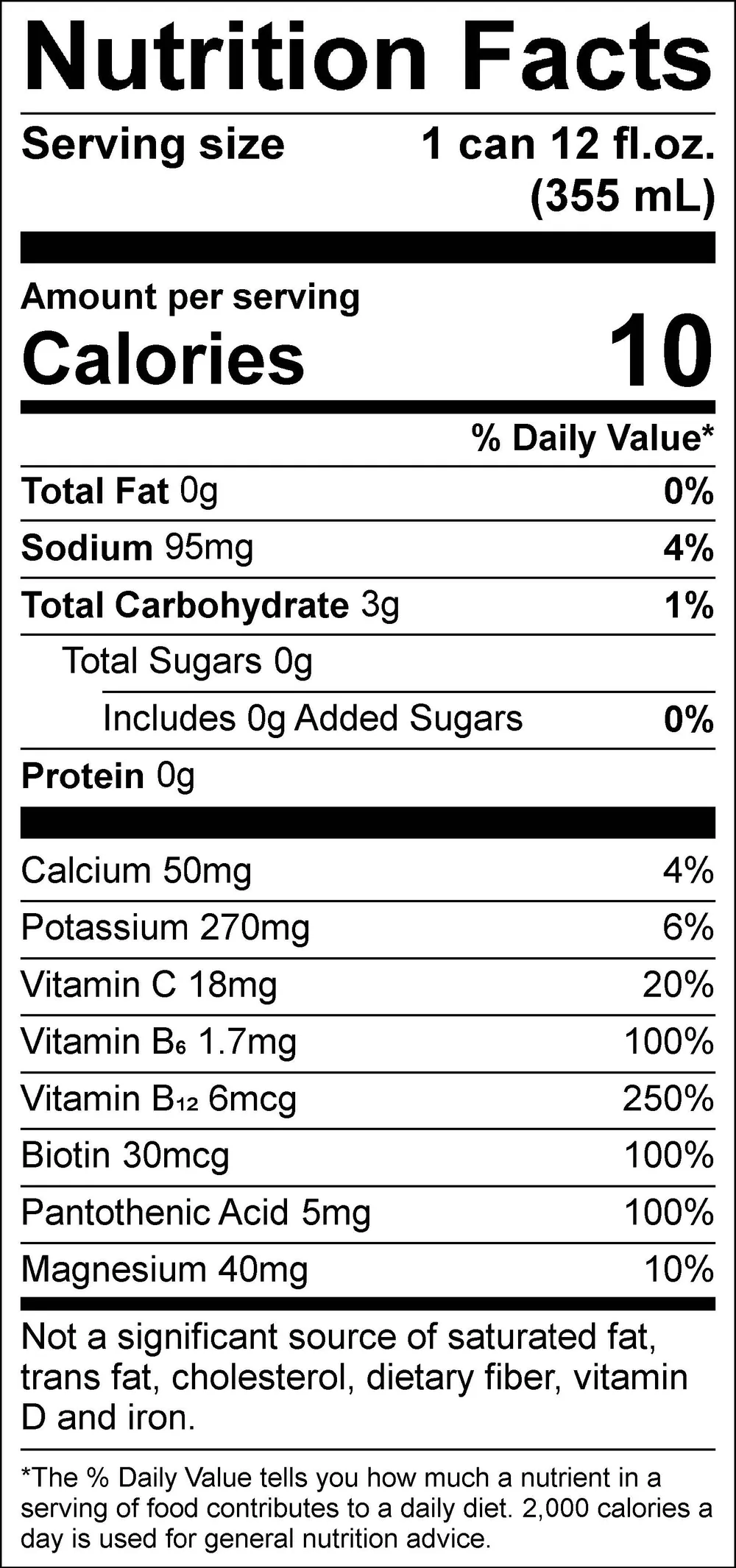
- Calories: 10
- Total Fat: 0g (0% DV)
- Total Carbohydrate: 3g (1% DV)
- Total Sugars: 0g
- Added Sugars: 0g (0% DV)
- Total Sugars: 0g
- Protein: 0g
- Vitamins and Minerals
- Sodium: 95mg (4% DV)
- Potassium: 270mg (6% DV)
- Calcium: 50mg (4% DV)
- Magnesium: 40mg (10% DV)
- Vitamin C: 18mg (20% DV)
- Vitamin B6: 1.7mg (100% DV)
- Vitamin B12: 6mcg (250% DV)
- Biotin: 30mcg (100% DV)
- Pantothenic Acid: 5mg (100% DV)
Depending on flavor, a can runs 10-15 calories with zero sugar, and stevia does the sweetening. The B vitamins mostly sit at an even 100% DV, with B12 pushed to 250%. The electrolytes are present in modest, everyday amounts rather than sports-drink loading doses, which fits a can meant for an ordinary afternoon more than a two-hour run.
Yesly Energy Ingredients
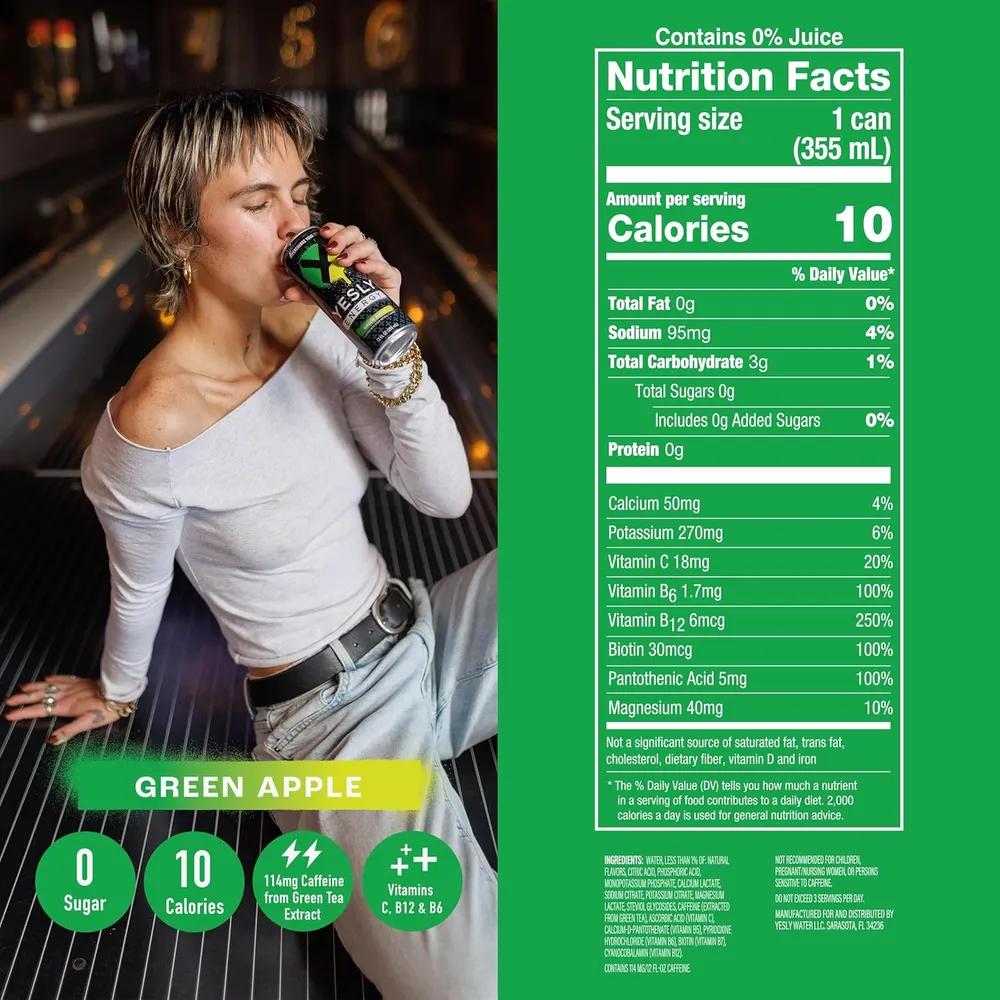
Each 12 fl oz can provides the following key actives:
-
Caffeine (as Green Tea) - 114mg
Caffeine is the only stimulant on the label, and Yesly lists it as caffeine extracted from green tea. That's a sourcing detail, not a different molecule. Once isolated, caffeine from green tea works like caffeine from any other source: it blocks the signal in your brain that makes you feel tired, which raises alertness and lowers perceived fatigue.[1,2] The label doesn't list L-theanine or any other tea compounds, so don't expect a built-in calming partner.
At 114mg, the dose lands squarely in the range where research keeps finding benefits. A broad review found that roughly 40-300mg improves alertness, vigilance, attention, and reaction time.[2] Sports-performance research uses heavier doses of 3-6mg/kg, about 210-420mg for a 70kg adult, so this can isn't trying to be a pre-workout.[3]
A review of 381 studies supported up to 400mg/day as not associated with overt adverse effects in healthy adults, and three cans would total 342mg, still under that mark.[4] Response still varies a lot from person to person, and timing matters for sleep.[5,6] Children, pregnant or nursing women, and people sensitive to caffeine should be cautious with any caffeinated drink.
-
Vitamins and Minerals
-
Potassium (as Monopotassium Phosphate and Potassium Citrate) - 270mg (6% DV)
Potassium is the biggest electrolyte on the panel. The ingredient list shows two sources, monopotassium phosphate and potassium citrate, and the label gives only the 270mg total, not a split between them. Potassium helps manage fluid balance and muscle signaling, and you lose it in sweat at fairly steady rates.[7] Most U.S. adults also eat well below recommended potassium intakes, so a few hundred milligrams from a drink is a small, useful top-up.[8]
-
Sodium - 95mg (4% DV)
Sodium comes in at 95mg, and the sodium salt on the ingredient list is sodium citrate. Along with supplying sodium for fluid balance, sodium citrate buffers acidity, which helps keep a tart drink from tasting harsh. Sports researchers have tested sodium citrate as a performance aid, but at doses around 500mg per kilogram of body weight, far beyond anything in a can like this.[9] Here it's an electrolyte and flavor tool.
-
Calcium (as Calcium Lactate) - 50mg (4% DV)
Calcium arrives as calcium lactate at 50mg. Calcium is the trigger for muscle contraction and one of the minerals you lose in sweat, so it earns a spot in an electrolyte lineup. At 4% DV, though, it's a supporting player. Don't count it toward bone health goals, where research typically involves supplemental doses closer to 1,000mg a day.
-
Magnesium - 40mg (10% DV)
Magnesium shows up on the ingredient list as magnesium lactate and lands at 40mg, or 10% DV. It's a cofactor in more than 300 enzyme reactions, including energy production and muscle contraction.[10] Studies on blood pressure, soreness, and stress generally used 300-400mg a day, so this is maintenance-level support rather than a research dose.[11]
-
Vitamin C - 18mg (20% DV)
Vitamin C, listed as ascorbic acid, comes in at 18mg. It supports collagen formation and immune cell function, and as an acid it also adds a little brightness to the flavor. At 20% DV, it's a modest contribution to your daily total. It's nowhere near the gram-level amounts used in common cold research, so treat it as a nutritional extra.
-
Vitamin B6 - 1.7mg (100% DV)
Vitamin B6 is listed as pyridoxine hydrochloride at 1.7mg. Your body converts it into pyridoxal-5'-phosphate, which helps run more than 140 enzyme reactions, including amino acid metabolism and neurotransmitter production. The B6 safety conversation is about stacking. The EFSA adult upper limit is 12mg a day, so one can sits far below it, but pyridoxine adds up if you also take a multivitamin, B-complex, or pre-workout.
-
Vitamin B12 - 6mcg (250% DV)
Vitamin B12 comes as cyanocobalamin, the most stable and widely used supplemental form, at 6mcg. B12 supports red blood cell formation and nerve health. Where it clearly helps energy is in people who are low. In people without a deficiency, a meta-analysis of 16 trials found no measurable effect on cognition or depressive symptoms, so read the 250% DV as coverage, not a buzz.[12]
-
Biotin - 30mcg (100% DV)
Biotin (vitamin B7) hits 100% DV at 30mcg. It's a cofactor for enzymes that handle fat synthesis, glucose production, and amino acid breakdown. This is a nutritional amount. The lab-test interference issue associated with biotin involves high-dose supplements, a different league from the microgram amount in this can, though it never hurts to tell your doctor about any supplements before blood work.
-
Pantothenic Acid (Vitamin B5) - 5mg (100% DV)
Pantothenic acid, listed as calcium-D-pantothenate, comes in at 5mg. Your body uses it to build Coenzyme A, which sits at the center of turning carbs and fat into usable energy. The 5mg matches the adult adequate intake, and toxicity isn't a concern anywhere near this amount. Like the other B vitamins here, it fills a nutritional gap rather than acting as a stimulant.
-
-
Sweeteners and Flavors
-
Stevia (Steviol Glycosides)
Steviol glycosides, the sweet compounds from stevia leaf, handle all of the sweetening. They're hundreds of times sweeter than sugar, so a tiny amount does the job without calories.[13] Regulators set an acceptable daily intake of 4mg/kg of body weight (as steviol equivalents), well above typical beverage use.[14] In a four-week trial, a daily stevia-sweetened beverage didn't change gut microbiome composition compared with a sugar-sweetened one.[15] Some drinkers notice a lingering or slightly bitter finish with stevia, which flavor systems are built to cover.[16]
-
Natural Flavors
Natural flavors carry the fruit profile. Under FDA rules, "natural flavor" describes where a flavoring comes from (fruit, plant, or other natural sources) rather than its chemistry, and brands don't have to list the individual components.[17] They're here for taste, not function.
-
-
Other Ingredients
- Water - The base of the drink and the first ingredient on the label. Even mild dehydration, around 1-2% of body weight, has been linked to dips in concentration and mood, which is the case for building an energy drink on a hydration base.[18,19]
- Citric Acid - Adds tartness and helps preserve the drink. It's the most widely used organic acid in food and beverages.[20]
- Phosphoric Acid - A second acidulant, the same one behind cola's bite, that sharpens flavor and helps with shelf life. Acidic drinks in general are worth sipping with your teeth in mind: one analysis of 379 U.S. beverages found 93% had a pH below 4.0.[21]
Choosing Your Yesly Flavor
The label numbers above come from the Green Apple can, so check the panel on other flavors, since values can shift slightly between them.
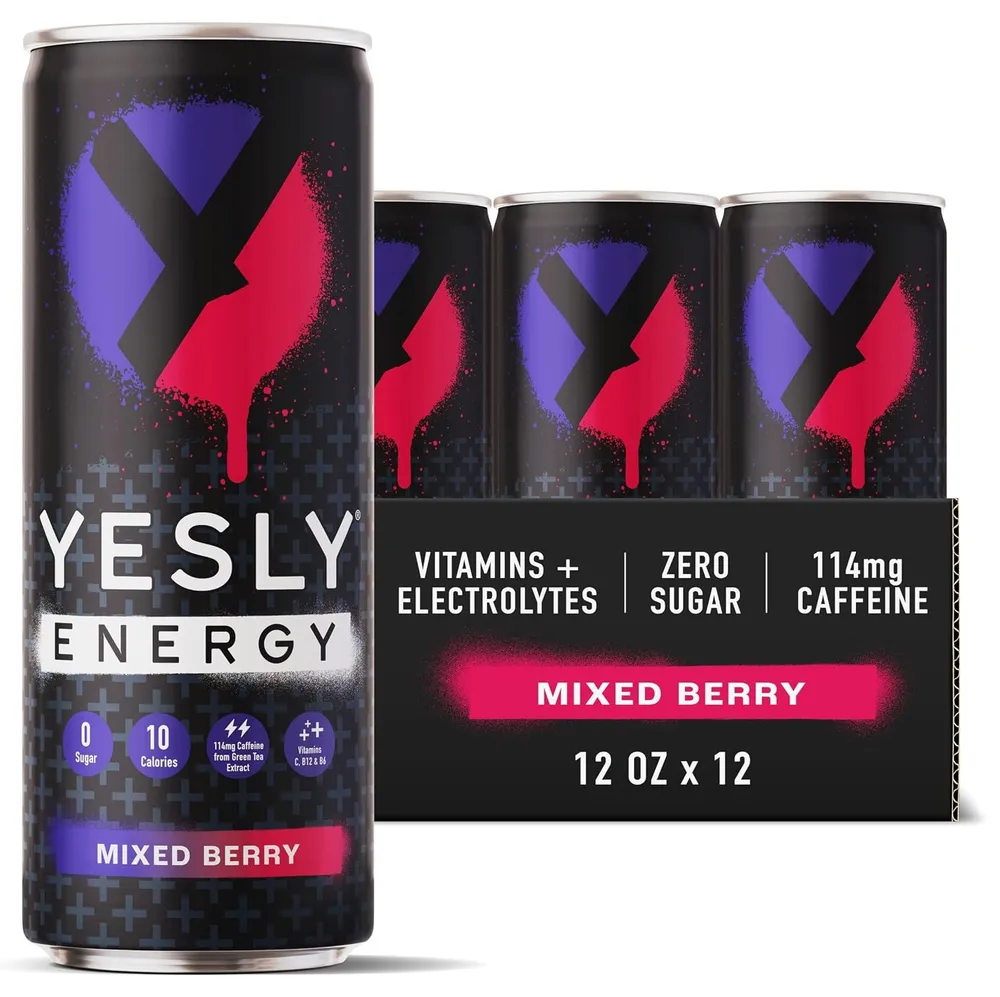
- Mixed Berry (12 Cans: $18.76)
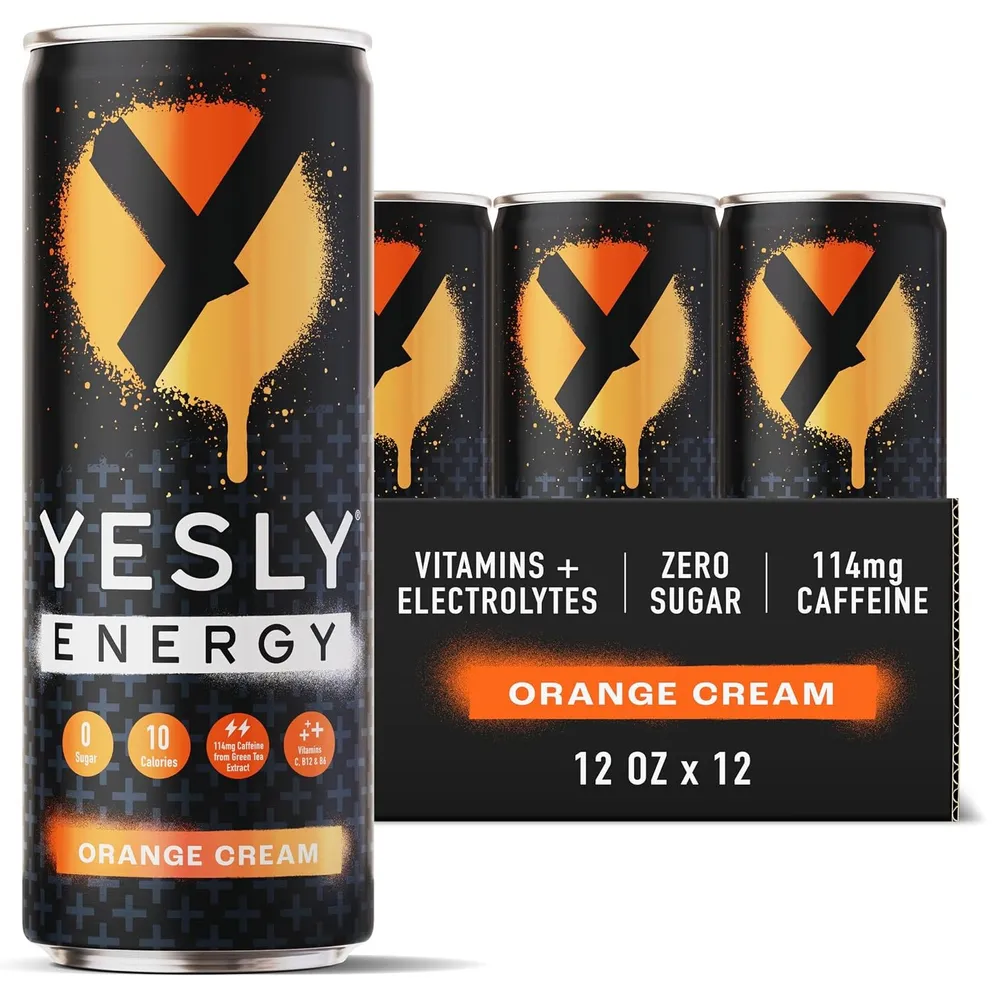
- Orange Cream (12 Cans: $20.64)
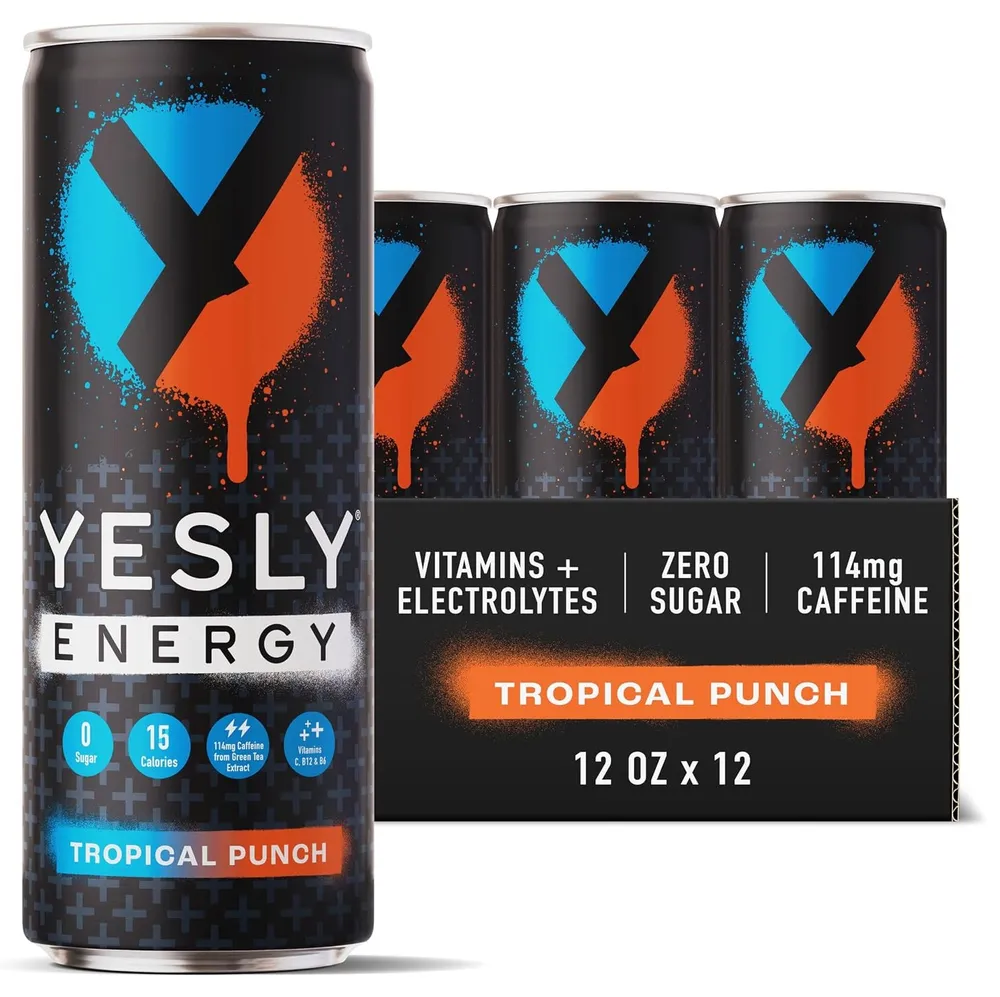
- Tropical Punch (12 Cans: $18.76)
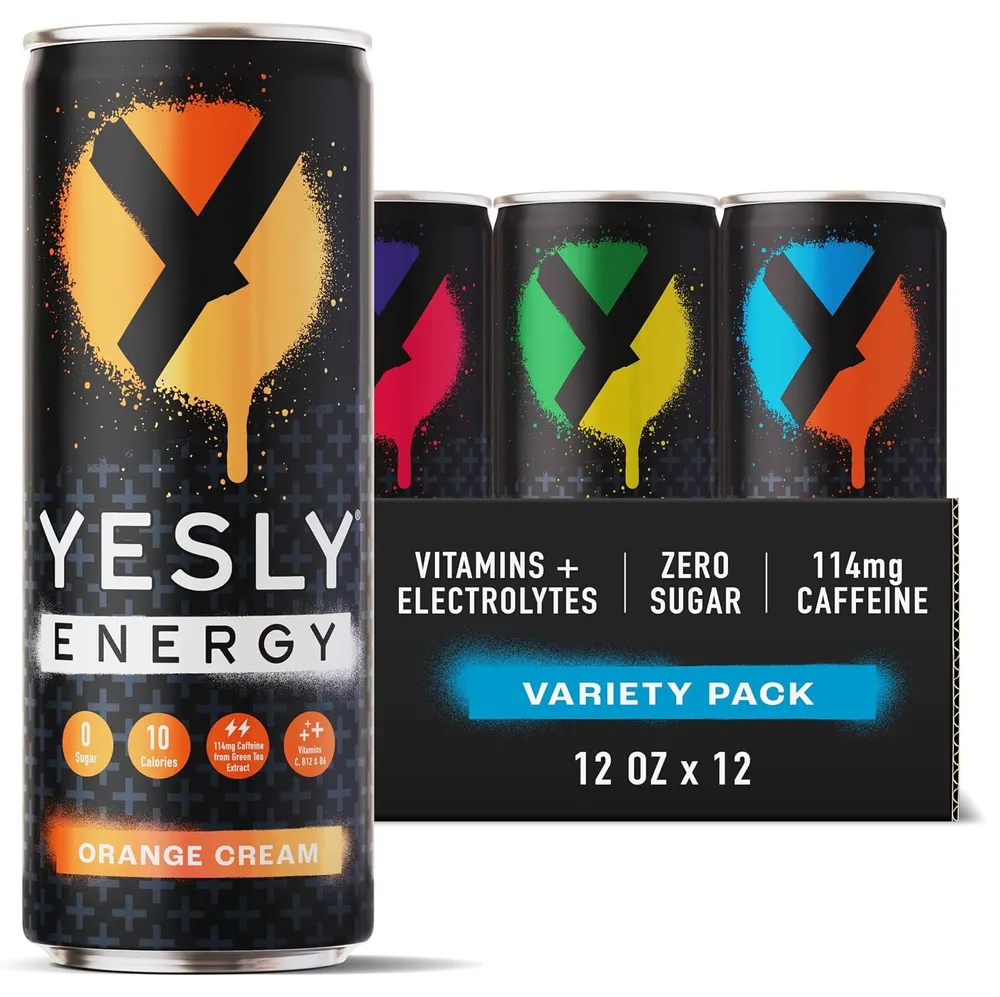
- Variety Pack (12 Cans: $18.76)
Built for the Afternoon Can
- Moderate caffeine drinkers: If higher-dose cans leave you wired, 114mg gives you more room to pace your intake across the day.
- Hydration-first drinkers: If you already reach for enhanced water, this is the same idea with a caffeine lift and zero sugar.
Where Yesly Energy Lands
Yesly Energy suits anyone who wants a light caffeine bump with electrolytes and B vitamins in the same can, and the 114mg, zero-sugar formula backs up that pitch. If you want pre-workout strength, look elsewhere.
References
- Fredholm, Bertil B. et al. "Actions of Caffeine in the Brain with Special Reference to Factors That Contribute to Its Widespread Use." Pharmacological Reviews, 1999. https://doi.org/10.1016/S0031-6997(24)01396-6
- McLellan, Tom M. et al. "A Review Of Caffeine S Effects On Cognitive Physical And Occupational Performance." Neuroscience & Biobehavioral Reviews, 2016. https://doi.org/10.1016/j.neubiorev.2016.09.001
- Goldstein, Erica R, et al. "International Society Of Sports Nutrition Position Stand Caffeine And Performance." Journal of the International Society of Sports Nutrition, 2010. https://doi.org/10.1186/1550-2783-7-5
- Wikoff, Daniele, et al. "Systematic review of the potential adverse effects of caffeine consumption in healthy adults, pregnant women, adolescents, and children." Food and chemical toxicology : an international journal published for the British Industrial Biological Research Association, 2017. https://doi.org/10.1016/j.fct.2017.04.002
- Nehlig, Astrid. "Interindividual Differences in Caffeine Metabolism and Factors Driving Caffeine Consumption." Pharmacological reviews, 2018. https://doi.org/10.1124/pr.117.014407
- Drake, Christopher, et al. "Caffeine effects on sleep taken 0, 3, or 6 hours before going to bed." Journal of clinical sleep medicine : JCSM : official publication of the American Academy of Sleep Medicine, 2013. https://doi.org/10.5664/jcsm.3170
- Montain, Scott J, et al. "Sweat mineral-element responses during 7 h of exercise-heat stress." International journal of sport nutrition and exercise metabolism, 2007. https://doi.org/10.1123/ijsnem.17.6.574
- Weaver, Connie M. "Potassium and health." Advances in nutrition (Bethesda, Md.), 2013. https://doi.org/10.3945/an.112.003533
- Urwin, Charles S, et al. "Factors Influencing Blood Alkalosis and Other Physiological Responses, Gastrointestinal Symptoms, and Exercise Performance Following Sodium Citrate Supplementation: A Review." International journal of sport nutrition and exercise metabolism, 2021. https://doi.org/10.1123/ijsnem.2020-0192
- Fatima, Ghizal, et al. "Magnesium Matters A Comprehensive Review Of Its Vital Role In Health And Diseases." Cureus, 2024. https://doi.org/10.7759/cureus.71392
- Alharran, Abdullah M, et al. "Impact Of Magnesium Supplementation On Blood Pressure An Umbrella Meta Analysis Of Randomized Controlled Trials." Current therapeutic research, clinical and experimental, 2024. https://doi.org/10.1016/j.curtheres.2024.100755
- Markun, Stefan, et al. "Effects Of Vitamin B12 Supplementation On Cognitive Function Depressive Symptoms And Fatigue A Systematic Review Meta Analysis And Meta Regression." Nutrients, 2021. https://doi.org/10.3390/nu13030923
- Orellana-Paucar, Adriana Monserrath. "Steviol Glycosides From Stevia Rebaudiana An Updated Overview Of Their Sweetening Activity Pharmacological Properties And Safety Aspects." Molecules (Basel, Switzerland), 2023. https://doi.org/10.3390/molecules28031258
- EFSA, Panel on Food Additives and Flavourings (FAF), et al. "Safety Of The Proposed Amendment Of The Specifications For Steviol Glycosides E 960 As A Food Additive." EFSA journal. European Food Safety Authority, 2019. https://doi.org/10.2903/j.efsa.2019.5867
- Kwok, David, et al. "Comparison of a Daily Steviol Glycoside Beverage compared with a Sucrose Beverage for Four Weeks on Gut Microbiome in Healthy Adults." The Journal of nutrition, 2024. https://doi.org/10.1016/j.tjnut.2024.01.032
- Parker, M N, et al. "Consumer Acceptance Of Natural Sweeteners In Protein Beverages." Journal of dairy science, 2018. https://doi.org/10.3168/jds.2018-14707
- Goodman, Matthew J. "The “Natural” vs. “Natural Flavors” Conflict in Food Labeling: A Regulatory Viewpoint." Food and drug law journal, 2017. https://pubmed.ncbi.nlm.nih.gov/29140655/
- Riebl, Shaun K, et al. "The Hydration Equation: Update on Water Balance and Cognitive Performance." ACSM's health & fitness journal, 2013. https://doi.org/10.1249/FIT.0b013e3182a9570f
- Popkin, Barry M, et al. "Water, hydration, and health." Nutrition reviews, 2010. https://doi.org/10.1111/j.1753-4887.2010.00304.x
- Ciriminna, Rosaria, et al. "Citric acid: emerging applications of key biotechnology industrial product." Chemistry Central journal, 2017. https://doi.org/10.1186/s13065-017-0251-y
- Reddy, Avanija, et al. "The pH of beverages in the United States." Journal of the American Dental Association (1939), 2016. https://doi.org/10.1016/j.adaj.2015.10.019
Tagged